
1. Word Meaning
The Sanskrit term “Paschimottanasana” is derived from:
- Paschima – meaning “west” or “back”, here referring to the posterior side of the body
- Uttana – meaning “intense stretch” or “extension”
- Asana – meaning “pose” or “seat”
Thus, Paschimottanasana translates to “Intense Stretch of the Back of the Body”. The asana emphasizes posterior chain stretching, including spine, hamstrings, and calves, and symbolizes humility, introspection, and surrender in yoga philosophy.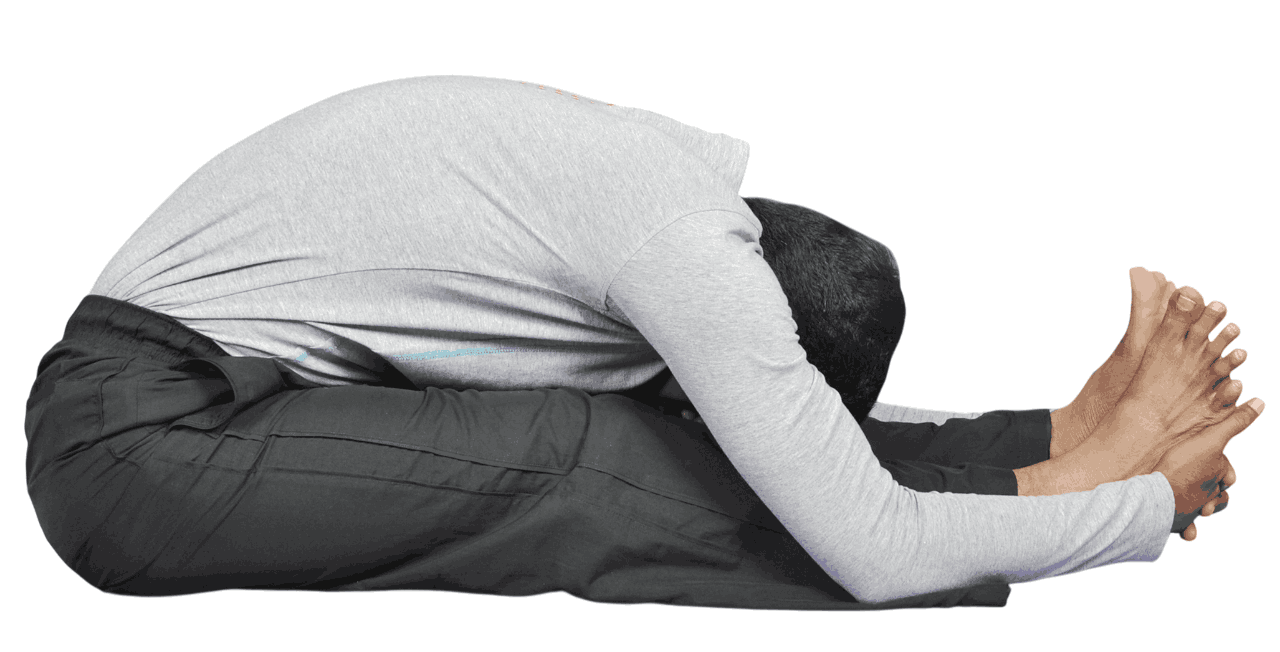
2. Definition
Paschimottanasana is a seated forward-bending yoga posture in which the practitioner:
- Sits with legs extended straight ahead (Dandasana base)
- Hinge forward from the hips while maintaining an elongated spine
- Reaches forward with hands to grasp the feet, ankles, or shins
- Stretches the posterior chain (spine, hamstrings, calves, and back muscles) while promoting mental focus and calming the mind
It is classified as a Hatha Yoga seated forward bend that enhances flexibility, spinal mobility, and introspection.
3. Method of Practice – Step by Step
Step 1: Begin in Dandasana
- Sit on a firm yoga mat or folded blanket with legs extended
- Keep spine erect, shoulders relaxed, hands resting beside hips
Step 2: Align the Legs
- Feet together, toes pointing upward
- Knees actively engaged, quadriceps contracted
- Sit bones grounded evenly
Step 3: Inhale – Lengthen the Spine
- Inhale, extend spine upward
- Engage core muscles to stabilize lumbar region
Step 4: Exhale – Hinge Forward
- Hinge from hip joints, not the lumbar spine
- Maintain elongation of the spine
- Reach forward with hands toward feet, ankles, or shins
Step 5: Head and Neck Position
- Keep head in line with the spine or gently lowered toward legs
- Avoid compressing cervical spine
Step 6: Maintain and Breathe
- Inhale to lengthen the spine, exhale to deepen forward fold
- Hold posture mindfully, maintaining diaphragmatic breathing
Step 7: Hold Duration
- Beginners: 15–30 seconds
- Intermediate: 1–2 minutes
- Advanced: 3–5 minutes or longer, focusing on breath and spinal elongation
Step 8: Exit the Pose
- Inhale, slowly lift torso, returning to upright Dandasana
- Release arms gently
4. Alignment Cues
- Hips: Square and grounded on sit bones
- Spine: Elongated throughout forward fold
- Legs: Extended, active quadriceps, knees straight
- Arms: Extended forward, hands grasping feet, ankles, or shins
- Head: Neutral, avoiding cervical compression
- Breath: Smooth, diaphragmatic
5. Benefits of Paschimottanasana
A. Physical Benefits
- Stretches hamstrings, calves, spine, shoulders
- Strengthens back muscles and spinal stabilizers
- Improves posture and spinal flexibility
- Stimulates abdominal organs, enhancing digestion
- Provides relief from mild back pain and stress
B. Mental Benefits
- Calms the mind, reducing stress and anxiety
- Enhances focus, concentration, and introspection
- Encourages mindfulness and self-discipline
C. Physiological Benefits
- Stimulates liver, kidneys, pancreas, intestines
- Enhances blood circulation to posterior body
- Improves respiratory function and diaphragmatic expansion
D. Energetic Benefits
- Activates Muladhara (root) and Manipura (solar plexus) chakras
- Promotes pranic flow along posterior body
- Encourages grounding and inward focus
6. Contraindications
- Hamstring or lower back injuries – avoid deep forward fold
- Sciatica – practice with caution, maintain spine elongation
- Slipped or herniated disc – avoid bending deeply
- Pregnancy (especially second and third trimester) – avoid deep forward fold
- Neck or shoulder injuries – keep head neutral and shoulders relaxed
7. Counterposes
- Setu Bandhasana (Bridge Pose) – balances posterior stretch with anterior opening
- Bhujangasana (Cobra Pose) – counter-stretch for spine
- Adho Mukha Svanasana (Downward Dog) – posterior chain lengthening
- Shavasana – deep relaxation
8. Preparatory Practices
- Dandasana (Staff Pose) – seated foundation
- Janu Sirsasana (Head-to-Knee Pose) – gentle forward bend
- Ardha Paschimottanasana (Half Forward Bend) – partial forward stretch
- Standing Forward Bends (Uttanasana) – hamstring and spine warm-up
- Hip and shoulder stretches – improve folding flexibility
9. Modifications
- Place a blanket or bolster under sit bones to elevate pelvis
- Bend knees slightly if hamstrings are tight
- Use yoga strap around feet for better reach
- Rest forehead on yoga block or bolster for support
- Half forward fold if full fold is not possible
10. Muscles Involved
A. Stretched Muscles
- Hamstrings: biceps femoris, semitendinosus, semimembranosus
- Calves: gastrocnemius, soleus
- Spinal erectors: erector spinae, multifidus
- Gluteals: gluteus maximus and medius
- Latissimus dorsi and intercostals
- Shoulders: deltoids (posterior fibers)
B. Strengthened / Stabilized Muscles
- Core muscles: rectus abdominis, transverse abdominis, obliques
- Spinal stabilizers: erector spinae, multifidus
- Quadriceps: maintain leg extension
- Hip flexors: iliopsoas
C. Joints
- Hip flexion
- Knee extension (active)
- Spine: sagittal plane flexion
- Shoulder flexion (forward reach)
- Ankle dorsiflexion
11. Kinesiology
- Hip joint: flexion during forward fold
- Knee joint: extension with quadriceps activation
- Spine: sagittal plane flexion
- Shoulders: flexion, arm reach forward
- Ankles: dorsiflexion for proper foot alignment
12. Kinematics
- Sagittal plane movement dominates (forward bend)
- Force distribution:
- Weight on sit bones
- Core engagement stabilizes lumbar spine
- Hamstrings and spinal erectors absorb posterior stretch forces
13. Biomechanics
- Forward bending stretches hamstrings, calves, spinal muscles
- Core engagement prevents lumbar collapse
- Shoulder extension enhances posterior chain stretch
- Spine elongation distributes stress across intervertebral discs
- Gradual forward fold reduces risk of muscle strain
14. Functional Anatomy & Physiology
A. Musculoskeletal System
- Enhances posterior chain flexibility
- Strengthens spinal stabilizers
- Improves postural alignment and joint mobility
B. Nervous System
- Stimulates parasympathetic nervous system, calming mind
- Enhances proprioception and body awareness
C. Digestive System
- Compresses abdomen mildly, stimulating liver, pancreas, kidneys, intestines
- Improves digestion and elimination
D. Circulatory System
- Increases blood flow to posterior body and lower extremities
E. Respiratory System
- Encourages diaphragmatic breathing, expanding rib cage
F. Energetic System
- Stimulates Muladhara and Manipura chakras
- Promotes pranic flow along posterior body
- Encourages grounding and inward awareness
15. How to Correct and Adjust While Teaching
Common Misalignments
- Rounded spine due to tight hamstrings
- Knees bent excessively
- Shoulders elevated or tensed
- Neck compressed
Verbal Adjustments
- “Lengthen spine first, then hinge forward”
- “Engage quadriceps to protect hamstrings”
- “Relax shoulders away from ears”
- “Reach forward with exhale, inhale to elongate”
Hands-On Adjustments
- Gently support lumbar spine for elongation
- Assist forward reach by guiding hands or arms
- Use props to maintain alignment
- Encourage micro-bends in knees for safety
Modifications
- Yoga strap around feet
- Blanket under sit bones
- Half Paschimottanasana with torso elevated
16. Variations
- Ardha Paschimottanasana – half forward fold
- Supported Paschimottanasana – bolster or block under forehead
- Padangusthasana Variation – grasp toes instead of foot
- Wall-Supported Forward Fold – beginners with tight hamstrings
17. Philosophical and Energetic Aspect
- Promotes humility, introspection, surrender
- Represents mental focus through physical stillness
- Encourages grounding and inward reflection
- Supports preparation for meditation and pranayama practice
18. Conclusion
Paschimottanasana (Seated Forward Bend) is a foundational seated forward-bending yoga posture integrating physical flexibility, spinal health, core engagement, and mental introspection.
- Physical Benefits: Stretches posterior chain, strengthens spinal stabilizers, improves posture
- Mental Benefits: Reduces stress, improves focus, encourages mindfulness
- Physiological Benefits: Stimulates digestive organs, enhances circulation, improves respiratory efficiency
- Energetic Benefits: Activates root and solar plexus chakras, promotes pranic flow
Through mindful alignment, preparatory practices, and appropriate modifications, Paschimottanasana can be safely practiced by beginners to advanced practitioners, providing a holistic physical and mental experience.
QUESTION AND ANSWER
1. What does “Paschima” mean in Sanskrit?
a) East
b) West / Back
c) Side
d) Upward
Answer: b
2. What does “Uttana” mean?
a) Fold
b) Intense stretch or extension
c) Twist
d) Balance
Answer: b
3. What is the English translation of Paschimottanasana?
a) Forward Fold Pose
b) Seated Forward Bend
c) Intense Stretch of the Back of the Body
d) Head-to-Knee Pose
Answer: c
4. Which base pose is required before performing Paschimottanasana?
a) Dandasana (Staff Pose)
b) Sukhasana
c) Vajrasana
d) Padmasana
Answer: a
5. How should the legs be positioned in Paschimottanasana?
a) Extended straight, feet flexed
b) Crossed
c) Bent under hips
d) One bent, one straight
Answer: a
6. How should the spine be aligned?
a) Elongated and neutral during forward fold
b) Rounded aggressively
c) Hyperextended
d) Twisted
Answer: a
7. Primary muscles stretched in Paschimottanasana:
a) Hamstrings, calves, spinal erectors, latissimus dorsi
b) Quadriceps only
c) Deltoids only
d) Biceps only
Answer: a
8. Muscles strengthened / stabilized:
a) Core muscles, spinal stabilizers, quadriceps
b) Only biceps
c) Only calves
d) Only trapezius
Answer: a
9. Which joints are actively engaged?
a) Hips, knees, spine, shoulders, ankles
b) Elbows only
c) Wrists only
d) None
Answer: a
10. Recommended head position:
a) In line with spine or gently lowered
b) Tilted backward
c) Turned sideways forcefully
d) Hyperextended
Answer: a
11. Breathing cue:
a) Slow, diaphragmatic, inhale to lengthen spine, exhale to fold
b) Breath-holding
c) Rapid chest breathing
d) Forceful inhalation
Answer: a
12. Contraindications include:
a) Hamstring injuries, lower back issues, sciatica, pregnancy
b) Only tight shoulders
c) Only wrist injuries
d) None
Answer: a
13. Preparatory poses:
a) Dandasana, Janu Sirsasana, Ardha Paschimottanasana
b) Only Tadasana
c) Only Bhujangasana
d) None
Answer: a
14. Counterposes:
a) Setu Bandhasana, Bhujangasana, Shavasana
b) Only Tadasana
c) Only Ardha Matsyendrasana
d) None
Answer: a
15. Common misalignment:
a) Rounded spine due to tight hamstrings
b) Perfect spine
c) Chest slightly lifted
d) Shoulders relaxed
Answer: a
16. Duration for beginners:
a) 15–30 seconds
b) 1–2 minutes
c) 3–5 minutes
d) 10 minutes
Answer: a
17. Duration for intermediate practitioners:
a) 1–2 minutes
b) 15 seconds
c) 5 minutes
d) 30 seconds
Answer: a
18. Duration for advanced practitioners:
a) 3–5 minutes or longer
b) 15 seconds
c) 1 minute
d) 30 seconds
Answer: a
19. Modifications for tight hamstrings:
a) Slight bend in knees, use strap
b) Force fold
c) Lift head
d) Push legs down
Answer: a
20. Modification for tight lower back:
a) Blanket or bolster under sit bones
b) Twist spine
c) Round back
d) None
Answer: a
21. Hands placement in full forward fold:
a) Grasp feet, ankles, or shins
b) Behind back
c) Only overhead
d) None
Answer: a
22. Energetic benefits:
a) Activates Muladhara and Manipura chakras
b) Depletes energy
c) Only Sahasrara chakra
d) No effect
Answer: a
23. Mental benefits include:
a) Reduces stress, enhances focus, encourages introspection
b) Increases agitation
c) Causes fatigue
d) None
Answer: a
24. Physiological benefits:
a) Stimulates digestive organs, enhances circulation, improves respiration
b) Weakens spine
c) Reduces blood flow
d) None
Answer: a
25. Which core muscles are engaged
a) Rectus abdominis, transverse abdominis, obliques
b) Biceps only
c) Forearms only
d) Quadriceps only
Answer: a
26. Knee cue:
a) Active, straight, quadriceps engaged
b) Hyperextended
c) Relaxed fully
d) Bent excessively
Answer: a
27. Shoulder cue:
a) Relaxed and away from ears
b) Raised to ears
c) Hyperextended
d) None
Answer: a
28. How to exit the pose safely:
a) Inhale, lift torso slowly, return to Dandasana
b) Exhale, jump up
c) Twist abruptly
d) Lean forward forcibly
Answer: a
29. Which part of spine is most stretched?
a) Posterior chain (thoracic, lumbar, cervical)
b) Only cervical
c) Only lumbar
d) Only sacral
Answer: a
30. Recommended props:
a) Strap, blanket, bolster
b) Chair only
c) Wall only
d) None
Answer: a
31. Variation for beginners:
a) Ardha Paschimottanasana
b) Full inversion
c) Arm balance
d) Backbend
Answer: a
32. Core engagement purpose:
a) Stabilize lumbar spine, prevent collapse
b) Strengthen shoulders only
c) Flex elbows
d) Compress chest
Answer: a
33. Ankle position:
a) Dorsiflexed, toes pointing upward
b) Plantarflexed
c) Inverted
d) Everted
Answer: a
34. Which organ systems are stimulated?
a) Digestive, circulatory, and abdominal organs
b) Only skeletal
c) Only respiratory
d) None
Answer: a
35. Nervous system effect:
a) Activates parasympathetic system, calming mind
b) Stimulates sympathetic excessively
c) Causes stress
d) None
Answer: a
36. Energetic alignment cue:
a) Ground through sit bones, elongate spine, fold with awareness
b) Push head to feet forcibly
c) Twist spine excessively
d) None
Answer: a
37. Neck cue for beginners:
a) Keep neutral, avoid compression
b) Press forehead to shins
c) Turn head sideways
d) Hyperextend
Answer: a
38. How does Paschimottanasana affect posture?
a) Improves spinal flexibility and alignment
b) Weakens spine
c) Reduces awareness
d) None
Answer: a
39. Which chakras are activated?
a) Muladhara (root) and Manipura (solar plexus)
b) Sahasrara only
c) Anahata only
d) Vishuddha only
Answer: a
40. Philosophical aspect:
a) Encourages humility, surrender, introspection
b) Promotes aggression
c) Increases restlessness
d) None
Answer: a
41. Kinesiology of hips:
a) Flexion during forward fold
b) Hyperextension
c) Rotation only
d) Abduction
Answer: a
42. Kinematics plane of motion:
a) Sagittal plane (forward bend)
b) Coronal plane
c) Transverse plane
d) None
Answer: a
43. Biomechanics principle:
a) Core activation prevents lumbar strain, distributes stretch evenly
b) Force lumbar hyperextension
c) Compress cervical spine
d) Lock knees
Answer: a
44. Which arm movement is involved?
a) Shoulder flexion to reach forward
b) Only overhead
c) Behind back
d) None
Answer: a
45. Modification if hamstrings are very tight:
a) Bend knees slightly, use strap
b) Force fold
c) Push torso down
d) None
Answer: a
46. How to deepen fold safely:
a) Inhale to lengthen spine, exhale to fold forward
b) Push torso down forcibly
c) Twist spine abruptly
d) Hold breath
Answer: a
47. Which spine muscles are stretched?
a) Erector spinae, multifidus
b) Biceps only
c) Quadriceps only
d) Deltoids only
Answer: a
48. Recommended hold time for meditation:
a) 1–5 minutes
b) 15 seconds
c) 30 seconds
d) 10 minutes
Answer: a
49. Common error by beginners:
a) Rounding spine excessively
b) Keeping spine neutral
c) Engaging core
d) Relaxing shoulders
Answer: a
50. Teaching verbal cue:
a) “Lengthen spine, hinge forward, reach toward feet, breathe mindfully”
b) “Force fold immediately”
c) “Round spine aggressively”
d) “Lift shoulders to ears”
Answer: a