
1. Introduction
Among the core-strengthening postures within classical Haṭha Yoga, Paripūrṇa Nāvasana, commonly known as Full Boat Pose, holds a distinguished place. It is a powerful seated balance posture that strengthens the abdominal muscles, hip flexors, spinal stabilizers, and deep core musculature while promoting concentration, endurance, and energetic upliftment. At the same time, it demands steadiness, breath coordination, and mental clarity.
This pose is frequently taught in modern yoga traditions such as Ashtanga, Iyengar, Sivananda, and Hatha Yoga sessions because it symbolizes the union of strength and stillness: physical firmness stabilized by mental discipline.
The pose requires symphony between muscular engagement and axial elongation, challenging practitioners to maintain form without collapse or over-effort.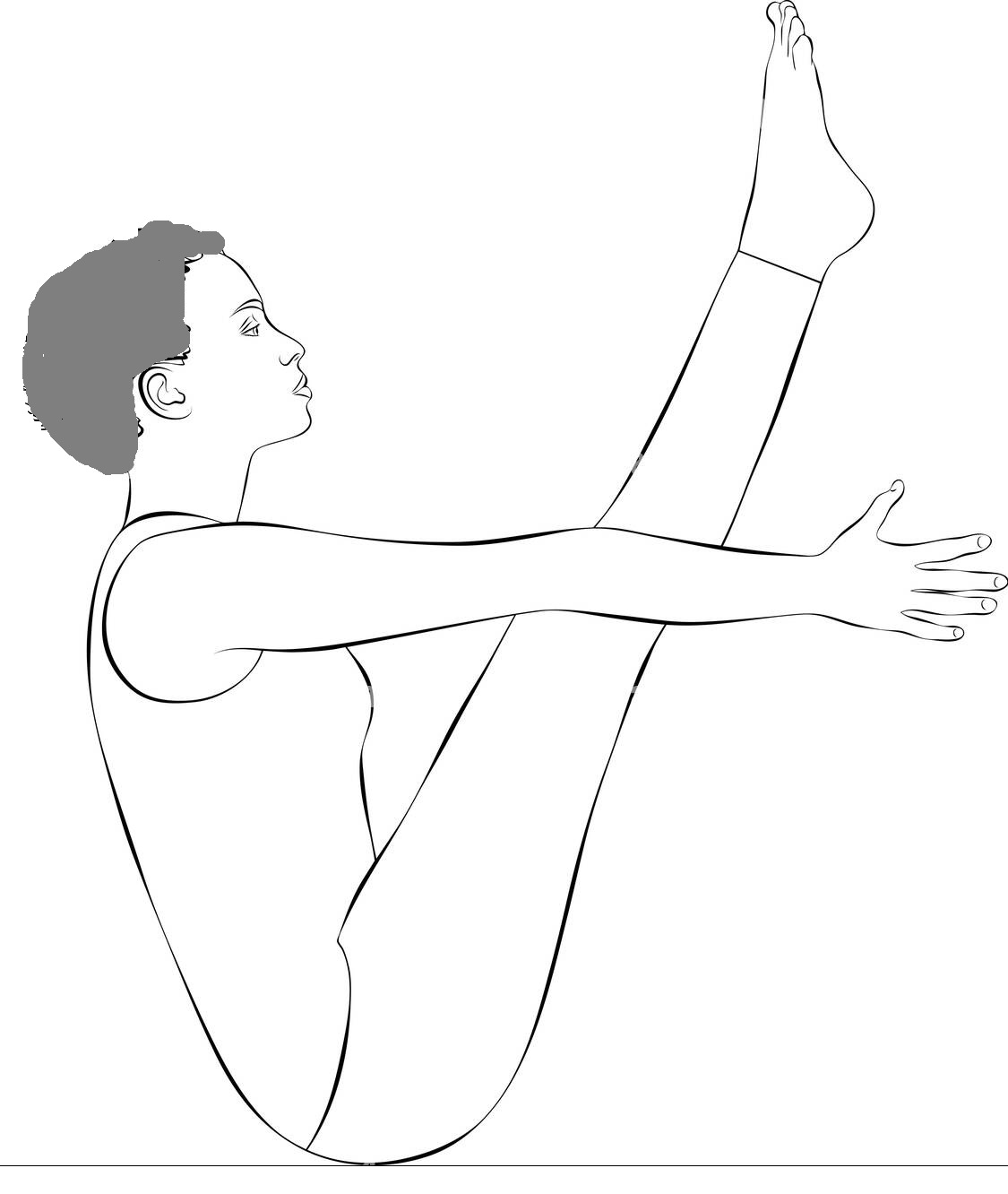
Paripūrṇa Nāvasana is also significant energetically. In yogic physiology, it stimulates the solar plexus region, activating Maṇipūra Cakra, the seat of willpower, vitality, transformation, and digestive fire (Agni). The posture reflects the metaphor of a boat navigating the ocean—symbolizing stability amidst life’s fluctuations.
2. Word Meaning and Etymology
The Sanskrit name Paripūrṇa Nāvasana is composed of two words:
1. Paripūrṇa
Meaning:
- “Complete,” “full,” “perfect,” or “entire.”
2. Nava / Nāva
Meaning:
- “Boat.”
3. Āsana
Meaning:
- “Seat,” “posture,” or “physical pose.”
Thus, Paripūrṇa Nāvasana literally means:
“The Full or Complete Boat Pose.”
This is in contrast to Ardha Nāvasana (Half Boat Pose), where the spine is more reclined and the legs are lower.
In Paripūrṇa Nāvasana, the “boat” shape is complete: the body forms a “V” shape with legs lifted, spine long, and arms extended.
3. Definition of Paripūrṇa Nāvasana
Paripūrṇa Nāvasana is a seated balancing posture in which the practitioner:
- Sits on the sitting bones
- Lifts the legs to approximately 45°
- Balances on the sacrum without collapsing
- Extends the arms parallel to the legs
- Maintains spinal length
- Engages the core to stabilize the pose
It is primarily a core-strengthening and hip-flexor-dominant asana, requiring both muscular activation and neuromuscular control.
Nature of the Pose
- It is an isometric hold posture.
- Strength is generated by sustained contraction.
- Balance is maintained through central stabilization.
- The breath must remain steady and unforced.
Energetic Definition
- Paripūrṇa Nāvasana activates Maṇipūra Cakra, enhancing digestion, metabolism, confidence, and inner fire.
4. Method of Practice (Step-by-Step Technique)
Step 1: Starting Position
- Sit in Daṇḍāsana (Staff Pose).
- Legs straight, spine tall, chest open.
- Place hands beside the hips.
Step 2: Preparation
- Bend knees slightly.
- Lean back a few inches while keeping the spine straight—not rounding.
- Lift the chest and broaden the collarbones.
Step 3: Lifting the Legs
- Shift slightly onto the back of the sitting bones—not the tailbone.
- Lift both feet off the floor, knees still bent.
- Balance between the pubic bone and tailbone.
Step 4: Straightening the Legs
- Slowly straighten both legs upward to about 45°.
- Keep the toes active (pointed or flexed).
Step 5: Extending the Arms
- Raise arms parallel to the floor.
- Palms face each other.
- Keep shoulders relaxed.
Step 6: Spinal Alignment
- Draw the lower belly inward and upward.
- Lift the sternum forward and upward.
- Neck long, gaze at the toes.
Step 7: Breath
- Maintain slow, deep, rhythmic breathing.
- Avoid holding the breath.
Step 8: Duration
- Hold for 20–60 seconds.
- Repeat 2–3 rounds.
Step 9: Releasing
- Exhale, bend knees, and bring feet down.
- Return to Daṇḍāsana.
5. Alignment Cues (Detailed Teaching Points)
Foundation and Base
- Sit on the center of the sitting bones, not the extreme back of the sacrum.
- Avoid rolling onto the tailbone, which compresses the lower back.
Spine and Torso
- Lift the sternum upward.
- Maintain a neutral lumbar curve—not flattened or overarching.
- Engage the transverse abdominis to support the spine.
Legs and Feet
- Squeeze inner thighs together.
- Either flex or point the toes—maintain consistent tension.
- Keep legs straight but not hyperextended.
Pelvis
- Pelvis should be slightly posteriorly tilted but supported.
- Avoid excessive lumbar rounding.
Arms and Shoulders
- Keep arms parallel to the floor and to each other.
- Shoulders remain broad and away from the ears.
Breath
- Inhale: lengthen spine.
- Exhale: deepen core engagement.
Common Alignment Errors
- Rounding the back.
- Splaying the legs.
- Lifting shoulders toward ears.
- Straining the neck.
- Collapsing the chest.
6. Benefits of Paripūrṇa Nāvasana
A. Physical Benefits
- Strengthens the core musculature—rectus abdominis, obliques, transverse abdominis.
- Improves hip flexor strength, especially iliopsoas.
- Enhances balance and proprioception.
- Tones abdominal organs and improves circulation.
- Strengthens quadriceps and adductors.
- Enhances spinal stability through erector spinae activation.
- Improves posture by strengthening deep stabilizers.
- Improves stamina and endurance.
B. Physiological Benefits
- Stimulates the digestive system.
- Activates the solar plexus and enhances metabolic fire.
- Improves diaphragmatic breathing capacity.
- Enhances blood flow to abdominal and pelvic organs.
- Encourages lymphatic circulation.
C. Therapeutic Benefits
- Helps relieve mild digestive sluggishness.
- Improves lower back support (if practiced correctly).
- Helps with emotional strengthening and confidence.
- Useful for recovery from weak core conditions (e.g., postpartum with guidance).
D. Mental and Energetic Benefits
- Boosts willpower, discipline, and determination.
- Develops concentration and mental steadiness.
- Activates Maṇipūra Cakra (solar plexus).
- Promotes feelings of empowerment and inner fire.
7. Contraindications
Absolute Contraindications
- Severe lower back injuries or slipped disc
- Recent abdominal surgery
- Hernia
- Pregnancy
- Severe hip flexor strain
- Severe menstrual cramps (for some practitioners)
Relative Contraindications
- High blood pressure
- Heart conditions
- Neck strain
- Vertigo or dizziness
- Weak pelvic floor (requires modifications)
When to Avoid
- If abdominal organs are inflamed (e.g., appendicitis)
- Immediately after meals
- During early postpartum without guidance
8. Counterposes
To neutralize the core and hip flexors:
Recommended Counterposes
- Apanāsana (Knees to Chest)
- Supta Baddha Konasana
- Setu Bandhasana (Bridge Pose)
- Child’s Pose
- Seated forward fold (Paschimottanasana)
- Supine Twist
These poses relax the lower back, lengthen hip flexors, and calm abdominal engagement.
9. Preparatory Practices
Warm-Up Poses
- Cat–Cow
- Dynamic knee-to-chest movements
- Pelvic tilts
- Shoulder shrugs and chest opening
Strengthening Preparatory Poses
- Low Boat (Ardha Nāvasana)
- Plank Pose
- Dolphin Plank
- Bridge Pose
- Supine leg lifts
Stretching Preparatory Poses
- Supta Padangusthasana
- Lizard lunge
- Psoas stretch
- Hip flexor release with block
Neuromuscular Preparation
- Core activation drills
- Dead bug exercise
- Hollow body hold (gymnastic prep)
10. Modifications and Variations
Beginner Modifications
- Knees bent
- Keep knees bent while lifting shins parallel to the floor.
- Hold back of thighs
- Support the posture without collapsing.
- Use a wall
- Lean back against the wall for spinal support.
Intermediate Modifications
- Use a strap around the feet for leg extension.
- Sit on a folded blanket to elevate hips and reduce rounding.
Advanced Variations
- Straight Arms Overhead
- Boat Pose with Lotus Legs (Padma Navasana)
- Twisting Boat Pose
- Weighted Boat Pose (strength training community)
11. Muscles Involved (Detailed Anatomy)
Primary Muscles Engaged
- Rectus Abdominis – trunk flexion
- Transverse Abdominis – deep stability
- External and Internal Obliques – stabilization
- Iliopsoas – hip flexor lift
- Quadriceps – knee extension
- Tensor Fasciae Latae – stabilizer
- Adductors – maintain leg alignment
Secondary Muscles Engaged
- Erector Spinae – spinal extension support
- Latissimus Dorsi – stabilizing arms
- Serratus Anterior – keeps shoulders broad
- Hip Flexors: Rectus Femoris
- Pectineus and Sartorius – hip flexion synchronizers
Isometric Stabilizers
- Multifidus
- Pelvic floor muscles
- Diaphragm
- Intercostals
12. Kinesiology of Paripūrṇa Nāvasana
Joint Actions
- Hip Joint:
- Flexion against gravity
- Requires strong hip flexor activity
- Knee Joint:
- Extension or semi-extension
- Spine:
- Neutral to slight flexion
- Must resist excessive rounding
- Shoulder Joint:
- Flexion to 90° (arms parallel to legs)
Key Kinesiological Concepts
- Isometric contraction dominates.
- Eccentric control occurs when moving in/out of pose.
- Balance is centered through the lumbopelvic complex.
- Diagonal muscle activation (obliques + hip flexors) stabilizes rotation.
13. Kinematics and Biomechanism
A. Center of Gravity
- The body pivots at the pelvis.
- Center of gravity shifts backward.
- Stability depends on core engagement.
B. Force Dynamics
- Abdominals counteract gravitational pull on the legs.
- Hip flexors lift the legs.
- Spinal extensors prevent collapse.
C. Load on Spine
- Excessive lumbar rounding increases disc pressure.
- Proper technique distributes load evenly.
D. Breath Mechanics
- Deep breathing requires coordinated diaphragm + core stability.
- Over-engagement may restrict breath; hence balance is essential.
14. Functional Anatomy & Physiology
Spinal Function
- Neutral alignment encourages functional muscular recruitment.
- Deep stabilizers maintain spinal integrity.
Core Physiology
- Activates the inner unit (TA, diaphragm, pelvic floor).
- Strengthens the outer unit (RA, obliques, erector spinae).
- Supports posture, gait, and daily movements.
Pelvis Function
- Pelvic tilt dictates spinal alignment.
- Over-tilting posteriorly increases lumbar strain.
Digestive System
- Mild abdominal compression stimulates organ movement.
- Enhances peristalsis and Agni.
Respiratory System
- Encourages diaphragmatic stability and breath awareness.
- Expands intercostal capacity.
15. Correcting and Adjusting While Teaching
General Teaching Principles
- Encourage spine length first, not leg height.
- Prioritize quality over quantity.
- Cue breath continuously.
Verbal Adjustments
- “Lift your chest, soften your shoulders.”
- “Draw your belly inward and upward.”
- “Keep your spine long; avoid rounding.”
- “Balance on the center of your sitting bones.”
Physical Adjustments
(Use only when appropriate and with consent.)
For collapsing spine:
- Place hands on the upper back and sternum to guide lift.
For weak core:
- Support the practitioner’s back with your hand to maintain neutral spine.
For splaying legs:
- Gently bring legs together or apply a strap.
For neck strain:
- Ask them to gaze upward slightly or lower intensity.
Safety Adjustments
- Never force a student to straighten legs.
- Avoid pressing the back into deeper flexion.
- Support beginners with props.
Conclusion
Paripūrṇa Nāvasana is a powerful and transformative yoga posture that integrates strength, stability, balance, breath awareness, and inner discipline. Properly practiced, it strengthens the core, enhances postural integrity, supports digestion, and cultivates willpower and endurance. Its therapeutic potential lies in its ability to awaken the solar plexus region, stimulate metabolic fire, and support spinal health. Through mindful practice, precise alignment, and appropriate modifications, Paripūrṇa Nāvasana becomes a safe and beneficial asana for practitioners at all levels.
QUESTIONS AND ANSWERS
1. The Sanskrit word “Paripūrṇa” means:
A. Half
B. Full or complete
C. Boat
D. Abdominal
Answer: B
2. In Paripūrṇa Nāvasana, the body forms the shape of a:
A. Triangle
B. Square
C. V-shape
D. Circle
Answer: C
3. Which posture is considered the starting position for practicing Nāvasana?
A. Vajrasana
B. Dandasana
C. Tadasana
D. Sukhasana
Answer: B
4. The primary muscle group strengthened in Navasana is:
A. Hamstrings
B. Triceps
C. Core/Abdominals
D. Calf muscles
Answer: C
5. Which of the following is the main hip flexor involved in Nāvasana?
A. Gluteus maximus
B. Iliopsoas
C. Piriformis
D. Obturator internus
Answer: B
6. Arms are typically held in which position in Full Boat Pose?
A. Overhead
B. Parallel to the floor
C. Behind the back
D. Resting on thighs
Answer: B
7. The main alignment focus in Navasana is:
A. Round the spine
B. Collapse shoulders
C. Lengthen the spine
D. Spread knees wide
Answer: C
8. Which chakra is primarily activated in Navasana?
A. Muladhara
B. Anahata
C. Manipura
D. Ajna
Answer: C
9. One key contraindication for Navasana is:
A. Mild headache
B. Pregnancy
C. Fatigue
D. Mild muscle soreness
Answer: B
10. Navasana is best described as what type of contraction?
A. Isotonic
B. Isometric
C. Concentric only
D. Eccentric only
Answer: B
11. Which posture is a good counterpose for Navasana?
A. Bhujangasana
B. Savasana
C. Apanasana
D. Trikonasana
Answer: C
12. What is the recommended gaze (drishti) in Navasana?
A. Down at the floor
B. Up at the ceiling
C. Toward the toes
D. Backwards
Answer: C
13. Excessive rounding of the lower back in Navasana indicates weakness in:
A. Quadriceps
B. Hamstrings
C. Core stabilizers
D. Deltoids
Answer: C
14. Which modification helps beginners in Navasana?
A. Place a block under the head
B. Bend the knees
C. Hold breath
D. Lift only one leg
Answer: B
15. Paripūrṇa Nāvasana primarily strengthens which area?
A. Upper back
B. Lower legs
C. Core and hip flexors
D. Arms
Answer: C
16. Which biomechanical element is essential in maintaining balance in Navasana?
A. Low center of gravity
B. Posterior pelvic tilt collapse
C. Controlled center of mass
D. High arm elevation
Answer: C
17. Straightening the legs primarily increases the demand on:
A. Gluteus medius
B. Rectus femoris
C. Serratus anterior
D. Biceps femoris
Answer: B
18. Teachers should avoid which adjustment?
A. Lifting chest
B. Supporting lower back
C. Forcing legs straight
D. Aligning shoulders
Answer: C
19. Overuse of hip flexors may create tension in which region?
A. Thoracic spine
B. Cervical spine
C. Lumbar spine
D. Arms
Answer: C
20. Which of the following is NOT a benefit of Navasana?
A. Improved digestion
B. Strengthened core
C. Improved hip flexor strength
D. Deep hamstring stretching
Answer: D
21. The pelvis in proper Navasana alignment should be:
A. Tilted excessively forward
B. Tilted excessively backward
C. Neutral or slight posterior tilt
D. Completely neutral without abdominal engagement
Answer: C
22. Which breathing pattern is recommended?
A. Hold breath to stabilize
B. Fast shallow breaths
C. Slow deep breaths
D. Alternate nostril breath during posture
Answer: C
23. Navasana improves which type of endurance?
A. Aerobic endurance
B. Isometric muscular endurance
C. Cardiovascular endurance
D. Explosive power
Answer: B
24. Which muscle acts as a spinal stabilizer in Navasana?
A. Pectoralis major
B. Multifidus
C. Gastrocnemius
D. Teres minor
Answer: B
25. In Navasana, what helps prevent shoulder tension?
A. Shrugging shoulders upward
B. Pressing shoulder blades down
C. Leaning back excessively
D. Lifting chin high
Answer: B
26. Which variation increases difficulty?
A. Knees bent
B. Hands holding thighs
C. Arms overhead
D. Supporting back on wall
Answer: C
27. Navasana is especially helpful for strengthening which energetic center?
A. Crown
B. Throat
C. Solar plexus
D. Root
Answer: C
28. During teaching, what is the safest instruction for beginners?
A. Straighten legs immediately
B. Lift legs as high as possible
C. Maintain spine length first
D. Look backward
Answer: C
29. Which movement occurs at the hip joint in Navasana?
A. Extension
B. Adduction
C. Flexion
D. Abduction
Answer: C
30. A student struggling with balance should:
A. Hold breath
B. Sit on a folded blanket
C. Lower the chest only
D. Keep arms overhead
Answer: B