
1. Introduction
Urdhva Padmasana, also known as Upward Lotus Pose, is an advanced seated yoga posture that combines the traditional Lotus Pose (Padmasana) with an extension of the torso upward. It is a meditative and energy-focused asana frequently used in pranayama and meditation practices to enhance mental focus, spinal length, and energy flow through the sushumna nadi (central energy channel).
This pose requires flexibility in the hips, knees, and ankles, alongside core strength, spinal elongation, and balance. Its practice provides deep physical, physiological, and psychological benefits, supporting both meditation and advanced yoga practices.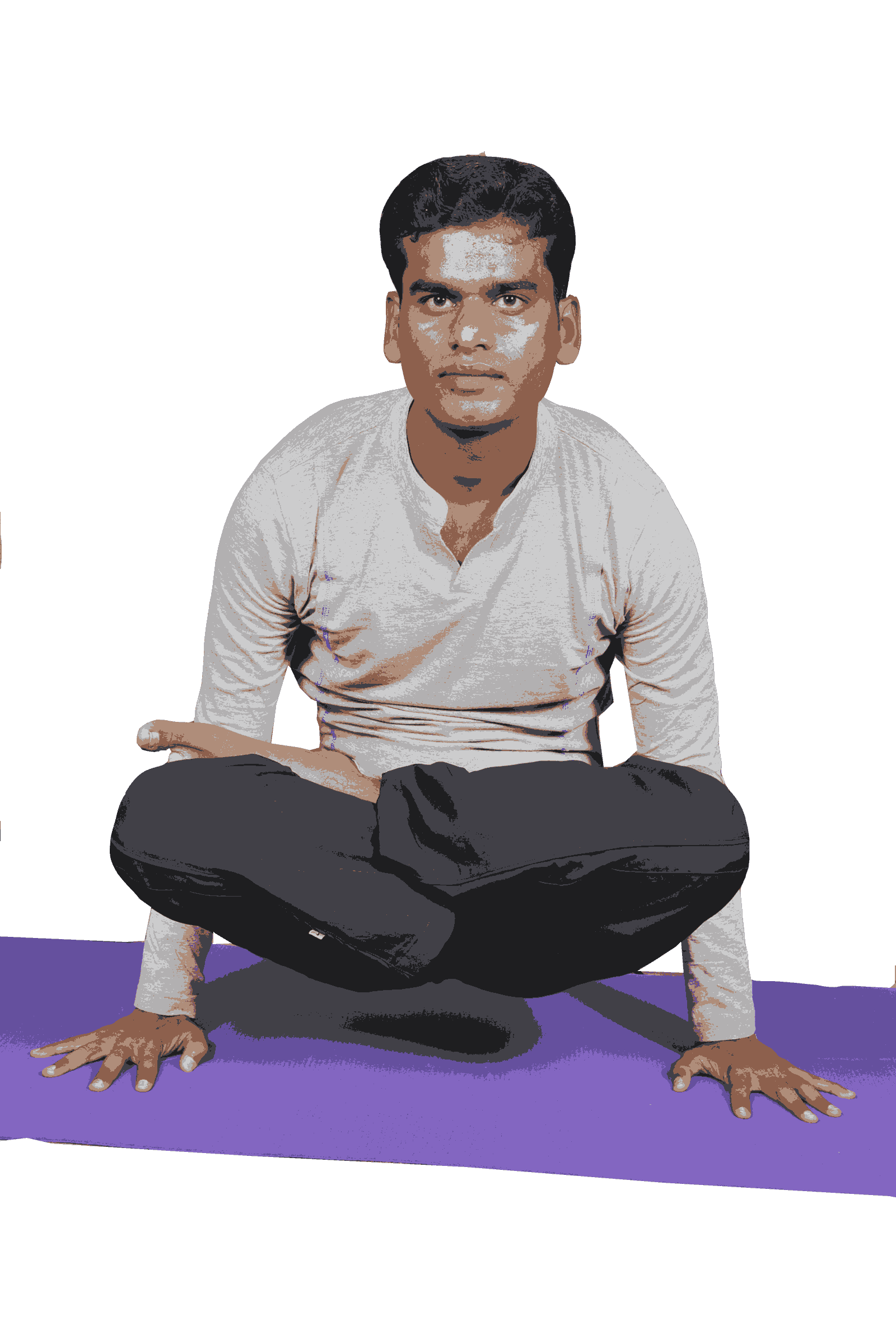
2. Word Meaning and Definition
2.1 Word Meaning
- Urdhva : Upward, elevated.
- Padma : Lotus.
- Asana : Pose or posture.
Thus, Urdhva Padmasana literally translates to “Upward Lotus Pose”, symbolizing spiritual elevation, upward flow of energy, and mental focus.
2.2 Definition
Urdhva Padmasana is an advanced seated posture where the practitioner:
- Enters Padmasana (Lotus Pose).
- Lifts the torso upright, maintaining spinal elongation.
- Often incorporates arm extensions or mudras for meditation or pranayama.
It is classified as:
- A meditative, seated posture (Sukhasana derivative).
- An asana promoting spinal elongation and energy flow.
- An advanced Hatha Yoga asana requiring hip, knee, and ankle flexibility.
3. Method of Practice — Step by Step
Step 1: Preparation
- Sit in Sukhasana or Dandasana to prepare the spine.
- Ensure hips, knees, and ankles are warmed up with gentle stretches.
Step 2: Enter Lotus Pose
- Fold the right leg first, placing the foot on the left thigh.
- Then fold the left leg, placing it on the right thigh.
- Align knees and ankles carefully to avoid strain.
Step 3: Align the Torso
- Lengthen the spine upward from sacrum to crown.
- Lift the chest gently, engage core muscles, and relax shoulders.
- Maintain a neutral pelvis and avoid collapsing backward.
Step 4: Arm Positioning
- Optional: Place hands in chin mudra on knees, or extend arms overhead in alignment with the torso.
Step 5: Breathing
- Inhale slowly and evenly.
- Exhale, maintaining spinal length and shoulder relaxation.
Step 6: Hold the Pose
- Begin with 10–30 seconds, gradually increasing duration as flexibility and comfort improve.
Step 7: Exit the Pose
- Slowly release legs in reverse order to avoid knee or ankle injury.
- Return to Sukhasana or Dandasana.
4. Alignment Cues
- Hips: Keep squared and grounded.
- Spine: Elongated and neutral, avoid collapsing thoracic or lumbar regions.
- Knees and Ankles: Relax into floor or prop as needed; avoid forcing the position.
- Shoulders: Relax downward; avoid tension.
- Head: Neutral; gaze forward.
5. Benefits of Urdhva Padmasana
5.1 Physical Benefits
- Opens hips, knees, and ankles.
- Strengthens the core and stabilizes the pelvis.
- Enhances spinal flexibility and posture.
- Prepares body for prolonged meditation.
5.2 Physiological Benefits
- Stimulates abdominal organs and digestion.
- Increases circulation in lower extremities.
- Activates parasympathetic nervous system, reducing stress.
- Supports energy flow through sushumna nadi and chakras.
5.3 Psychological Benefits
- Enhances focus, concentration, and mindfulness.
- Encourages calmness and mental clarity.
- Symbolizes spiritual elevation and meditative awareness.
6. Contraindications
- Knee injuries or ligament issues.
- Hip pain or tightness preventing safe Lotus entry.
- Ankylosed or arthritic ankles.
- Sciatica or nerve impingement.
- Pregnancy (advanced lotus may strain pelvic region).
- Lower back or sacral injuries without prior preparation.
7. Counterposes
- Baddha Konasana (Bound Angle Pose) for hip release.
- Supta Baddha Konasana (Reclined Bound Angle) to relax pelvis.
- Balasana (Child’s Pose) for spinal release.
- Setu Bandhasana (Bridge Pose) to counter hip flexor tightness.
8. Preparatory Practices
- Hip Openers: Baddha Konasana, Ardha Padmasana, Gomukhasana.
- Hamstring and Calf Flexibility: Paschimottanasana, Upavistha Konasana.
- Spinal Extension and Core Strength: Dandasana, Navasana.
- Ankle Mobility: Seated ankle rotations, Toe Stretch poses.
9. Modifications
- Sit on a folded blanket or yoga block to elevate hips.
- Keep half lotus (Ardha Padmasana) if full lotus is not possible.
- Use props like bolsters or blankets under knees for support.
- Avoid raising arms if balance or flexibility is limited.
10. Muscles Involved
10.1 Prime Movers
- Hip external rotators: Piriformis, Gemellus, Obturator internus
- Hip abductors: Gluteus medius, minimus
- Core muscles: Rectus abdominis, obliques, transverse abdominis
- Erector spinae: For spinal elongation
10.2 Stabilizers
- Quadriceps: Knee stabilization
- Adductors: Pelvic alignment
- Rhomboids and trapezius: Shoulder stabilization
11. Kinesiology
- Hip external rotation in folded legs.
- Knee flexion in Lotus arrangement.
- Ankle dorsiflexion and plantarflexion in foot placement.
- Spinal extension in sagittal plane to maintain upright posture.
12. Kinematics
- Hip rotation: 45–60° external rotation.
- Knee flexion: 90–120°, depending on flexibility.
- Spine: Neutral to slightly extended; lumbar stabilization essential.
- Arm elevation (if practiced): Shoulder flexion 90–120°.
13. Biomechanism
- Lotus leg arrangement opens hip joint capsule and stretches gluteal muscles.
- Spinal elongation increases intervertebral space and improves posture.
- Core engagement prevents posterior pelvic tilt and lumbar collapse.
- Supports energy flow through spine, facilitating meditative awareness.
14. Functional Anatomy and Physiology
- Hip muscles: External rotators lengthened and strengthened.
- Spine: Erector spinae and multifidus maintain upright alignment.
- Core muscles: Stabilize pelvis and lower back.
- Nervous system: Parasympathetic activation promotes relaxation.
- Circulation: Improved in pelvic and lower extremities.
15. How to Correct and Adjust While Teaching
15.1 Hip and Leg Alignment
- Ensure knees do not hyperextend or compress.
- Use blankets or props under knees for support.
- Encourage gradual entry into Lotus to prevent injury.
15.2 Spine and Torso
- Cue spinal elongation, engaging core muscles.
- Shoulder blades down and back, chest lifted.
15.3 Head and Neck
- Maintain neutral alignment; avoid craning neck.
- Gaze forward or slightly upward for meditative focus.
15.4 Props and Support
- Bolster under pelvis to reduce hip strain.
- Strap for hands if arms are elevated.
15.5 Safety Checklist
- No sharp knee or hip pain.
- Smooth, even breathing maintained.
- Spinal alignment preserved throughout hold.
16. Conclusion
Urdhva Padmasana is a sophisticated asana combining physical flexibility, core strength, spinal elongation, and meditative focus. Its practice enhances flexibility in the hips, knees, and ankles, strengthens core muscles, promotes energy flow, and cultivates mindfulness. Correct preparatory practices, modifications, and alignment awareness are essential for safe and effective practice. As a meditative and energetic posture, Urdhva Padmasana supports both physical well-being and spiritual development in advanced yoga practitioners.
QUESTION AND ANSWER
1. Urdhva Padmasana is also called:
A. Upward Lotus Pose
B. Half Lotus Pose
C. Heron Pose
D. Boat Pose
Answer: A
2. The Sanskrit word “Urdhva” means:
A. Lotus
B. Upward / Elevated
C. Seated
D. Forward
Answer: B
3. Which joint is primarily involved in the Lotus leg position?
A. Shoulder
B. Hip
C. Elbow
D. Cervical spine
Answer: B
4. Which muscle group is stretched in the Lotus legs?
A. Hip external rotators
B. Quadriceps only
C. Pectoralis major
D. Latissimus dorsi
Answer: A
5. The spinal alignment in Urdhva Padmasana should be:
A. Neutral to slightly extended
B. Fully flexed
C. Rotated to one side
D. Collapsed forward
Answer: A
6. Which preparatory pose is recommended for hip flexibility?
A. Baddha Konasana
B. Adho Mukha Svanasana
C. Setu Bandhasana
D. Bhujangasana
Answer: A
7. Contraindications of Urdhva Padmasana include:
A. Knee injuries
B. Hip injuries
C. Ankylosed ankles
D. All of the above
Answer: D
8. Core muscles involved in Urdhva Padmasana are:
A. Rectus abdominis, obliques, transverse abdominis
B. Trapezius only
C. Latissimus dorsi only
D. Biceps brachii
Answer: A
9. Proper entry into Urdhva Padmasana requires:
A. Gradual entry into full Lotus
B. Forcing legs into position
C. Ignoring discomfort
D. Hyperextending knees
Answer: A
10. Which of the following is a counterpose?
A. Supta Baddha Konasana
B. Dandasana
C. Tadasana
D. Utkatasana
Answer: A
11. Arms in Urdhva Padmasana can be positioned:
A. Chin mudra on knees
B. Extended overhead
C. Both A and B
D. None of the above
Answer: C
12. Benefits of Urdhva Padmasana include:
A. Hip opening
B. Core strengthening
C. Spinal elongation
D. All of the above
Answer: D
13. Which breathing pattern is recommended?
A. Slow, deep, and steady
B. Rapid, shallow breaths
C. Breath holding
D. Hyperventilation
Answer: A
14. Which plane of motion predominates in the spinal alignment?
A. Sagittal plane
B. Frontal plane
C. Transverse plane
D. Horizontal plane
Answer: A
15. Which precaution is important for safe practice?
A. Avoid sharp pain in knees or hips
B. Push beyond comfort
C. Ignore spinal alignment
D. Lean forward forcefully
Answer: A
16. The Lotus leg position involves:
A. Hip external rotation and knee flexion
B. Hip internal rotation
C. Hip abduction only
D. Knee extension only
Answer: A
17. Which pose helps release tension after Urdhva Padmasana?
A. Balasana
B. Adho Mukha Svanasana
C. Tadasana
D. Warrior II
Answer: A
18. Which nerve can be irritated if Lotus is forced?
A. Sciatic nerve
B. Median nerve
C. Ulnar nerve
D. Radial nerve
Answer: A
19. Props commonly used include:
A. Blanket under hips
B. Strap for hands
C. Both A and B
D. None
Answer: C
20. Which muscle group stabilizes the spine in Urdhva Padmasana?
A. Erector spinae and multifidus
B. Triceps
C. Pectorals
D. Gastrocnemius
Answer: A
21. Which energy principle is associated with Urdhva Padmasana?
A. Upward flow of prana through sushumna nadi
B. Energy flow downward only
C. Lateral energy activation
D. None
Answer: A
22. Which preparatory pose strengthens the core for this asana?
A. Navasana (Boat Pose)
B. Tadasana
C. Adho Mukha Svanasana
D. Setu Bandhasana
Answer: A
23. For beginners, which modification is recommended?
A. Ardha Padmasana (Half Lotus)
B. Full Lotus without preparation
C. Ignoring hip tightness
D. Forcing knees down
Answer: A
24. Symbolically, Urdhva Padmasana represents:
A. Spiritual elevation and meditative focus
B. Aggression
C. Strength alone
D. Speed
Answer: A
25. In teaching, the first priority is:
A. Proper alignment of hips, knees, and spine
B. Duration in pose
C. Forcing full Lotus
D. Ignoring props
Answer: A