
1. Introduction
Eka Pada Sirasana is an advanced seated yoga posture that combines hip opening, spinal flexion and extension, forward bending, and spinal rotation. It is widely practiced in Hatha, Ashtanga, and therapeutic yoga for its physical, physiological, and psychological benefits.
The pose requires flexibility, balance, and focused breathing, and it helps cultivate mental clarity, concentration, and relaxation. Eka Pada Sirasana also prepares practitioners for advanced seated postures, including Yogamudrasana and Padmasana variations.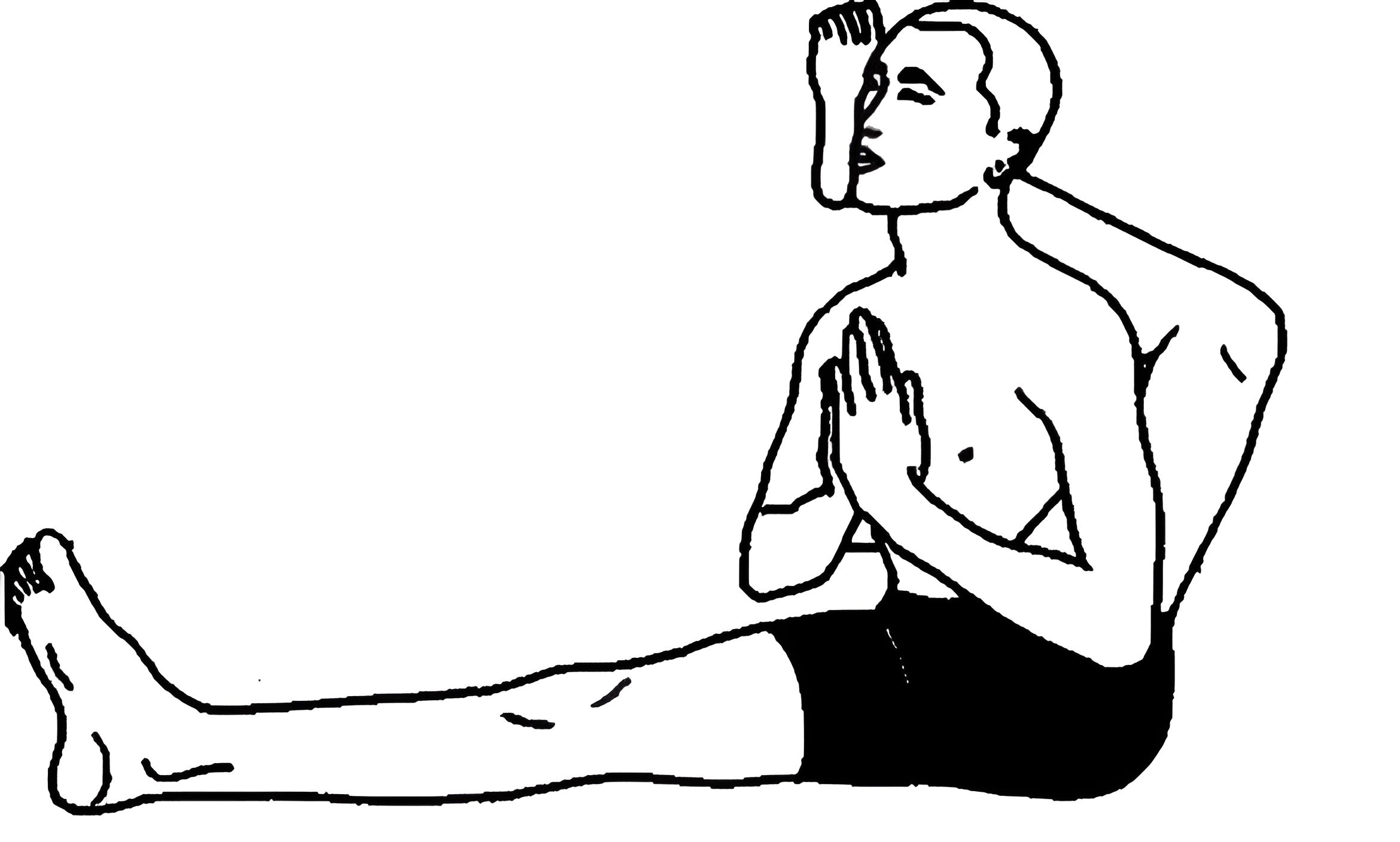
2. Word Meaning and Definition
2.1 Word Meaning
- Eka : One
- Pada : Leg or foot
- Sira: Head
- Asana: Posture or seat
Thus, Eka Pada Sirasana translates to “One-Legged Head-to-Knee Pose”, reflecting the forward folding of the torso over one extended leg while the other leg is bent.
2.2 Definition
Eka Pada Sirasana is a seated asana that involves:
- Extending one leg forward.
- Folding the torso toward the extended leg.
- Placing the head toward or near the extended foot.
- Bending the opposite leg and placing the foot against the inner thigh of the extended leg (similar to Janu Sirsasana or modified Padmasana).
It is an intermediate-to-advanced forward bend that stretches the hamstrings, calves, spine, and shoulders, while engaging the core and stabilizing muscles.
3. Method of Practice — Step by Step
Step 1: Preparation
- Begin in Dandasana (Staff Pose) with both legs extended.
- Perform hamstring, calf, and spinal stretches, including Janu Sirsasana, Paschimottanasana, and Baddha Konasana.
Step 2: Leg Positioning
- Bend the right knee and place the sole of the foot against the inner left thigh.
- Keep the left leg fully extended with toes pointing upward.
Step 3: Torso Folding
- Inhale and lengthen the spine.
- Exhale and fold forward over the extended left leg.
- Bring the head toward the knee or shin.
Step 4: Arm Placement
- Reach forward to hold the foot, ankle, or shin of the extended leg.
- Keep the shoulders relaxed and away from the ears.
Step 5: Breathing
- Maintain slow, deep, and even breathing.
- Inhale to elongate the spine; exhale to deepen the fold.
Step 6: Hold and Release
- Hold the posture for 30–60 seconds initially.
- Slowly return to upright Dandasana.
- Repeat on the opposite side.
4. Alignment Cues
- Hips: Keep both hips grounded; avoid tilting sideways.
- Extended Leg: Knee straight, toes pointing upward.
- Bent Leg: Sole against inner thigh; avoid forcing the knee.
- Spine: Elongated, not rounded excessively.
- Shoulders: Relaxed, avoid hunching.
- Head: Toward knee without strain on neck.
5. Benefits
5.1 Physical Benefits
- Stretches hamstrings, calves, spine, and shoulders.
- Improves hip flexibility and spinal mobility.
- Enhances postural alignment and core strength.
- Prepares for advanced seated postures.
5.2 Physiological Benefits
- Stimulates digestive organs, aiding in digestion.
- Enhances circulation to lower limbs.
- Reduces stiffness in hip and lumbar regions.
5.3 Psychological Benefits
- Reduces stress and anxiety.
- Improves focus, concentration, and mindfulness.
- Promotes a sense of calm and mental clarity.
6. Contraindications
- Hamstring or calf injuries.
- Knee pain or ligament injuries.
- Lower back pain or disc issues.
- Hip problems or arthritis.
- Pregnancy (especially third trimester).
7. Counterposes
- Supta Baddha Konasana (Reclined Bound Angle Pose) — relaxes hips and lower back.
- Balasana (Child’s Pose) — releases spine and hamstrings.
- Adho Mukha Svanasana (Downward Dog) — stretches the posterior chain.
- Ardha Matsyendrasana (Half Spinal Twist) — balances spinal rotation.
8. Preparatory Practices
- Dandasana (Staff Pose) — develops upright spinal alignment.
- Janu Sirsasana (Head-to-Knee Forward Bend) — warms up hamstrings.
- Paschimottanasana (Seated Forward Bend) — stretches posterior chain.
- Baddha Konasana (Bound Angle Pose) — opens hips and groin.
- Supta Padangusthasana (Reclined Hand-to-Big-Toe Pose) — prepares hamstrings.
9. Modifications
- Use a yoga strap around the extended foot to assist forward folding.
- Place a blanket under the hips for support and to maintain alignment.
- Keep the torso higher if spinal or hamstring flexibility is limited.
- Bend the extended knee slightly to avoid overstretching hamstrings.
- Rest hands on the shin or thigh instead of the foot.
10. Muscles Involved
10.1 Prime Movers
- Hamstrings (Biceps femoris, Semitendinosus, Semimembranosus) — stretch in extended leg.
- Quadriceps (Rectus femoris) — stabilize bent leg.
- Hip Adductors — maintain bent leg position.
- Erector Spinae — maintain spinal extension.
- Deltoids and Latissimus dorsi — arm reach and shoulder engagement.
10.2 Stabilizers
- Core muscles (Rectus abdominis, Obliques, Transverse abdominis) — stabilize pelvis.
- Gluteus medius and maximus — hip stabilization.
- Serratus anterior and trapezius — shoulder stabilization.
11. Kinesiology
- Hip Flexion (Bent Leg) — stabilizes pelvis.
- Hip Extension (Extended Leg) — hamstrings lengthened.
- Spinal Flexion — forward fold.
- Shoulder Flexion — reaching toward foot.
- Pelvic Stabilization — prevents lateral tilt.
12. Kinematics
- Front Leg: Hip flexion and knee extension.
- Back Leg: Hip adduction and external rotation (bent).
- Torso: Forward spinal flexion.
- Arms: Shoulder flexion and slight elbow flexion.
13. Biomechanism
- Hamstrings and Calves — elongated in extended leg.
- Hip Adductors and Flexors — stretch in bent leg.
- Spinal Extensors — maintain controlled flexion and alignment.
- Core Muscles — stabilize trunk and pelvis.
- Shoulder Muscles — engaged for reaching foot or maintaining posture.
14. Functional Anatomy & Physiology
- Hips: Opens and stretches hip joint, adductors, and flexors.
- Spine: Lengthens thoracic and lumbar regions; improves mobility.
- Hamstrings: Stretches and elongates posterior thigh.
- Shoulders and Arms: Increase mobility and flexibility.
- Core Muscles: Stabilize pelvis and trunk.
- Circulatory System: Enhances blood flow to lower extremities.
- Nervous System: Activates parasympathetic system, reducing stress.
15. How to Correct and Adjust While Teaching
15.1 Hips and Pelvis
- Ensure hips remain square and grounded.
- Cue alignment using props (blankets or blocks) under hips.
15.2 Extended Leg
- Avoid locking knee or overstretching hamstrings.
- Use strap for flexibility limitations.
15.3 Bent Leg
- Ensure knee is comfortable; do not force position.
15.4 Spine and Torso
- Encourage elongation and spinal alignment.
- Avoid rounding shoulders or collapsing chest.
15.5 Arms and Shoulders
- Keep shoulders relaxed; use strap if foot is out of reach.
15.6 Breathing and Safety
- Maintain slow, deep breathing throughout.
- Gradually deepen the pose; avoid forcing flexibility.
- Monitor for knee, hip, or lower back discomfort.
16. Conclusion
Eka Pada Sirasana is a therapeutic and advanced seated forward bend that stretches and strengthens the hamstrings, hips, spine, shoulders, and core. It provides physical, physiological, and psychological benefits, including improved flexibility, postural alignment, digestion, stress relief, and mental focus.
Proper preparatory practice, modifications, alignment awareness, and attentive teaching are essential to safely master Eka Pada Sirasana. Consistent practice develops body awareness, control, patience, and mindfulness, making it a valuable pose in advanced yoga sequences.
QUESTION AND ANSWER
1. Eka Pada Sirasana is commonly known as:
A. Bow Pose
B. One-Legged Head-to-Knee Pose
C. Lotus Pose
D. Camel Pose
Answer: B
2. The Sanskrit word “Eka” means:
A. King
B. One
C. Leg
D. Head
Answer: B
3. “Pada” in Eka Pada Sirasana refers to:
A. Spine
B. Leg or foot
C. Arm
D. Head
Answer: B
4. “Sira” translates to:
A. Arm
B. Knee
C. Head
D. Foot
Answer: C
5. Which joints are primarily involved in this posture?
A. Hip, knee, and shoulder
B. Elbow and wrist only
C. Cervical spine only
D. Ankle only
Answer: A
6. The pose primarily stretches which muscles?
A. Hamstrings and calves
B. Quadriceps and hip flexors
C. Deltoids and chest
D. All of the above
Answer: D
7. Which muscle group stabilizes the spine during the pose?
A. Erector spinae and multifidus
B. Biceps only
C. Latissimus dorsi
D. Gastrocnemius
Answer: A
8. Which preparatory pose helps with hip flexibility for Eka Pada Sirasana?
A. Baddha Konasana
B. Tadasana
C. Adho Mukha Svanasana
D. Setu Bandhasana
Answer: A
9. Which preparatory pose strengthens spinal extensors for this posture?
A. Bhujangasana
B. Balasana
C. Tadasana
D. Sukhasana
Answer: A
10. Common contraindications include:
A. Hamstring injuries
B. Knee problems
C. Hip injuries
D. All of the above
Answer: D
11. Which of the following is a suitable counterpose?
A. Supta Baddha Konasana
B. Utkatasana
C. Warrior II
D. Trikonasana
Answer: A
12. In Eka Pada Sirasana, the extended leg should be:
A. Bent at the knee
B. Fully extended with toes pointing upward
C. Crossed over the other leg
D. Slightly lifted off the ground
Answer: B
13. Which core muscles are engaged to maintain pelvic stability?
A. Rectus abdominis, Obliques, Transverse abdominis
B. Quadriceps only
C. Latissimus dorsi only
D. Trapezius only
Answer: A
14. Proper alignment of hips requires:
A. Both hips grounded and square to the front
B. Front hip rotated outward
C. Back hip lifted
D. Pelvis tilted laterally
Answer: A
15. To modify for beginners, which method is recommended?
A. Use a yoga strap around the extended foot
B. Force shin closer to the body
C. Arch spine excessively
D. Ignore knee comfort
Answer: A
16. The extended leg primarily stretches:
A. Hamstrings and calves
B. Quadriceps only
C. Shoulder muscles
D. Spinal extensors only
Answer: A
17. Which plane of motion predominates in spinal alignment?
A. Sagittal plane
B. Frontal plane
C. Transverse plane
D. Horizontal plane
Answer: A
18. Gaze (Drishti) is recommended to be:
A. Toward the knee or forward
B. Downward only
C. Sideways
D. Closed forcibly
Answer: A
19. Psychological benefits include:
A. Reducing stress and anxiety
B. Improving focus and concentration
C. Promoting mindfulness
D. All of the above
Answer: D
20. The pose strengthens which upper body muscles?
A. Deltoids, biceps, and upper back (for arm reach)
B. Triceps only
C. Pectorals only
D. Latissimus dorsi only
Answer: A
21. Eka Pada Sirasana improves:
A. Hip flexibility
B. Hamstring length
C. Spinal mobility
D. All of the above
Answer: D
22. Which preparatory practice helps with hamstring flexibility?
A. Supta Padangusthasana
B. Sukhasana
C. Tadasana
D. Child’s Pose
Answer: A
23. Which breathing pattern is recommended?
A. Slow, deep, rhythmic breathing
B. Rapid shallow breaths
C. Breath holding
D. Hyperventilation
Answer: A
24. Key teaching priority is:
A. Alignment of hips, spine, and shoulders
B. Forcing flexibility
C. Ignoring props
D. Breath holding
Answer: A
25. Duration for beginners in the pose is usually:
A. 15–30 seconds
B. 1–2 minutes
C. 5 minutes
D. 5–10 seconds
Answer: A