
1. Introduction
Yoga is an ancient system designed to integrate body, mind, and spirit. Among its many postures, Prasarita Padottanasana—commonly known as the Wide-Legged Forward Bend—is a significant standing asana that combines strength, flexibility, balance, and introspection. This pose is highly valued for its ability to stretch the posterior chain, improve spinal flexibility, and calm the mind.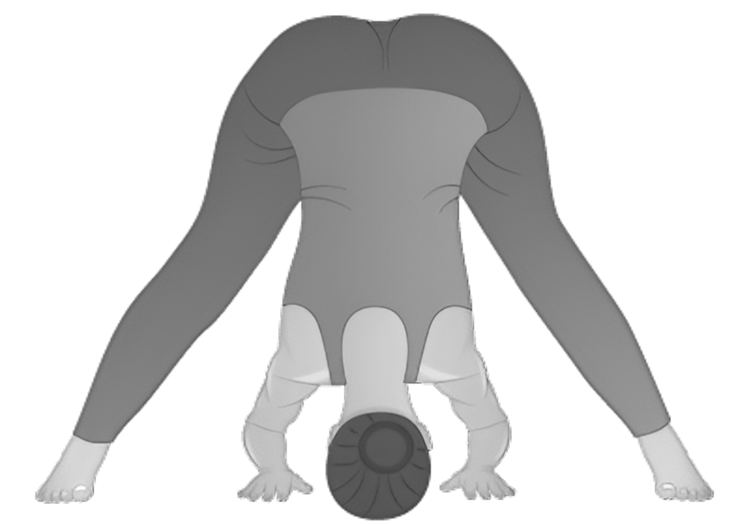
Prasarita Padottanasana is not only a physical practice but also a meditative posture, allowing practitioners to cultivate mental focus, inner calm, and self-awareness. Its multifaceted benefits make it a cornerstone in both hatha yoga sequences and therapeutic yoga programs.
2. Word Meaning and Etymology
The Sanskrit term Prasarita Padottanasana can be broken down as follows:
- Prasarita – Spread, extended, or stretched.
- Pada – Foot.
- Uttana – Intense stretch or forward extension.
- Asana – Posture or seat.
Thus, Prasarita Padottanasana translates to “Intense Forward Stretch of the Spread Feet Pose”. Symbolically, the pose represents expansion, openness, and grounded awareness, connecting the practitioner with the earth while promoting mental clarity and calmness.
3. Definition of Prasarita Padottanasana
Prasarita Padottanasana is defined as a standing forward bend with legs spread wide apart that emphasizes:
- Hamstring and inner thigh stretch
- Spinal lengthening and flexion
- Activation of core stabilizers for balance
- Calming of the nervous system
Classical Definition:
Prasarita Padottanasana is a wide-legged forward-bending asana that integrates flexibility, strength, and mental focus, allowing a deep stretch of the posterior chain while promoting mind-body awareness.
4. Method of Practice: Step by Step
Step 1: Starting Position
- Begin in Tadasana (Mountain Pose).
- Stand with feet spread wide apart, roughly 3–4 feet depending on your height and leg length.
- Arms relaxed at your sides, feet parallel to each other.
Step 2: Grounding
- Distribute your weight evenly through both feet.
- Engage quadriceps slightly to avoid hyperextension.
- Lengthen the spine, lifting the crown of the head toward the ceiling.
Step 3: Forward Fold
- Inhale, extend the arms out to the sides, shoulder-height.
- Exhale, hinge forward from the hips, keeping the spine long.
- Bring hands to the floor under your shoulders, or grasp your ankles/toes depending on flexibility.
Step 4: Adjustment
- Keep the legs strong, thighs engaged, and knees slightly soft if needed.
- Lengthen the spine as you fold, avoiding rounding excessively in the lower back.
Step 5: Hold the Pose
- Maintain the forward fold for 30–60 seconds or longer if comfortable.
- Breathe evenly, allowing the torso to sink toward the floor naturally.
Step 6: Release
- Place hands on the hips, engage core, and inhale as you slowly rise to standing.
- Return to Tadasana, relaxing the arms by the sides.
5. Alignment Cues
- Feet: Spread wide, parallel, with inner arches lifted.
- Knees: Micro-bend if hamstrings are tight; avoid locking knees.
- Hips: Hinge from the hip joints, not lumbar spine.
- Spine: Elongated, with tailbone lifted slightly for safe forward fold.
- Shoulders & Arms: Relaxed; hands on floor, shins, or ankles.
- Head & Neck: Relaxed, aligned with spine, letting gravity assist in lengthening.
6. Benefits of Prasarita Padottanasana
Physical Benefits:
- Stretches hamstrings, calves, inner thighs, and spine.
- Strengthens legs, knees, and lower back.
- Improves posture and spinal alignment.
- Stimulates abdominal organs, improving digestion.
- Enhances flexibility in hip adductors and lower back.
Mental Benefits:
- Calms the mind and reduces anxiety and stress.
- Encourages introspection and focus.
- Enhances mind-body awareness.
Therapeutic Benefits:
- Relieves mild back pain and tension in shoulders.
- Improves circulation in the head due to mild inversion.
- Helps with mild hypertension and fatigue.
7. Contraindications
Prasarita Padottanasana should be avoided or modified in:
- Severe hamstring injuries
- Lower back pain or disc herniation
- Neck issues (avoid if head hangs unsupported)
- Vertigo or high blood pressure (practice with head at heart level or supported)
- Pregnancy (after first trimester, use modification or skip)
8. Counterpose
After Prasarita Padottanasana, it is recommended to practice a backbend or upright pose:
- Tadasana (Mountain Pose) – re-establishes posture and balance
- Setu Bandhasana (Bridge Pose) – counteracts forward bend
- Bhujangasana (Cobra Pose) – opens the spine and chest
9. Preparatory Practice
To safely enter Prasarita Padottanasana, these poses help:
- Utthita Trikonasana (Extended Triangle Pose) – stretches hamstrings and opens hips
- Adho Mukha Svanasana (Downward Dog) – lengthens posterior chain
- Baddha Konasana (Bound Angle Pose) – prepares inner thighs
- Paschimottanasana (Seated Forward Bend) – familiarizes with spinal forward fold
10. Modifications
- Beginner: Place hands on blocks if floor is out of reach.
- Intermediate: Place hands under shoulders or grasp ankles.
- Advanced: Place crown of head on the floor for deeper forward fold.
- Pregnancy or limited flexibility: Keep spine long and hinge from hips with support.
11. Muscles Involved
Primary Muscles Stretched:
- Hamstrings (Biceps Femoris, Semitendinosus, Semimembranosus)
- Erector Spinae (spinal extensors)
- Adductors (inner thighs)
- Gastrocnemius and soleus
Primary Muscles Engaged:
- Quadriceps (stabilize knees)
- Core muscles (Rectus Abdominis, Obliques)
- Gluteus Maximus (hip stabilization)
Secondary Muscles:
- Deltoids and Trapezius (arm support)
- Neck extensors (head alignment)
12. Kinesiology
- Hip Joint: Flexion
- Knee Joint: Slight extension; micro-bend recommended
- Spine: Flexion, lengthening through the vertebrae
- Shoulder Joint: Slight flexion/abduction for hand support
- Ankle Joint: Plantarflexion, stabilizing body weight
13. Kinematics
- Weight Distribution: Even across both feet, grounded through arches.
- Center of Mass (COM): Shifts forward over legs, requiring core activation.
- Range of Motion (ROM):
- Hip flexion: 70–90° depending on flexibility
- Knee extension: 0–10° micro-bend
- Spinal flexion: 20–40°
- Movement Pattern: Closed kinetic chain on both legs, forward hinge at hips.
14. Biomechanism
- Lever Mechanics: Hips act as fulcrum; torso and arms as lever arm.
- Spinal Load: Distributed through erector spinae; avoid rounding lumbar excessively.
- Balance Mechanics: Core stabilizers maintain vertical alignment of torso.
- Stretch-Tension Mechanism: Eccentric stretch in hamstrings and adductors.
15. Functional Anatomy & Physiology
- Musculoskeletal Function: Lengthens posterior chain, strengthens stabilizers.
- Neuromuscular Coordination: Enhances proprioception and postural awareness.
- Circulatory Effect: Mild inversion improves venous return to the heart.
- Respiratory Effect: Chest slightly opens, promoting diaphragmatic breathing.
- Neurological Engagement: Promotes calm and mindfulness via parasympathetic stimulation.
16. How to Correct and Adjust While Teaching
Common Errors & Corrections:
- Rounded Spine – Cue to hinge from hips, lengthen spine
- Locked Knees – Suggest micro-bend in knees
- Feet Turning Outward – Align feet parallel or slightly inward
- Neck Strain – Head should be neutral or supported
- Uneven Weight Distribution – Emphasize even grounding through both feet
Hands-On Adjustments:
- Support pelvis to maintain hip hinge.
- Guide head to floor or blocks for safe elongation.
- Encourage even weight distribution through feet.
Verbal Cues:
- “Lift the tailbone, hinge from the hips, and lengthen your spine.”
- “Engage your legs and draw the inner thighs together.”
- “Relax shoulders and allow the head to hang gently.”
17. Conclusion
Prasarita Padottanasana is a powerful standing forward bend that integrates strength, flexibility, and mental focus. Its physical, mental, and therapeutic benefits make it essential in yoga practice.
By understanding the muscles involved, biomechanics, modifications, and alignment cues, practitioners can safely deepen their practice and teachers can provide effective guidance and adjustments. Regular practice cultivates mindfulness, posture, and inner calm, embodying the holistic principles of yoga.
QUESTION AND ANSWER
1. Basic Knowledge
- The Sanskrit meaning of Prasarita Padottanasana is:
A) Standing Forward Bend
B) Wide-Legged Forward Bend ✅
C) Extended Triangle Pose
D) Lord of the Dance Pose - Prasarita Padottanasana primarily involves:
A) Seated twist
B) Standing forward bend ✅
C) Backbend
D) Inversion - In Prasarita Padottanasana, the feet are:
A) Together
B) Wide apart ✅
C) One in front of the other
D) Crossed - The primary purpose of this pose is:
A) Arm strength
B) Flexibility, spinal elongation, and posterior chain stretch ✅
C) Jump training
D) Meditation only
2. Alignment & Technique
- The knees in Prasarita Padottanasana should be:
A) Locked
B) Slightly bent if necessary ✅
C) Hyperextended
D) Rotated outward - The spine should be:
A) Rounded
B) Lengthened, hinging from the hips ✅
C) Hyperextended
D) Twisted - Where should the hands ideally be placed in the full pose?
A) On the floor, under shoulders, or holding ankles ✅
B) Only on knees
C) Behind the back
D) On the head - Common alignment cue:
A) Keep hips rotated outward
B) Lift tailbone slightly, hinge from hips ✅
C) Shrug shoulders
D) Lock elbows
3. Muscles Involved
- The primary muscles stretched in Prasarita Padottanasana are:
A) Quadriceps
B) Hamstrings and adductors ✅
C) Biceps
D) Triceps - The muscles engaged for stabilization are:
A) Gluteus maximus and quadriceps ✅
B) Pectorals
C) Forearm flexors
D) Deltoids only - Core muscles involved include:
A) Rectus abdominis and obliques ✅
B) Soleus only
C) Trapezius
D) Latissimus dorsi - Which muscles help maintain arm support?
A) Deltoids and trapezius ✅
B) Quadriceps
C) Hamstrings
D) Gastrocnemius
4. Kinesiology & Biomechanics
- Prasarita Padottanasana involves which primary joint movement?
A) Hip flexion ✅
B) Shoulder abduction only
C) Knee flexion
D) Ankle dorsiflexion - The pose is considered a:
A) Open kinetic chain exercise
B) Closed kinetic chain exercise ✅
C) Plyometric exercise
D) Isolated joint exercise - The center of mass in this pose shifts:
A) Forward ✅
B) Backward
C) Sideways
D) Remains unchanged - Spinal action in Prasarita Padottanasana is:
A) Extension
B) Flexion and elongation ✅
C) Rotation
D) Lateral bending only
5. Benefits
- Physical benefits include:
A) Hamstring and spine flexibility, leg strength ✅
B) Arm hypertrophy
C) Vision improvement
D) Hair growth - Mental benefits include:
A) Stress reduction and mental calm ✅
B) Increased appetite
C) Insomnia
D) Hyperactivity - Therapeutic benefits may include:
A) Mild relief for lower back tension ✅
B) Knee degeneration
C) Neck injury worsening
D) High blood pressure increase - Prasarita Padottanasana improves circulation to:
A) Lower body only
B) Head and posterior chain ✅
C) Arms only
D) Chest only
6. Contraindications
- People with which condition should avoid full Prasarita Padottanasana?
A) Hamstring injuries ✅
B) Healthy back
C) Good balance
D) Flexible hips - Individuals with high blood pressure should:
A) Avoid or modify, keeping head at heart level ✅
B) Practice full inversion
C) Extend arms overhead
D) Hold for 5 minutes - Those with neck injuries should:
A) Hang head freely
B) Keep head supported or aligned with spine ✅
C) Rotate head frequently
D) Force chin to floor
7. Preparatory & Counter Poses
- Preparatory pose for hamstring and inner thigh flexibility:
A) Utthita Trikonasana ✅
B) Adho Mukha Svanasana
C) Sukhasana
D) Ardha Matsyendrasana - Preparatory pose for spinal flexion:
A) Paschimottanasana ✅
B) Tadasana
C) Vrksasana
D) Setu Bandhasana - Counterpose after Prasarita Padottanasana:
A) Backbend like Setu Bandhasana ✅
B) Forward fold again
C) Standing on tiptoe
D) Shoulder stand
8. Modifications
- Beginner modification:
A) Place hands on blocks ✅
B) Full crown to floor
C) Rotate feet outward
D) Twist torso - Advanced variation includes:
A) Crown of head to floor ✅
B) Arms behind back
C) Knee flexion
D) Shorten stance - Pregnant or limited flexibility modification:
A) Hinge from hips with hands on thighs ✅
B) Hands to floor only
C) Full fold
D) Wide-arm jump
9. Teaching & Adjustments
- Common student error: rounding lower back. Correct by:
A) Cue hinging from hips and lifting tailbone ✅
B) Pushing head to floor
C) Locking knees
D) Rotating feet outward - If weight is uneven on feet:
A) Encourage grounding evenly ✅
B) Lift one heel
C) Lean forward
D) Close eyes - Neck strain correction:
A) Support head on block or maintain neutral ✅
B) Force chin to chest
C) Rotate head left and right
D) Hang head fully - Hands-on adjustment:
A) Guide pelvis for hip hinge ✅
B) Push feet apart
C) Pull head down
D) Twist torso forcibly
10. Functional Anatomy & Physiology
- Primary posterior chain stretched:
A) Hamstrings, erector spinae, gastrocnemius ✅
B) Quadriceps only
C) Biceps
D) Pectorals - Respiratory benefit:
A) Diaphragmatic expansion ✅
B) Lung compression
C) Bronchial constriction
D) Shallow breathing - Neurological effect:
A) Parasympathetic activation for calm ✅
B) Sympathetic overstimulation
C) Vision blur
D) Hearing loss - Joint stabilization primarily occurs at:
A) Hips, knees, ankles ✅
B) Elbows only
C) Shoulders only
D) Wrists only - Which core muscles are engaged for balance?
A) Rectus abdominis, obliques ✅
B) Forearms
C) Pectorals
D) Neck flexors