
1. Introduction
Yoga, an ancient discipline, integrates physical postures (asanas), breath regulation (pranayama), and mindfulness to improve overall health. Among standing balance postures, Virabhadrasana III, or Warrior III Pose, is a dynamic balancing asana that develops strength, stability, coordination, and concentration.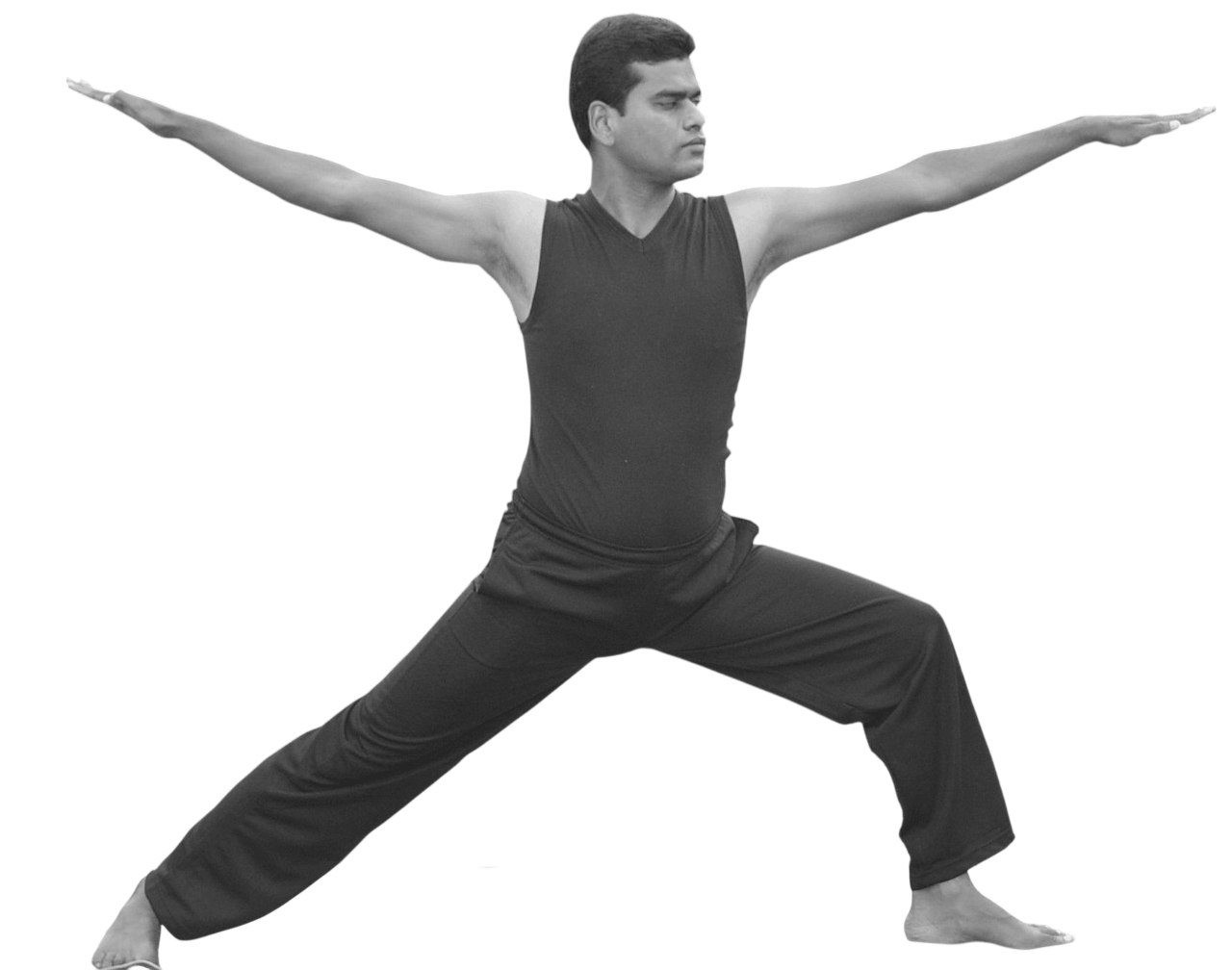
This pose is widely used in Hatha Yoga, Vinyasa flows, and power yoga sequences, offering benefits to postural alignment, lower limb strength, core stabilization, and proprioception. Its combination of single-leg support, trunk extension, and arm positioning requires both physical strength and mental focus, making it a vital posture in advanced yoga practice.
2. Word Meaning and Etymology
The Sanskrit term Virabhadrasana III is composed of:
- Virabhadra – A mythical warrior in Hindu mythology
- Asana – Pose or posture
- III – Denotes the third variation of Warrior Pose
Thus, Virabhadrasana III translates as “Warrior III Pose”, symbolizing courage, focus, and dynamic balance. The posture embodies warrior strength with emphasis on stability, alignment, and extension.
3. Definition of Virabhadrasana III
Virabhadrasana III is a standing, single-leg balance pose characterized by:
- One leg grounded and fully extended
- The torso parallel to the floor
- Arms extended forward, backward, or alongside the body
- The lifted leg extended straight behind, forming a T-shaped alignment
Classical Definition:
Virabhadrasana III is a dynamic balance posture that combines single-leg support, trunk extension, arm engagement, and hip stabilization to develop strength, proprioception, and focus.
4. Method of Practice: Step by Step
Step 1: Starting Position
- Begin in Tadasana (Mountain Pose).
- Step one leg forward into a lunge position (similar to Warrior I or II).
Step 2: Align Hips
- Square hips forward.
- Ensure the front knee is above the ankle, and the back leg is active.
Step 3: Shift Weight
- Inhale and shift weight forward onto the front leg.
- Begin lifting the back leg toward the ceiling.
Step 4: Extend Torso
- Simultaneously, bring the torso forward to become parallel with the floor.
- Arms extend forward in line with the torso, palms facing each other or down.
Step 5: Balance and Engage Core
- Activate core, glutes, quadriceps, and hamstrings.
- Keep gaze forward or slightly downward for balance.
Step 6: Hold the Pose
- Hold for 15–30 seconds, maintaining even breathing and alignment.
- Focus on stability, core engagement, and extension of lifted leg.
Step 7: Release
- Exhale, slowly lower back foot to starting position.
- Repeat on the opposite side.
5. Alignment Cues
- Feet: Supporting foot grounded; toes spread for stability.
- Knee: Slight micro-bend in supporting leg to prevent hyperextension.
- Hips: Square to the floor; avoid twisting.
- Spine: Neutral and elongated; torso parallel to floor.
- Arms: Extended forward in line with torso or by sides.
- Head & Neck: Neutral, gaze forward or slightly down.
- Legs: Lifted leg extended straight behind, foot flexed or toes pointing downward.
6. Benefits of Virabhadrasana III
Physical Benefits:
- Strengthens quadriceps, glutes, hamstrings, calves, and core.
- Enhances balance, coordination, and proprioception.
- Improves posture and spinal alignment.
- Opens hip flexors of lifted leg.
Mental Benefits:
- Increases focus, concentration, and mindfulness.
- Reduces mental stress and anxiety.
Physiological/Therapeutic Benefits:
- Stimulates circulation in lower limbs.
- Improves neuromuscular coordination and stability.
- Supports spinal health and balance training.
7. Contraindications
- Ankle or knee injuries: Avoid deep weight-bearing on one leg.
- Hip instability: Modify lift height or support hands on blocks.
- Balance disorders: Use wall or chair support.
- High blood pressure: Avoid head-forward variations that strain neck.
- Pregnancy: Avoid deep forward lean; modify with support.
8. Counterpose
Recommended counterposes include:
- Adho Mukha Svanasana (Downward Dog Pose) – releases hamstrings and spine
- Balasana (Child’s Pose) – relaxes hips and spine
- Tadasana (Mountain Pose) – restores postural alignment
9. Preparatory Practice
To prepare for Virabhadrasana III:
- Tadasana (Mountain Pose) – grounding and posture alignment
- Virabhadrasana I & II (Warrior Poses) – leg and hip strength
- Uttanasana (Forward Fold) – hamstring and back stretch
- Phalakasana (Plank Pose) – core stabilization
- Adho Mukha Svanasana (Downward Dog) – posterior chain activation
10. Modifications
- Beginner: Keep lifted leg lower or support torso with hands on blocks.
- Intermediate: Arms extended forward, torso parallel, lifted leg hip-height.
- Advanced: Full lift of back leg, torso fully parallel, arms extended forward.
- Pregnancy/Balance issues: Use chair or wall support, arms along sides.
11. Muscles Involved
Primary Muscles Stretched:
- Hamstrings of supporting leg
- Hip flexors of lifted leg
- Calves and gluteals
Primary Muscles Engaged:
- Quadriceps of supporting leg
- Gluteus maximus and medius
- Core muscles: rectus abdominis, transverse abdominis, obliques
- Spinal erectors
Secondary Muscles:
- Shoulder stabilizers if arms extended
- Neck extensors
- Ankle and foot stabilizers
12. Kinesiology
- Hip Joint: Extension of lifted leg; slight flexion of supporting leg.
- Knee Joint: Micro-bend in supporting leg; extension in lifted leg.
- Spine: Neutral, elongated, parallel to floor.
- Shoulder Joint: Flexion/extension if arms forward; neutral if arms alongside.
- Ankle Joint: Plantarflexion and dorsiflexion for stability.
13. Kinematics
- Weight Distribution: Entire body weight on supporting leg; lifted leg acts as lever.
- Range of Motion (ROM):
- Hip extension: 0–15° (lifted leg)
- Hip flexion: supporting leg 5–15°
- Knee flexion: micro-bend to avoid hyperextension
- Center of Mass: Over supporting foot; stabilized by core and lifted leg
14. Biomechanism
- Lever Mechanics: Lifted leg acts as a rearward lever; torso acts as counterbalance.
- Torque Generation: Core and hip stabilizers generate torque to maintain alignment.
- Joint Stability: Quadriceps, gluteals, spinal erectors, and ankle stabilizers maintain posture.
- Stretch-Tension Relationship: Hamstrings and hip flexors are stretched; glutes, quadriceps, and core muscles contract isometrically.
15. Functional Anatomy & Physiology
- Musculoskeletal Function: Strengthens lower limb stabilizers, core, and spinal erectors.
- Neuromuscular Coordination: Improves proprioception, balance, and dynamic stability.
- Circulatory Effects: Enhances blood flow to lower limbs and core.
- Respiratory Effects: Encourages deep, diaphragmatic breathing with elongated spine.
- Neurological Effects: Improves concentration, balance awareness, and cognitive focus.
16. How to Correct and Adjust While Teaching
Common Errors & Corrections:
- Hips twisting: Cue to square hips toward floor.
- Collapsed torso: Engage core; lengthen through spine.
- Lifted leg sagging: Activate glutes and hamstrings.
- Front knee hyperextension: Micro-bend and engage quadriceps.
- Shoulder tension: Relax shoulders; keep arms extended or along sides.
Hands-on Adjustments:
- Support pelvis to maintain neutral alignment.
- Stabilize lifted leg for correct height.
- Gently guide torso parallel to floor.
Verbal Cues:
- “Engage your core and lengthen your spine.”
- “Lift your back leg and extend arms forward.”
- “Balance on the supporting foot and maintain alignment.”
17. Conclusion
Virabhadrasana III (Warrior III Pose) is a dynamic standing balance posture that develops strength, flexibility, stability, and focus. With attention to alignment, core engagement, and modifications, this pose enhances postural alignment, lower limb strength, and neuromuscular coordination.
Regular practice improves balance, proprioception, and concentration, while offering therapeutic benefits for spinal health, circulation, and mental clarity. Proper teaching adjustments, preparatory sequences, and modifications make it accessible for practitioners of all levels.
QUESTION AND ANSWER
1. Basic Knowledge
- The Sanskrit meaning of Virabhadrasana III is:
A) Half Moon Pose
B) Warrior III Pose ✅
C) Triangle Pose
D) Revolved Side Angle Pose - The pose primarily focuses on:
A) Spinal extension, core activation, and single-leg balance ✅
B) Forward bend only
C) Shoulder mobility only
D) Arm strength only - Virabhadrasana III is classified as:
A) Standing balance pose ✅
B) Seated forward bend
C) Supine stretch
D) Inversion - The posture is mainly a combination of:
A) Single-leg support, torso extension, arm alignment ✅
B) Forward bend only
C) Backbend only
D) Arm balance only
2. Alignment & Technique
- Supporting foot should be:
A) Grounded firmly with toes spread ✅
B) Lifted slightly
C) Turned inward
D) Crossed - Supporting knee should be:
A) Micro-bent to avoid hyperextension ✅
B) Locked straight
C) Folded
D) Hyperextended - Hips should be:
A) Square toward floor ✅
B) Twisted forward
C) Tilted sideways
D) Rotated backward - Spine should be:
A) Neutral and elongated, parallel to floor ✅
B) Rounded
C) Collapsed
D) Hyperextended
3. Muscles Involved
- Primary muscles stretched:
A) Hamstrings, hip flexors, calves ✅
B) Biceps only
C) Deltoids only
D) Neck muscles only - Primary muscles engaged:
A) Core (rectus abdominis, obliques, transverse abdominis), quadriceps, gluteals ✅
B) Forearms only
C) Trapezius only
D) Pectorals only - Secondary muscles:
A) Spinal erectors, ankle stabilizers, gluteus medius ✅
B) Neck flexors only
C) Triceps only
D) None - Shoulder stabilizers are engaged when:
A) Arms extended forward or sideways ✅
B) Arms relaxed
C) Hands on knees
D) Arms crossed
4. Kinesiology & Biomechanics
- Hip joint action:
A) Extension of lifted leg; slight flexion of supporting leg ✅
B) Both legs flexed
C) Both legs extended
D) Adduction only - Knee joint action:
A) Micro-bend in supporting leg; extension in lifted leg ✅
B) Both knees flexed
C) Supporting leg flexed
D) Locked - Spine movement:
A) Neutral and elongated ✅
B) Forward bend
C) Hyperextended
D) Twisted - Pose type:
A) Closed kinetic chain ✅
B) Open kinetic chain
C) Plyometric
D) Passive stretch
5. Benefits
- Physical benefits:
A) Strengthens quadriceps, glutes, hamstrings, core; improves balance ✅
B) Strengthens arms only
C) Vision improvement
D) Shoulder mobility only - Mental benefits:
A) Enhances concentration, focus, and mindfulness ✅
B) Increases anxiety
C) Reduces attention
D) None - Physiological benefits:
A) Improves circulation in lower limbs and core ✅
B) Compresses spine
C) Weakens core
D) Only stretches arms - Respiratory benefits:
A) Encourages deep diaphragmatic breathing with elongated spine ✅
B) Restricts lung expansion
C) Shallow breathing
D) None
6. Contraindications
- Avoid in case of:
A) Ankle, knee, or hip injuries ✅
B) Healthy lower limbs
C) Normal spinal mobility
D) Good balance - Balance disorders:
A) Use wall or chair support ✅
B) Lift leg fully unsupported
C) Fold torso forward
D) Jump into pose - Pregnancy:
A) Avoid deep forward lean; use support ✅
B) Full lift allowed
C) No modification needed
D) Jump into pose - High blood pressure:
A) Avoid head-forward strain; maintain neutral spine ✅
B) Lift arms fully
C) Bind hands behind back
D) No caution
7. Preparatory & Counter Poses
- Preparatory poses:
A) Tadasana, Virabhadrasana I & II, Plank, Downward Dog ✅
B) Shoulderstand only
C) Forward fold only
D) Tree Pose only - Counterposes:
A) Adho Mukha Svanasana, Balasana, Tadasana ✅
B) Another lifted leg on same side
C) Side plank only
D) Seated twist only
8. Modifications
- Beginner modification:
A) Lift back leg lower or hands on blocks ✅
B) Full lift immediately
C) Arms folded
D) Forward fold - Intermediate variation:
A) Torso parallel to floor; lifted leg hip-height ✅
B) Relax lifted leg
C) Fold torso
D) Hands on hips - Advanced variation:
A) Full lift of back leg, torso fully parallel, arms extended forward ✅
B) Keep leg passive
C) Arms crossed
D) Fold torso
9. Teaching & Adjustments
- Sagging lifted leg correction:
A) Engage glutes and hamstrings ✅
B) Relax leg
C) Bend supporting knee
D) Lift torso - Hips twisting correction:
A) Cue to square hips toward floor ✅
B) Lift chest
C) Shrug shoulders
D) Fold torso - Front knee hyperextension correction:
A) Micro-bend and engage quadriceps ✅
B) Lock knee
C) Rotate foot
D) None - Shoulder tension correction:
A) Relax shoulders; maintain arm extension ✅
B) Shrug shoulders
C) Fold arms
D) Lift chest
10. Functional Anatomy & Physiology
- Primary muscles stretched:
A) Hamstrings, hip flexors ✅
B) Quadriceps only
C) Deltoids only
D) Neck muscles only - Core muscles activated:
A) Rectus abdominis, transverse abdominis, obliques ✅
B) Forearms only
C) Trapezius
D) Pectorals - Neurological effect:
A) Improves balance, body awareness, proprioception ✅
B) Reduces vision
C) Stimulates hearing
D) None - Circulatory effect:
A) Enhances blood flow to lower limbs and core ✅
B) Only affects arms
C) Reduces blood flow
D) None - Joint stabilization primarily at:
A) Hips, knees, ankles ✅
B) Elbows only
C) Neck only
D) Shoulders only