
1. Word Meaning & Introduction
Ardha Chandrasana is a Sanskrit term:
- Ardha = half
- Chandra = moon
- Asana = posture
Meaning: “Half Moon Pose.”
Introduction:
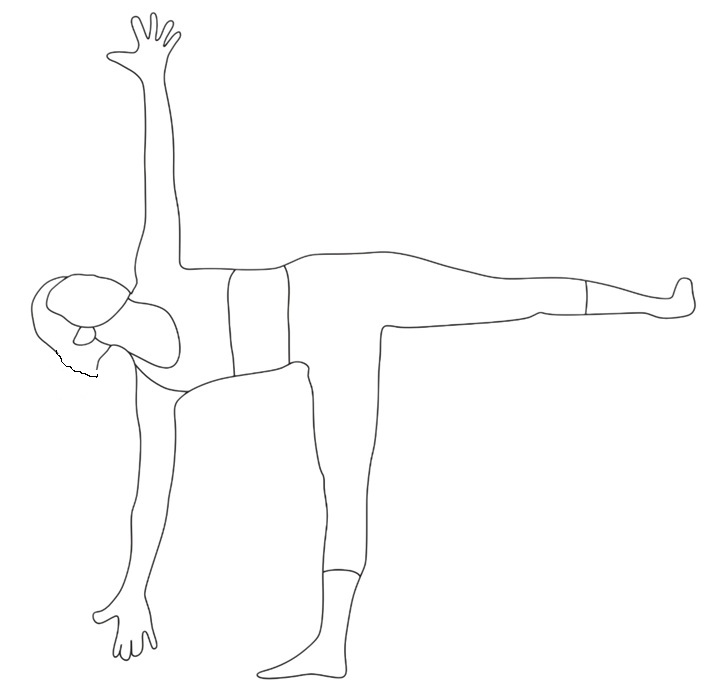
Ardha Chandrasana is a standing balance pose combining lateral flexion, hip extension, core engagement, and upper body alignment. The pose reflects the curved, radiant nature of the moon, offering both strength and grace. In yoga, it develops balance, coordination, and proprioception, integrating muscular, skeletal, and neurological systems.
It is often incorporated into standing pose sequences, Vinyasa flows, and balance training. Beyond the physical aspect, Ardha Chandrasana encourages mindfulness, concentration, and energetic alignment, reflecting the harmony between the grounded earth and the expansive sky.
2. Definition
Ardha Chandrasana is defined as a standing lateral balance pose in which the body is extended sideways, one leg lifted off the floor, arms aligned perpendicularly to the torso, with gaze toward the extended hand, creating a semicircular, moon-like alignment.
Key characteristics:
- Weight borne primarily on one leg
- Opposite leg lifted and extended
- Torso rotated and laterally flexed
- Arms extended to maintain balance
- Gaze over the top hand
It is a dynamic asymmetrical pose emphasizing strength, flexibility, and stability.
3. Method of Practice – Step by Step
Step 1: Starting Position
- Begin in Trikonasana (Triangle Pose) with right foot forward.
- Feet 3–4 feet apart; front foot turned 90°, back foot slightly inward.
Step 2: Shift Weight
- Bend front knee slightly and place the right hand on the floor, a few inches in front of the front foot.
- Engage the standing leg quadriceps and gluteus maximus.
Step 3: Lift the Back Leg
- Straighten the front leg while lifting the back leg parallel to the floor.
- Ensure toes point forward; foot flexed or active.
Step 4: Align Torso and Hips
- Open the hips so the lifted leg is stacked over the standing leg.
- Maintain lateral extension; avoid collapsing torso forward.
Step 5: Arm Position
- Left arm extends straight upward; right hand supports balance on the floor or block.
- Arms form a vertical line perpendicular to the floor.
Step 6: Head and Gaze
- Turn head to gaze toward the lifted hand.
- Neck long; avoid craning or tilting.
Step 7: Hold & Breathe
- Hold for 15–30 seconds on each side.
- Breathe deeply and evenly, maintaining balance.
Step 8: Release
- Lower lifted leg to the floor; return to Trikonasana.
- Repeat on the opposite side.
4. Alignment Cues
Standing Leg
- Knee straight or slightly micro-bent
- Quadriceps engaged
- Foot grounded, weight evenly distributed
Lifted Leg
- Straight, strong, toes active
- Hips stacked over the standing leg
- Gluteus medius engaged
Hips & Torso
- Torso laterally elongated
- Core engaged
- Avoid collapsing forward or backward
Arms
- Vertical alignment of hands
- Shoulders relaxed, away from ears
- Arms active, stretching in opposite directions
Head & Gaze
- Gaze toward top hand
- Neck aligned with spine
Feet
- Standing foot grounded with toes spread
- Lifted foot active, toes pointing forward
5. Benefits
Physical Benefits
- Strengthens legs, ankles, and core
- Improves balance and stability
- Opens hips, chest, and shoulders
- Enhances lateral flexibility of spine
- Develops coordination between limbs
Physiological Benefits
- Improves circulation and lymphatic flow
- Stimulates nervous system for proprioception
- Enhances vestibular function (balance)
- Boosts energy and vitality
Mental & Emotional Benefits
- Enhances concentration and focus
- Develops patience and presence
- Reduces stress and promotes mindfulness
Energetic Benefits
- Activates Manipura (solar plexus) and Anahata (heart) chakras
- Balances pranic flow along the lateral meridians
6. Contraindications
- Recent ankle, knee, or hip injury
- Low blood pressure or dizziness
- Shoulder or neck strain (during arm extension)
- Severe balance disorders
Precautions:
- Use a yoga block under supporting hand if floor is distant
- Practice near a wall for stability
7. Counterposes
- Trikonasana – release lateral stretch
- Tadasana – neutralizes spinal alignment
- Adho Mukha Svanasana (Downward Dog) – stretches hamstrings
- Paschimottanasana – releases spine and legs
8. Preparatory Practices
- Balance Training: Tree Pose (Vrikshasana), Warrior III (Virabhadrasana III)
- Hip Opening: Utthita Trikonasana, Baddha Konasana
- Core Engagement: Plank, Side Plank (Vasisthasana)
- Lateral Flexibility: Gate Pose (Parighasana), Side Stretch
- Shoulder Strengthening: Extended Arm Plank, Downward Dog
9. Modifications & Variations
Beginners
- Use a yoga block under supporting hand
- Keep lifted leg lower or bent slightly
- Wall support behind for balance
Advanced
- Lift lifted leg higher, toes pointing forward
- Lift gaze to extended hand
- Practice without floor support (full arm extension)
Therapeutic
- Keep hands on hips instead of floor
- Micro-bend standing leg to reduce strain
- Limit lateral bending for spinal conditions
10. Muscles Involved
Primary Muscles
- Quadriceps (standing leg)
- Gluteus medius and maximus
- Hamstrings
- Obliques and rectus abdominis
- Erector spinae
- Deltoids
Secondary Muscles
- Adductors (inner thighs)
- Rotator cuff (shoulder stability)
- Intrinsic foot muscles (balance)
- Transverse abdominis (core stabilization)
11. Kinesiology
- Hip flexion/extension: Standing leg extends, lifted leg extends
- Knee action: Slight micro-bend in standing leg
- Spinal motion: Lateral flexion and slight rotation
- Shoulder abduction: Arms aligned vertically
- Balance mechanism: Weight shifts to standing leg, proprioception stabilizes
12. Kinematics
- Joint motion: Standing leg bears load, lifted leg extends backward and laterally
- Spine: Lateral extension with rotational control
- Shoulders: Abduction, scapular stabilization
- Head/Neck: Alignment with spine
- Dynamic micro-movements: Adjustments for balance and weight distribution
13. Biomechanics
- Ground reaction forces: Transferred through standing leg to floor
- Joint stacking: Hip, knee, and ankle aligned
- Muscular co-contraction: Core, gluteus, quadriceps maintain stability
- Balance efficiency: Floor support reduces torque on spine and ankle
14. Functional Anatomy & Physiology
- Foot/Ankle: Stabilize and prevent collapse
- Knee: Quadriceps and hamstrings stabilize, prevent hyperextension
- Hip: Gluteus medius/minimus stabilize pelvis
- Spine: Erector spinae support lateral extension
- Shoulders: Deltoids and trapezius maintain arm alignment
- Core: TVA and obliques control lateral flexion
- Respiration: Open thoracic cavity for deep breathing
- Neurological: Vestibular and proprioceptive systems engaged
15. How to Correct & Adjust While Teaching
Verbal Cues
- “Ground through standing foot.”
- “Lift lifted leg actively.”
- “Stack hips over standing leg.”
- “Extend arms vertically and relax shoulders.”
- “Gaze toward top hand.”
Physical Adjustments
- Support hand placement with block
- Slightly lift or guide raised leg for alignment
- Stabilize hips and pelvis by gentle touch
Common Errors
- Collapsing torso forward
- Standing knee locked
- Hips not stacked
- Lifted leg rotation outward
16. Common Teaching Tips
- Encourage micro-bend in standing knee for safety
- Use blocks for beginners or short arms
- Emphasize core engagement to maintain balance
- Repeat on both sides for symmetry
- Integrate into standing pose sequences
17. Energetic & Philosophical Insights
- Represents the balance of moon’s receptive energy
- Teaches stability, expansion, and mental clarity
- Aligns body and mind with lunar qualities of calm, focus, and presence
18. Conclusion
Ardha Chandrasana is a complex balance and lateral flexion asana integrating strength, flexibility, alignment, and mindfulness. Its practice develops physical stability, mental focus, and energetic balance, making it essential in advanced standing pose sequences and Yoga Teacher Training. Through mindful execution, Ardha Chandrasana cultivates grace, poise, and inner awareness, embodying the balance of strength and flexibility akin to the radiant half-moon.
QUESTION AND ANSWER
1. What does “Ardha Chandrasana” mean?
A. Full Moon Pose
B. Half Moon Pose
C. Sun Salutation Pose
D. Triangle Pose
Answer: B
2. “Ardha” in Sanskrit means:
A. Moon
B. Half
C. Pose
D. Light
Answer: B
3. “Chandra” in Sanskrit means:
A. Sun
B. Moon
C. Star
D. Light
Answer: B
4. Which type of asana is Ardha Chandrasana?
A. Forward bend
B. Standing lateral balance pose
C. Seated twist
D. Backbend
Answer: B
5. Which foot bears the primary weight?
A. Lifted leg
B. Standing leg
C. Both equally
D. Back foot only
Answer: B
6. In Ardha Chandrasana, the lifted leg is:
A. Flexed
B. Straight and strong
C. Bent
D. Relaxed
Answer: B
7. Which preparatory pose is most suitable?
A. Trikonasana
B. Savasana
C. Paschimottanasana
D. Balasana
Answer: A
8. Typical arm alignment:
A. Both arms forward
B. Top arm vertical, bottom hand on floor/block
C. Arms at sides
D. Hands on hips
Answer: B
9. Gaze (drishti) should be:
A. Down at the floor
B. Toward lifted hand
C. Forward at standing foot
D. Over back shoulder
Answer: B
10. Which muscle group stabilizes the standing leg?
A. Hamstrings
B. Quadriceps and gluteus
C. Biceps
D. Neck muscles
Answer: B
11. Core engagement involves:
A. Only rectus abdominis
B. Only obliques
C. Transverse abdominis and obliques
D. Only erector spinae
Answer: C
12. Which joint is most at risk without proper alignment?
A. Shoulder
B. Knee of standing leg
C. Elbow
D. Neck
Answer: B
13. Hips should be:
A. Stacked over standing leg
B. Rotated forward
C. Collapsed sideways
D. Tilted back
Answer: A
14. A common beginner modification is:
A. Lift leg higher
B. Use a block under supporting hand
C. Keep arms at sides
D. Bend lifted leg backward
Answer: B
15. How long should the pose typically be held?
A. 5–10 seconds
B. 15–30 seconds
C. 1–2 minutes
D. 3–5 minutes
Answer: B
16. Main benefit of Ardha Chandrasana:
A. Cardiovascular endurance
B. Lateral balance and leg strength
C. Flexibility of wrists
D. Supination of elbows
Answer: B
17. Contraindication includes:
A. Mild ankle soreness
B. Knee or hip injury
C. Shoulder flexibility
D. Regular practice experience
Answer: B
18. What chakra is primarily stimulated?
A. Muladhara
B. Manipura
C. Anahata
D. Sahasrara
Answer: B (and also lateral flow activates Anahata)
19. Head and neck alignment:
A. Relaxed, gazing forward
B. Gaze over lifted hand, neck long
C. Tilted backward
D. Craned to floor
Answer: B
20. Which type of contraction occurs in standing leg?
A. Eccentric
B. Concentric
C. Isometric
D. None
Answer: C
21. Which arm muscles are engaged?
A. Deltoids and trapezius
B. Biceps only
C. Forearm flexors
D. Pectoralis minor
Answer: A
22. Common teaching cue for lifted leg:
A. Relax foot
B. Engage quadriceps, lift actively
C. Bend knee slightly
D. Rotate toes outward
Answer: B
23. Weight distribution cue:
A. Mostly on lifted leg
B. Evenly balanced
C. Mostly on standing leg
D. On heels only
Answer: C
24. Correct torso alignment:
A. Lateral flexion with core engaged
B. Lean forward over standing leg
C. Rotate backward
D. Collapse to side
Answer: A
25. Best counterpose:
A. Trikonasana
B. Savasana
C. Adho Mukha Svanasana
D. Parivrtta Trikonasana
Answer: A
26. Arms should form:
A. Vertical line
B. Horizontal line
C. Diagonal line
D. Folded at elbows
Answer: A
27. Which balance system is activated?
A. Vestibular
B. Digestive
C. Cardiovascular
D. Respiratory only
Answer: A
28. Preparation for beginners includes:
A. Tree Pose and Trikonasana
B. Savasana only
C. Dhanurasana
D. Ardha Matsyendrasana
Answer: A
29. Which common mistake should be corrected?
A. Collapsed hips
B. Drooping lifted leg
C. Leaning torso forward
D. All of the above
Answer: D
30. Standing foot alignment cue:
A. Outer edge grounded
B. Weight on toes
C. Weight evenly distributed, toes spread
D. Heel lifted
Answer: C
31. Shoulder alignment:
A. Shoulders lifted
B. Arms relaxed
C. Shoulders down and away from ears
D. Rounded forward
Answer: C
32. To improve balance:
A. Shorten stance or use wall
B. Close eyes immediately
C. Lift both arms overhead
D. Keep gaze at floor
Answer: A
33. Core cue:
A. Relaxed
B. Engage obliques and transverse abdominis
C. Only rectus abdominis
D. Hold breath
Answer: B
34. Head correction cue:
A. Turn toward floor
B. Gaze at top hand
C. Tilt back
D. Close eyes
Answer: B
35. Benefits to mental focus:
A. Improves concentration and mindfulness
B. Causes distraction
C. Reduces focus
D. Only relaxes muscles
Answer: A
36. Which joint requires micro-bend to prevent strain?
A. Standing knee
B. Elbow
C. Wrist
D. Neck
Answer: A
37. Which muscle group assists in lifting leg?
A. Gluteus medius and maximus
B. Biceps
C. Forearm flexors
D. Pectoralis minor
Answer: A
38. How to cue arms for beginners?
A. Vertical alignment, relaxed shoulders
B. Horizontal line
C. Folded
D. Behind back
Answer: A
39. How does Ardha Chandrasana benefit energy flow?
A. Opens lateral meridians
B. Only energizes head
C. Only opens chest
D. No energetic benefit
Answer: A
40. Recommended modification for dizziness:
A. Lower lifted leg or use wall
B. Close eyes
C. Lift arms higher
D. Hold breath
Answer: A
41. Which respiratory cue is correct?
A. Hold breath
B. Shallow rapid breaths
C. Steady deep breaths
D. Only exhale
Answer: C
42. Which muscle stabilizes pelvis?
A. Gluteus medius
B. Biceps
C. Sternocleidomastoid
D. Rectus femoris
Answer: A
43. Common energetic effect:
A. Balances left and right side energy
B. Activates Sahasrara only
C. Opens throat chakra only
D. No effect
Answer: A
44. Which practice aids in lifting the back leg?
A. Core strengthening
B. Shoulder rolls
C. Wrist stretches
D. Forward folds
Answer: A
45. Teacher cue for pelvis alignment:
A. Stack hips over standing leg
B. Rotate forward
C. Collapse lateral side
D. Tilt back
Answer: A
46. If arms collapse, cue:
A. Reach actively in opposite directions
B. Relax completely
C. Fold elbows
D. Lower to waist
Answer: A
47. Which pose complements Ardha Chandrasana in a sequence?
A. Trikonasana
B. Savasana
C. Balasana
D. Dhanurasana
Answer: A
48. Which sensory system is most challenged?
A. Vestibular and proprioceptive
B. Vision only
C. Hearing
D. Taste
Answer: A
49. Standing leg engagement includes:
A. Quadriceps, hamstrings, gluteus
B. Biceps only
C. Pectorals
D. Neck muscles
Answer: A
50. When releasing the pose:
A. Lower lifted leg slowly, return to Trikonasana
B. Jump down
C. Roll over
D. Hold for 5 minutes
Answer: A