
1. WORD MEANING & LINGUISTIC ORIGIN
The Sanskrit term Vṛkṣāsana comes from:
- Vṛkṣa = “Tree”
- Āsana = “Posture”, “Seat”, or “Steady pose”
Thus, Vṛkṣāsana means “the posture of a tree,” symbolizing stability, rootedness, balance, and upward growth. In yogic philosophy, the tree represents grounding (mūla) and expansion (ūrdhva)—qualities cultivated through stillness, concentration, and breath awareness.
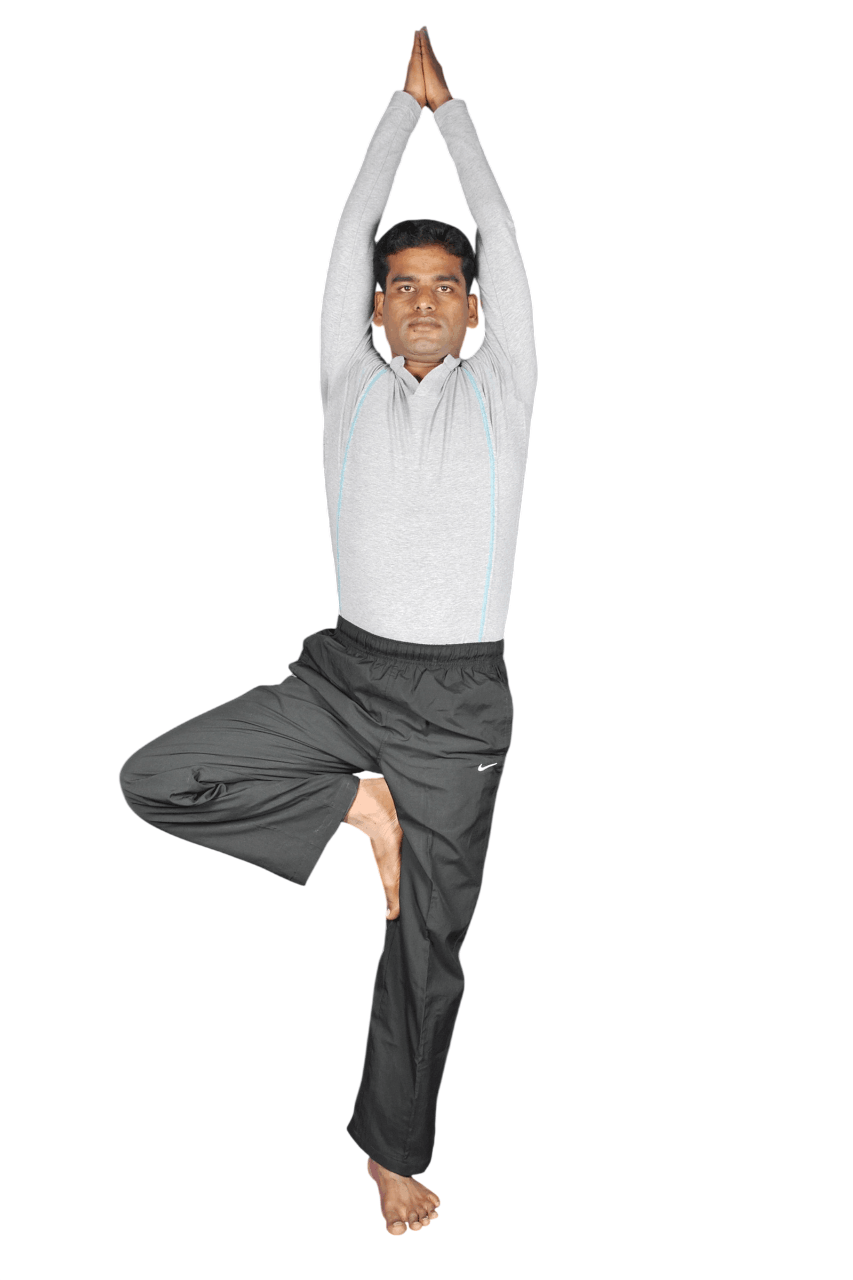
The pose mirrors the qualities of a healthy tree:
- Strong roots (foot grounding into earth)
- A stable trunk (engaged leg and core)
- Flexible but steady branches (arms reaching upward)
- Balance amidst external winds (mental steadiness despite challenges)
2. DEFINITION OF VṚKṢĀSANA
Vṛkṣāsana is a balancing, standing yoga posture where one foot is rooted firmly on the ground while the opposite foot is placed on the inner thigh, calf, or ankle, and the hands are typically joined overhead or at the heart center. The spine lengthens upward, promoting neuromuscular coordination, proprioception, concentration, and equilibrium.
Technically, Tree Pose is:
- A unilateral weight-bearing posture
- A closed-chain movement for the standing leg
- A balance-oriented postural stabilization exercise
- A frontal-plane alignment practice
- A mild hip opener for the lifted leg
- A postural corrective pose for students with imbalance or weak stabilizers
At deeper levels, it trains dṛṣṭi (gaze focus), pratyāhāra (sense withdrawal), and dharana (concentration).
3. METHOD OF PRACTICE — STEP-BY-STEP
Below is a TTC-grade, anatomically aligned step-by-step guide.
Step 1: Foundation and Centering
- Begin in Samasthiti (Tadasana).
- Feet hip-width or together (depending on comfort level).
- Distribute weight evenly across four corners of each foot.
- Engage core, lengthen spine, soften breath.
Step 2: Shift Weight
- Slowly shift body weight onto the right leg.
- Keep right foot stable, toes spread, arches active.
- Avoid leaning the pelvis or torso sideways.
Step 3: Lift the Left Foot
- Bend the left knee and externally rotate the hip.
- Place left foot on one of the following:
- inner ankle (beginner)
- inner calf (intermediate)
- inner mid-thigh (advanced)
- Avoid pressing the foot directly on the knee joint.
Step 4: Align the Pelvis
- Neutralize pelvis; avoid hiking the hip of the lifted leg.
- Draw navel inward for core support.
Step 5: Arm Placement
- Hands in Namaste at chest, OR
- Extended overhead as Urdhva Hastasana
- Shoulders relaxed, neck long.
Step 6: Establish Dṛṣṭi
- Choose a non-moving point (nasagra-dṛṣṭi or bhru-madhya-dṛṣṭi).
- Maintain soft, slow, nasal breathing.
Step 7: Balance & Hold
- Maintain the pose for 20–60 seconds, gradually increasing time.
- Continue rooting down and lengthening upward simultaneously.
Step 8: Release
- Exhale, lower arms and leg gently.
- Return to Samasthiti and repeat on the other side.
4. ALIGNMENT CUES (INSTRUCTOR-LEVEL)
Feet & Ankles
- Press down through the standing foot tripod.
- Avoid collapsing arches inward.
- Lift inner ankle and activate peroneals.
Knee of Standing Leg
- Track knee over second/third toe.
- Avoid hyperextension; micro-bend if needed.
- Engage quadriceps.
Lifted Leg
- Turn knee out from hip, not foot/ankle.
- Press foot and thigh equally (isometric engagement).
- Keep pelvis level — avoid hip hike.
Pelvis
- Face pelvis forward.
- Draw tailbone slightly down to avoid swayback.
- Avoid leaning into standing hip.
Torso & Spine
- Lengthen through crown of head.
- Engage deep core (TVA).
- Keep ribs neutral; avoid flaring.
Shoulders & Arms
- Shoulders relaxed away from ears.
- Palm engagement firm but soft.
- Elbows straight without locking.
Breath
- Steady, slow, controlled.
- Equal inhalation and exhalation.
5. BENEFITS
Physical Benefits
- Enhances balance and proprioception
- Strengthens foot arches, ankles, calves, quadriceps
- Improves hip stability and mobility
- Enhances spinal alignment
- Strengthens core musculature
- Improves neuromuscular coordination
- Helps correct postural imbalances
Therapeutic Benefits
- Helps relieve sciatica via hip stabilization
- Improves focus and cognitive clarity
- Helps manage anxiety through grounding
- Corrects flat feet and knee valgus
- Supports rehabilitation for mild knee instability
Energetic Benefits
- Activates Mūlādhāra Chakra (root)
- Builds grounding, steadiness, mental calm
- Encourages upward flow of prāṇa (udāna)
Mental & Emotional Benefits
- Develops confidence and self-esteem
- Improves concentration (dharana)
- Encourages inner stillness and patience
6. CONTRAINDICATIONS
Absolute Contraindications
- Acute vertigo
- Inner ear balance disorders
- Recent ankle sprain
- Severe knee ligament injury
- Fresh hip surgery
Relative Contraindications
- Low blood pressure
- Migraine
- Weak vestibular system
- Eye conditions affecting gaze focus
- Severe arthritis of foot or hip
- Pregnancy (requires modifications)
7. COUNTERPOSES
After balancing unilaterally, the body benefits from neutralizing poses:
- Tadasana – resets alignment
- Samasthiti – grounding
- Pada-hastasana – decompresses spine
- Uttanasana – releases tension
- Ardha Uttanasana – lengthens hamstrings
8. PREPARATORY PRACTICES
Warm-up Movements
- Ankle rotations
- Toe lifts
- Hip circles
- Standing Marching
- Pelvic tilts
- Hamstring warmups
Balance Training
- Samasthiti with eyes open/closed
- Single-leg stands
- Heel-to-toe alignment walking
Hip Opening
- Vrksasana prep with foot at ankle
- Baddha Konasana
- Janu Sirsasana
- Supta Padangusthasana (external rotation version)
9. MODIFICATIONS & PROPS
For Beginners
- Foot placed at ankle level
- Use wall support
- Hands on hips instead of overhead
- Gaze closer to avoid dizziness
For Seniors
- Use chair support
- Keep lifted leg lower
- Avoid long holds
For Pregnancy
- Stand near a wall
- Keep arms open (avoid overhead if uncomfortable)
For Knee Issues
- Avoid foot-to-thigh pressure
- Place foot below knee instead
For Limited Hip Rotation
- Keep lifted foot lower
- Slight external rotation only
10. MUSCLES INVOLVED
Standing Leg (Stabilizers)
- Quadriceps (rectus femoris, vasti group)
- Hamstrings
- Gluteus medius & minimus
- Adductors
- Tibialis anterior
- Gastrocnemius & soleus
- Peroneals
Lifted Leg (Hip External Rotators)
- Gluteus maximus (upper fibers)
- Piriformis
- Gemellus superior/inferior
- Obturator internus/externus
- Quadratus femoris
Core
- Transverse abdominis
- Obliques
- Multifidus
- Erector spinae
Upper Body
- Deltoids
- Rhomboids
- Serratus anterior
- Trapezius (upper fibers minimal)
11. KINESIOLOGY OF VRKSASANA
Kinesiology examines movement patterns:
Joint Actions
- Ankle (standing leg):
- Stabilization, slight dorsiflexion
- Knee (standing leg):
- Extension and stabilization
- Hip (standing leg):
- Neutral to slight internal rotation
- Hip (lifted leg):
- External rotation + abduction
- Spine:
- Axial extension
- Shoulders (if arms up):
- Flexion, upward rotation of scapula
Muscle Actions
- Isometric contraction of stabilizers
- Co-contraction around knee
- Constant micro-adjustments (proprioception)
- Hip external rotators active for lifted leg stability
12. KINEMATICS OF VRKSASANA
Planes of Movement
- Frontal plane:
- Main balancing plane
- Sagittal plane:
- Axial extension
- Transverse plane:
- Hip external rotation
Motion Dynamics
- Minimal displacement of center of gravity
- Standing leg stabilizes center of mass
- Micro-movements in foot/ankle provide balance correction
13. BIOMECHANISM (BIOMECHANICS)
Stability Mechanisms
- Foot tripod → base of support
- Standing leg alignment → load distribution
- Core activation → stabilizes lumbar spine
- Dṛṣṭi → enhances neuromuscular control
Force Distribution
- Ground reaction forces travel upward through kinetic chain
- Improper alignment causes:
- ankle collapse
- knee valgus stresses
- pelvic tilt
- spinal compensation
Balance Mechanism
- Vestibular
- Proprioceptive
- Visual feedback
- Somatosensory integration
14. FUNCTIONAL ANATOMY & PHYSIOLOGY
Nervous System
- Enhances neural pathways for balance
- Activates parasympathetic relaxation
- Improves motor cortex activation
Endocrine System
- Reduces stress hormones (cortisol)
- Improves focus hormones (dopamine, serotonin)
Musculoskeletal System
- Builds joint integrity
- Strengthens stabilizing muscles
- Enhances posture
Respiratory System
- Diaphragmatic breathing stabilizes core
- Improves oxygenation
Proprioception Enhancement
- Improves spatial awareness
- Helps prevent falls (elderly population)
15. CORRECTION & ADJUSTMENTS WHILE TEACHING
Common Mistakes & Corrections
1. Collapsed arches
Cue:
“Lift inner arch and press through big toe mound.”
2. Hip lifting on lifted-leg side
Cue:
“Drop the outer hip down; keep pelvis level.”
3. Knee drifting inward
Cue:
“Press thigh outward from the hip.”
4. Torso leaning sideways
Cue:
“Imagine a string lifting you up from the crown.”
5. Overarching lower back
Cue:
“Draw navel in, lengthen back ribs.”
Hands-On Adjustments
- Stabilize student by lightly placing hands on hips
- Encourage pelvic neutrality
- Guide lifted foot placement
- Support arms to maintain vertical alignment
- Help maintain balance by offering forearm support
Safety Guidelines
- NEVER force hip external rotation
- Avoid pushing student’s foot higher
- Use minimal-touch, informed consent
- Prioritize stability over aesthetics
QUESTION AND ANSWER
Section 1: Word Meaning & Definition
1. The Sanskrit word “Vṛkṣa” means:
A. Mountain
B. Tree
C. Bird
D. Balance
Answer: B
2. Vr̥kṣāsana primarily symbolizes:
A. Strength and rootedness
B. Relaxation and surrender
C. Forward bending
D. Twisting
Answer: A
3. Vr̥kṣāsana belongs to which category of asanas?
A. Supine
B. Prone
C. Standing balance pose
D. Inversion
Answer: C
4. The primary purpose of Vr̥kṣāsana is to develop:
A. Lung capacity
B. Balance and stability
C. Forward bend flexibility
D. Hip rotation only
Answer: B
5. Vr̥kṣāsana is usually practiced at the beginning of a class to:
A. Warm up the spine
B. Center the mind
C. Stretch hamstrings
D. Improve digestion
Answer: B
6. The pose is traditionally associated with:
A. Calm focus
B. Explosive strength
C. Passive stretching
D. Backbending
Answer: A
7. Vr̥kṣāsana improves stability by strengthening:
A. Lower back only
B. Core and legs
C. Neck
D. Arms
Answer: B
8. In yogic philosophy, practicing Vr̥kṣāsana enhances:
A. Rajas
B. Tamas
C. Sattva
D. None
Answer: C
9. The shape of Vr̥kṣāsana resembles:
A. A mountain’s slope
B. A standing tree on one leg
C. A bird flying
D. A coiled snake
Answer: B
10. In classical Hatha Yoga texts, Vr̥kṣāsana is described as:
A. A pose for heating the body
B. A balancing and meditative asana
C. A relaxation posture
D. A cleansing kriya
Answer: B
Section 2: Method of Practice
11. Vr̥kṣāsana begins from which pose?
A. Vajrasana
B. Samasthiti / Tadasana
C. Sukhasana
D. Dandasana
Answer: B
12. The lifted foot is generally placed on:
A. Knee joint
B. Inner thigh or calf
C. Lower back
D. Abdomen
Answer: B
13. Which instruction is CORRECT?
A. Lock the standing knee
B. Keep the standing leg active
C. Shift the pelvis sideways
D. Lift shoulders up
Answer: B
14. Hands can be placed in all EXCEPT:
A. Namaste at chest
B. Raised overhead
C. On hips
D. Behind the back
Answer: D
15. Eyes in Vr̥kṣāsana should ideally focus on:
A. Moving objects
B. A fixed drishti point
C. The ceiling
D. The back foot
Answer: B
16. Exiting Vr̥kṣāsana safely involves:
A. Jumping out
B. Dropping the leg suddenly
C. Slowly releasing foot and returning to Samasthiti
D. Twisting out
Answer: C
17. Breath during Vr̥kṣāsana should be:
A. Fast
B. Irregular
C. Natural and steady
D. Breath-hold
Answer: C
18. The foot should NOT be placed on the knee because:
A. Knee is fragile to lateral pressure
B. It looks unattractive
C. It breaks balance
D. It restricts breathing
Answer: A
19. To maintain balance, the pelvis should be:
A. Tilted forward
B. Tilted backward
C. Neutral
D. Rotated externally
Answer: C
20. Weight should be distributed mainly on:
A. The outer heel
B. Big toe mound & heel evenly
C. Inner arch only
D. Standing on toes
Answer: B
Section 3: Alignment & Teaching Cues
21. The standing leg should be:
A. Loose
B. Hyperextended
C. Firm and engaged
D. Bent deeply
Answer: C
22. The lifted knee should be:
A. Pointing straight forward
B. Turned slightly outward
C. Locked inward
D. Raised above hip
Answer: B
23. Hands overhead should be:
A. Spread apart unevenly
B. Straight but not rigid
C. Bent sharply
D. Placed behind head
Answer: B
24. Shoulders should be:
A. Lifted up
B. Relaxed and down
C. Pushed forward
D. Externally rotated
Answer: B
25. The pelvis should avoid:
A. Dropping on one side
B. Neutral alignment
C. Core engagement
D. Balanced hips
Answer: A
26. A good cue for stability:
A. “Press foot firmly into thigh and thigh into foot.”
B. “Lean sideways to balance.”
C. “Lock your knee.”
D. “Lift your ribs excessively.”
Answer: A
27. A common mistake is:
A. Soft gaze
B. Placing the foot on the knee
C. Lifting arms
D. Engaging core
Answer: B
28. To improve balance, teacher may cue:
A. “Spread your toes”
B. “Look up at ceiling”
C. “Hold breath”
D. “Shift weight to toes only”
Answer: A
29. The rib cage should be:
A. Neutral and not flared
B. Pushed out
C. Collapsed
D. Twisted
Answer: A
30. The drishti is typically:
A. Nasagra
B. Broomadhya
C. Parshva
D. Hastagra
Answer: B
31. If the student is shaking heavily:
A. Ask them to stare at a broader point
B. Ask them to close eyes
C. Ask them to hop
D. Tell them to forcefully tighten shoulders
Answer: A
32. The standing foot should:
A. Grip the floor
B. Be loose
C. Turn inward
D. Lift from heel
Answer: A
33. Ideal class cue:
A. “Grow tall like a tree from base to crown.”
B. “Relax all legs.”
C. “Drop pelvis to one side.”
D. “Stare at your lifted foot.”
Answer: A
34. To align pelvis, teacher cues:
A. “Square the hips.”
B. “Twist more.”
C. “Lift ribs high.”
D. “Bend spine back.”
Answer: A
35. If hands are overhead, palms should:
A. Press lightly
B. Separate completely
C. Push strongly sideways
D. Press neck
Answer: A
Section 4: Benefits
36. Vr̥kṣāsana improves:
A. Digestion
B. Balance and neuromuscular coordination
C. Neck compression
D. Blood pressure spikes
Answer: B
37. It strengthens:
A. Shoulders only
B. Legs, ankles, core
C. Biceps
D. Lower back only
Answer: B
38. It enhances:
A. Concentration
B. Laziness
C. Anxiety
D. Drowsiness
Answer: A
39. Therapeutically, useful for:
A. Insomnia
B. Improving posture
C. High fever
D. Hernia
Answer: B
40. Vr̥kṣāsana stimulates which chakra?
A. Swadhisthana
B. Muladhara
C. Vishuddhi
D. Ajna
Answer: B
41. Beneficial for:
A. Runners needing ankle stability
B. People needing cardio
C. Sciatic nerve compression
D. Lumbar disc herniation
Answer: A
42. It promotes:
A. Inner grounding
B. Emotional instability
C. Mental confusion
D. Fatigue
Answer: A
43. Regular practice improves:
A. Spatial awareness
B. Acid reflux
C. Kidney stones
D. Shoulder dislocation
Answer: A
44. Helpful in correcting:
A. Flat feet
B. Hyper-kyphosis
C. Heart blockage
D. Asthma attack
Answer: A
45. Vr̥kṣāsana aids:
A. Single-leg strength
B. Reduced vision
C. Acute pain
D. Cholesterol
Answer: A
Section 5: Contraindications & Precautions
46. Vr̥kṣāsana should be avoided in:
A. Dizziness
B. Healthy adults
C. Mild fatigue
D. Normal BP
Answer: A
47. Students with knee injury should:
A. Load weight on injured leg
B. Use wall support
C. Stand on toes
D. Bend deeply
Answer: B
48. Pregnant women (late trimester) should:
A. Practice without support
B. Use wall or avoid
C. Close eyes
D. Twist deeply
Answer: B
49. High blood pressure students should avoid:
A. Raising arms overhead
B. Looking forward
C. Using wall
D. Standing straight
Answer: A
50. Students with vertigo should:
A. Use support
B. Practice on soft surface
C. Practice with closed eyes
D. Avoid breathing
Answer: A
51. Avoid placing lifted foot on:
A. Calf
B. Inner thigh
C. Knee joint
D. Standing leg
Answer: C
52. For hip issues:
A. Avoid extreme rotation
B. Rotate externally at maximum
C. Force the thigh back
D. Lean sideways
Answer: A
53. Students recovering from ankle sprain:
A. Should use wall support
B. Stand only on injured foot
C. Avoid all standing poses
D. Close eyes
Answer: A
54. If balance is extremely poor:
A. Skip or use chair
B. Force hold
C. Practice on uneven surface
D. Hold breath
Answer: A
55. If student experiences pain:
A. Continue
B. Shift weight
C. Stop immediately
D. Turn the foot more
Answer: C
Section 6: Muscles, Kinesiology, Anatomy
56. Main muscle stabilizing the standing leg:
A. Gluteus medius
B. Psoas
C. Biceps
D. Deltoid
Answer: A
57. Lifted leg involves activation of:
A. Hip abductors
B. Hip adductors
C. Spinal extensors only
D. Jaw muscles
Answer: A
58. Standing ankle stability depends on:
A. Tibialis anterior
B. Deltoid
C. Triceps brachii
D. Pectoralis major
Answer: A
59. Core stabilizers in Vr̥kṣāsana include:
A. Transversus abdominis
B. Upper trapezius
C. Biceps
D. Forearm flexors
Answer: A
60. Hip joint of the lifted leg is in:
A. Flexion and external rotation
B. Extension
C. Hyperflexion
D. None
Answer: A
61. The pelvis must remain:
A. Neutral
B. Rotated
C. Tilted
D. Compressed
Answer: A
62. Spine position:
A. Axial elongation
B. Flexed
C. Excessively arched
D. Twisted
Answer: A
63. Vr̥kṣāsana strengthens:
A. Arch muscles
B. Knee ligaments
C. Neck muscles
D. Shoulder joints
Answer: A
64. Knee of lifted leg relies on:
A. Iliotibial band
B. Gluteus medius
C. Popliteus
D. Hip abductors
Answer: D
65. Standing hip stability relates to:
A. Gluteus medius & minimus
B. Quadratus lumborum only
C. Hamstrings alone
D. Gastrocnemius only
Answer: A
66. Vision focus improves:
A. Proprioception
B. Kidney function
C. Lung capacity
D. Thyroid hormone levels
Answer: A
67. Foot placement activates:
A. Adductor group
B. Extensors of wrist
C. Neck muscles
D. Elbow flexors
Answer: A
68. Balancing requires activation of:
A. Cerebellum
B. Brain stem
C. Medulla
D. Frontal lobe
Answer: A
69. Vr̥kṣāsana improves:
A. Neuromuscular feedback loops
B. Lung tidal volume
C. Digestion immediately
D. Liver detox
Answer: A
70. Arms overhead activate:
A. Serratus anterior
B. Hip extensors
C. Glutes
D. Triceps
Answer: A
Section 7: Adjustments & Corrections
71. If student leans sideways:
A. Align pelvis
B. Lift shoulders
C. Shift weight to toes
D. Bend spine
Answer: A
72. If knee of lifted leg drifts forward:
A. Cue external rotation
B. Close eyes
C. Hold breath
D. Shift to heel
Answer: A
73. If student shakes:
A. Use wall support
B. Lift leg higher
C. Hyperextend knee
D. Tighten neck
Answer: A
74. For flat feet:
A. Encourage toe spreading
B. Lift heel
C. Force inward arch
D. Press knee inward
Answer: A
75. For collapsing pelvis:
A. Engage glute medius
B. Lean sideways
C. Bend standing knee inward
D. Rotate torso
Answer: A
76. Teacher’s safe physical adjustment:
A. Stabilize shoulders
B. Push knee
C. Pull thigh
D. Press lumbar spine
Answer: A
77. If student keeps foot on knee:
A. Move foot to calf or thigh
B. Push harder
C. Encourage knee pressure
D. Ignore
Answer: A
78. If student overarches spine:
A. Cue core engagement
B. Lift ribs more
C. Tilt pelvis anteriorly
D. Drop arms
Answer: A
79. To help with balance:
A. Use fingertip support
B. Block vision
C. Stand on towel
D. Practice with eyes closed
Answer: A
80. To correct foot sliding:
A. Reduce sweat / use cloth
B. Raise leg higher
C. Shift weight
D. Practice fast
Answer: A