
Vastra Dhouti
Vastra Dhouti Practice Catch one end of the cloth with both hands and start swallowing slowly with deep awareness and ease. Drink sips of water along with the cloth if it does not move on smoothly. Make sure that about 20 – 25cms of the cloth is left outside towards the end. After completing, wait for a few seconds, churn the abdomen by movement or agnisara twisting. Lean forward and start pulling out the cloth slowly with ease and relaxation. If the cloth is not coming out easily, wait, take a deep breath and relax, drink a few sips of water and then continue. #Online 300 hour Yoga teacher training Bangalore
Vaman Dhauti
Vaman Dhauti Practice Drink about one and a half liters of lukewarm saline water (about 1% saline) as quickly as you can until you feel like vomiting it out. Churn the stomach by twisting exercises. Stand with feet apart at shoulder width and bend the trunk forward forming an angle of about 80 degrees to the body. Now with the help of the middle three fingers of the right hand, tickle the back of the throat to vomit out (vaman) all the water. Repeat the process of tickling the throat until no more water comes out which may mean that all water has been vomited . With continued practice one can stimulate the vomiting sensation and vomit out the water without using the fingers at the throat. Relax completely in savasana for about 15 to 20 minutes. Have a bland breakfast after about half an hour. #Online 300 hour Yoga teacher training Bangalore
Kapalabhati (frontal brain cleansing breath)
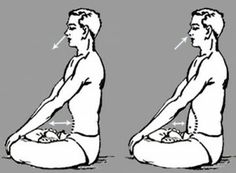
Kapalabhati (frontal brain cleansing breath) Practice Practice rapid breathing with active and forceful exhalation and passive inhalation. During each exhalation, blast out the air by vigorous flapping movements of the abdomen in quick succession. Inhale passively by relaxing the abdominal muscles at the end of each exhalation. Repeat the exhalation as quickly as possible at the rate of 60 strokes per minute. At the end of one minute, stop the practice. Now observe an automatic suspension of breath. In fact, there will be no urge for breathing for a few seconds. Simultaneously the mind may experience a deep state of silence. Enjoy this state of deep rest and freshness. Wait until the breathing comes back to normal. Benefits Brain cells are invigorated. It brings brightness to the face with regular practice. It balances and strengthens the nervous system. It removes the drowsiness from the body. It provides a nice massage to all the abdominal organs. People with digestive problems are highly benefited. It cleanses the lungs and also the entire respiratory tract. It is good for asthmatics and for other respiratory disorders. #Online 300 hour Yoga teacher training Bangalore
Jala Neti (Cleaning the nasal passage
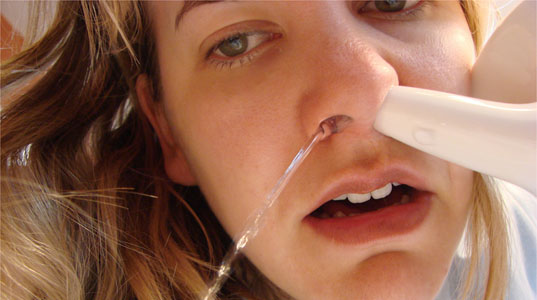
Jala Neti (Cleaning the nasal passage) Practice Add about half a teaspoon of salt to a neti pot full of sterile lukewarm water. Stand with the legs apart. Hold the neti pot in your right hand. Insert the nozzle of the Neti pot into the right nostril. Keep the mouth open and breathe freely through the mouth. Tilt the head first slightly backwards, then forwards and sidewards to the left so that the water from the pot enters the right nostril and comes out through the left by gravity. Allow the flow till the pot is empty. Repeat the same on the left side. To clear the nasal passages of the remaining water, blow out the water by active exhalation through alternate nostrils as in Kapalabhati. #Prenatal, Mudra Therapy, Yoga Chanting & Meditation certificate Course Benefits It helps to clear nasal passages. Removes cold, hypersensitivity, headache, sinusitis, bronchitis and stimulates olfactory nerves. #200 hour Yoga teacher training certificate course in Bangalore
Sutra Neti
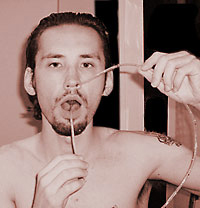
Sutra Neti Practice Insert the blunt end of a thin soft rubber catheter horizontally into the right nostril. Gently push it along the floor of the nose until the tip is felt in the back of the throat. Insert the right index and the middle finger through the mouth arid catch the tip of the catheter at the back of the throat. Pull it out through the mouth and gently massage the nasal passage by catching the two ends of the tube. Remove the catheter through the nose. Repeat on the left side. #50/100/200/300/500 hr Yoga teacher training certificate course Bangalore Benefits Clear the nose and pharynx. Tremendous will power increases in process of catheter insertion. Desensitizes to dust pollution etc. in nasal allergy patients. #Prenatal, Mudra Therapy, Yoga Chanting & Meditation certificate Course
Maha Bandha – Great lock
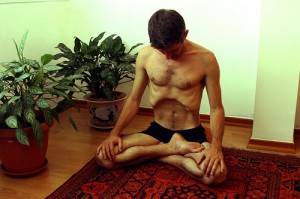
Maha Bandha – Great lock (Bestower of great siddhis) Practice: Sit in siddha or padmasana with the palms pressing on the knees. The spine should be straight. Breathe in slowly and deeply through the nose. Exhale forcefully and completely through the mouth. Hold the breath outside. Sequentially perform Jalandhara, Uddiyana and Moola Bandha at end. Inhale slowly when the head is upright. This is one round. #Yin, Restorative, Hatha, Vinyasa, Yoga Therapy Teacher Training Certificate Course Benefits: Maha Bandha gives the benefits of all three bandhas. It affects the hormonal secretions of the pineal gland and regulates the entire endocrine system. The decaying, cell of the body is rejuvenated. It soothes anger and introverts the mind prior to meditation. It leads to the merge of prana, apana and samana in agni mandala, which is the culmination of all pranayamas. #50/100/200/300/500 hr Yoga teacher training certificate course Bangalore
Mula Bandha – Perennial/ cervix retraction lock
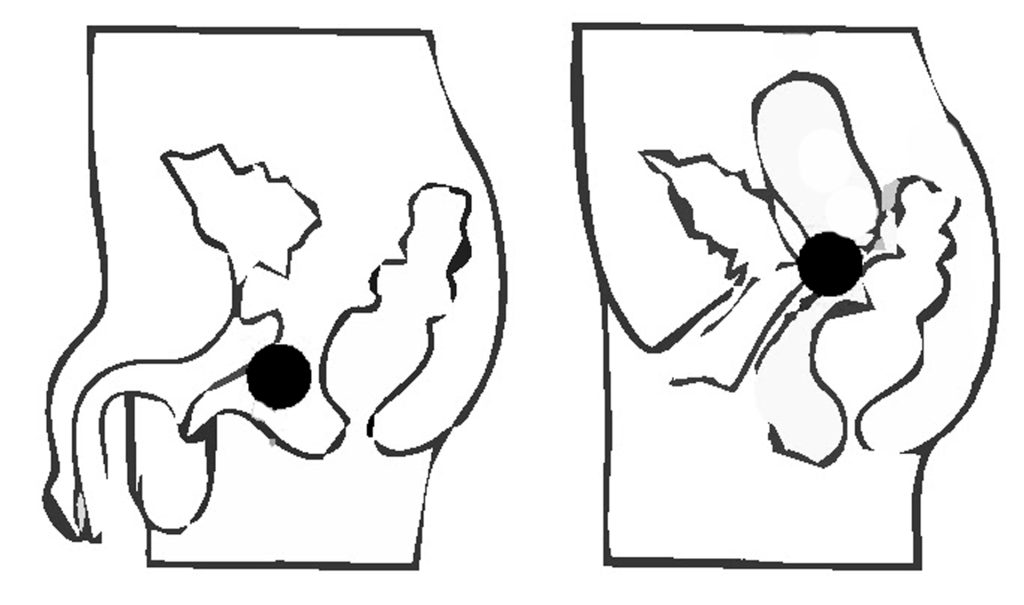
Mula Bandha – Perennial/ cervix retraction lock, when engaged, prevents apana escaping from the lower body and draws it up to unite with prana. Practice Sit in a comfortable meditative pose, preferably siddhasana. Close the eyes, make sure the body is completely relaxed and the spine is erect. For men, the area just inside the perineum has to be contracted, so it is best to concentrate on this area for a few minutes. Women should concentrate on the cervix, as it is the cervix and vaginal muscles which have to be contracted. After a few minutes of concentration, start to gradually contract and release the muscles of the perineum/cervix. Contraction should last for a few seconds. Keep the breath normal. Prepare as above. Contract the muscles of the perineum/cervix and hold. Hold the contraction for till you feel comfortable, then release. Practice five times. Start off with a gentle or partial contraction. Contract just a little and hold without releasing. Then contract a little more. Continue like this, gradually increasing the tension and contraction ten times until full contraction is reached. Hold the full contraction for few seconds and try to breathe normally. #Yoga, Anatomy, Physiology, Kinesiology and Bio-Mechanism Yoga Teacher Training certificate Course Benefits Mula bandha is the force or energy created by lifting the pelvic floor and controlling the breath. It is the root lock and calls the fire within that causes everything to come alive, to move. Mula bandha increases flexibility and stimulates heat. By contracting the perineum and drawing the energy up from the base of the spine, one can intensify and direct the life energy, cultivating a sense of heightened awareness and increasing vitality. Mula bandha ignites the flame of kundalini (cosmic energy), the serpent power. By bringing awareness to the core of the body, mula bandha helps prevent injury. It guides you to move from your center, grounding you so you can become light and fluid in your yoga practice. #Yin, Restorative, Hatha, Vinyasa, Yoga Therapy Teacher Training Certificate Course
Uddiyana Bandha – Abdominal retraction lock

Uddiyana Bandha – Abdominal retraction lock which forces prana up the shushumna nadi. Practice Stand with feet about two feet apart. Bend the knees slightly and rest the hands above the knees, with the thumbs facing inwards and the fingers outwards. The spine must remain straight, not curved; the head should be kept up and eyes open. Inhale deeply through the nose, then exhale quickly through slightly pursed lips, but don’t be forceful. Having fully exhaled, bring the chin to the chest ( jalandhara bandha), raising the shoulders. Pull the abdomen and stomach inward toward the spine and up. Hold for a few seconds. Before inhaling, relax the stomach and abdomen, raise the head and stand straight. Then inhale through the nose slowly and with control. Before repeating another round, breathe normally for a minute or two. Start with three rounds and over a period of a few months increase to more rounds.#Best yoga teacher training certification courses in Bangalore Sit in a comfortable cross-legged position ( padmasana, siddhasana or sukhasana, depending on your flexibility). Sit on a cushion so that the buttocks are raised. Keep the palms of the hands on the knees and the spinal cord upright and straight. Eyes may be open or closed. Begin as above, practicing three to ten rounds, concentrating on the natural breath for a minute or two between rounds.#Yoga teacher training certificate course fees in Bangalore Stand up and experiment moving from the middle of your body, try walking as if there is a string attached to your navel pulling you forward. Practice the bandhas at different times during the day. Notice the effect on your energy level. 5.Notice any fears that arise when you’re practicing the bandhas. Connect the breath, mula bandha, and uddiyana bandha, and try to relax while maintaining the locks. Benefits #Best100/200/300/500 hour yoga teacher training India Movement of shakti in the body is described as a bird. Shakti is the personification of the feminine form of the Divine. Through the practice of the flying bandha, the great bird (Shakti) flies upward with ease, further directing the flow of prana toward higher states of consciousness. By contracting the lower abdomen and pulling it inward and upward, toward the spine, a powerful toning effect and internal strengthening occurs. This lifting helps push up the diaphragm and expel the breath. Uddiyana bandha, the abdominal lock, also eliminates strain by helping to control the breath. Control of the breath controls consciousness. Bandhas are a means of extending control over the breath and thus are a means to extend our access to consciousness. #Yoga, Anatomy, Physiology, Kinesiology and Bio-Mechanism Yoga Teacher Training certificate Course
Jalandhara Bandha – Throat lock
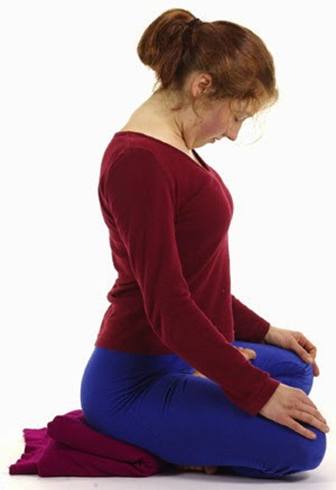
Jalandhara Bandha – Throat lock which prevents prana from escaping the upper body. Practice Jalandhara bandha Sit comfortably in siddhasana or padmasana). Place the palms of the hands on the knees and allow the whole body to relax. Inhale slowly and deeply through the nose and retain the breath. Lower the chin so that it touches the collarbone. At the same time, straighten the elbows and raise the shoulders. Hold the breath and the position for as long as comfortable. Then release jalandhara bandha by slowly raising the head and relaxing the shoulders. Exhale in a very slow, controlled manner. Practice five rounds, breathing normally for a few minutes between each round. Then practice five rounds with external retention (exhale and hold). Visualize the throat as a net that captures the breath as it comes up. Notice when the chin is tucked how easy it is to see your navel. Pay attention to the opening of your throat while simultaneously locking the chin. Link all the bandhas and follow the flow of breath unobstructed while maintaining the locks in the body. Notice any change in energy level or effects on your thoughts. #Yoga teacher training certification course near me Benefits Jalandhara bandha is the water pipe lock. It binds the network of subtle energy channels. Engaging Jalandhara bandha is useful for alleviating diseases of the throat. It also improves the quantum of prana in the thoracic region. By pressing the chin to the chest, prana is captured, preventing it from escaping the upper body. Many major nerve fibers pass through the neck; when jalandhara bandha is performed it exerts pressure on them and the flow of nervous impulses to the brain is restricted. These impulses collect in the cervical plexus, and when the bandha is released they flood into the brain. The force of these impulses helps to activate higher centers in the brain, those that function with creativity and intellect. #Best yoga teacher training certification courses in Bangalore
Patanjali Yoga Sutra – Kaivalya Pada: Potentiality of object

Patanjali Yoga Sutra – Kaivalya Pada: Potentiality of object 4.14. Parinamaikatvadvastutattvam| Parinama-transformation Ekatvat-due to oneness Vastu-object Tattvam-the essence The potential of the object is due to the uniqueness of transformation of the gunas. Patanjali Yoga Sutra – Kaivalya Pada #Online yoga classes India What is perception ? 4.15. Vastusamye chittabhedattayovibhaktah panthah| Vastusamye-by sameness of the object Chittabhedat-by the difference of the mind Tayoh-of these two vibhaktah –separate panthah-path of manifestation Because of the sameness of object and difference of mind their ways are different. #Online Yoga teacher training certification course near me Patanjali Yoga Sutra – Kaivalya Pada Mind & object 4.16. Na chaika chittatantram vastu tadapramanakam tada kim syat| Na-not Cha-and Eka-one Chitta-mind Tantram-dependent Vastu-object Tat-that Apramanakam-non-cognized Tada-then Kim-what Syat-would happen The object of perception is not dependent on the chitta, what would happen to the object of perception when the medium of cognition is not there?. #Online Yoga teacher training certification course near me Patanjali Yoga Sutra – Kaivalya Pada Reflection of object 4.17. Taduparagapeksitvachchittasya vastu jnatajnatam| Taduparaga-the reflection of the object in chitta Apeksitvat-because of necessity Chittasya-of the mind Vastu-object Jnata-known Ajnatam-unknown The mind needs the reflection of the objects for its cognition. Patanjali Yoga Sutra – Kaivalya Pada Purusha knows the mind 4.18. Sada jnatascittavrttayastatprabhoh purusasyaparinnamitvat| Sada-always Jnatah-are known Chittavrttayah-modifications of mind Tatprabhoh-on its master Purusasya-of the purusha Aparinamitvat-due to changelessness Purusha, the master of chitta, is chnageless, therefre, he always knows the modifications of the mind. #Online Yoga teacher training certification course near me Patanjali Yoga Sutra – Kaivalya Pada Mind is not self-illumintive 4.19. Na tatsvabhasam drsyatvat| Na-not Tat-that svabhasam –self-illumined drsyatvat-of perceptibility That chitta is not self-illumined because it is the subject of knowledge and perception. Patanjali Yoga Sutra – Kaivalya Pada Limitation of mind 4.20. Ekasamaye chobhayanavadharanam| Ekasamaye-simultaneously Cha-and Ubhaya-both Anavadharanam-non-comprehension And there cannot be the comprehension of both simultaneously. Patanjali Yoga Sutra – Kaivalya Pada Confusion of memories 4.21. Chittantaradrsye buddhibuddheratiprasangah smrtisankarascha| Chittantaradrsye-in one mind being cognized by the other Buddhibuddheh-cognition of cognitions Atiprasangah-absurd superfluity Smrti-memory Sankarah-confusion Cha-and If cognition by one mind of th eother be accepted, then there will be cognition of cognitions leading to absurdity and confusion of memory. Patanjali Yoga Sutra – Kaivalya Pada Attainment of pure consciousness or kaivalya 4.34. Purusarthasunyanam gunanam pratiprasavah kaivalyam svarupapratistha va chitisakteriti| Purusartha-purpose of the purusha Sunyanam-devoid of Gunanam-of the gunas Pratiprasavah-involution Kaivalyam-liberation Svarupa-ones own nature Pratistha-establishment Va-or Chitisakteh-purusah Iti-that’s all(denotes the end of the Patanjali Yoga Sutra) Kaivalya is the involution of the gunas because of the fulfillment of their objectives or it is the restoration of the purusha to its inherent form which is called pure consciousness. #Online Best yoga certification courses in Bangalore