
Sarvangasana – Shoulder Standing Posture
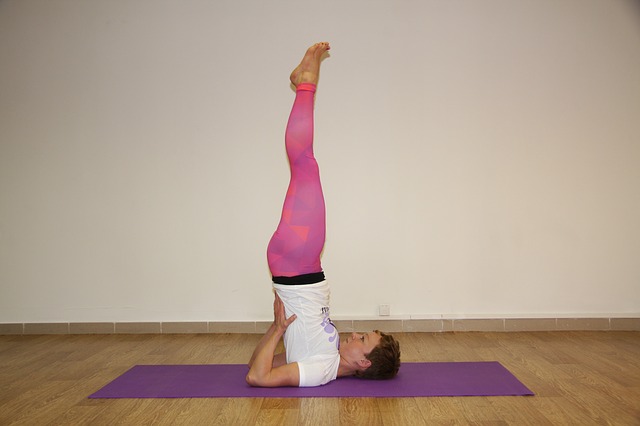
Sarvangasana – Shoulder Standing Posture (sarva- all, whole, entire, anga – limb or part of body) Practice: Lie flat on the back with feet together, arms by the sides and palms flat on the ground. Using the arms as levers raise the legs and back to a vertical position. Bend the elbows and use the arms as props to steady the back by pressing it with the palms. The trunk and legs should extend straight up, forming a right angle with the neck, the chest pressing against the chin. Soften the throat and tongue. Firm the shoulder blades against the back, and move the sternum toward the chin. Your forehead should be relatively parallel to the floor, your chin perpendicular. Gaze softly at your toes or tip of your nose. Stay for 10 to 30 seconds, with normal breathing. Exhale, drop legs down, spine down with support of arms, and relax at Savasana for 10 to 30 seconds. Benefits: Stimulates the thyroid gland and thereby improves the balance of the circulatory, digestive, reproductive, nervous and glandular systems. It corrects improper body growth and clears psychological disturbances by bringing a rich supply of blood to the brain. It relieves asthma and bronchitis. It releases the normal gravitational pressure from the anal muscles, relieving hemorrhoids (piles). It tones the legs, abdomen, the female reproductive organs, spine and neck. It inhibits hydrocele and eliminates waistline fat. Leucorrhea and diabetes can be controlled. Mastery of this asana gives conscious control over body temperature.
Purvottanasana – Intense East Stretch
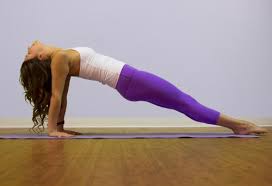
Purvottanasana – Intense East Stretch (Purva – east, Uttana- intense stretch) Practice: Come to Dandasana posture, by palms on floor beside thighs. Recline back, rest palms pointing towards head, straight to shoulders, press palms down lift lower back, hip, thighs, towards sky. Knees straight, foot on ground. Neck long, straight line with body. Whole body perpendicular rot he ground. Stay in this posture for 10 to 15 seconds, by normal deep inhalation and exhalation at your nostrils. Exhale bend elbows, knees, drop legs, hip down and relax. Benefits: Strengthen wrist, arms, shoulder, neck, open chest improves breathing makes heart stronger. Tones lower back, pelvic region, give suppleness to ankles and foot. Good for arthritis and lower back peoples.
Plank Posture
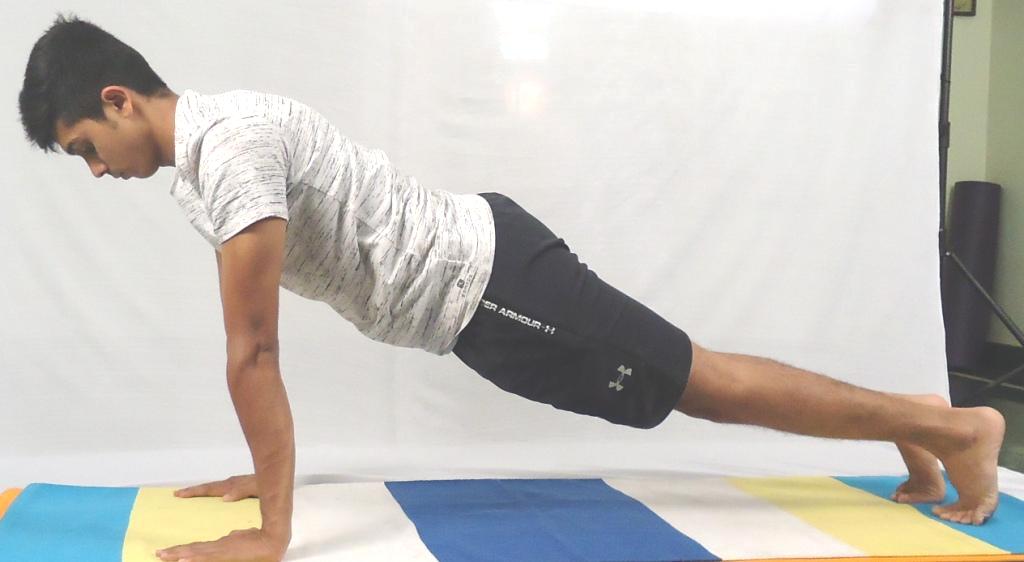
Plank Posture Practice: It is the part of the Surya namaskara ( sun salutation) after Aswa Sanchalansana (Equestrian or runners lunge Posture) , from here bring your legs back , whole body in a straight line like stick , at 35 degree angle towards ground, looking two foot front, balance at your palm and toes. Stay for 10 to 20 seconds, breathing normally at your nostrils. Then move to next posture. ►Benefits: Strengthens the arms, wrists, and spine. Tones the abdomen and chest region.
Pavana Mukta Asana – Wind Releasing Posture
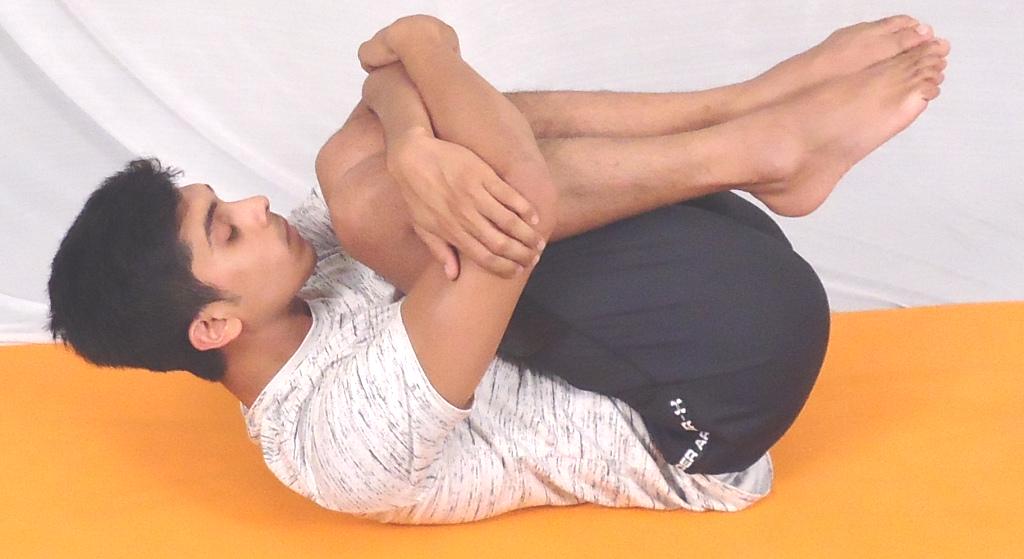
Pavana Mukta Asana – Wind Releasing Posture (pavana – wind, mukta-releasing) Practice: Come to Savasana, bring legs together, arms beside thighs. Inhale; raise right leg up till 90 degree, by keeping knee straight. Bend right leg knee, interlock fingers place it below knee. Pull knee towards chest and lift head dorsal try chin to touch knees. Stay for 10 to 30 seconds comfortably, keep breathing at your nostrils by synchronizing with abdomen movement. Exhale, return back, by unfolding right leg knee, and head down. Repeat same at left side, and then relax at Savasana. Benefits: Remove all gastro-intestinal problems. Strengthen all abdominal organs and lower, middle upper back. Good for those who having thyroid related problems. Relieves, chronic constipation.
Paschimottanasana – Intense West Stretch or Sitting Forward Bend
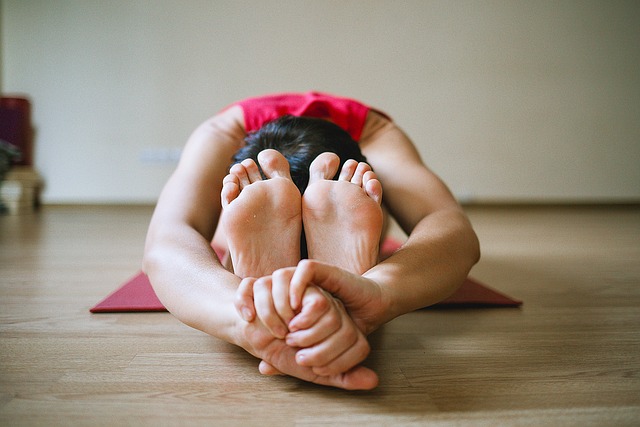
Paschimottanasana – Intense West Stretch or Sitting Forward Bend (paschima – west uttana – intense stretch) Practice: Come to Dandasana (staff posture) by keeping legs forward, straight and spine, head, neck towards sky, by palms on ground beside hip. Along with inhalation gradually raise arms up, close to ears. Inhale lift spine up and arch it, exhale bend forward from hip, till your abdomen resting on your thighs, forehead on shin region. Grasp big toes by thumb, index, and middle finger, press elbow down on floor close to beside calf muscles. Both knees straight, parallel to each other, feet pointing upward, lengthen from lower back, and avoid round back. Back of legs contacting with floor. Stay for 10 to 20 seconds, by breathing evenly and deeply to awaken shusmna nadi. Inhale, come up from lower back, exhale arms down and relax. Benefits: Stretch profoundly entire back side of spine, neck, thigh, and calf muscles. Activates abdominal organs, large and small intestine, remove its slugginess. Remove constipation, excessive abdominal fat. Strengthen respiratory, improve strength, stamina and endurance power. #Yoga teacher training certification course near me #Best yoga teacher training certification courses in Bangalore #Yoga teacher training certificate course fees in Bangalore
Padmasana – Lotus Posture
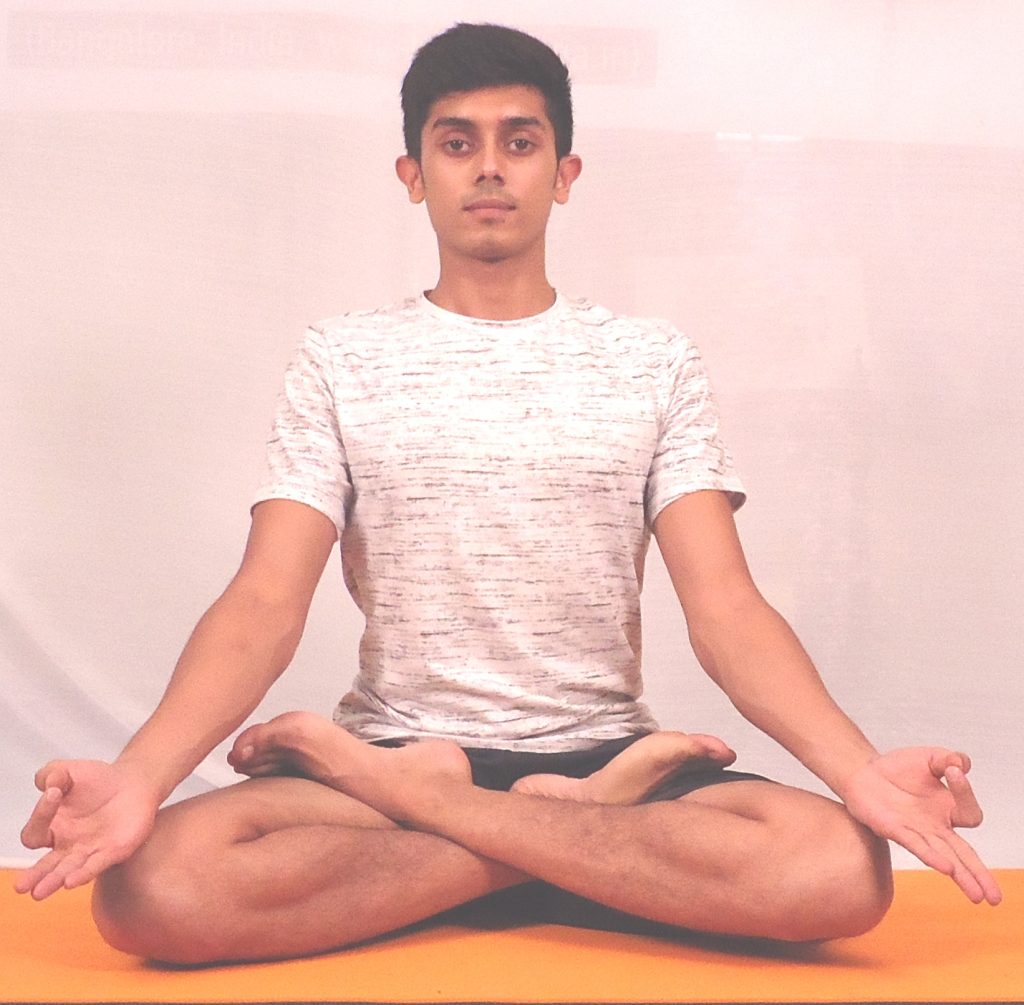
Padmasana – Lotus Posture (padma – lotus flower) Practice: Come to Dandasana, by palms beside hip n floor. Bend right leg with help of right arm and place the soles at close to navel, soles facing upward. Now bend, left leg, bring left foot close to navel, foot facing towards up. Make sure knees contact with ground, keep spine, neck, and head straight, do not lean forward or back ward. Abdomen in chest up lift lower back up and stay for 20 to 60 seconds, with normal breathing. Palms on your thighs. Eyes closed observe your breathing motion. Now unfold knees, and relax. Benefits This is an ideal for meditation. Brings flexibility to knees ankles. Keep spine stronger, strengthen entire back muscles. Makes breathing stronger and distributes energy evenly through out body. #Yoga teacher training certification course near me #Best yoga teacher training certification courses in Bangalore #Yoga teacher training certificate course fees in Bangalore
Padahastasana – Hand to Foot Posture
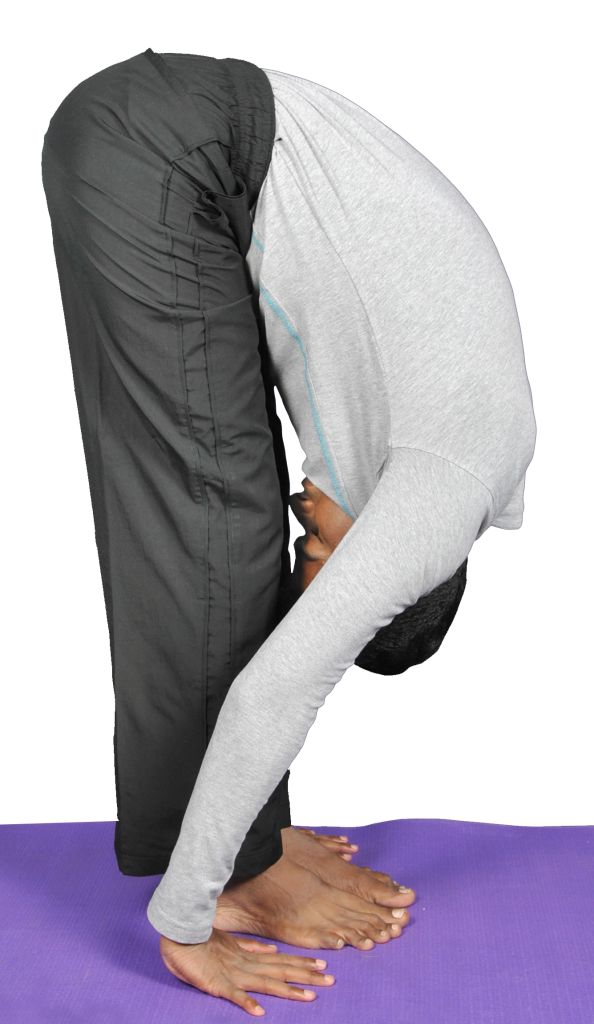
Padahastasana – Hand to Foot Posture (pada – foot, hasta – hand) Practice: Come to Tadasana(mountain) posture, by arms beside your thighs. Inhale raise arms side way till it touch ears. Take deep inhale , by exhaling bend forward by keeping your knee straight from your lower back ( make sure not bending from your upper back ( if you have back pain or weak back keep your knees bend) Lengthen the neck and toward the feet. At final phase keep the chest open as you resting your palms beside of your feet, Keep your feet firm , both leg straight and stably grounded . From hip to ankle should be in straight line. Lenghten from your lower back and stretch from upper back, in hale through nose while exhale suck your abdomen in towards back , forward touching your shin bone not your knees. Stay for 10 to 20 seconds, by deep breathing at your abdominal . Finally completely relax at final pose. Inhale lift head up, come up form lower back , exhale arms down , and relax . Benefits: Helps preventing constipation and menstrual problems. Improves digestion. Enhances blood flow to the head region. #Yoga teacher training certification course near me #Best yoga teacher training certification courses in Bangalore #Yoga teacher training certificate course fees in Bangalore
Matsyasana – Fish Posture

Matsyasana – Fish Posture (matsya – fish) Practice: Come to supine posture, by bringing legs together, arms beside thi Now adopt padmasana with support of both hands. Place palms above shoulder press against floor, lift head neck, chest, spine and make arch on your back. Grasp big toe with thumb, index, middle finger, press elbows down, close to body, and give minimum pressure to head region. Stay in this posture for 10 to 30 seconds, breathe normally. Release toes and palms supporting above head, and release head, neck, trunk on ground, unfold both legs release padmasana. Come back to Savasana and relax. Lie on your back on the floor, in savasana(corpse pose) Benefits: A traditional text Gheranda Samhita (2:21)says that Matsyasana is the destroyer of all diseases Strengthen your entire back, neck region. Helps in balancing the function of the thyroid gland. Effective for diabetes, asthmatics and back problems. #Yoga teacher training certification course near me #Best yoga teacher training certification courses in Bangalore #Yoga teacher training certificate course fees in Bangalore
Janu Sirsasana – Head to Knee Posture
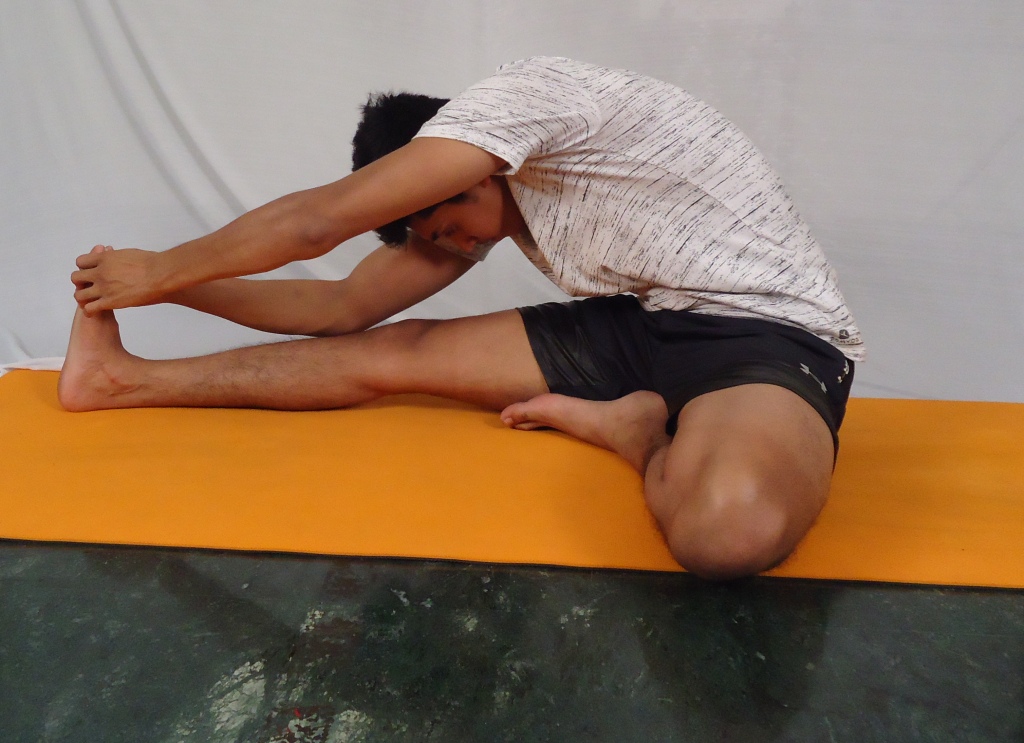
Janu Sirsasana – Head to Knee Posture (janu – knee, sirsa – head) Practice: Come to Dandasana (staff posture), bend right leg knee with help of arm place it heels at root of reproductive organs or close to perineum, calf muscles touching back thigh muscles, knees pressing downward, right foot pointing forward. Inhale, raise both your arms from ground beside thighs, extend your back and bend from lower back catch hold left foot by both palms. Foot facing towards sky, knee straight, left leg in straight line not tilting either side, forehead at your shin muscles. Stay in this posture for 10 to 40 seconds or till you feel comfortable, by breathing longer and even through your nose. Release your arms, lift head, come up from lower back, and exhale arms down. Repeat same at opposite side for complimentary. Benefits: It activates pancreas and makes insulin to function efficiently, it strengthen pelvic region, hip joints and inner deep quadriceps thigh muscles, release fatigue and tiredness of leg muscles. Melts and remove kidney or gall bladder stone. Improves digestive mechanisms and strengthen liver, pancreas, prostrate gland. Stimulate ida and pingala nadi which is preparatory for activate shushmna nadi. Removes lower back stiffness and strengthen lower back, hip joints, and butt, remove back pain gradually by stable practice. #Yoga teacher training certification course near me #Best yoga teacher training certification courses in Bangalore #Yoga teacher training certificate course fees in Bangalore
Halasana – Plough Posture
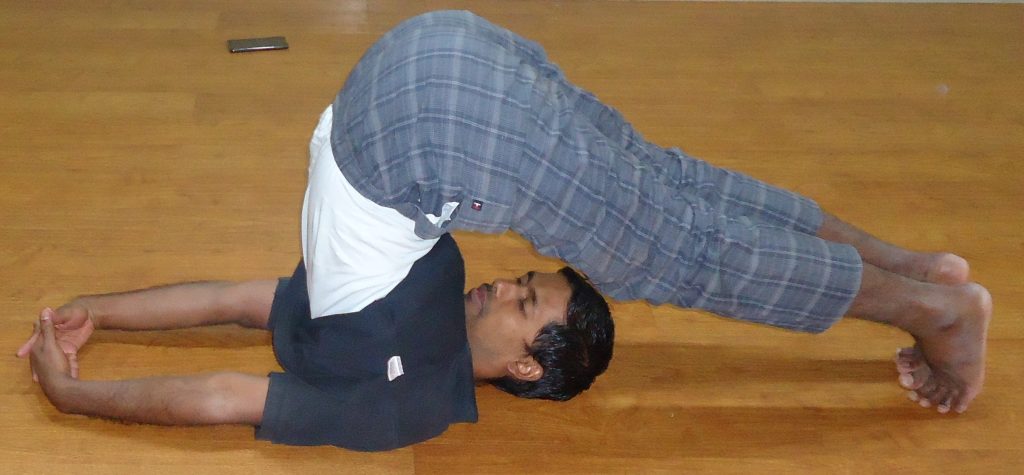
Halasana – Plough Posture (hala – plough) Practice: Lie supine on the floor with the hands extended along the body and the feet together. Raise the legs up to 90 degree, by keeping the knees straight. Press the palms against floor, raise the trunk by bending the legs towards the head and touch the toes on the ground. Interlock fingers rest back of head straight. Both legs straight and firm. Stay for 10 to 20 seconds, keep breathing evenly and deeply. By palms support lower the trunk and slowly come back to supine posture. Benefits: Deeply stimulates abdominal organs. Gives good exercise to the thyroid glands. Gives a good stretch to the spinal column, thus it builds a strong and supple supine. #Yoga teacher training certification course near me #Best yoga teacher training certification courses in Bangalore #Yoga teacher training certificate course fees in Bangalore