
Patanjali Yoga Sutra – Kaivalya Pada Memory & impressions
Patanjali Yoga Sutra – Kaivalya Pada Memory & impressions 4.9. Jatidesakalavyavahitanamapyantaryam smrtisamskarayorekarupatvat| Jati-class of birth Desa-place Kala-time Vyavahitanam-separated Api-even Anantaryam-sequence Smrtisamskarayoh-of memory and impressions Ekarupatvat-because of sameness in form Because memory and impression are the same in form there is a sequence although they may be classified by class of birth, place and time. Patanjali Yoga Sutra – Kaivalya Pada Source of potential impressions 4.10. Tasamanaditvam chasiso nityatvat| Tasam-there is Anaditvam-begnninglessness Cha-and Asisah-of the will to live Nityatvat-by permanence There is no beginning to them and the desire to live is eternal.
Heart, Arteries & Veins Forms the Circulatory System
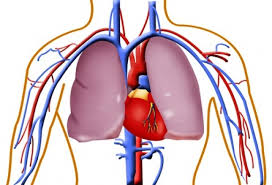
The Heart, Arteries & Veins Forms the Circulatory System: The heart pumps blood into arteries. The arteries divide and subdivide and finally end in capillaries. The capillaries later unite to form veins. The veins return blood to the heart. The arteries carry pure blood away from the heart, Veins carry De-oxygenated blood to the heart and the capillaries are minute channels receives blood from smaller arteries (arterioles) and deliver into smaller veins (venules). Blood circulation: depending on the course of blood. Circulation can be classified into: Systemic circulation. Pulmonary circulation Coronary circulation Portal circulation. Systemic circulation: it’s the blood circulation that carries oxygenated blood away from the heart, to the body, and returns deoxygenated blood back to the heart except for lungs. This circulation starts Oxygenated blood enters the left atrium from the pulmonary veins. The blood is then pumped through the mitral valve into the left ventricle. From the left ventricle, blood is pumped through the aortic valve and into the aorta, the body’s largest artery. The aorta arches and branches into major arteries and then it breaks up into smaller arteries and finally ends in capillaries. The capillaries unite to form venules which join up ultimately to form 2 large venous trunks namely superior vena cava and inferior vena cava. These 2 venous trunks open in the right atrium of the heart. Gas and nutrient exchange with the tissues occurs within the capillaries that run through the tissues. Metabolic waste and carbon dioxide diffuse out of the cell into the blood, while oxygen and glucose in the blood diffuse out of the blood and into the cell. The arterial component of systemic circulation the highest blood pressures in the body. The venous component of systemic circulation has considerably lower blood pressure in comparison, due to their distance from the heart, but contain semi-lunar valves to compensate. Systemic circulation as a whole is a higher pressure system than pulmonary circulation. Pulmonary circulation: it involves the purification of blood in lungs. It’s the circulation of the blood from the heart to the lungs for oxygenation, then back to the heart again. The Oxygen-depleted blood from the body leaves the systemic circulation when it enters the right atrium, The blood is then pumped through the tricuspid valve into the right ventricle. From the right ventricle, blood is pumped through the pulmonary valve and into the pulmonary artery. The pulmonary artery splits into the right and left pulmonary arteries and travel to each lung. The oxygenated blood then leaves the lungs through pulmonary veins, which returns it to the left atrium, completing the pulmonary circulation. Coronary Circulation: Coronary circulation involves blood supply to the heart itself, it is the circulation of blood in the blood vessels of the heart muscle. The vessels that deliver oxygen-rich blood to the myocardium are known as coronary arteries. The right and left coronary arteries arise from ascending aorta. The vessels that remove the deoxygenated blood from the heart muscle are known as cardiac veins which collect and opens into the right atrium. Portal circulation: It’s the circulation of blood through the liver. In this circulation, the portal vein carries blood that has circulated in stomach, intestine, and pancreas to liver. The portal vein divides into capillaries. These capillaries join with the capillaries of the hepatic artery. The venous blood of liver is collected by hepatic vein which joins with inferior vena cava.
Measurement of blood pressure
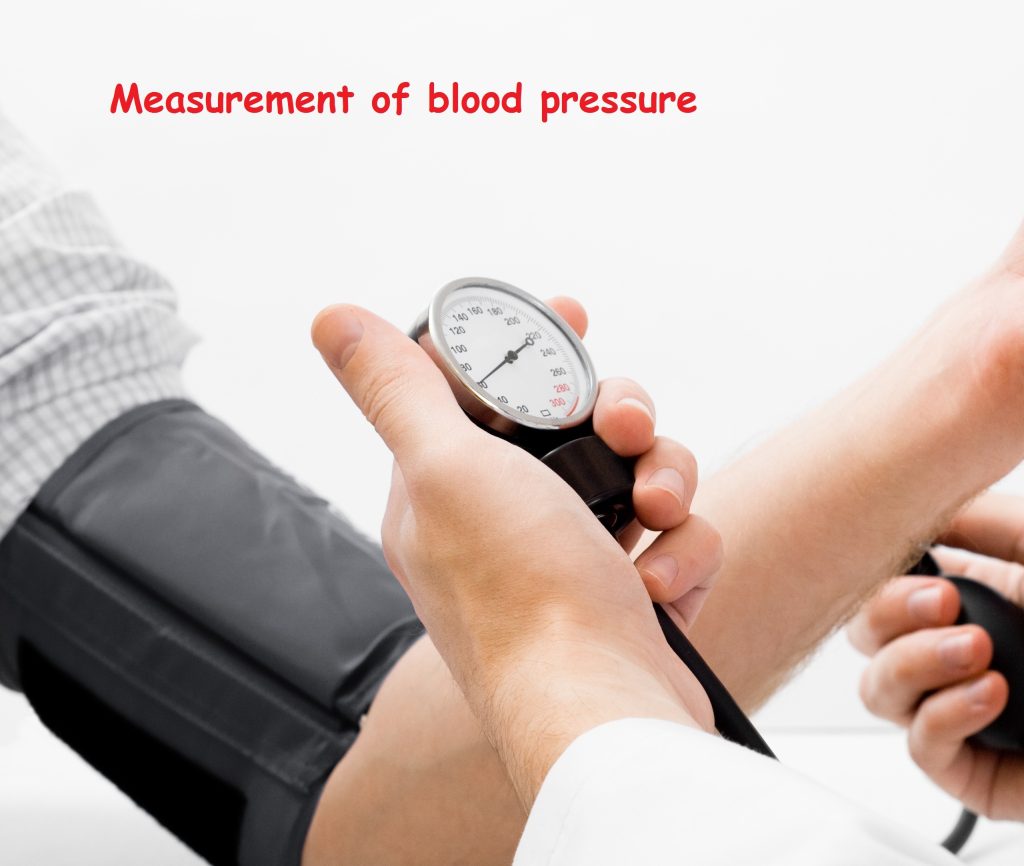
Measurement of blood pressure: Blood pressure is usually measured by an instrument called sphygmomanometer; it consists of a mercury manometer. Cuff and hand pump. The cuff is tied around the cubical fossa of the individual then the hand pump is pressed so that air is inflated in the cuff. When the cuff is fully inflated, air pressure is more than blood pressure. So blood flow in the brachial artery is completely obstructed. Now the hand pump is slowly released until the time the appearance of the first sound is heard (by means of a stethoscope put in the cubital fossa*. The manometer reading is now noted this regarding the systolic pressure. Later the hand pump is slowly released until the time that the sound becomes louder and louder. Later it stops the manometric reading is noted when the sound disappears. This reading is the diastolic blood pressure.
Unmani Avastha State

Unmani Avastha Tare jyotishi samyojya kimchidunnamayed bhruvau/ Purvayogam mano yunjannunmanikarakah kshanat// Fix the gaze on the tip of the nose and raise the eyebrows a little, within the mind contemplating, inwardly thinking of Brahma, but apparently looking outside. This will create the Unmani avastha state.
Sound-Shakti – Dissolves in Consciousness
Sound is shakti and dissolves in consciousness Yatkinchin nadarupena sruyate saktireva sa / Yas tattvanto nirakarah sa eva paramesvarah// Whatever is heard of the nature of the mystical nada or sound is verily Shakti. That in which all the panchatattwa elements find dissolution, that is the formless being, the supreme God. (Chapter -4, Verse 102).
Shambhavi Mudra (eyebrow center gazing)

Shambhavi Mudra (eyebrow center gazing) Shambhavi mudra (eyebrow center gazing) internalizes pranic flow and mind – If the Hatha Yogi remains with the chitta and prana absorbed in the internal object and gaze motionless, though seeing, he is not seeing, this is called shambhavi mudra, realm of Shiva consciousness). Antarlakshyam bahirdrshtir nimeshonmeshavarjita / Esha sa sambhavi mudra vedasastreshu ghopita// With internalised one-pointed awareness and external gaze unblinking, that truly is shambhavi mudra, preserved in the Vedas. (Chapter -4, Verse 36). Antarlakshyavilinachittapavano Yogi Yada vartate / Drshtya nischalataraya bahir adhah pasyannapasyannapi / Mudreyam khalu sambhavi bhavati sa labdha prasadad ghuroh/ Śunyasunyavilakshanam sphurati tattattvam Padam sambhavam// If the Hatha Yogi remains with the chitta and prana absorbed in the internal object and gaze motionless, though seeing, he is not seeing, this is called shambhavi mudra. When it is bestowed by the guru’s blessing, the state of shoonyashoonya obtained. That is the real state of Shiva consciousness. (Chapter -4, Verse 37)
Prana and Mind
Prana and mind are controlled through each other Pavano badhyate yena manastenaiva badhyate / Manascha badhyate yena pavanastena badhyate// Through controlling the prana, thought is contolled and through control of thought, prana or air is controlled. (Chapter -4, Verse 21).
Parichaya Avastha (stage of increase)
Parichaya Avastha (stage of increase) Stage of increase – Sound of the drum, perfection or siddhi. Imbalance of the three humors or doshas, pain, old age, disease, hunger, sleep are destroyed. Trtiyayam tu vijneyo vihayo mardaladhvanih / Mahasunyam tada yati sarvasiddhisamasrayam// In the third stage is the experience of the sound of the drum. Then there is the great emptiness and one enters the place of total perfection or siddhi. (Chapter -4, Verse 74). Chittanandam tada jitva sahajanandasambhavah / Doshaduhkhajaravyadhikshudhanidravivarjitah// Then the bliss of chitta being obtained, spontaneous ecstasy arises. Imbalance of the three humours or doshas, pain, old age, disease, hunger, sleep are destroyed. (Chapter -4, Verse 75).
Main bones of the human skeleton
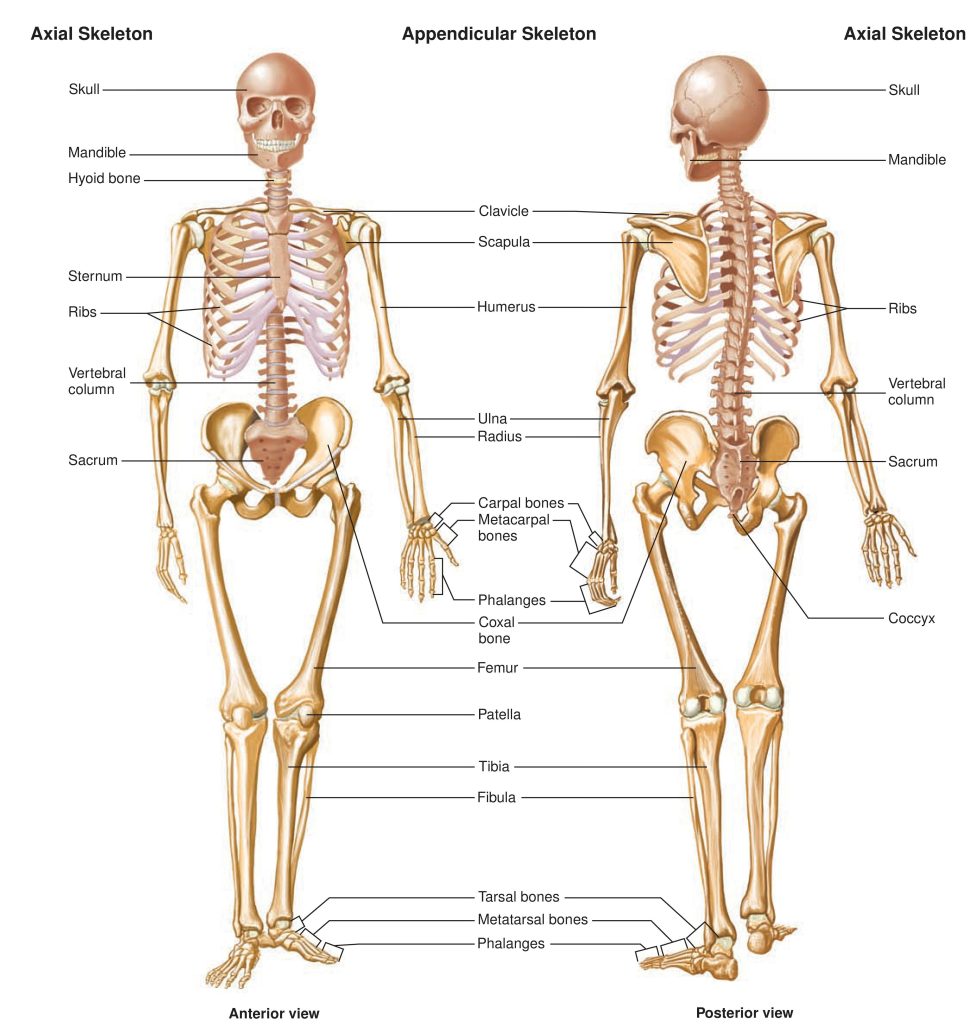
The main bones of the human skeleton are: The Skull – Cranium, Mandible, and Maxilla Shoulder girdle – clavicle and scapula Arm – humerus, radius, and ulna Hand – Carpals, Metacarpals, and Phalanges Chest – Sternum, and Ribs Spine – Cervical area (top 7 vertebrae), Thoracic (next 12), Lumbar (bottom 5 vertebrae), Sacrum (5 fused or stuck together bones) and Coccyx (the tiny bit at the bottom of the spine). Pelvic girdle – Ilium, Pubis, and Ischium. Leg – Femur, Tibia, and Fibula Ankle – Talus and calcaneus Foot – Tarsals, Metatarsals, and Phalanges.
Nishpatti Avastha (state of consummation)
Nishpatti Avastha (state of consummation) Nishpatti avastha or state of consummation – Rudra granthi is pierced, the fire of prana flows to the place of Ishwara. Then in the state of nishpatti or consummation is the tinkling sound of the flute resonating like a vina Rudraghranthim yada bhittva sarvapithaghatoanilah/ Nishpattau vainavah sabdah kvanadvinakvano bhavet// If the Rudra granthi is pierced, the fire of prana flows to the place of Ishwara. Then in the state of nishpatti or consummation is the tinkling sound of the flute resonating like a vina.(Chapter -4, Verse 76).