
Jathara Parivartanasana(Master Revolved Abdomen Pose)
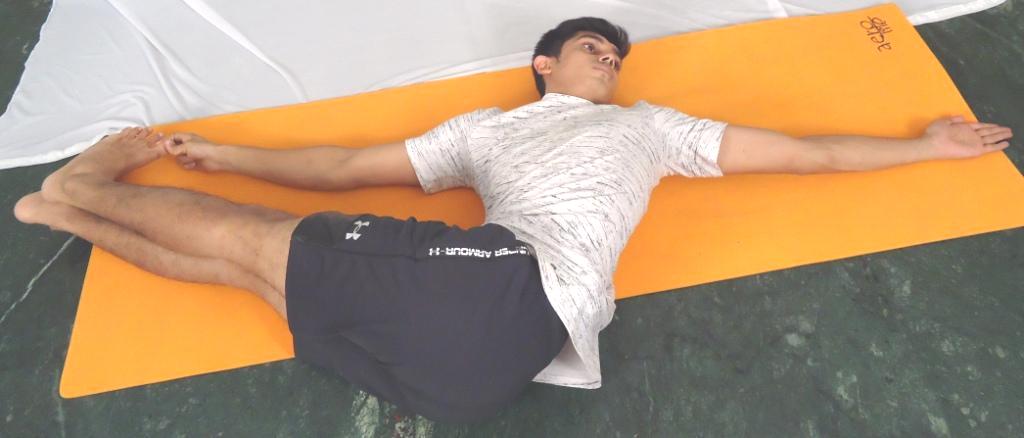
Jathara Parivartanasana(Master Revolved Abdomen Pose) This is an abdominal twist. Start by lying flat on your back on the floor. Reach your arms out to either side of the body so your body looks like a cross. Press your legs together from the inner thigh down to the heels. Exhale and raise the legs together until they are perpendicular to the mat or floor. Make sure your knees are straight. Take a few breaths. Now exhale and place the legs to the right side of the body, just below your right hand. Make sure your shoulders are not rising off the floor. Stay here breathing easily for thirty seconds. Then exhale and move the legs back until they are perpendicular to the floor. Breathe here. On an exhale, place the legs stretched back out in front of you. Now repeat this on the other side. Precaution: Hip replacement Pregnancy Benefits: Tones and eradicates sluggishness of the liver, spleen and pancreas. Cures gastritis and strengthens the intestines. Helps to relieve sprains and catches in the lower back and the hip region.
Supta Pavanamuktasana(Reclining Wind Relieving Pose)
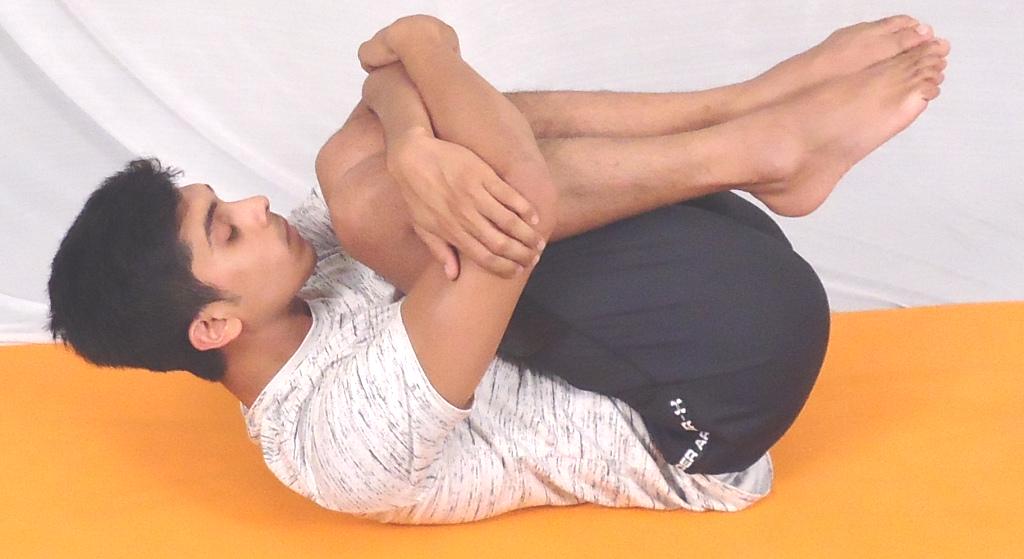
Supta Pavanamuktasana(Reclining Wind Relieving Pose) This is the reclined wind relieving pose. You must lie flat on your back on your mat. Slowly inhale and hug your right knee to your chest and raise your head slightly off the ground. Try and touch your nose to your knee. Then exhale and relax back down to Shavasana. Repeat this on the other side. You can do this pose hugging both knees into your chest, as well. Precaution: Neck concern Abdominal surgery Pregnancy Benefits: Strengthens the lower back muscles and loosens the spinal vertebrae. It massages the abdomen and the digestive organs and is therefore very effective in removing wind and constipation. By massaging the pelvic muscles and reproductive organs, it is also useful for impotence, sterility and menstrual problems.
Ananda Balasana(happy baby pose)
Ananda Balasana(happy baby pose) This is the happy baby pose. Lie on your back. Now exhale and raise your knees so the backs of your thighs are pushing into your stomach. You have to spread your legs as far as is comfortable here. Inhale and reach your hands and grasp your feet with them. You can rock gently from side to side here. Stay in this pose, breathing easily for thirty seconds. Then slowly come out of the pose. Benefits: Get relief from back pain. Hip opening pose. Wind relieving pose. Strengthen core.
Savasana(corpse pose)
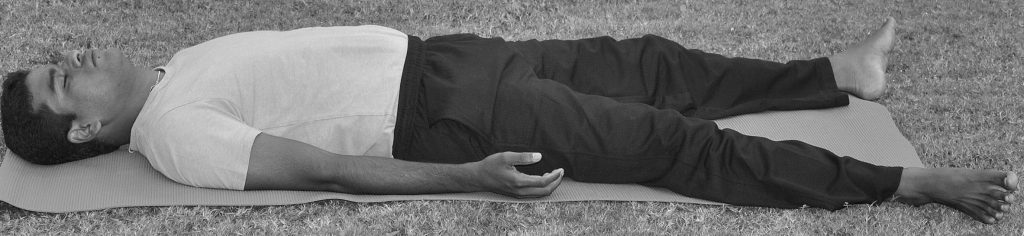
This is the corpse pose. You must lie flat on your back on your mat. Keep your feet slightly apart and your hands on the floor facing upwards. Close your eyes and relax your breathing. Stay here until your breathing slows down and you feel the tension leaving your body. Benefits: Relaxes the whole psycho-physiological system. It should ideally be practiced before sleep; before, during and after asana practice, particularly after dynamic exercises such as surya Namaskara.
Eka Pada Raja Kapot Asana(One Legged King Pigeon Pose)
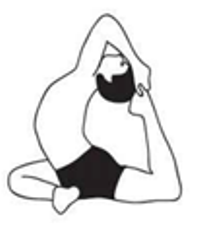
Eka Pada Raja Kapot Asana(One Legged King Pigeon Pose) This is pigeon pose or single legged pigeon pose. Start by sitting on the floor with your legs stretched straight out in front of you. Now draw your left leg behind you in a half split, while you bend your right leg and take it in front of you with your right foot placed close to your groin. Place your palms on the floor by your hips. Arch your back as you feel the stretch in your back leg. Stay here, breathing easily for thirty seconds. Then come out of the pose and relax. Repeat this on the other side. Precaution: Knee or hip injury Sacroiliac concerns Benefits: Opens the hips and chest. Stimulates and stretches the abdominal organs. Recommended for runners and sprinters. It relaxes and strengthens the abductor muscles of the thighs.
Krounchasana(heron pose)
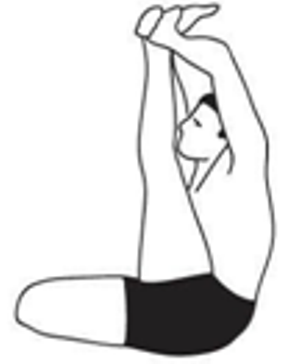
Krounchasana(heron pose) This is the heron pose. Start in dandasana, sitting with your legs stretched out in front of you. Sit in half Virasana, with your right knee bent and placed on the floor, your foot by your buttocks, toes pointing backwards. The inner right calf should touch the back of the right thigh. As you exhale, bend the left knee and grasp the left foot with both hands. Raise the left leg until it is pointing to the sky with the knee straight. Make sure your spine is straight. Try and press your nose or chin to your knee. Stay here, breathing easily for thirty seconds. Then come out of the pose and relax. Precaution: Who having knee problem should avoid this pose. Benefits: Abdominal organs all get rejuvenated.
Parighasana(gate pose)
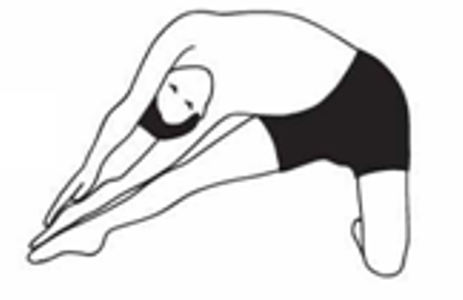
Parighasana(gate pose) This is the gate pose. Start in a kneeling position on your mat. Inhale and rise up so that your upper thighs are perpendicular to the floor. Exhale and bring your left thigh out to the side of your body, placing the foot flat on the mat. The knee should be straight as you stretch the left leg out to the side, supported on your right leg. Inhale and take your left hand out and place it below your left knee as you bend the torso to the left side. Exhale Inhale and take your right hand over your head so that you are leaning over to the left side with your whole upper body, including the right arm. Stay here, breathing easily for thirty seconds. Then come out of the pose and relax. Repeat the pose on the other side. Precaution: Who having knee problem should avoid this pose. Benefits: Pelvic region is stretched and strengthened. Abdomen is extended and keep healthy. Sideways spinal movement will help persons suffering from stiff rigid back.
Malasana(garland pose)
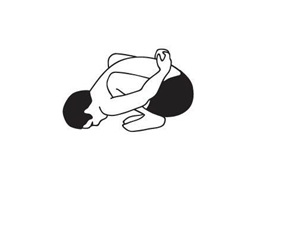
Malasana(garland pose) This is the garland pose. It is a low squat. Step your feet slightly apart so there is about enough place for your body to fit in between them. Then lower down into a squat, while keeping your feet flat on the ground. Fold your hands in Anjali mudra or prayer pose and press your elbows against your inner thighs. Stay here, breathing easily for thirty seconds. Then come out of the pose and relax. Precaution: Knee concern Benefits: Abdominal organs are exercised and gain strength. Pain in the back during the menstrual period, will get relief.
Prasarita Padottanasana(Wide Legged Forward Bend Pose)
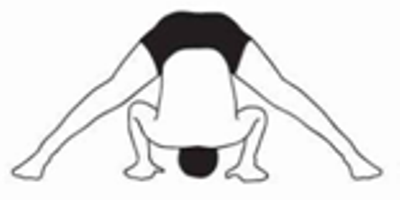
Prasarita Padottanasana(Wide-Legged Forward Bend Pose) This is a forward bend with a wide stance. Step your feet three and a half to four feet apart on an exhale. Now inhale and place your hands on your hips and turn your feet inwards so the toes point forwards. Engage your thigh muscles and make your torso longer. Now exhale and bend forward from the lower back and press into the floor with your palms parallel to your shoulders and your elbows bent. Try and rest the crown of your head on the floor. Stay here, breathing easily for thirty seconds. Then come out of the pose and relax. Precaution: Shoulder injury Back concerns Benefits: Stretches the hamstrings, inner thighs, and low back. Builds stability in the feet and legs. Stretches the shoulder joints throughout the range of motion. Relaxes and recharges the mind and body. Stimulates and tones the abdominals. People who cannot do Sirsasana can benefit from this pose, which increases digestive powers.
Natarajasana(Lord of the Dance Pose)
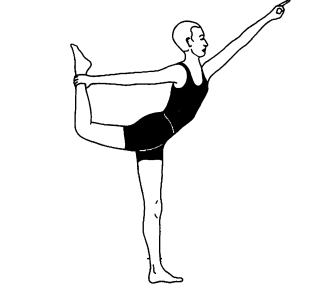
Natarajasana(Lord of the Dance Pose) This is the Lord of the Dance pose named for Lord Shiva. Start in Tadasana. Inhale and lift your left leg, bent at the knee, towards your left buttock. Grasp your left foot with your left hand and lift the left leg up until the thigh is parallel to the floor. Bend the torso forward and reach your right hand out until it is parallel to the floor. Stay here breathing easily for thirty seconds. Then release the pose and relax. Precaution: People who suffer from a weak heart, high blood pressure, back problems, hernia, colitis, peptic or duodenal ulcers, or vertigo should not practice this asana. Benefits: Strengthens the back, shoulders, arms, hips and legs. It helps develop a sense of balance and coordination and improves concentration.