
Virabhadrasana – III (Warrior – III Pose)
Virabhadrasana – III (Warrior – III Pose) This is warrior 2. Start in Tadasana. Then exhale into chair pose, keeping your thighs parallel to the mat as much as you can. From here exhale and step back into a lunge position, your right foot in front and left foot behind. Inhale and turn your right foot out 90 degrees. Turn your left foot inwards slightly so it is pointing in the direction of the right foot. Then keep your arms parallel to the floor and lean down active from the torso so that your torso and arms are in a straight line. Exhale and straighten the right leg as you go while simultaneously raising the back leg until it forms a straight line from toe to head. Press strongly through the right leg and heel to balance. Stay here breathing easily for thirty seconds. Then slowly release the pose and come back to Tadasana. Repeat the pose on the other side. Precaution: Balance concerns or vertigo High blood pressure Benefits: Contract and tone the abdominal organs and makes the leg muscles more shapely and sturdy. It is recommended for runners, as it gives vigour and agility. helps one to stand firmly on the soles of the feet, keeps the stomach muscles in and gives agility to the body and the mind.
Virabhadrasana – II (Warrior – II Pose)
Virabhadrasana – II (Warrior – II Pose) This is warrior 2. Start in Tadasana. Step your feet three and a half to four feet apart on an exhale. Inhale and turn your right foot out 90 degrees. Turn your left foot inwards slightly so it is pointing in the direction of the right foot. Now exhale and press down until your right thigh is parallel to the ground, while your back knee is straight. Turn your torso so that your right hip is pointing forwards towards your right leg and your left hip is pointing in the direction of the back leg. On an inhale, raise your arms and reach out strongly to the sides, pointing the right arm in forward and the left arm behind. Keep your neck straight but relaxed. Stay here breathing easily for thirty seconds. Then slowly release the pose and come back to Tadasana. Repeat the pose on the other side. Precaution: Knee concerns Neck concerns Benefits: Opens and strengthens the shoulder joints. Through this pose the leg muscles become shapely and stronger. It relieves cramp in the calf and thigh muscles, brings elasticity to the leg and back muscles and also tones the abdominal organs.
Virabhadrasana – I (Warrior – I Pose)
Virabhadrasana – I (Warrior – I Pose) This is warrior 1. Start in Tadasana. Step your feet three and a half to four feet apart on an exhale. Inhale and turn your right foot out 90 degrees. Turn your left foot inwards slightly so it is pointing in the direction of the right foot. Make your thighs firm. Now exhale and press down until your right thigh is parallel to the ground, while your back knee is straight. Now inhale and raise your arms so that they are by the sides of your ears, reaching up, your fingers activated and pointing to the sky. On an exhale, make sure your hips are pointing forward. Stay here breathing easily for thirty seconds. Then slowly release the pose and come back to Tadasana. Repeat the pose on the other side. Precaution: Knee injury Shoulder concerns High blood pressure Benefits: Builds strength and endurance. In this pose the chest is fully expanded and this helps deep breathing. It relieves stiffness .in shoulders and back, tones up the ankles and knees and cures stiffness of the neck. It also reduces fat round the hips.
Parsvottanasana(Intense Side Stretch Pose)
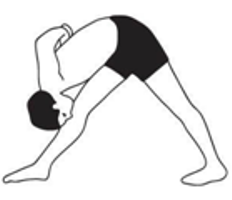
Parsvottanasana(Intense Side Stretch Pose) This is the intense side stretch. Start in Tadasana. Then walk, step or jump your feet three or three and a half feet apart. Join your palms in Anjali mudra behind your back on an inhale as you draw your shoulders back. Then turn your right foot out 90 degrees. Turn your left foot inwards slightly so it is pointing in the direction of the right foot. Make your thighs firm. Now exhale and turn your torso to the right as you bend your body forward and down from the lower back. Rest your forehead on your thigh or knee, if possible. Stay here breathing easily for thirty seconds. Then inhale and raise your head and torso back up, relax your arms down and bring your feet back so you are in Tadasana again. Then repeat this on the left side. Precaution: Glaucoma or high blood pressure Shoulder injury. Benefits: Opens the chest. Increases balance. Stimulates the abdominal organs. Provides deep stretch for the legs, hips, and side torso. Relieves arthritis in the neck and spine. Relieves stiffness in the neck, shoulders, elbows, and wrists.
Parivrtta Parsvakonasana(revolved side angle pose)
Parivrtta Parsvakonasana(revolved side angle pose) This is the revolved side angle pose. Start in Tadasana. Then exhale and walk, step or jump your feet four or three and a half feet apart. Inhale and place your hands on your hips. Then turn your right foot out 90 degrees. Turn your left foot inwards slightly so it is pointing in the direction of the right foot. Exhale and turn your torso to the right. Inhale and bend the right knee so that it is parallel to the mat, while keeping the left leg straight. Exhale and rotate your torso so that your left hip joint is pointing to the floor and your right hip joint is pointing to the sky. Inhale, take your left hand and try and place it by your right foot. Your right arm is pointing to the sky. Look up at your right palm. Breathe easily here for thirty seconds. Then relax and come out of the pose. Repeat this on the left side. Precaution: Back injury. As with any twisting posture, students with an acute back injury should be cautious when practicing this asana. Benefits: Tones the thigh, calf and hamstring muscles. The chest is expanded fully. The pose relieves pains in the back, invigorates the abdominal organs and strengthens the hip muscles.
Utthita Trikonasana(extended triangle pose)
Utthita Trikonasana(extended triangle pose) This is the extended triangle pose. Start in Tadasana. Then exhale and walk, step or jump your feet three or three and a half feet apart. Inhale and raise your arms so that they are parallel to the floor. Reach out to sides, fingers activated. Then turn your right foot out 90 degrees. Turn your left foot inwards slightly so it is pointing in the direction of the right foot. Make your thighs firm. Then exhale and while your knees are straight, rotate the torso and bend the torso down so that the right hip joint and right hand point to the floor and the left hip joint and left hand point to the sky. Try and place your right palm on the floor near your right foot. If this is not possible place it on the right upper thigh or below the right knee. Turn your head to gaze at your left hand. Stay here breathing easily for thirty seconds. Then inhale and raise your head and torso back up, relax your arms down and bring your feet back so you are in Tadasana again. Then repeat this on the left side. Precaution: Heart conditions and high blood pressure Instruct the student to turn the gaze downward and keep the upper arm on the hip. Neck pain or injury Direct the student to continue to gaze forward without turning the neck. Shoulder concerns Instruct the student to keep the top hand on the hip and continue to rotate the shoulder back. Benefits: Good for flat feet, neck pain, and sciatica. Improves height, makes body aligned and balance both side. Improves droop or hunch back. Makes legs very stronger. Strengthens the Calf, thigh muscles, and waist muscles and makes the spine flexible. Strengthen the hips, groins, hamstrings, and calves, shoulders, chest, and spine.
Utkatasana(chair pose or mighty pose)
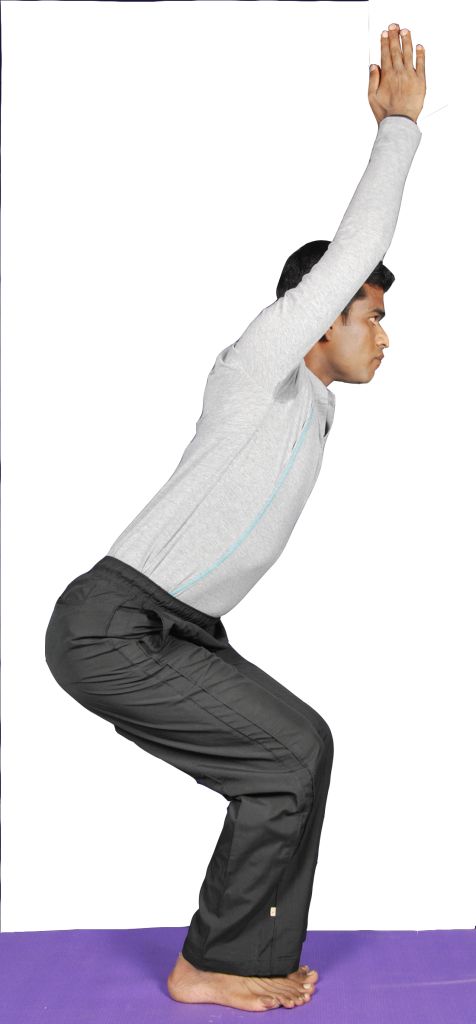
Utkatasana(chair pose or mighty pose) This is the chair pose. Start in Tadasana. From there inhale and raise your hands over your head with palms facing each other. Then exhale and bend your knees and try and make your thighs parallel to the mat or floor. Make sure that your knees do not extend out over your toes. Press your tailbone down towards the floor and try and keep the back firm. Stay here breathing easily for thirty seconds. Then inhale and rise back up. Exhale and lower your arms down to your side. Precaution: Knee injury Benefits: Builds strength and endurance in the hips and thighs. Opens and tones the chest and shoulders. Strengthens shoulders and open the chest. Strengthens and tones the ankles, thighs, calves, and spine Activate and optimize the efficiency of abdominal organs, diaphragm, and heart. Reduces flat feet.
Garudasana(eagle pose)
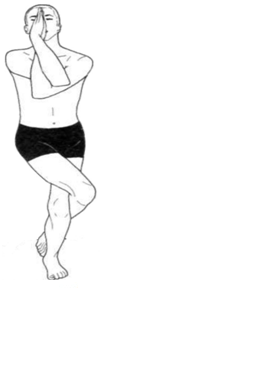
Garudasana(eagle pose) This is the eagle pose. Start in Tadasana. From there bend your knees then take your left thigh and cross it over your right thigh while balancing on your right foot. Try to hook the left foot over the right lower right calf. Now stretch your arms so they are parallel to the floor and square your shoulder blades. Cross your arms so the right arm is over your left arm and then bend your elbows. Then twist the right arm around the left so that you are doing a twisted prayer pose, with the palms joined. Stay here breathing easily for thirty seconds. Then come out of the pose and relax. Precaution: Hip replacement Knee injury Students with knee concerns should use modifications. Benefits: Helps develop focus, concentration, and increased balance. Provides a deep stretch in the outer hips, along the posterior shoulders, and between the shoulder blades. Stretches and strengthens the calf and ankle of the standing leg. Develops the ankles and removes stiffness in the shoulders. Preventing cramps in the calf muscles.
Ardha Chakrasana(Half Wheel Pose)
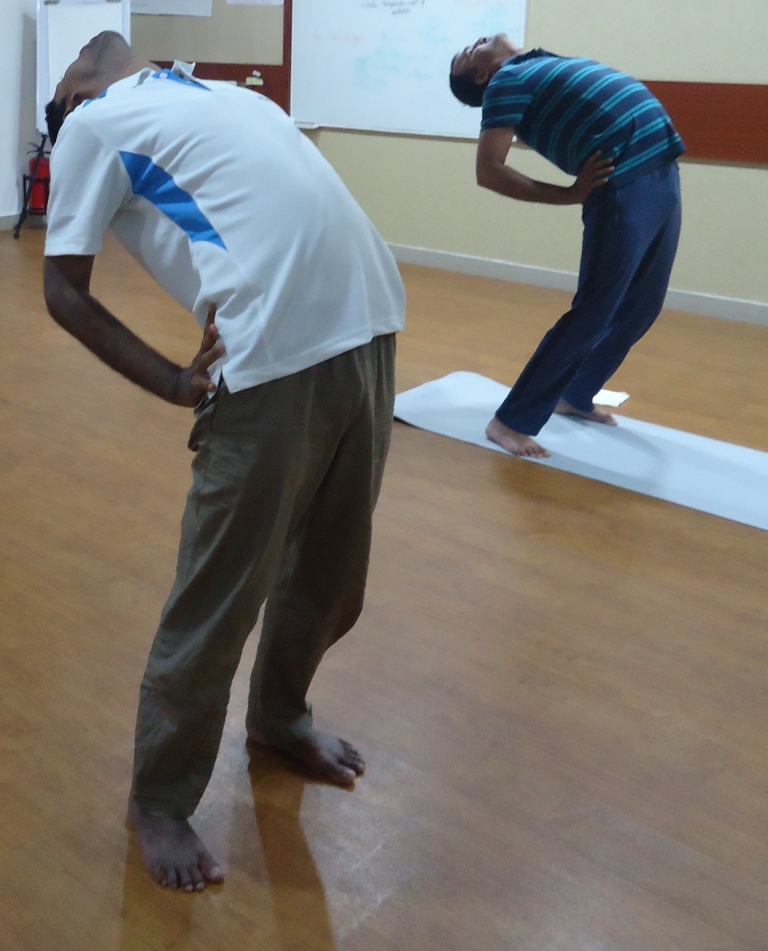
Ardha Chakrasana(Half Wheel Pose) Ardha Chakrasana is the half wheel pose. It is a standing backward bend. Start in Tadasana. From there inhale and raise your arms over your head as you bend backwards as far as you comfortably can. If you need support, you can place your hands on the back of your hips while you bend backwards. Stay here breathing easily for thirty seconds. Then inhale and bring your arms back down as you straighten up. Precaution: Late pregnancy Glaucoma Cardiac Problem Benefits: Makes the lower back flexible. Stimulates and strengthen the entire back, neck muscles, chest and shoulders. Improves respiration.
Padhastasana(hand under foot pose)
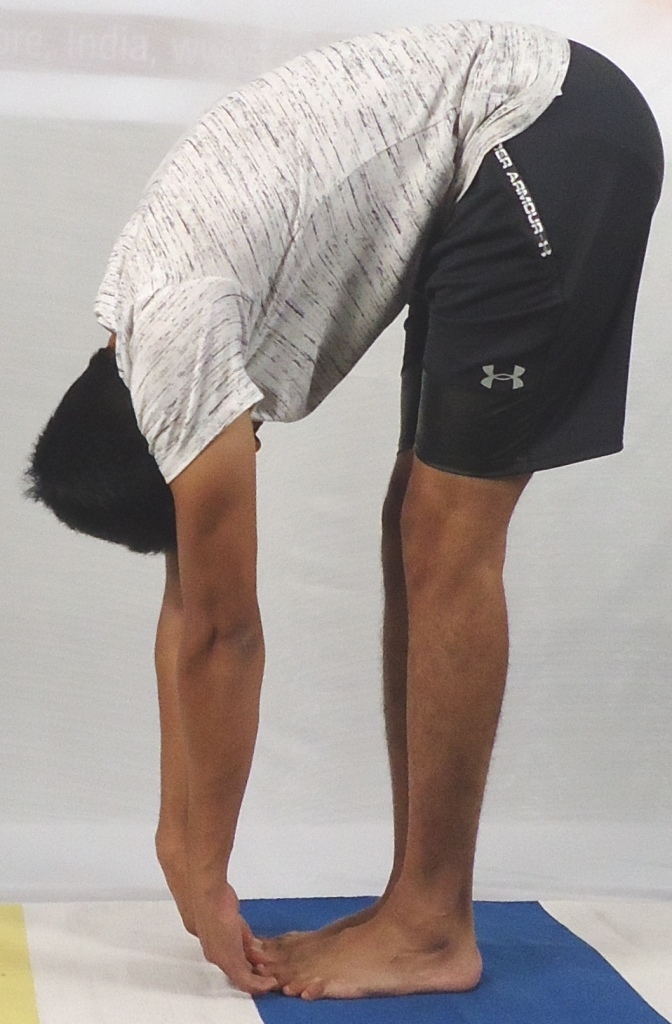
Padhastasana(hand under foot pose) Padhastasana is the hand under foot pose. It is not to be confused with Uttanasana, which is a general forward fold. Start your padhastasana in Tadasana. From here exhale and fold down from the lower back. You have to try and touch your torso to your thighs. Slide your hands under your feet so your toes are on top of palms, which are facing upwards. Your elbows will be bent. Stay here breathing easily for thirty seconds. Then relax back into Tadasana. Precaution: Back concerns Late pregnancy Glaucoma Cardiac Problem Benefits: Strengthens and stretches the spinal muscles. Lengthens and stretches the hamstrings and opens the posterior of the hips. Stimulates the stomach, intestine, liver, spleen, and kidneys. Helps preventing constipation and menstrual problems. Improves digestion. Enhances blood flow to the head region.