
Chaturanga Dandasana(Four Limbed Staff Pose)
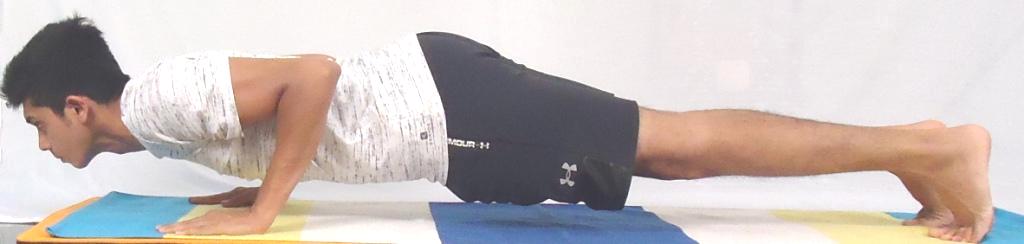
Chaturanga Dandasana(Four Limbed Staff Pose) This is the four limbed plank pose. Start in a prone position, on your stomach. Your palms are on the floor by your chest. Your feet are about a foot apart. Then exhale and slowly raise your body until it is balanced on your palms. Stay here, breathing easily for thirty seconds. Precaution: Wrist concerns Lower-back weakness Pregnancy Benefits: Strengthens the shoulders, arms, and wrists. Strengthens the abdominal muscles and massages the organs.
Phalakasana(plank pose)
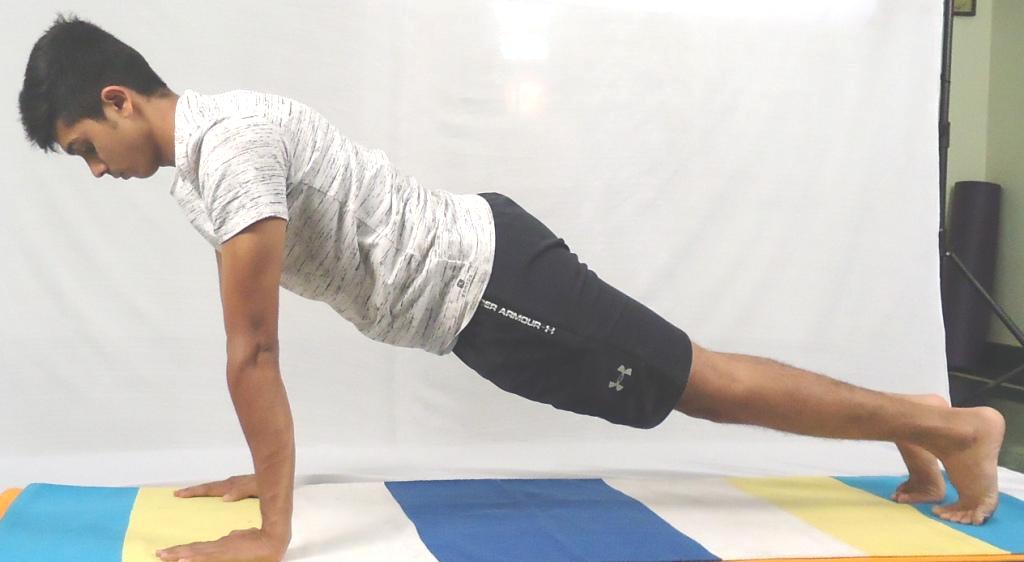
Phalakasana(plank pose) This is the plank pose. Start in the cat position, with your hands and knees on the floor and your knees hip distance apart. Then straighten out your legs so that you are rising up off the ground with your toes. At the same time, support your upper body on your palms. Your body should be in a straight line like a plank from head to toe. Breathe normally through this and stay in this pose for thirty seconds. Now relax back down into cat pose. Precaution: Wrist concerns Lower back weakness Pregnancy People suffering from high blood pressure, heart conditions or hernia should not practice Benefits: Builds stability in the shoulders and core muscle. This asana improves nervous balance and develops a sense of inner equilibrium and harmony. It strengthens the muscles of the thighs, arms, shoulders and spine.
Dhanurasana(bow pose)
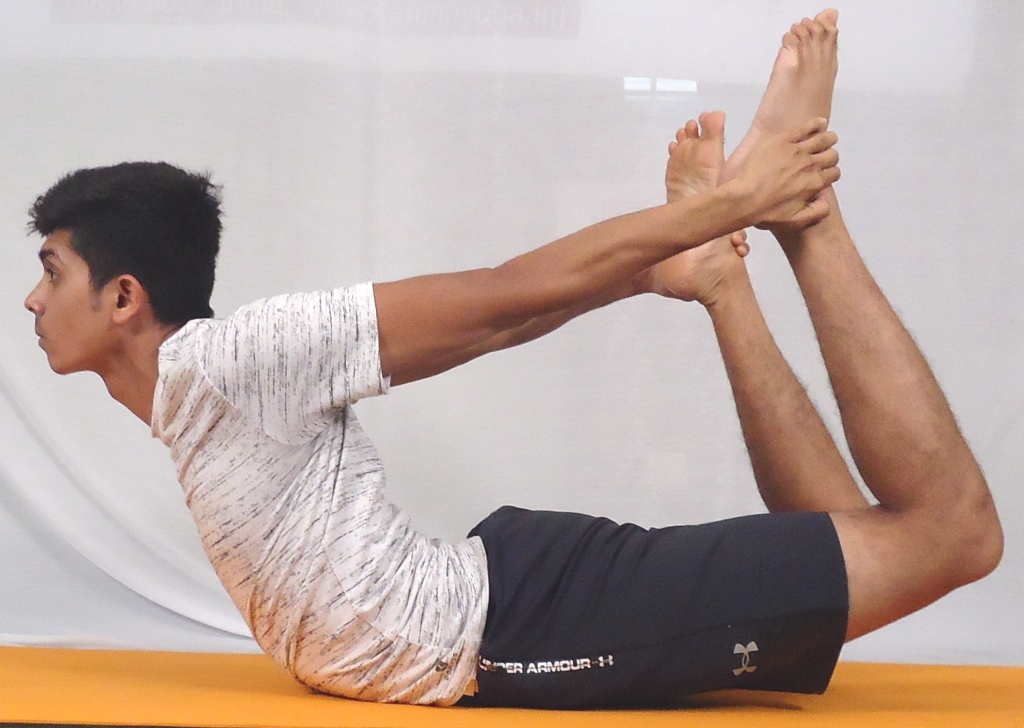
Dhanurasana(bow pose) This is the bow pose. Start by lying in a prone position on your stomach. As you exhale bend your knees and bring them up. At the same time extend your arms backwards and grasp your ankles with your hands. Breathe easily here, then exhale and life the knees off the ground as you lift the chest off the floor, as well. Your body should look taut like a stretched bow, which is why the pose is called bow pose. Stay here for about thirty seconds breathing easily. Then exhale and release back down. Precaution: Pregnancy Acute low-back injury, high blood pressure, or heart concerns Shoulder concerns weak heart, high blood pressure, hernia, colitis, peptic or duodenal ulcers Benefits: Brings back elasticity to the spine and tones the abdominal organs. Slipped discs. The liver, abdominal organs and muscles are massaged. The pancreas and adrenal glands are toned, balancing their secretions. The kidneys are massaged and excess weight is reduced around the abdominal area. This leads to improved functioning of the digestive, excretory and reproductive organs and helps to remove gastrointestinal disorders, dyspepsia, chronic constipation and sluggishness of the liver. The spinal column is realigned and the ligaments, muscles and nerves are activated, removing stiffness. It helps to correct hunching of the upper back.
Bhujangasana(cobra pose)
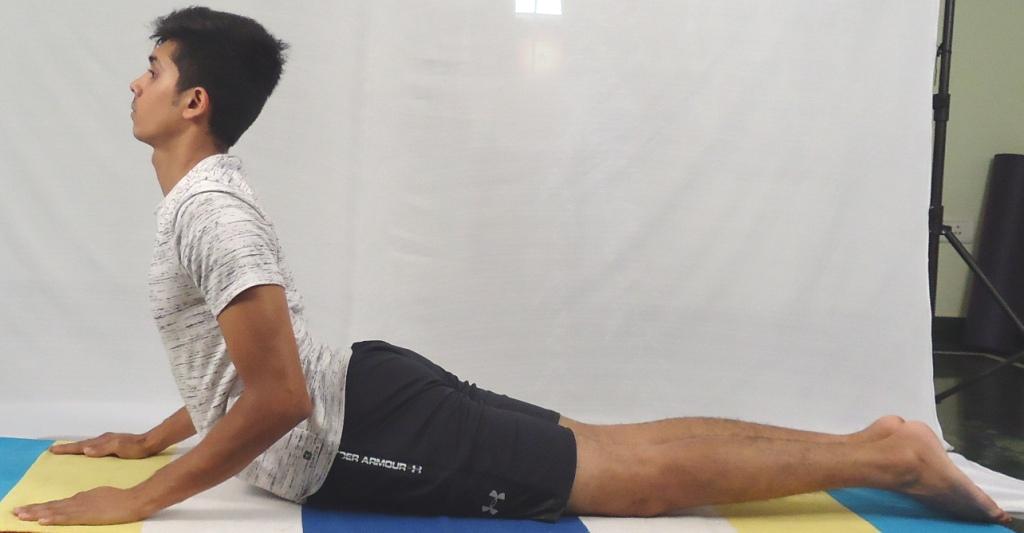
Bhujangasana(cobra pose) This is the low cobra pose. Lie flat on your stomach. Your legs are stretched behind you. Place your palms by your chest and inhale as you raise your head and upper body up until the navel by arching your spine backwards. Roll your shoulders back and down. Breathe easily as you hold the pose for thirty seconds. Then lower back down and relax. Precaution: Pregnancy Wrist pain Peptic ulcer, hernia Benefits: Panacea for an injured spine and in cases of slight displacement of spinal discs the practice of this pose replaces the discs in their original position. tones the ovaries and uterus, and helps in menstrual and some other gynaecological disorders. It stimulates the appetite, alleviates constipation and is beneficial for all the abdominal organs, especially the liver and kidneys.
Sarpasana(snake pose)
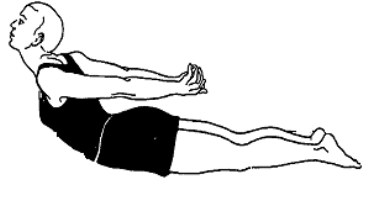
Sarpasana(snake pose) This is the snake pose. It is a precursor to the low cobra pose. Lie flat on your stomach. Your legs are stretched behind you and your forehead is on the mat. Your palms are on the floor by the chest. Now inhale and lift the torso off the floor, lifting the head first. Keep your legs pressed together and engaged. Gaze in front while breathing easily for thirty seconds. You can also clasp your hands behind your back and pull them backwards. Then exhale and lower back down and relax. Precaution: Who suffering from peptic ulcer, hernia, intestinal tuberculosis or hyperthyroidism, heart conditions and high blood pressure should not practice. Benefits: Correct the posture, particularly rounded shoulders. Profound strengthening effect on the back muscles.
Shalabhasana(locust pose)
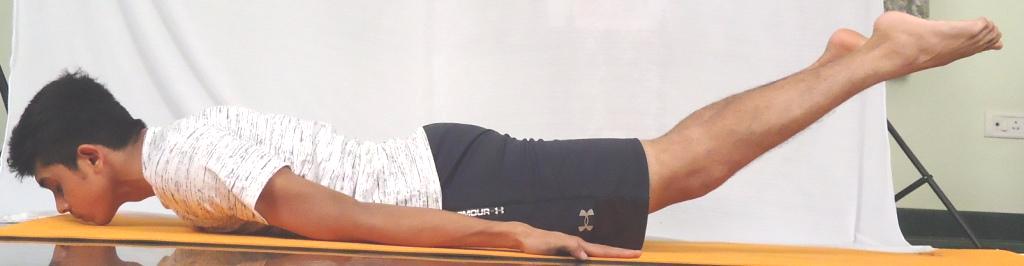
Shalabhasana(locust pose) This is the locust pose. Lie flat on your stomach. Place your palms under your inner thighs. Engage your lower body and then inhale and raise both your legs off the floor with the support of your palms. Stay here breathing easily for thirty seconds. Then lower back down while you exhale and relax. Precaution: Weak heart, coronary thrombosis or high blood pressure. Peptic ulcer, hernia, intestinal tuberculosis. Benefits: Strengthens the lower back and pelvic organs, and provides relief from backache, mild sciatica and slipped disc. Liver, stomach, bowels and other abdominal organs, and stimulates the appetite.
Ardha Shalabhasana(Half Locust Pose)
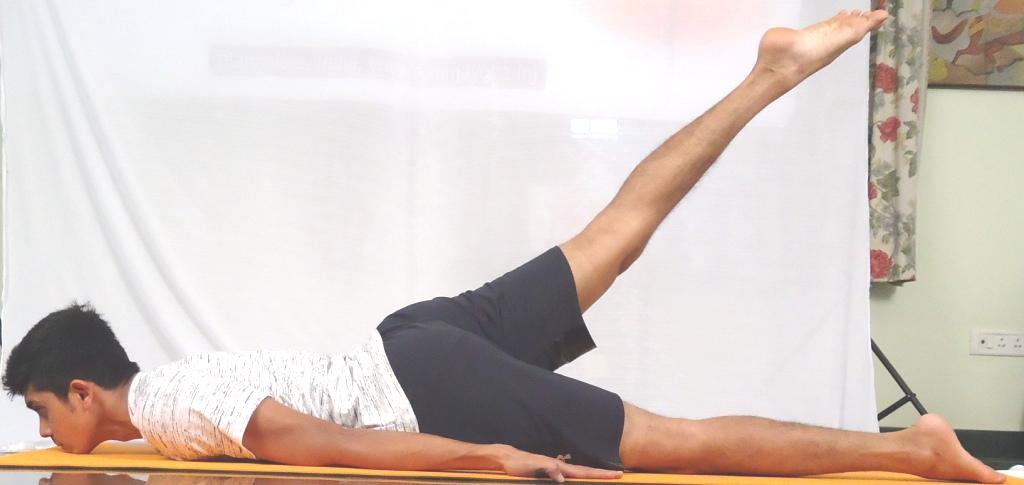
Ardha Shalabhasana(Half Locust Pose) This is the half locust pose. Lie flat on your stomach. Place your palms under your inner thighs. Engage your lower body and then inhale and raise your right leg off the floor with the support of your palms. Stay here breathing easily for thirty seconds. Then lower back down while you exhale and relax. Repeat the pose on the other side. Precaution: Weak heart, coronary thrombosis or high blood pressure. Peptic ulcer, hernia, intestinal tuberculosis. Benefits: Back and pelvic organs. It can release tension in the pelvic area.
Makarasana(Crocodile Pose)
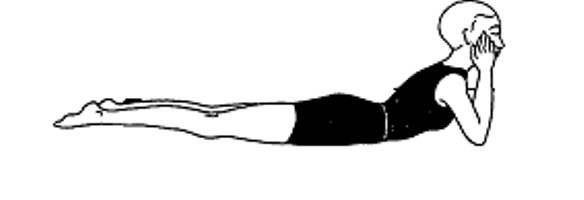
Makarasana(Crocodile Pose) This is the crocodile pose. Lie flat on your stomach. Your legs are stretched behind you. Place your palms on the floor under your chin. Inhale as you raise your head and upper body up until the navel by arching your spine backwards. Now bring your palms up while your elbows rest on the floor. Rest your chin on your palms. Breathe easily here for thirty seconds. Then slowly release the pose and relax. Precaution: Exaggerated lumbar curve should not practice this asana if any pain is experienced. Benefits: Slipped disc, sciatica, and lower back pain. Vertebral column to resume its normal shape and releases compression of the spinal nerves.
Urdhva Cakrasana (Upward Bow or Wheel Pose)
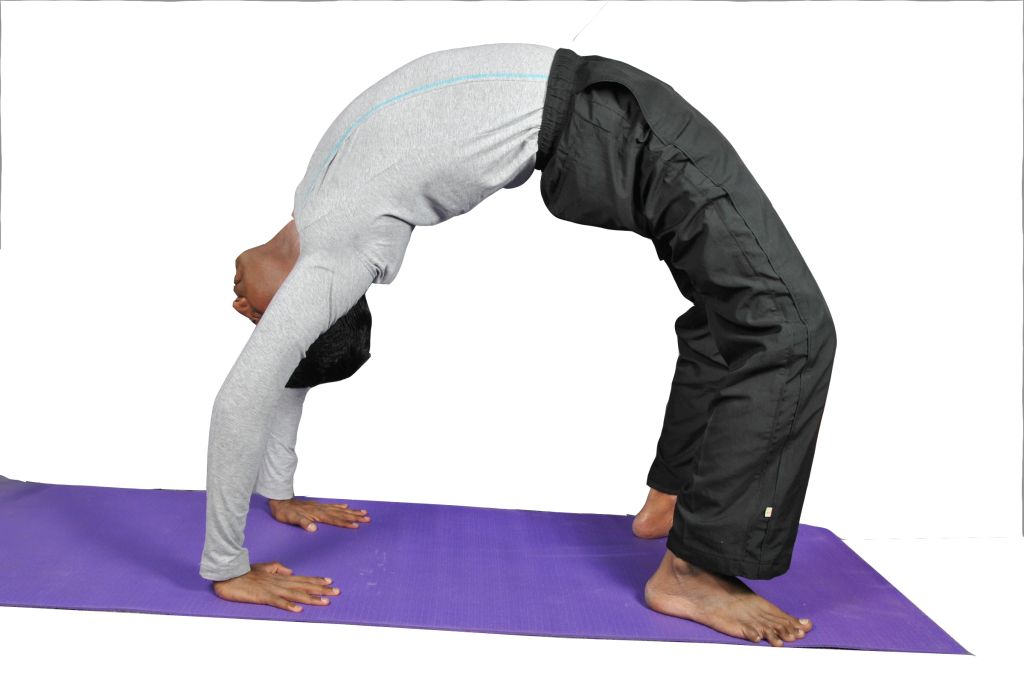
Urdhva Cakrasana (Upward Bow or Wheel Pose) This is the upward wheel pose or upward bow pose. Lie flat on your back on your mat. Your legs are bent at the knees and your feet are flat on the ground, hip distance apart. Place your palms on the ground near your ears, your elbows are pointing to the sky and your fingers are facing towards your head. Now push up into bridge while you inhale. Exhale and stay here. On an inhale, while balancing your entire weight on your feet push your upper body off while balancing your weight on your palms and feet. Your body at this point will look like half a wheel. Make sure your neck isn’t being strained, here. Then lower back down and relax. Precaution: Shoulder or wrist concerns Glaucoma or high blood pressure Low-back injury Benefits: Strengthens the shoulders, arms, wrists, legs, and spine. Opens the chest and shoulder girdle. Relieves asthma symptoms by expanding the lungs. Strengthens the legs. It is beneficial to the nervous, digestive, respiratory, cardiovascular and glandular systems. Relieve various gynaecological disorders.
Salamba Sarvangasana (Supported Shoulder Stand Pose)
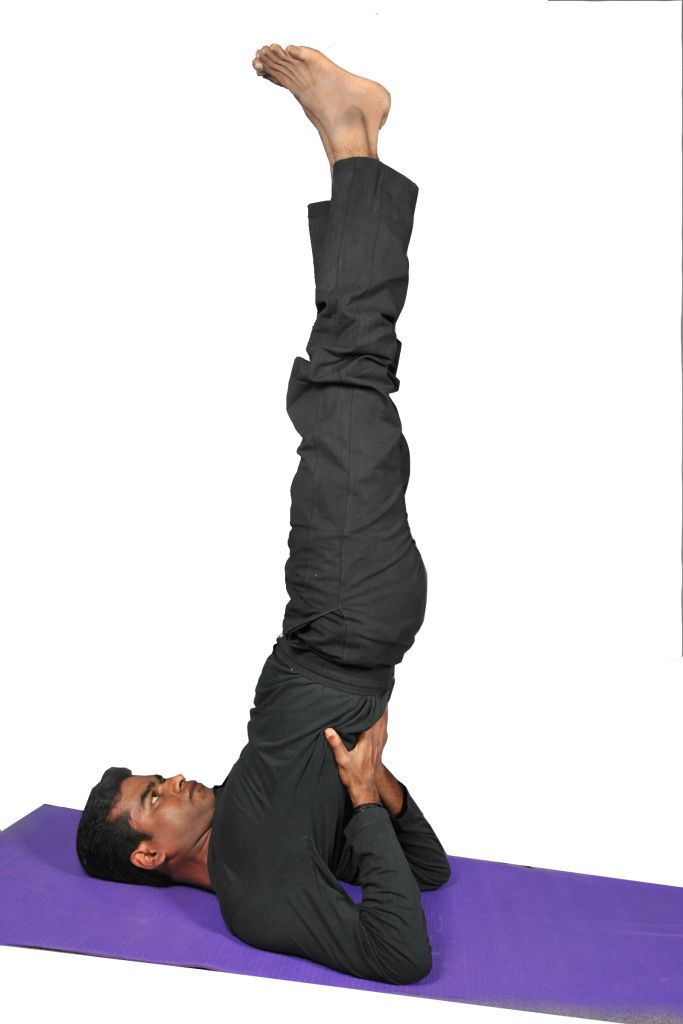
Salamba Sarvangasana (Supported Shoulder Stand Pose) This is the supported shoulder stand. Start by lying flat on your back on the floor with your legs stretched straight out in front of you. Your arms are by your side. Breathe easily and then on an exhale life both your legs until they are at a right angle to the body. Breathe easily and then on an exhale raise your legs further up supporting yourself with your arms on the floor. Continue to rise up off the floor and when your back is off the floor, support yourself with your hands pressed against your back and elbows on the floor. Raise your torso off the ground until you are supported only by your shoulders, neck and head which are on the floor. Straighten your whole body so that your torso to the feet are straight, with the feet pointing straight up at the ceiling. Stay here breathing easily for thirty seconds to one minute. Gradually try to increase this to five minutes. Then release the pose, place your hands back down as you relax back down until you are flat on the floor. Precaution: People with high blood pressure, heart conditions, inflammation of the ear, weak eye capillaries, severe near-sightedness, problems in the pituitary or thyroid glands, arteriosclerosis, cerebral or other thrombosis, severe asthma, tuberculosis, cold or sinusitis, excessively impure blood, slipped disc, weak spine or vertigo should not practice this asana. Benefits: Mother of asanas Low blood pressure. Strengthens the neck muscles and brings a rich supply of blood to the brain. thyroid and parathyroid glands. urinary disorders and uterine displacement, menstrual trouble, piles and hernia. Helps to relieve epilepsy, low vitality and anaemia. Activates the abdominal organs and relieves people suffering from stomach and intestinal ulcers, severe pains in the abdomen and colitis.