Vastra Dhouti
Vastra Dhouti Practice Catch one end of the cloth with both hands and start swallowing slowly with deep awareness and ease. Drink sips of water along with the cloth if it does not move on smoothly. Make sure that about 20 – 25cms of the cloth is left outside towards the end. After completing, wait for a few seconds, churn the abdomen by movement or agnisara twisting. Lean forward and start pulling out the cloth slowly with ease and relaxation. If the cloth is not coming out easily, wait, take a deep breath and relax, drink a few sips of water and then continue. #Online 300 hour Yoga teacher training Bangalore
Vaman Dhauti
Vaman Dhauti Practice Drink about one and a half liters of lukewarm saline water (about 1% saline) as quickly as you can until you feel like vomiting it out. Churn the stomach by twisting exercises. Stand with feet apart at shoulder width and bend the trunk forward forming an angle of about 80 degrees to the body. Now with the help of the middle three fingers of the right hand, tickle the back of the throat to vomit out (vaman) all the water. Repeat the process of tickling the throat until no more water comes out which may mean that all water has been vomited . With continued practice one can stimulate the vomiting sensation and vomit out the water without using the fingers at the throat. Relax completely in savasana for about 15 to 20 minutes. Have a bland breakfast after about half an hour. #Online 300 hour Yoga teacher training Bangalore
Kapalabhati (frontal brain cleansing breath)
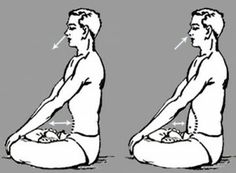
Kapalabhati (frontal brain cleansing breath) Practice Practice rapid breathing with active and forceful exhalation and passive inhalation. During each exhalation, blast out the air by vigorous flapping movements of the abdomen in quick succession. Inhale passively by relaxing the abdominal muscles at the end of each exhalation. Repeat the exhalation as quickly as possible at the rate of 60 strokes per minute. At the end of one minute, stop the practice. Now observe an automatic suspension of breath. In fact, there will be no urge for breathing for a few seconds. Simultaneously the mind may experience a deep state of silence. Enjoy this state of deep rest and freshness. Wait until the breathing comes back to normal. Benefits Brain cells are invigorated. It brings brightness to the face with regular practice. It balances and strengthens the nervous system. It removes the drowsiness from the body. It provides a nice massage to all the abdominal organs. People with digestive problems are highly benefited. It cleanses the lungs and also the entire respiratory tract. It is good for asthmatics and for other respiratory disorders. #Online 300 hour Yoga teacher training Bangalore
Jala Neti (Cleaning the nasal passage
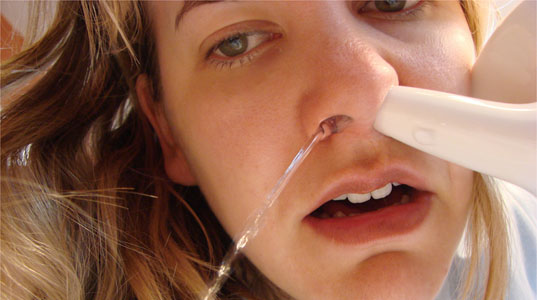
Jala Neti (Cleaning the nasal passage) Practice Add about half a teaspoon of salt to a neti pot full of sterile lukewarm water. Stand with the legs apart. Hold the neti pot in your right hand. Insert the nozzle of the Neti pot into the right nostril. Keep the mouth open and breathe freely through the mouth. Tilt the head first slightly backwards, then forwards and sidewards to the left so that the water from the pot enters the right nostril and comes out through the left by gravity. Allow the flow till the pot is empty. Repeat the same on the left side. To clear the nasal passages of the remaining water, blow out the water by active exhalation through alternate nostrils as in Kapalabhati. #Prenatal, Mudra Therapy, Yoga Chanting & Meditation certificate Course Benefits It helps to clear nasal passages. Removes cold, hypersensitivity, headache, sinusitis, bronchitis and stimulates olfactory nerves. #200 hour Yoga teacher training certificate course in Bangalore
Maha Bandha – Great lock
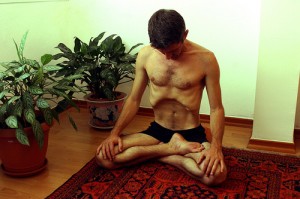
Maha Bandha – Great lock (Bestower of great siddhis) Practice: Sit in siddha or padmasana with the palms pressing on the knees. The spine should be straight. Breathe in slowly and deeply through the nose. Exhale forcefully and completely through the mouth. Hold the breath outside. Sequentially perform Jalandhara, Uddiyana and Moola Bandha at end. Inhale slowly when the head is upright. This is one round. #Yin, Restorative, Hatha, Vinyasa, Yoga Therapy Teacher Training Certificate Course Benefits: Maha Bandha gives the benefits of all three bandhas. It affects the hormonal secretions of the pineal gland and regulates the entire endocrine system. The decaying, cell of the body is rejuvenated. It soothes anger and introverts the mind prior to meditation. It leads to the merge of prana, apana and samana in agni mandala, which is the culmination of all pranayamas. #50/100/200/300/500 hr Yoga teacher training certificate course Bangalore
Mula Bandha – Perennial/ cervix retraction lock
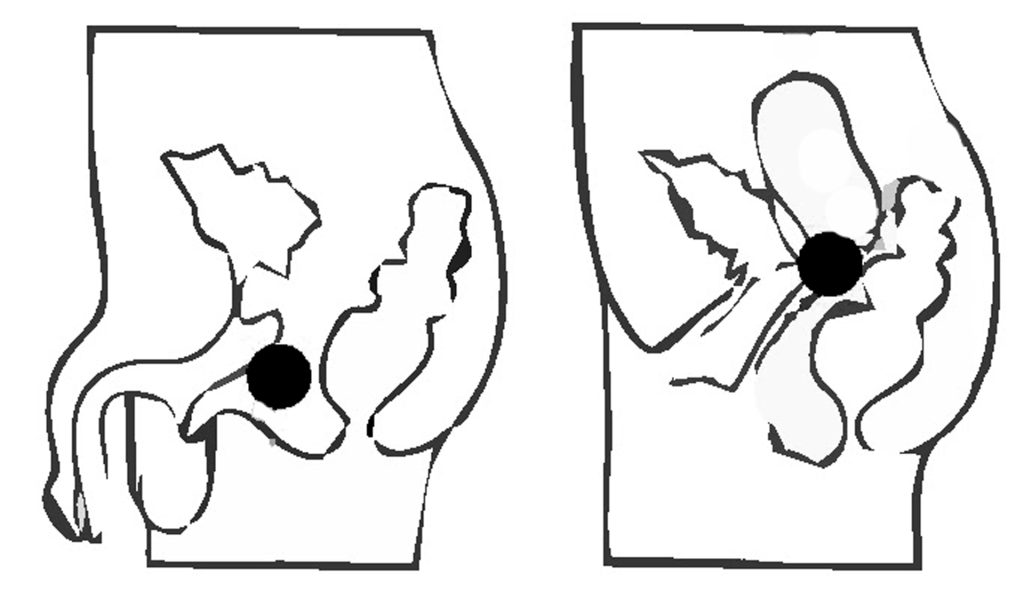
Mula Bandha – Perennial/ cervix retraction lock, when engaged, prevents apana escaping from the lower body and draws it up to unite with prana. Practice Sit in a comfortable meditative pose, preferably siddhasana. Close the eyes, make sure the body is completely relaxed and the spine is erect. For men, the area just inside the perineum has to be contracted, so it is best to concentrate on this area for a few minutes. Women should concentrate on the cervix, as it is the cervix and vaginal muscles which have to be contracted. After a few minutes of concentration, start to gradually contract and release the muscles of the perineum/cervix. Contraction should last for a few seconds. Keep the breath normal. Prepare as above. Contract the muscles of the perineum/cervix and hold. Hold the contraction for till you feel comfortable, then release. Practice five times. Start off with a gentle or partial contraction. Contract just a little and hold without releasing. Then contract a little more. Continue like this, gradually increasing the tension and contraction ten times until full contraction is reached. Hold the full contraction for few seconds and try to breathe normally. #Yoga, Anatomy, Physiology, Kinesiology and Bio-Mechanism Yoga Teacher Training certificate Course Benefits Mula bandha is the force or energy created by lifting the pelvic floor and controlling the breath. It is the root lock and calls the fire within that causes everything to come alive, to move. Mula bandha increases flexibility and stimulates heat. By contracting the perineum and drawing the energy up from the base of the spine, one can intensify and direct the life energy, cultivating a sense of heightened awareness and increasing vitality. Mula bandha ignites the flame of kundalini (cosmic energy), the serpent power. By bringing awareness to the core of the body, mula bandha helps prevent injury. It guides you to move from your center, grounding you so you can become light and fluid in your yoga practice. #Yin, Restorative, Hatha, Vinyasa, Yoga Therapy Teacher Training Certificate Course
Uddiyana Bandha – Abdominal retraction lock
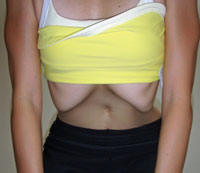
Uddiyana Bandha – Abdominal retraction lock which forces prana up the shushumna nadi. Practice Stand with feet about two feet apart. Bend the knees slightly and rest the hands above the knees, with the thumbs facing inwards and the fingers outwards. The spine must remain straight, not curved; the head should be kept up and eyes open. Inhale deeply through the nose, then exhale quickly through slightly pursed lips, but don’t be forceful. Having fully exhaled, bring the chin to the chest ( jalandhara bandha), raising the shoulders. Pull the abdomen and stomach inward toward the spine and up. Hold for a few seconds. Before inhaling, relax the stomach and abdomen, raise the head and stand straight. Then inhale through the nose slowly and with control. Before repeating another round, breathe normally for a minute or two. Start with three rounds and over a period of a few months increase to more rounds.#Best yoga teacher training certification courses in Bangalore Sit in a comfortable cross-legged position ( padmasana, siddhasana or sukhasana, depending on your flexibility). Sit on a cushion so that the buttocks are raised. Keep the palms of the hands on the knees and the spinal cord upright and straight. Eyes may be open or closed. Begin as above, practicing three to ten rounds, concentrating on the natural breath for a minute or two between rounds.#Yoga teacher training certificate course fees in Bangalore Stand up and experiment moving from the middle of your body, try walking as if there is a string attached to your navel pulling you forward. Practice the bandhas at different times during the day. Notice the effect on your energy level. 5.Notice any fears that arise when you’re practicing the bandhas. Connect the breath, mula bandha, and uddiyana bandha, and try to relax while maintaining the locks. Benefits #Best100/200/300/500 hour yoga teacher training India Movement of shakti in the body is described as a bird. Shakti is the personification of the feminine form of the Divine. Through the practice of the flying bandha, the great bird (Shakti) flies upward with ease, further directing the flow of prana toward higher states of consciousness. By contracting the lower abdomen and pulling it inward and upward, toward the spine, a powerful toning effect and internal strengthening occurs. This lifting helps push up the diaphragm and expel the breath. Uddiyana bandha, the abdominal lock, also eliminates strain by helping to control the breath. Control of the breath controls consciousness. Bandhas are a means of extending control over the breath and thus are a means to extend our access to consciousness. #Yoga, Anatomy, Physiology, Kinesiology and Bio-Mechanism Yoga Teacher Training certificate Course
Jalandhara Bandha – Throat lock
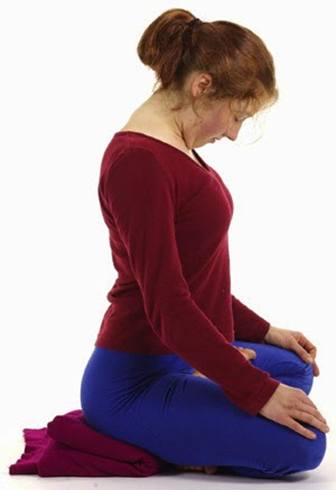
Jalandhara Bandha – Throat lock which prevents prana from escaping the upper body. Practice Jalandhara bandha Sit comfortably in siddhasana or padmasana). Place the palms of the hands on the knees and allow the whole body to relax. Inhale slowly and deeply through the nose and retain the breath. Lower the chin so that it touches the collarbone. At the same time, straighten the elbows and raise the shoulders. Hold the breath and the position for as long as comfortable. Then release jalandhara bandha by slowly raising the head and relaxing the shoulders. Exhale in a very slow, controlled manner. Practice five rounds, breathing normally for a few minutes between each round. Then practice five rounds with external retention (exhale and hold). Visualize the throat as a net that captures the breath as it comes up. Notice when the chin is tucked how easy it is to see your navel. Pay attention to the opening of your throat while simultaneously locking the chin. Link all the bandhas and follow the flow of breath unobstructed while maintaining the locks in the body. Notice any change in energy level or effects on your thoughts. #Yoga teacher training certification course near me Benefits Jalandhara bandha is the water pipe lock. It binds the network of subtle energy channels. Engaging Jalandhara bandha is useful for alleviating diseases of the throat. It also improves the quantum of prana in the thoracic region. By pressing the chin to the chest, prana is captured, preventing it from escaping the upper body. Many major nerve fibers pass through the neck; when jalandhara bandha is performed it exerts pressure on them and the flow of nervous impulses to the brain is restricted. These impulses collect in the cervical plexus, and when the bandha is released they flood into the brain. The force of these impulses helps to activate higher centers in the brain, those that function with creativity and intellect. #Best yoga teacher training certification courses in Bangalore
Patanjali Yoga Sutra – Kaivalya Pada Dominance of action or karma
Patanjali Yoga Sutra – Kaivalya Pada Dominance of action or karma 4.7. Karmasuklakrsnam yoginastrividhamitaresam| Karma-action Asukla-not white Akrsnam-not black Yoginah-of the yogis Trividham-threefold Itaresam-of others The deed of yogis are neither white nor black, of others they are threefold. Patanjali Yoga Sutra – Kaivalya Pada Exhibition of potential desires 4.8. Tatastadvipakanugunanamevabhivyaktirvasanam| Tatah-therefrom Tadvipaka-the ripening of those Anugunanam-accordingly Eva-only Abhivyaktih-manifestation Vasanam-of potential desires Therefrom the exhibition of potential desires according to their activities, ripening only. Patanjali Yoga Sutra – Kaivalya Pada Memory & impressions 4.9. Jatidesakalavyavahitanamapyantaryam smrtisamskarayorekarupatvat| Jati-class of birth Desa-place Kala-time Vyavahitanam-separated Api-even Anantaryam-sequence Smrtisamskarayoh-of memory and impressions Ekarupatvat-because of sameness in form Because memory and impression are the same in form there is a sequence although they may be classified by class of birth, place and time. Patanjali Yoga Sutra – Kaivalya Pada Source of potential impressions 4.10. Tasamanaditvam chasiso nityatvat| Tasam-there is Anaditvam-begnninglessness Cha-and Asisah-of the will to live Nityatvat-by permanence There is no beginning to them and the desire to live is eternal. Patanjali Yoga Sutra – Kaivalya Pada Vanishing of impressions 4.11. Hetuphalasrayalambanaih sangrahitatvadesamabhave tadabhavah| Hetu-cause Phala-effect Asraya-support Alambanaih-object Sangrhitatvat-because of being bound together Esam-of these Abhave-on the disappearance Tadabhavah-their disappearance Since cause and effect, support and object are act together, by their disappearance that also disappears. #Online Best yoga certification courses in Bangalore Patanjali Yoga Sutra – Kaivalya Pada Past & future exist 4.12. Atitanagatam svarupo’styadhvabhedadharmanam| Atita-past Anagatam-future Svarupatah-in its essential form Asti-exists Adhvabhedat dharmanam- of inherent properties Past and future exist in their own form by difference of paths. #Online Best yoga certification courses in Bangalore Patanjali Yoga Sutra – Kaivalya Pada Reason for existence 4.13. Te vyaktasuksma gunatmanah| Te-they Vyakta-manifest Suksma-subtle Gunatmanah-of the nature of gunas Whether manifest or unmanifest they are of the nature of gunas.
GHERANDA SAMHITA
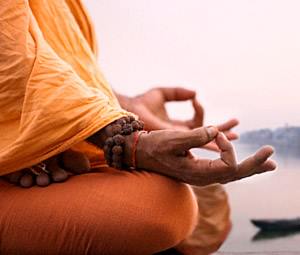
GHERANDA SAMHITA Gheranda Samhita is a systematically written text on yoga. It is in the form of a dialogue between Gheranda the preceptor and Chandkapali the (pupil). The yoga that has been discussed in Gheranda Samhita is called Ghathasta Yoga. “Gatha” refers to the body. Ghathasta Yoga means Yoga based approach through the body and the training of the body is the first step to the training of the mind. Obviously Ghathastha Yoga or Ghathastha Yoga deals with the Hatha Yoga practices. It describes more than 100 Yogic practices of varied nature. These practices can be classified as follows: Kriyas – 06 Dhautis – 13 Bastis – 12 Neti – 01 Lauli – 01 Kapalabhati – 03 Trataka – 01 Asanas – 32 Mudras – 25 Pratyahara – 5 Pranayama – 10 Dhyana – 3 Samadhi – 6 Total 102 In these Yogic practices there is gradual evolution of the process from Physical to Spiritual through Psychological process. Gheranda Samhita explains all the above practices in seven lessons. #50/100/200/300/500 hr Yoga teacher training certificate course Bangalore CHAPTER – 1 On the training of the physical body The training of the body is the first step to the training of the mind. A healthy mind can exist only in a healthy body. Hence the Hatha Yoga or training of the body is the first step to the training of the mind or Raja yoga. Lesson first start with the question of Chandkapali who wishes to know the physical discipline (Yoga) leads to the knowledge of truth (Tattava Jnana). Gheranda explains there is no fetters like those of illusion (maya) no strength like that which comes from discipline (Yoga). There is no friend higher than knowledge (Jnana) and no greater enemy than egoism (Ahankara). As by learning the alphabets, through practice one can master all the sciences, so by thoroughly practicing, first the (physical) training, one requires the knowledge of the truth. By practice of yoga one can overcome maya. There are seven exercises which pertain to the training of the body. They are particularly strengthening, steadying, calming and those leading of lightness, perception and isolation. The satkarmas are the six processes which include Dhauti, Basti, Neti, Laukiki, Trataka and kapalabhati. The technique and importance of these are also given in details. #50/100/200/300/500 hr Yoga teacher training certificate course Bangalore The sapta Sadhanas are, Kriyas – For cleansing Asanas – Gives Dridhata or strength Mudras – Gives Sithirata or Steadiness Pratyahara – Gives Dhairya or calmness Pranayama – Gives lightness or Laghima Dhyana – Gives perception or pratyakshatwa Samadhi – Gives Isolation, nirtipta which is the freedom #50/100/200/300/500 hr Yoga teacher training certificate course Bangalore CHAPTER -II Asanas and Postures There are 84, 00,000 asanas described by Lord Shiva, The postures are as many in the numbers of species of living creature in the universe. Among them 84 are the best and among these 32 have been found useful for mankind in this world. Sidhasana – Perfect Padmasana – Lotus Bhadrasana – Gentle Muktasana – Free Vajrasana – Adamant Swastikasana – Prosperous Simhasana – Lion Gomukhasanan – Cow – mouth Veerasana – Heroic Dhanurasana – Bow Maritasana – Crops Guptasana – Hidden Matsyasana – Fish Matsyendasana – Sage Gorakasana – Sage Paschimotanasana – Fish Utkatasana – Hazardous Sankatasana – Dangerous Mayurasana – Peacock Kukkutasana – Cock Kurmasana – Tortoise Uttanamandukasana – Frog Uttanakurmasana – Tortoise Vrikshasana – Tree Mandukasana – Frog Garndasana – Eagle Vrishasana – Bull slabhasana – Locust Makarasana – Crocodile Ustrasana – Camel Bhujangasana – Snake #50/100/200/300/500 hr Yoga teacher training certificate course Bangalore The very first asana – namely siddhasana is described as mokkna-kavatabhedanka (which opens the doors of realization, Padmasana, Bhadrasana, Simhasana, Matsyasana, all these destroy all sorts of disease). Muktasana gives siddhis (perfection) Vajrasana gives psychic powers to the yogi. Mritasana destroy fatigue and quiten the agitations of the mind. Gorakasana gives success to the yogis; Mayurasana destroys the effect of whole some food. It produces heat in the stomach; it destroys the effect of deadly poisons. If easily cures diseases like fever etc. Makarasana increases the body heat, Bhujangasana (serpent) always increases the bodily heat, destroys all diseases and by the practice of this posture the Kundalini force is awakened. #50/100/200/300/500 hr Yoga teacher training certificate course Bangalore CHAPTER – III Mudras There are 25 Mudras the practice of which gives senses to the yogis, they are. Mahamudra Nabho Uddiyana Jalandhara Mulabandha Maha Bandha Maha Bheda Khecari Viparita Karani Vajroli Sakticalana Tadagi Mandauki Sambhavi 20 Panca Dharma (Five Dharma) Asvini Pasini Kaki Matangini Bhujanginini These Mudras which gives happiness and emancipation. These Mudras destroys all diseases. There is nothing in the world like the Mudras for giving quick success. #50/100/200/300/500 hr Yoga teacher training certificate course Bangalore CHAPTER – IV Prathyahara By prathyahara all the passions like lust are destroyed. Let one bring the chitta (thinking principle) under his control by withdrawing it wherever it wanders away driven by the various objects of right, praise or censer good or bad, speech, sweet or bad, smell or taste or what ever the mind may be distracted or attracted. #50/100/200/300/500 hr Yoga teacher training certificate course Bangalore CHAPTER -V Pranayama Four things are necessary for practicing Pranayama in Good place. Suitable time Moderate food. Purification of the Nadis The purification of the Nadis is of two sorts. Samanu and Nirmanu. The Samanu is done by a mental process with Bijamantra. The Nirmanu is performed by physical cleanings. After purification of the Nadis one has to sit firmly in a posture and be in regular Pranayama. #50/100/200/300/500 hr Yoga teacher