
Sound-Shakti – Dissolves in Consciousness
Sound is shakti and dissolves in consciousness Yatkinchin nadarupena sruyate saktireva sa / Yas tattvanto nirakarah sa eva paramesvarah// Whatever is heard of the nature of the mystical nada or sound is verily Shakti. That in which all the panchatattwa elements find dissolution, that is the formless being, the supreme God. (Chapter -4, Verse 102).
Shambhavi Mudra (eyebrow center gazing)

Shambhavi Mudra (eyebrow center gazing) Shambhavi mudra (eyebrow center gazing) internalizes pranic flow and mind – If the Hatha Yogi remains with the chitta and prana absorbed in the internal object and gaze motionless, though seeing, he is not seeing, this is called shambhavi mudra, realm of Shiva consciousness). Antarlakshyam bahirdrshtir nimeshonmeshavarjita / Esha sa sambhavi mudra vedasastreshu ghopita// With internalised one-pointed awareness and external gaze unblinking, that truly is shambhavi mudra, preserved in the Vedas. (Chapter -4, Verse 36). Antarlakshyavilinachittapavano Yogi Yada vartate / Drshtya nischalataraya bahir adhah pasyannapasyannapi / Mudreyam khalu sambhavi bhavati sa labdha prasadad ghuroh/ Śunyasunyavilakshanam sphurati tattattvam Padam sambhavam// If the Hatha Yogi remains with the chitta and prana absorbed in the internal object and gaze motionless, though seeing, he is not seeing, this is called shambhavi mudra. When it is bestowed by the guru’s blessing, the state of shoonyashoonya obtained. That is the real state of Shiva consciousness. (Chapter -4, Verse 37)
Prana and Mind
Prana and mind are controlled through each other Pavano badhyate yena manastenaiva badhyate / Manascha badhyate yena pavanastena badhyate// Through controlling the prana, thought is contolled and through control of thought, prana or air is controlled. (Chapter -4, Verse 21).
Parichaya Avastha (stage of increase)
Parichaya Avastha (stage of increase) Stage of increase – Sound of the drum, perfection or siddhi. Imbalance of the three humors or doshas, pain, old age, disease, hunger, sleep are destroyed. Trtiyayam tu vijneyo vihayo mardaladhvanih / Mahasunyam tada yati sarvasiddhisamasrayam// In the third stage is the experience of the sound of the drum. Then there is the great emptiness and one enters the place of total perfection or siddhi. (Chapter -4, Verse 74). Chittanandam tada jitva sahajanandasambhavah / Doshaduhkhajaravyadhikshudhanidravivarjitah// Then the bliss of chitta being obtained, spontaneous ecstasy arises. Imbalance of the three humours or doshas, pain, old age, disease, hunger, sleep are destroyed. (Chapter -4, Verse 75).
Main bones of the human skeleton
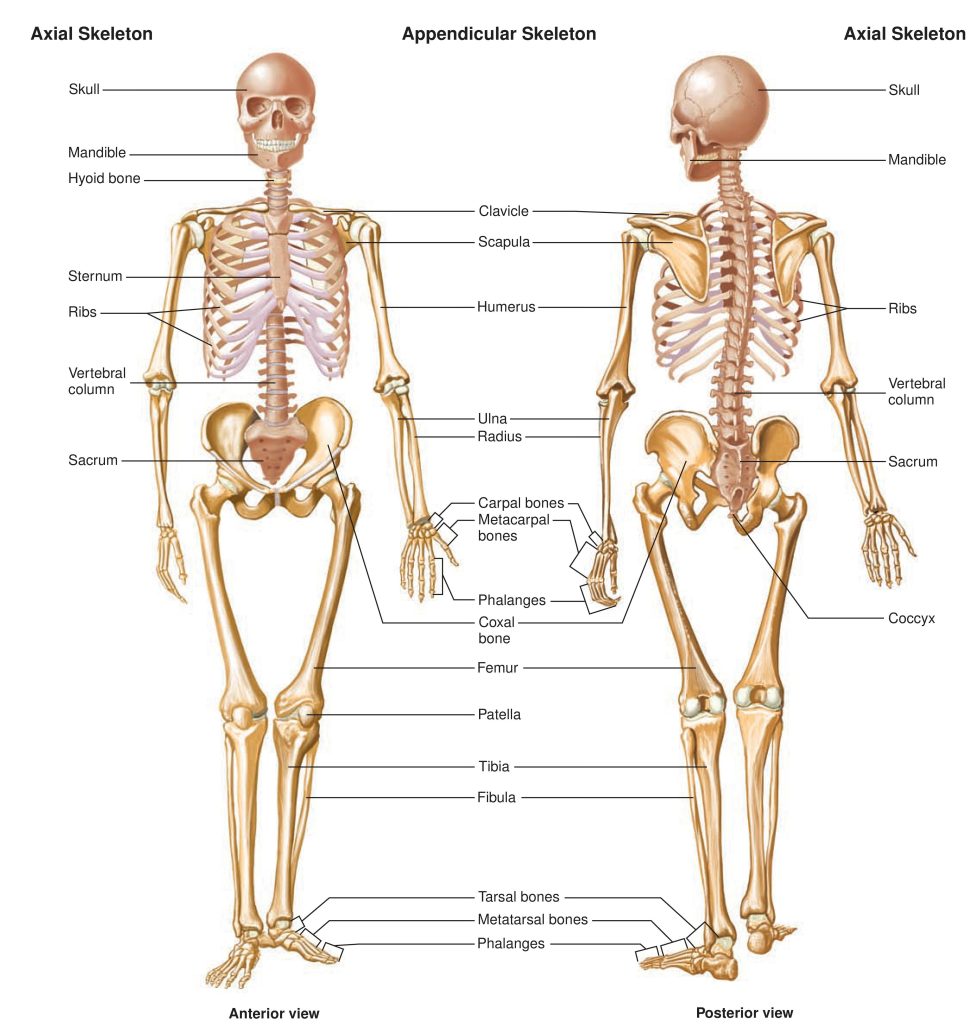
The main bones of the human skeleton are: The Skull – Cranium, Mandible, and Maxilla Shoulder girdle – clavicle and scapula Arm – humerus, radius, and ulna Hand – Carpals, Metacarpals, and Phalanges Chest – Sternum, and Ribs Spine – Cervical area (top 7 vertebrae), Thoracic (next 12), Lumbar (bottom 5 vertebrae), Sacrum (5 fused or stuck together bones) and Coccyx (the tiny bit at the bottom of the spine). Pelvic girdle – Ilium, Pubis, and Ischium. Leg – Femur, Tibia, and Fibula Ankle – Talus and calcaneus Foot – Tarsals, Metatarsals, and Phalanges.
Nishpatti Avastha (state of consummation)
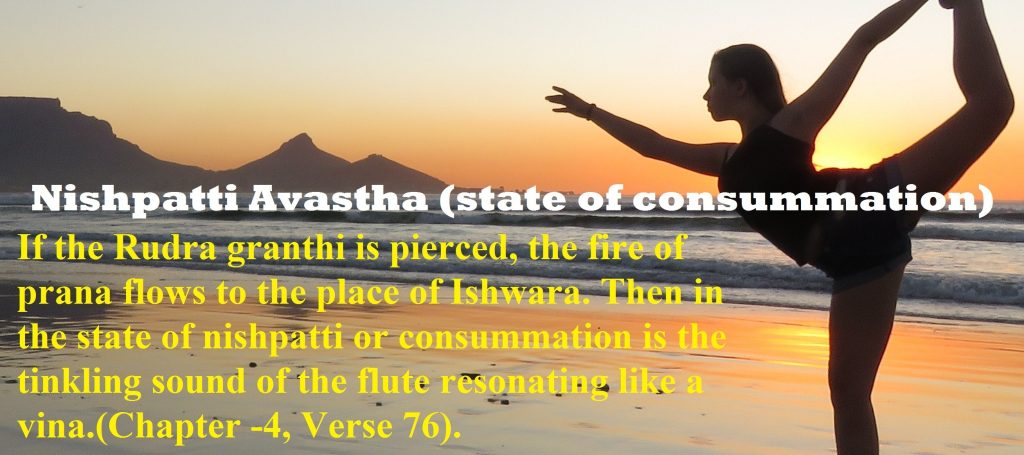
Nishpatti Avastha (state of consummation) Nishpatti avastha or state of consummation – Rudra granthi is pierced, the fire of prana flows to the place of Ishwara. Then in the state of nishpatti or consummation is the tinkling sound of the flute resonating like a vina Rudraghranthim yada bhittva sarvapithaghatoanilah/ Nishpattau vainavah sabdah kvanadvinakvano bhavet// If the Rudra granthi is pierced, the fire of prana flows to the place of Ishwara. Then in the state of nishpatti or consummation is the tinkling sound of the flute resonating like a vina.(Chapter -4, Verse 76).
Nada anusandhana – exploration of sound “OM”
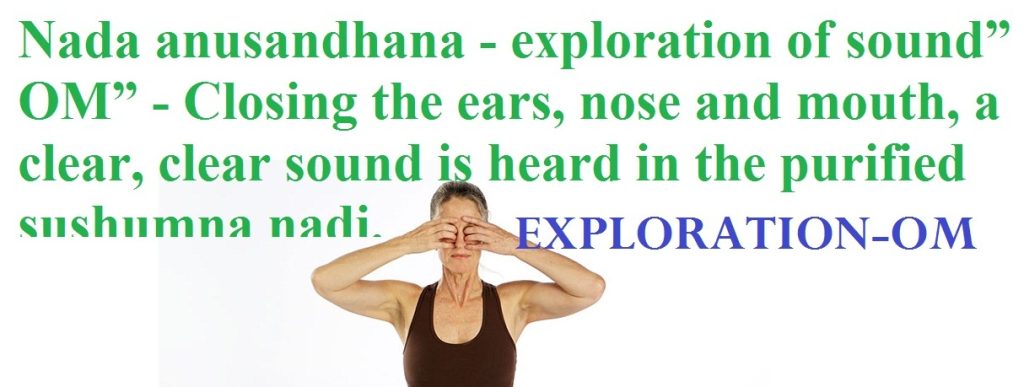
Nada anusandhana – exploration of sound “OM” Nada anusandhana – exploration of sound”OM” – Closing the ears, nose and mouth, a clear, clear sound is heard in the purified sushumna nadi. Muktasane sthito yogi mudram sandhaya sambhavim/ Śrnuyad dakshine karne nadam antastham ekadhih// The Hatha Yogi, sitting in Muktasana, concentrated in shambhavi mudra, should hear closely to the nada heard within the right ear. (Chapter -4, Verse 67). Sravanaputanayanayughala Ghranamukhanam nirodhanam karyam /Suddhasushumnasaranau Sphutamamalah sruyate nadah// Closing the ears, nose and mouth, a clear sound is heard in the cleansed sushumna nadi. (Chapter -4, Verse 68).
Mind dissolves in Samadhi
Mind dissolves in Samadhi Mind dissolves in Samadhi – As camphor burnt in fire, and salt mix in the sea, in samadhi mind dissolves into ‘Thatness’ Karpuramanale yadvatsaindhavam salile yatha/ Tatha sandhiyamanam cha manastattve viliyate// As camphor burnt in fire, and salt mix in the sea, in samadhi mind dissolves into ‘Thatness’. (Chapter -4, Verse 59). Knower, known and knowing united Jneyam sarvam pratitam cha jnanam cha mana uchyate/ Jnanam jneyam samam nashtam nanyah pantha dvitiyakah// All that can be known, all that is known and the knowledge, is called mind. When the knower and that which is known are lost together, there is no second way. (Chapter -4, Verse 60).
Mind – Senses, Prana – Mind, Nada – Prana
Mind – Senses, Prana – Mind, Nada – Prana Indriyanam mano natho manonathastu marutah/ Marutasya layo nathah sa layo nadamasritah// Mind is the controller of the senses, prana is the controller of the mind. Dissolution is the lord of the prana and that dissolution, laya is the foundation of nada. (Chapter -4, Verse 29).
Manonmani (consciousness without mind) State

Manonmani (consciousness without mind) State Manonmani (consciousness without mind) – Manonmani is obtained when prana flows in sushumna nadi Sushumnavahini prane siddhyatyeva manonmani/ Anyatha tvitarabhyasah prayasayaiva yoghinam// When the prana travels in the sushumna nadi this state of manonmani (consciousness without mind) is obtained. Therefore, other forced practices are just laborious to the Hatha Yogi. (Chapter -4, Verse 20).