
Pralamba Mudrā
Pralamba Mudrā Introduction Pralamba Mudrā is a classical hasta mudrā (hand gesture) mentioned in yoga, Ayurveda, and Indian dance traditions. The word Pralamba means hanging down, extended, or relaxed. This mudra reflects the idea of release, surrender, and letting go of burdens. In yoga practice, Pralamba Mudra is often performed as a gesture of openness, surrender, and relaxation, helping practitioners dissolve tension and cultivate inner calm. In dance and iconography, it represents arms or objects hanging downward. Therapeutically, it is used to relieve stress, calm the mind, and relax the nervous system. Meaning Pralamba = hanging, relaxed, or extended downward. Mudrā = seal, gesture, or psychic expression. Symbolically, Pralamba Mudrā represents letting go of effort, releasing attachments, and relaxing into stillness. How to Perform Practice Sit in a meditative posture (Sukhasana, Vajrasana, or Padmasana). With the palms facing down, join the tips of the thumbs while keeping the other fingers collected. Close the eyes, take slow breaths, and consciously soften the arms, shoulders, and hands. Stay in this mudra for several minutes, allowing awareness to deepen into stillness. Benefits of Pralamba Mudrā Physical Benefits Relaxes the shoulders, arms, and hands. Helps reduce muscle fatigue caused by overuse of hands. Improves circulation in the upper extremities. Supports the release of tension in the neck and spine. Mental Benefits Encourages relaxation and surrender. Helps release stress, anxiety, and emotional holding. Promotes mental clarity by letting go of mental clutter. Spiritual Benefits Symbolizes detachment and release of worldly burdens. Enhances meditation by allowing energy to flow downward, grounding the practitioner. Activates Apana Vayu (downward-moving energy), supporting elimination and purification. Contraindications People with low blood pressure should avoid practicing for too long, as the downward energy flow may cause dizziness. Those with severe shoulder or wrist injuries should modify hand placement. Should not be used when feeling excessively lethargic, as it may deepen inertia. Anatomy & Physiology Encourages muscular relaxation in the shoulders and arms. Supports the parasympathetic nervous system, reducing stress. Enhances blood and lymph flow away from tense upper body regions. Aids in grounding by stimulating Apana Vayu (energy of elimination). Kinesiology Involves passive extension of fingers and relaxation of flexor/extensor muscles in the forearms. Shoulders and elbows remain neutral, gravity-assisted posture. Minimal muscular activity, primarily isometric relaxation. Neurology Stimulates the parasympathetic nervous system (rest-and-digest). Reduces activity in sympathetic pathways, lowering stress responses. Enhances awareness of proprioception and relaxation response. Symbolically, it helps the brain reprogram holding patterns by letting go. Duration of Mudra 5–15 minutes in meditation or pranayama. Can be used before sleep as a relaxation mudra. Useful as a transition mudra after active practices like Mushtika Mudra or Surya Mudra. Counter Mudra To balance Pralamba Mudra’s downward and releasing energy: Chin Mudra or Jnana Mudra – for clarity and upliftment. Anjali Mudra – to center and integrate energies. Prana Mudra – to stimulate vitality after deep relaxation. Conclusion Pralamba Mudrā is a simple yet profound gesture of relaxation, surrender, and release. By embodying the downward flow of energy, it helps dissolve physical tension, calm the nervous system, and encourage mental clarity. It is especially useful in meditation and stress-relief practices, reminding us of the spiritual value of letting go. FAQ Q1. What does Pralamba Mudra symbolize?It symbolizes hanging down, letting go, and relaxation. Q2. Can it be practiced daily?Yes, it can be practiced daily, especially before meditation or sleep. Q3. Which dosha does it balance?It primarily reduces Vata (restlessness) and Pitta (tension) by grounding the mind. Q4. Can it be used for stress relief?Yes, it is very effective for calming stress and anxiety. Q5. Which energy does it activate?It enhances Apana Vayu, supporting grounding and elimination. References Swami Satyananda Saraswati, Asana, Pranayama, Mudra, Bandha. Gertrud Hirschi, Mudras: Yoga in Your Hands. Joseph Le Page & Lilian Aboim, Mudras for Healing and Transformation. Natyashastra (hasta mudras in classical dance). B. K. S. Iyengar, Light on Yoga.
Pranapana Mudra
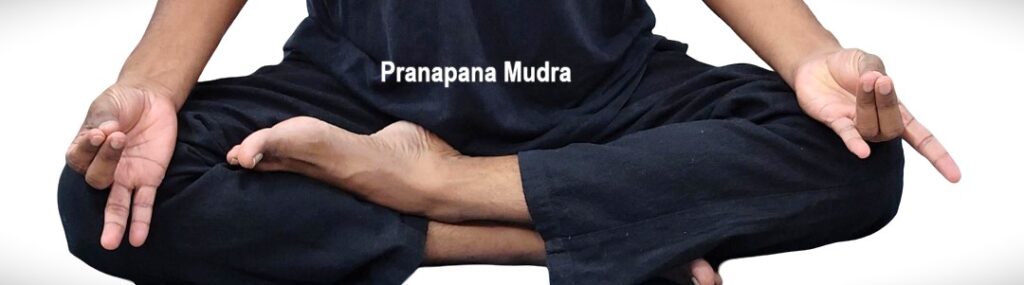
Pranapana Mudra Introduction Mudras are yogic hand gestures that direct prana (vital energy) to balance body, mind, and spirit. Pranapana Mudra is a therapeutic mudra that regulates the flow of prana and apana energies, aiding in detoxification, digestion, and energy balance. “Prana” represents inward life energy, and “Apana” represents downward-expelling energy. This mudra harmonizes these energies to detoxify the body, regulate excretory functions, and support overall vitality. Meaning Prana = Inward life energy, vital force. Apana = Downward-moving energy responsible for elimination and detoxification. Mudra = Yogic gesture that channels energy. Purpose: Balances intake and elimination energies, improving digestion, metabolism, detoxification, and respiratory function. How to Perform (Practice) Sit in a comfortable meditation posture such as Sukhasana, Padmasana, or Vajrasana. Relax shoulders, spine, and arms. Right hand – bring the tips of the thumb, index and middle fingers together. Left hand – join the thumb to the tips of the ring and middle fingers. Rest hands on thighs, palms facing upward. Close eyes and focus on breathing, energy flow, and cleansing. Maintain the mudra for 5–15 minutes, gradually increasing up to 20–30 minutes. Tip: Keep fingers gently touching; avoid tension in hands or wrists. Benefits Physical Benefits Enhances digestion and metabolism. Supports elimination of toxins through excretory system. Reduces gas, bloating, acidity, and constipation. Improves respiratory function and oxygenation. Strengthens immune system. Mental & Emotional Benefits Reduces mental stress, anxiety, and irritability. Promotes mental clarity and calmness. Balances emotional energy, stabilizing mood. Spiritual Benefits Harmonizes prana-apana energies, enhancing subtle energy flow. Supports meditation and internal focus by cleansing energetic blockages. Promotes overall inner balance and vitality. Contraindications Finger, hand, or wrist injuries. Severe digestive disorders should practice under guidance. Avoid over-practice if fatigue or discomfort occurs in hands or fingers. Anatomy & Physiology Musculoskeletal: Activates intrinsic hand muscles and forearm stabilizers. Digestive system: Influences subtle energy regulating stomach, intestines, and liver function. Excretory system: Supports bowel, bladder, and detoxification processes. Respiratory system: Improves oxygen utilization and diaphragm efficiency. Nervous system: Activates peripheral nerves in fingertips, enhancing mind-body awareness. Kinesiology Thumb contacts middle and ring finger tips, forming a triangular seal. Index and little fingers extended, lightly engaging hand muscles. Neutral wrist alignment prevents strain. Enhances proprioception and subtle energy awareness. Neurology Stimulates sensory nerve endings in fingertips for autonomic nervous system regulation. Promotes parasympathetic activity, supporting relaxation and digestion. Enhances cortical functions related to focus, attention, and emotional stability. Helps synchronize prana-apana flow for internal homeostasis. Duration of Mudra Beginners: 5 minutes. Intermediate: 10–15 minutes. Advanced: 20–30 minutes during meditation or pranayama. Tip: Daily practice strengthens digestive, excretory, and energetic balance. Counter Mudra Prana Mudra: For energizing and revitalizing when low energy is present. Apana Mudra: To release stagnant energy or support detoxification specifically. Gyan Mudra: To enhance mental focus after detoxifying effects. Conclusion Pranapana Mudra is a powerful mudra for digestive health, detoxification, and energy balance. Regular practice enhances physical vitality, mental clarity, and spiritual focus by harmonizing prana and apana energies, making it an excellent addition to daily yoga and meditation routines. FAQ Q1. Can beginners practice this mudra?Yes, it is simple and safe for beginners. Q2. Can it be combined with pranayama?Yes, especially with Kapalabhati, Bhastrika, or Nadi Shodhana to support digestion and energy flow. Q3. How long should it be practiced daily?5–15 minutes for beginners; up to 30 minutes for advanced practitioners. Q4. Can it help with constipation or bloating?Yes, it stimulates digestive and elimination processes. References Swami Satyananda Saraswati, Asana, Pranayama, Mudra, Bandha. B.K.S. Iyengar, Light on Yoga. Hatha Yoga Pradipika – Mudras for digestion and energy balance. Gheranda Samhita – Mudras for prana-apana harmonization. Kuvalayananda, Yoga Mimamsa Journal.
Prushta Mudra (Health Mudra)
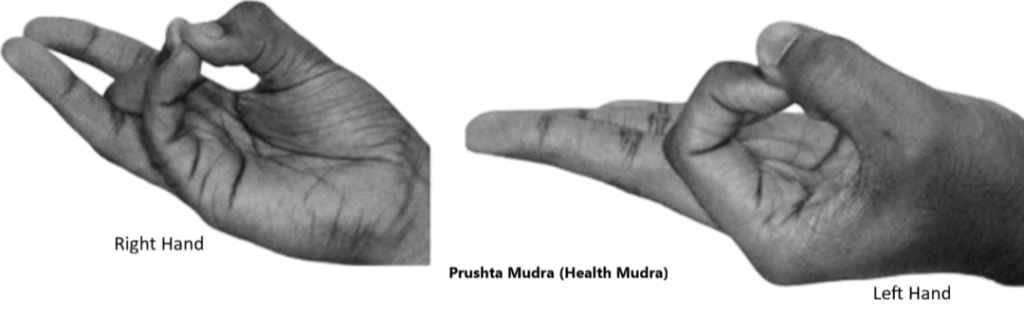
Prushta Mudra (Health Mudra) Introduction Mudras are yogic hand gestures that direct the flow of prana (life energy) to balance physical, mental, and subtle energies. Prushta Mudra is a specialized mudra primarily aimed at strengthening the back, improving spinal flexibility, and supporting digestive and eliminatory functions. The term “Prushta” in Sanskrit means “back” or “posterior part of the body,” reflecting its focus on back health, spinal energy, and overall vitality. Meaning Prushta = Back, posterior part of the body. Mudra = Yogic seal or gesture. Purpose: To balance pranic flow along the spine, strengthen the dorsal muscles, and support overall health and vitality, particularly of the back and core regions. How to Perform (Practice) Method: Right hand: join the tip of the thumb, middle finger and small finger together, While keep the index finger and ring finger straight. Left hand: bend the index finger and press the tip of the thumb on the nail of the index finger slightly as shown in the image. Benefits Physical Benefits Strengthens spinal muscles and shoulders. Improves posture and spinal alignment. Enhances circulation to the back, arms, and chest. Reduces back stiffness, tension, and muscular fatigue. Supports digestive and eliminatory functions by stimulating pranic flow. Mental & Emotional Benefits Promotes mental calmness and focus. Reduces stress, anxiety, and tension stored in the back. Enhances emotional stability and resilience. Spiritual Benefits Stimulates sushumna nadi and spinal energy channels. Supports meditation by enhancing awareness of prana along the spine. Connects root (Muladhara) and crown (Sahasrara) energies for balance. Contraindications Shoulder, elbow, or wrist injuries. Severe spinal disorders or herniated discs; practice only under guidance. Avoid if experiencing pain or discomfort while interlocking hands. Anatomy & Physiology Musculoskeletal: Strengthens rhomboids, trapezius, deltoids, and spinal erectors. Circulatory system: Improves localized blood flow to back and arms. Nervous system: Stimulates peripheral nerves in hands and shoulders for relaxation. Respiratory system: Opens chest, supporting deeper breathing. Digestive system: Encourages prana flow that indirectly supports digestion and elimination. Kinesiology Fingers interlocked to stabilize the upper back and shoulders. Chest lift engages spinal extensors, improving posture. Elbows slightly bent to avoid overextension. Enhances proprioception and upper body coordination. Neurology Activates sensory nerve endings in fingers, hands, and shoulders for mind-body integration. Stimulates parasympathetic activity, promoting calmness and relaxation. Enhances postural awareness and spinal proprioception. Supports spinal energy balance and subtle neural pathways. Duration of Mudra Beginners: 3–5 minutes. Intermediate: 5–10 minutes. Advanced: 10–15 minutes during meditation or pranayama. Tip: Daily practice strengthens spinal health, posture, and energy flow. Counter Mudra Prana Mudra: To energize after stretching. Apana Mudra: To release stagnant energy from the back. Gyan Mudra: To enhance spinal awareness while improving mental clarity. Conclusion Prushta Mudra is a therapeutic mudra for spinal health, posture improvement, and stress relief. Regular practice integrates musculoskeletal, neurological, and subtle energy benefits, making it ideal for yoga, meditation, and wellness routines. FAQ Q1. Can beginners practice this mudra?Yes, but start gently and gradually increase duration. Q2. Can it be combined with pranayama?Yes, particularly with Anulom Vilom or Bhramari to enhance spinal pranic flow. Q3. How long should it be practiced daily?Start with 3–5 minutes; increase to 10–15 minutes for advanced practice. Q4. Can it help with back stiffness or fatigue?Yes, it stretches and strengthens upper back and shoulders, relieving tension. References Swami Satyananda Saraswati, Asana, Pranayama, Mudra, Bandha. B.K.S. Iyengar, Light on Yoga. Hatha Yoga Pradipika – Mudras for spinal health and energy flow. Gheranda Samhita – Mudras for postural alignment and subtle energy. Kuvalayananda, Yoga Mimamsa Journal.
Prithivi Surabi Mudra
Prithivi Surabi Mudra Introduction Mudras are yogic hand gestures that channel prana (vital energy) to influence physical, mental, and spiritual health. Prithivi Surabi Mudra is a specialized mudra that combines the qualities of the Prithvi (Earth) element with subtle energy flow patterns to enhance physical strength, stability, and grounding. It is particularly practiced to strengthen bones, improve immunity, and support overall vitality, while also promoting mental clarity and emotional balance. Meaning Prithivi = Earth element, stability, and strength. Surabi = Nectar, essence; symbolizes nourishment and vitality. Mudra = Yogic seal or gesture. Purpose: To increase the earth element and vital essence in the body, providing strength, endurance, and balance at physical, mental, and energetic levels. How to Perform (Practice) Sit comfortably in a meditation posture such as Sukhasana, Padmasana, or Vajrasana. Relax shoulders, spine, and arms. Prithvi surabhi mudra is formed by touching the tips of the thumbs to the base of the ring fingers while performing surabhi mudra. Place hands on thighs, palms facing upward. Close your eyes and focus on grounding, nourishment, and strengthening energy flow. Maintain the mudra for 5–15 minutes, gradually increasing up to 30 minutes for advanced practice. Tip: Keep finger contact gentle; maintain relaxed shoulders and spine. Benefits Physical Benefits Enhances bone strength and tissue health. Improves immune function and vitality. Promotes digestion, metabolism, and nutrient absorption. Reduces fatigue, weakness, and lethargy. Mental & Emotional Benefits Promotes grounding and emotional stability. Reduces stress, anxiety, and mental restlessness. Enhances focus, patience, and calmness. Spiritual Benefits Stimulates subtle energy channels associated with earth element. Supports meditation and mindfulness by fostering inner stability and clarity. Encourages alignment of Muladhara (root) and Swadhisthana chakras for grounding and vitality. Contraindications Finger, hand, or wrist injuries. Over-practice may increase heaviness or sluggishness in some individuals. Avoid if feeling excessively tired, cold, or lethargic. Anatomy & Physiology Musculoskeletal: Activates intrinsic hand muscles, forearm stabilizers, and maintains neutral wrist alignment. Skeletal system: Supports bone health through subtle energy stimulation. Circulatory system: Enhances localized and systemic blood flow. Digestive system: Supports nutrient assimilation and metabolism. Nervous system: Stimulates sensory nerve endings in fingertips, promoting parasympathetic activation. Kinesiology Thumb contacts ring and little fingers, forming a triangular energy seal. Index and middle fingers extended, engaging minimal hand muscle tension. Neutral wrist and forearm alignment ensures comfort. Enhances proprioception, hand stability, and energy awareness. Neurology Activates sensory nerve endings in fingertips, improving mind-body integration. Stimulates parasympathetic nervous system, supporting calmness and relaxation. Enhances mental clarity, focus, and emotional regulation. Supports subtle energy flow in alignment with physical and emotional stability. Duration of Mudra Beginners: 5 minutes. Intermediate: 10–15 minutes. Advanced: 20–30 minutes during meditation or pranayama. Tip: Daily practice strengthens physical vitality, emotional stability, and energy grounding. Counter Mudra Apana Mudra: To balance excess heaviness or sluggishness. Gyan Mudra: To combine grounding with enhanced mental focus. Shuni Mudra: To promote patience and controlled energy flow. Conclusion Prithivi Surabi Mudra is a grounding and strengthening mudra that enhances physical strength, vitality, immunity, and mental stability. Regular practice integrates musculoskeletal, neurological, and energetic benefits, making it ideal for meditation, yoga, and daily wellness routines. FAQ Q1. Can beginners practice this mudra?Yes, it is simple and safe for all levels. Q2. Can it be combined with pranayama?Yes, particularly grounding pranayamas such as Chandra Bhedana or slow Nadi Shodhana. Q3. How long should it be practiced daily?5–15 minutes for beginners; up to 30 minutes for advanced practitioners. Q4. Can it help with fatigue or weakness?Yes, it promotes physical strength, stamina, and overall vitality. References Swami Satyananda Saraswati, Asana, Pranayama, Mudra, Bandha. B.K.S. Iyengar, Light on Yoga. Hatha Yoga Pradipika – Mudras for grounding and vitality. Gheranda Samhita – Mudras for balance of elements and tissue regeneration. Kuvalayananda, Yoga Mimamsa Journal.
Prajna Mudra
Prajna Mudra Introduction Mudras are yogic hand gestures that channel prana (life energy) to influence physical, mental, and spiritual well-being. Prajna Mudra, also called the Mudra of Wisdom, is used to enhance intelligence, memory, intuition, and spiritual insight. “Prajna” in Sanskrit means wisdom or higher intelligence. This mudra is often practiced by students, meditators, and spiritual aspirants to stimulate cognitive functions, mental clarity, and inner awareness. Meaning Prajna = Wisdom, intelligence, insight. Mudra = Yogic seal or gesture that directs pranic energy. Purpose: Enhances mental clarity, learning capacity, concentration, memory, and spiritual awareness by balancing energy in the brain and nervous system. How to Perform (Practice) Sit comfortably in a meditative posture such as Sukhasana, Padmasana, or Vajrasana. Relax shoulders, spine, and arms. Touch index finger nail to lowest joint of thumb and apply light pressure, extend all other fingers and turn palms up. Rest the hands on thighs, palms facing upward. Close your eyes and focus on breathing, mental clarity, and energy flow. Maintain the mudra for 5–15 minutes, gradually increasing to 20–30 minutes for advanced practice. Tip: Keep finger contact gentle; avoid strain. Benefits Physical Benefits Enhances brain circulation and neurological efficiency. Supports nervous system health, including cognitive function. Reduces tension headaches and eye strain from mental fatigue. Mental & Emotional Benefits Improves memory, concentration, and learning ability. Calms mental agitation and stress. Enhances emotional stability and mental alertness. Spiritual Benefits Activates intuition and inner wisdom. Supports meditative depth and insight during spiritual practices. Balances subtle energy in ajna (third eye) and sahasrara (crown) chakras. Contraindications Finger, hand, or wrist injuries. Severe neurological disorders; practice only under supervision. Avoid overstraining fingers if flexibility is limited. Anatomy & Physiology Musculoskeletal: Engages intrinsic hand muscles, forearm stabilizers, and maintains neutral wrist alignment. Nervous system: Stimulates sensory nerve endings in fingertips, enhancing cortical activation and proprioception. Circulatory system: Improves local blood flow and indirectly supports cerebral circulation. Endocrine system: May influence pineal and pituitary activity through subtle energy channels. Kinesiology Thumb, ring, and little fingers form a triangular contact; index and middle fingers extended. Slight flexion in thumb, ring, and little fingers; minimal forearm engagement. Neutral wrist and shoulder alignment ensures comfort. Enhances proprioception and kinesthetic awareness. Neurology Activates parasympathetic nervous system, promoting calm alertness. Stimulates sensory nerve endings for mind-body integration. Enhances cognitive clarity, attention, and memory. Supports synchronization between brain hemispheres during meditation. Duration of Mudra Beginners: 5 minutes. Intermediate: 10–15 minutes. Advanced: 20–30 minutes during meditation or pranayama. Tip: Daily practice enhances memory, learning, and mental clarity. Counter Mudra Gyan Mudra (Thumb + Index Finger): To redirect or balance mental energy. Shuni Mudra (Thumb + Middle Finger): For mental stability if over-alertness occurs. Prithvi Mudra: For grounding if mental overactivity develops. Conclusion Prajna Mudra is a powerful tool for cultivating wisdom, concentration, and spiritual insight. It supports cognitive performance, mental clarity, emotional balance, and meditative depth. Regular practice integrates physiological, neurological, and energetic benefits, making it suitable for students, meditators, and spiritual aspirants. FAQ Q1. Can beginners practice this mudra?Yes, it is simple and adaptable to finger flexibility. Q2. Can it be combined with pranayama?Yes, especially with Nadi Shodhana or Anulom Vilom for mental clarity. Q3. How long should it be practiced daily?5–15 minutes initially; up to 30 minutes for advanced practitioners. Q4. Can it enhance memory and learning?Yes, regular practice supports memory, learning, and cognitive function. References Swami Satyananda Saraswati, Asana, Pranayama, Mudra, Bandha. B.K.S. Iyengar, Light on Yoga. Hatha Yoga Pradipika – Mudras for mental and spiritual clarity. Gheranda Samhita – Mudras for cognitive balance. Kuvalayananda, Yoga Mimamsa Journal.
Ruksha Mudra
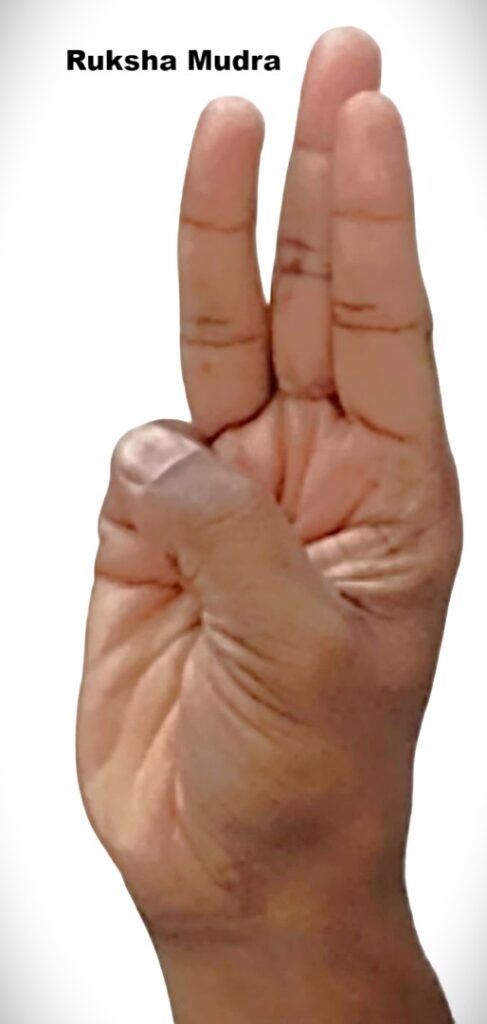
Ruksha Mudra Introduction Mudras are yogic hand gestures that influence the flow of prana (life energy), helping to harmonize body, mind, and subtle energies. Ruksha Mudra is known as the “Drying or Detoxifying Mudra”, traditionally used to reduce excess fluids, control moisture in the body, and balance Kapha dosha. The name “Ruksha” in Sanskrit means “dry” or “arid,” indicating its primary function of absorbing excess moisture and promoting metabolic and energetic balance. This mudra is often used in detoxification practices, weight management, and Kapha-pacifying routines. Meaning Ruksha = Dry, arid, or desiccated. Mudra = Yogic seal or gesture. Purpose: To control excess moisture, support detoxification, reduce Kapha imbalance, and enhance overall energy flow. How to Perform (Practice) Sit comfortably in a meditation posture such as Sukhasana, Padmasana, or Vajrasana. Relax shoulders, spine, and arms. Try to touch the base of your thumb with the tip of your small finger as shown in the image. Slightly press your thumb on the bent small finger. Keep all the other fingers straight as shown in the image. Close your eyes and focus on energy flowing to balance excess moisture and Kapha in the body. Maintain the mudra for 5–15 minutes, gradually increasing as comfort improves. Tip: Keep fingers gently touching and avoid tension in the hands or arms. Benefits Physical Benefits Reduces excess Kapha dosha, which can manifest as fluid retention or lethargy. Supports detoxification and metabolism. Helps alleviate obesity-related issues. Enhances circulation and energy flow in the body. Mental & Emotional Benefits Reduces mental lethargy and drowsiness associated with high Kapha. Improves focus, clarity, and mental alertness. Promotes emotional stability and calmness. Spiritual Benefits Directs subtle energy toward purification and balance. Supports meditation by clearing stagnant energy and promoting focus. Harmonizes prana flow, contributing to overall energetic equilibrium. Contraindications Finger, hand, or wrist injuries. Individuals with excess dryness (Vata imbalance) should practice moderately. Avoid over-practice if hands, arms, or shoulders feel strained. Anatomy & Physiology Musculoskeletal: Activates intrinsic hand muscles and stabilizes fingers. Circulatory system: Improves blood flow to hands and upper limbs. Digestive system: Supports metabolism and fluid regulation indirectly. Nervous system: Stimulates sensory nerves, promoting alertness and parasympathetic balance. Endocrine system: Supports energy balance and detoxification processes. Kinesiology Thumb, middle, and little fingers form a triangular seal, guiding energy flow. Index and ring fingers extended, lightly engaging hand muscles. Neutral wrist alignment avoids strain. Enhances proprioception, hand stability, and subtle energy direction. Neurology Stimulates sensory nerve endings in fingers, enhancing mind-body integration. Activates parasympathetic and sympathetic balance, supporting detoxification and alertness. Improves cortical awareness associated with focus, energy balance, and emotional regulation. Enhances subtle energy flow related to Kapha and moisture balance. Duration of Mudra Beginners: 5 minutes. Intermediate: 10–15 minutes. Advanced: 20–30 minutes during meditation or pranayama. Tip: Regular practice balances Kapha, moisture, and mental clarity. Counter Mudra Apana Mudra: To release stagnant fluids and toxins. Prana Mudra: To energize the body after Kapha-reducing practice. Gyan Mudra: To combine focus with energetic balance. Conclusion Ruksha Mudra is a Kapha-pacifying mudra that reduces excess moisture, enhances metabolism, and promotes physical and mental alertness. Regular practice integrates physical, emotional, and subtle energy benefits, making it ideal for detoxification, meditation, and yogic wellness. FAQ Q1. Can beginners practice this mudra?Yes, it is safe for all levels with gentle practice. Q2. Can it help with fluid retention or lethargy?Yes, it is particularly beneficial for Kapha imbalance symptoms. Q3. How long should it be practiced daily?5–15 minutes for beginners; up to 30 minutes for advanced practitioners. Q4. Can it be combined with pranayama?Yes, especially with Kapalabhati or Anulom Vilom for detoxification and energy balance. References Swami Satyananda Saraswati, Asana, Pranayama, Mudra, Bandha. B.K.S. Iyengar, Light on Yoga. Hatha Yoga Pradipika – Mudras for Kapha and energy balance. Gheranda Samhita – Mudras for detoxification and metabolic balance. Kuvalayananda, Yoga Mimamsa Journal.
Prithvi Mudra
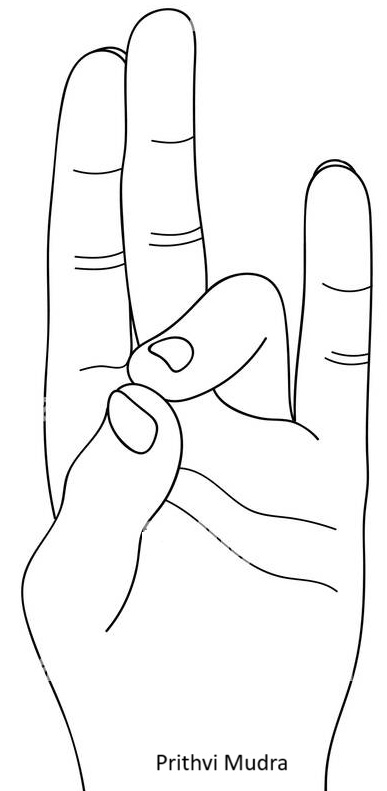
Prithvi Mudra Introduction Mudras are yogic hand gestures that influence the flow of prana (life energy) within the body and mind. Prithvi Mudra, also called the Mudra of Earth Element, is designed to increase stability, strength, and vitality. In Ayurveda, it is associated with the earth element (Prithvi) and is believed to promote physical endurance, grounding, and tissue regeneration. This mudra is commonly practiced by yogis, meditators, and individuals seeking balance, grounding, and overall well-being. Meaning Prithvi = Earth element, stability, strength. Mudra = Yogic seal or gesture. Purpose: To increase the earth element in the body, providing strength, vitality, endurance, and grounding, while also balancing vata and pitta doshas. How to Perform (Practice) Sit comfortably in a meditative posture such as Sukhasana, Padmasana, or Vajrasana. Relax shoulders, spine, and arms. Form the mudra: Touch the tip of the thumb with the tip of the ring finger. Keep the index, middle, and little fingers extended straight. Rest hands on thighs, palms facing upward. Close your eyes and focus on grounding energy, stability, and vitality. Maintain the mudra for 5–15 minutes, gradually increasing to 30 minutes for advanced practice. Tip: Keep fingers gently touching; avoid tension. Benefits Physical Benefits Improves physical strength and stamina. Enhances tissue growth, skin health, and hair health. Supports healing and regeneration of muscles and bones. Increases overall vitality and energy levels. Balances vata and pitta doshas in Ayurvedic terms. Mental & Emotional Benefits Promotes groundedness and emotional stability. Reduces anxiety, restlessness, and mental fatigue. Enhances focus, patience, and calmness. Spiritual Benefits Connects practitioner with earth energy for grounding during meditation. Supports a sense of stability, inner strength, and balance. Harmonizes subtle energy flow in chakras related to grounding and stability, especially Muladhara (root) chakra. Contraindications Finger, hand, or wrist injuries. Over-practice may increase heaviness or lethargy if done excessively. Avoid if feeling extremely cold or sluggish in body. Anatomy & Physiology Musculoskeletal: Strengthens intrinsic hand muscles and forearm stabilizers; maintains wrist alignment. Circulatory system: Improves localized blood flow and indirectly supports systemic circulation. Nervous system: Stimulates sensory nerves at fingertips, promoting parasympathetic activation. Endocrine system: May influence adrenal and pituitary glands through energy balance. Tissue regeneration: Supports metabolism of cells and maintenance of skin, hair, and connective tissue. Kinesiology Thumb contacts ring finger tip, forming a stable triangular energy seal. Index, middle, and little fingers extended, lightly engaging hand muscles. Neutral wrist position prevents strain. Enhances proprioception, hand stability, and energy awareness. Neurology Activates fingertip sensory nerves, enhancing mind-body integration. Stimulates parasympathetic nervous system, promoting calmness and mental stability. Supports focus, patience, and stress regulation. May influence brain hemispheric balance through subtle energy alignment. Duration of Mudra Beginners: 5 minutes. Intermediate: 10–15 minutes. Advanced: 20–30 minutes during meditation or pranayama. Tip: Consistent practice strengthens physical vitality, grounding, and mental stability. Counter Mudra Apana Mudra: To balance excess heaviness or sluggishness. Gyan Mudra: For enhancing mental alertness while maintaining grounding. Shuni Mudra: To promote patience and disciplined energy flow. Conclusion Prithvi Mudra is a grounding and strengthening mudra that enhances physical vitality, mental stability, and emotional balance. Regular practice integrates musculoskeletal, neurological, and subtle energy benefits, making it ideal for meditation, yoga, and daily wellness routines. FAQ Q1. Can beginners practice this mudra?Yes, it is simple and suitable for all levels. Q2. Can it be combined with pranayama?Yes, especially grounding pranayamas like Chandra Bhedana or slow Nadi Shodhana. Q3. How long should it be practiced daily?5–15 minutes for beginners; up to 30 minutes for advanced practitioners. Q4. Can it help with fatigue or weakness?Yes, it promotes physical strength, stamina, and overall vitality. References Swami Satyananda Saraswati, Asana, Pranayama, Mudra, Bandha. B.K.S. Iyengar, Light on Yoga. Hatha Yoga Pradipika – Mudras for grounding and vitality. Gheranda Samhita – Mudras for balance of elements and tissue regeneration. Kuvalayananda, Yoga Mimamsa Journal.
Sahaja Sankha Mudra
Sahaja Sankha Mudra Introduction Mudras are yogic hand gestures that direct the flow of prana (life energy) to balance the body, mind, and subtle energies. Sahaja Sankha Mudra is a specialized mudra often used for clearing energy channels, calming the mind, and enhancing meditative focus. The term “Sahaja Sankha” can be broken down as follows: Sahaja = Natural, innate, spontaneous. Sankha = Conch, symbolic of sound, vibration, and spiritual awakening. Thus, Sahaja Sankha Mudra represents natural awakening of inner energy and vibration, supporting both mental clarity and spiritual growth. Meaning Sahaja = Spontaneous, innate. Sankha = Conch, associated with sound, energy, and spiritual awakening. Mudra = Yogic seal or gesture. Purpose: To stimulate subtle energy flow, harmonize prana, and promote calmness and focus during meditation. How to Perform (Practice) Sit comfortably in a meditation posture such as Sukhasana, Padmasana, or Vajrasana. Relax shoulders, spine, and arms. Join both hands together interlocking the fingers and press the palms together. Apply a gentle pressure with both the thumbs by laying them parallel to each other on the index finger. This forms the sahajan shankha mudra. Close your eyes and focus on breathing, vibration, and energy circulating within. Maintain the mudra for 5–15 minutes, gradually increasing duration as comfort improves. Tip: Keep hands relaxed and avoid tension in fingers, wrists, or shoulders. Benefits Physical Benefits Enhances circulation and pranic flow in hands, chest, and upper body. Reduces tension in shoulders and chest. Supports respiratory function and oxygenation. Mental & Emotional Benefits Promotes mental clarity, focus, and calmness. Reduces stress, anxiety, and mental fatigue. Enhances inner awareness and mindfulness. Spiritual Benefits Activates subtle energy channels (nadis) and balances prana. Supports meditation by focusing attention and harmonizing inner vibrations. Enhances spiritual awakening and awareness of inner energy. Contraindications Finger, hand, or wrist injuries. Shoulder or chest injuries should practice under supervision. Avoid over-practice if hands or arms feel strained. Anatomy & Physiology Musculoskeletal: Activates intrinsic hand muscles, stabilizes fingers, and engages forearm muscles. Circulatory system: Improves localized blood flow in hands and upper limbs. Respiratory system: Encourages chest expansion and deeper breathing. Nervous system: Stimulates sensory nerves, promoting parasympathetic activation and mental relaxation. Endocrine system: Supports subtle energy centers that regulate stress and mental focus. Kinesiology Fingers curled to form a spiral/conch-like seal, directing pranic flow. Hands positioned near chest to enhance energetic focus. Shoulders relaxed; wrists in neutral alignment. Enhances proprioception, hand stability, and subtle energy direction. Neurology Stimulates peripheral nerve endings in fingers and palms, improving mind-body integration. Activates parasympathetic pathways to reduce stress and anxiety. Supports cortical regions associated with attention, focus, and emotional regulation. Enhances subtle energy perception and awareness during meditation. Duration of Mudra Beginners: 5 minutes. Intermediate: 10–15 minutes. Advanced: 20–30 minutes during meditation or pranayama. Tip: Daily practice enhances pranic flow, mental clarity, and spiritual awareness. Counter Mudra Gyan Mudra: To combine meditation focus with mental clarity. Prana Mudra: To energize the body after meditation. Apana Mudra: To release stagnant energy or mental tension. Conclusion Sahaja Sankha Mudra is a meditative mudra that harmonizes prana, enhances mental clarity, and supports spiritual awakening. Regular practice integrates physical, emotional, and subtle energy benefits, making it ideal for meditation, yoga, and holistic well-being. FAQ Q1. Can beginners practice this mudra?Yes, it is safe and simple for all levels. Q2. Can it be combined with pranayama?Yes, especially with Anulom Vilom or deep meditative breathing. Q3. How long should it be practiced daily?5–15 minutes for beginners; up to 30 minutes for advanced practitioners. Q4. Can it help with stress or mental fatigue?Yes, it promotes calmness, focus, and inner awareness. References Swami Satyananda Saraswati, Asana, Pranayama, Mudra, Bandha. B.K.S. Iyengar, Light on Yoga. Hatha Yoga Pradipika – Mudras for meditation and energy balance. Gheranda Samhita – Mudras for pranic flow and spiritual awakening. Kuvalayananda, Yoga Mimamsa Journal.
Prasanna Mudra
Prasanna Mudra Introduction Mudras are yogic hand gestures that regulate the flow of prana (vital energy) in the body and mind. Prasanna Mudra is a subtle mudra that promotes mental clarity, calmness, and emotional upliftment. The word “Prasanna” in Sanskrit means joyful, serene, or clear-minded. Practicing this mudra is believed to help alleviate stress, enhance focus, and improve overall emotional well-being. Meaning Prasanna = Joyful, serene, clear-minded. Mudra = Yogic gesture or seal. Purpose: To cultivate mental clarity, emotional balance, and inner calm, enhancing both cognitive and emotional well-being. How to Perform (Practice) Sit comfortably in a meditation posture such as Sukhasana, Padmasana, or Vajrasana. Relax shoulders, spine, and arms. : Keep hand near the chest. Rub the nails of the eight fingers against each other for 5 to 10 minutes for 30 days. The thumbs should be straight. Close your eyes and focus on breathing and cultivating inner serenity. Tip: Keep finger contact gentle without tension; maintain relaxed shoulders and arms. Benefits Physical Benefits Reduces tension and stress-related headaches. Improves respiratory function through subtle energy regulation. Enhances blood circulation to hands and forearms. Mental & Emotional Benefits Cultivates calmness, joy, and clarity of thought. Reduces stress, anxiety, and mental agitation. Promotes positive emotional balance and improved focus. Spiritual Benefits Enhances inner awareness and meditative depth. Stimulates subtle energy flow in ajna (third eye) and sahasrara (crown) chakras. Supports mindfulness and emotional regulation during meditation. Contraindications Finger, hand, or wrist injuries. Severe neurological or musculoskeletal disorders; practice only under guidance. Avoid overstraining fingers or wrists. Anatomy & Physiology Musculoskeletal: Activates intrinsic hand muscles and forearm stabilizers; maintains wrist alignment. Circulatory system: Enhances localized blood flow in hands and fingers. Nervous system: Stimulates peripheral nerves at fingertips, promoting parasympathetic activation. Endocrine system: May indirectly support adrenal and pineal function through energy flow. Kinesiology Thumb, index, and little fingers form a triangular contact; middle and ring fingers extended. Slight flexion in thumb, index, and little fingers; minimal forearm engagement. Neutral wrist and shoulder alignment prevents strain. Enhances proprioceptive awareness and subtle energy perception in hands. Neurology Activates sensory nerve endings, enhancing mind-body awareness. Stimulates parasympathetic nervous system, supporting relaxation and emotional regulation. Improves mental clarity, focus, and stress management. Supports cognitive-emotional integration and neural synchronization during meditation. Duration of Mudra Beginners: 5 minutes. Intermediate: 10–15 minutes. Advanced: 20–30 minutes during meditation or pranayama practice. Tip: Daily practice strengthens mental clarity, emotional balance, and meditative focus. Counter Mudra Shuni Mudra (Thumb + Middle Finger): For grounding excessive joy or energy. Gyan Mudra (Thumb + Index Finger): To enhance concentration if mental calmness is already present. Prithvi Mudra: To balance over-alertness with grounding energy. Conclusion Prasanna Mudra is a gentle yet effective mudra for cultivating joy, mental clarity, and emotional balance. Regular practice integrates physical, mental, and subtle energy benefits, making it a valuable tool for meditation, stress management, and daily yoga practice. FAQ Q1. Can beginners practice this mudra?Yes, it is simple and safe for all levels. Q2. Can it be combined with pranayama?Yes, it complements calming and grounding pranayamas like Nadi Shodhana or Chandra Bhedana. Q3. How long should it be practiced daily?5–15 minutes initially; up to 30 minutes for advanced practitioners. Q4. Can it help with stress and anxiety?Yes, regular practice promotes calmness, clarity, and emotional stability. References Swami Satyananda Saraswati, Asana, Pranayama, Mudra, Bandha. B.K.S. Iyengar, Light on Yoga. Hatha Yoga Pradipika – Mudras for mental clarity and emotional balance. Gheranda Samhita – Mudras for stress relief and inner awareness. Kuvalayananda, Yoga Mimamsa Journal.
Pushan Mudra (Giver of Good Health)
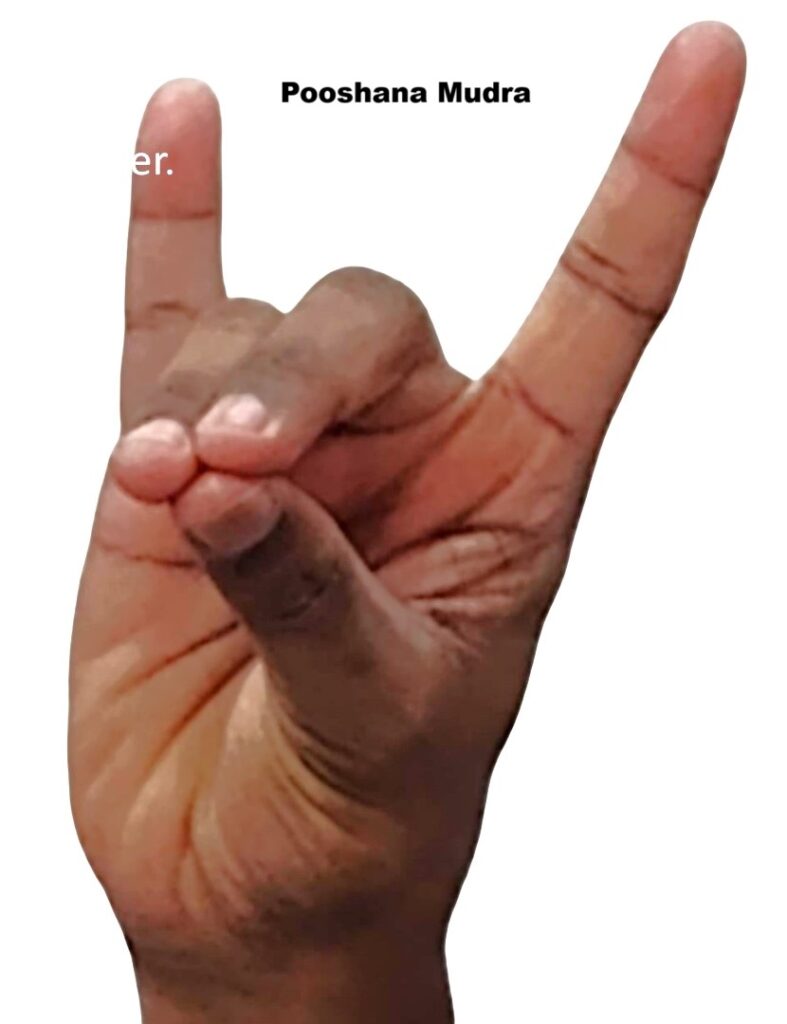
Pushan Mudra (Giver of Good Health) Introduction Mudras are yogic hand gestures that influence the flow of prana (vital energy) to harmonize body, mind, and subtle energies. Pushan Mudra is known as the “Mudra of Nourishment and Energy Direction”. It is designed to stimulate digestive fire (Agni), improve nutrient absorption, and enhance overall vitality and energy flow. The name “Pushan” comes from Sanskrit, meaning “nourisher or sustainer”, symbolizing the mudra’s ability to nourish the body and mind while enhancing metabolic and energetic processes. Meaning Pushan = Nourisher, sustainer, energy provider. Mudra = Yogic seal or gesture. Purpose: To improve digestion, metabolic efficiency, and vitality, while directing pranic energy to nourish the body and support overall health. How to Perform (Practice) Sit comfortably in a meditation posture such as Sukhasana, Padmasana, or Vajrasana. Relax shoulders, spine, and arms. Right hand – join the thumb tip to the tips of the index and middle fingers. Left hand – join the thumb tip to the tips of the ring and middle fingers. Maintaining these hand positions, rest the backs of your hands on their respective knees, palms up. Close your eyes and focus on digestive energy, nourishment, and prana flowing through the body. Maintain the mudra for 5–15 minutes, gradually increasing as comfort improves. Tip: Keep fingers gently touching; avoid tension in the hands or arms. Benefits Physical Benefits Stimulates digestive fire (Agni) and improves metabolism. Enhances nutrient absorption and assimilation. Supports liver, pancreas, and gastrointestinal functions. Reduces indigestion, bloating, and constipation. Boosts overall energy and vitality. Mental & Emotional Benefits Promotes clarity of thought and mental nourishment. Reduces fatigue and mental lethargy. Supports emotional stability by providing balanced energy flow. Spiritual Benefits Directs prana to vital centers, enhancing meditation and awareness. Supports chakras associated with digestion and vitality, mainly Manipura (solar plexus chakra). Strengthens the connection between body energy and subtle consciousness. Contraindications Finger, hand, or wrist injuries. Severe digestive disorders should practice only under guidance. Avoid over-practice if hands, wrists, or arms feel strained. Anatomy & Physiology Musculoskeletal: Activates intrinsic hand muscles and stabilizes fingers. Digestive system: Enhances peristalsis, metabolic activity, and nutrient assimilation. Circulatory system: Improves localized and systemic circulation. Nervous system: Stimulates sensory nerves at fingertips, promoting parasympathetic activation and digestive relaxation. Endocrine system: Supports pancreas and adrenal functions indirectly through energy regulation. Kinesiology Thumb, ring, and little fingers form a triangular seal, guiding energy flow. Index and middle fingers extended, lightly engaging hand muscles. Neutral wrist alignment prevents strain. Enhances proprioception, hand stability, and subtle energy awareness. Neurology Stimulates peripheral nerves in the fingers, enhancing mind-body connection. Supports parasympathetic nervous system, promoting calm digestion and energy balance. Activates brain regions associated with metabolic awareness and energy regulation. Improves focus, alertness, and emotional equilibrium. Duration of Mudra Beginners: 5 minutes. Intermediate: 10–15 minutes. Advanced: 20–30 minutes during meditation or pranayama. Tip: Regular practice enhances digestion, vitality, and energy balance. Counter Mudra Apana Mudra: To release excess digestive energy or toxins. Gyan Mudra: To enhance mental clarity while balancing energy. Prana Mudra: To energize the body after digestive strengthening. Conclusion Pushan Mudra is a nourishing mudra that enhances digestion, metabolism, vitality, and mental clarity. Regular practice integrates physical, mental, and subtle energy benefits, making it ideal for daily wellness, meditation, and yogic practice. FAQ Q1. Can beginners practice this mudra?Yes, it is safe and simple for all levels. Q2. Can it be combined with pranayama?Yes, particularly with deep abdominal breathing or Kapalabhati to stimulate digestion. Q3. How long should it be practiced daily?5–15 minutes for beginners; up to 30 minutes for advanced practitioners. Q4. Can it help with indigestion or bloating?Yes, it improves digestion, nutrient absorption, and metabolism. References Swami Satyananda Saraswati, Asana, Pranayama, Mudra, Bandha. B.K.S. Iyengar, Light on Yoga. Hatha Yoga Pradipika – Mudras for digestion and energy flow. Gheranda Samhita – Mudras for metabolic and digestive balance. Kuvalayananda, Yoga Mimamsa Journal.