
Pushpaputa Mudra(offering spiritual gifts)
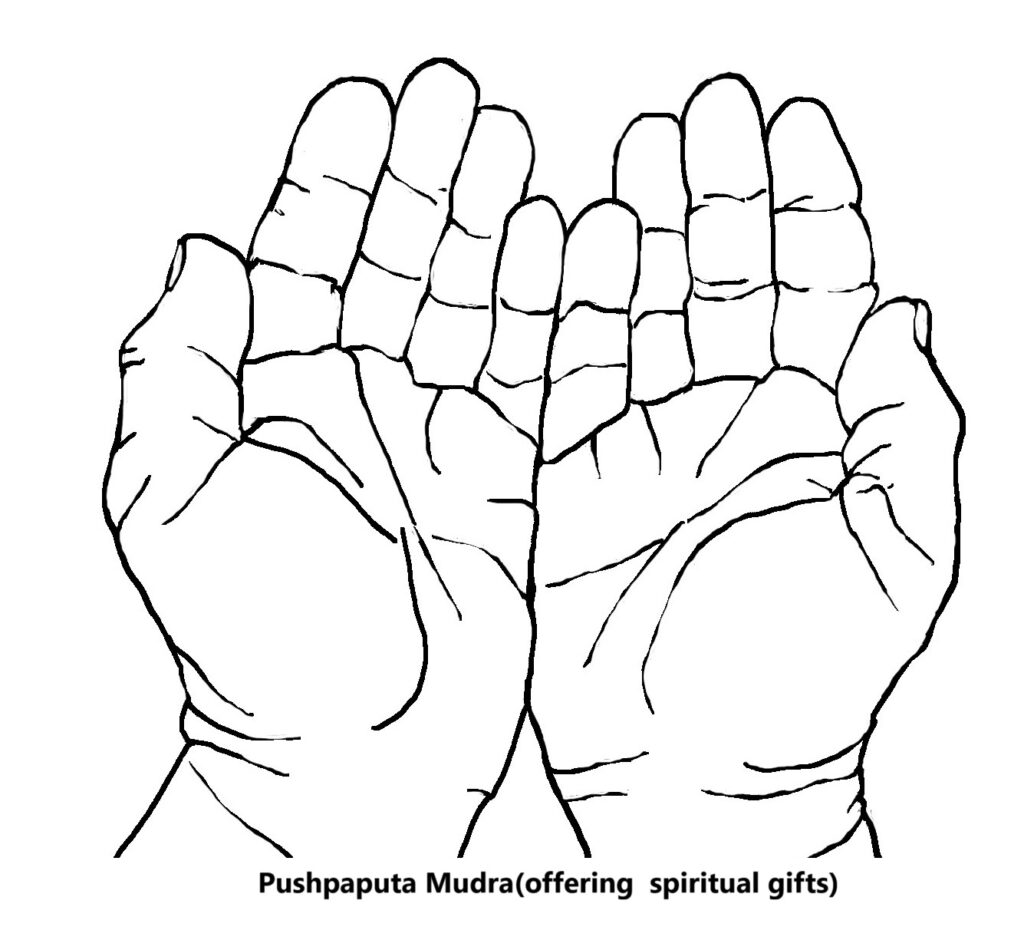
Pushpaputa Mudra(offering spiritual gifts) Introduction Mudras are yogic hand gestures that direct the flow of prana (life energy) to balance the body, mind, and subtle energies. Pushpaputa Mudra is a heart-centered mudra designed to enhance emotional expression, compassion, and inner joy, while harmonizing energy in the chest and heart region. The name “Pushpaputa” comes from Sanskrit, meaning “flower bud,” symbolizing purity, blossoming, and the unfolding of inner love and joy. This mudra is often used in meditation, prayer, or practices aiming at emotional and spiritual growth. Meaning Pushpa = Flower. Puta = Bud, container, or opening. Mudra = Yogic seal or gesture. Purpose: To nurture emotional balance, inner joy, and love, allowing one’s heart energy to unfold like a blossoming flower. How to Perform (Practice) Sit comfortably in a meditation posture such as Sukhasana, Padmasana, or Vajrasana. Relax shoulders, spine, and arms. Cup hands with little and ring fingertips together creating a bowl shape. Close your eyes and focus on heart-centered breathing and the blossoming of love, compassion, and joy. Maintain the mudra for 5–15 minutes, gradually increasing as comfort improves. Tip: Keep hands relaxed; avoid tension in fingers or shoulders. Benefits Physical Benefits Enhances circulation and energy flow in the chest and heart region. Supports respiratory health and oxygenation. Reduces tension in shoulders and upper chest. Improves vitality and overall energy levels. Mental & Emotional Benefits Promotes emotional stability, compassion, and joy. Reduces stress, anxiety, and emotional heaviness. Enhances focus on positive emotions and mindfulness. Spiritual Benefits Activates heart chakra (Anahata), fostering love, forgiveness, and empathy. Supports meditation by opening emotional and spiritual awareness. Harmonizes prana flow in the upper torso and heart region, enhancing spiritual vitality. Contraindications Finger, hand, or wrist injuries. Shoulder or chest injuries should practice under guidance. Avoid over-practice if hands, shoulders, or chest feel strained. Anatomy & Physiology Musculoskeletal: Activates intrinsic hand muscles, forearm stabilizers, and chest muscles. Respiratory system: Supports deeper breathing and chest expansion. Circulatory system: Improves blood flow to upper torso and heart. Nervous system: Stimulates sensory nerves in fingers and hands, promoting relaxation. Endocrine system: Supports heart energy centers and associated hormonal balance. Kinesiology Fingers interlaced to form a stable heart-centered seal. Palms near the chest, supporting subtle energy direction. Shoulders and arms relaxed to avoid tension. Enhances proprioception, hand stability, and energy awareness. Neurology Activates sensory nerves in hands and fingers, enhancing mind-body integration. Promotes parasympathetic activity, reducing stress and emotional tension. Stimulates brain regions associated with emotional regulation, empathy, and focus. Supports subtle energy flow in the chest and heart region. Duration of Mudra Beginners: 5 minutes. Intermediate: 10–15 minutes. Advanced: 20–30 minutes during meditation or pranayama. Tip: Regular practice enhances emotional balance, compassion, and heart-centered awareness. Counter Mudra Gyan Mudra: To combine heart-centered energy with mental clarity. Prana Mudra: To energize the body after emotional or spiritual meditation. Apana Mudra: To release stagnant energy or emotional heaviness. Conclusion Pushpaputa Mudra is a heart-centered mudra that enhances emotional balance, compassion, inner joy, and energetic harmony. Regular practice integrates physical, mental, and spiritual benefits, making it ideal for meditation, heart-centered yoga practices, and emotional wellness. FAQ Q1. Can beginners practice this mudra?Yes, it is simple and safe for all levels. Q2. Can it be combined with pranayama?Yes, especially with Anulom Vilom or heart-focused deep breathing. Q3. How long should it be practiced daily?5–15 minutes for beginners; up to 30 minutes for advanced practitioners. Q4. Can it help with emotional imbalance or stress?Yes, it promotes calmness, joy, and emotional stability. References Swami Satyananda Saraswati, Asana, Pranayama, Mudra, Bandha. B.K.S. Iyengar, Light on Yoga. Hatha Yoga Pradipika – Mudras for heart energy and emotional balance. Gheranda Samhita – Mudras for emotional and energetic harmony. Kuvalayananda, Yoga Mimamsa Journal.
Rudra Mudra
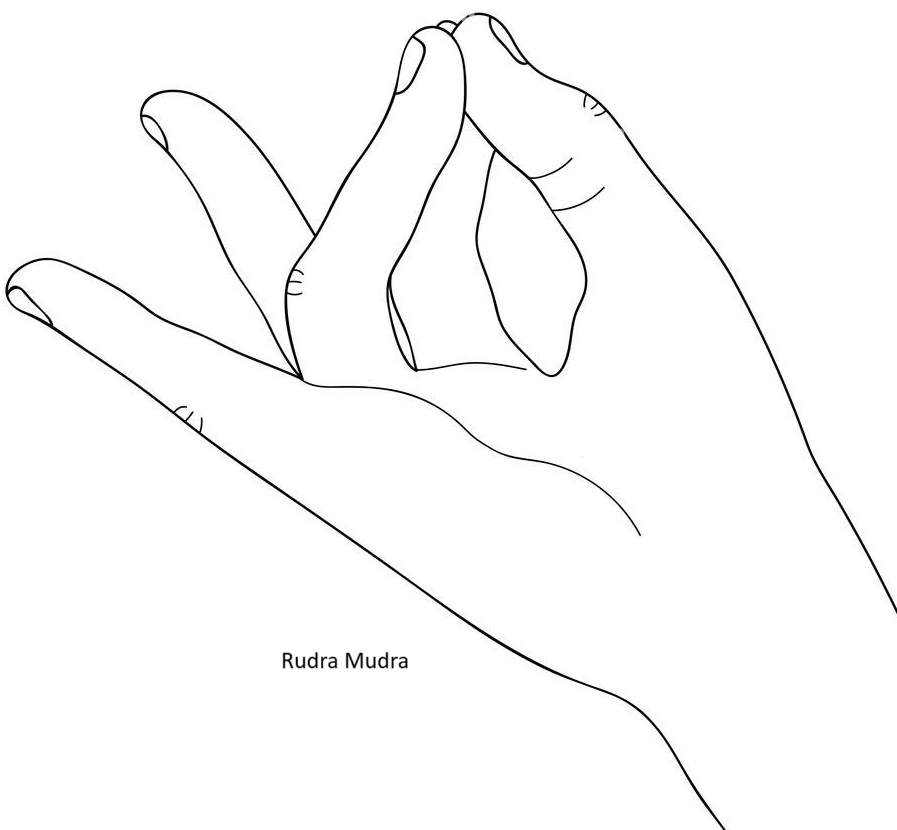
Rudra Mudra Introduction Mudras are symbolic hand gestures used in yoga to regulate prana (vital energy), influencing physical, mental, and spiritual well-being. Rudra Mudra is associated with Lord Rudra (Shiva), symbolizing power, transformation, clarity, and purification. This mudra is particularly known for stimulating the body’s energy, enhancing mental clarity, and promoting healing and detoxification. It is also used in meditation to awaken inner strength and transformative energy. Meaning Rudra = A fierce aspect of Shiva; symbolizes transformation, strength, and purification. Mudra = Yogic seal or gesture. Purpose: To enhance energy flow, stimulate the fire and ether elements, and support physical vitality, mental clarity, and emotional balance. How to Perform (Practice) Sit comfortably in a meditation posture such as Sukhasana, Padmasana, or Vajrasana. Relax shoulders, spine, and arms. Form the mudra: Join the tips of the thumb, index finger, and ring finger together. Keep the middle and little fingers extended straight. Place hands on the thighs, palms facing upward. Close your eyes and focus on inner energy, purification, and clarity. Maintain the mudra for 10–15 minutes, gradually increasing duration with practice. Tip: Keep the touch gentle; do not strain the fingers or hands. Benefits Physical Benefits Enhances circulation and oxygenation. Improves digestion and metabolism. Stimulates the fire element, supporting detoxification. Boosts overall vitality and energy. Mental & Emotional Benefits Enhances mental clarity, focus, and concentration. Reduces stress, anxiety, and mental fatigue. Promotes inner strength and emotional balance. Spiritual Benefits Awakens subtle energies associated with transformation and spiritual growth. Supports meditation by clearing mental obstacles and enhancing awareness. Activates fire (Agni) and ether (Akasha) energies, fostering purification and clarity. Contraindications Finger, hand, or wrist injuries. Avoid over-practice if hands or arms feel fatigued. Individuals with excessive heat or inflammatory conditions should practice moderately. Anatomy & Physiology Musculoskeletal: Activates intrinsic hand muscles and stabilizes fingers. Digestive system: Stimulates metabolism and digestive fire. Circulatory system: Improves blood flow in hands and upper body. Nervous system: Stimulates sensory nerves, promoting relaxation and mental focus. Endocrine system: Supports fire-related energy centers influencing metabolism and vitality. Kinesiology Thumb, index, and ring fingers form a triangular seal, guiding pranic flow. Middle and little fingers extended to enhance subtle energy flow. Neutral wrist and forearm alignment maintains comfort. Enhances hand stability, finger coordination, and energy awareness. Neurology Stimulates sensory nerve endings in fingers, enhancing mind-body integration. Activates parasympathetic nervous system, promoting calmness. Supports cortical areas associated with focus, emotional regulation, and mental clarity. Enhances subtle energy flow in coordination with mental and physical vitality. Duration of Mudra Beginners: 5–10 minutes. Intermediate: 10–15 minutes. Advanced: 20–30 minutes during meditation or pranayama. Tip: Daily practice supports energy balance, mental clarity, and detoxification. Counter Mudra Gyan Mudra: To combine mental clarity with calm focus. Prana Mudra: To energize the body after practice. Apana Mudra: To release excess heat or stagnant energy. Conclusion Rudra Mudra is a transformative mudra that enhances physical vitality, mental clarity, and spiritual purification. Regular practice integrates physical, emotional, and subtle energy benefits, making it ideal for meditation, energy balancing, and yogic wellness routines. FAQ Q1. Can beginners practice this mudra?Yes, it is safe for all levels with gentle practice. Q2. Can it be combined with pranayama?Yes, particularly with Kapalabhati, Bhastrika, or Anulom Vilom to stimulate energy and focus. Q3. How long should it be practiced daily?10–15 minutes for beginners; up to 30 minutes for advanced practitioners. Q4. Can it help with mental fatigue and stress?Yes, it promotes clarity, focus, and emotional balance. References Swami Satyananda Saraswati, Asana, Pranayama, Mudra, Bandha. B.K.S. Iyengar, Light on Yoga. Hatha Yoga Pradipika – Mudras for energy, clarity, and detoxification. Gheranda Samhita – Mudras for mental and physical balance. Kuvalayananda, Yoga Mimamsa Journal.
Matangi Mudra
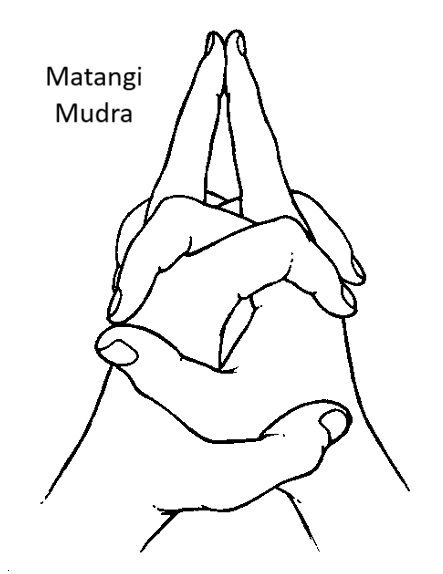
Matangi Mudra Introduction Matangi Mudra is a yogic hand gesture dedicated to Goddess Matangi, one of the Mahavidyas (wisdom goddesses) in Tantric and Yogic traditions. Known as the Tantric Saraswati, she represents inner harmony, knowledge, speech, and the power of transformation.The mudra is primarily used to restore mental clarity, inner balance, and emotional stability. It is also regarded as a powerful gesture for harmonizing the solar plexus (Manipura Chakra) and boosting inner strength. Meaning The word Matangi comes from Mata (mother) + anga (part or limb). Symbolically, it represents union with universal energy through aligning the inner self. The mudra is considered a seal of harmony and inner alignment, helping to regulate conflicting forces of mind and body. How to Perform (Practice) Sit comfortably in Padmasana, Sukhasana, or Vajrasana with a straight spine. bring both hands together and interlace all your fingers. Release both middle fingers and extend them, keeping them pressing against each other and pointing upward. Relax the shoulders, close the eyes, and breathe deeply. Focus attention on the solar plexus (Manipura Chakra). Practice for 5–15 minutes at a time, up to 2–3 times daily. Benefits Physical Benefits Strengthens the digestive system. Improves breathing capacity and supports lung function. Enhances circulation and energy flow. Reduces fatigue, exhaustion, and weakness. Mental & Emotional Benefits Creates inner harmony and calms emotional turbulence. Reduces stress, nervousness, and anxiety. Improves confidence, focus, and clarity of thought. Brings balance in relationships by reducing anger and frustration. Spiritual Benefits Activates the Manipura Chakra (solar plexus) – the seat of willpower and self-esteem. Enhances intuition, inner guidance, and creativity. Invokes the blessings of Goddess Matangi for wisdom and clarity in speech. Aligns personal energy with universal harmony. Contraindications Avoid during high blood pressure or heart-related conditions (if practiced too long). Should not be practiced during acute digestive disorders without guidance. Excessive practice may overstimulate and lead to restlessness. Anatomy & Physiology Engages the respiratory diaphragm by directing awareness to deep abdominal breathing. Stimulates the vagus nerve, inducing relaxation and regulating the autonomic nervous system. Supports liver, pancreas, and stomach functions by energizing Manipura region. Helps regulate the endocrine system, particularly adrenal glands. Kinesiology Interlaced fingers activate flexor digitorum profundus, lumbricals, and interossei muscles. Upright middle fingers engage extensor digitorum and stabilize hand posture. Creates neuromuscular awareness linking hand gestures with abdominal core muscles. Neurology Stimulates brain centers linked to confidence, balance, and speech regulation. Strengthens parasympathetic dominance, calming overactivity of stress circuits. Promotes coherence between right and left brain hemispheres. Supports mental clarity and improved executive functions in the prefrontal cortex. Duration of Practice Beginners: 5 minutes daily. Intermediate: 10–15 minutes, twice daily. Advanced: Up to 30 minutes in meditation or pranayama practice. Best practiced in the morning or when seeking calm and inner strength. Counter Mudra Apana Mudra – for grounding and reducing overstimulation. Shakti Mudra – for deep relaxation and calming energy after Matangi practice. Dhyana Mudra – for balance in meditation after energizing manipura chakra. Conclusion Matangi Mudra is a powerful gesture for harmony, clarity, and empowerment. By activating the solar plexus, it balances emotions, supports digestion, and enhances confidence. Spiritually, it connects the practitioner with inner wisdom and creativity, making it a valuable tool for meditation, stress management, and personal growth. FAQ Q1. Can Matangi Mudra help with stress?Yes, it calms the nervous system, reduces anxiety, and promotes inner peace. Q2. Can beginners practice it daily?Yes, starting with 5–10 minutes is safe and effective. Q3. Which chakra does it activate?Primarily the Manipura Chakra (solar plexus). Q4. Can it be combined with pranayama?Yes, it works well with deep abdominal breathing, Kapalabhati, or Anulom Vilom. Q5. Is it beneficial for public speakers or students?Yes, it improves confidence, clarity of thought, and speech. References Swami Satyananda Saraswati – Asana, Pranayama, Mudra, Bandha. Gertrud Hirschi – Mudras: Yoga in Your Hands. Vasant Lad – Ayurveda: Science of Self-Healing. David Frawley – Yoga and Ayurveda. Research on yoga mudras, vagus nerve activation, and stress regulation.
Maha Vedha Mudra
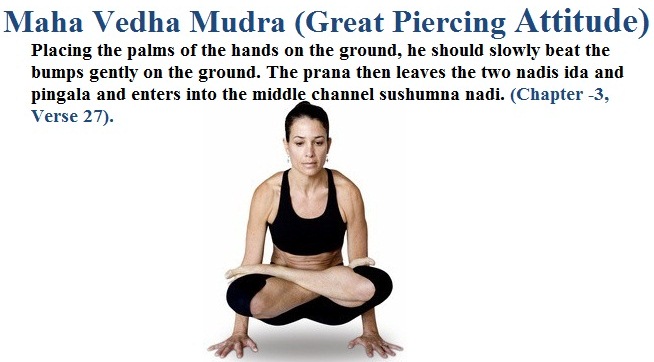
Maha Vedha Mudra Introduction Maha Vedha Mudra is an advanced Hatha Yoga practice mentioned in the Hatha Yoga Pradipika and Gheranda Samhita. It is one of the Maha Mudras (great mudras) that powerfully influences prana and awakens higher states of consciousness. Maha Vedha involves a combination of asana, bandhas, kumbhaka (breath retention), and a dynamic movement of the body. It is traditionally performed after Maha Mudra and Maha Bandha, and it acts as a catalyst to stimulate the Kundalini Shakti by directing prana into the central channel (Sushumna Nadi). Meaning Maha = Great, supreme. Vedha = Piercing, penetration, striking. Mudra = Seal or gesture. Thus, Maha Vedha Mudra means the great piercing gesture, symbolizing the piercing of the three granthis (energy knots) that obstruct Kundalini: Brahma Granthi (base, inertia), Vishnu Granthi (heart, attachment), Rudra Granthi (head, ego). How to Perform (Practice) Sit in padmasana. Relax the body and close the eyes. Place the palms of the hands on the floor beside the thighs with the fingers pointing forward or make fists with the knuckles facing down. The arms should be straight but relaxed. Inhale slowly and deeply. Retain the breath inside. Raise the body by placing all the weight on the hands and straightening the arms. Gently beat the buttocks on the ground 3 times, keeping the awareness at the perineum. The buttocks and the back of the thighs should touch the ground simultaneously. The spine must be kept straight. Gently rest the buttocks back on the floor. Exhale. This is one round. When the breathing returns to normal, repeat the process. Practice 3 rounds. Benefits Physical Benefits Stimulates pelvic and abdominal organs. Improves circulation to reproductive and digestive systems. Strengthens pelvic floor muscles. Regulates glandular secretions (thyroid, adrenal, gonadal). Energetic Benefits Purifies nadis and removes blockages. Directs prana into Sushumna Nadi. Awakens Kundalini energy. Dissolves the granthis (knots) of energy. Mental & Spiritual Benefits Increases concentration and meditation capacity. Promotes detachment from material bondage. Awakens higher states of consciousness. Leads toward Samadhi (union with the self). Contraindications Not suitable for beginners. Avoid in case of: Hypertension, Heart disease, Hernia, ulcers, Epilepsy, Pregnancy. Should not be performed after heavy meals. Anatomy & Physiology Musculoskeletal: Involves hip joints, spine, pelvic floor, and abdominal compression. Endocrine: Stimulates thyroid, adrenal, and reproductive glands. Respiratory: Increases tolerance to CO₂, strengthens diaphragm control. Circulatory: Enhances venous return and arterial circulation in pelvic region. Kinesiology Movement: Upward lift of the body followed by gentle striking of buttocks on the ground. Muscles involved: Arm and shoulder muscles (for lifting support), Pelvic floor muscles (Mula Bandha), Abdominal muscles (Uddiyana Bandha), Cervical flexors (Jalandhara Bandha). Promotes stability, balance, and control. Neurology Stimulates sacral and lumbar nerve plexuses. Activates parasympathetic nervous system (through Mula Bandha). Jalandhara Bandha regulates vagus nerve activity (balances HR and BP). Enhances higher brain centers → limbic system, pineal, pituitary → linked to altered states of consciousness. Duration of Practice Beginners (with guidance): 3 rounds of 10–20 seconds breath retention. Intermediate/advanced: 5–7 rounds, gradually increasing kumbhaka time. Best practiced early morning on an empty stomach, after Maha Mudra and Maha Bandha. Counter Mudra To balance its heating, stimulating effects, practice: Shakti Mudra → calming, cooling. Chin Mudra → grounding, meditative. Varun Mudra → restores water balance. Conclusion Maha Vedha Mudra is one of the most potent yogic mudras, known as the great piercing gesture. It directs prana into Sushumna, pierces energy knots, and awakens Kundalini Shakti. It enhances physical health, purifies energy channels, and uplifts consciousness. However, it is an advanced practice and should be approached with caution and guidance. FAQ Q1. Can beginners try Maha Vedha Mudra?No, it is recommended only for advanced practitioners under expert guidance. Q2. Does it really awaken Kundalini?Yes, it is one of the traditional mudras for Kundalini arousal. Q3. Can women practice Maha Vedha Mudra?Yes, but avoid during pregnancy and menstruation. Q4. What is the difference between Maha Bheda and Maha Vedha Mudra? Maha Bheda → static, inward piercing with bandhas and kumbhaka. Maha Vedha → dynamic striking movement of buttocks with bandhas. Q5. When should it be practiced?After Maha Mudra and Maha Bandha, early morning, empty stomach, in a meditative environment. References Hatha Yoga Pradipika – Svātmārāma. Gheranda Samhita. Swami Satyananda Saraswati – Asana, Pranayama, Mudra, Bandha. Kuvalayananda – Yoga Mimamsa Journal. Swami Niranjanananda Saraswati – Prana and Pranayama.
Māsikī Mudrā
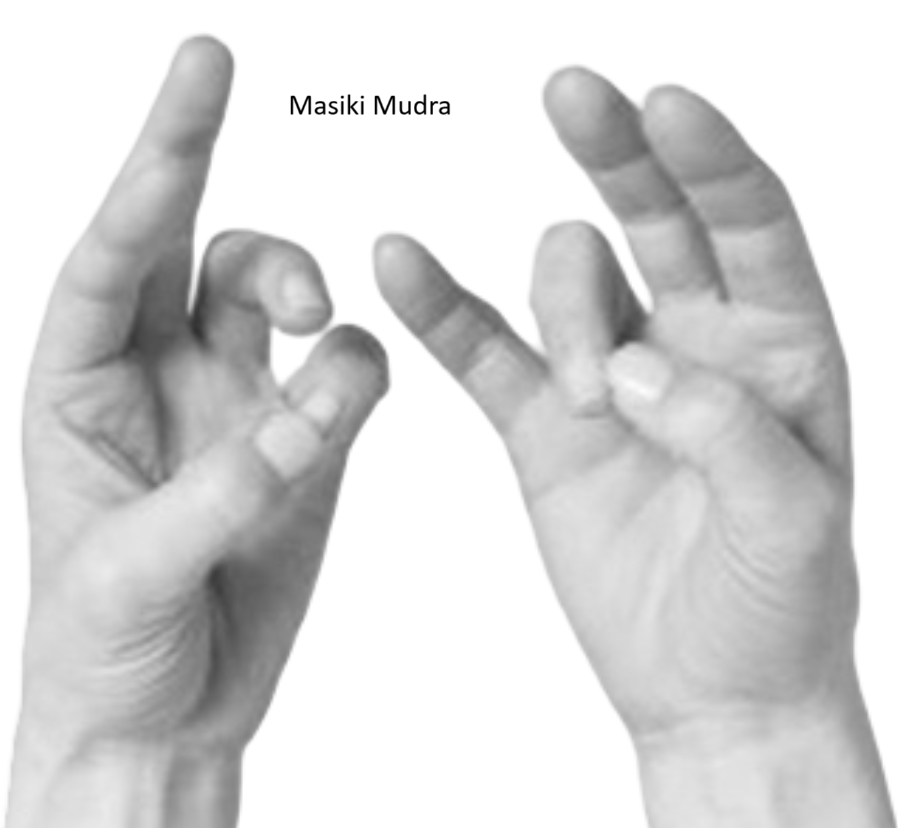
Māsikī Mudrā Introduction Māsikī Mudrā is a relatively less-known but significant yogic gesture found in the Tantric and Hatha Yoga traditions. It is linked with the regulation of lunar energy (chandra tattva) and the cyclical rhythms of the body, particularly those associated with the female reproductive system and the soma principle (nectar energy).The mudra is often practiced in conjunction with pranayama and meditation, especially during sādhanās focused on cooling, balancing, and harmonizing inner energies. Meaning Māsikī comes from the Sanskrit word Māsa = “month” or “lunar cycle”. It represents monthly cyclic energy, the rhythms of time, moon, and menstruation. Mudra = “gesture” or “seal”. Thus, Māsikī Mudrā can be understood as the gesture that harmonizes with the monthly rhythm of lunar energy, balancing feminine and cooling forces in the body. How to Perform (Practice) Sit in Padmasana, Siddhasana, or Sukhasana with a straight spine. Each hand does something different Right hand – bring the thumb tip to the inside of the nail on your ring finger. Left hand – bring the tips of your thumb and little finger together. Focus on the swadhisthana chakra (sacral energy center) and/or ajna chakra (third eye). Practice for 10–15 minutes in the evening or during meditation. Benefits Physical Benefits Balances menstrual cycles and alleviates discomfort. Cools down excess heat and pitta in the body. Supports reproductive health and hormonal balance. Relieves fatigue, insomnia, and stress-related physical disorders. Improves digestion by calming the fire element. Energetic Benefits Activates the lunar (ida nadi), enhancing calmness and cooling energy. Strengthens connection with soma (amrita, nectar energy). Enhances fluid balance in tissues (linked with water element). Helps in deep meditative states and pratyahara (withdrawal of senses). Mental & Spiritual Benefits Promotes emotional stability and tranquility. Reduces stress, anxiety, and irritability. Enhances intuition and inner awareness. Helps harmonize with lunar phases, supporting spiritual practices aligned with the moon. Contraindications Avoid during severe depression or extreme lethargy (as it may enhance heaviness). Not recommended for those with excess kapha dosha (as it may increase sluggishness). Should not be practiced immediately after heavy meals. Pregnant women should practice under guidance. Anatomy & Physiology Stimulates parasympathetic nervous system, reducing heart rate and cooling the body. Activates swadhisthana chakra, regulating reproductive and urinary functions. Engages hand marma points that connect to reproductive and endocrine systems. Balances water metabolism and supports hormonal regulation. Kinesiology Involves opposition of thumb, ring, and little finger tips, engaging muscles like flexor pollicis longus, flexor digitorum profundus, and interossei muscles. Extended index and middle fingers lengthen finger flexors and stabilize hand position. Improves fine motor control and neural feedback through sensory stimulation of fingertips. Neurology Stimulates sensory nerves in fingers connected with vagus nerve activity. Enhances neuroendocrine regulation, particularly linked to hypothalamic-pituitary-ovarian axis. Induces a relaxation response, calming overactive sympathetic nervous system. May support neuroplasticity by conditioning the brain toward calm states. Duration of Practice Beginners: 5–10 minutes daily. Intermediate: 15–20 minutes daily. Advanced practitioners: Up to 30 minutes in deep meditation. Best practiced during evening, full moon days, or when feeling overheated or restless. Counter Mudra Surya Mudra (Sun Gesture) – to balance if too much cooling or lethargy arises. Prana Mudra – to re-energize after long lunar meditative practices. Apana Mudra – to assist if digestive sluggishness occurs. Conclusion Māsikī Mudrā is a lunar and cyclical energy gesture that harmonizes the rhythms of body and mind with the moon’s influence. It helps regulate menstrual cycles, cools excess heat, and calms the mind. When practiced regularly, it supports emotional stability, reproductive health, and deeper meditation, making it especially valuable for women and for those seeking balance with lunar energy. FAQ Q1. Is Māsikī Mudrā only for women?No, while it supports menstrual health, men can also practice it for lunar cooling and mental calmness. Q2. When is the best time to practice it?During evening meditation, full moon days, or when seeking to reduce heat and restlessness. Q3. Can it be combined with pranayama?Yes, it works well with Chandra Bhedana Pranayama (left-nostril breathing) or Sheetali/Sheetkari Pranayama. Q4. Does it help with anxiety?Yes, it strongly activates ida nadi, which reduces overthinking and stress. Q5. How soon can results be felt?Some effects (calmness, cooling) can be felt immediately, while hormonal and menstrual balance may take weeks of consistent practice. References Swami Satyananda Saraswati – Asana, Pranayama, Mudra, Bandha. Gertrud Hirschi – Mudras: Yoga in Your Hands. Vasant Lad – Ayurveda: Science of Self-Healing. Dr. David Frawley – Yoga and Ayurveda. Research journals on mudras and lunar energy regulation.
Maha Sacral Mudra
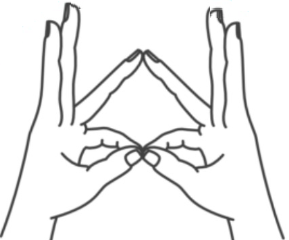
Maha Sacral Mudra Introduction Maha Sacral Mudra, also known as the Great Pelvic Mudra, is a therapeutic hand gesture primarily used in Mudra Therapy for regulating the sacral chakra (Svadhisthana) and the reproductive–urinary system. It is believed to restore energetic balance in the lower abdomen, harmonize hormonal function, and bring relief from gynecological and urogenital disorders. Unlike classical yogic mudras like Maha Mudra, this mudra is part of modern therapeutic mudras practiced for healing, emotional stability, and balancing energy flow in the pelvis and sacral region. Meaning Maha = Great, supreme. Sacral = Refers to the sacral region (pelvic area, reproductive organs, water element, Svadhisthana chakra). Mudra = Gesture/seal that directs energy. Thus, Maha Sacral Mudra means the great energy seal for the pelvic/sacral region, harmonizing reproductive, urinary, and hormonal health while balancing emotional flow. How to Perform (Practice) Sit comfortably in Sukhasana (easy pose), Vajrasana, or even in a chair with an erect spine. Touch the tips of the thumb and little fingers together, then touch the thumb, short and ring finger tips of both hands together; extend the index finger and middle fingers, pointing fingers downward in front of the lower abdomen. Close the eyes and breathe deeply, focusing on the pelvic area (Svadhisthana Chakra). Practice visualization: imagine a flowing orange light in the lower abdomen, bringing warmth and harmony. Benefits Physical Benefits Balances functions of the bladder, kidneys, uterus, ovaries, and prostate. Helpful in menstrual disorders (cramps, irregularity, menopause). Reduces symptoms of PMS, infertility, and sexual weakness. Supports urinary health and prevents infections. Aids digestion by supporting the lower abdominal organs. Energetic Benefits Activates and balances the Svadhisthana Chakra (sacral energy center). Promotes flow of water element (fluid balance, emotional fluidity). Dissolves blockages in reproductive energy. Mental & Emotional Benefits Reduces mood swings, emotional instability, and anxiety. Encourages creativity, sensuality, and emotional openness. Promotes grounding, emotional healing, and harmony in relationships. Contraindications Should be avoided in conditions of excess fluid retention (edema) or severe infections. People with very high blood pressure or chronic kidney disease should consult a therapist before practice. Not recommended immediately after abdominal surgery. Anatomy & Physiology Region influenced: Pelvis, sacral plexus, urinary and reproductive system. Elemental relation: Water element (Jala Tattva). Physiological effects: Stimulates parasympathetic nerves controlling bladder and reproductive organs. Balances hormonal secretions from ovaries/testes. Improves pelvic blood circulation. Kinesiology Finger placement engages subtle neuromuscular circuits. By pressing ring, little fingers, and thumb together → activation of water and earth elements. Extended index and middle fingers allow flow of ether and air elements, creating balance. Stabilizes pelvic muscles and sacral nerve pathways energetically. Neurology Stimulates sacral plexus (S2–S4) and parasympathetic nervous system. Enhances vagal response (relaxation, stress reduction). Influences limbic system for emotional regulation. Encourages brain–pelvis connection, reducing psychosomatic tension in reproductive organs. Duration of Practice Practice for 10–15 minutes, 2–3 times daily. Best results with consistent daily use for several weeks. Can be integrated with meditation, pranayama, or mantra for deeper effect. Counter Mudra If there is excessive activation or heat in the pelvic region, practice: Apana Mudra – regulates elimination and balances downward energy. Prithvi Mudra – for grounding and stabilizing. Chin Mudra – for mental calmness. Conclusion Maha Sacral Mudra is a gentle yet powerful healing mudra for harmonizing the sacral energy center and improving reproductive, urinary, and hormonal balance. It brings physical relief from menstrual, menopausal, and urinary issues while promoting emotional stability and creativity. As with all mudras, regular practice is key, and it should be approached with awareness of contraindications. FAQ Q1. Can Maha Sacral Mudra help with infertility?It may support reproductive health by improving circulation and hormonal balance, but it should be practiced along with medical treatment. Q2. How soon will results be felt?With daily practice, benefits may be noticed within 2–4 weeks. Q3. Can men practice Maha Sacral Mudra?Yes, it benefits the prostate, bladder, and sexual energy in men. Q4. Can it be practiced during menstruation?Yes, it can ease cramps and mood swings, but if pain is severe, rest is advised. Q5. Should it be combined with breathing techniques?Yes, practicing with deep abdominal breathing or So-Ham mantra enhances effects. References Gertrud Hirschi – Mudras: Yoga in Your Hands. K. S. Joshi – Yoga and Mudras. Swami Satyananda Saraswati – Asana, Pranayama, Mudra, Bandha. Research articles on therapeutic hand mudras and their neurophysiological effects.
Mandala Mudra
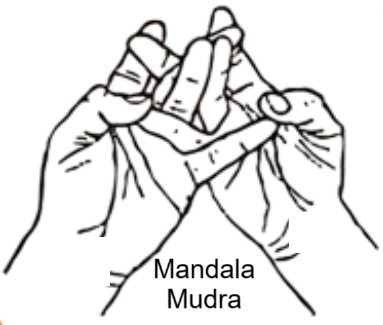
Mandala Mudra Introduction Mandala Mudra is a sacred hand gesture and meditative practice symbolizing wholeness, unity, and the cyclical nature of existence. The word Mandala in Sanskrit means “circle,” representing completeness, harmony, and the interconnectedness of the universe. This mudra is often used in meditation, tantric rituals, and yoga practices to invoke balance, enhance concentration, and connect the practitioner with universal energy. It is commonly practiced in Buddhist, Hindu, and yogic traditions as a tool for centering the mind and opening the heart and higher consciousness. Meaning Mandala = Circle, wholeness, cosmos, eternal cycle. Mudra = Seal, gesture. Thus, Mandala Mudra signifies the “seal of unity and completeness,” symbolizing the infinite cycle of creation, preservation, and dissolution. How to Perform (Practice) Sit comfortably in Padmasana, Sukhasana, or Vajrasana, with a straight spine and relaxed shoulders. Sit comfortably with your back straight and focus on calming your breath. As you calm your mind and lower your heart rate, imagine a majestic mountain situated amidst a great sea. Pull the fingers of both your hands up and down with your palms in between. Press the tip of the opposite thumb at the tip of each small finger. Fold each index finger so that its tip reaches the tip of the opposite middle. Hold the fingers of the fingers and position them in such a way that they are perpendicular to the top of your palms. Press the back of each finger to its counterpart. Anamika is the symbol of the sacred mountain Meru which is surrounded by the cosmic ocean. Close your eyes, take deep breaths, and focus on the circle formed by the hands as a symbol of wholeness and harmony. Practice for 10–20 minutes during meditation or pranayama. Benefits Physical Benefits Supports digestion and abdominal organs when placed at the solar plexus. Enhances respiratory efficiency by expanding awareness of diaphragmatic breathing. Improves circulation and lymphatic flow by calming the body. Energetic Benefits Balances prana (life force) across all five vayus. Activates and harmonizes solar plexus (Manipura) and heart (Anahata) chakras. Promotes a sense of wholeness, grounding, and stability. Connects personal energy with cosmic energy. Mental & Emotional Benefits Enhances concentration and meditation depth. Reduces feelings of fragmentation or stress. Cultivates inner harmony, clarity, and completeness. Symbolically heals emotional wounds by restoring a sense of unity and belonging. Contraindications Not suitable for those experiencing severe restlessness or hyperactivity (may intensify inner focus too strongly). Should be avoided in acute digestive discomfort or abdominal inflammation if placed at the solar plexus. People with emotional trauma may initially find deep meditative states overwhelming. Anatomy & Physiology Promotes relaxation response via the parasympathetic nervous system. Influences the solar plexus → regulating digestive enzymes and metabolic activity. Improves oxygenation and diaphragm activity for better breathing. Enhances heart coherence, synchronizing heartbeat with breath rhythm. Kinesiology The circular hand shape represents energy looping back into itself, symbolizing conservation and balance. Gentle engagement of finger flexors and extensors creates a stable but non-rigid posture. Activates proprioceptive feedback, enhancing body–mind connection. Neurology Stimulates somatosensory cortex through tactile awareness of joined fingers. Enhances neuroplasticity via focused attention and visualization of wholeness. Regulates autonomic nervous system balance by deepening meditative states. Activates frontal lobes (attention, decision-making) and limbic system (emotional integration). Duration of Practice 10–20 minutes, once or twice daily. Can be practiced during meditation, mantra chanting, or pranayama. For therapeutic use (stress, anxiety, digestion), practice consistently for 4–6 weeks. Counter Mudra Prithvi Mudra → grounding if one feels scattered after Mandala Mudra. Hridaya Mudra → for emotional release if deep focus stirs up hidden emotions. Hakini Mudra → for enhancing concentration in a more cognitive manner. Conclusion Mandala Mudra is a symbol of wholeness and unity, guiding practitioners toward balance, harmony, and inner peace. It integrates body, mind, and spirit by forming a circle—the most ancient symbol of infinity and completeness. Practiced regularly, it enhances meditation, balances energy, supports digestion, and nurtures inner calm. By embodying the cosmic circle, this mudra helps us experience a profound sense of belonging within the universe. FAQ Q1. What is Mandala Mudra used for?It is used for meditation, enhancing unity, and balancing inner energy. Q2. Can beginners practice it?Yes, it is gentle and safe for beginners. Q3. Which chakra does it activate?Primarily Manipura (solar plexus) and Anahata (heart chakra). Q4. Does it help with stress?Yes, it calms the nervous system and brings emotional stability. Q5. Is it linked to Buddhist or Hindu traditions?Both—Buddhism uses it in mandala meditations, while Hindu yoga associates it with wholeness and pranic balance. References Gertrud Hirschi – Mudras: Yoga in Your Hands. Swami Satyananda Saraswati – Asana, Pranayama, Mudra, Bandha. Joseph Campbell – The Power of Myth (on mandala symbolism). Lama Anagarika Govinda – The Foundations of Tibetan Mysticism. Modern research on hand mudras in meditation and stress reduction.
Mahākrānta Mudrā
Mahākrānta Mudrā Introduction Mahākrānta Mudrā is a rarely discussed but symbolically significant hasta mudra (hand gesture) found in yoga, tantra, and mudra therapy traditions. The word Mahākrānta translates as “great expanse” or “mighty spread”, symbolizing vastness, expansion of consciousness, and opening of inner channels. This mudra is believed to aid in releasing stagnation, expanding awareness, and enhancing energetic circulation in the body. In yogic texts, it is linked to tantric meditative practices, where hand gestures represent psychic locks and energetic circuits. Meaning Mahā = great, vast, mighty. Krānta = spreading, expanding, crossing over, or transcending. Symbolically, the mudra means “transcending limitations” or “expansion of inner consciousness.” It represents the unfolding of higher awareness and the dissolution of boundaries within the practitioner. How to Perform Practice Sit in a comfortable posture such as Padmasana, Sukhasana, or Vajrasana. Raise the hands to the height of the face. With the elbows pointing down, turn the palms toward the face. Keep the hands about shoulder width apart. Keep the shoulders relaxed and spine upright. Close the eyes, breathe deeply, and focus on expansion of awareness. Practice for a few minutes, gradually increasing the duration. Benefits of Mahākrānta Mudrā Physical Benefits Improves circulation and energy flow in the arms and chest. Strengthens the respiratory system by opening the chest cavity. May help in reducing stiffness in fingers and hands. Stimulates the peripheral nerves and enhances tactile sensitivity. Mental Benefits Promotes a feeling of expansion and openness. Helps in releasing fear, rigidity, and stagnation. Encourages creativity and expressive capacity. Reduces mental blockages and overthinking. Spiritual Benefits Represents the expansion of consciousness beyond limitations. Balances the Prana Vayu (upward-moving energy) in the chest. Supports meditation on space (ākāsha tattva). Enhances connection with the subtle body (sūkshma sharira). Contraindications Avoid if experiencing severe arthritis or joint pain in fingers. Should not be practiced with nerve injuries in the hand. People with excessive anxiety or restlessness should limit duration, as expansion may aggravate symptoms. Anatomy & Physiology Expands the intercostal muscles, improving chest capacity. Stimulates the nerve endings in the fingers connected to sensory cortices. Encourages blood circulation in the upper extremities. Supports respiratory physiology by widening the rib cage. Kinesiology Actively engages finger extensors (extensor digitorum, extensor indicis, extensor digiti minimi). Stabilizes through the thenar and hypothenar muscles (base of thumb and little finger). Creates proprioceptive awareness in hand musculature. Symbolic gesture of “spreading” activates both motor and sensory feedback loops. Neurology Stimulates somatosensory cortex via finger extension. Increases parasympathetic relaxation when combined with deep breathing. Finger spreading activates contralateral brain hemispheres, improving neural coordination. Supports the release of mental rigidity through neuromotor relaxation. Duration of Mudra Beginners: 3–5 minutes daily. Therapeutic: Up to 15 minutes, in 2–3 sittings. Meditative expansion practice: 10–20 minutes with breath awareness. Counter Mudra To balance or neutralize effects of Mahākrānta Mudrā: Hridaya Mudra (for calming and centering). Chin Mudra (for grounding awareness). Anjali Mudra (for balance and humility). Conclusion Mahākrānta Mudrā is a symbolic hand gesture that reflects expansion, transcendence, and openness. Physically, it improves circulation and respiratory function; mentally, it encourages release of rigidity and enhances creativity; spiritually, it fosters consciousness expansion and connection with higher awareness. Regular practice helps dissolve limitations and promotes a state of openness and harmony. FAQ Q1. What is Mahākrānta Mudra mainly used for?It is used for expansion of awareness, improving circulation, and opening blocked energies. Q2. Can beginners practice it?Yes, but start with short durations (3–5 minutes). Q3. Which chakra does it affect?It influences the Heart Chakra (Anahata) and Throat Chakra (Vishuddha). Q4. Can it be combined with meditation?Yes, it is powerful when combined with visualizations of expansion or space (ākāsha dharana). Q5. Is it therapeutic for stress?Yes, but in moderation—long practice may overstimulate in anxious individuals. References Swami Satyananda Saraswati, Asana, Pranayama, Mudra, Bandha. Gertrud Hirschi, Mudras: Yoga in Your Hands. Joseph Le Page & Lilian Aboim, Mudras for Healing and Transformation. André Van Lysebeth, Tantra: The Cult of the Feminine. Traditional yoga and tantra mudra texts referencing symbolic hand gestures.
Mahaprana Mudra
Mahaprana Mudra Introduction Mahaprana Mudra is a powerful therapeutic and pranic hand gesture that activates the vital life force (Prana Shakti). In yogic philosophy, Mahaprana refers to the universal vital energy that sustains life. This mudra is practiced to strengthen the lungs, expand breath capacity, improve energy circulation, and enhance immunity. It is often taught in Pranayama practices and in Mudra Therapy to boost vitality, particularly for those with weak respiratory function, chronic fatigue, or low immunity. Meaning Maha = Great, supreme. Prana = Vital life force, breath, energy. Mudra = Gesture or psychic seal. Thus, Mahaprana Mudra means the great gesture of vital energy, symbolizing the awakening and channeling of universal pranic force within the body. How to Perform (Practice) Sit in a comfortable meditation posture (Sukhasana, Padmasana, or Vajrasana) with spine erect. Place both hands on the thighs. Hand formation: Join the tips of the thumb, ring finger, and little finger together. Keep the index and middle fingers extended straight and close together. Rest the hands on thighs with palms facing upward. Close the eyes, relax, and breathe slowly and deeply. Focus on the breath moving through the nostrils and feel energy spreading throughout the body. Visualize white light or vital energy filling the lungs and energizing every cell. Benefits Physical Benefits Strengthens lungs and improves oxygen exchange. Useful for respiratory problems like asthma, bronchitis, breathlessness. Increases lung capacity and efficiency. Boosts immune system and resistance to infections. Improves circulation and overall stamina. Energetic Benefits Activates and harmonizes Prana Vayu (upward-moving life energy). Enhances flow of prana through all nadis (energy channels). Awakens Anahata Chakra (heart center) and strengthens vitality. Reduces pranic blockages that cause fatigue and weakness. Mental & Emotional Benefits Relieves stress, anxiety, and nervousness. Promotes calmness, clarity, and inner strength. Increases confidence, motivation, and positive energy. Contraindications Should be avoided in cases of: Severe hyperventilation disorders. Very high blood pressure. Acute infections with fever. Should not be forced in people with serious cardiac conditions without supervision. Anatomy & Physiology System influenced: Primarily respiratory, circulatory, and autonomic nervous system. Improves alveolar oxygen exchange in lungs. Enhances vagal stimulation → balances heart rate and blood pressure. Increases parasympathetic activity, promoting relaxation. Indirectly stimulates immune responses. Kinesiology Finger contact: Thumb = fire element (Agni, energy). Ring finger = earth element (Prithvi, stability). Little finger = water element (Jala, fluidity). Index & middle fingers extended = space & air elements remain open. This combination enhances pranic balance and lung expansion. Neurology Stimulates phrenic nerve pathways controlling diaphragm. Enhances vagus nerve activity → reduces stress, calms mind. Improves neural regulation of respiration and autonomic balance. Strengthens the brain–lung connection, reducing psychosomatic breathing issues. Duration of Practice 10–15 minutes per session, 2–3 times daily. Can also be combined with Pranayama practices (e.g., Anulom Vilom, Bhramari). Regular practice for 4–6 weeks gives measurable improvement in breath and vitality. Counter Mudra To balance overstimulation or excess heat from Mahaprana Mudra, practice: Prithvi Mudra → for grounding and stability. Apana Mudra → to release excess energy and aid elimination. Chin Mudra → for calming and meditation. Conclusion Mahaprana Mudra is a vital energy-enhancing practice that strengthens the lungs, boosts immunity, and harmonizes pranic flow. It supports respiratory health, reduces fatigue, and awakens inner vitality. As the “great gesture of prana,” it connects individual energy with universal energy, promoting overall well-being and spiritual balance. Regular practice with mindful breathing enhances both physical health and mental calmness. FAQ Q1. Can Mahaprana Mudra cure asthma?It supports respiratory function and reduces symptoms, but should be used as a complementary therapy, not a cure. Q2. Can it be practiced during illness?Yes, in mild respiratory issues, but avoid during high fever or acute infection. Q3. How long before results are felt?Improvement in energy and breathing may be felt within 1–2 weeks of daily practice. Q4. Is it safe for children?Yes, children with weak immunity or asthma can practice gently under guidance. Q5. Can it be combined with Pranayama?Yes, it works excellently with deep breathing, Anulom Vilom, or Bhramari. References Gertrud Hirschi – Mudras: Yoga in Your Hands. K. S. Joshi – Mudras in Yoga. Swami Satyananda Saraswati – Asana, Pranayama, Mudra, Bandha. Dr. Dhirendra Brahmachari – Yogic Therapy. Research on mudras and autonomic nervous system regulation.
Manduki Mudra
Manduki Mudra Introduction Manduki Mudra (also called Manduki Kriya or Manduki Karana) is a yogic mudra mentioned in Hatha Yoga texts such as the Gheranda Samhita and Hatha Yoga Pradipika. The name comes from the Sanskrit word Manduka meaning frog, as the mudra resembles the wide mouth of a frog. It is a tongue-based mudra, often considered a preliminary practice to Khechari Mudra. Manduki Mudra is used for stilling the mind, activating higher awareness, and controlling prana. Meaning Manduki = Frog. Mudra = Gesture/seal. The mudra mimics the frog’s movement of opening its mouth and extending the tongue, representing awareness of taste, inner nectar (Amrita), and awakening consciousness. How to Perform (Practice) Sit in bhadrasana. If possible, without straining, adjust so that the toes are pointing outward. The buttocks should rest on the floor. A folded blanket may also be placed underneath the buttocks to apply firm pressure to the perineum, stimulating the region of mooladhara chakra. Place the hands on the knees, holding the spine and head straight. Close the eyes and relax the whole body. This is manduki asana. Open the eyes and perform nasikagra drishti. When the eyes become tired, close them for a few seconds. Continue the practice for 5 minutes, until the mind and senses become introverted. Benefits Physical Benefits Stimulates the salivary glands, promoting digestion. Lubricates the mouth and throat, preventing dryness. Strengthens tongue and throat muscles. Activates vagus nerve and improves parasympathetic function. Energetic Benefits Awakens the taste of Amrita (nectar of immortality) in advanced stages. Prepares for Khechari Mudra by training the tongue. Balances prana in Vishuddhi chakra (throat). Enhances control over Udana Vayu (upward-moving energy). Mental & Spiritual Benefits Calms the wandering mind. Improves concentration and meditative absorption (dhyana). Dissolves sensory distractions by focusing on tongue movement. Promotes inner awareness and stillness. Contraindications Not recommended for those with mouth ulcers, throat infections, or tongue injuries. Avoid if suffering from excess salivation disorders or severe digestive imbalance. People with neurological tremors of the tongue should consult a teacher before practice. Should be avoided immediately after meals. Anatomy & Physiology Involves glossopharyngeal and hypoglossal nerves controlling tongue movement. Stimulates taste buds, enhancing saliva production → aiding digestion. Engages parasympathetic nervous system, inducing relaxation. Strengthens muscles of oropharynx and tongue base. Kinesiology Tongue movements involve extrinsic tongue muscles (genioglossus, styloglossus, hyoglossus). Controlled tongue rolling develops neuromuscular coordination. Enhances jaw stability and orofacial awareness. Neurology Stimulates cranial nerves (VII – facial, IX – glossopharyngeal, XII – hypoglossal). Activates brainstem reflexes linked with swallowing and breathing. Calms limbic system by rhythmic movement and breath focus. Prepares the nervous system for higher mudras like Khechari. Duration of Practice Beginners: 2–3 minutes daily. Intermediate: Up to 10 minutes. Advanced: Can be integrated into meditation for 15–20 minutes. Best practiced early morning or before meditation. Counter Mudra Khechari Mudra (as the next progression). Shanmukhi Mudra (to turn senses inward if Manduki activates restlessness). Chin Mudra (for grounding after Manduki practice). Conclusion Manduki Mudra is a simple yet powerful yogic practice that bridges the physical and spiritual aspects of yoga. It tones the tongue and throat, stimulates digestion, calms the mind, and prepares the practitioner for advanced mudras like Khechari. As a gateway to higher awareness, it teaches the yogi to redirect sensory energy inward, discovering inner nectar and peace. FAQ Q1. Is Manduki Mudra only for advanced yogis?No, beginners can practice it safely, but deeper experiences (nectar awareness) come with advanced practice. Q2. Can it be practiced daily?Yes, ideally during meditation sessions. Q3. What is the main purpose?To control the tongue, activate inner awareness, and prepare for Khechari Mudra. Q4. Which chakra does it stimulate?Primarily Vishuddhi (throat chakra) and secondarily Ajna (third eye). Q5. Does it really produce nectar (Amrita)?Symbolically, yes. Physiologically, it enhances saliva and relaxation, which yogis interpret as Amrita. References Hatha Yoga Pradipika – Swatmarama. Gheranda Samhita. Swami Satyananda Saraswati – Asana, Pranayama, Mudra, Bandha. Bihar School of Yoga publications on Mudra & Bandha. Gertrud Hirschi – Mudras: Yoga in Your Hands. Scientific studies on tongue–brain connection and cranial nerve stimulation in yoga.