
Makara Mudra
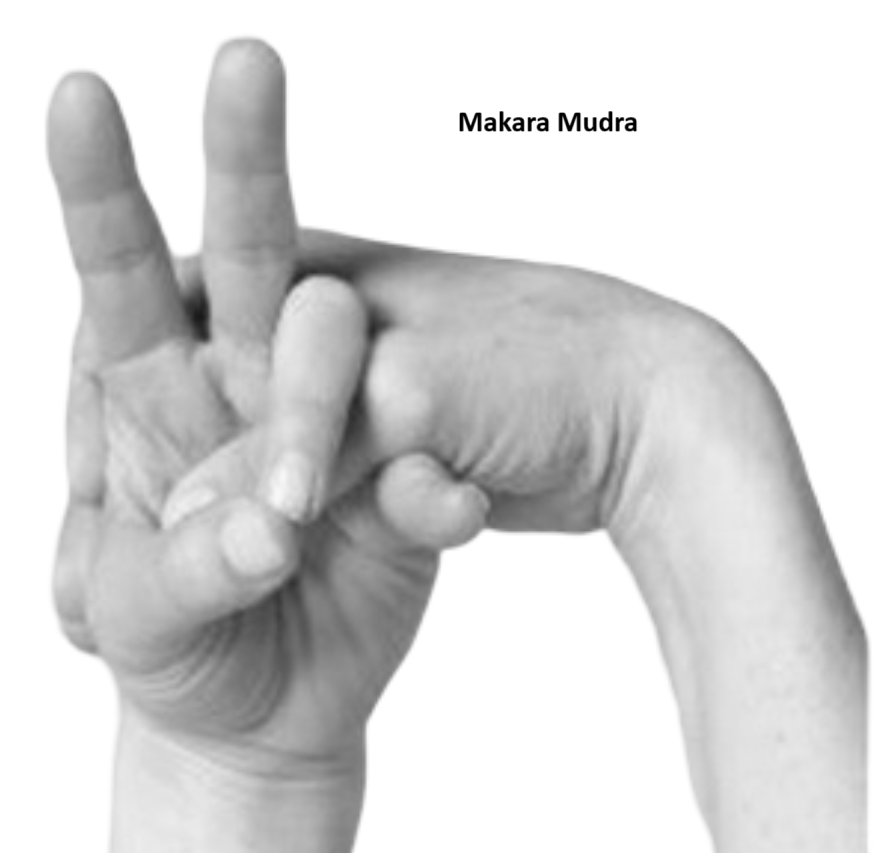
Makara Mudra Introduction Makara Mudra is an ancient yogic hand gesture rooted in mudra therapy and Ayurveda, associated with strength, vitality, and energy conservation. The word Makara means “crocodile” in Sanskrit—a creature symbolizing primal energy, endurance, and survival power. Just as the crocodile waits patiently yet possesses immense hidden strength, this mudra is believed to awaken dormant energy reserves within the body, especially when one feels drained or fatigued. It is commonly used in yoga therapy for restoring vitality, grounding energy, and strengthening the kidneys and adrenal glands, which are considered sources of deep life force (ojas). Meaning Makara = Crocodile (symbol of primal power, deep waters of subconscious, vitality). Mudra = Gesture, seal. Thus, Makara Mudra means “the gesture of the crocodile”, representing the hidden strength and survival energy within us. How to Perform (Practice) Sit in a comfortable position such as Sukhasana, Vajrasana, or Padmasana. Keep your spine straight and shoulders relaxed. Practise in any position. Join the tips of your left thumb and ring finger. Bring the right thumb between the ring and little finger of your left hand and place its tip on the base of your left thumb. Bring your right palm flat against the back of your left hand. Hold for 5–10 minutes three times daily. Close your eyes, breathe deeply, and focus on the sensation of inner energy reserves awakening. Hold the mudra for 5–15 minutes, up to 2–3 times daily. Benefits Physical Benefits Strengthens kidneys and adrenal glands (vitality organs). Restores energy during exhaustion, fatigue, or burnout. Supports recovery from chronic illness or weakness. Improves blood circulation and oxygen supply. Boosts immune system functioning. Energetic Benefits Awakens ojas (vital essence) and life force. Balances prana and apana vayu (upward and downward energies). Grounds scattered energy and stabilizes the aura. Helps in root chakra (Muladhara) activation. Mental & Emotional Benefits Increases confidence, stability, and resilience. Reduces stress and anxiety linked to fatigue. Promotes inner calmness and patience. Encourages endurance during long-term challenges. Contraindications Should be avoided in high blood pressure (can increase inner heat and circulation). Not recommended for people with excessive inner restlessness or hyperactivity. Pregnant women should practice only under expert supervision. Avoid prolonged holding if experiencing palpitations or dizziness. Anatomy & Physiology Works on endocrine system, especially adrenal glands. Enhances oxygen utilization by improving blood flow. Strengthens renal circulation and supports detoxification. Stimulates parasympathetic nervous system to restore balance after fatigue. Kinesiology Right thumb (fire element, energy source) is locked into the left hand (support, stability), symbolizing energy conservation. The pressing of the thumbs creates a closed energy loop, preventing energy loss and redirecting it internally. Hand and forearm muscles engage lightly, enhancing awareness of strength and grounding. Neurology Stimulates vagus nerve → promotes calmness and recovery. Activates brain centers for energy regulation. Strengthens the hypothalamic-pituitary-adrenal (HPA) axis, reducing fatigue. Improves neuro-muscular tone and helps regulate body’s energy expenditure. Duration of Practice 5–15 minutes, 2–3 times daily as needed. For therapeutic purposes, practice consistently for 4–6 weeks. Best used during times of exhaustion or low vitality. Counter Mudra Prana Mudra → enhances energy and immunity. Apana Mudra → for grounding and detoxification. Shakti Mudra → to calm hyperactive energy after Makara practice. Conclusion Makara Mudra is a powerful revitalizing gesture that draws upon hidden reserves of energy, much like the crocodile resting silently but bursting with strength when required. It strengthens the kidneys, adrenals, and vitality, restores balance during fatigue, and promotes resilience in body and mind. As a therapeutic mudra, it is particularly useful for individuals who feel burned out, weak, or energetically drained, helping them to reconnect with their inner strength and endurance. FAQ Q1. What is Makara Mudra best for?It is most effective for restoring vitality, overcoming fatigue, and strengthening the kidneys and adrenal glands. Q2. Can it be practiced daily?Yes, but preferably in short sessions (5–15 min). Q3. Does it help with anxiety?Yes, indirectly—by reducing fatigue and stabilizing energy, it calms the mind. Q4. Is it safe for everyone?Generally yes, but those with high blood pressure or hyperactivity should avoid overuse. Q5. Which chakra does it influence?Primarily the Muladhara (Root Chakra) and Manipura (Solar Plexus Chakra). References Gertrud Hirschi – Mudras: Yoga in Your Hands. Swami Satyananda Saraswati – Asana, Pranayama, Mudra, Bandha. K. Rangarajan – Yoga Mudras: Gestures for Healing and Spiritual Growth. Ayurveda texts on ojas and kidney-adrenal connection. Modern research on mudra therapy for fatigue and stress management.
Mahatrika Mudra
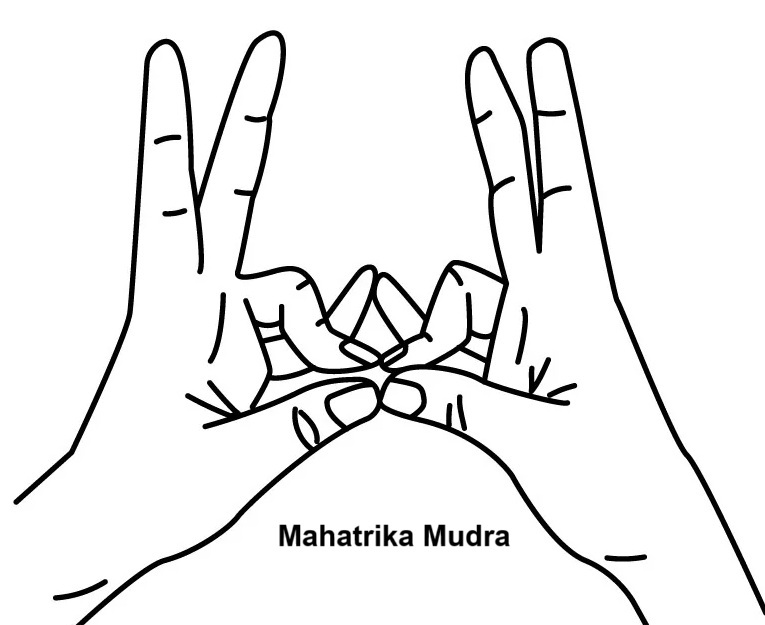
Mahatrika Mudra Introduction Mahatrika Mudra is a lesser-known but profound yogic hand gesture practiced in Tantric Yoga and Mudra Therapy traditions. The word Trika is associated with the threefold principle—body, mind, and spirit—or sometimes the three primary energies (gunas). The prefix Maha indicates that this mudra deals with the great union of these three forces. It is mainly practiced to balance the three doshas (Vata, Pitta, Kapha), regulate the three main nadis (Ida, Pingala, Sushumna), and harmonize the three gunas (Sattva, Rajas, Tamas). It is considered a balancing and integrative mudra. Meaning Maha = Great Trika = Threefold (body, mind, spirit / Ida, Pingala, Sushumna / Vata, Pitta, Kapha) Mudra = Gesture, seal Thus, Mahatrika Mudra means the great gesture of threefold balance, symbolizing unity of energy, consciousness, and matter. How to Perform (Practice) Sit in Padmasana, Sukhasana, or Vajrasana with a straight spine. Relax the body and take a few deep breaths. Extend both little fingers and bring the tips together. Join the ends of the thumbs and index fingers of each hand, and then connect them. Allow your ring and middle fingers to be straight but relaxed. Rotate your hands slightly so that the ring, middle and little fingers point downward. Hold for as long as feels comfortable. Practice for 10–20 minutes daily. Benefits Physical Benefits Balances nervous, respiratory, and circulatory systems. Helps in reducing stress-related disorders. Supports immune system balance by harmonizing doshas. Relieves chronic fatigue and body-mind imbalance. Energetic Benefits Balances Ida (moon), Pingala (sun), and Sushumna (central) nadis. Harmonizes three doshas (Vata, Pitta, Kapha). Activates Ajna Chakra for clarity and intuition. Integrates the three gunas into a state of sattvic equilibrium. Mental & Emotional Benefits Improves concentration and stability. Calms overactive thinking. Brings a sense of centeredness and wholeness. Useful in managing mood swings and emotional imbalances. Contraindications Not to be practiced during severe mental disorders without guidance. Avoid during high fever or acute infections. Those with severe neurological conditions should consult a therapist before practice. Anatomy & Physiology Engages hand reflex zones connected to the brain, lungs, and nervous system. Enhances oxygen circulation through rhythmic breathing. Supports balance between sympathetic and parasympathetic nervous systems. Helps regulate homeostasis by harmonizing autonomic responses. Kinesiology Thumb (Fire) + Index finger (Air) + Ring finger (Earth) → union of metabolic energy, movement, and stability. Extending middle finger (Ether) and little finger (Water) allows expansion and fluidity. This creates dynamic balance among all five elements, with emphasis on the triadic unity. Neurology Stimulates cortical brain centers related to balance and integration. Activates vagus nerve pathways, reducing stress response. Promotes left–right hemisphere synchronization. Supports mental clarity by improving neuro-electrical balance in cranial regions. Duration of Practice 10–20 minutes daily, either in one sitting or divided sessions. Can be practiced during meditation, after pranayama, or when mental clarity is needed. For therapeutic effects, regular practice for 6–8 weeks is recommended. Counter Mudra Prana Mudra → to re-energize if feeling drained. Apana Mudra → for grounding after extended Mahatrika practice. Hakini Mudra → for additional mental focus and hemispheric balance. Conclusion Mahatrika Mudra is a powerful balancing gesture that harmonizes the threefold principles of life: body–mind–spirit, three doshas, three nadis, and three gunas. By integrating these energies, it helps practitioners experience wholeness, balance, and clarity. This mudra is particularly effective in overcoming stress, restoring equilibrium, and deepening meditation. FAQ Q1. What is Mahatrika Mudra mainly used for?It is used for balancing the three doshas, three nadis, and three gunas, thereby promoting holistic harmony. Q2. Can beginners practice it?Yes, it is simple and safe for beginners with no complex hand positions. Q3. Does it help with anxiety?Yes, by balancing pranic flow and calming the nervous system, it helps reduce stress and anxiety. Q4. How is it different from Hakini Mudra?Hakini Mudra focuses mainly on mental focus and memory, while Mahatrika Mudra emphasizes triadic energy balance (doshas, nadis, gunas). Q5. Can it be combined with meditation?Yes, it is best practiced during meditation to harmonize energies at deeper levels. References Gertrud Hirschi – Mudras: Yoga in Your Hands. Swami Satyananda Saraswati – Asana, Pranayama, Mudra, Bandha. K.S. Joshi – Yoga and Mudras. Ayurveda and Tantra texts on Trika philosophy and triadic energy balance. Contemporary research on mudra therapy for nervous system regulation.
Manipura Mudra
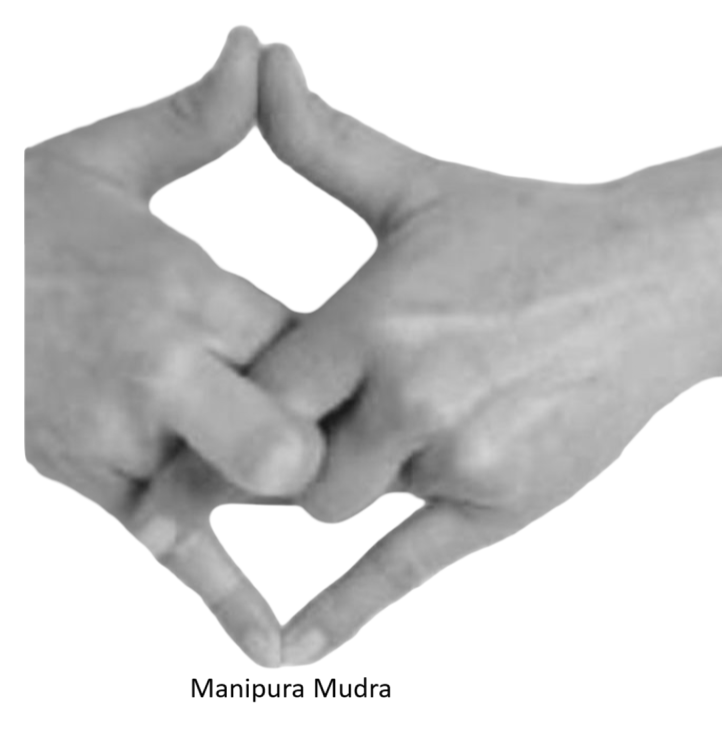
Manipura Mudra Introduction Manipura Mudra is a hand gesture associated with the Manipura Chakra (solar plexus or navel center). The word Manipura in Sanskrit means “city of jewels,” referring to the radiant energy center that governs willpower, vitality, confidence, and transformation. This mudra is a gesture of fire and self-empowerment. It stimulates Agni (digestive fire), balances energy at the solar plexus, and promotes inner strength. Practicing Manipura Mudra helps in digestive health, vitality, and emotional balance. Meaning Mani = Jewel. Pura = City. Manipura Chakra = The “City of Jewels,” representing personal power, confidence, and transformation. Manipura Mudra = The hand gesture that activates and harmonizes Manipura Chakra, enhancing inner fire and vitality. How to Perform (Practice) Sit in a comfortable meditative posture such as Padmasana, Sukhasana, or Vajrasana. Keep the spine straight. Have both palms facing down, with all the fingers extended. Slightly lower your left index finger and lift the middle finger next to it. Place your right index finger on top of your left index finger; slide it under the left middle finger, and rest the tip on top of the left ring finger. Bend the left middle finger down and curl the right middle finger over the top of the left index finger, so the two middle fingers touch. Bring the tip of the left index finger on top of the right ring finger. Join the tips of the two little fingers, and the ends of the thumbs. Close the eyes, breathe deeply, and focus awareness on the Manipura Chakra region. Practice for 5–15 minutes while meditating or during pranayama. Benefits Physical Benefits Improves digestion and metabolism by stimulating digestive fire. Helps in managing constipation, bloating, and indigestion. Strengthens abdominal organs (liver, pancreas, stomach, intestines). Boosts immunity by improving gut health. Energetic Benefits Activates solar plexus chakra (Manipura), enhancing self-confidence. Promotes balance of Samana Vayu (digestive and assimilative energy). Increases inner fire (Agni) for vitality and energy. Helps release stored negative emotions in the gut. Mental & Spiritual Benefits Strengthens willpower, determination, and discipline. Helps overcome fear, doubt, and indecisiveness. Promotes clarity, motivation, and self-esteem. Balances emotional energy, creating courage and transformation. Contraindications Avoid during fever, ulcers, severe gastritis, or diarrhea. People with hypertension should practice under guidance (as it may increase inner heat). Not advised immediately after meals. Pregnant women should avoid or modify the practice. Anatomy & Physiology Activates the solar plexus region (celiac plexus). Stimulates digestive organs: stomach, liver, pancreas, intestines. Balances autonomic nervous system, especially sympathetic activity. Improves energy distribution through pranic pathways in the abdomen. Kinesiology Involves finger interlocking → improves finger dexterity and neuromuscular coordination. Upright ring fingers direct energy to Manipura Chakra. Hand gesture stabilizes the body-mind connection through isometric muscular engagement. Neurology Stimulates solar plexus nerves, influencing gut–brain connection. Enhances vagal tone (parasympathetic relaxation response). Reduces stress by calming sympathetic overactivity. Improves brain-gut communication, enhancing emotional stability. Duration of Practice Beginners: 5 minutes daily. Intermediate: 10–15 minutes. Advanced: Up to 30 minutes with meditation or pranayama. Best practiced morning before meals, or during meditation sessions. Counter Mudra Apana Mudra – if excess digestive fire causes acidity. Prana Mudra – for grounding after energizing Manipura. Shakti Mudra – to balance over-stimulation of solar plexus. Conclusion Manipura Mudra is a powerful yogic gesture that activates the solar plexus chakra, balancing digestive fire, boosting vitality, and enhancing willpower. It harmonizes the gut-brain connection, supports emotional balance, and strengthens inner transformation. With regular practice, it awakens confidence, courage, and clarity—helping practitioners live with purpose and radiant energy. FAQ Q1. Which chakra does Manipura Mudra activate?It directly activates and balances the Manipura Chakra (solar plexus). Q2. Can it help with digestion?Yes, it stimulates Agni (digestive fire) and improves metabolism. Q3. How long should I practice daily?Begin with 5 minutes, gradually increasing to 15–20 minutes. Q4. Can I practice after meals?No, wait at least 1–2 hours after meals. Q5. Is it safe for everyone?Generally yes, but people with acidity, ulcers, or pregnancy should avoid or modify practice. References Swami Satyananda Saraswati – Asana, Pranayama, Mudra, Bandha. Gertrud Hirschi – Mudras: Yoga in Your Hands. Hatha Yoga Pradipika – Svātmārāma. Bihar School of Yoga Publications. Scientific studies on yoga mudras and autonomic nervous system regulation.
Maha Shirsha Mudra
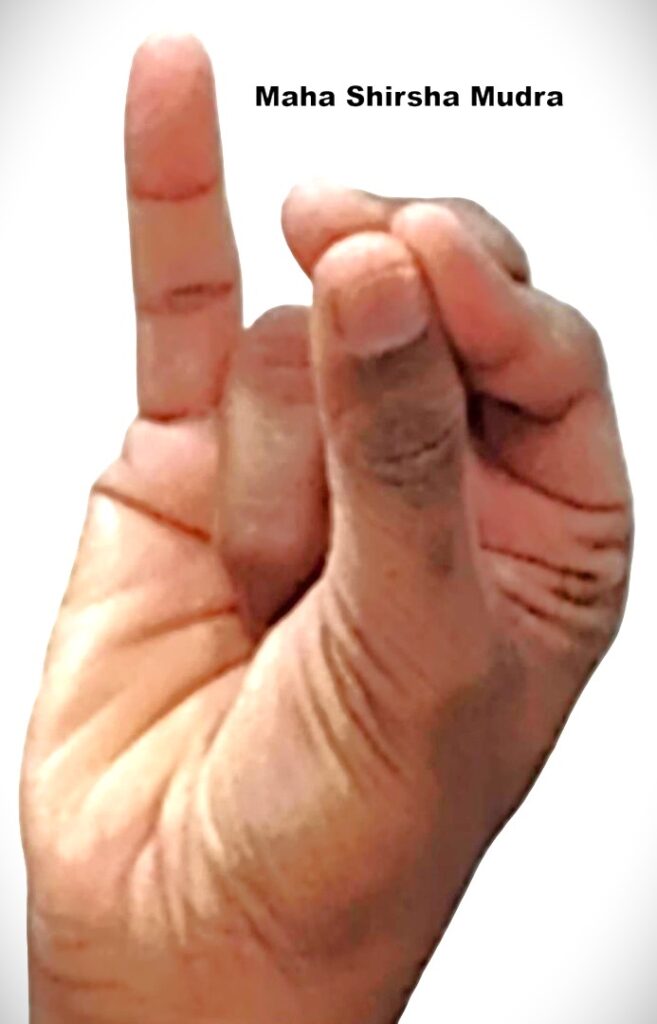
Maha Shirsha Mudra Introduction Maha Shirsha Mudra is known as the “Great Head Gesture” in yogic and therapeutic traditions. It is primarily practiced to alleviate headaches, sinus issues, stress, and mental tension. The mudra works by balancing energy flow in the head region, improving circulation, and reducing blockages in the sinus and cranial areas. It is widely recommended in mudra therapy for migraine, sinusitis, and anxiety-related head pressure. Meaning Maha = Great Shirsha = Head Mudra = Gesture, seal Thus, Maha Shirsha Mudra means the great mudra for the head, symbolizing the regulation of pranic energy in the cranial and sinus regions. How to Perform (Practice) Sit in a comfortable posture (Sukhasana, Vajrasana, or a chair with straight back). Relax shoulders and keep spine erect. Hand Formation: Join the tips of the thumb, index finger, and middle finger. Fold the ring finger and little finger gently into the palm. Press them lightly with the thumb (while still touching index and middle). Place hands on thighs or knees with palms facing upward. Close eyes, breathe deeply and slowly. Focus awareness on the forehead, temples, and nasal passages. Continue for 10–15 minutes or until relief is felt. Benefits Physical Benefits Relieves headaches, migraines, and sinus pain. Reduces tension in forehead, temples, and eyes. Improves nasal airflow, beneficial in sinusitis. Reduces fatigue and heaviness in the head. Helpful in stress-related high blood pressure. Energetic Benefits Balances Prana Vayu (upward-moving energy in the head). Clears blockages in Ajna Chakra (third-eye center). Improves flow of prana in cranial nadis (energy channels). Mental & Emotional Benefits Reduces stress, anxiety, and overthinking. Induces calmness and mental clarity. Enhances focus and reduces irritability caused by headaches. Contraindications Not advised during very low blood pressure (can increase dizziness). Avoid during severe dehydration or fainting conditions. Should not replace medical treatment for chronic migraine or sinus infections—works as supportive therapy. Anatomy & Physiology Stimulates sinus cavities and improves drainage. Relaxes cranial muscles and blood vessels, reducing migraine tension. Enhances oxygen intake by opening nasal passages. Reduces sympathetic overactivity, calming the nervous system. Kinesiology Thumb = Fire (energy, metabolism). Index finger = Air (movement, nervous impulses). Middle finger = Ether (space, expansion). Folding of ring and little fingers reduces Earth and Water dominance. This configuration reduces excess mucus, congestion, and pressure in the head region. Neurology Stimulates trigeminal nerve pathways, reducing facial pain and tension. Calms autonomic nervous system activity → relieves stress-induced headaches. Enhances neurovascular balance in cranial circulation. Supports regulation of hypothalamic stress responses. Duration of Practice 10–15 minutes, 2–3 times daily. During acute headaches, can be practiced until relief is felt. Regular practice helps prevent chronic sinus or tension headaches. Counter Mudra Prithvi Mudra → for grounding after excessive cranial energy activation. Chin Mudra → for meditation and relaxation. Shunya Mudra → to relieve ear-related and head pressure. Conclusion Maha Shirsha Mudra is an effective therapeutic gesture for head-related ailments, particularly headaches, migraines, and sinus congestion. By balancing the cranial energy and improving circulation, it provides natural relief from tension and stress. When practiced regularly, it enhances mental clarity, reduces pressure in the head, and restores pranic harmony. FAQ Q1. Can this mudra completely cure migraines?It helps reduce frequency and intensity but should be practiced alongside lifestyle changes and medical advice. Q2. When is the best time to practice?Whenever headaches or sinus pressure arises; also preventive when done morning and evening. Q3. Can children practice this mudra?Yes, it is safe for children suffering from sinus congestion or headaches. Q4. Does it work instantly?In many cases, relief can be felt within 10 minutes, but chronic issues need consistent practice. Q5. Can it be combined with Pranayama?Yes, combining with Bhramari (humming bee breath) enhances its effectiveness for headaches. References Hirschi, Gertrud – Mudras: Yoga in Your Hands. Satyananda Saraswati – Asana, Pranayama, Mudra, Bandha. K. S. Joshi – Yoga and Mudras. Research articles on mudras for headache and sinus management. Ayurvedic & Yogic texts on Prana Vayu and cranial health.
Marma Mudra
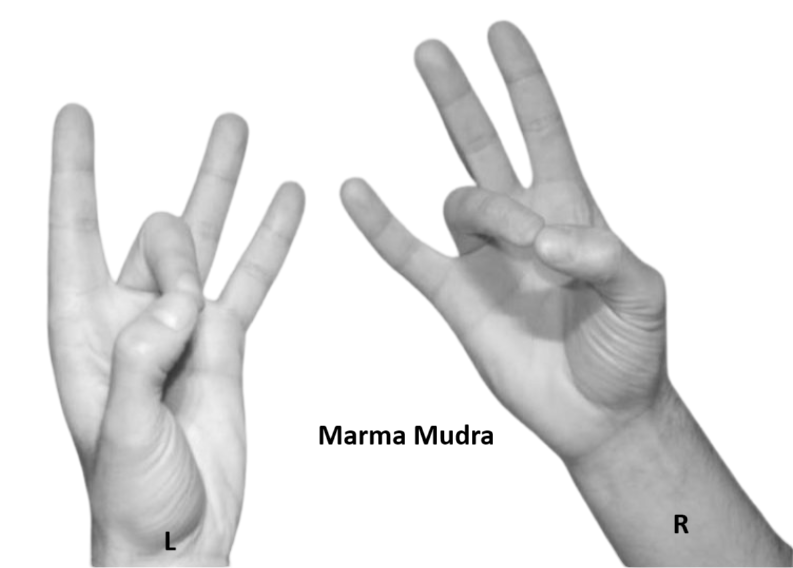
Marma Mudra Introduction Marma Mudra is a therapeutic hand gesture rooted in the ancient Indian science of Marma Therapy—the study of vital energy points (marma sthanas) in the body. In Ayurveda and Yoga, marmas are subtle junctions of prana (life energy), nerves, and tissues, and stimulating them restores balance in body, mind, and spirit.The Marma Mudra specifically connects and activates vital energy points through the hands and fingers, harmonizing pranic flow, supporting self-healing, and enhancing inner awareness. Meaning Marma = Vital energy point or junction where prana flows. Mudra = Gesture/seal. Marma Mudra = A hand gesture that awakens and regulates the flow of prana through marma points in the fingers, hands, and body. It is also known as the gesture of healing and self-preservation, because marmas are linked with both physical and subtle dimensions of health. How to Perform (Practice) There are variations, but the most commonly practiced Marma Mudra is: Sit in a comfortable meditative posture (Sukhasana, Padmasana, or Vajrasana) with spine erect. Right Hand: Touch tip of thumb and ring fingers together, extend all others Left Hand: Touch tips of thumb and middle fingers together, extend all others. Rest hands with palms up. Close the eyes, breathe slowly, and focus on the marma points along the hands and solar plexus. Practice for 10–20 minutes daily. Benefits Physical Benefits Balances the tridosha (Vata, Pitta, Kapha) by regulating prana. Supports the immune system and natural healing processes. Improves circulation, especially in the hands and extremities. Strengthens the respiratory and digestive systems. Helps relieve chronic fatigue, weakness, and joint pain. Energetic Benefits Activates pranic pathways through marma points. Harmonizes the flow of five prana vayus (Prana, Apana, Samana, Udana, Vyana). Clears subtle energy blockages in nadis. Promotes rejuvenation and longevity. Mental & Spiritual Benefits Calms the mind and reduces stress and anxiety. Enhances focus, awareness, and intuition. Promotes emotional healing and balance. Creates a sense of inner safety and self-protection. Contraindications Should not be over-practiced during acute illness or extreme fatigue. People with severe cardiac conditions should consult a yoga therapist before practicing. Avoid immediately after meals (can be practiced at least 1–2 hours later). Not suitable for those with excessive heat (pitta aggravation) without guidance. Anatomy & Physiology Works on marma points present in the hands (especially talahridaya marma). Activates the solar plexus (celiac plexus), influencing digestion and metabolism. Stimulates the autonomic nervous system, balancing sympathetic and parasympathetic activity. Promotes circulatory and lymphatic flow, aiding detoxification. Kinesiology Finger combination of thumb + ring + little finger → strengthens Apana Vayu and stabilizes grounding energy. Extended index and middle fingers → channel energy upward (Udana Vayu). Improves finger coordination, neuromuscular function, and hand proprioception. Neurology Stimulates nerve endings in fingers linked to marma points. Enhances brain–gut–heart connection through vagus nerve regulation. Reduces over-activation of the stress response (sympathetic nervous system). Improves neuroplasticity by integrating sensory-motor pathways through hand gestures. Duration of Practice Beginners: 5–10 minutes, 1–2 times daily. Intermediate: 15–20 minutes. Advanced: Up to 30 minutes during meditation or pranayama. Best practiced morning or evening in a calm environment. Counter Mudra Prana Mudra – to boost energy if fatigue arises after practice. Apana Mudra – to balance grounding energy if excess heat is generated. Varun Mudra – if dryness or dehydration occurs from over-stimulation. Conclusion Marma Mudra is a healing hand gesture that activates vital energy points, balances prana, and strengthens physical, mental, and spiritual health. By harmonizing the five prana vayus, it supports immunity, digestion, circulation, and emotional well-being. Practiced regularly, it becomes a powerful tool for self-healing, longevity, and inner balance. FAQ Q1. What is the main purpose of Marma Mudra?To activate and balance vital energy points (marmas) for healing and pranic flow. Q2. Can it be practiced daily?Yes, ideally 10–20 minutes once or twice daily. Q3. Which dosha does it balance?It balances all three doshas (Vata, Pitta, Kapha) by regulating prana. Q4. Is it safe for children?Yes, in short durations (5 minutes), under supervision. Q5. Does it cure disease?It does not directly cure disease but supports the body’s natural healing by regulating energy and immunity. References Dr. David Frawley – Ayurveda and Marma Therapy. Swami Satyananda Saraswati – Asana, Pranayama, Mudra, Bandha. Gertrud Hirschi – Mudras: Yoga in Your Hands. Vasant Lad – The Complete Book of Ayurvedic Home Remedies. Research articles on marma therapy and pranic healing (Ayurveda & Yoga journals).
Mooladhara Mudra
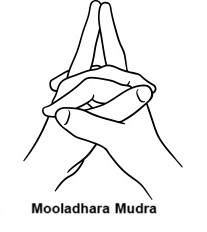
Mooladhara Mudra Introduction Mooladhara Mudra is a yogic hand gesture associated with the Mooladhara (Root) Chakra, the first of the seven primary chakras located at the base of the spine. This chakra governs stability, grounding, survival instincts, and vital energy (prana). The mudra helps awaken, stabilize, and balance the root chakra, which is the foundation for higher spiritual practices. Meaning Moola = root, base, foundation Adhara = support, basis Mudra = gesture, seal, energy circuit Thus, Mooladhara Mudra means “the gesture that activates and stabilizes the root support of life.” It connects practitioners with the earth element, grounding energy, promoting security, and preparing the mind-body for spiritual ascent. How to Perform Practice Sit in a comfortable meditative posture such as Padmasana, Sukhasana, or Vajrasana with the spine erect. Bend the little and ring fingers of both hands inward and interlock them. Straighten your middle fingers and join their ends so they point upward. Bring together the tips of your index fingers and thumbs on each hand to form interlocking circles. Close your eyes, focus on the Mooladhara Chakra (base of spine, perineum), and breathe deeply. Optionally, chant the seed mantra “LAM” while holding the mudra to stimulate the chakra. Benefits Physical Benefits Strengthens pelvic floor muscles and reproductive health. Improves digestion, elimination, and vitality. Supports adrenal gland function, enhancing resilience to stress. Mental & Emotional Benefits Promotes grounding, stability, and inner security. Reduces fear, anxiety, and restlessness. Enhances confidence, willpower, and self-survival instincts. Spiritual Benefits Activates and balances the Mooladhara Chakra. Directs prana downward to stabilize meditation. Prepares the base for kundalini awakening by strengthening the root foundation. Contraindications Should be avoided during severe constipation or pelvic pain, unless guided therapeutically. People with lower back injury or recent pelvic/abdominal surgery should practice cautiously. Those with excessive lethargy may experience heaviness; balance with energizing practices like Surya Mudra. Anatomy & Physiology Endocrine connection: Stimulates the adrenal glands and regulates survival hormones (adrenaline, cortisol). Pelvic region: Improves circulation in the perineum, sacrum, pelvic floor, and lower digestive tract. Respiratory system: Encourages diaphragmatic breathing, reducing stress responses. Skeletal support: Promotes spinal alignment from sacrum upward. Kinesiology Interlaced fingers provide muscular engagement of the hand flexors and stabilizers. The downward-pointing ring fingers symbolically and kinesthetically ground energy. Engages postural awareness of the pelvic floor muscles (Mula Bandha synergy). Balances right–left hemispheric control through bilateral hand coordination. Neurology Activates the sacral plexus and root nerve centers. Strengthens parasympathetic dominance, encouraging calmness and grounded energy. Influences survival-related neural pathways (fight-or-flight regulation). Enhances sensorimotor awareness of the lower body and pelvic floor. Duration of Mudra Beginners: 5–10 minutes daily. Intermediate: 15–20 minutes in meditation. Advanced: Up to 30–45 minutes or during full chakra meditation sessions. Best practiced in the morning or when feeling anxious, ungrounded, or fearful. Counter Mudra Apana Mudra – to support elimination and balance lower body energy. Prithvi Mudra – to increase grounding and vitality. Chin Mudra – to balance excess grounding with higher awareness. Conclusion Mooladhara Mudra is a powerful grounding gesture that awakens and balances the Root Chakra, providing stability, courage, and connection to life energy. It serves as the foundation for higher yogic practices, ensuring that spiritual growth is rooted in strength and balance. By integrating this mudra into meditation, pranayama, or chakra work, one can cultivate security, resilience, and harmony in both material and spiritual life. FAQ Q1: What is the best time to practice Mooladhara Mudra?Morning meditation or times of stress and insecurity are ideal. Q2: Can it help with anxiety?Yes, it reduces restlessness, promotes grounding, and eases fear-based anxiety. Q3: Is it only for spiritual awakening?No, it also has practical benefits for digestion, vitality, and stress resilience. Q4: Can beginners practice it?Yes, it is safe and simple for all levels, but duration should be increased gradually. Q5: Does it help in kundalini awakening?Yes, it strengthens the root support needed for safe kundalini rising. References Swami Satyananda Saraswati – Asana, Pranayama, Mudra, Bandha (Bihar School of Yoga) Gertrud Hirschi – Mudras: Yoga in Your Hands Swami Niranjanananda Saraswati – Prana and Pranayama Feurerstein, Georg – The Yoga Tradition Bihar Yoga Publications on Chakra and Kundalini practices
Merudanda Mudra
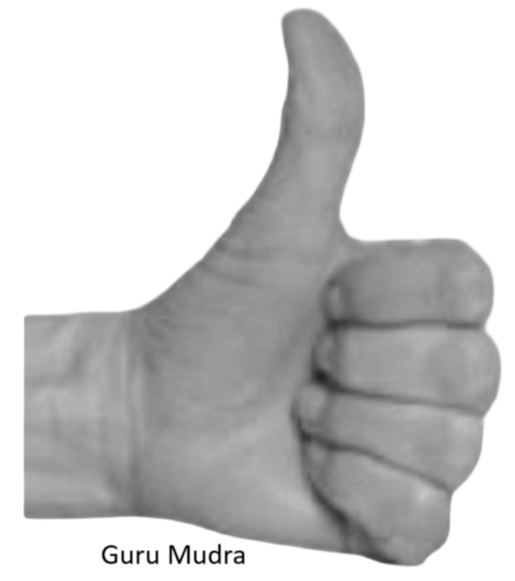
Merudanda Mudra Introduction Merudanda Mudra is an ancient yogic hand gesture connected with pranic flow regulation along the spinal column (Meru Danda). In yogic texts, the spine is often considered the axis of the body and the seat of kundalini energy. Meru = mountain / spine Danda = staff / support Mudra = seal / gesture Thus, this mudra symbolizes the staff of life (spinal cord) and helps in channelizing energy upward through the sushumna nadi. Meaning The mudra represents the stability of the spine, which is essential for physical posture, energetic balance, and spiritual awakening. Practicing this mudra is said to harmonize the flow of prana in the three main nadis—ida, pingala, and sushumna—bringing balance between activity and rest, mind and body, left and right hemispheres. How to Perform Practice Sit in Sukhasana, Padmasana, or Vajrasana, with an erect spine. Place both hands on the knees, palms facing upward. Curl the fingers inward, placing the tips of the four fingers into the palm. Extend the thumbs upward, pointing toward the sky. The hands resemble thumbs-up fists resting on the knees. Keep the spine upright and shoulders relaxed. Breathe deeply and steadily while maintaining awareness on the spinal column. Visualize prana moving up and down the spine with each breath. Benefits Physical Benefits: Strengthens spinal alignment and posture. Enhances lung capacity by opening the chest. Improves energy flow through the nervous system. Mental Benefits: Enhances concentration and grounding. Balances the sympathetic and parasympathetic nervous systems. Reduces restlessness and anxiety. Spiritual Benefits: Activates the sushumna nadi for kundalini awakening. Helps in meditation, balancing ida (moon energy) and pingala (sun energy). Cultivates stability, courage, and resilience. Contraindications Those with severe spinal disorders (e.g., slipped disc, spinal injury) should avoid long practice. High blood pressure patients should practice under guidance, as prana flow intensification may cause discomfort. Not recommended during extreme fatigue, dizziness, or vertigo. Anatomy & Physiology Spinal Column: Supports structural integrity, posture, and nerve flow. Respiratory System: Promotes deeper breathing due to upright posture. Nervous System: Activates spinal nerve roots, improves communication between brain and body. Circulatory System: Facilitates oxygenation of the brain by improving posture and breath. Kinesiology The thumbs pointing upward represent energy flow and upward extension of the spine. Flexed fingers engage flexor muscles of the hand while thumbs activate the extensors, creating balance. The mudra encourages isometric stability in arms and shoulders while focusing awareness on the axial skeleton (spine). Neurology Stimulates the autonomic nervous system through spinal awareness. Balances right and left hemispheres via symbolic alignment of ida & pingala. Enhances neuroplasticity through mindful breathing and posture control. Promotes activation of parasympathetic tone, encouraging calm and meditative states. Duration of Mudra Beginners: 5–10 minutes daily. Intermediate: 15–20 minutes in meditation or pranayama. Advanced: Can be integrated into longer meditation sessions (30–45 minutes). Best practiced during early morning or evening meditation. Counter Mudra Chin Mudra – for grounding and balancing energy after spinal activation. Prana Mudra – for revitalization if fatigue occurs. Shakti Mudra – for relaxation and calming after stimulating Merudanda. Conclusion Merudanda Mudra is a spinal energy-balancing gesture that stabilizes posture, harmonizes pranic currents, and supports meditation. It symbolizes the spine as the staff of life, holding the body upright and guiding energy upward. Through regular practice, one develops inner strength, balance, and spiritual awakening. FAQ Q1: What is the main purpose of Merudanda Mudra?To balance energy along the spine and prepare the body for meditation and pranayama. Q2: Can it help with back pain?Yes, by promoting spinal awareness and posture, but avoid long practice if there is injury. Q3: Is it linked to kundalini?Yes, it awakens and balances energy in sushumna nadi, aiding kundalini activation. Q4: How is it different from Prana Mudra?Prana Mudra focuses on energizing life force, while Merudanda Mudra stabilizes and directs it along the spine. Q5: Can beginners do it?Yes, but should start with short durations and proper posture guidance. References Swami Satyananda Saraswati, Asana, Pranayama, Mudra, Bandha (Bihar School of Yoga). Gertrud Hirschi, Mudras: Yoga in Your Hands. Saraswati, Sivananda Tradition Yoga Texts on Mudra and Kundalini. Yoga International & Bihar Yoga publications.
Mrigi Mudra
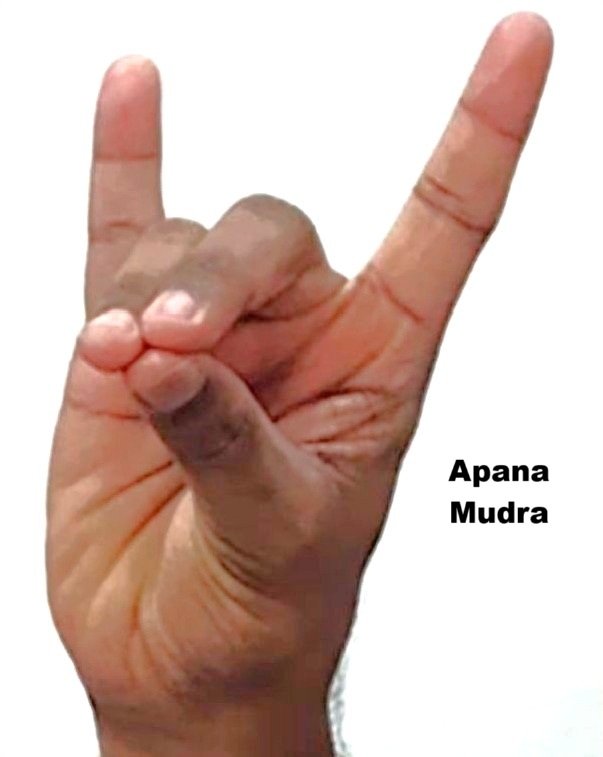
Mrigi Mudra Introduction Mrigi Mudra is a hand gesture used primarily in Pranayama (breath control practices), especially in Nadi Shodhana (alternate nostril breathing). It is a simple yet powerful mudra where specific fingers are used to alternately close and open the nostrils, helping regulate breath and balance energy flow in the body. This mudra is essential in yogic breathing practices as it directly influences the flow of prana (life force) through the Ida and Pingala nadis, leading to balance of the left and right brain hemispheres. Meaning Mrigi = deer (in Sanskrit) Mudra = seal, gesture The hand gesture is named “deer gesture” because the positioning of the fingers resembles a deer’s face and antlers. Symbolically, it represents alertness, calmness, and balance of nature’s rhythm, just like a deer in the forest. How to Perform Practice Sit comfortably in Sukhasana, Padmasana, or any meditative seated posture with the spine upright. Use your right hand to make a ‘paw’ with your fingers . Bring your index finger and middle finger down to the middle of the palm, Deer seal (mrigi mudra) uses an alternative breathing technique in which air is inhaled through one nostril and inhaled through another. Place your thumb against your right nostril as you inhale through the left nostril. Then using your thumb and ring finger keep both nasal cavities closed. The thumb should close the right nostril, while the ring finger should pin the left nostril. Raise your thumb and allow the air to exit your right nostril. Repeat this entire sequence twice, once using the right nostril in step 4, and once using the left nostril in step 4. Repeat this set of three breaths at least two or three times. Benefits Physical Benefits Improves lung capacity and respiratory efficiency. Enhances oxygenation and circulation. Strengthens the nervous and endocrine systems. Mental & Emotional Benefits Balances left (Ida – lunar) and right (Pingala – solar) energy channels. Reduces stress, anxiety, and restlessness. Improves focus, clarity, and emotional balance. Spiritual Benefits Prepares for deep meditation by harmonizing prana. Awakens Sushumna nadi, facilitating higher states of consciousness. Purifies nadis, an essential step in Kundalini awakening practices. Contraindications Avoid during cold, nasal congestion, or sinus infections. People with serious respiratory disorders (asthma in acute attack, COPD flare-ups) should consult a yoga therapist before practicing. Should not be practiced immediately after heavy meals. Avoid excessive strain while holding breath (for beginners). Anatomy & Physiology Engages the nasal passages, lungs, and diaphragm. Enhances oxygen–carbon dioxide exchange. Stimulates the autonomic nervous system, balancing sympathetic (fight/flight) and parasympathetic (rest/digest) functions. Improves vagal tone, lowering stress response. Kinesiology Requires fine motor coordination of the hand, especially thumb and ring finger control. Stabilizes shoulder, arm, and hand muscles while maintaining the mudra. Works synergistically with diaphragmatic and intercostal muscles during breathing regulation. Neurology Stimulates the olfactory and trigeminal nerves through controlled nostril closure. Influences limbic system, reducing stress and promoting calm. Balances left and right brain hemispheres, enhancing concentration and memory. Duration of Mudra Beginners: 5 minutes of practice during Pranayama. Intermediate: 10–15 minutes daily. Advanced: 20–30 minutes integrated into extended Nadi Shodhana or Pranayama sessions. Best practiced early morning (Brahma Muhurta) or evening on an empty stomach. Counter Mudra Chin Mudra → to stabilize and ground prana after pranayama. Jnana Mudra → to enhance meditative awareness after balancing breath. Prana Mudra → to recharge after extended breath control. Conclusion Mrigi Mudra is a fundamental hand gesture in yogic breathing practices, essential for Nadi Shodhana and Anulom Vilom Pranayama. It harmonizes the flow of prana, balances body–mind energy, and prepares the practitioner for meditation and spiritual growth. As a practical tool, it enhances respiratory health, calms the mind, and deepens awareness, making it a vital part of Pranayama practice in Yoga. FAQ Q1: Can Mrigi Mudra be practiced without Pranayama?Yes, but its primary purpose is for breath regulation in Pranayama. Q2: Why use the right hand only?Traditionally, the right hand is used to regulate breath while the left hand rests in a grounding mudra. Q3: Can children practice it?Yes, under guidance, especially with simple alternate nostril breathing. Q4: What if my fingers feel tired?Relax the arm on a cushion or practice shorter rounds. Q5: Is it necessary to fold index and middle fingers?Yes, in classical tradition, but some schools allow resting them on the forehead. References Swami Satyananda Saraswati – Asana, Pranayama, Mudra, Bandha B.K.S. Iyengar – Light on Pranayama Dr. Hiroshi Motoyama – Science and the Evolution of Consciousness Gertrud Hirschi – Mudras: Yoga in Your Hands Bihar School of Yoga Publications
Mukula Mudra
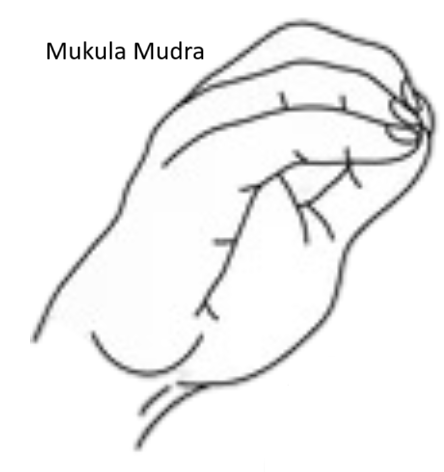
Mukula Mudra Introduction Mukula Mudra, also called the “Beak Hand Mudra”, is a therapeutic hand gesture widely used in Mudra Therapy for healing and energy concentration. The word Mukula means “bud” in Sanskrit, symbolizing the potential energy of a flower about to bloom. This mudra focuses prana (life force) into a single point, making it highly effective for self-healing and energy direction. It is often applied directly to body parts that require healing or rejuvenation. Meaning Mukula = Bud (lotus bud or flower bud) Mudra = Seal, gesture Thus, Mukula Mudra represents the concentration of energy in a seed/bud form, symbolizing healing, regeneration, and renewal. How to Perform Practice Sit in a comfortable posture (Sukhasana, Vajrasana, or on a chair with spine upright). Bring together the tips of all five fingers (thumb, index, middle, ring, and little finger). Keep the palms relaxed, forming a “beak” shape with the fingers pointing forward. Place the hands gently on the knees (for general practice) or directly on the body part needing healing (e.g., stomach for digestion, heart for emotional balance, head for concentration). Close the eyes and breathe deeply, focusing on directing prana through the fingertips. Practice for 5–15 minutes, once or twice daily. Benefits Physical Benefits Directs prana (vital energy) to specific areas of the body. Relieves fatigue, weakness, and exhaustion. Supports healing of localized pain (e.g., stomach ache, headache, back pain). Improves digestion and metabolism when placed on the solar plexus. Promotes better blood circulation. Mental & Emotional Benefits Increases focus and inner awareness. Reduces stress and anxiety by channeling scattered energy inward. Brings a sense of centeredness and calm. Spiritual Benefits Helps in chakra healing when placed on specific chakras. Enhances meditation by focusing energy at a single point. Represents the seed state of spiritual potential. Contraindications Should not be practiced for very long durations (excessive prana concentration may cause restlessness in sensitive individuals). Not recommended immediately after heavy meals (as it may disturb digestion). People with severe psychological instability should use under guidance. Anatomy & Physiology Concentrates electromagnetic energy at the fingertips, which are rich in nerve endings. Stimulates acupressure points linked to different organs. Increases bioenergetic circulation in the applied area, supporting healing. Enhances parasympathetic activation, promoting relaxation. Kinesiology Involves fine motor coordination of all fingers. Engages small intrinsic muscles of the hand, especially lumbricals and interossei. Supports postural balance by anchoring energy through the hand. Neurology Stimulates sensory and motor nerve endings in the fingers. Activates somatosensory cortex representation of fingers, influencing brain-body connection. Enhances vagal tone, aiding stress reduction. Improves neuronal focus by directing energy consciously. Duration of Mudra General practice: 5–15 minutes, 2–3 times daily. Therapeutic use: Place on affected area for 2–5 minutes, several times a day. Can be practiced any time, but best done in a calm state, seated or lying down. Counter Mudra Prana Mudra → to recharge after energy focusing. Apana Mudra → for grounding after healing practice. Gyan Mudra → for mental relaxation after directed healing. Conclusion Mukula Mudra is a powerful healing mudra, often called the energy beak mudra, as it directs prana like a laser beam into specific areas of the body. It symbolizes the concentrated energy of a bud, carrying the potential for growth, renewal, and healing. Regular practice promotes physical rejuvenation, emotional balance, and spiritual focus, making it a versatile tool in mudra therapy. FAQ Q1: Can Mukula Mudra be used for any health issue?Yes, it can be applied locally to support healing of many issues, but it should not replace medical treatment. Q2: How often should I practice it?At least once or twice daily for 10–15 minutes, or more frequently for targeted healing. Q3: Can I do Mukula Mudra while lying down?Yes, especially if applying it to an affected body part (like stomach or chest). Q4: Is this mudra safe for children?Yes, children can practice it, particularly for improving focus or calming down. Q5: Does it help in meditation?Yes, it helps in channeling energy and increasing concentration. References Swami Satyananda Saraswati – Asana, Pranayama, Mudra, Bandha Gertrud Hirschi – Mudras: Yoga in Your Hands Dr. Joseph Bharat Cornell – The Healing Power of Mudras Bihar School of Yoga Publications Dr. Indu Arora – Mudra: The Sacred Secret
Mudgara Mudrā
Mudgara Mudrā Introduction Mudgara Mudrā is a symbolic hasta mudrā (hand gesture) found in classical yoga, tantra, and Indian dance traditions. The word Mudgara refers to a mace or hammer, an ancient weapon symbolizing strength, discipline, and the destruction of ignorance. In yoga, this mudra embodies power, determination, and focus, channeling inner energy toward breaking obstacles in both the body and the mind. It is not a commonly practiced mudra in therapeutic yoga but is mentioned in tantric and ritual practices where gestures are used as psychic tools for transformation. Meaning Mudgara = mace, hammer, or club (weapon of Lord Hanuman and Lord Vishnu). Mudra = seal, gesture, or psychic lock. Symbolically, Mudgara Mudrā represents “breaking through limitations with inner strength.” It signifies power, courage, and the awakening of inner Shakti (vital force). How to Perform Practice Sit in a comfortable meditation posture (Padmāsana, Sukhasana, or Vajrāsana). Place the left palm under the right side of the chest. Form a straight with the right hand, resting the right elbow in the palm of the left hand. Keep the right forearm vertical. Benefits of Mudgara Mudrā Physical Benefits Improves arm and hand strength. Stimulates blood circulation in the upper extremities. Helps improve posture by engaging shoulder and chest muscles. May enhance respiratory capacity by opening the thoracic region. Mental Benefits Builds inner determination and willpower. Reduces feelings of weakness, doubt, and fear. Enhances focus and mental clarity. Provides a sense of courage and resilience in difficult situations. Spiritual Benefits Represents the destruction of ignorance and negativity. Activates the Manipura Chakra (solar plexus), center of vitality and power. Encourages the practitioner to connect with the warrior spirit (Veer Bhava). Supports devotional practices linked to Lord Hanuman and Vishnu. Contraindications People with shoulder, arm, or wrist injuries should avoid holding the mudra too long. Those with high blood pressure or agitation should practice gently, as the energizing effect may overstimulate. Avoid during acute anxiety episodes unless guided by a teacher. Anatomy & Physiology Engages the pectoralis major, deltoids, biceps, and forearm muscles in a static hold. Creates mild compression around the chest, which enhances breath awareness. Stimulates the sympathetic nervous system, increasing alertness. Encourages oxygen-rich blood flow to the arms and chest. Kinesiology The gesture activates isometric contraction of arm and shoulder muscles. Provides kinesthetic awareness of the upper body alignment. Engages fine motor control through fist formation and pressure balance. Symbolic “weapon” posture enhances somatic memory of strength and defense. Neurology Stimulation of hand and finger nerves influences the somatosensory cortex. Activates brain regions linked to power, assertion, and self-confidence. Deep breathing with this mudra shifts balance toward parasympathetic calmness after initial alertness. Helps overcome fear-related neural patterns through visualization of breaking barriers. Duration of Mudra Beginners: 2–5 minutes daily. Intermediate: 10 minutes in 2–3 sittings. Advanced/ritual practice: Up to 20 minutes with visualization and mantra chanting (e.g., Hanuman Chalisa, Vishnu Sahasranama). Counter Mudra To balance the intense and energizing effect of Mudgara Mudrā: Anjali Mudra (Namaste gesture): for humility and centering. Hridaya Mudra: for calming the heart and emotions. Chin Mudra: for grounding awareness. Conclusion Mudgara Mudrā is a symbolic and powerful gesture representing the mace of strength and courage. It works on the physical, mental, and spiritual planes, enhancing determination, breaking inner blockages, and awakening the warrior energy within. While it is not a commonly prescribed therapeutic mudra, its practice in meditation and devotion helps cultivate fearlessness, clarity, and resilience. FAQ Q1. What is the purpose of Mudgara Mudra?It symbolizes strength and breaking obstacles, supporting courage and determination. Q2. Can beginners practice it?Yes, but start with short durations (2–5 minutes). Q3. Which chakra does it affect?Primarily the Manipura Chakra (Solar Plexus), sometimes the Anahata Chakra. Q4. Is it a therapeutic mudra?Indirectly—it is more symbolic and spiritual but may help boost energy and self-confidence. Q5. Can it be combined with mantra?Yes, chanting Hanuman mantra or Vishnu mantra enhances its effect. References Swami Satyananda Saraswati, Asana, Pranayama, Mudra, Bandha. Gertrud Hirschi, Mudras: Yoga in Your Hands. Joseph Le Page & Lilian Aboim, Mudras for Healing and Transformation. Natyashastra references to symbolic mudras. Traditional tantric and yogic gesture practices.