
What is life and death; the functions of five Vayus
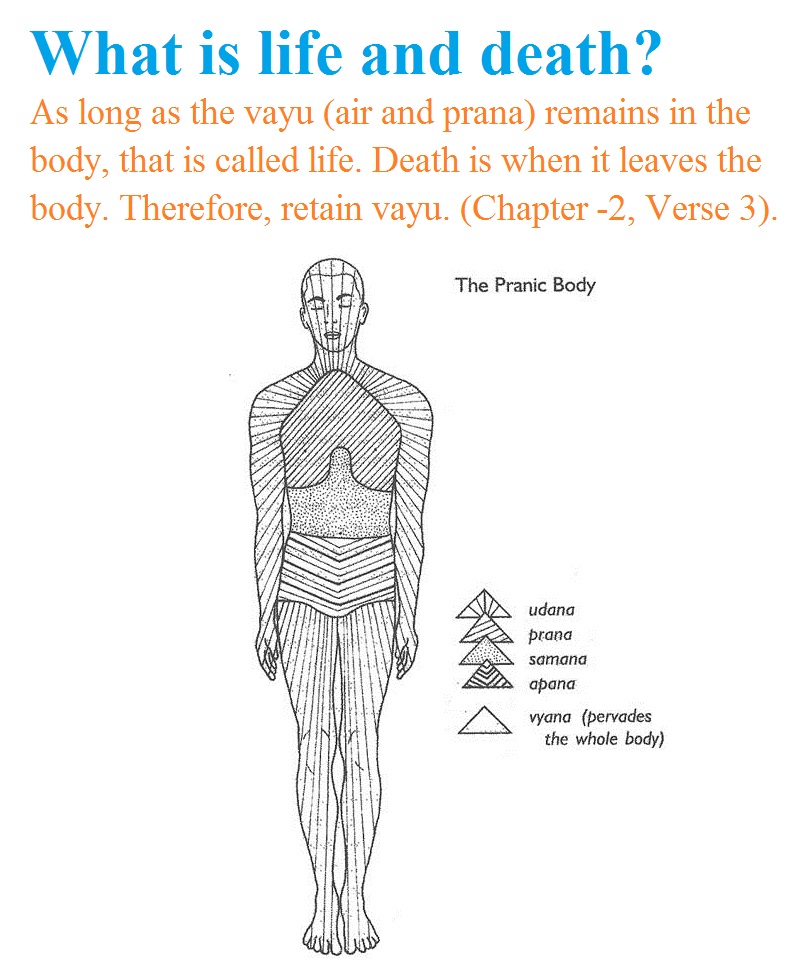
What is life and death? What is life and death; the functions of five Vayus Yavad vayuh sthito dehe tavaj jivanam uchyate / Maranam tasya nishkrantistato vayum nirodhayet//(Chapter -2, Verse 3). As long as the vayu (air and prana) remains in the body, that is called life. Death is when it leaves the body. Therefore, retain vayu. (Chapter -2, Verse 3).
Times and duration of Pranayama practice

Times and duration of Pranayama practice Times and duration of practice – Early morning, midday, evening and midnight, holding is step by step held up to eighty counts in one sitting. Pratarmadhyandine sayamardharatre cha kumbhakan/ Sanairasitiparyantam chaturvaram samabhyaset//(Chapter -2, Verse 11). Holding should be practiced perfectly four times a day: early morning, midday, evening and midnight, so that holding is step by step held up to eighty counts in one sitting. (Chapter -2, Verse 11).
Signs and symptoms of right Pranayama practice
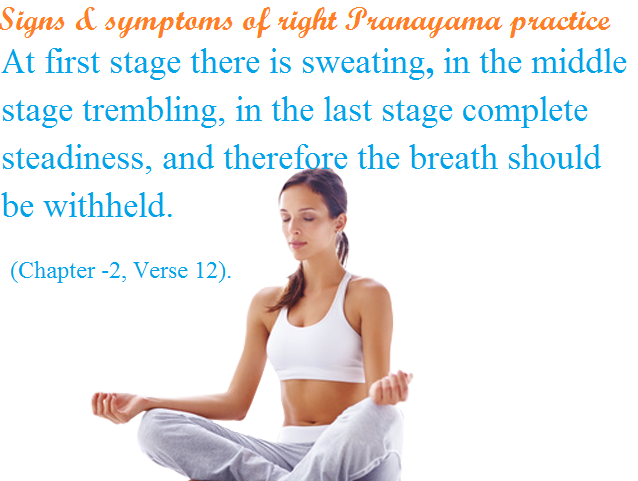
Signs and symptoms of right Pranayama practice Kaniyasi bhavedsveda kampo bhavati madhyame / Uttame sthanamapnoti tato vayum nibandhayet//(Chapter -2, Verse 12). At first stage there is sweating, in the middle stage trembling, in the last stage complete steadiness, and therefore the breath should be withheld. (Chapter -2, Verse 12).
Sattvic quality of mind and the three Gunas for pranayama Practice
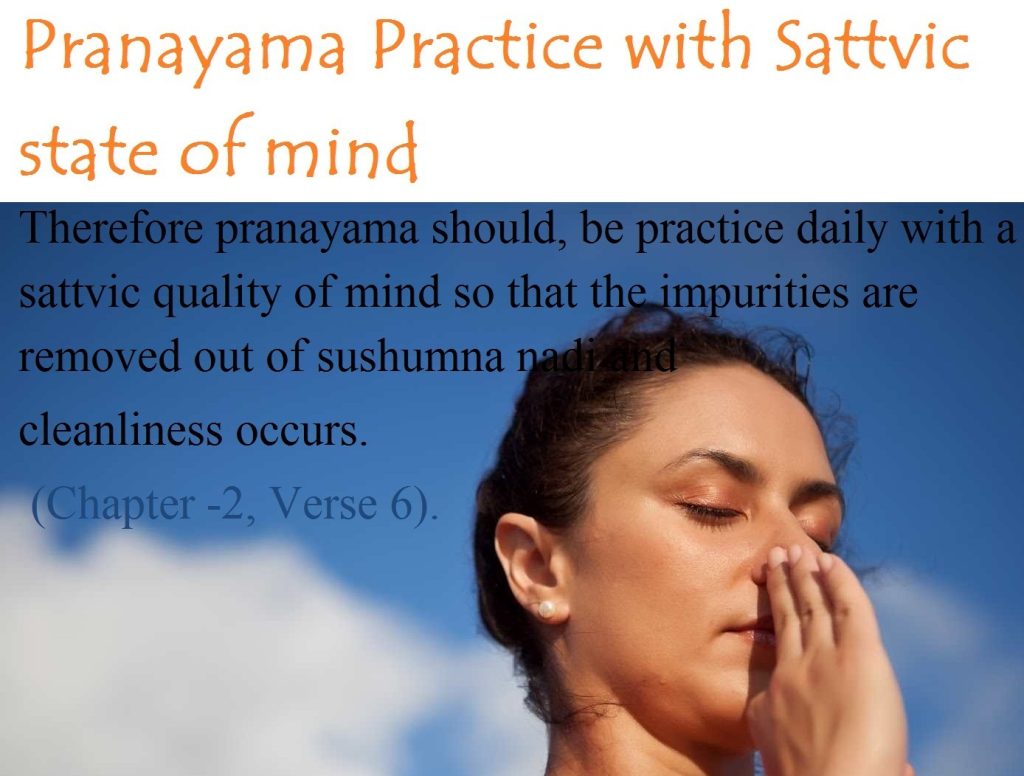
Sattvic quality of mind and the three Gunas for pranayama Practice Pranayamam tatah kuryannityam sattvikaya dhiya / Yatha sushumnanadistha malah suddhim prayanti cha//(Chapter -2, Verse 6). Therefore pranayama should, be practice daily with a sattvic quality of mind so that the impurities are removed out of sushumna nadi and cleanliness occurs. (Chapter -2, Verse 6).
Pranayama three types, rechaka, pooraka, and kumbhaka

Pranayama three types, rechaka, pooraka, and kumbhaka. Pranayamas tridha prokto rechapurakakumbhakaih / Sahitah kevalascheti kumbhako dvividho matah// (Chapter -2, Verse 71). Pranayama is said to be of three types: exhalation (rechaka), inhalation (pooraka), and retention (kumbhaka). Kumbhaka is again of two types: connected sahita and unconnected kevala. (Chapter -2, Verse 71). Yavat kevalasiddhih syat sahitam tavad abhyaset/ Rechakam purakam muktva sukham yadvayudharanam//(Chapter -2, Verse 72). Till attain perfection in kevala kumbhaka, sahita kumbhaka has to be practiced. When you are freed of inhalation/exhalation then the breath/prana is ceased spontaneously. (Chapter -2, Verse 72). Pranayamoa yam ityuktah sa vai kevalakumbhakah/ Kumbhake kevale siddhe rechapurakavarjite//(Chapter -2, Verse 73). Perfection of isolated holding is freedom from inhalation and exhalation process. This pranayama spoken of is verily kevala kumbhaka. (Chapter -2, Verse 73). Na tasya durlabham kimchittrishu lokeshu vidyate/ Saktah kevalakumbhena yatheshtam vayudharanat//(Chapter -2, Verse 74). Nothing in the three worlds of existence is unobtainable by him who has mastery over kevala kumbhaka and can hold the breath as desired time. (Chapter -2, Verse 74).
Nadis and Chakras for retention of Prana
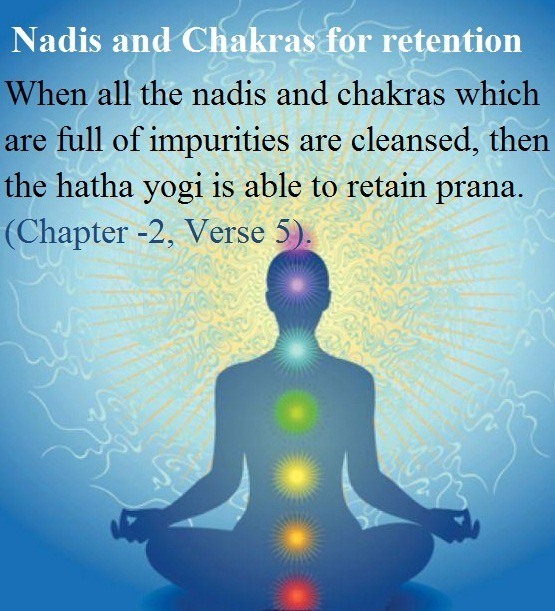
Cleansing of the Nadis and Chakras for retention of Prana Suddhameti yada sarvam nadichakram malakulam / Tadaiva jayate yogi pranasamghrahane kshamah//(Chapter -2, Verse 5). When all the nadis and chakras which are full of impurities are cleansed, then the hatha yogi is able to retain prana. (Chapter -2, Verse 5).
Mind and Prana

Interconnection of Mind and Prana Interconnection of Mind and Prana and their controlling through Pranayama Chale vate chalam chittam nischale nischalam bhavet / Yogi sthanutvamapnoti tato vayum nirodhayet//(Chapter -2, Verse 2). When Prana moves, chitta the mental force too moves. When prana is still, Chitta also still without any movement. By this steadiness of prana the Hatha Yogi reaches stableness and should thus control the Vayu air. (Chapter -2, Verse 2).
Diet and Pranayama – Milk and Ghee is recommended
Diet and Pranayama – Milk and Ghee is recommended. At the beginning period of pranayama practice, food, consisting of milk and ghee is recommended very much. Upon being established in the practice such conditions are not necessary at all. (Chapter -2, Verse 14).
Veerasana (Hero’s Pose)
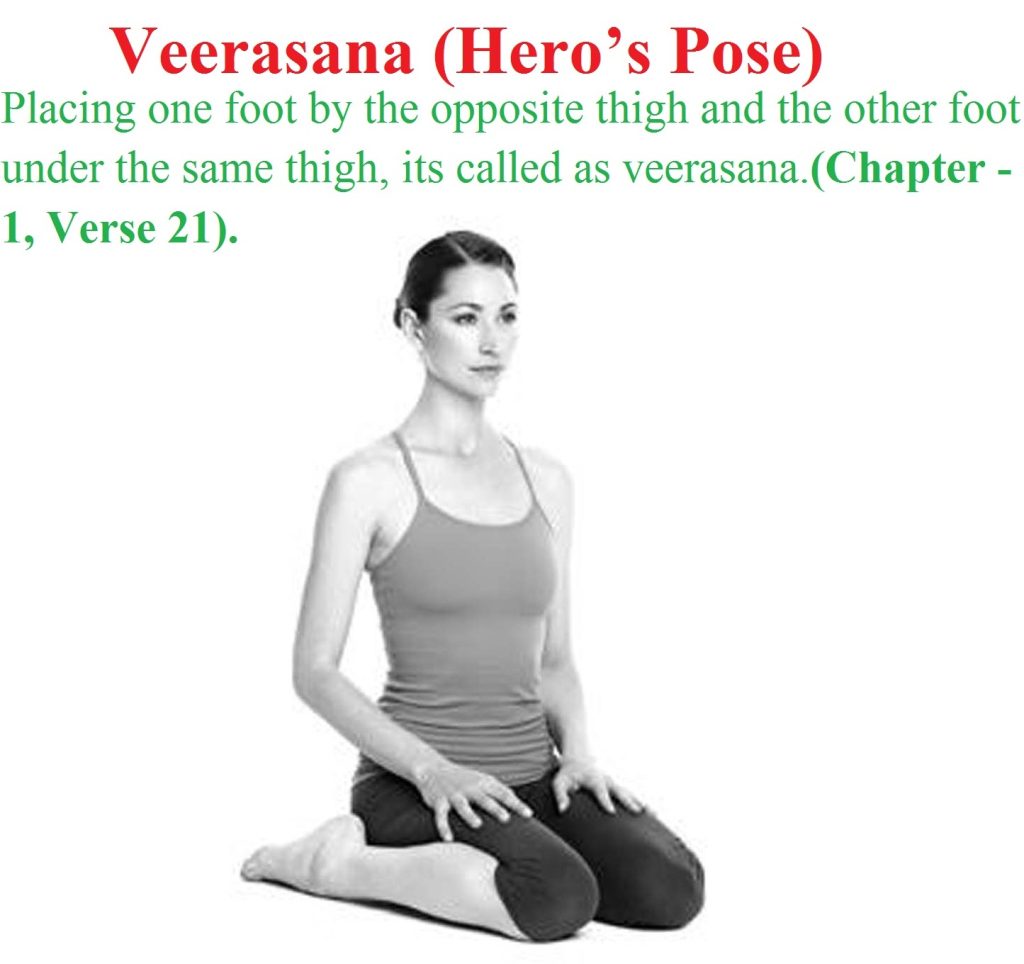
Veerasana (Hero’s Pose) Ekam padam tathaikasmin vinyased uruni sthiram / Itarasmims tatha chorum virasanam itiritam//(Chapter -1, Verse 21). Placing one foot by the opposite thigh and the other foot under the same thigh, its called as veerasana. (Chapter -1, Verse 21).
Swastikasana (auspicious pose)
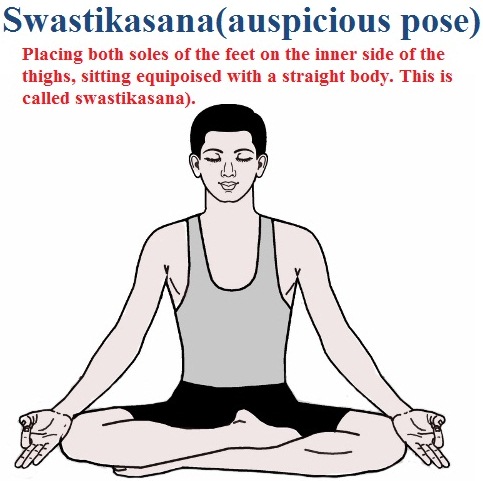
Swastikasana (auspicious pose) Janurvor antare samyak krtva padatale ubhe / Rjukayah samasinah svastikam tat prachakshate//(Chapter -1, Verse 19). Placing both soles of the feet on the inner side of the thighs, sitting equipoised with a straight body. This is called swastikasana). (Chapter -1, Verse 19).