
Vrksasana(Tree Pose)
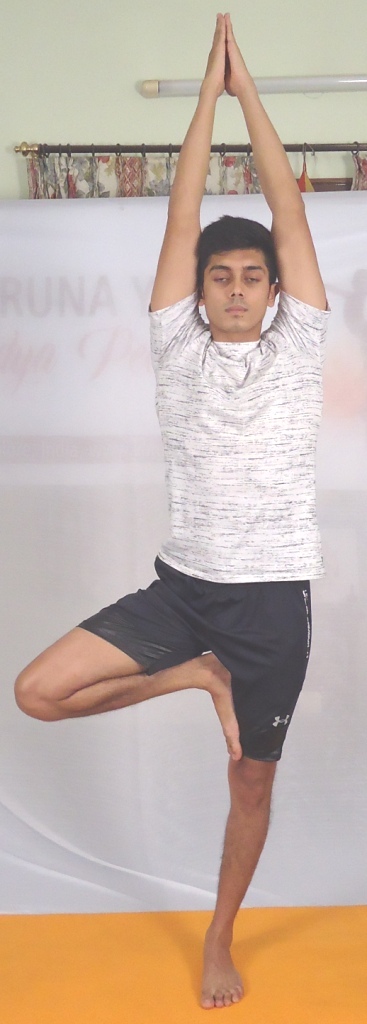
From Tadasana, shift weight to the foot that is straight on the floor and distribute weight evenly across the foot. Bend other leg and rest it on the inner thigh, right foot pointing straight downwards. Raise both arms sideways and adopt namaskara mudra. Foot, spine and arms straight, elbows locked beside ears. Lengthen tailbone and pelvis straight.
Tadasana(Mountain Pose)
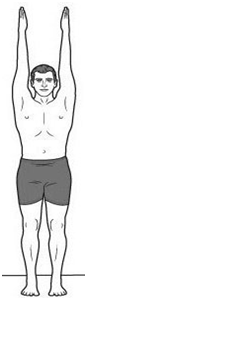
Feet together, heels and toes touching, tighten the knees and knee caps pulled up, contract the hips, pull up the muscles of the backs of the thighs, stomach pulled in, chest forward, and spine and neck straight, distribute weight across heels and soles of foot. Lift hops, stomach in, rib cage up, chest up, neck and head straight. Arms stretched over the head, elbows locked and fingers reaching straight out.
Samasthiti (Equal Standing Pose)
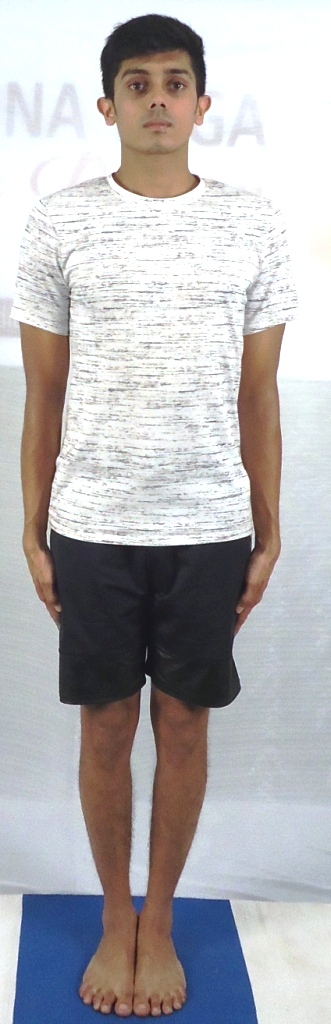
Feet together, heels and toes touching, tighten the knees and knee caps pulled up, contract the hips, pull up the muscles of the backs of the thighs, stomach pulled in, chest forward, and spine and neck straight, distribute weight across heels and soles of foot. Arms by thighs, elbows locked and fingers reaching straight out.
Katha Upanishad(A Dialogue with the God of Death – What Happens to the Soul after Death)
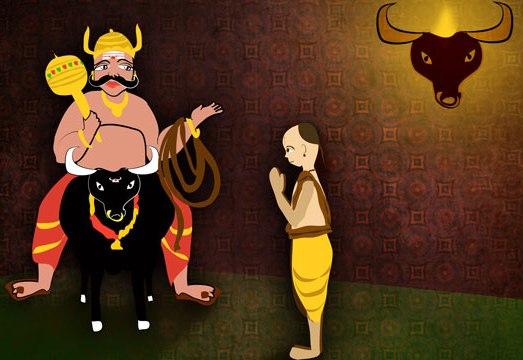
There was a sage Vajasrava who was performing a yajna. After the Yagna his son Nachiketa was bothering him and so the sage banished him to hell where Nachiketa found himself in the domain of Yama, the Lord of Death. Nachiketa waited three days in front of Yama’s house and for this Yama granted him three boons. For this first boon Nachiketa asked for his father’s welfare and that when he went back to his father, his father would recognise him and be happy with him. This was granted. For this second boon Nachiketa asked to know how to reach heaven and Yama gave him the knowledge he had requested. He told Nachiketa between Preyas (worldly pleasure) and shreyas (spiritual good), the latter which can give permanent peace and happiness and that Atman is the highest form of shreyas. For his third boon Nachiketa wanted to know what is beyond good and evil, cause and effect. Here he learned that OM is the symbol of the omniscient self, and this self dwells within all. Yama also declared that one’s destiny after death is decided by his karma in life. One who realizes this becomes immortal. Brahman is the end of the journey and the supreme goal. The whole universe comes forth from Brahman and moves into Brahman. When all the senses are stilled and the mind is at rest, this is the highest state, called yoga. He who attains this is free from delusions and is pure and impartial.
Concept of Asana According To Patanjali
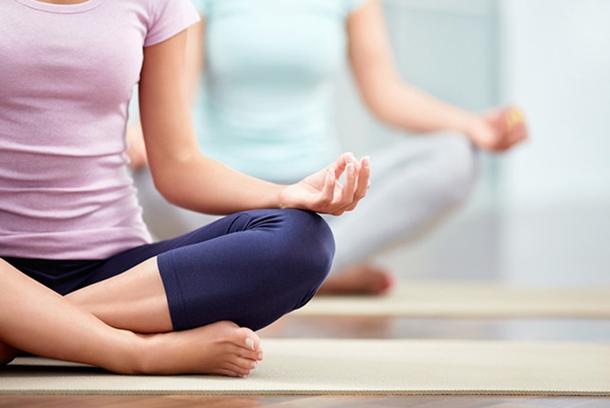
Patanjali talks about asanas in only 3 sutras: 46. A sitting posture should be steady and comfortable, 47. This is achieved through the relaxation of exertion, and making contact with the unlimited; 48. Then there is no further affliction from the dualities of existence. Patanjali does not refer to specific postures or sequences of movements as we practice nowadays, he just speaks about a comfortable posture one should be able to maintain effortless for a prolonged time while undergoing meditation and concentration of the mind.
How to Teach Asanas ?
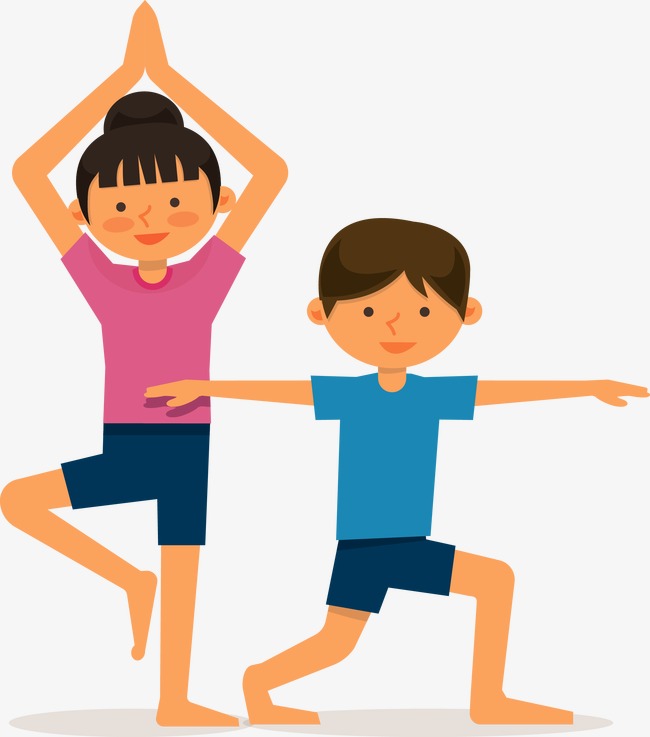
Yoga for Bronchial Asthma The role of yoga teacher in asana instruction is very important as the student will be relies on teacher. Yoga teacher should have complete attention on student breath and body movement. Yoga teacher should have knowledge of his or her different students health conditions and capacities so that his or her instructions cannot be generalized. Yoga teacher should demonstrate asanas to students with sensible in students understandable language as demonstration is very important part of the instructing and learning process. In yoga workshops positioning of teacher with students is very important. During instructing students the yoga teacher should also see the feet weather feet’s are straight, foot is out or in . Achilles are align straight or veer towards the mid line or toward lateral. Weather knees are hard or soft, flexed, extended or hyper extended. Hips are in level. Is there any tension in in one calf than the other? Arms are hanged evenly at the side or is one hand more in front than the other. Shoulders are even or level. Head is centered between the shoulders. Does the ear hole is lined up over the shoulder. Weather shoulder is forward or either slumping forward or pulled back. Do the knee caps point forward. Yoga teacher should repeat the demonstrations stage by stage so that asanas can easily understandable to student and they could perform asanas effectively. After the demonstration ask the students if they are clearly understand the asanas or else is there any need to demonstrate again.
Do’s & Dont’s of Yogic Practices for Beginners
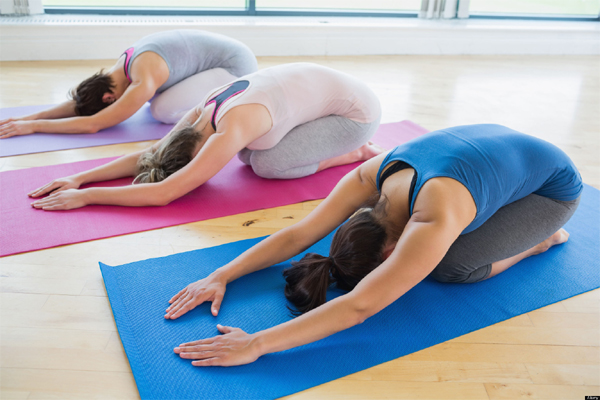
Asanas should be done with proper breathing through nose only . yoga teacher should give specific instructions which will help students to coordinate the breath with the asanas. With regarding to time of practice of yoga it can be performed at any time of the day except after meals . The best time for yoga practice is 2 hours before and including suryodhaya ( sunrise) because at this time the atmosphere will pure , quite , our stomach will be clear & our mind will be calm. Place of yoga practice should be clean, calm & quite. During practice of yogasanas our cloths should be loose , light , comfortable preferably cotton cloths . we should not wore wrist watches, jewellery & spectacles. Before commencing asanas programme our stomach should be empty, the bladder & stomach should be preferably empty this wiil helps us to do yogasanas effectively & comfortably. We should aware of yogasanas practices because it will influences , integrates &maintains harmony at all levels of physically , pranic , mental , emotional , psychic & spiritually. While doing asanas if we feel physically and mentally tired relaxation should be taken by doing shavasan . After completion of all asanas doing shavasan will relax all the physical & mental tired. Beginners or experienced yoga practitioners should never exert undue forces while doing asanas. Regular practice of yogasanas will increase their muscle strength. As diet is concerned for doing yogasanas there is no special dietary rules. Vegetarian diet is not essential although it is recommended at higher stages of yoga. For doing yogasanas half filled stomach with food , one quarter with water and leaving remaining quarter empty is recommended this will help us do yogasanas comfortably and successfully. Yogasanas can be performed by all age groups only we should see which type of asanas is usefull and beneficial for which age group of peoples for example sivananda style of suryanamaskar, sathyananda style of suryanamaskar can easily comfortably performed by youngage & middle age persons but for old age persons Vivekananda style of suryanamaskar can performed by easily and comfortably. Ashtanga suryanamaskar A & B cannot be performed by old age persons as it needs strong wrist and elbow strength. Yogasanas cannot be performed or dangerous in persons who have fractured bones or who are chronic ailments and diseases such as stomach ulcer , tuberculosis or hernia. We should terminate the yogasana if there is a severe pain any part of body , medical help can taken at that time . we inverted asanas if there is a gas or fermented intestines.never practice yogasanas after sun bath as asanas futher increase the heat of the body. Females should avoid practicing yoga during their menstruation periods. Benefits of doing yoagasanas are surplus it will help us to control the mind through body, removes toxins from the our body , increases absoption of vital neutrients from our intaken, food increases the longevity of living of our body ,increases immunity of the body.
Jala Neti(Yogic Nasal Cleansing Technique)
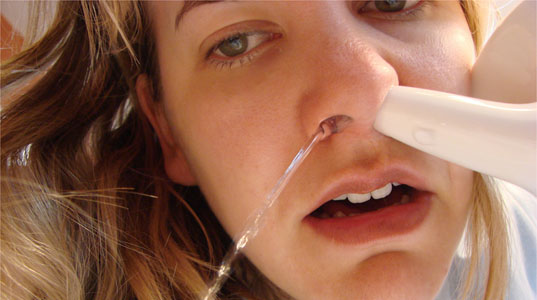
Jala neti preparations First of all, take a neti pot with nozzle that can be easily inserted into the nostril. One teaspoon of salt may be added into half litre of lukewarm water. Now, fill the neti pot with this water. How to do Jala Neti The simple steps and technique of performing Jala neti are being given below: First of all sit in squat or standing having 1 foot distance between legs. Lean forward from the lower back. Tilt the head to the opposite side of the nostril whichever is more active at the moment. Insert the nozzle of the pot into the nostril which is active at that moment. Open your mouth throughout the neti process and try to breathe through it. Let the water flow in through one nostril and out through the other nostril. After finishing half of the water of the Neti pot, put it down and clear your nostril. The same thing should start from other side. After finishing from both side, do forceful exhalation from both the nostrils in all the directions i.e. left & right, top & bottom. Benefits of Jala Neti Daily practice helps maintain the nasal hygiene by removing the dirt and bacteria trapped along with the mucus in the nostrils. It soothes the sensitive tissues inside the nose, which can assuage a bout of rhinitis or allergies. It is beneficial in dealing with asthmatic conditions and making breathing easier. It reduces tinnitus and middle ear infections. It helps abate sinusitis or migraine attack. It can alleviate upper respiratory complaints like sore throats, tonsils, and dry coughs. It can clear the eye ducts and improve vision. Clearing of nasal passages helps improve the sense of smell and thereby improves digestion. It calms the nervous system and the mind. It also helps relieve stress and brings clarity to the mind. People have experienced a reduction in their anger by practicing Jal Neti regularly. It helps improve the quality of your meditation. Jala Neti goes beyond nasal cleansing and helps in aligning your body, mind, and soul. Hence, it should be practiced daily and not only when one has a nasal blockage or cold. Jala Neti precautions The nose should be dried properly after the process. People with high blood pressure should be careful during this part. If one feels dizzy while drying the nose, then it should be done standing upright. Take care that you do not leave any water in the nasal passages as it might cause an infection. Like any other yogic practice, learn it from an expert practitioner.
Querying new yoga student
0) We should introduce our self with smiling face and positive attitude ask questions. 1) Have you ever practiced yoga? If answer is no. Assure them no problem but if the answer is yes 2) What style of yoga has been practised? 3) How long period yoga has been practised? 4) Do you have any injuries or anything else going on with your body that i should be aware of? 5) Have you ever had any surgeries? If yes collect details 6) How are your ankles, knees, hips, back, shoulders, neck , wrists ? Try to follow up the relevant questions with their answers. We should use our knowledge but also prepare to acknowledge that we do not know about the injury or issue and encourage the student to take care of him or herself. 7) are you pregnant or have you recently had a baby? Ask this of any women if we think she is pregnant or who recently gave birth, share with her basic trimester cautions. 8) What is your profession, work or daily life like? 9) What do you do for exercise? According to the answers to the above questions we should give the student some initial guidance on how he / she might modify his / her practice.
Hatha Yoga
The larger part of yoga being rehearsed in the globe is hatha yoga, including asanas (yoga stances), pranayama (breathing practices), kriyas (inside purging strategies), bandhas (strong locks and contractions), and mudras (hand gestures and seals), to more prominent or lesser degrees relying upon the arrangement of yoga. The 200-hour Hatha Yoga practice by Karuna Yoga Maha Vidya Peetham, teacher training center in, Bangalore, India is one of the best institutions today to learn Hatha Yoga. Yoga Anatomy of Hatha Yoga Despite the fact that a physical practice, hatha yoga is more than a workout schedule. Hatha yoga is an exceptionally refined arrangement of all-encompassing wellbeing and prosperity, tending to all layers of the self, which are not isolated but rather interrelated, influencing each other. On the off chance that the body is debilitated, the psyche, heart, and soul are altogether decreased, and the other way around; if the heart is discouraged, the brain, soul, and body are lazy; etcetera. Considered a science with refined procedures and practices, hatha yoga viably balances and fortifies each arrangement of the body — the musculoskeletal, respiratory, circulatory, stomach related, anxious, and endocrine frameworks — permitting professionals to discharge pressure, increment dissemination, dispense with poisons, and reestablish common wellbeing and essentials. Meaning of Hatha Yoga In spite of the fact that the Sanskrit expression hatha signifies “mighty” or “extreme,” when broken into its syllables, ha for “sun” and that for “the moon,” it infers a joining of contrary energies. Manly qualities, for example, quality, animation, animosity, hardness, and warmth are related with the sun, and feminine qualities, for example, delicate quality, lack of involvement, tenderness, nurturance, and cool-ness are related with the moon. The yoga of the sun and moon, hatha yoga, looks to adjust the restricting strengths: manly and female, hard and delicate, right and left, inward and external, doing and being, yin and yang. Physically hatha yoga requires adjusted activity. Through the practice, we build up a harmony amongst quality and adaptability while figuring out how to explore the unobtrusive move amongst exertion and surrender. The flawless thing is that a few stances, for example, forward folds, cool the body and quiet the sensory system, while others, for example, backbends, warm and empower the body. At that point, there are turns, which are alluded to as either “shrewd” represents that will cool or warmth the body, whichever is important to take the body back to impartial. Spine & Hatha Yoga The asanas collectively work to reestablish and keep up an adaptable and conditioned spine. For creatures, it is vital to move the spine in all directions with a specific end goal to keep the spinal segment supple and portable. They move, extend, twist, and twist their spines in each course.) The spinal segment is comprised of various vertebrae and supple, sinewy circles that fill in as spacers in the middle. It houses the spinal string, which associates with the cerebrum and, together with it, creates the focal sensory system. Nerves then branch out from the spinal string through the spaces between the vertebrae, associating particular body parts — organs, organs, et cetera — to the mind. After some time, with gravity, the spine starts to pack, losing space between the vertebrae and bargaining the vertebral circles. The outcome is regularly an encroached nerve, removing the stream of vitality and nerve driving forces through the body, bringing on debilitated organs and loss of muscle capacity, also torment. In this way, the significance of a supple yet conditioned spine can’t be focused on enough. The wide range of yoga postures flex, contort, bend, protract, and open the distinctive districts of the spine, keeping up the wellbeing of the whole spinal segment and reinforcing the sensory system. Prana & Hatha Yoga On the subtle, or active, level, the full yogic breath brings more prana into the body while likewise managing the life-constrain vitality. Prana is the body’s unobtrusive vitality. It is the enlivening power behind every atom, cell, organ, and arrangement of the body, organizing each real movement from the pumping of the heart to the disposal of waste. Prana likewise enormously impacts the mind’s state. Unsteady pranic vitality causes the brain to wind up distinctly upset and the body’s different frameworks to be unpredictable, producing disease in the psyche and body. The breath is an augmentation of prana. The more profound you inhale with cognizant mindfulness, the more prana you get. By being a part of Karuna Yoga Maha Vidya Peetham, Yoga TTC program Bangalore, you can even direct the stream of prana into particular regions of the body just by sending the breath there. Moreover, when inward breaths and exhalations are balanced, prana gets to be distinctly steadier and the mind calmer, and all the body’s living frameworks work all the more ideally. Join Karuna Yoga Maha Vidya Peetham, Yoga TTC program for a better understanding of Hatha Yoga. Hatha yoga has evolved over the previous century to wind up distinctly more inclusive and keeps on advancing as new logical revelations are made in the fields of kinesiology, brain science, neurology, and comprehensive wellbeing. Whichever style you follow, yoga can bring balance physically, rationally, and inwardly, to all parts of your life. It is the rare 90 minutes when students don’t need to consider their occupations and other world affairs. However your own, so give yourself the authorization to remain totally exhibit for the length of the class, leave every bit of your stresses and duties with your shoes at the entryway, and be with yourself in your body on your mat.