
Ardhakati Chakrasana(Half Waist Wheel Pose)
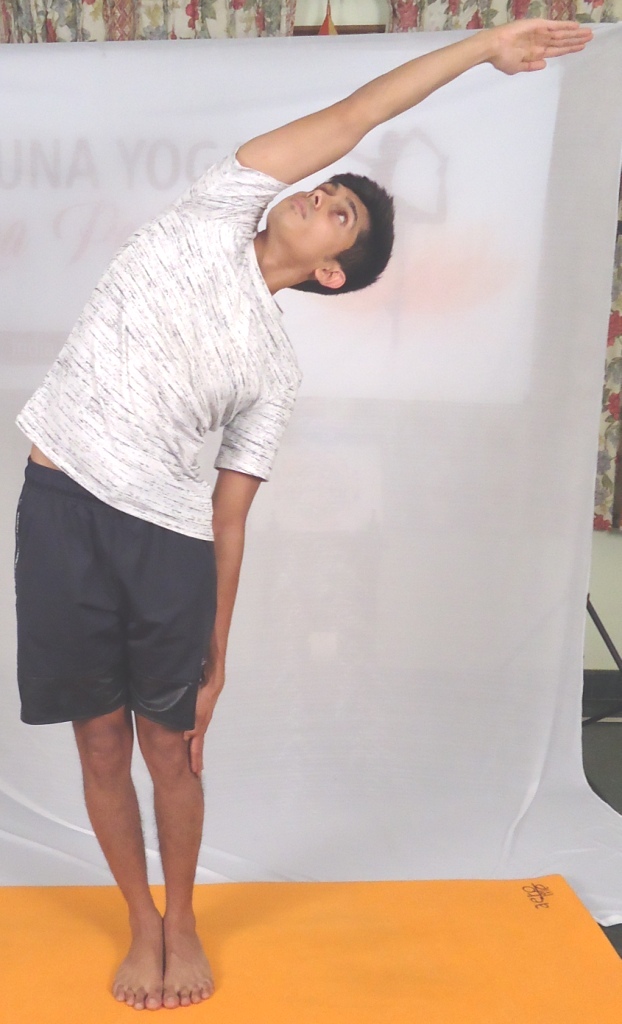
The half wheel pose or Ardhakati Chakrasana begins at Tadasana or the mountain pose. Stand straight, with the heels and toes of both feet pressed together. Keep your arms by your side, weight distributed evenly across your feet from your heels to your toes. Inhaling in, raise your right hand vertically over the head while your left hand is at your side. Stretch the right hand out as far as you can. Next, slowly bend to the left side from your waist. Make sure to maintain a normal and comfortable rate of breathing. Maintain this posture for a few breaths, for about 30 seconds. Then slowly, straighten back up and lower your right hand down slowly by your side. Repeat this on the other side. You can eventually increase the length of time you hold the pose. Benefits: Reduces fat in waist region, stimulates sides of the body. Give lateral bending to the spine, improves function of liver.
Isometric and Isotonic (pose) Yoga Asana
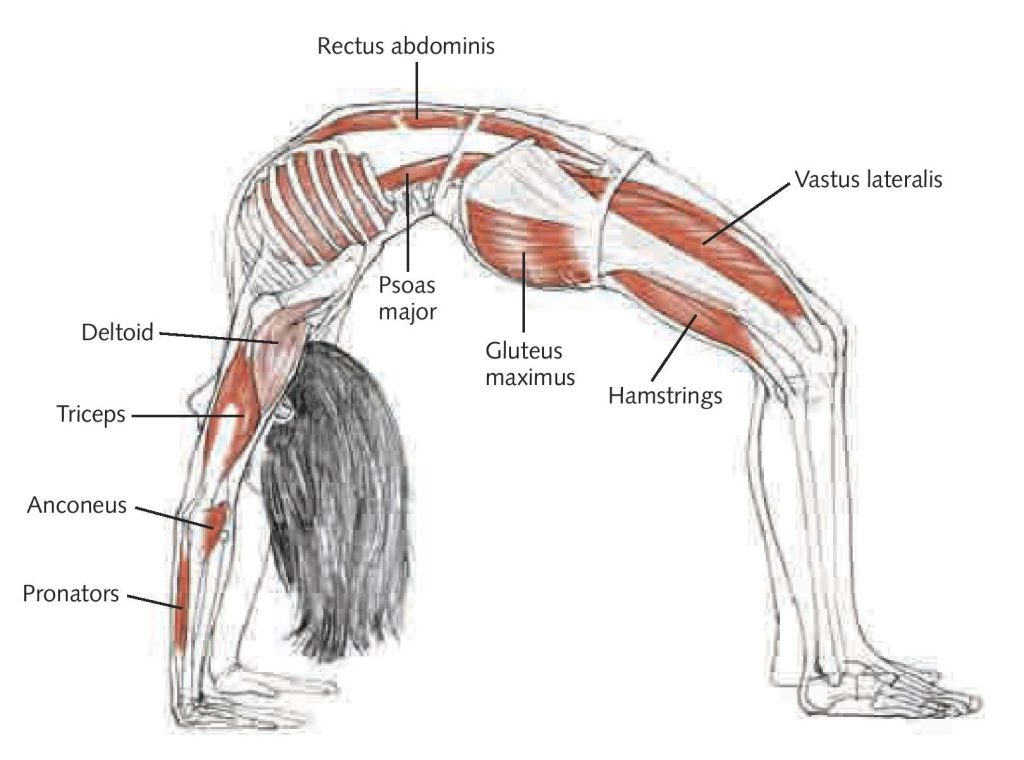
Isometric – no movement, muscles stay the same length. Example, staying in plank position, not moving. Isotonic: i.e. eccentric and concentric Eccentric muscle moves to lengthen, resisting gravity i.e. forward fold into Uttanasana. Concentric, muscle moves to shorten, moving against gravity. Example, moving from chaturanga dandasana to plank position.
Pancha Kosha (Five Level of Human Existence)
In the Taittriya upanishad, the five layers of the body are expounded upon. Going beyond these, one can reach the atman. These five layers are the pancha kosas. These are: Annamaya kosha or physical body. Pranamaya kosha or the energy body. This consists of a further five levels or the pancha bhootas, i.e earth, fire, wind, water and space. Manamaya kosha or the mental sheath. Here there is perception, memory and ego. Here also lie emotions which can cause one to be swayed from what is right. Vigyanamaya kosha, which is the wisdom layer. This contains knowledge and the conscience. A person who doesn’t have Buddhi or the discriminating faculty, which is found in this sheath, is no better than an animal. Anandmaya kosha or the bliss sheath. Ananda is what everything in the universe has been created from. By doing various tapas, man can journey toward and attain oneness with the ultimate.
Yoga as a Science of 4 States of Human Consciousness
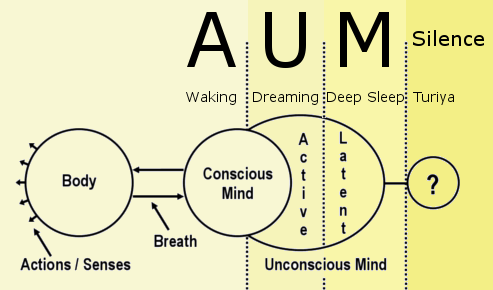
The Mandukya Upanishad deals with the four states of consciousness. Waking, 2. dreaming, 3. Deep sleep and 4. Turiya or samadhi state. It also states that everything in the universe is OM and that the past, present and future are contained in OM. The three components or syllables comprise the three states of Brahman. After meditation on OM one is taken to the silence which is Atman or Brahman.
Three Types of Muscle Contractions (Isometric, Concentric, and Eccentric)
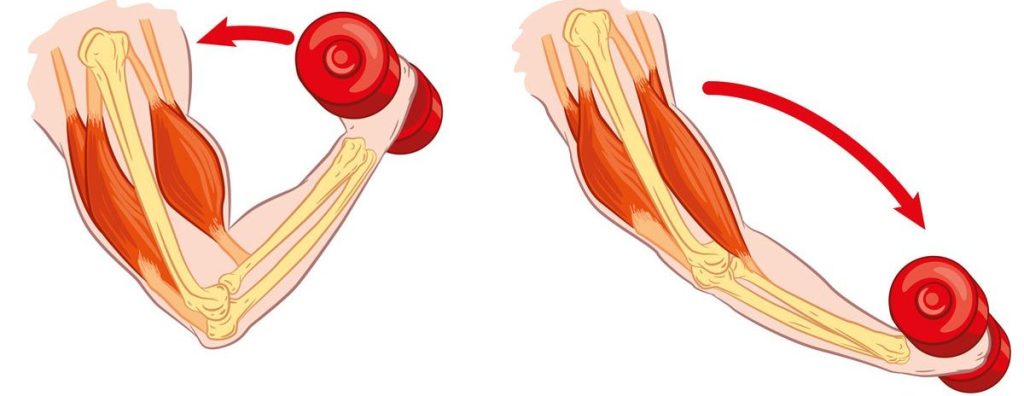
1) Isometric Muscles are tense but no joint movement. 2) Isotonic Eccentric Downward movement of joint. Tension is produced when the muscle lengthens. Concentric Upward movement Tension is produced when the muscle shortens. Causes joint movement.
Aerobic and Anaerobic Yoga Pose
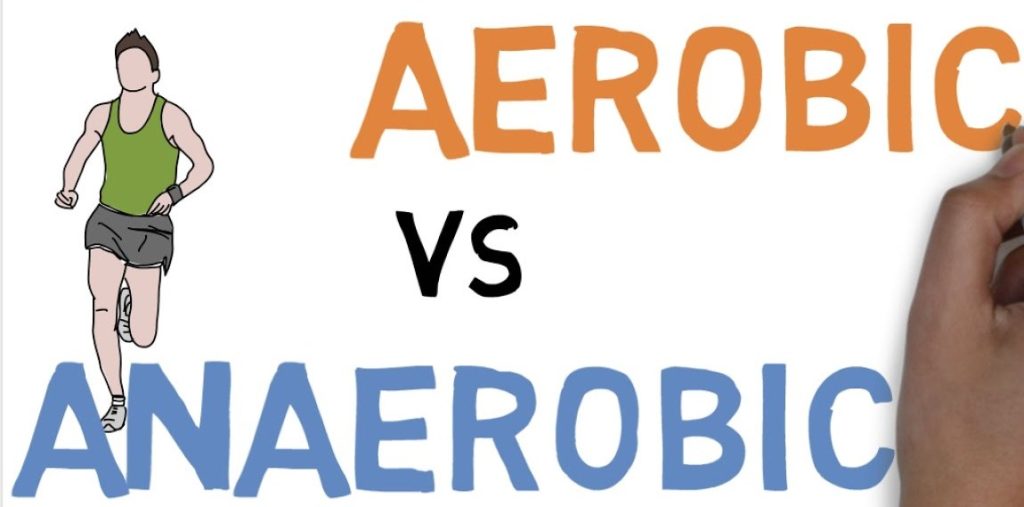
Aerobic activity This takes place with oxygen where carbohydrate and oxygen are used as fuel for the first two minutes after which fat is burned. These are lower intensity activities. More fat for energy is used and leads to a better ability to burn fat. Blood vessels increase and become bigger to accommodate the oxygen being used. It changes the composition of muscle fibres which contract slower and at a lower intensity. Aerobic activity increase these type one muscles which increases endurance and performance. Aerobic activity increases mitochondria which improved the aerobic capacity of muscles. Anaerobic activity This happens without oxygen, fuel comes from muscle storage and is short, highly intense and burns fat directly. Example is weightlifting. More fast twitch muscle fibres are produced for strength. It increases lactic acid tolerance for endurance. It increases glycolysis, ATP, CP and creatine. It increases growth hormone and testosterone.
Muscle Fiber Types: Fast Twitch Muscle Fiber and Slow Twitch Muscle Fiber
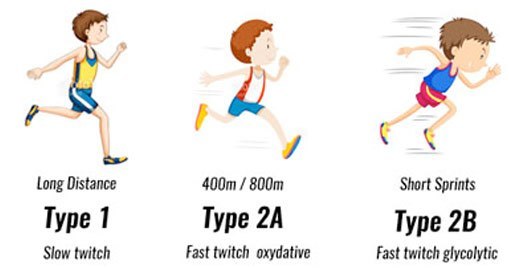
Slow Twitch Muscles that are associated with aerobic work are called slow twitch. These are the muscles working when we do the simpler yoga poses. Small force is produced over a sustained period. It is suited for endurance activities such as running marathons. Fast Twitch These fibres are associated with anaerobic activity. They are used when we perform high intensity activity which is sustained for shorter periods such as sprinting. The lactic acid build up from these activities means they cannot be sustained for a long time. 1) Fast oxidative glycolytic fibres These are more resistant to fatigue that fast glycolytic fibres. 2) Fast glycolytic fibres These fibres generate the largest amount of force and have the greatest anaerobic capacity.
Eight Limbs of Ashtanga Yoga – Patanjali Yoga Sutra
Yama – self restraint Niyama – social mores Asana – postures Pranayama – breathing Dharana – concentration Dhyana – meditation Pratyahara – withdrawing from attachment to senses Samadhi – transcendence
9 Obstacles in the Path of Yoga – Patanjali Yoga Sutra
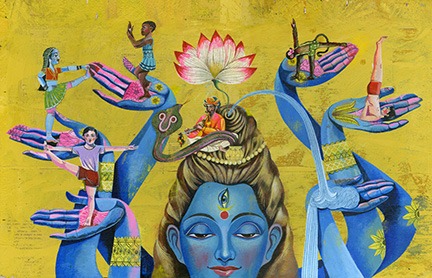
Laziness Doubt, Dullness, Cravings, Wrong perceptions, Disease, Procrastination, Inability to achieve the refinement, Instability
Urdhva Dhanurasana(Upward Bow or Wheel Pose)
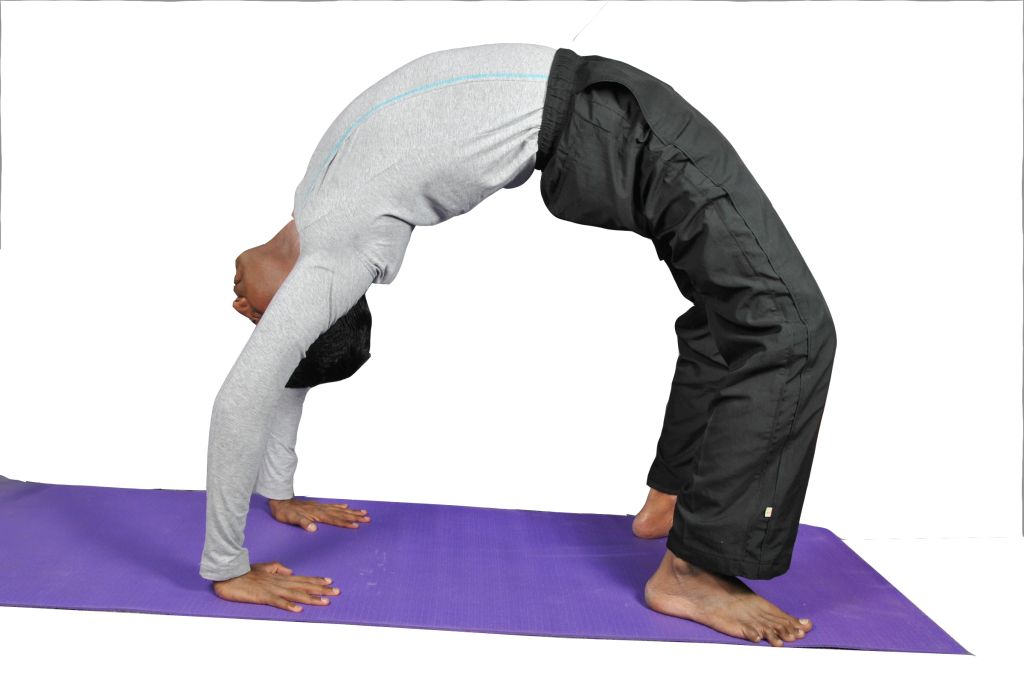
Lie flat. Bend and raise the elbows over the head and palms under the shoulders. Bend and raise the knees. Bring the feet nearer until the touch the hips.