
How to Register: Step-by-Step Instructions for Teachers
STEP 1. Create an Account / Access Your Account 1A. If your Registered Yoga School (RYS®) created an account for you, you should have received an email inviting you to register with Yoga Alliance®, with a link to reset your password and access your account. 1B. Alternatively, you can create an account yourself. Enter your basic information (name, email, password) to create a new account. 1C. Either way works and will lead you to Step 2, below. STEP 2. Submit Your Training Program Information 2A. From your new account dashboard, click on “Register Now” under Teacher Registration. 2B. Select your desired designation to show the registration Requirements for that designation 2C. Enter your training program details: 2D. Select the designation of the training you completed. 2E. Enter the start and end date of the training. 2F. Identify your RYS. Enter the name of the school where you completed your training. Select your RYS from the list of schools. If you are registering as RYT 500 and your RYS appears as invalid, please confirm whether your school is a RYS 300 or a RYS 500. 2G. Upload an electronic copy of your certificate. Browse for your file. The file size of your certificate may be up to 12 MB and must be in an acceptable format (PDF, JPG, GIF or PNG). 2H. Send Request. Use the “Send Request” button to submit your Program Confirmation Request to your RYS. 2I. Enter your teaching hours: 2J. Except for RYT 200, all designations require teaching hours for registration or upgrade. The teaching hour Requirements for the designation you selected will be shown in the teaching hours section. Please note teaching hours must be entered with a start and end date after the completion of your first RYS training program. You can enter teaching hours in groups by date range or class type. STEP 3. Wait for RYS Confirmation 3A.Your RYS must confirm that you completed training. When you submit your Program Confirmation Request your RYS will be notified. Once someone from your RYS confirms you completed the school’s yoga teacher training program, you will be notified via email and invited to complete your registration. 3B. Pay Fees 3C. When you’re ready to complete your registration, login to your account to pay your membership fees. Click the green “Pay Now” button to submit payment by credit card or PayPal (we do not accept checks, cash or money orders). STEP 4. Review Your RYS 4A. Once your payment has been processed, click the “Review Now” button to complete a survey of your RYS. If you do not complete the review immediately after submitting your payment, you can return to your dashboard and the “Review Now” button will appear. Your registration is not complete until you have filled out a review of your training. STEP 5. Publish Your Profile 5A. You must publish your profile in order to appear in the Yoga Alliance Directory. You will be prompted to edit your profile when you complete your review. To edit your profile at a later time, use the My Profile link on your teacher dashboard. 5B. Set your privacy settings to public, including your first and last name. BY VISUAL IMAGE STEP – 1 STEP – 2 STEP – 3 STEP – 4 STEP – 5 STEP – 6 STEP – 7 *****
Yoga question and answer
1. Define ‘teaching’ according to Yoga perspective of view. To share the step by step knowledge of the holistic yoga practice by making students understand with valid examples, for them to practice and understand the technique of union of body and mind. 2. Write the meaning for term guru and master and teacher and instructor. The mentor who explains the students the method of yoga practice with commitment.(S)He stands out as an example of high disciplined master for their students to walk behind their trail. 3. What kind of space needed for hatha yoga practice? A breathable space with a peaceful atmosphere with plants and yogic symbols in a clean ventilated room . 4. What type of “light or brightness’ need for Vinyasa yoga? Moderate lighting is sufficient for vinyasa yoga since it is dynamic. Dim light is only used for relaxed practices. 5. How and what types of music should be used in difference intensity of hatha yoga Class. For moderate and dynamic yoga we must avoid music as its a source of distraction. But for gentle yoga we can play smooth beats like meditation music. 6. What type of yoga mat is good for asana practice? A 6mm-10 mm thickness and with 183cm* 61cm dimensions made with natural rubber is the best yoga mat for practice. 7. Write what kind of attire ideal for Vinyasa yoga. Loose clothing are ideal for dynamic practices to avoid blood clotting. 8. Write what kind of attire ideal for hatha yoga. For moderate hata yoga practice we can prefer tight or loose fit up to ones interest. 9. Write reasons why we should be in ‘bare feet’ in yoga class. Its definitely uncomfortable to practice with shoes on and is considered unclean and disrespectful to practice with slippers on. Moreover with bare foot the practice has better grip. 10. What time student should arrive and depart from yoga class. Students must come to class before the teacher and leave after the class has completely ended. To leave in between they must leave the class silently after informing the teacher without disturbing other students. 11. Where will you allocate in class room, if students with injuries, pregnancy, physical limitations, and with balancing problem. For students with special body conditions we can accommodate a space for them beside the wall and make sure they are visible to the teachers eyes in case of emergency. 12. How to place “master’s mat” in class room. The masters mat is at the front of the class with one horizontal and vertical mat on the floor to demonstrate in various directions. 13. Why we chant ‘om’ beginning of class. Write the meaning of ‘om’. Om is said to be the celestial sound that resonates through living forms. We chat om before the class to enhance ourselves with the cosmic resonance. 14. How should be the voice and tone for hatha yoga class? The voice and tone for a moderate hatha yoga class should be in a soft pace. 15. How should be the voice and tone for Vinyasa yoga class? The tone for a dynamic class must be steadfast with short breaks in between and a bit commanding. 16. How to enquire new students. List out the six questions which you going to ask. Ask for their Personal Information ● What motivated them to sign up for yoga classes ● Are you suffering from a medical condition? ● Have you had surgeries in the past? ● Are you capable of performing exercises? ● Which yoga exercises feel the most comfortable for you? ● Which movements make you feel good or bad? 17. Write levels of yoga classes. Beginners – for those who are very new to yoga need help in understanding basic workout and instructions. Intermediate- Those who are done with the basics and can try doing little more difficult poses. Advanced- those who are well trained and are capable of doing any poses but want to do group practice. 18. Who is not deserved for advanced level yoga class? Students with unstable mind and with body ailments must not practice advanced poses. 19. Write about ‘in – the – flow demonstration. In the flow demonstration requires a steady body and mind to remember the asana sequence and demonstrate it without any jittery body movements. 20. How the ‘knees’ should be in tadasana. The knee caps must be engaged and pulled up. 21. How the ‘hips’ should be in tadasana. The hips must be squared facing the front and steady. 22. How to touch students while teaching asana. After asking their permission we can touch them and adjust their pose with firmness and not too rough. 23. How to develop ‘practice teaching visual observation’ skills. Learning the anatomy of the body can help us think which part of the body we must observe for each asana. 24. Write about social marketing. We can market our yoga classes using social media and websites, or through word of mouth and pamphlets. 25. Define kinesthetic learning style. Kinesthetic learning style involves visualization of the bones and muscles stretching, twisting and contracting in the body on doing a pose. 26. Write about safe biomechanics. Safety is in essence using good form when exercising, which, if you think about it, is applying correct biomechanical principles: if you are applying good force, your form and movement will also be good, which greatly reduces the risk of injury. 1) Why yoga student should know about “anatomy and physiology” An understanding of anatomy is key for the safety and development of your students. Integrating this knowledge can encourage injury prevention and facilitate the healing process. 2) Function of diaphragm in respiration. Upon inhalation, the diaphragm contracts and flattens and the chest cavity enlarges. This contraction creates a vacuum, which pulls air into the lungs. Upon exhalation, the diaphragm relaxes and returns to its domelike shape, and air is forced out of the lungs. 3) What is the breathing pattern we should adopt for forward bending
Karuna Yoga Vidya Peetham – Affiliated Schools
Karuna Yoga Vidya Peetham certified teachers running yoga schools are eligible to become Karuna Yoga Affiliated Schools. An affiliation membership provides additional support to teachers and studios, helping to unify teachers and centers in order to contribute more effectively to the development and promotion of yoga. With our proven yoga business model and support, Karuna Yoga Affiliated Studios receive a head-start, enabling them to grow to their full potential. Our goal is to support affiliated teachers in making yoga their lifestyle as well as a successful and fulfilling career. Benefits of Karuna Yoga Vidya Peetham Affiliation •Use of the Karuna Yoga logo, a registered trademark that provides a unifying identity to yoga teachers who choose to meet the affiliation standards. This logo is a stamp of approval, indicating the quality and high standards that are met by affiliated teachers. •Benefit from Karuna Yoga network’s free marketing exposure and goodwill. •Receive guidance and support in class structuring and crisis management as well as client relationship building, renewal strategies, and reputation building strategies. •Guidance in fulfilling professional and legal requirements. •Receive a set of requirements and standards to ensure that your Karuna Yoga Affiliated Studio is associated with quality and integrity. •Flat yearly fees rather percentage-based fees structure •Follow a proven and time-tested business model from a reputed yoga institution, which will help you avoid costly starter’s mistakes and avoidable financial losses. •Tutoring to help your website rank at the top of Google search results for a yoga studio in your area. This will save a lot of your advertising costs. Karuna Yoga Vidya Peetham Affiliation Costs We choose a low charge as we understand that high fees may deter many eligible and deserving candidates from opening their own yoga studio. However, our modest fees do not imply low-quality support. We believe in long-term mutual benefit and collaboration, so we have created a price structure that is very affordable. Yearly Fee: USD 1000 Karuna Yoga Vidya Peetham Affiliation Application Process To apply to become a Karuna Yoga Affiliated Studio, you can contact us at drkarunayoga@gmail.com
Traditional and Modern Hatha Yoga Approach
What is Hatha Yoga? The Hatha Yoga Pradipika is compiled by Yogi Swatmarama, an outstanding personality among many authorities of Hatha Yoga i.e. Goraknanath, Gheranda and Srinivasa Bhatta. Meaning of term Hatha Yoga The term Hatha is a combination of two big mantras, i.e. Ha & tha where Ha represents mind, the mental energy. That represents prana the vital force. So Hatha yoga means the union between the pranic and mental force. This is the awakening of higher consciousness. In another description, ‘Ha’ means sun; ‘tha’ means moon “This is a symbolic of the twin energy forces which exists in everything. It represents the forces of mind, prana or vitality. As in yoga, life and consciousness are known as Purusha and Prakriti and in Tantra they are called Shakti and Shiva, similarly in Hatha yoga they are known as Ida and Pingala. Objective of Hatha Yoga The main objective of Hatha Yoga is to create an absolute balance of the interacting activities and processes of the physical body, mind and energy. When this balance is created the impulses created give a call of awakening to the control force (shushmna nadi) which is responsible for the evolution of human consciousness. Therefore it considers Hatha Yoga as the preliminary practice of Raja Yoga or Patanjali’s Ashtanga Yoga. Basic Hatha Yoga Practices Hatha yoga, involving asanas (yoga postures), pranayama (breathing practices), Shat-Karma (internal cleansing techniques), Bandhas (muscular locks and contractions), and Mudras (hand gestures and seals). What is Traditional Hatha Yoga? The Guru-Shishya parampara has been an inevitable part of education in ancient Indian culture. This involved the tradition of a living and learning relationship between the Guru and the Student (Shishya), signifying the emotional, intellectual, and spiritual bonding between them. Traditional Hatha Yoga involves the practice of: Asanas (postures) Pranayama (breathing techniques) Shatkarma (six action/purification methods) Yoga Nidra (psychic sleep meditation) Bandhas (muscular locks and contractions) Mudras (hand gestures and seals). Dhyana (meditation) Trataka (candlelight and gazing meditation) There are many hatha yoga styles which exist in modern day among that, Traditional Hatha Yoga, Satyananda yoga, B.K.S. Iyengar yoga and Ashtanga Yoga considered as traditional Hatha Yoga. Traditional Hatha Yoga Approach In Traditional Hatha Yoga according to the level and intention of the class, the methods of transition will vary to some degree, for example approached from Tadasana and end at tadasana, then enough relaxation space between each practice. Counter pose for every asana involved. Every asana practised one by one individually. What is Contemporary modern Hatha Yoga Approach? Hatha yoga has evolved over the past century to become more inclusive and continues to evolve as new scientific discoveries are made in the fields of kinesiology, psychology, neurology, and holistic health. Whichever style you practice, yoga has the ability to bring balance, physically, mentally, and emotionally, to all areas of your life. In Contemporary Hatha Yoga according to the level and intention of the class, the methods of transition will vary to some degree, for example while in flow-oriented classes such as Vinyasa Flow, most standing asanas are approached from Downward-Facing Dog Pose or directly from another standing asana.
Karuna Yoga Lineage and Teaching Tradition
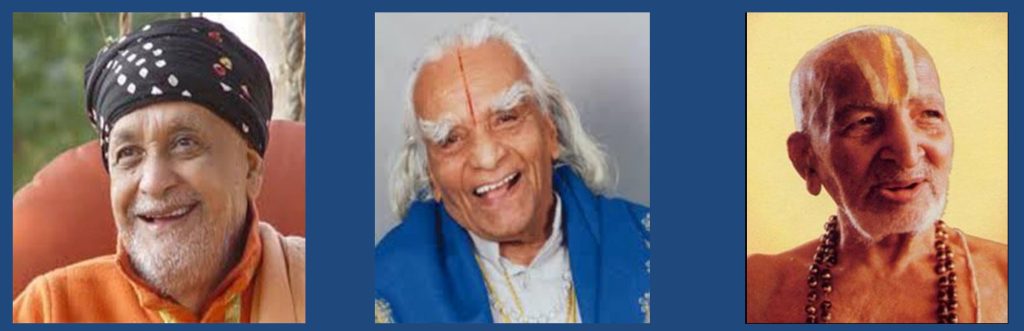
While contemporary in application and language, all our teachings are based on the thousands of years old Vedic and Yogic traditions of India. The source of our practice and teachings is Swami Satyananda Saraswati from Bihar school of yoga, asana, pranayama, mudra, bandha, shat-karma, yoga Nidra, trataka, Ajapa Japa, meditation. B. K. S. Iyengar alignment principle, restorative yoga, and Vinyasa style of yoga inculcated from Tirumalai Krishnamacharya Ashtanga Yoga, from Mysore. We practice and teach Swami Satyananda Saraswati, B. K. S. Iyengar & Tirumalai Krishnamacharya. Yoga of Synthesis which aims at the harmonious development of a human being through the practice of all three styles of hatha yoga.
What is Yoga Alliance?
What is Yoga Alliance? Established in the late 90s, Yoga Alliance is one of the most recognized Yoga organizations worldwide for its association of Yoga Schools and Teachers. It is registered as a non-profit organization under the US federal laws to work as a registry of Yoga schools and Teachers. They went on setting up minimum standard criteria for a Yoga school or a Teacher to have international credentials. The idea was to bring some sort of norms in Yoga teaching & learning at the same time to protect the rights of Yoga professionals. Yoga Alliance – How does it work? Instead of having its own training center, Yoga Alliance sets the educational training parameters to recommend Yoga Schools or Teachers to make sure adequate amounts of study and instructions have been made to manifest a better & improved Yoga Community. Designations promoted by Yoga Alliance Listing with the most searched Yoga Directory: Registration with Yoga alliance helps create a profile on a web directory as a Yoga school or Teacher, which not only verifies the registered status but helps increase the visibility for a better chance to access potential clients. Increase in the credentials: Once the registrants find themselves on a global platform provided by Yoga Alliance Directory that aids the tremendous amount of credentials & reputation to their names even among the vastness of the Yoga community. Being in the Community: By joining the Yoga alliance you become part of an exclusive Yoga community with like-minded people having passion, love & gratitude toward the eternal science of Yoga. Free Online Workshops exclusively for Yoga Alliance members: Yoga Alliance helps its members through free registration to many of the online study groups, workshops throughout the year with the intention to spread awareness on various current challenges faced by Yoga schools and Teachers. Exclusive Discounts for Members: Yoga Alliance members enjoy special access to liability insurance, legal counseling. These discounts are also applicable to some of the other things such as travel, apparel brands, education & training, etc. Registered Yoga School with Yoga Alliance USA Karuna Yoga Vidya Peetham is a Registered Yoga School (RYS) with Yoga Alliance, USA. We specialized in certified 200 hr (Hatha Yoga), 300 hr (Multi-Style) & 500 hr (blend of Hatha and Multi-style yoga) yoga teacher training certificate courses. We offer various 50 Hr, & 100 Hr Yoga Continuing Education Courses (YACEP) Training programs to deepen knowledge and improve teaching skills through various yoga teacher training courses, as well as in short-term intensive yoga courses and workshops. A registered Yoga school (RYS) allows you to be a member of Yoga Alliance as a Registered Yoga Teacher (RYT) which opens up the possibilities to teach Yoga almost anywhere in the world. https://www.yogaalliance.org/SchoolPublicProfile?sid=3971&lid=4982 https://www.yogaalliance.org/YACEPPublicProfile?cepid=30279#/section=1
Why yoga student should know about “human anatomy and physiology”
Understanding yoga anatomy is crucial for all yoga students because it will increase the effectiveness of the asanas and knowledge to protect from creating injuries and also be better prepared to deal with any existing injuries safely and effectively.
Ashtanga Surya Namaskar – A (with alignment cues)
Ashtanga Surya Namaskar – A with alignment cues a.The steps of Ashtanga A Surya Namaskar are as follows: Begin in Samasthiti: Stand upright with feet together, arms by the side and toes spread out, evenly distributing the weight across the feet. Step 1: Inhale, stretch the arms up sideways. Keeping them shoulder width apart, look up. Step 2: Uttanasana: Exhale, bend forward from the hip and place the fingertips or palms on either side of the feet. Keeping the spine extended and the knees straight, try to bring the forehead to the shin and place the fingertips or palms on either side of the feet. Step 3: Ardha Uttanasana: Inhale, lift the head up, place the palms on the shin and straighten the spine for a flat back and gaze forward. Step 4: Chaturanga Dandasana: Exhale, bend the knees to the chest, heels off the floor and jump back or step back to Chaturanga Dandasana. The feet are hip width apart. Step 5: Urdhva Mukha Svanasana: Inhale, slide the chest forward and raise the chest and head up. Keep the toes pressed on the floor, chest open, shoulders rolled down and elbows close to the body. Step 6: Adho Mukha Svanasana: Exhale, tuck the toes in and lift the hips up. Adjust the feet, keeping the heels on the floor and elbows straight, extend the spine. Gaze at the navel. Stay here for 5 breaths. Step 7: Ardha Uttanasana: Inhale, bend the knees, lift the hips up and jump back or step the feet back together in between the palms. Lift the head up, place the palms on the shin and straighten the spine for a flat back and gaze forward. Step 8: Uttanasana: Exhale, bend forward from the hip. Keeping the spine extended and the knees straight, try to bring the forehead to the shin and place the fingertips or palms on either side of the feet. Step 9: Inhale, lift the neck up and stretch the arms up sideways. Keeping them shoulder width apart, look up. Step 10: Samasthiti: Exhale, bring the arms by the side and stand upright, evenly distributing the weight across the feet.
Surya Namaskar Sivananda style, name, breathing and alignment.

Step 1 – Pranamasana: Stand upright with feet together, weight distributed evenly across the feet. Place the palms together in front of the chest in namaskara mudra. Step 2 – Hasta Utthanasana: Inhale, sparate the hands, raise and stretch the hands above the head keeping them shoulder width apart and bend the upper trunk arm and head slightly backward. Step 3 – Padahastasana: Exhale, bend forward from the hips and place the fingertips or palms of the hand on the floor on either side of the feet. Bring the forehead close to the shin keeping the back and knees straight. Step 4 – Ashwa Sanchalanasana: Inhale, move the right leg away from the body and step it back, keeping the foot and knee on the floor. The palms and left foot are placed firmly on the ground. Step 5 – Phalakasana: Inhale, hold the breath and move the left leg back, keeping both the feet together and knees of the floor, make sure the body is in a straight line from head to feet. Step 6 – Astanga Namakara: Exhale, lower the knees, chest and chin to the floor, keeping the hips raised up. Step 7 – Bhujangasana: Inhale, slide the chest forward and raise the chest and head up. Make sure the chest is open, shoulders are rolled down and elbows are bent and close to the body, keeping the toes together and pressed against the floor. Step 8 – Parvatasana: Exhale, tuck the toes in and lift the hips off the floor. Extend the spine. Keep the arms and legs straight. Ensure the heels are touching the floor and gaze at the navel. Step 9 – Ashwa Sanchalanasana: Inhale, move the right leg and place the foot in between both the palms. The left foot and knee touches the floor. Look front. Step 10 – Padahasthasana: Exhale, step the left foot forward in line with the right foot. Keeping the back and knees straight, bring the forehead close to the shin. Step 11 – Hasta Utthanasana: Inhale, lift the neck up, arms parallel to the ears and raise up from the hips and bend backward. Step 12 – Pranamasana: Exhale, bring the palms together in front of the chest in namaskara mudra, drop the hands to the side and relax.
Full Vinayasa and Half Vinayasa Yoga
There are three Vinyasa sequences divided into two groups. Between standing postures, you do a Standing Vinyasa. Between seated postures you do either a Full Vinyasa or a Half Vinyasa sequence. Full vinyasa is the original form of Ashtanga, after each asana you transition back to Standing as if doing a sun salutation. In postures where you switch legs, you practice half vinyasa between legs employing the more usual jump back and jump through, then after completing both sides you transition back to standing. Vinyasa is also employed as a noun to describe the sequence of poses that are performed between Adho Mukha Svanasanas or Downward Facing Dog as part of a Surya Namaskara or Sun Salutation sequence. Though this is more correctly termed half-vinyasa as full-vinyasa returns to complete standing asana or positions.