
Yoga and Kinesiology
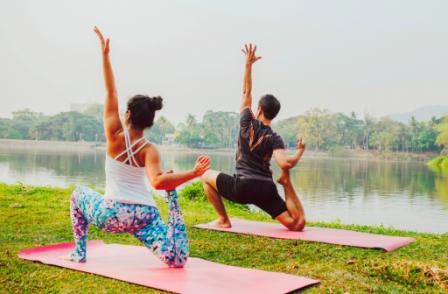
1. Flexion and Extension are movements that take place along the sagittal plane and involve anterior or posterior movements of the body. Flexion is an anterior-directed movement; eg. Bending the forearm at the elbow. The extension is a posteriorly directed movement; eg. Straightening of the bent forearm. 2. Abduction is the movement of a limb away from the midline of the body. Adduction is the movement of a limb towards the midline of the body. 3. Lateral rotation and medial rotation; rotations are movements when a bone moves around or within another bone. The lateral rotation occurs towards the lateral direction. The medial rotation occurs towards the medial direction. 4. Supination and Pronation are movements of the forearm. the upper limb is held next to the body with the palm facing forward. This is the supinated position of the forearm. In this position, the radius and ulna are parallel to each other. When the palm of the hand faces backward, the forearm is in the pronated position, and the radius and ulna form an X-shape. 5. Circumduction is the movement of a body region in a circular manner, in which one end of the body mode stays relatively stationary and the other end describes a circle. It involves the sequential combination of flexion, adduction, extension, and abduction at a joint. Eg. Arm rotations. 6. Protraction and Retraction are anterior-posterior movements of the scapula or mandible. Protraction moves the scapula forward (anteriorly) and toward the side of the body (laterally). Retraction is the opposite movement; shoulder blades move back and medially. 7. Inversion and Eversion. Eversion: Tilting of the foot so the sole faces away from the midline. Inversion: Tilting of the foot so the sole faces into the midline. 8. Elevation and Depression The terms elevation and depression refer to movement above and below the horizontal. Elevation refers to movement in a superior direction. Depression refers to movement in an inferior direction. 9.Dorsiflexion and Plantar flexion Dorsiflexion and plantar flexion refer to the extension or flexion of the foot at the ankle. Dorsiflexion is where the toes are brought closer to the shin. This decreases the angle between the dorsum of the foot and the leg. Plantar flexion or plantarflexion is the movement that decreases the angle between the sole of the foot and the back of the leg.
obstacle in each chakra
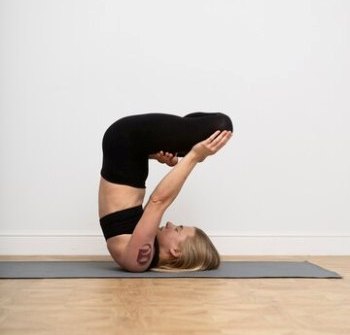
Mooladhara chakra (Root chakra) Lock in Brahma granthi Swadhisthana chakra (Sacral chakra) Karmic block, Desire for food and sex Manipura (Solar plexus chakra) Habits, mindsets, and traumatic experiences in life Anahata (Heart chakra) Lock in Vishnu granthi Vishuddhi (Throat chakra) Self-destructive behavior and challenges around communication Ajna (Third eye chakra) Lock in Rudra granthi Bindu Fire of Manipura Sahasrara (Crown chakra) Blockage in all other chakras
Visuddhi chakra
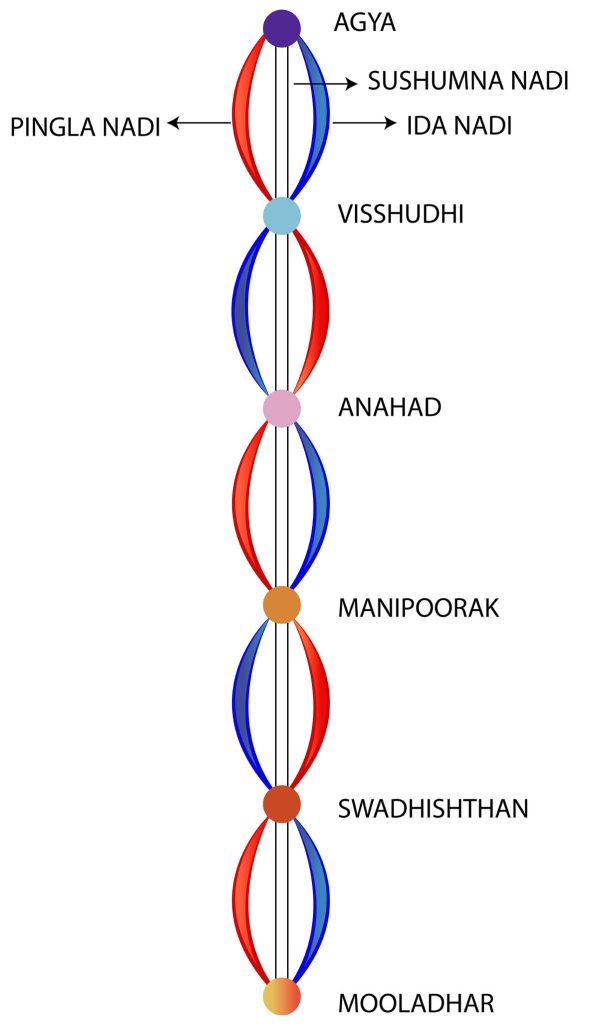
Visuddhi Chakra is violet in color, round, and has 16 petals. Vishudhi is the purification center and is known as the fountain of youth. Nectar of life falls from Bindu into this chakra, generating health, vitality, and longevity. Vishuddhi is associated with vijnanamaya kosha, when vishuddhi is purified, the sense of hearing becomes very sharp not only through the ears but through the mind too. Vishuddhi is located behind the throat pit in the spine and is associated with the thyroid gland. By meditating on vishudhhi, the mind becomes free of thought, pure and empty like space. Asanas that press the muscles in the neck and throat help in balancing the energy of the throat chakra.
Three Gunas
Guna is a Sanskrit term and means quality, peculiarity, or tendency. A Guna is a tattva or element of reality that can affect our psychological, emotional, or energetic states. The three Gunas are Sattva, Rajas, and Tamas. i)Sattvic Guna is purity and Prakasam; it is a state of balance, harmony, joy, and intelligence. Sattva guna is a force favorable for the attainment of moksha. A sattvic mind is always steady and finds delight internally. The effect of sattva guna is Brahmavichara – inquiry into Brahman/ search for truth. Sattva is the guna that yogis achieve that reduces Tamas and Rajas and makes liberation possible. Sattvapatti is a state of mind wherein there is the purity of thought and purity of heart. ii)Rajasic Guna is a hostile force to pull you down into samsara. Rajas is a state of energy, action, change, and movement. A sattvic mind will make a man still and inactive, while a Rajsic mind will make him restless. The Rajasic mind remembers the defects of others, and good/bad deeds, which intensifies hatred and disturbance in the mind. The nature of Rajas is attraction, longing, and attachment. iii)Tamasic Guna is a state of darkness, ignorance, and delusion. If the natural rhythm of sleep and wakefulness is disturbed, Tamas is increased. Other tamasic qualities are laziness, disgust, attachment, depression, helplessness, doubt, guilt, shame, boredom, addiction, hurt, sadness, apathy, confusion, grief, dependency, and ignorance.
Stress yogic point of view, how to overcome.
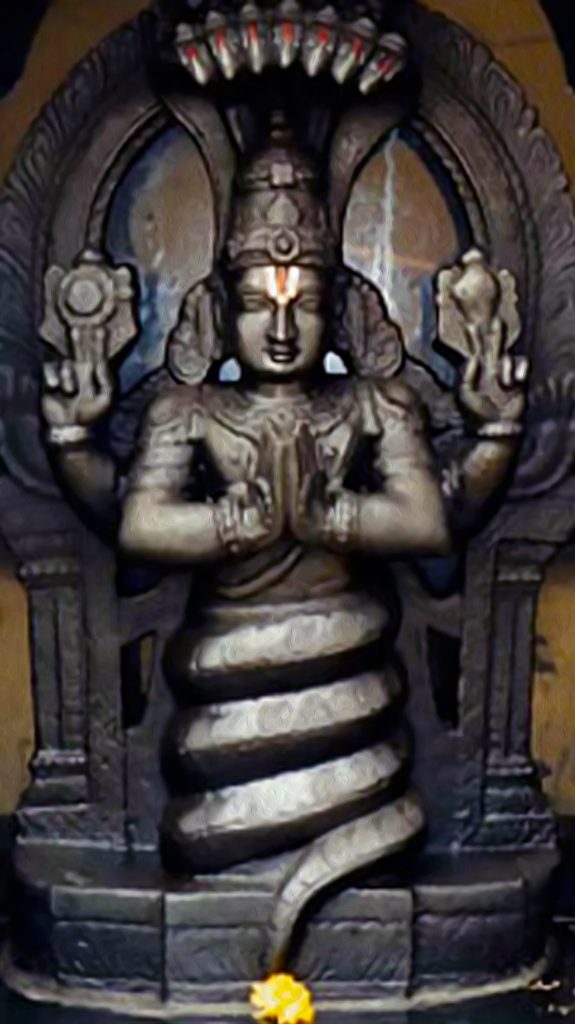
The Yoga text – Yoga Vasista, explains the diseases originating from stress and diseases which are not due to stress. Human emotions such as likes, dislikes, love, and hatred, create imbalance at the level of manomaya kosha and bring about the speed in mind called stress, which leads to the response of anxiety, depression, and anger and affects the various systems. Acharya Patanjali describes five stress-producing factors called Kleshas. They are Avidya, Asmita, Raga, Dwesha, and Abhiniveshaha. Ignorance, ego, desire, dislike, and fear of change are the five stress-producing factors. The fivefold kleshas are responsible for the onset of dukkha (pain) which may be physical or mental. Diseases are considered as dukkha and can be overcome through chittavritti nirodha (regulation of mental modifications). We could overcome the fivefold klesha by practicing kriya yoga, swadhyaya, ishwarapranidhana (surrendering to the divine), and by ashtanga yoga (Eight limbs of Yoga). Keeping a positive attitude, practicing breathing techniques and meditation on various objects helps one to get rid of the Obstacles and therefore manage Stress and its impact on the body.
Purusarthas(pursuits of human life)
Purusartha is defined as the goal of human existence, the soul’s purpose, and the ultimate quest of life– the four aims of life. The four purusarthas work in conjunction with one another. Artha – economic prosperity. Artha ensures dignity in one’s life, promotes Financial and material satisfactions allow one to pursue moksha, and prevents excessive struggle. Artha is kept in check by dharma. Artha is a steppingstone towards the attainment of the supreme self and shouldn’t be looked down upon. Kama – Love, pleasure: the emotional Kama offers enjoyment, wishes, desires, and pleasures to the senses. The Kama contributes to a balanced life if it doesn’t become an obsession. One must give and receive kama in accordance with dharma and appreciate kama to pursue moksha. Dharma – moral obligation; Dharma refers to social and moral values and what is right and virtuous in nature. Living one’s dharma means acting on the path of righteousness and accepting laws governing the universe to come into one’s supreme self. Dharma is a series of conscious choices for living beings. Moksha – spiritual Moksha is the ultimate goal in purushartha. Moksha is the feeling of oneness with the divine as a place of freedom and bliss. Moksha is the realization of the self and union of the cosmos within oneself to reveal the Supreme Self. It offers a place of freedom from the cycle of life and death.
How to cultivate Sattvic Guna and sustain in it
Sattvic guna is a force favorable for the attainment of moksha. A sattvic mind is always steady and finds delight internally. Sattva guna is developed by japa, vichara, satsanga, meditation, light sattvic food, tapas, and svadhyaya. When it comes to actual practice, the mind even after raising fantastic, curious thoughts and pretending to do vichara, will do nothing. It needs actual practice for months steadily and a longing for self-realization. An increase of sattva guna and pure, strong, determined Will pave way for God-realization.
Chaturvargas(four stages of life)
Chaturvargas(four stages of life) i) Brahmacharya Ashram (1-25 years) student life, observing celibacy • Period of study and discipline • Period of probation • Students lived in Gurukulas in ancient India • Regard your mother, father, teacher and guest as god ii) Grahistha Ashram (25-50 years) Householder, married life • This stage is entered at marriage • Ready to take roles and responsibilities • Grihstha is the heart of Aryan life • Five yajnas should be performed: Deva yajna (offerings to Devas), Rishi yajna (study of Vedas), Pitri yajna (annual religious rites performed for departed souls), Bhuta yajna (distribution of food to cows, crows, and animals), Atithi yajna (honoring guests) iii) Vanaprastha Ashram (50-75 years) • Retirement phase • Handing over responsibilities to the next generation • Meditate in the forest or in solitude • Free from responsibilities iv) Sanyasa Ashrama (75-100 years) • Phase of giving up material desires and prejudices • Renouncing all possessions, attachments, and recognitions • Sanyasi is an ideal man, he is brahman, jivanmukta, a free man
yoga question and answers
1. Define Gaseous Exchange. [VP] – The transfer of gases between an organism and the external environment in either direction. It occurs by diffusion across a concentration gradient and includes the exchange of oxygen and carbon dioxide in respiration and photosynthesis. Successful gaseous exchange requires a large surface area, as is provided by the alveoli of the lungs and the leaves of plants. 2. Importance of pleura during respiration. [VP] – The pleura fluid itself has a slightly adhesive quality that helps draw the lungs outward during inhalation rather than slipping round in the chest cavity. In addition, pleural fluid creates surface tension that helps maintain the position of the lungs against the chest wall. 3. Define vital capacity [VP] – Vital capacity (VC) is the maximum amount of air a person can inhale after a maximum exhalation. It is equal to the sum of inspiratory reserve volume, tidal volume, and expiratory reserve volume. 4. Mention quadriceps muscles [VP] – The quadriceps are a group of muscles present on the front of the thigh. They consist of four distinct muscles: the rectus femoris, the vastus lateralis, the vastus intermedius, and the vastus medialis. They are responsible for extending the leg and helping with movements such as walking and jumping. 5. Mention hamstring muscles. [VP] – Hamstring muscles are in the back of the thigh, starting at the hip and inserting to the knee. The three hamstring muscles are: · Biceps femoris, closest to the outside of your body. The function of this hamstring is to flex your knee, extend the thigh at your hip and rotate your lower leg from side-to-side when your knee is bent. Semimembranosus, closest to the middle of your body. This hamstring flexes your knee joint, extends your thigh at your hip and offers medial rotation for your hip and lower leg. Semitendinosus, between the semimembranosus and the biceps femoris. The function of this hamstring matches that of the semimembranosus. 6. Explain about slow twitch muscle fiber (type -1), with respective hatha yoga style. [VP] – Slow-twitch, or Type I muscle fibers, are skeletal muscle fibers that slowly contract. Slow-twitch muscle fibers support everyday actions, like standing from a seated position and maintaining normal posture. Sun Salutation can be the respective hatha yoga style 7. Explain about Fast twitch muscle fiber (type -2), with hatha yoga practices. [VP] – The greater your aerobic capacity, the longer your muscles can function without fatiguing or burning out. Type IIa fibers have more potential for increased aerobic capacity, whereas Type IIb fibers produce the highest energy forces within the quickest window of fatigue. 8. Explain Aerobic hatha yoga [VP] – This takes place with oxygen where carbohydrate and oxygen are used as fuel for the first two minutes after which fat is burned. These are lower intensity activities. More fat for energy is used and leads to a better ability to burn fat. Blood vessels increase and become bigger to accommodate the oxygen being used. It changes the composition of muscle fibers which contract slower and at a lower intensity. Aerobic activity increases this type one muscles which increases endurance and performance. Aerobic activity increases mitochondria which improved the aerobic capacity of muscles. 9. Explain anaerobic hatha yoga. [VP] – This happens without oxygen, fuel comes from muscle storage and is short, highly intense and burns fat directly. Example is weightlifting. More fast twitch muscle fibres are produced for strength. It increases lactic acid tolerance for endurance. It increases glycolysis, ATP, CP and creatine. 10. Define Isometric Contraction and explain with respective asanas. [VP] – This is a contraction in which movement does not take place, because the tension generated by the contracting muscle exceeds the load on the muscle. This occurs when you use your muscles to successfully push or pull an object Isometric contractions are very common in yoga, particularly when poses are held for several breaths. Thus, when you hold any pose, the contractions are likely isometric. 11. Define Isotonic Contraction and explain with respective asanas. [VP] – Eccentric Downward movement of joint. Tension is produced when the muscle lengthens. Concentric Upward movement. Tension is produced when the muscle shortens. Causes joint movement. When you move in and out of a pose, you are likely using concentric and eccentric contractions
Yoga Anatomy Physiology and Bio-mechanics question answer
1. Why yoga student should know about “anatomy” Understanding yoga anatomy is crucial for all yoga students because it will increase the effectiveness of the asanas and knowledge to protect from creating injuries and also be better prepared to deal with any existing injuries safely and effectively. 2. Why yoga student should know about “Physiology” Through the study of anatomy in yoga teacher training, you will acquire a deep understanding of the execution and alignment of asanas. An awareness in yoga anatomy and physiology will add credibility to your teaching and will be very helpful to your prospective yoga students. 3. How many ‘planes’ are their in human body. There are the 3 planes of motion/movement in the body. The three planes in human body are the sagittal, coronal (or frontal) and transverse planes 4. How many lobes are their in right lungs? The right lung consists of three lobes: the right upper lobe (RUL), the right middle lobe (RML), and the right lower lobe (RLL) 5. Function of diaphragm in respiration. Upon inhalation, the diaphragm contracts and flattens and the chest cavity enlarges. This contraction creates a vacuum, which pulls air into the lungs. Upon exhalation, the diaphragm relaxes and returns to its domelike shape, and air is forced out of the lungs. 6. List out yogic practices to overcome Shallow breathing. Practices such as Sun salutation, asanas (e.g., bridge pose, …), pranayama (Nadi shodana, kapalabati), conscious effort and mindfulness practices can help to overcome shallow breathing. 7. Why we have to do deep breathing, during hatha yoga practices. The deep, intentional breathing which accompanies the poses removes energetic blockages and serves to purify the body, increasing prana flow. Deep breathing during hatha yoga can help rid the lungs of accumulated stale air, increase oxygen levels and get the diaphragm to return to its job of helping you breathe. 8. Define Hypoventilation, how you will manage by hatha yoga practices. Hypoventilation is breathing that is too shallow or too slow to meet the needs of the body. If a person hypoventilates, the body’s carbon dioxide level rises. This causes a buildup of acid and too little oxygen in the blood. A person with hypoventilation might feel sleepy. The kind of breathing generally practiced in most hatha yoga classes is called Ujjayi breathing, which loosely translates as “victory” breathing. This is not to say that the quality of the breath should be aggressive, but rather that there is a steadiness, resonance, and depth to it. 9. What is the breathing pattern we should adopt for forward bending asana? Exhale when forward bending during asana practice. 10. What is the breathing pattern we should adopt for backward bending asana? Inhale when backward bending asana 11. What is the breathing pattern we should adopt for lateral bending asana? Exhale when moving into side bends. 12. What is the breathing pattern we should adopt for twisting asana? Exhale when twisting asana 13. What is the breathing pattern we should adopt for arm balancing asana? Most of the arm balancing asanas adopt, exhaling breathing pattern. 14. What is the breathing pattern we should adopt for axial extension asana? Exhale for axial extension asanas 15. Why we should breathe. Breathing not only provide your body with necessary oxygen, but it also removes the waste like carbon dioxide. To get rid of carbon dioxide, your blood delivers it to the capillaries surrounding your alveoli. In the alveoli, the carbon dioxide moves into the lungs, where it leaves the body when you exhale. 16. Why we should breathe in nose, why not in mouth. Nose breathing is more beneficial than mouth breathing. Breathing through your nose can help filter out dust and allergens, boost your oxygen uptake, and humidify the air you breathe in. Mouth breathing, on the other hand, can dry out your mouth. This may increase your risk of bad breath and gum inflammation. 17. Write the general benefits of hatha yoga practices on respiratory system. Practice of hatha yoga which is a combination of asanas (physical postures) and Pranayama (Yogic breathing exercises) provides a sense of equilibrium to the body, mind and soul and is vital for the smooth functioning of the respiratory system. 18. How muscles are communicating towards brain. The motor neurons release a chemical, which is picked up by the muscle fibre. This tells the muscle fibre to contract, which makes the muscles move. Neurons carry messages from the brain via the spinal cord. These messages are carried to the muscles which tell the muscle fibre to contract, which makes the muscles move. 19. Explain about slow twitch muscle fiber (type -1), with respective hatha yoga style. A type of muscle fibre associated with aerobic work. It produces a small force over a long period of time: high resistance to fatigue. It is suited to endurance-based activities, e.g., marathon running. Example, traditional hatha yoga (Sivananda & Iyengar) 20. Explain about Fast twitch muscle fiber (type -2), with hatha yoga practices. These are designed for anaerobic exercise and produces large amount of force in a very short time, as they fatigue easily. Performers in power events tend to have a high percentage of fast twitch muscle fibres. Example, Vinyasa 21. Explain Aerobic hatha yoga Aerobic yoga is a style of yoga in which the asanas — yoga postures — are sequenced together much faster than they ordinarily would be, in order to get the heart pumping and offer cardiovascular benefits. This takes place with oxygen where carbohydrate and oxygen are used as fuel for the first two minutes after which fat is burned. These are lower intensity activities. Dynamic sequences of Sun Salutation can be regarded as aerobic exercises. 22. Explain anaerobic hatha yoga. Anaerobic is performed in the absence of oxygen (It uses carbohydrate and minimal oxygen) at a maximal intensity that can only be sustained for a short period of time due to the build-up of lactic acid, e.g. sprinting. This happens without oxygen, fuel comes from muscle storage and is short, highly intense and burns fat