
Biomechanics of stretching
Biomechanics of stretching 1. Isotonic contraction asana mechanism This is a type of contraction in which movement takes place, eg. When pushing or pulling an object. Eg. During Suryanamaskara. During a concentric contraction, tension is produced while the muscle shortens. During an eccentric contraction, tension is produced while the muscle lengthens. 2. Isometric contraction asana mechanism This is a type of contraction in which no movement takes place because the load on the muscle exceeds the tension generated by the contracting muscle. Eg. Final position of all asanas. 3. Slow twitch muscle fiber hatha yoga style Muscle fibers are long cylindrical muscle cells. Slow-twitch muscle fibers are the ones that act slowly to produce small force over a long period of time by using aerobic respiration. These are suited for endurance-based activities. 4. Fast twitch muscle fiber hatha yoga style Fast-twitch muscle fibers produce a large amount of force in a short span by using anaerobic respiration. Eg. Power events 5. Aerobic and anaerobic energy sources, hatha yoga style, mechanism, pros, and cons In the aerobic energy system, the primary source of energy is glycogen, glucose, fats, and proteins. The sporting events are walking, jogging, swimming, and climbing stairs. Advantages: large output of energy over a long period of time and removes lactic acid. Disadvantages: excess energy demands In anaerobic energy system, the primary source of energy is only carbohydrates. Advantages: ability to produce energy under conditions of inadequate oxygen Disadvantages: lactic acid accumulation
Anatomical directional terminology
Anatomical directional terminology Define the directional term “superior” Towards the head or top, eg. Head Define the directional term “cranial” Cranial refers to the skull Define the directional term “posterior or dorsal” Refers to behind or back of the body eg. Shoulder blades Lateral Refers to away from the midline of the body or towards the side of the body. Eg. The thumb Proximal Refers to the nearest to the trunk or the point of attachment. Distal Refers to away from the trunk or away from point of attachment. The coronal plane divides the body into anterior and posterior. Movements along this plane are called adduction (towards the midline) and abduction (away from the midline) The sagittal plane divides the body into right and left. Movements along this plane are called flexion (moving forward except for the knee) and extension (moving the extremity backward). The transverse plane divides the body into upper and lower halves. Movements along this plane is called rotations. Medial/ internal rotations are towards the midline or lateral/ external rotations are away from the midline. 9. Medial plane is the plane when the sagittal plane cuts the body into two equal halves and passes through the midline. 10. How many body cavities in the human body? The cavities are the fluid-filled spaces in the human body that hold and protect the internal organs, or viscera. The human body is primarily divided into two body cavities: the ventral and dorsal cavities. The ventral cavity is the larger cavity and is divided into thoracic and Abdominopelvic cavities. The upper ventral cavity is called the thoracic cavity, it fills the chest and is divided into the pleural cavity that holds the lungs and the pericardial cavity that holds the heart. The abdominopelvic cavity fills the lower half of the trunk and is divided into an abdominal cavity that holds the digestive organs (GIT) and kidneys and the pelvic cavity contains reproductive and excretory organs. The dorsal cavity is at the posterior or back side of the body. It includes both the head and back of the trunk. It is divided into cranial and spinal cavities. The cranial cavity holds the upper part of the skull and contains the brain. The spinal/ vertebral cavity is a long narrow cavity that runs inside the vertebral column and contains the spinal cord.
Chakras with number of petals
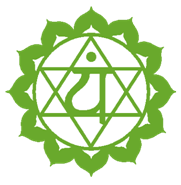
Chakras with a number of petals Mooladhara chakra (Root chakra) Four Swadhisthana chakra (Sacral chakra) Six Manipura (Solar plexus chakra) Ten Anahata (Heart chakra) Twelve Vishuddhi (Throat chakra) Sixteen Ajna (Third eye chakra) Two Bindu Sahasrara (Crown chakra) 1000
Yoga Injuries and How To Prevent Them
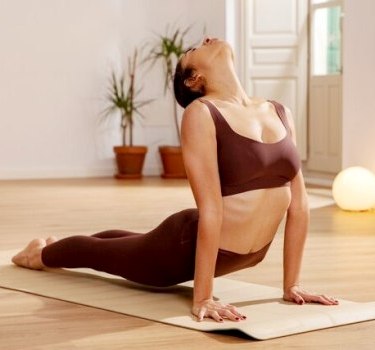
Yoga Injuries and How To Prevent Them Some of the common contraindications of asana practice are as follows: High BP and cardiac conditions: People with hypertension or high blood pressure should generally avoid inverted asanas or any asana where the heart is above the head and poses that put additional pressure on the heart and increase the blood pressure. Ex: Avoid sarvangasana, sirsasana. Joint issues: Pople who have problems with ankles, knees, hips, wrists, and shoulders should skip or adapt to asanas that don’t put pressure or stress on the joints. Ex: Avoid plank pose for weak wrists. Pregnancy: The body keeps changing during pregnancy and so should the yoga practice. It is advisable to modify, and adapt asanas according to the stage of pregnancy and avoid poses that put pressure to the abdomen and back, especially backbends and twisting asanas and prone poses. Ex: Avoid Bhujangasana, chakrasana. Surgery and injury: People who have undergone surgery or are injured should first consult a doctor to determine when they can resume/start a yoga practice and how it can affect the operated or injured area. Ex: Avoid hip flexing asanas like balasana, garudasana after a hip replacement surgery. Seniors: Classes for seniors should generally be slow-paced as they may have osteoporosis or other health problems. Asanas should be modified to avoid fractures and ensure safety. Ex: Avoid spinal twists and flexions for osteoporosis. Hernia and ulcers: People with severe ailments like this should avoid core strengthening asanas as they worsen the condition. Ex: Avoid Naukasana. Sciatica and back problems: Avoid asanas that involve advanced forward folds and backbends as this will only worsen the condition. Adapt to gentle, restorative asanas that work on easing the pain. Ex: Avoid Paschimottanasana.
Ashtanga Suryanamaskara – contraindications & its modification
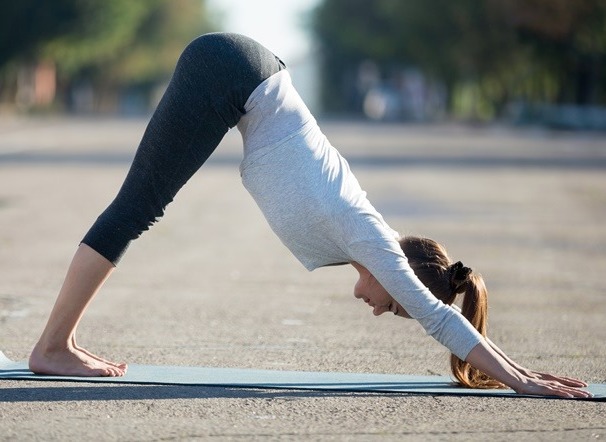
Qualification: Ashtanga Surya Namaskar can be practiced by anyone whose physical and mental health or rather overall well-being is sound. Contraindications: Ashtanga Surya Namaskar should not be practiced by the following: People who have cardiac problems, hypertension, sciatica, back problems, hernia, and ulcers. It should be avoided during the onset of menstruation and during pregnancy. It should also be avoided by those who have injuries or have undergone surgery. Modifications: Depending on an individual, each pose can be modified to ensure comfort and safety during practice. The following modifications can be made: Samasthiti: Those who have lower back problems or can’t keep their feet together can stand with feet hip-width apart Urdhva Hastasana: Those who find it difficult to bring the palms together in namaskar mudra can keep palms shoulder with apart Uttanasana: Those who have back problems can bend the knees to keep the spine straight and place the fingertips or palms on the floor Ardha Uttanasana: Those who have back problems or curve the back can use yoga blocks to place the palms and ensure flat back. They can also step back instead of jumping to move to the next pose Chaturanga Dandasana: People who don’t have the arm and core strength can practice plank pose or ardha chaturanga with knees on the floor or ashtanga namaskara Urdhva Mukha Svanasana: People can bring the knees down to lift the upper body up. They can also keep their toes tucked in instead of flat for balance and support Adho Mukha Svanasana: People can bend the knees to lengthen the spine and gradually straighten the legs with heels on the floor Ardha Uttanasana: Those who can’t jump back into this pose can step their feet in and follow the above-mentioned modifications for the pose Uttanasana: Follow the above-mentioned modifications for the pose Urdhva Hastasana: Follow the above-mentioned modifications for the pose Samasthiti: Follow the above-mentioned modifications for the pose
Basics Arc Structure Of Class
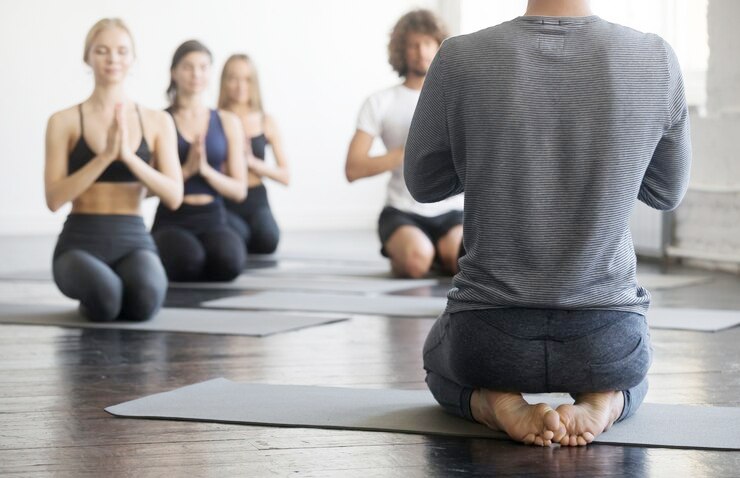
The steps involved in, the basics arc structure of class. Most yoga classes follow a basic arc structure that includes the following five elements: a) Initiating the yogic process: The most important part of this process is breath awareness. It involves guiding the students into a more focused inner awareness connecting the body, breath, and mind helping them establish the foundation of their practice. It is also the time to create space for this initiation, set the tone and intention of the class, to decide how the students will sit, lie or stand at the opening of the class, and for introducing pranayama practices. b) Warming the body: Warm-up is an integral part of yoga. It improves flexibility, reduces the risk of injury, and generates inner fire to burn the toxicity. It can be classified into: i) Passive warm-up: The body is warmed up using external forces such as a heated room or hot bath. It is used to prepare the body for intense activity. ii) Active warm-up: This is a self-initiated process. It gradually increases the heart rate, blood flow, metabolic rate, and nerve impulses and activates muscle groups in the body. It can be further divided into: General warm-up: It includes activities that bring overall warmth to the body and is carried out at the beginning of the practice. A good general warm-up can include Ujjayi pranayama, Surya namaskar, cat-cow stretch. Targeted warm-up: It includes activities that focus on preparing the body for intense actions that may come later during the practice. Ex: To prepare the body for backbends. A good targeted warm-up can include plank, chaturanga, up dog and down dog sequence. c) Pathway to the peak: It is important to create an asana sequence with each asana in relationship to another to make it more accessible. The key principle is to move from simple to complex asanas leading to the deepest and easiest possible exploration along the entire path to the peak asana and eventually to Savasana. With clear guidance from the teacher, the students can cultivate a deeper awareness of each pose, breath work, and how the body can open and stabilize, giving the student the opportunity to successively explore. d) Exploring the peak: The peak asanas or asanas are usually the easiest yet most challenging ones to practice. They are easy if the pathway offered is clear and simple, building up to the peak. They are also challenging because they require strength, openness, and balance. It is the perfect time to remind the students that the practice is about self-exploration, acceptance, and transformation. After the peak is explored, it is a must to completely relax, balance the breath, and tune into the personal intention of the practice. Ex: Backbends are usually placed at the peak. e) Integration: The integration process or Pratikriyasana includes individual asanas, sets of asanas, and the entire class sequence. There are their stages involved: i) Specific Pratikriyasana for peak asana: Teach simple asanas to neutralize any tension arising from the practice of peak asana. ii) Deep and relatively more static relaxing asanas: After neutralizing the tension, a series of asanas that calm the body and allow the students to move into a deeper release must be practiced. iii) Savasana: It is important to end the practice by relaxing and offering a feeling of completeness, openness and wholeness. The corpse pose is the ultimate restorative asana and must be practiced for a minimum of at least 5 minutes.
Hatha Yoga Sequence
60 min hatha yoga sequence for both gender for the age group of 25 to 40, who does not have any physical or mental illness. Centering (2 mins) Om chanting (2 mins) (3 times) Pranayama (4 mins) Kapalbhati pranayama WaRm Up (10 mins) Neck rotations (3 sets) Neck side to side (3 sets) Neck up to down (3 sets) Shoulder rotations (5 sets) Arm rotations (5 sets) Side twists (5 sets) Lateral stretch both sides (5 counts) Forward stretch (5 counts) Jog in place (10 counts) Stand on toe to heel (5 sets) Ankle rotations (5 sets) Surya Namaskar: Sivananda Style (10 mins) (3 sets) 1st set: step by step 2nd set: in a flow 3rd set: hold each pose for 5 breaths Kneeling Asanas (6 mins) Supta Virasana Ushtrasana Sitting Asanas (6 mins) Upavishta Konasana Ardha Matsyendrasana Supine Asanas (10 mins) Salamba Sarvangasana Chakrasana Jathara Parivartanasana Relaxation (8 mins) Savasana Ending Prayer (2 mins) Maha Mrityunjaya Mantra
Vinyasa Yoga Sequence
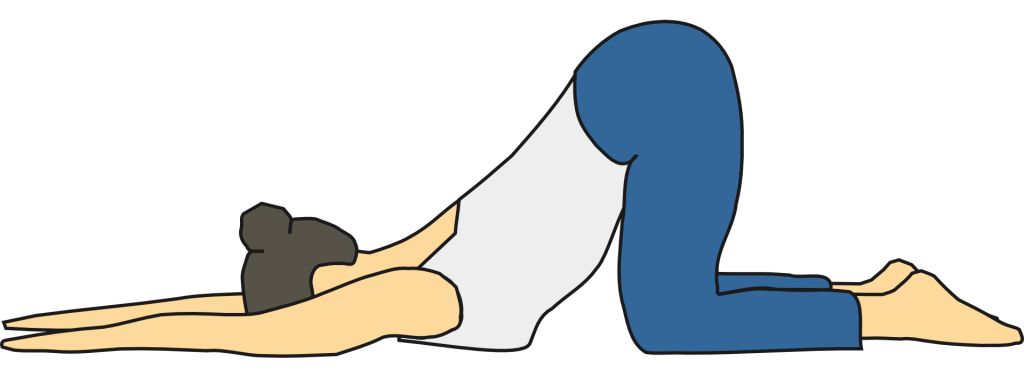
60 min vinyasa yoga practice list and sequence it. Both gender for the age group 25 to 40. Warm-Up (10 mins) Supta virasana with cushion (hold for 1 min) Butterfly stretch forward (hold for 5 deep breaths) Cat cow stretch (5 rounds and hold for 5 breaths) Thread the needle (3 rounds) Balasana (5 deep breaths) Roll up slowly and move to Samasthiti to start the sequence. Sequence (40 mins) Ashtanga A Surya Namaskar (2 rounds) Ashtanga A Surya Namaskar with three-legged downward dog and pigeon stretch (2 rounds) Ashtanga A Surya Namaskar with three legged downward dog and lizard pose (2 rounds) Ashtanga A surya Namaskar with three legged downward dog and extended side angle pose (2 rounds) Ashtanga B Surya Namaskar (2 rounds) Half Vinyasa – Balasana – Setu Bandhasana – Salamba Sarvangasana – Chakrasana – Jathara Parivartanasana Relaxation (10 mins) Savasana
Yoga Sequence Back Pain
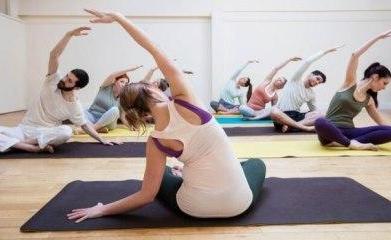
60 min practice list and sequence – back pain issue, slip disc, and sciatica. Centering (2 mins) Om chanting (2 mins) (3 times) Pranayama (3 mins) Full yogic breathing Warm-Up (8 mins) Neck rotations (3 sets) Neck side to side (4 sets) Neck up to down (4 sets) Shoulder rotations (5 sets) Arm rotations (5 sets) Stand on the toe to heel (5 sets) Ankle rotations (4 sets per ankle) Standing asanas (6 mins) Tadasana Vrksasana (modifications if needed – take wall support; keep hands to chest) Kneeling asanas (8 mins) Cat-Cow (5 rounds and hold) Bird Dog (5 rounds and hold) Supine asanas (6 mins) Setu Bandhasana (5 rounds and hold) Prone asanas (8 mins) Makarasana Ardha Salabhasana (5 rounds and hold) (modifications if needed: palms below the chin) Bhujangasana Relaxation (15 mins) Yoga Nidra Ending Prayer (2 mins) Sarve Bhavantu Sukinah
Yoga Sequence Cardiovascular
60 min practice list and sequence – cardiac problem Centering (2 mins) Om chanting (2 mins) (3 times) Pranayama (5 mins) Nadi Shodhana (long inhale and exhale without holding the breath for too long) (6 rounds) Warm-Up (12 mins) Seated: Neck rotations (3 sets) Neck side to side (3 sets) Neck up to down (3 sets) Butterfly stretch (10 times) Cat – cow (5 rounds) Standing: Shoulder rotations (3 sets) Arm rotations (3 sets) Side twists (5 ets) Stand on toe to heel (5 sets) Ankle rotations (3 sets per ankle) Standing Asanas (8 mins) Tadasana Garudasana (modifications if needed: take wall support; use a yoga block) Sitting Asanas (8 mins) Gomukhasana (modifications if needed: use a yoga strap) Padmasana Supine Asanas (8 mins) Supta Baddha Konasana (modifications if needed: use a cushion) Jathara Parivartanasana (modifications if needed: keep knees bent) Relaxation (12 mins) Savasana Ending Prayer (3 mins) Sarve Bhavantu Sukinah