Best Yoga Teacher Training in Bangalore, India | Yoga Alliance USA | Accredited

karuna yoga vidya peetham logo

Blog

-
Blog

Anāhata Mudrā

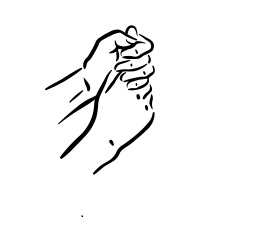
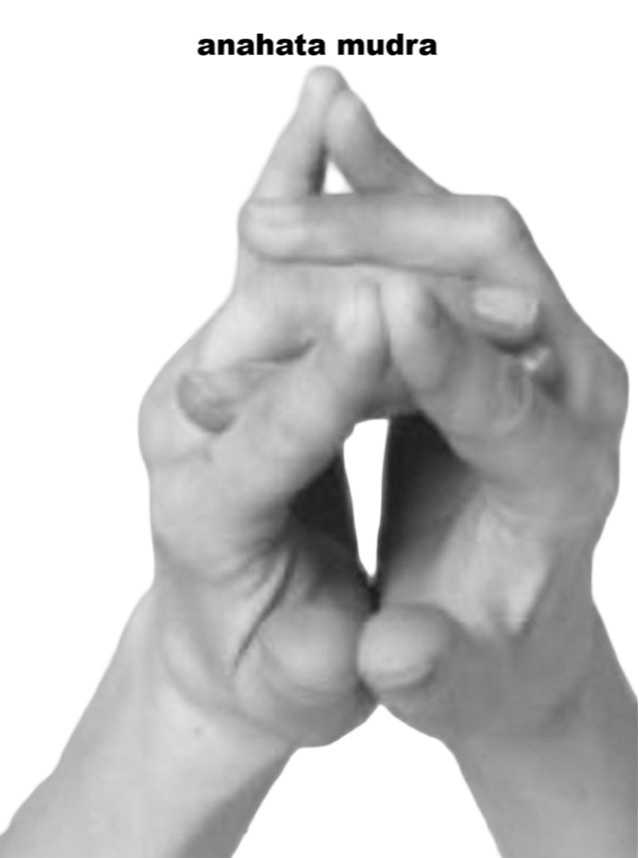
Anāhata Mudrā Introduction Anāhata Mudrā is a yogic hand and heart gesture associated with the heart chakra (Anāhata Cakra), located at the center of the chest. The Sanskrit word Anāhata means “unstruck” or “unbeaten sound”, referring to the subtle vibration of the eternal cosmic sound that exists without external contact. This mudrā awakens compassion, love, forgiveness, and openness. It is widely practiced in meditation, pranayama, and bhakti yoga traditions to expand heart energy and dissolve emotional blockages.   Meaning Etymology: Anāhata = “unstruck sound” or “eternal vibration” Mudrā = seal, gesture, psychic attitude Literal Meaning: “Gesture of the Heart Chakra” Symbolism: It represents the union of love, compassion, and universal harmony. How to Perform Practice Bring your right ring finger into the web between the index and middle fingers on your left hand. Place the left ring finger into the web between the index and middle fingers on your right hand. Curl both middle fingers down over their opposite ring fingers. Extend your thumbs and your index and little fingers; bring their respective ends together. Benefits Physical Benefits Supports heart health and cardiovascular circulation. Improves lung capacity, oxygen exchange, and breath regulation. Strengthens the thymus gland and immune system. Helps reduce palpitations and stress-related hypertension. Mental & Emotional Benefits Promotes self-love, empathy, compassion, and forgiveness. Reduces anger, resentment, jealousy, and grief. Brings emotional stability and inner peace. Encourages openness in relationships. Spiritual Benefits Awakens Anāhata Cakra (heart center). Enhances devotion, bhakti, and unconditional love. Connects individual self with universal consciousness. Helps one experience the unstruck inner sound (Anāhata Nāda).   Contraindications Those with severe heart disease or recent cardiac surgery should practice gently. People with deep unresolved trauma may experience strong emotional release — guidance from a teacher is recommended. Should be avoided immediately after intense physical activity.   Anatomy & Physiology Activates the cardiorespiratory system by expanding the chest and improving lung-heart coordination. Stimulates the vagus nerve, balancing the parasympathetic nervous system. Supports thymus gland function (related to immunity). Enhances circulation and oxygen supply to body tissues.   Kinesiology Involves isometric engagement of palms when pressed together. Encourages spinal alignment, chest opening, and scapular stabilization. Improves motor coordination of upper limb muscles during the hand gesture.   Neurology Stimulates parasympathetic pathways (calming, restorative effect). Activates brain regions linked with empathy and social bonding (limbic system). Promotes alpha brainwave dominance, leading to relaxation and meditative awareness. Balances right and left hemispheres, symbolized by the union of palms.   Duration of Mudra Beginners: 5–10 minutes daily. Therapeutic practice: 20–30 minutes (can be divided into 2 sessions). Advanced meditation: Up to 45 minutes, with mantra chanting or pranayama.   Counter Mudra Apana Mudra – for grounding when heart energy feels excessive. Prithvi Mudra – for stability and balancing emotions.   Conclusion Anāhata Mudrā is a profound yogic gesture that harmonizes the heart, mind, and spirit. It cultivates compassion, emotional healing, and love, while supporting heart health and immune function. By awakening the heart chakra, it allows practitioners to connect deeply with themselves and others, experiencing the eternal “unstruck sound” of inner peace.   FAQ Q1. What is the best time to practice Anāhata Mudrā?Morning meditation or before sleep is ideal, but it can be done any time you feel emotional imbalance. Q2. Can it help in heart disease?It can support cardiovascular health as a complementary practice, but it is not a replacement for medical treatment. Q3. Is it useful for emotional trauma?Yes, it helps release suppressed emotions, but guidance is recommended for deep trauma. Q4. Can it be combined with pranayama?Yes, especially with Anulom Vilom or Bhramari for calming and balancing effects.   References Swami Satyananda Saraswati – Asana, Pranayama, Mudra, Bandha Joseph & Lilian LePage – Mudras for Healing and Transformation Gertrud Hirschi – Mudras: Yoga in Your Hands Swami Niranjanananda – Prana and Pranayama Tiwari, O.P. – Pranayama: The Breath of Yoga  
Read More »

Antar Chaitanya Mudrā

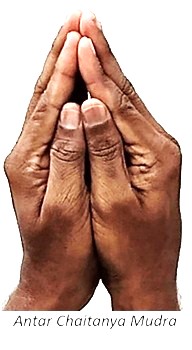
Antar Chaitanya Mudrā Introduction Antar Chaitanya Mudrā is a subtle yogic gesture used in meditation and pratyāhāra (withdrawal of the senses) to cultivate awareness of inner consciousness. Unlike external hand gestures, this mudrā is an internal gesture of awareness. It is taught in yogic and tantric meditation systems where the practitioner learns to shift focus from the external world toward the inner self, thereby deepening the experience of meditation and self-realization.   Meaning Etymology: Antar = inner, internal. Chaitanya = consciousness, awareness, the principle of life. Mudrā = seal, gesture, psychic lock. Literal Meaning: “The gesture of inner consciousness.” Symbolism: This mudrā symbolizes the closing of external awareness and the opening of inner awareness, allowing the practitioner to perceive the subtle flow of prāna and inner silence. How to Perform Practice Sit in a comfortable meditative posture such as Padmāsana, Siddhāsana, or Sukhasana. Close the eyes gently and keep the spine upright. It’s a modified form of the ‘Prayer Mudra’. Touch the tip of the fingers of your right hand with the tip of the fingers of your left hand as shown in the image. Make hollow space between both the palms. Now, take this formation in front of your eyes, and look through the hollow space and concentrate on your breathing. Continue to rest in the inner awareness of Chaitanya (consciousness) without external distraction. Practice initially for 5–10 minutes, extending with experience.   Benefits Physical Benefits Promotes deep relaxation of the nervous system. Reduces psychosomatic tension and improves sleep. Enhances oxygenation through natural deep breathing. Mental & Emotional Benefits Improves concentration, mindfulness, and mental clarity. Reduces anxiety, stress, and emotional restlessness. Cultivates self-awareness and acceptance. Spiritual Benefits Facilitates entry into dhyāna (meditation) and samādhi (higher states of consciousness). Awakens subtle energy and awareness of kundalini shakti. Promotes realization of the inner self beyond ego and external identity.   Contraindications Not recommended for individuals with severe depression, psychosis, or trauma, unless guided by an experienced teacher. Those with extreme restlessness or anxiety may find it difficult without preparatory practices like pranayama. Beginners should start with short durations to avoid mental fatigue.   Anatomy & Physiology Encourages parasympathetic dominance (relaxation response). Activates pineal gland and pituitary gland through inward concentration. Improves balance in the autonomic nervous system, reducing stress hormones. Enhances blood flow to the brain, supporting focus and clarity.   Kinesiology Involves stillness and minimal muscular activity, focusing instead on subtle proprioception and kinesthetic awareness. Requires spinal alignment and diaphragmatic breathing for stability. Promotes symmetrical posture, reducing imbalances in the musculoskeletal system.   Neurology Activates prefrontal cortex (attention, higher awareness). Stimulates insula and limbic system (self-awareness and emotional regulation). Increases alpha and theta brain waves, associated with meditation and creativity. Balances hemispheric activity, leading to mental harmony and deeper introspection.   Duration of Mudra Beginners: 5–10 minutes daily. Intermediate practitioners: 15–30 minutes. Advanced meditators: up to 1 hour or more, integrated into meditation.   Counter Mudra Pratyahara Mudra – for withdrawing the senses when mind is restless. Chin Mudra or Jnana Mudra – for grounding and balancing energy when too much internal focus feels overwhelming.   Conclusion Antar Chaitanya Mudrā is not merely a hand gesture but a mental and inner mudrā — a seal of consciousness. It turns awareness inward, leading to self-realization and union with higher consciousness. Physically, it relaxes the body; mentally, it cultivates mindfulness and peace; spiritually, it helps transcend ego and connect with the inner self. It is a powerful tool for practitioners of meditation seeking to deepen their journey from the external world to the inner light of consciousness.   FAQ Q1. Is Antar Chaitanya Mudra a hand mudra?Not primarily. It is an inner awareness mudra, often accompanied by meditative hand mudras like Chin or Jnana Mudra. Q2. Can beginners practice it?Yes, but beginners should start with short durations and preparatory breathing practices. Q3. Which chakra does it activate?Primarily the Ajna Chakra (third eye) and Sahasrara Chakra (crown). Q4. Can it be practiced without a teacher?Yes, but for deeper states and spiritual awakening, guidance is beneficial.   References Swami Satyananda Saraswati – Asana, Pranayama, Mudra, Bandha Swami Niranjanananda Saraswati – Yoga Darshan Swami Rama – Path of Fire and Light Georg Feuerstein – The Yoga Tradition Joseph & Lilian LePage – Mudras for Healing and Transformation  

Read More »

Akashi Mudrā

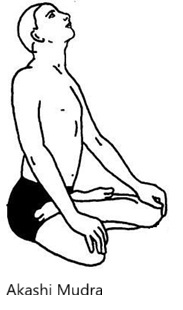
Akashi Mudrā Introduction Akashi Mudrā is a subtle yogic hand gesture that works with the ether (space) element, similar to Ākāśa Mudrā. The name “Akashi” refers to one who belongs to or relates to space (ākāśa). This mudrā is often used in meditation and spiritual practices to awaken inner consciousness, dissolve limitations, and connect to the vastness of existence. Unlike Ākāśa Mudrā, which is performed with thumb and middle finger, some traditions describe Akashi Mudrā as a gaze (drishti) and awareness mudrā that expands inner vision, especially by focusing awareness in the inner space of the head and heart. It is both a hand gesture and a mental practice for cultivating spaciousness and universal connection.   Meaning Etymology: Akashi = belonging to space, celestial, vast Mudrā = seal, gesture, psychic attitude Literal Meaning: “Gesture of Space Consciousness” Symbolism: Represents freedom, openness, and universal expansion beyond the limits of body and mind.   How to Perform Practice Akashi Mudra (awareness of inner space) Sit in any comfortable meditation asana. Close the eyes and relax the whole body for a few minutes. Fold the tongue back against the palate in khechari mudra. Practice ujjayi pranayama and shambhavi mudra. Bend the head backward about 45 degrees. Straighten the arms and lock the elbows, pressing the knees with the hands. Breathe slowly and deeply in ujjayi. Continue for as long as you feel comfortable. End the practice by bending the elbows and releasing khechari and shambhavi mudras.  Raise the head to the upright position.  Resume normal breathing and be aware of the inner space. Benefits Physical Benefits Improves ear health, supports hearing and balance disorders (tinnitus, vertigo). Enhances bone strength by improving calcium absorption. Boosts lung capacity and oxygenation. Helps clear toxins and congestion. Mental & Emotional Benefits Reduces feelings of confinement, depression, or heaviness. Enhances clarity, receptivity, and openness to new ideas. Calms anxiety and overthinking by creating mental spaciousness. Spiritual Benefits Expands consciousness, deepens meditation. Awakens inner vision (chidakasha dharana). Promotes detachment from ego, connecting with universal self. Helps in astral experiences and lucid awareness in yogic traditions.   Contraindications Avoid over-practice, which can cause excessive detachment or disconnection. Not recommended for individuals with severe dizziness or extreme light-headedness. Should be balanced with grounding mudras if feelings of “emptiness” or weakness occur.   Anatomy & Physiology Involves thumb (fire element, Agni) and middle finger (space element, Akasha). Activates the auditory system, vestibular balance, and skeletal metabolism. Stimulates cranial nerves and expands lung–thoracic cavity functions.   Kinesiology Requires precise coordination of the thumb and middle finger. Engages intrinsic hand muscles for subtle stability. Encourages stillness and posture alignment through neuromuscular relaxation.   Neurology Stimulates parietal and temporal lobes (space perception, auditory functions). Activates parasympathetic nervous system → promotes relaxation. Enhances alpha–theta brainwave states, useful for meditation and inner vision. Strengthens neural circuits of spatial awareness and introspection.   Duration of Mudra Beginners: 10–15 minutes daily. Therapeutic: 30–45 minutes (can be split into 2–3 sessions). Advanced meditation: Up to 1 hour with deep inner awareness.   Counter Mudra Prithvi Mudrā (Earth Mudra) – balances excessive space element with grounding. Apana Mudrā – supports elimination and grounding energy.   Conclusion Akashi Mudrā is a powerful yogic hand and awareness gesture that expands the space element, cultivates inner clarity, and deepens spiritual consciousness. Physically, it supports ear health, bone strength, and detoxification. Mentally, it brings openness and calm. Spiritually, it connects the practitioner to the vast universal self. Like all mudrās, it should be practiced in balance and complemented with grounding practices when necessary.   FAQ Q1. Is Akashi Mudra the same as Akasha Mudra?They are closely related. Some traditions treat them as synonyms; others distinguish Akashi Mudra as having a stronger connection with chidakasha dharana (inner sky meditation). Q2. Can it improve ear disorders?Yes, it is traditionally prescribed for tinnitus, vertigo, and partial hearing issues. Q3. Can beginners practice it?Yes, but short sessions (5–10 minutes) are recommended at first. Q4. Can I combine it with pranayama?Yes, especially with Anulom Vilom or Ujjayi breathing for deeper awareness.   References Swami Satyananda Saraswati – Asana, Pranayama, Mudra, Bandha Gertrud Hirschi – Mudras: Yoga in Your Hands Joseph & Lilian LePage – Mudras for Healing and Transformation Dr. David Frawley – Ayurveda and the Mind Tiwari, O.P. – Pranayama: The Breath of Yoga  
Read More »

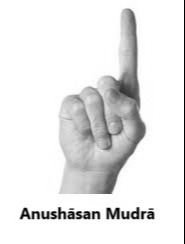
Anushāsan Mudrā

Anushāsan Mudrā Introduction Anushāsan Mudrā is a yogic gesture that symbolizes discipline, self-control, and regulation of energy. The word anushāsan itself means discipline, order, or regulation, which is also seen in the second chapter of Patañjali Yoga Sūtra — “Yogaḥ citta vṛtti nirodhaḥ” is possible only when there is anushāsana (discipline in yoga). This mudrā represents the act of aligning one’s physical, mental, and spiritual energies under conscious control to progress in yoga and meditation. It is used in yogic and meditative traditions to cultivate inner order, concentration, and stability, making the mind and body disciplined enough to receive higher wisdom.   Meaning Etymology: Anu = following, according to. Śāsan = discipline, control, guidance. Mudrā = seal, gesture, psychic lock. Literal Meaning: “The gesture of discipline and regulation.” Symbolism: Represents inner order, restraint, and the harmonious regulation of prāna, mind, and senses. How to Perform Practice Sit in a meditative posture such as Padmāsana, Vajrāsana, or Sukhasana with spine erect. Curl middle, ring, and little finger into palm, secure with thumb, extend index finger; rest back of hands-on thighs Keep the eyes gently closed and focus on breath awareness, while mentally repeating an affirmation like: “I am disciplined and aligned with my higher purpose.” Maintain steady breathing and inner stillness. Practice for 5–15 minutes, gradually increasing duration. (Note: Different lineages may perform Anushāsan Mudrā with slight variations, sometimes involving interlacing of fingers in front of the chest as a gesture of restraint and control.)   Benefits Physical Benefits Improves postural stability and awareness. Reduces restlessness and tension in the nervous system. Balances cardiovascular rhythm through calm breathing. Mental & Emotional Benefits Develops discipline, willpower, and focus. Helps overcome procrastination and distractions. Cultivates mental order and emotional regulation. Spiritual Benefits Deepens meditation by aligning prāna and mind. Prepares practitioner for higher yogic practices such as dhyāna and samādhi. Strengthens inner resolve and connection to dharma (righteous living).   Contraindications Not advisable for people in high emotional agitation without preparatory grounding practices. Those with severe anxiety or rigidity may experience excess inner pressure if over-practiced. Should not be forced; practice should remain gentle and mindful.   Anatomy & Physiology Activates the parasympathetic nervous system, inducing calmness. Engages respiratory muscles through diaphragmatic breathing. Enhances oxygenation and circulation by promoting steady breath and posture. Stimulates the sternum region, supporting vagus nerve relaxation.   Kinesiology Involves isometric engagement of palms and thumbs, which improves neuromuscular awareness. Encourages symmetry and balance in upper body alignment. Enhances coordination between posture, breath, and intention.   Neurology Activates the prefrontal cortex, enhancing focus and executive control. Regulates the limbic system, balancing emotions. Promotes alpha and theta brain waves, associated with calm concentration and meditation. Encourages integration of right and left brain hemispheres through symmetrical hand placement.   Duration of Mudra Beginners: 5–10 minutes daily. Intermediate practitioners: 15–20 minutes. Advanced: up to 30 minutes as part of meditation or prāṇāyāma.   Counter Mudra Chin Mudra / Jnana Mudra – for openness and receptivity when discipline becomes too rigid. Hridaya Mudra – to soften emotional intensity after strict focus and self-control.   Conclusion Anushāsan Mudrā is a gesture of discipline, order, and conscious regulation, essential for deeper yogic and meditative progress. It helps in channeling inner energy, cultivating willpower, and aligning one’s body, mind, and spirit. Practicing this mudrā regularly leads to greater focus, stability, and spiritual readiness. While it encourages discipline, it must also be balanced with openness and compassion for holistic growth.   FAQ Q1. Is Anushāsan Mudra the same as Anjali Mudra?Not exactly. While it is similar in hand placement, Anushāsan Mudra emphasizes discipline and conscious restraint, often practiced with intention at the heart center. Q2. Can beginners practice it?Yes, it is simple and safe, but its mental focus on discipline develops more deeply with consistent practice. Q3. Which chakra does it affect most?Primarily the Anahata Chakra (heart center) and indirectly the Ajna Chakra (focus and discipline). Q4. Can it be practiced with mantras?Yes, repeating affirmations or mantras like “Om Shanti” or “I am disciplined and balanced” enhances its effect.   References Swami Satyananda Saraswati – Asana, Pranayama, Mudra, Bandha Swami Niranjanananda Saraswati – Yoga in Daily Life Georg Feuerstein – The Yoga Tradition Joseph & Lilian LePage – Mudras for Healing and Transformation Patañjali Yoga Sūtra – Chapter II (Sādhana Pāda: Yogaḥ Anushāsanam)  

Read More »

Anjali Mudra (Gesture of prayer)

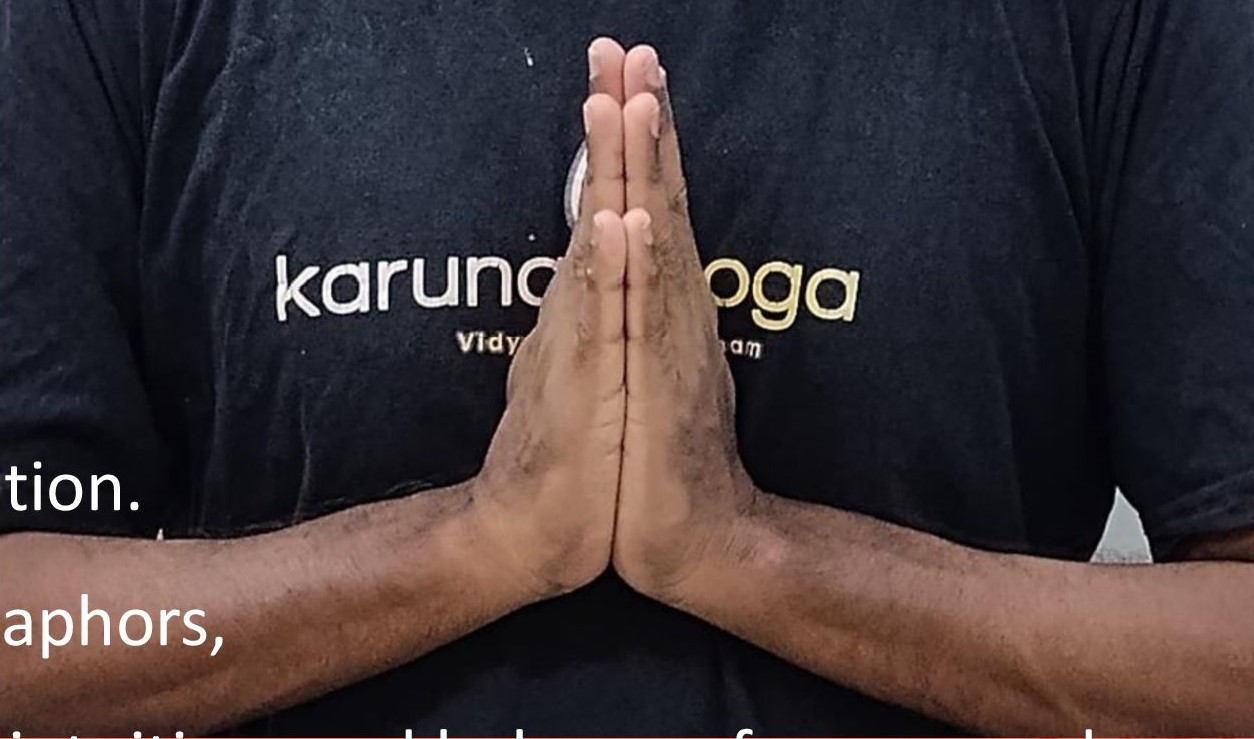
Anjali Mudra (Gesture of prayer) Introduction Atmanjali Mudrā is a sacred yogic hand gesture that embodies self-offering, reverence, and devotion. Derived from traditional yoga and devotional practices, it represents the unity of the individual self (Ātman) with the universal consciousness. This mudrā is commonly used in meditation, prayer, and pranayama, fostering inner calm, spiritual focus, and emotional balance. It is closely related to Anjali Mudrā (prayer position) but emphasizes the conscious surrender of the self, hence the name Atmanjali – “offering of the self.”   Meaning Etymology: Ātman = self, soul, or inner consciousness. Anjali = offering, reverence, or salutation. Mudrā = seal or symbolic gesture. Literal Meaning: “Gesture of offering one’s self in reverence and surrender.” Symbolism: Represents humility, devotion, self-awareness, and alignment with higher consciousness. It is often performed as a greeting, a sign of respect, or during meditation to cultivate inner stillness. How to Perform Practice Sit in a comfortable meditative posture (Padmāsana, Sukhasana, or Vajrāsana) with the spine erect. Bring both palms together, flat against each other with all your fingers pointing upward. Bring your thumbs against your breastbone. Hold for as long as feels comfortable and repeat as required. Close the eyes and focus on the heart center, visualizing your energy and consciousness being offered in surrender. Maintain calm, steady breathing. Practice for 5–30 minutes, ideally during meditation or prayer sessions. Optional: Combine with mantra chanting or silent affirmation for enhanced spiritual connection.   Benefits Physical Benefits Encourages upright posture and spinal alignment. Improves circulation in hands, wrists, and upper body. Relieves muscle tension in shoulders and chest. Mental & Emotional Benefits Cultivates calmness, emotional stability, and mindfulness. Enhances focus, concentration, and inner awareness. Reduces stress, anxiety, and mental clutter. Spiritual Benefits Promotes heart-centered awareness and devotion. Activates Anāhata Chakra (Heart Chakra), fostering love, compassion, and empathy. Strengthens the connection between individual consciousness and universal energy. Supports meditation, prayer, and spiritual discipline.   Contraindications Generally safe for all practitioners. Avoid prolonged practice if wrist or shoulder pain occurs; support hands with a cushion if needed. Should be practiced with mindful attention, not as a mechanical gesture.   Anatomy & Physiology Engages forearm, wrist, and hand muscles through gentle isometric contraction. Opens the chest, promoting lung expansion and oxygen intake. Stimulates parasympathetic nervous system, inducing relaxation and reducing stress response. Supports upper body alignment and joint stability.   Kinesiology Involves bilateral symmetry of hands and arms, enhancing proprioception. Promotes postural stability while seated. Encourages coordination between hand placement and breath control. Enhances fine neuromuscular control of hands, wrists, and forearms.   Neurology Activates the vagus nerve, supporting calm heart rate and respiratory rhythm. Stimulates prefrontal cortex for focus and emotional regulation. Balances limbic system activity, enhancing emotional clarity. Supports interhemispheric coordination through symmetrical hand placement.   Duration of Mudra Beginners: 5–10 minutes daily. Intermediate: 10–20 minutes daily. Advanced: 20–30 minutes integrated with meditation or prayer.   Counter Mudra Jnana Mudrā – to enhance receptivity and awareness after devotional focus. Hridaya Mudrā – to deepen heart-centered energy and emotional balance.   Conclusion Atmanjali Mudrā is a profound gesture for self-offering, inner focus, and spiritual alignment. Physically, it supports posture and upper body circulation; mentally, it cultivates calmness and concentration; spiritually, it deepens heart-centered awareness and devotion. Regular practice nurtures humility, compassion, and connection to universal consciousness, making it a powerful tool in meditation, prayer, and yoga practice.   FAQ Q1. How is Atmanjali Mudrā different from Anjali Mudrā?While both involve palms together at the heart, Atmanjali emphasizes conscious self-offering and inner surrender, whereas Anjali Mudrā is often a greeting or general gesture of respect. Q2. Which chakra does it primarily activate?Primarily Anāhata (Heart Chakra), with secondary benefits to Vishuddha (Throat Chakra) for expression of devotion. Q3. Can it be combined with meditation or mantra practice?Yes, combining it with mantras or silent affirmations enhances spiritual focus and energy flow. Q4. Is it safe for beginners?Yes, it is safe for all practitioners and can be performed daily with mindful attention.   References Swami Satyananda Saraswati – Asana, Pranayama, Mudra, Bandha Joseph & Lilian LePage – Mudras for Healing and Transformation Swami Niranjanananda Saraswati – Yoga in Daily Life Georg Feuerstein – The Yoga Tradition Gertrud Hirschi – Mudras: Yoga in Your Hands  

Read More »

Apāna Mudrā

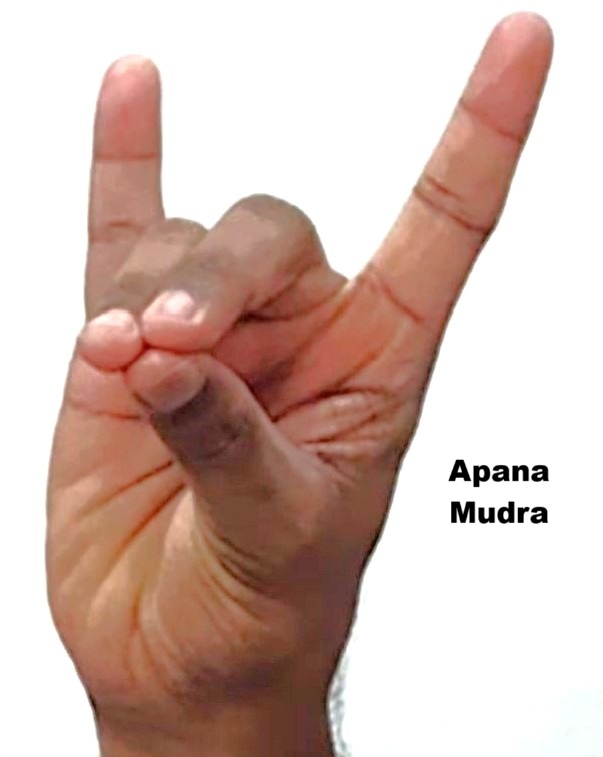
Apāna Mudrā Introduction Apāna Mudrā is one of the most powerful hasta mudrās (hand gestures) in yoga, often referred to as the “mudrā of purification and elimination.” It is closely linked to the Apāna Vāyu, one of the five prānic forces responsible for the downward and outward flow of energy in the body. This mudrā plays a vital role in detoxification, reproductive health, and balancing lower-body energy. In yogic philosophy, Apāna Mudrā is also considered a “life-saving mudrā” (mrityuñjaya mudrā) because it helps harmonize vital functions, particularly in emergency or critical conditions.   Meaning Etymology: Apāna = downward flowing vital energy. Mudrā = seal, gesture, psychic lock. Literal Meaning: “The gesture that regulates and directs the downward-moving energy of elimination and purification.” Symbolism: Represents grounding, cleansing, and release of physical, emotional, and energetic toxins. How to Perform Practice Sit in a comfortable posture (Padmāsana, Vajrāsana, or Sukhasana) with spine erect. Rest the hands on the knees or thighs. Touch the tip of the thumb with the tips of the middle and ring fingers. Keep the index finger and little finger extended but relaxed. Maintain gentle pressure between the fingers. Close the eyes, focus on deep breathing, and bring awareness to the lower abdomen and pelvic region. Practice for 15–45 minutes daily, either at once or in 3 sessions of 15 minutes each.   Benefits Physical Benefits Stimulates Apāna Vāyu aiding excretion of toxins, sweat, urine, and feces. Regulates menstrual cycles, reduces cramps, and supports reproductive health. Improves digestion, relieves constipation, piles, and gastric discomfort. Strengthens pelvic and lower abdominal organs. Acts as a supportive practice during labor, aiding smooth childbirth. Known as a “life-saving mudrā” during emergencies to stabilize energy flow. Mental & Emotional Benefits Promotes grounding and emotional stability. Helps release suppressed emotions and mental clutter. Creates a sense of safety, rootedness, and letting go. Spiritual Benefits Grounds excess energy, helping balance higher spiritual practices. Activates the Mūlādhāra (root) chakra and Swādhiṣṭhāna (sacral) chakra. Facilitates prāṇic cleansing, preparing for meditation.   Contraindications Pregnant women should practice under guidance (beneficial during late pregnancy but should be avoided in the first trimester). Should not be overdone by individuals with low blood pressure or severe weakness. Not recommended immediately after surgery in abdominal or pelvic areas.   Anatomy & Physiology Stimulates the excretory and reproductive systems. Balances the autonomic nervous system by activating parasympathetic responses. Enhances circulation in the pelvic floor muscles and lower abdomen. Supports hormonal regulation through its effect on reproductive glands.   Kinesiology Engages fine motor coordination of fingers (thumb with middle and ring fingers). Promotes subtle activation of pelvic floor muscles through awareness and breath control. Encourages proper posture and stability while seated.   Neurology Calms the sympathetic nervous system, reducing stress responses. Activates parasympathetic functions linked to digestion and elimination. Enhances vagus nerve stimulation, promoting deep relaxation and gut health. Improves communication between the brainstem and pelvic nerves (sacral plexus).   Duration of Mudra Minimum: 15 minutes daily. Optimal: 30–45 minutes daily (can be divided into 2–3 sessions). In emergency or life-saving situations: practice continuously until relief is experienced.   Counter Mudra Prāna Mudrā – to energize and revitalize after deep cleansing. Ashwini Mudrā (perineal contraction) – can complement Apāna Mudrā for pelvic floor strengthening.   Conclusion Apāna Mudrā is a powerful yogic gesture that harmonizes the downward-flowing Apāna energy, supporting detoxification, reproductive health, and grounding. Its practice provides physical cleansing, emotional release, and spiritual grounding. Recognized as a “life-saving mudrā,” it is one of the most important hasta mudrās in yoga therapy. When practiced regularly, it cultivates balance, stability, and purification at all levels of being.   FAQ Q1. Why is Apāna Mudrā called the life-saving mudrā?Because it balances vital energy in emergencies, supporting circulation, respiration, and excretion when the body is under shock or stress. Q2. Can Apāna Mudrā be practiced during pregnancy?Yes, under guidance. It helps during labor but should be avoided in the first trimester. Q3. Which chakra does Apāna Mudrā activate most?Primarily Mūlādhāra (Root) and Swādhiṣṭhāna (Sacral) chakras. Q4. When is the best time to practice Apāna Mudrā?Morning and evening, especially on an empty stomach, or whenever detoxification or grounding is needed.   References Swami Satyananda Saraswati – Asana, Pranayama, Mudra, Bandha Joseph & Lilian LePage – Mudras for Healing and Transformation Swami Niranjanananda Saraswati – Yoga in Daily Life Gertrud Hirschi – Mudras: Yoga in Your Hands Georg Feuerstein – The Yoga Tradition  

Read More »

Akasha Mudrā

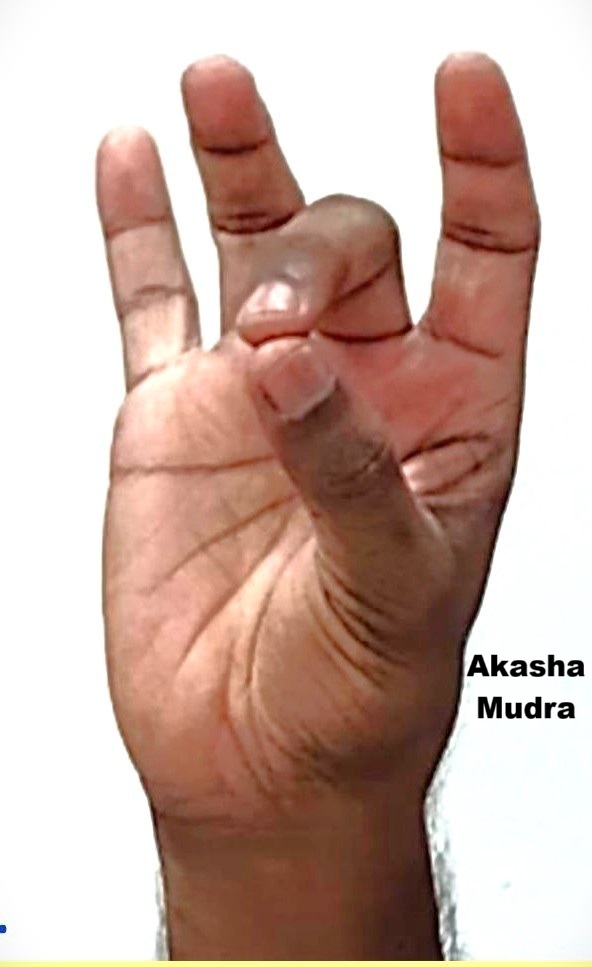
Akasha Mudrā Introduction Akasha Mudrā is a yogic hand gesture associated with the element of space (ether) in the Pancha Mahabhutas (five great elements). “Ākāsha” means sky, space, or ether, and this mudrā is used to balance the space element within the body and mind. It is also called the Mudrā of Consciousness because it promotes expansion, clarity, and spiritual awareness. This mudrā is often practiced in meditation and pranayama to increase mental space, inner freedom, and connection with higher consciousness.   Meaning Etymology: Ākāsha = sky, space, ether Mudrā = seal, gesture Literal Meaning: “Gesture of Space” or “Seal of Ether.” Symbolism: Represents the vastness of the universe, openness, receptivity, and connection to the higher self. How to Perform Practice Sit in a meditative posture such as Padmāsana, Sukhasana, or Vajrasana. Spine upright and relaxed. Place the tip of the middle finger gently on the tip of the thumb. Keep the other three fingers (index, ring, little) extended but relaxed. Rest the hands on the knees with palms facing upward. Close your eyes, take slow deep breaths, and focus on the feeling of expansion and spaciousness inside. Practice for a set duration (5–30 minutes).   Benefits Physical Benefits Improves hearing and helps ear-related problems (tinnitus, vertigo, partial hearing loss). Strengthens bones by improving calcium absorption. Enhances detoxification by clearing blockages in the body. Helps regulate metabolism and digestion. Mental & Emotional Benefits Creates a sense of inner space and freedom. Reduces feelings of heaviness, claustrophobia, or stagnation. Enhances clarity, creativity, and receptivity. Reduces anxiety and mental congestion. Spiritual Benefits Expands consciousness and opens spiritual awareness. Supports meditation, intuition, and connection with higher realms. Helps dissolve ego boundaries, allowing unity with universal consciousness.   Contraindications Should be avoided in excessive practice, as too much space element may lead to disconnection, detachment, or dizziness. Not recommended for people who already experience excessive lightness, emptiness, or weakness. Pregnant women should consult a teacher before prolonged practice.   Anatomy & Physiology Involves thumb (fire element) and middle finger (space element) connection. Stimulates cranial nerves and ear channels, aiding hearing function. Improves skeletal system health (calcium absorption, bone density). Expands lung capacity and improves oxygen exchange.   Kinesiology Requires fine motor coordination of the thumb and middle finger. Activates muscles of the hand, forearm, and shoulders in subtle stabilization. Enhances proprioception by engaging fingers in symbolic gestures.   Neurology Stimulates sensory pathways linked to the auditory cortex and vestibular system (balance, hearing). Activates parasympathetic nervous system promoting calmness. Encourages alpha and theta brain waves, aiding deep meditation. Supports neural circuits of spacious awareness and spiritual cognition.   Duration of Mudra Minimum: 10–15 minutes daily. Therapeutic use: 30–45 minutes (can be divided into 2–3 sessions). For meditation: as long as one is comfortable.   Counter Mudra Prithvi Mudrā (Earth Gesture) – balances excessive space element by grounding. Apana Mudrā – helps if Akasha mudra causes dizziness or excessive lightness.   Conclusion Akasha Mudrā is a profound yogic practice that balances the ether element, enhances spiritual awareness, and promotes mental clarity and receptivity. Physically, it aids in ear health, bone strength, and detoxification. Mentally, it creates inner spaciousness, while spiritually, it connects the practitioner to universal consciousness. With mindful practice, it brings a sense of vastness and expansion into life, but it should be practiced in balance to avoid excessive lightness or detachment.   FAQ Q1. Can Akasha Mudra improve hearing loss?Yes, it is traditionally believed to help ear-related issues, but it should be practiced consistently and with medical guidance for chronic conditions. Q2. Can beginners practice Akasha Mudra?Yes, it is simple and safe for beginners when practiced moderately. Q3. Can I practice it while walking or standing?It is best practiced in a seated meditative posture, though one can use it briefly in daily life. Q4. Is Akasha Mudra useful for meditation?Yes, it is one of the best mudrās for expanding consciousness and deepening meditation.   References Swami Satyananda Saraswati – Asana, Pranayama, Mudra, Bandha Gertrud Hirschi – Mudras: Yoga in Your Hands Joseph & Lilian LePage – Mudras for Healing and Transformation Dr. David Frawley – Yoga and Ayurveda Tiwari, O.P. – Pranayama: The Breath of Yoga  
Read More »

Ājñā Mudrā

Ājñā Mudrā Introduction Ājñā Mudrā is a powerful yogic hand gesture and concentration technique linked with the Ājñā Chakra (the third eye center, located between the eyebrows). In Sanskrit, Ājñā means command, knowledge, or perception. This mudrā enhances inner guidance, intuition, and clarity of thought. It is used in meditation and spiritual practices to awaken awareness, balance the mind, and develop higher consciousness.   Meaning Etymology: Ājñā = command, perception, authority, knowledge Mudrā = seal, gesture Literal meaning: “Gesture of Command/Perception.” Symbolism: Represents focusing one’s energy and awareness on the third eye to receive inner wisdom and higher guidance. How to Perform Practice Posture: Sit comfortably in Padmāsana, Siddhāsana, or Sukhasana with an upright spine. Raise your left hand in front of your face. Gently curl all the fingers of your left hand into the palm, making a loose fist with your thumb on the outside. Release your index finger and extend it upward. Bring the fingers of the right hand around the extended left index finger, using your right thumb to gently press on the outside edge of the nail. Eyes: Close the eyes and direct inner gaze (drishti) toward the space between the eyebrows. Breathing: Inhale deeply and exhale slowly, maintaining awareness at the third eye. Awareness: Concentrate on receiving guidance, clarity, or simply observe thoughts without attachment.   Benefits Physical Benefits Relieves tension headaches and eye strain. Enhances relaxation by calming the nervous system. Improves concentration and memory. Mental & Emotional Benefits Develops intuition and decision-making power. Reduces confusion, doubt, and overthinking. Promotes inner balance, clarity, and mindfulness. Spiritual Benefits Activates the third eye (Ājñā Chakra). Supports meditation, visualization, and spiritual insight. Helps connect with higher consciousness and inner wisdom.   Contraindications Not suitable for individuals with severe migraines if pressure at the third eye causes discomfort. Should be avoided in acute psychiatric conditions (hallucinations, delusions). Those with glaucoma or high eye pressure should not apply strong pressure at the eyebrow center. Pregnant women may practice it gently without excessive focus on chakra awakening.   Anatomy & Physiology Influences the pituitary and pineal glands, regulating hormones and circadian rhythms. Stimulates the frontal cortex, responsible for concentration and decision-making. Calms the sympathetic nervous system, activating parasympathetic relaxation.   Kinesiology Involves finger flexion, palmar contact, and gentle isometric pressure. The mudrā redirects prāna (life energy) from the periphery inward, centralizing awareness at the third eye. Symbolically unites left and right hemispheres of the brain through symmetrical hand positioning.   Neurology Activates neural pathways of the prefrontal cortex and pineal gland, enhancing focus and intuitive perception. Encourages alpha and theta brain wave activity, supportive of meditation and creativity. Helps down-regulate the amygdala, reducing anxiety and fear-based responses.   Duration of Mudra Beginners: 3–5 minutes with meditation. Intermediate: 10–15 minutes. Advanced: Up to 30 minutes in deep meditation or as part of kriyā yoga. Best practiced during early morning meditation or before sleep for clarity.   Counter Mudra Chin Mudrā (Gesture of Consciousness) – balances intellect with higher awareness. Jnana Mudrā (Gesture of Knowledge) – grounds the wisdom accessed through Ājñā Mudrā.   Conclusion Ājñā Mudrā is a sacred yogic gesture that awakens the inner eye of wisdom. By concentrating awareness at the third eye center, it cultivates intuition, clarity, and spiritual perception. Physically, it reduces stress and supports brain function; mentally, it enhances decision-making and inner calm; spiritually, it connects practitioners with higher consciousness. It must, however, be practiced mindfully and gently, especially for those sensitive to mental or eye-related issues.   FAQ Q1. Is Ājñā Mudrā the same as third-eye meditation?It is a gesture that supports third-eye meditation, but can also be used independently with breath awareness. Q2. Can beginners safely practice it?Yes, but focus should remain gentle without forcing visualization or pressure. Q3. Does it open the third eye instantly?No, it gradually balances and activates the Ājñā Chakra with regular practice. Q4. Can it be combined with mantras?Yes, chanting Om while in Ājñā Mudrā deepens concentration and third-eye activation.   References Swami Satyananda Saraswati – Asana, Pranayama, Mudra, Bandha Gertrud Hirschi – Mudras: Yoga in Your Hands Swami Niranjanananda – Prana and Pranayama Georg Feuerstein – The Yoga Tradition Joseph & Lilian LePage – Mudras for Healing and Transformation  

Read More »

Ahankar Mudrā

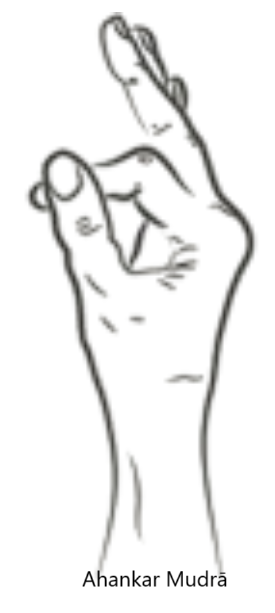
Ahankar Mudrā Introduction Ahankar Mudrā is a symbolic yogic hand gesture associated with the concept of ego (Ahankāra). In yogic psychology, Ahankāra means the “I-maker,” the sense of identity or ego that differentiates the self from others. While ego is necessary for survival and individuality, its excess can cause suffering, imbalance, and detachment from higher consciousness. This mudrā is often practiced in mindfulness, meditation, and yoga therapy to observe, balance, and transcend ego-driven tendencies.   Meaning Etymology: Aham = I / Self Kāra = Maker / Doer Mudrā = Gesture or seal Literal Meaning: “Gesture of Ego” or “Seal of Identity.” Spiritual Significance: Represents the observation and control of ego, leading to humility, balance, and self-awareness. How to Perform Practice Posture: Sit in a meditative position such as Sukhasana, Padmasana, or Vajrasana. Keep the spine upright. Bend index fingers slightly and put the upper phalanx of the thumb to the side of the middle phalanx of the index finger, at the upper part. Other fingers are straight. Placement: Rest the hands on the knees, palms facing upward. Breathing: Inhale deeply and exhale slowly with awareness. Awareness: Focus on the concept of “I” — observe the thoughts of ego without judgment, slowly cultivating detachment.   Benefits Physical Benefits Helps release physical stress linked to overthinking or ego-driven anxiety. Calms heart rate and reduces psychosomatic tension. Supports healthy breathing and relaxation. Mental & Emotional Benefits Balances the sense of self, reducing arrogance or inferiority. Promotes self-awareness, humility, and acceptance. Helps overcome anger, jealousy, pride, and competitiveness. Supports emotional healing in relationships by reducing ego clashes. Spiritual Benefits Assists in transcending ego to reach higher states of consciousness. Enhances meditation, devotion, and surrender to universal energy. Facilitates self-realization by distinguishing between the ego-self and the true Self (Atman).   Contraindications Not recommended during phases of severe depression or dissociation (may cause confusion about identity if not guided). Should be avoided if the practitioner feels overly detached or disconnected from reality. Must be practiced with guidance if emotional trauma related to self-identity is present.   Anatomy & Physiology Works on the respiratory and cardiovascular systems by calming breath and heart rate. Balances the autonomic nervous system, reducing stress responses. Influences the pituitary gland and pineal gland, supporting higher awareness.   Kinesiology Involves flexion of the index finger and pressure by the thumb. Represents subordination of ego (index finger) to higher consciousness (thumb). Activates neuromuscular relaxation by positioning fingers in symbolic alignment.   Neurology Calms the sympathetic nervous system (fight or flight) and activates the parasympathetic system (rest and digest). Stimulates brain areas associated with self-perception and emotional regulation. Encourages neuroplasticity by reframing identity beyond egoic thought patterns.   Duration of Mudra Beginners: 5–10 minutes daily. Intermediate: 15–20 minutes. Advanced: Up to 30–45 minutes in meditation. Best practiced in silence, before or after meditation.   Counter Mudra Chin Mudrā (Gesture of Consciousness) – balances ego with awareness of higher Self. Hridaya Mudrā (Heart Gesture) – opens compassion to counteract ego-driven separation.   Conclusion Ahankar Mudrā is a transformative hand gesture that brings awareness to the role of ego in daily life. By symbolically pressing the index finger (ego) under the thumb (higher self), it teaches humility, surrender, and balance. It is a valuable tool for personal growth, emotional regulation, and spiritual awakening. However, practitioners must approach it with mindfulness and avoid misuse when already struggling with identity-related issues.   FAQ Q1. Is Ahankar Mudrā meant to remove ego completely?No, it balances ego. Ego is necessary for individuality, but excessive ego causes suffering. Q2. Can it be practiced with other mudrās?Yes, especially with Chin Mudrā or Hridaya Mudrā for balancing self-awareness and compassion. Q3. What is the best time to practice?Morning meditation or evening reflection sessions. Q4. Can beginners practice it without a teacher?Yes, but deeper ego-related work is best guided by a yoga therapist or meditation teacher.   References Swami Satyananda Saraswati – Asana, Pranayama, Mudra, Bandha. Gertrud Hirschi – Mudras: Yoga in Your Hands. Joseph & Lilian LePage – Mudras for Healing and Transformation. Georg Feuerstein – The Yoga Tradition. Dr. David Frawley – Yoga and Ayurveda.  

Read More »

Agni Mudrā

Agni Mudrā Introduction Agni Mudrā (also known as Agni Vardhak Mudrā or Fire Gesture) is a yogic hand gesture associated with the fire element (Agni Mahabhuta). In yogic philosophy, Agni represents digestion, transformation, energy, vitality, and metabolism. Practicing this mudrā stimulates the digestive fire (Jatharagni), enhances vitality, and promotes inner strength. It is widely used in yoga therapy for improving digestion, metabolism, and energy regulation.   Meaning Etymology: Agni = Fire, energy, transformation. Mudrā = Gesture, seal, or attitude. Symbolic Meaning: Represents the ignition of the inner fire, essential for digestion and life force. Spiritual Meaning: Awakens willpower, determination, and inner radiance, burning away laziness and negativity. How to Perform Practice Posture: Sit in a comfortable meditative position (Sukhasana, Padmasana, or Vajrasana) with a straight spine. By folding the ring finger at the base of thumb and pressing it with the thumb at the second phalange. Keep the rest of the three fingers straight and perform it in sitting position only. Awareness: Concentrate on the solar plexus (Manipura Chakra) to activate the fire element.   Benefits Physical Benefits Improves digestion and metabolism. Reduces problems of indigestion, gas, and constipation. Helps regulate body temperature and maintains warmth. Supports weight management by stimulating fat metabolism. Mental & Emotional Benefits Increases alertness, energy, and willpower. Helps overcome sluggishness, dullness, and lethargy. Promotes clarity, motivation, and enthusiasm. Spiritual Benefits Activates Manipura Chakra (Solar Plexus), the center of energy and transformation. Burns away inner negativity and enhances spiritual radiance (Tejas). Prepares the mind for meditation and higher awareness.   Contraindications Should be avoided in fever, acidity, heartburn, ulcers, or excess pitta conditions. Not recommended for individuals with high blood pressure or inflammatory disorders. Avoid excessive practice in hot climates or summers.   Anatomy & Physiology Organs Affected: Stomach, intestines, liver, pancreas, and digestive glands. Physiological Effects: Stimulates digestive enzymes and improves assimilation of nutrients. Regulates metabolism and enhances circulatory warmth. Balances endocrine activity in the pancreas and adrenal glands.   Kinesiology Involves flexion of the ring finger and pressure from the thumb. Symbolically reduces earth element (heaviness) while increasing fire element (energy, heat). Encourages abdominal muscle activity through conscious breathing.   Neurology Stimulates the enteric nervous system (gut-brain connection). Calms the vagus nerve, improving parasympathetic activity for digestion. Activates brain centers linked to alertness, motivation, and willpower.   Duration of Mudra Beginners: 5 minutes daily after meals. Intermediate: 15–20 minutes. Advanced: Up to 30–45 minutes, divided into sessions. Best practiced on an empty stomach in the morning.   Counter Mudra Varun Mudrā (Water gesture) – to balance excess fire or pitta conditions. Prithvi Mudrā (Earth gesture) – for grounding and stability.   Conclusion Agni Mudrā is a powerful hand gesture for activating the fire element, improving digestion, boosting metabolism, and enhancing vitality. It awakens the Manipura Chakra, cultivating energy, determination, and transformation. When practiced moderately, it supports physical health, mental clarity, and spiritual illumination. However, care should be taken by those with excess pitta or heat-related conditions.   FAQ Q1. Can Agni Mudrā help with weight loss?Yes, it stimulates metabolism and fat digestion, supporting weight management. Q2. Is it safe to practice daily?Yes, but avoid during fever, acidity, or inflammation. Q3. What is the best time to practice?Morning on an empty stomach, or after meals for digestion. Q4. Can it be combined with pranayama?Yes, especially with Kapalabhati or Bhastrika, but only under guidance.   References Swami Satyananda Saraswati – Asana, Pranayama, Mudra, Bandha. Gertrud Hirschi – Mudras: Yoga in Your Hands. Joseph & Lilian LePage – Mudras for Healing and Transformation. Dr. H. R. Nagendra – Yoga Therapy. Tiwari, O.P. – Pranayama: The Breath of Yoga.  

Read More »

Agni Mudrā

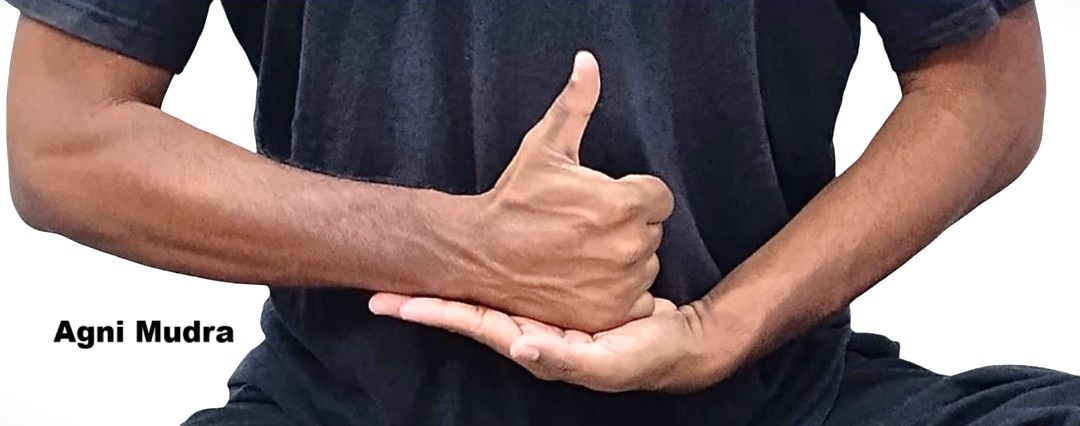
Agni Mudrā Introduction Agni Mudrā (also known as Agni Vardhak Mudrā or Fire Gesture) is a yogic hand gesture associated with the fire element (Agni Mahabhuta). In yogic philosophy, Agni represents digestion, transformation, energy, vitality, and metabolism. Practicing this mudrā stimulates the digestive fire (Jatharagni), enhances vitality, and promotes inner strength. It is widely used in yoga therapy for improving digestion, metabolism, and energy regulation.   Meaning Etymology: Agni = Fire, energy, transformation. Mudrā = Gesture, seal, or attitude. Symbolic Meaning: Represents the ignition of the inner fire, essential for digestion and life force. Spiritual Meaning: Awakens willpower, determination, and inner radiance, burning away laziness and negativity. How to Perform Practice Posture: Sit in a comfortable meditative position (Sukhasana, Padmasana, or Vajrasana) with a straight spine. Right hand makes a fist with the thumb pointing straight up. Left hand – open your hand, with the palm facing up. Place your right fist on your left palm and, maintaining this position, rest both hands in your lap. Breathing: Inhale deeply, exhale slowly, maintaining awareness on the navel region. Awareness: Concentrate on the solar plexus (Manipura Chakra) to activate the fire element.   Benefits Physical Benefits Improves digestion and metabolism. Reduces problems of indigestion, gas, and constipation. Helps regulate body temperature and maintains warmth. Supports weight management by stimulating fat metabolism. Mental & Emotional Benefits Increases alertness, energy, and willpower. Helps overcome sluggishness, dullness, and lethargy. Promotes clarity, motivation, and enthusiasm. Spiritual Benefits Activates Manipura Chakra (Solar Plexus), the center of energy and transformation. Burns away inner negativity and enhances spiritual radiance (Tejas). Prepares the mind for meditation and higher awareness.   Contraindications Should be avoided in fever, acidity, heartburn, ulcers, or excess pitta conditions. Not recommended for individuals with high blood pressure or inflammatory disorders. Avoid excessive practice in hot climates or summers.   Anatomy & Physiology Organs Affected: Stomach, intestines, liver, pancreas, and digestive glands. Physiological Effects: Stimulates digestive enzymes and improves assimilation of nutrients. Regulates metabolism and enhances circulatory warmth. Balances endocrine activity in the pancreas and adrenal glands.   Kinesiology Involves flexion of the ring finger and pressure from the thumb. Symbolically reduces earth element (heaviness) while increasing fire element (energy, heat). Encourages abdominal muscle activity through conscious breathing.   Neurology Stimulates the enteric nervous system (gut-brain connection). Calms the vagus nerve, improving parasympathetic activity for digestion. Activates brain centers linked to alertness, motivation, and willpower.   Duration of Mudra Beginners: 5 minutes daily after meals. Intermediate: 15–20 minutes. Advanced: Up to 30–45 minutes, divided into sessions. Best practiced on an empty stomach in the morning.   Counter Mudra Varun Mudrā (Water gesture) – to balance excess fire or pitta conditions. Prithvi Mudrā (Earth gesture) – for grounding and stability.   Conclusion Agni Mudrā is a powerful hand gesture for activating the fire element, improving digestion, boosting metabolism, and enhancing vitality. It awakens the Manipura Chakra, cultivating energy, determination, and transformation. When practiced moderately, it supports physical health, mental clarity, and spiritual illumination. However, care should be taken by those with excess pitta or heat-related conditions.   FAQ Q1. Can Agni Mudrā help with weight loss?Yes, it stimulates metabolism and fat digestion, supporting weight management. Q2. Is it safe to practice daily?Yes, but avoid during fever, acidity, or inflammation. Q3. What is the best time to practice?Morning on an empty stomach, or after meals for digestion. Q4. Can it be combined with pranayama?Yes, especially with Kapalabhati or Bhastrika, but only under guidance.   References Swami Satyananda Saraswati – Asana, Pranayama, Mudra, Bandha. Gertrud Hirschi – Mudras: Yoga in Your Hands. Joseph & Lilian LePage – Mudras for Healing and Transformation. Dr. H. R. Nagendra – Yoga Therapy. Tiwari, O.P. – Pranayama: The Breath of Yoga.  

Read More »

Aditi Mudrā

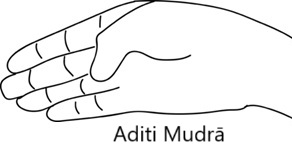
Aditi Mudrā Introduction Aditi Mudrā is a sacred hasta mudrā (hand gesture) named after the Vedic goddess Aditi, considered the Mother of the Gods (Devas) and the personification of infinite space and cosmic abundance. Aditi is associated with limitlessness, protection, and nurturing energy. Practicing this mudrā connects the practitioner with expansiveness, openness, and the nurturing quality of the divine mother. This mudrā is often practiced in meditation, pranayama, and devotional yoga to invoke spaciousness, compassion, and freedom from limitations.   Meaning Etymology: Aditi = “Boundless,” “Limitless,” “Infinite Mother.” Mudrā = gesture, seal, or attitude. Symbolic Meaning: Represents the cosmic womb of creation and the nurturing, protective power of the divine mother. Spiritual Meaning: By practicing Aditi Mudrā, one invokes qualities of openness, liberation, protection, and abundance. How to Perform Practice Seated Posture: Sit in Padmāsana, Sukhasana, or Vajrasana with a straight spine. Place the thumb end on the base of the ring finger. Anamika represents Prithvi (earth) and thumb represents fire (Agni). When the finger touches the base of the ring finger, the earth rises and also the fire element. Breathing: Practice slow, deep, rhythmic breaths. Inhale with the sense of openness, exhale with release of limitations. Awareness: Focus on expansiveness, compassion, and the quality of nurturing protection. Duration: Hold for 5–20 minutes in meditation or pranayama.   Benefits Physical Benefits Opens the chest and improves lung capacity. Encourages deeper breathing and oxygen exchange. Relaxes the muscles of the shoulders and chest. Mental & Emotional Benefits Enhances feelings of openness, trust, and receptivity. Reduces stress, fear, and insecurity. Promotes emotional nurturing and self-acceptance. Spiritual Benefits Connects the practitioner to divine mother energy (Shakti). Enhances meditation by invoking limitlessness and cosmic space. Helps in healing practices by radiating compassion and protective energy.   Contraindications No major physical contraindications. Should be avoided in situations of emotional hypersensitivity if it leads to feelings of overwhelm. Those experiencing extreme anxiety may prefer grounding mudrās (like Prithvi Mudrā) before moving to Aditi Mudrā.   Anatomy & Physiology Organs Affected: Lungs, heart, diaphragm. Physiological Effects: Expands thoracic cavity, improving lung ventilation. Activates parasympathetic response through calm breathing. Stimulates heart chakra region, influencing cardiovascular and respiratory efficiency.   Kinesiology Involves finger abduction (spreading of thumb and index) and palmar connection (palms touching). Encourages external rotation of shoulders and opening of chest cavity. Promotes balance between flexor and extensor muscles of the arms.   Neurology Activates neural pathways connected with safety, compassion, and maternal connection. Calms the sympathetic nervous system, shifting toward parasympathetic dominance. Engages limbic system centers related to emotional regulation and bonding.   Duration of Mudra Beginners: 5 minutes daily. Intermediate: 10–15 minutes. Advanced: Up to 30 minutes in meditation or healing practices.   Counter Mudra Prithvi Mudrā (Earth gesture) – for grounding and stability. Hridaya Mudrā – for emotional healing and heart opening.   Conclusion Aditi Mudrā is a gesture of openness, nurturance, and infinite space, honoring the boundless quality of the cosmic mother. It expands the chest, calms the mind, and nourishes the heart. Practicing this mudrā cultivates compassion, trust, and freedom from limitations, making it especially beneficial for meditation, healing, and devotional yoga. When combined with grounding mudrās, it balances expansiveness with stability.   FAQ Q1. What is the best time to practice Aditi Mudrā?Morning meditation or before sleep to invoke calmness and openness. Q2. Can Aditi Mudrā help with emotional healing?Yes, it helps release fear, insecurity, and emotional blockages by invoking nurturing qualities. Q3. Can it be practiced during pranayama?Yes, especially with deep breathing practices to enhance lung capacity and heart activation. Q4. Is Aditi Mudrā only spiritual?No, it also has physical and psychological benefits, especially for stress reduction and chest opening.   References Swami Satyananda Saraswati – Asana, Pranayama, Mudra, Bandha. Gertrud Hirschi – Mudras: Yoga in Your Hands. Joseph & Lilian LePage – Mudras for Healing and Transformation. B.K.S. Iyengar – Light on Yoga. Tiwari, O.P. – Pranayama: The Breath of Yoga.  

Read More »

Adho Mukha Mudrā

Adho Mukha Mudrā Introduction Adho Mukha Mudrā (downward-facing gesture) is a lesser-known yogic hand and body gesture symbolizing humility, surrender, grounding, and devotion. While “Adho Mukha” is widely recognized in asana names (e.g., Adho Mukha Svanasana – Downward-Facing Dog Pose), in mudrā practice, it refers to a gesture where the palms face downward, directing prāṇa (vital energy) into the earth. This mudrā embodies rooting, stability, and surrender of the ego, making it particularly effective for grounding and calming an overactive mind.   Meaning Etymology: Adho = downward. Mukha = face, direction. Mudrā = seal, gesture, mark. Philosophical Meaning: Symbolizes bowing to the earth, surrendering mental restlessness and grounding energy. Symbolism: By facing the palms down, the practitioner channels energy from the subtle body into the earth, creating stability, calmness, and humility. How to Perform Practice Posture: Sit in Sukhasana (easy pose) or Vajrasana. Spine tall, shoulders relaxed. With both palms facing downward, bend your fingers and bring the backs of your fingers together as you extend and join the tips of your thumbs. Awareness: Focus on the Muladhara Chakra (root center). Imagine energy flowing downward into the earth. Breathwork: Inhale deeply, exhale with a sense of grounding and surrender. Duration: Practice 10–20 minutes in meditation or pranayama sessions.   Benefits Physical Benefits Stabilizes posture and reduces fidgeting. Encourages deeper diaphragmatic breathing. Helps balance blood pressure and calm heart rate. Mental & Emotional Benefits Provides a sense of safety, grounding, and stability. Reduces anxiety, overthinking, and excessive “airiness.” Encourages humility and surrender of ego. Spiritual Benefits Grounds prāṇa into the physical body. Activates Muladhara Chakra, strengthening the foundation for higher practices. Supports meditative absorption (dhyāna) by reducing restlessness.   Contraindications Not recommended if the practitioner feels overly heavy, lethargic, or depressed (as downward energy may increase dullness). Should be avoided in cases of severe hypotension (very low blood pressure). Those with trauma associated with submission may need guided practice.   Anatomy & Physiology Organs Affected: Lungs, diaphragm, heart (indirectly through calming breath). Systems Influenced: Nervous system (parasympathetic dominance), musculoskeletal (postural stabilization). Physiological Effects: Downward palms activate grounding reflex, stabilizing autonomic functions.   Kinesiology Involves pronation of forearms (palms down). Engages flexors of the wrist lightly while keeping shoulders relaxed. Promotes stability in the pelvic floor and spine through grounding effect.   Neurology Stimulates somatosensory pathways linked with palm-down pressure. Encourages calming neural activity, shifting from sympathetic (“fight/flight”) to parasympathetic (“rest/digest”). Promotes alpha brainwave activity → relaxation and mindfulness.   Duration of Mudra Beginners: 5–10 minutes during meditation. Intermediate: 15–20 minutes daily. Advanced: Up to 30 minutes in long meditation or pranayama practice.   Counter Mudra Urdhva Mukha Mudrā (palms facing upward) – balances openness and receptivity when too much grounding causes heaviness. Jnana Mudrā – for mental clarity if Adho Mukha induces excessive passivity.   Conclusion Adho Mukha Mudrā is a grounding, stabilizing gesture that channels prāṇa downward, cultivating humility, surrender, and calmness. It harmonizes the root chakra, reduces anxiety, and strengthens the foundation for meditation. Best practiced when one feels restless, anxious, or ungrounded, this mudrā brings a sense of inner stability and connection with the earth.   FAQ Q1. Is Adho Mukha Mudrā the same as Adho Mukha Svanasana?No, the asana is a physical posture, while the mudrā is a hand gesture used in meditation. Q2. Can this mudrā be practiced while standing?Yes, simply keep arms relaxed by your sides with palms facing downward. Q3. Can it help with insomnia?Yes, it grounds excess mental energy, which may support better sleep. Q4. When should I avoid this mudrā?When feeling dull, depressed, or overly heavy, as it increases downward/earth energy.   References Swami Satyananda Saraswati – Asana, Pranayama, Mudra, Bandha. Joseph & Lilian Lepage – Mudras for Healing and Transformation. T.K.V. Desikachar – The Heart of Yoga. B.K.S. Iyengar – Light on Yoga. Contemporary yoga therapy manuals on grounding and mudrā practices.  

Read More »

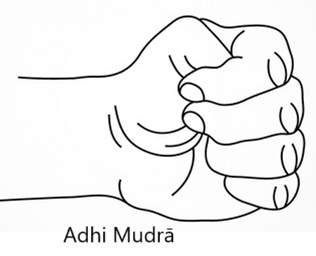
Adhi Mudrā

Adhi Mudrā Introduction Adhi Mudrā is one of the classic hasta mudrās (hand gestures) described in yogic tradition. It is a gesture of primal silence and inwardness, often practiced in meditation and pranayama. The term Adhi means “first” or “primordial,” symbolizing the original state of consciousness before thought. By curling the thumb into the palm and covering it with the fingers, Adhi Mudrā represents retreating inward, withdrawing from external distractions, and returning to the self.   Meaning Etymology: Adhi = first, primordial, original. Mudrā = seal, gesture, or attitude. Philosophical Meaning: Represents returning to the primordial stillness of the mind before ego and thought arise. Symbolism: Closing the thumb (ego/will) within the fist symbolizes surrender of individual control to higher consciousness. How to Perform Practice Seated Posture: Sit in Padmāsana, Sukhasana, or Vajrasana. Spine straight, shoulders relaxed. In the Adi Mudra, the thumb is placed at the base of the little finger and the remaining fingers curl over the thumb, forming a light fist. The palms are again placed upward on the thighs and exhale repeatedly. Breathing: Practice slow, deep diaphragmatic breathing or ujjayi pranayama. Awareness: Direct attention inward, especially at the Ajna Chakra (third eye) or Anahata (heart center). Duration: Maintain for 5–20 minutes during meditation or pranayama.   Benefits Physical Benefits Promotes deeper, slower breathing. Improves oxygen intake and circulation. Relaxes the nervous system, reducing muscle tension. Mental & Emotional Benefits Induces calmness and serenity. Reduces stress, anxiety, and restlessness. Promotes introversion and mental clarity. Spiritual Benefits Encourages pratyāhāra (withdrawal of the senses). Helps enter deeper meditative states. Symbolizes surrender of ego to the higher Self.   Contraindications Not suitable for those with severe depression or extreme lethargy, as it may increase inward withdrawal. Avoid if feeling overly isolated or emotionally closed. Should be practiced in balance with more expansive mudras (like Jnana or Urdhva Mukha).   Anatomy & Physiology Organs Affected: Lungs, diaphragm, heart. Physiological Effects: By reducing sensory stimulation (palms downward, fist closed), it encourages parasympathetic dominance. Promotes deeper exhalation, activating vagus nerve pathways for relaxation.   Kinesiology Involves flexion of the thumb into the palm and flexion of the fingers over the thumb. Shoulder and arm muscles relax as fists rest on thighs/knees. Supports a forward grounding of energy toward the pelvis and earth.   Neurology Activates the parasympathetic nervous system (calming response). Reduces beta-wave activity, encouraging alpha and theta states (deep relaxation, meditation). Symbolically suppresses the ego-driven neural activity (represented by the thumb enclosed within fingers).   Duration of Mudra Beginners: 5 minutes. Intermediate: 10–15 minutes. Advanced: Up to 30 minutes during meditation or pranayama.   Counter Mudra Jnana Mudrā (gesture of knowledge) – balances inward withdrawal with wisdom and openness. Urdhva Mukha Mudrā – restores expansiveness and receptivity.   Conclusion Adhi Mudrā is a primordial hand gesture symbolizing the return to silence and the womb of consciousness. By folding the thumb within the fist, one symbolically surrenders ego and control, turning awareness inward. It calms the nervous system, deepens the breath, and supports meditation. However, for balance, it should be practiced alongside more expansive and uplifting mudras to avoid excessive introversion. FAQ Q1. What is the best time to practice Adhi Mudrā?Early morning or evening, during meditation or pranayama. Q2. Does Adhi Mudrā improve breathing?Yes, it encourages diaphragmatic breathing and increases lung efficiency. Q3. Can it be practiced while lying down?It is best in a seated posture, but can be done lying down for relaxation. Q4. Is Adhi Mudrā good for anxiety?Yes, it activates parasympathetic relaxation, reducing stress and anxiety.   References Swami Satyananda Saraswati – Asana, Pranayama, Mudra, Bandha. Gertrud Hirschi – Mudras: Yoga in Your Hands. Joseph & Lilian LePage – Mudras for Healing and Transformation. B.K.S. Iyengar – Light on Yoga. Mark Stephens – Yoga Sequencing.  

Read More »

Acceptance Mudrā

Acceptance Mudrā Introduction Acceptance Mudrā is a contemporary yogic hand gesture designed to cultivate a sense of surrender, openness, and peace with life’s flow. Unlike many classical mudrās rooted in Vedic and tantric scriptures, Acceptance Mudrā is recognized primarily in modern yoga therapy and mindfulness traditions. It emphasizes letting go of resistance and embracing experiences—pleasant or unpleasant—with equanimity. This mudrā is particularly useful for those dealing with stress, grief, change, or self-judgment, and serves as a tool for emotional healing and resilience. Meaning Etymology: Acceptance = willingness to receive and embrace reality as it is. Mudrā = seal, gesture, or symbolic hand posture. Philosophical Meaning: Acceptance Mudrā symbolizes surrender to the present moment, removing inner conflict between “what is” and “what should be.” Symbolism: The open hands in this mudrā reflect receptivity, humility, and trust in universal flow. How to Perform Practice Posture: Sit comfortably in Sukhasana, Padmāsana, or on a chair with spine upright. The index finger is folded into the space between thumb and this finger, so that the nail touches the fold. The outer lower corner of the thumb’s nail touches the inner lower corner of the small finger’s nail. Awareness: Focus on breath and silently affirm: I accept myself. I accept this moment. I am open to life. Breathwork: Slow, deep abdominal breathing; exhale with a sense of release. Duration: Begin with 5–10 minutes, extending gradually to 20–30 minutes in meditation or relaxation. Benefits Physical Benefits Relaxes muscles of shoulders, arms, and chest. Helps reduce stress-related hypertension. Promotes deep, diaphragmatic breathing. Mental & Emotional Benefits Reduces resistance, worry, and self-criticism. Encourages self-acceptance and forgiveness. Helps manage grief, anxiety, and emotional pain. Improves adaptability to life changes. Spiritual Benefits Enhances surrender (Ishvara Pranidhana) in yogic philosophy. Promotes mindfulness and non-attachment. Deepens meditation by calming restless thoughts. Contraindications No major contraindications. Individuals with trauma history may experience emotional release; guided practice is recommended. Should not replace medical or psychological treatment but can complement it. Anatomy & Physiology Organs Affected: Heart, lungs, diaphragm, nervous system. Systems Influenced: Respiratory, circulatory, autonomic nervous system. Physiological Effects: Expands chest cavity for fuller breathing. Reduces cortisol and stress response. Promotes parasympathetic activation (relaxation response). Kinesiology Hands and forearms remain in a relaxed supinated position (palms facing up). Gentle isometric engagement of finger flexors and extensors to keep palms open. Shoulder girdle naturally relaxes downward, reducing tension in trapezius and neck. Neurology Stimulates sensory cortex regions associated with open palms and receptivity. Engages the vagus nerve through calm breathing, improving emotional regulation. Induces alpha brainwave activity → mindfulness and meditative calm. Encourages neural rewiring by pairing gesture with positive affirmations. Duration of Mudra Beginners: 5–10 minutes daily. Intermediate: 15–20 minutes twice daily. Advanced: 30 minutes in meditation, mindfulness, or yoga nidra practice. Can be practiced briefly (1–2 minutes) during stressful moments for grounding. Counter Mudra Hakini Mudrā (enhances focus and mental clarity when acceptance leads to passivity). Anjali Mudrā (prayer gesture, for centering and gratitude). Apana Vayu Mudrā (for grounding when emotions feel overwhelming). Conclusion Acceptance Mudrā is a simple yet profound hand gesture that helps cultivate peace, openness, and surrender. While it is not a classical mudrā from ancient yoga texts, it has significant therapeutic value in modern mindfulness and yoga therapy practices. It calms the nervous system, encourages emotional release, and fosters a compassionate relationship with oneself and others. By practicing this mudrā regularly, one develops the inner strength to face challenges with grace and acceptance. FAQ Q1. Is Acceptance Mudrā traditional or modern?It is primarily a modern therapeutic mudrā inspired by yogic and meditative principles of surrender. Q2. Can this mudrā help with anxiety?Yes, it relaxes the nervous system and reduces resistance, which helps ease anxiety. Q3. Can I practice it while lying down?Yes, especially in Yoga Nidra or Shavasana, palms open to the ceiling. Q4. How soon will I feel benefits?Often within a few minutes, as relaxation deepens and resistance softens. References Joseph & Lilian Lepage – Mudras for Healing and Transformation. Swami Satyananda Saraswati – Asana, Pranayama, Mudra, Bandha. T.K.V. Desikachar – The Heart of Yoga. B.K.S. Iyengar – Light on Yoga. Contemporary Yoga Therapy resources on mindfulness-based mudra practices.

Read More »

Ācamana Mudrā

  Ācamana Mudrā Introduction Ācamana Mudrā (often spelled Aachaman Mudra) is a yogic hand gesture rooted in Vedic rituals and yogic traditions. The word Ācamana refers to the act of “sipping water” or “purification by sipping,” which is a ritualistic practice in Hinduism, Ayurveda, and yoga. Symbolically, this mudrā represents purification of the body, speech, and mind. In yogic therapy, it is used as a subtle energy gesture that invokes inner cleansing, self-awareness, and alignment of the five elements (Pancha Mahābhūtas).   Meaning Etymology: Derived from Sanskrit: Ā = towards, Camana = sipping, purifying by sipping water. Philosophical Meaning: Symbolizes purification of body, prāṇa (life energy), and consciousness. It is an inner preparation before engaging in higher yogic or spiritual practices. Mudra Significance: Through the hand gesture, it channels prāṇic currents that aid in detoxification and calming the nervous system. How to Perform Practice Seated Posture: Sit comfortably in Padmāsana (Lotus), Sukhasana, or Vajrasana. Make a bowl with your palm, by bringing all the fingers together as shown in the image. Awareness: Focus on the solar plexus (Manipura chakra) and heart center while holding the mudrā. Breathing: Practice slow, rhythmic breathing (preferably Ujjayi or natural deep breathing). Duration: Hold for 5–15 minutes, gradually extending up to 30 minutes in meditation or pranayama sessions.   Benefits Physical Benefits: Aids digestion and assimilation of nutrients. Helps in balancing water element (Jala Mahābhūta). Improves hydration and body fluid regulation. Mental & Emotional Benefits: Brings mental clarity and inner purification. Reduces irritability, anger, and restlessness. Induces a sense of ritualistic sanctity before yoga or meditation. Spiritual Benefits: Cleanses karmic impressions (samskāras). Prepares the subtle body for mantra, meditation, and dhyāna. Enhances sattvic (pure) vibrations.   Contraindications Should be avoided if experiencing severe dehydration, diarrhea, or fluid imbalance disorders. Not recommended during high fever or acute gastrointestinal infections. People with kidney failure or fluid retention disorders (edema, ascites) should practice only under guidance.   Anatomy & Physiology Elemental Association: Water element (Jala tattva). Organs Influenced: Stomach, intestines, kidneys, bladder. Systems: Digestive system, excretory system, and circulatory balance. Physiological Effect: Enhances parasympathetic nervous system response → calming, restorative state.   Kinesiology Involves isometric contraction of small intrinsic hand muscles to hold the mudrā. Activates neuromuscular circuits linked to fine motor control, improving hand-brain coordination. Gentle engagement of tendons of ring and little fingers connects with meridians related to water metabolism.   Neurology Stimulates parasympathetic vagal pathways, aiding digestion and relaxation. Activates somatosensory cortex areas related to finger mapping (thumb, ring, little finger). Induces calm brainwave activity (alpha & theta states) beneficial for meditation and stress reduction.   Duration of Mudra Beginners: 5 minutes per session. Regular practice: 15–30 minutes daily (can be divided into 2–3 sessions). Advanced: During meditation, pranayama, or japa (mantra chanting).   Counter Mudra Prithvi Mudra (thumb + ring finger) – balances the earth element when excessive water imbalance occurs. Chin Mudra – restores grounding and balances energy if over-relaxation or drowsiness arises.   Conclusion Ācamana Mudrā is a gesture of purification, balance, and inner sanctity. Rooted in ancient Vedic rituals, it aligns water element, regulates digestion, calms the mind, and prepares practitioners for deeper yogic practices. Beyond physical benefits, it serves as a spiritual tool to purify thoughts and elevate consciousness. FAQ Q1. Is Ācamana Mudrā only a ritual gesture or also therapeutic?It is both — traditionally ritualistic, but therapeutically it balances water element and calms the nervous system. Q2. Can it be practiced without actual water sipping?Yes, the mudrā itself symbolically represents purification, even without water. Q3. When should I practice this mudrā?Morning, before meditation or pranayama, or before meals for digestive benefits. Q4. Can it be combined with mantra chanting?Yes, it enhances focus and sanctity in mantra sadhana. References Swami Satyananda Saraswati – Asana, Pranayama, Mudra, Bandha. G. Kumar – Mudras for Healing and Transformation. Hatha Yoga Pradipika & Vedic ritual texts (Ācamana practice). Light on Yoga – B.K.S. Iyengar. Ayurveda classics – Charaka Samhita (references to water purification rituals).

Read More »

Abhaya Mudrā

Abhaya Mudrā Introduction Abhaya Mudrā is one of the most ancient and universally recognized gestures in yoga, Hinduism, Buddhism, and Jainism. The term Abhaya means fearlessness, protection, and reassurance. This mudrā is frequently depicted in sacred art, where deities, Buddhas, or enlightened masters are shown with the right hand raised, palm facing outward, symbolizing peace and safety. It is not just a symbolic gesture but also a therapeutic yogic mudrā that influences the nervous system, emotional stability, and overall confidence. Meaning Etymology: Abhaya = fearlessness, safety, protection. Mudrā = seal, gesture, mark. Philosophical Meaning: Symbolizes protection, benevolence, and freedom from fear. It represents trust in higher consciousness and the assurance of divine support. Symbolism: When the palm faces outward, it acts as an energy shield, preventing fear, negativity, and mental disturbances from entering the practitioner’s aura. How to Perform Practice Posture: Sit in Padmāsana, Sukhasana, or even stand in Tadasana. Hand Gesture: Raise the right hand up to shoulder or chest level. Palm faces outward, all five fingers together extended upward towards the sky. The left hand can rest on the lap, in Jnana Mudrā or relaxed. Awareness: Focus on the heart or third eye center. Mentally affirm: “I am fearless. I am protected. I am safe.” Breath: Practice calm, deep breathing. You may combine it with chanting of Om or protective mantras. Duration: Hold for 5–15 minutes initially, extendable to 30 minutes in meditation or healing sessions. Benefits Physical Benefits Calms the heartbeat and stabilizes blood pressure during fear or anxiety. Relaxes involuntary tension in muscles caused by stress. Supports respiratory balance, reducing breathlessness linked to fear. Mental & Emotional Benefits Removes fear, phobias, and insecurity. Promotes confidence, courage, and inner strength. Creates a sense of safety and emotional grounding. Spiritual Benefits Acts as a protective shield in meditation or energy practices. Invokes divine grace and assurance of guidance. Enhances compassion, peace, and aura purification. Contraindications No major contraindications. Those with severe trauma or PTSD may need to practice under guidance, as suppressed emotions may surface. Should not be used as a substitute for medical or psychological treatment but as complementary support. Anatomy & Physiology Organs Affected: Heart, lungs, adrenal glands (stress response system). Systems Influenced: Circulatory, respiratory, and autonomic nervous system. Physiological Effect: Reduces sympathetic (“fight or flight”) activity and enhances parasympathetic calming response. Kinesiology Involves extension of the wrist and fingers, engaging extensor muscles of the forearm. The upright palm posture naturally opens the chest and shoulders, improving posture and lung capacity. Energy flow through palm chakras (hasta marma) creates a bio-energetic shield effect. Neurology Activates sensory-motor cortex regions mapped to the palm and fingers. Stimulates the vagus nerve (through deep breathing and calming posture), reducing anxiety. Encourages brainwave transition from beta (stress) to alpha-theta (relaxed, meditative states). Duration of Mudra Beginners: 5–10 minutes during meditation or stressful moments. Intermediate: 15–20 minutes daily practice. Advanced: Up to 30–45 minutes in prolonged meditative or healing sessions. Can also be practiced briefly during anxiety attacks or moments of fear. Counter Mudra Varada Mudrā (gesture of giving/compassion) – complements Abhaya Mudrā by balancing fearlessness with generosity. Chin Mudrā – helps ground excess energy if the practitioner feels over-stimulated. Conclusion Abhaya Mudrā is the gesture of fearlessness, protection, and reassurance, universally recognized across spiritual traditions. It strengthens the nervous system, removes fear, builds courage, and enhances spiritual confidence. Beyond symbolism, its physiological and neurological effects help balance stress, regulate breathing, and calm the heart. Practiced regularly, it empowers the practitioner to walk life’s path with inner peace and strength. FAQ Q1. Is Abhaya Mudrā only symbolic, or does it have real effects?It is both symbolic and therapeutic. The posture of the palm influences the nervous system and energy field, reducing fear and promoting calmness. Q2. Can it be practiced in public without drawing attention?Yes, it can be subtly practiced with the palm facing outward at chest level, even while standing. Q3. Can children practice Abhaya Mudrā?Yes, it is especially useful for children experiencing fear, nightmares, or insecurity. Q4. Can I combine Abhaya Mudrā with mantra?Yes, chanting Om Shanti or protective mantras (like Maha Mrityunjaya Mantra) enhances its effect. References Swami Satyananda Saraswati – Asana, Pranayama, Mudra, Bandha. T.K.V. Desikachar – The Heart of Yoga. B.K.S. Iyengar – Light on Yoga. Zimmer, Heinrich – Philosophies of India (discussion on mudrā symbolism). G. Kumar – Mudras for Healing and Transformation. Iconography references from Buddhist and Hindu scriptures (depictions of Buddha and Shiva in Abhaya Mudrā).

Read More »

Abhaya Hridaya Mudrā

Abhaya Hridaya Mudrā Introduction Abhaya Hridaya Mudrā is a powerful yogic hand gesture that integrates the symbolism of fearlessness (Abhaya) with the seat of compassion and love (Hridaya – the heart). This mudrā represents the courageous and open heart, free from fear, anxiety, and attachment. Unlike the simple Abhaya Mudrā (raised palm), Abhaya Hridaya Mudrā is a meditative hand posture performed in front of the chest, engaging both hands in a symbolic crossing over the heart. It is mentioned in tantric and yogic traditions as a practice to dissolve emotional blocks, release fear, and strengthen the practitioner’s heart center (Anāhata Chakra). Meaning Etymology: Abhaya = fearlessness, protection, safety. Hridaya = heart, seat of compassion, emotional center. Mudrā = gesture, seal. Philosophical Meaning: The mudrā represents fearless love — the courage to open the heart without fear of vulnerability. Symbolism: Crossing the hands at the heart symbolizes surrender of ego, unity of left (moon, intuition) and right (sun, action) channels, and protection of the spiritual heart. How to Perform Practice Posture: Sit comfortably in Padmāsana, Sukhasana, or Vajrasana. Keep the spine erect and shoulders relaxed. Join your palms together as in the Indian form of salutation ‘Namaste’. Now cross the palms at your wrist, with the back of the palms facing each other and the wrist of the right hand closer to the body. Interlock the Index, Middle and Little fingers at the tips.  Join the tips of the Ring fingers and the Thumbs as shown in the image. Duration: Begin with 5–10 minutes, extend gradually up to 20–30 minutes. Benefits Physical Benefits Strengthens heart and circulatory health. Improves lung capacity and breath regulation. Reduces palpitations and stress-induced cardiovascular imbalance. Mental & Emotional Benefits Releases fear, grief, and emotional pain. Encourages forgiveness, love, and compassion. Promotes emotional resilience and confidence. Spiritual Benefits Activates and harmonizes the Anāhata Chakra. Helps dissolve ego barriers, enhancing divine connection. Encourages surrender, devotion (bhakti), and openness to universal love. Contraindications People with acute cardiac conditions (heart attack, unstable angina) should avoid unless guided by a yoga therapist. Those with severe depression or trauma should practice gently and under guidance, as it may surface repressed emotions. Not to be done immediately after heavy meals (pressure on chest region). Anatomy & Physiology Organs Affected: Heart, lungs, thymus gland (immune support), arms and chest muscles. Systems Influenced: Circulatory system, respiratory system, and autonomic nervous system. Physiological Effects: Opens chest cavity, increases oxygen flow, reduces stress hormones, and promotes parasympathetic dominance (calm-rest state). Kinesiology Engages pectoral muscles (crossing arms), intrinsic hand muscles (interlacing fingers), and deltoids (arm lifting). Promotes chest expansion and better alignment of the thoracic spine. The triangular hand formation directs pranic flow toward the heart center. Neurology Stimulates cardiac plexus nerves near the heart, influencing emotional regulation. Enhances vagal tone → lowers stress, induces calmness. Activates limbic system pathways (emotional brain), aiding in emotional release and resilience. Encourages alpha-theta brainwave activity → deep meditative, healing state. Duration of Mudra Beginners: 5–10 minutes once daily. Intermediate: 15–20 minutes, can be done twice daily. Advanced: Up to 30 minutes in meditation, mantra chanting, or heart-healing practices.   Counter Mudra Hridaya Mudrā (Heart Mudra) – supportive and calming if Abhaya Hridaya stirs up too much emotional release. Anjali Mudrā (Prayer gesture) – grounds and centers energy after practice. Conclusion Abhaya Hridaya Mudrā is the gesture of the fearless heart, merging courage with compassion. It calms the mind, strengthens the heart, and opens emotional pathways for love, forgiveness, and healing. Beyond symbolism, it physiologically benefits the heart and nervous system, while spiritually it awakens the heart center and cultivates fearlessness rooted in compassion. Regular practice supports emotional freedom, heart health, and spiritual awakening. FAQ Q1. Is Abhaya Hridaya Mudrā the same as Hridaya Mudrā?No. Hridaya Mudrā supports the physical heart and circulation, while Abhaya Hridaya Mudrā specifically symbolizes fearlessness and spiritual heart opening. Q2. Can this mudrā heal a broken heart or grief?Yes, it is traditionally recommended for releasing grief, pain, and loss by opening the heart chakra. Q3. Can it be practiced lying down?It is best practiced seated with erect spine, but in relaxation (Shavasana) it can be adapted gently. Q4. Is it useful for public speaking anxiety or fear?Yes, practicing beforehand enhances courage, calmness, and self-confidence. References Swami Satyananda Saraswati – Asana, Pranayama, Mudra, Bandha. T.K.V. Desikachar – The Heart of Yoga. Joseph & Lilian Lepage – Mudras for Healing and Transformation. B.K.S. Iyengar – Light on Yoga (mudrā references and chest opening practices). Tantra & Bhakti texts describing Hridaya practices in relation to Anāhata Chakra.  

Read More »

The Ultimate Guide to Yin Yoga: History, Archetypes, Benefits & More

The Ultimate Guide to Yin Yoga: History, Archetypes, Benefits & More Yin Yoga is a slow, meditative practice that targets the deep connective tissues of the body, such as fascia, ligaments, and joints. It focuses on long-held, passive poses and encourages stillness, mindfulness, and deep relaxation. 📜 History & Origins of Yin Yoga Yin Yoga has roots in both traditional Hatha Yoga and Taoist practices. It was popularized in the West by Paul Grilley in the 1990s, inspired by the teachings of Taoist yoga master Paulie Zink. The practice integrates principles of: ✔ Taoism & Chinese Medicine → Emphasizing meridian lines & energy flow.✔ Buddhist Meditation → Encouraging stillness and mindfulness.✔ Traditional Yoga Asanas → Held for extended periods to release deep tension. 🧘 What Makes Yin Yoga Unique? ✔ Slow & Passive: Poses are held for 3-5 minutes (or longer).✔ Deep Stretching: Targets fascia, ligaments, joints, and bones.✔ Stillness & Meditation: Encourages mindfulness & inner awareness.✔ Energy Flow: Works with meridians & chi (qi) from Chinese medicine. 🆚 Yin vs. Yang Yoga: Yin Yogais passive, slow, and focused on deep tissue & relaxation. Yang Yoga(Vinyasa, Ashtanga, Hatha) is active, dynamic, and muscular. 🌿 5 Archetypal Poses in Yin Yoga Yin Yoga poses are adaptable to different body types & flexibility levels. The five main pose archetypes serve as templates for many Yin variations. 1. Shoelace (Hip Compression) ✅ Stretches the hips & glutes.🔹 Variations: Square Pose, Thread the Needle. 2. Caterpillar (Forward Fold) ✅ Stretches the spine & hamstrings.🔹 Variations: Butterfly, Snail Pose. 3. Dragon (Hip Opener) ✅ Opens the hip flexors & groin.🔹 Variations: Lizard, Crescent Lunge. 4. Saddle (Backbend & Quad Stretch) ✅ Stretches the front body & quads.🔹 Variations: Half Saddle, Supta Virasana. 5. Spinal Twist (Detox & Release) ✅ Improves spinal mobility & digestion.🔹 Variations: Supine Twist, Twisted Roots. 💡 Benefits of Yin Yoga 🦴 Physical Benefits ✔ Improves joint mobility & flexibility.✔ Enhances fascia health & hydration.✔ Reduces tension & stiffness.✔ Supports injury recovery. 🧠 Mental & Emotional Benefits ✔ Lowers stress & anxiety.✔ Encourages deep relaxation & stillness.✔ Enhances mindfulness & self-awareness.✔ Improves sleep & nervous system balance. 🌿 Energetic Benefits (Traditional Chinese Medicine – TCM) ✔ Stimulates meridians (energy channels).✔ Balances chi (qi) flow in the body.✔ Releases stagnant emotional energy. ⚠️ Safety & Precautions in Yin Yoga 🚫 Avoid forcing deep stretches – Find your “edge” & stay comfortable.🚫 Do not practice if you have hypermobility without support.🚫 Be cautious with injuries (use props like bolsters & blocks). Yin Yoga is NOT about pushing limits; it’s about surrendering into stillness. 🔄 How to Practice Yin Yoga Mindfully ✔ Find stillness – Once in a pose, relax completely.✔ Use props – Blocks, bolsters, blankets support longer holds.✔ Breathe deeply – Use slow, steady breaths to relax muscles & mind.✔ Hold poses for 3-5 minutes – Let gravity do the work.✔ Come out slowly – Move mindfully between poses.  

Read More »

Nauli Kriya: How to Do, Precautions & Benefits

Nauli Kriya: How to Do, Precautions & Benefits What is Nauli Kriya? Nauli Kriya is an advanced yogic cleansing technique (Shatkarma) that involves massaging the abdominal organs by isolating and rotating the abdominal muscles. It is one of the most powerful practices for detoxifying the digestive system and stimulating the solar plexus (Manipura Chakra). This kriya is best practiced on an empty stomach and is known to enhance digestion, metabolism, and overall vitality. 📖 Ancient Reference: Hatha Yoga Pradipika (2.34)“The Nauli process stimulates the digestive fire, removing all diseases and increasing bodily heat.” How to Perform Nauli Kriya (Step-by-Step Guide) Preparation: ✅ Best Time: Early morning on an empty stomach✅ Position: Stand with feet shoulder-width apart, bend slightly forward✅ Prerequisite: Learn Uddiyana Bandha (Abdominal Lock) first Steps: 1️⃣ Uddiyana Bandha (Preparation Step):✔️ Take a deep inhale and exhale completely✔️ Hold the breath out and draw the abdomen inward (toward the spine)✔️ This creates a vacuum effect in the abdominal cavity 2️⃣ Madhyama Nauli (Central Isolation):✔️ From Uddiyana Bandha, contract the rectus abdominis (central abdominal muscles)✔️ Hold for a few seconds, then release 3️⃣ Vama Nauli (Left Isolation):✔️ Shift the contraction to the left side of the abdomen✔️ Hold briefly and then release 4️⃣ Dakshina Nauli (Right Isolation):✔️ Shift the contraction to the right side of the abdomen✔️ Hold and then release 5️⃣ Nauli Chalan (Full Rotation):✔️ Move the abdominal muscles in a circular motion (left → center → right → center)✔️ Perform this several times, increasing speed gradually 📌 Duration: 5–10 rounds (start slow and increase gradually)📌 Breathing: Always hold breath out while performing Nauli Kriya Benefits of Nauli Kriya 1️⃣ Enhances Digestion & Gut Health ✔️ Stimulates the digestive fire (Agni)✔️ Relieves constipation, bloating, and indigestion 2️⃣ Strengthens Core Muscles ✔️ Activates deep abdominal muscles✔️ Tones the stomach and improves metabolism 3️⃣ Detoxifies Internal Organs ✔️ Flushes out toxins from the intestines and liver✔️ Supports kidney and pancreas function 4️⃣ Balances the Solar Plexus Chakra (Manipura Chakra) ✔️ Boosts confidence, willpower, and self-esteem✔️ Increases energy levels and vitality 5️⃣ Stimulates the Nervous & Endocrine System ✔️ Activates vagus nerve for better stress management✔️ Regulates hormonal balance Precautions & Contraindications ⚠️ Do NOT practice Nauli Kriya if you have:❌ High blood pressure or heart disease❌ Ulcers, hernia, or recent abdominal surgery❌ Pregnancy or menstruation❌ Severe digestive disorders like Crohn’s disease 🔹 Safety Tips:✔️ Always learn from a trained yoga teacher first✔️ Perform slowly and gently—do not strain✔️ Practice on an empty stomach for best results Final Thoughts Nauli Kriya is a powerful detox and energy-boosting technique that cleanses the digestive system, strengthens core muscles, and enhances vitality. However, it requires proper guidance and gradual practice to master.  

Read More »

Yoga for Diabetes – Can Yoga Help Control & Cure Diabetes?

Yoga for Diabetes – Can Yoga Help Control & Cure Diabetes? Diabetes is a chronic condition that affects blood sugar levels and insulin function. While yoga cannot “cure” diabetes, it can help control blood sugar, improve insulin sensitivity, and reduce stress, making it a valuable part of diabetes management. 🔬 How Yoga Helps with Diabetes 1. Lowers Blood Sugar Levels ✔ Gentle movement and deep breathing help regulate glucose metabolism.✔ Studies show yoga can lower fasting blood sugar and HbA1c levels. 2. Improves Insulin Sensitivity ✔ Helps the body use insulin more efficiently, reducing insulin resistance.✔ Especially beneficial for people with Type 2 diabetes and prediabetes. 3. Reduces Stress & Cortisol Levels ✔ High stress triggers the release of cortisol, which raises blood sugar.✔ Yoga activates the parasympathetic nervous system, promoting relaxation. 4. Supports Weight Management ✔ Helps reduce visceral fat, which is linked to insulin resistance.✔ Encourages mindful eating and healthy lifestyle habits. 5. Improves Circulation & Prevents Complications ✔ Increases blood flow to extremities, reducing the risk of diabetic neuropathy.✔ Supports heart health and lowers blood pressure. 🧘 Best Yoga Poses for Diabetes Management 1. Seated Forward Fold (Paschimottanasana) ✅ Stimulates the pancreas and supports insulin production.✅ Improves digestion and metabolism. 2. Cobra Pose (Bhujangasana) ✅ Stimulates the abdominal organs, including the pancreas.✅ Relieves stress and fatigue. 3. Bow Pose (Dhanurasana) ✅ Strengthens the pancreas and digestive organs.✅ Enhances metabolism and insulin regulation. 4. Legs Up the Wall (Viparita Karani) ✅ Balances blood sugar levels by improving circulation.✅ Promotes relaxation and stress reduction. 5. Supine Spinal Twist (Supta Matsyendrasana) ✅ Stimulates the digestive system and pancreas.✅ Supports detoxification and gut health. 🌬️ Pranayama (Breathing Exercises) for Diabetes 1. Kapalabhati (Skull Shining Breath) ⚡ ✅ Boosts metabolism and pancreatic function.🚫 Avoid if you have high blood pressure or heart issues. 2. Anulom Vilom (Alternate Nostril Breathing) 🌿 ✅ Balances the nervous system and reduces stress-induced sugar spikes.✅ Improves oxygen circulation and mental clarity. 3. Bhramari (Humming Bee Breath) 🎶 ✅ Lowers cortisol and stress levels, preventing sugar imbalances.✅ Promotes deep relaxation and emotional balance. ⚠️ Precautions for Practicing Yoga with Diabetes 🚫 Avoid intense or fast-paced yoga if you have low blood sugar.🚫 Stay hydrated and monitor glucose levels before & after practice.🚫 Use props or modifications if experiencing neuropathy or joint pain.  

Read More »

Kids Yoga for ADHD: Benefits & Best Practices

Kids Yoga for ADHD: Benefits & Best Practices Yoga can be an effective, natural tool to help kids with ADHD (Attention Deficit Hyperactivity Disorder) improve focus, self-regulation, and emotional balance. The combination of movement, breathwork, and mindfulness supports their nervous system, helping to reduce hyperactivity, impulsivity, and anxiety. How Yoga Helps Kids with ADHD ✅ Improves Focus & Attention – Mindful breathing and poses encourage concentration.✅ Regulates Energy Levels – Balancing active and calming poses helps manage hyperactivity.✅ Develops Self-Control – Holding poses and practicing stillness enhances impulse control.✅ Reduces Anxiety & Stress – Deep breathing and relaxation techniques calm the nervous system.✅ Enhances Body Awareness – Yoga helps kids recognize and manage their emotions and energy. Best Yoga Practices for ADHD 🧘 1. Start with Breathwork (Pranayama)Simple breathing exercises help calm the mind and prepare the body for movement. Balloon Breath– Inhale deeply, expanding the belly like a balloon; exhale, deflating it. Bumblebee Breath (Bhramari)– Humming while exhaling to soothe the nervous system. Lion’s Breath– Inhale deeply, then exhale with a loud “haaa” and stick out the tongue. 🦸 2. Active Yoga Poses for Energy ReleaseThese poses engage the body and improve focus. Jumping Jacks or Sun Salutations (Surya Namaskar)– Energizing warm-up. Warrior Poses (Virabhadrasana I & II)– Builds strength and focus. Tree Pose (Vrikshasana)– Improves balance and concentration. Frog Pose (Malasana Jumps)– Releases pent-up energy playfully. 🌿 3. Calming & Grounding PosesThese poses help kids transition from activity to relaxation. Child’s Pose (Balasana)– Encourages deep breathing and self-soothing. Butterfly Pose (Baddha Konasana)– Relaxes the body while engaging attention. Legs-Up-The-Wall (Viparita Karani)– Soothes anxiety and promotes relaxation. Cobra Pose (Bhujangasana)– Opens the chest and enhances mood. 🎭 4. Fun & Playful Yoga TechniquesEngage kids by making yoga interactive and imaginative. Storytelling Yoga– Create a story using yoga poses (e.g., jungle adventure, outer space). Animal Poses– Encourage kids to “become” the animals in poses (lion, cat, dog, butterfly). Yoga Games– Try “Freeze Yoga” (hold a pose when the music stops) or “Mirror Yoga” (copy a partner). 🌙 5. End with Relaxation & MeditationHelp kids slow down and integrate their practice. Guided Imagery– Use a calming story (e.g., “floating on a cloud” or “lying in a peaceful garden”). Body Scan Relaxation– Gently guide attention through different body parts. Gratitude Practice– Encourage them to share one happy moment from their day. Creating a Kid-Friendly ADHD Yoga Routine 🔹 Keep sessions short (10-20 minutes).🔹 Use music, storytelling, and props (yoga mats, stuffed animals, or scarves).🔹 Encourage participation, not perfection.🔹 Make it consistent—daily or 3-4 times a week for the best results.  

Read More »

Spine Flexion: A Fundamental Instrument of Well-Being in Yoga

Spine Flexion: A Fundamental Instrument of Well-Being in Yoga Spine flexion refers to the forward bending movement of the spine, where the upper body bends forward towards the thighs, with the spine rounding. It is a common movement in yoga, often seen in forward folds, seated stretches, and various poses. Spine flexion is essential not only for increasing flexibility but also for promoting overall well-being by improving posture, enhancing digestion, relieving tension, and calming the nervous system. Let’s explore why spine flexion is so beneficial in yoga and how it contributes to physical health and mental well-being: 1. Improves Flexibility and Mobility of the Spine Spine flexion helps to stretch the muscles along the back, especially the erector spinae(muscles running along the spine), and the hamstrings, which are key muscles in the posterior chain of the body. Regular practice of spine flexion in yoga improves the mobilityof the spine and helps prevent stiffness and rigidity, especially for people who sit for long periods or have sedentary lifestyles. A more flexible spine also supports better posture and can prevent lower back pain or discomfort caused by tight muscles. 2. Relieves Tension and Stress Flexing the spine, especially in forward bends, promotes muscle relaxationalong the back and neck. By folding forward and releasing tension in the back, yoga helps alleviate the physical manifestations of stress and muscle tightness. The deep forward folding poses(such as Paschimottanasana and Uttanasana) also encourage a release of emotional stress by triggering the body’s parasympathetic nervous system (the “rest and digest” system), which promotes a sense of calm and relaxation. 3. Stimulates the Digestive System Spine flexion compresses and massages the internal organs, particularly in poses that involve deep forward bends. This compression and release action improves the flow of blood and energyto the digestive system, stimulating better digestion and metabolism. Poses like Paschimottanasana, Seated Forward Bend, and Child’s Posehelp with the peristalsis process (the wave-like contractions of the intestines) and improve gut health by activating the vagus nerve, which regulates digestion. 4. Improves Posture Regular spine flexion helps counteract the effects of poor posture, especially the forward head posture and slouching common in people who spend time hunched over computers or phones. It creates balance between the front and back of the body, helping to lengthenthe spine and open up the chest. Spine flexion encourages an alignment where the spine stays elongatedand upright, reducing the tendency to slouch and promoting better posture throughout the day. 5. Enhances Mental Clarity and Calmness The deep, mindful forward bends in yoga encourage a state of meditationand mindfulness, helping clear the mind and calm the thoughts. In forward-folding poses, the act of bowing the head toward the knees or the ground symbolizes an invitation to surrender, relax, and release unnecessary mental clutter. Mindful breathingduring spine flexion poses helps to slow down the heart rate and deepen the breath, facilitating a sense of calm and focus. This can be incredibly useful for managing stress, anxiety, and mental fatigue. 6. Promotes Emotional Health and Letting Go Spine flexionis often linked with emotional release in yoga practice. Forward bending poses are thought to help access and release deep-seated emotions, particularly those associated with the root chakra (Muladhara), which is connected to safety, stability, and grounding. In addition, these poses create space in the body for emotional healing, offering a safe environment to process emotionssuch as grief, sadness, or fear. It’s not uncommon for practitioners to feel an emotional release when performing spine flexion poses in yoga. 7. Stimulates the Central Nervous System The action of folding forward and rounding the spine helps stimulate the central nervous system(CNS), improving its efficiency in processing sensory and motor information. This stimulation helps in balancing the autonomic nervous system, promoting relaxation and reducing the effects of chronic stress. Moreover, activating the vagus nerve through spine flexion supports overall well-being and strengthens the connection between the brain and the body. Common Yoga Poses Involving Spine Flexion: Uttanasana (Standing Forward Bend): A classic forward bend that stretches the entire back and hamstrings, helping to relieve tension and improve flexibility. Focuses on grounding and lengthening the spine, encouraging mental clarity. Paschimottanasana (Seated Forward Bend): A seated forward fold that deepens the stretch along the spine and hamstrings while also offering a calming effect on the mind. It also stimulates the digestive system and reduces lower back pain. Child’s Pose (Balasana): A gentle forward bend that provides rest and helps release tension from the back and neck. Known for its calming effect, it is often used as a restorative pose in yoga practice. Cat-Cow Pose (Marjaryasana-Bitilasana): While Cat pose (spine flexion) is a rounding of the spine, Cow pose (spine extension) provides a gentle way to alternate between flexion and extension. This dynamic movement increases spinal mobility and promotes fluid movement between the vertebrae. Reclining Forward Bend (Supta Paschimottanasana): A variation of Paschimottanasana done lying down. It allows for a deeper stretch while offering support to the lower back. This modification helps release stress and tension while focusing on the breath. Seated Forward Fold with a Twist (Parivrtta Paschimottanasana): A combination of forward folding and twisting that adds a layer of complexity while stretching the spine and stimulating the digestive system. Forward Fold with Block (Setu Bandhasana with Block): A gentle variation of forward bending with the support of a yoga block, allowing for deeper release and relaxation in the spine. Conclusion: Spine flexion in yoga is a powerful tool for promoting spinal health, mental well-being, and emotional release. By engaging in forward bends and spine flexion poses, yoga practitioners can increase flexibility, reduce stress, improve posture, and foster a sense of peace and calm. The act of folding forward also encourages a deeper connection between mind and body, helping to release tension and promote overall vitality. Regular practice of spine flexion enhances the body’s ability to let go of physical and emotional blocks, leading to a sense of well-being and balance.  

Read More »

The Power of Hatha Yoga: A Complete Guide

The Power of Hatha Yoga: A Complete Guide Hatha Yoga is the foundation of most modern yoga styles. It focuses on physical postures (āsanas), breath control (prāṇāyāma), and meditation to create balance between body, mind, and energy. Whether you’re a beginner or an advanced practitioner, understanding Hatha Yoga can deepen your practice and enhance well-being. 1. What is Hatha Yoga? “Hatha” comes from Sanskrit: “Ha” (Sun)– Represents masculine, active energy. “Tha” (Moon)– Represents feminine, passive energy. Hatha Yoga balances these energiesthrough movement, breathwork, and mindfulness. It is often considered the preparatory stagefor deeper meditative practices. 2. Benefits of Hatha Yoga Physical Benefits ✅ Improves flexibility & strength✅ Enhances posture & balance✅ Supports joint health & mobility✅ Boosts digestion & metabolism Mental & Emotional Benefits ✅ Reduces stress & anxiety✅ Enhances focus & mental clarity✅ Promotes emotional balance✅ Supports better sleep & relaxation Energetic Benefits ✅ Activates the chakras (energy centers)✅ Aligns breath & movement for harmony✅ Prepares the body for higher states of consciousness 3. Key Elements of Hatha Yoga 1. Āsanas (Yoga Postures) Hatha Yoga includes classic postures that build strength, flexibility, and awareness. Some key āsanas: Tādāsana (Mountain Pose)– Foundation for alignment Adho Mukha Śvānāsana (Downward Dog)– Stretches & strengthens Vīrabhadrāsana (Warrior Poses)– Builds focus & endurance Paścimottānāsana (Seated Forward Fold)– Calms the mind Śavāsana (Corpse Pose)– Deep relaxation 2. Prāṇāyāma (Breath Control) Breathwork is central to Hatha Yoga. Some common techniques: Nāḍī Śodhana (Alternate Nostril Breathing)– Balances energy Kapalabhāti (Skull-Shining Breath)– Energizes & detoxifies Bhrāmarī (Bee Breath)– Reduces stress & calms the mind 3. Bandhas (Energy Locks) Engaging muscular contractions to direct prāṇa (life force): Mūla Bandha– Pelvic floor lock (root energy) Uḍḍīyāna Bandha– Abdominal lock (solar plexus activation) Jālandhara Bandha– Throat lock (mental clarity) 4. Dhyāna (Meditation) Hatha Yoga prepares the body for meditation by removing restlessness. Common meditation techniques include: Mindfulness meditation– Observing breath & thoughts Mantra meditation– Chanting sacred sounds (e.g., “Om”) Visualization– Focusing on energy centers (chakras) 4. A Simple Hatha Yoga Sequence for Balance Beginner-Friendly Hatha Flow (15-20 min) Tādāsana (Mountain Pose)– 1 min Adho Mukha Śvānāsana (Downward Dog)– 5 breaths Vīrabhadrāsana I & II (Warrior I & II)– 5 breaths each side Paścimottānāsana (Seated Forward Fold)– 5 breaths Śavāsana (Final Relaxation)– 5-10 min 💡 Tip: End with 5 minutes of prāṇāyāma or meditation for a complete practice. 5. How to Start a Hatha Yoga Practice ✅ Start Slow – Focus on alignment & breath awareness.✅ Be Consistent – Practice at least 3-4 times a week.✅ Listen to Your Body – Avoid forcing flexibility or strength.✅ Use Props – Blocks, straps, and cushions help with alignment.✅ Combine Movement & Stillness – Balance active poses with relaxation. Final Thoughts Hatha Yoga is a powerful practice that builds physical strength, mental clarity, and inner peace. Whether you’re seeking stress relief, better health, or spiritual growth, Hatha Yoga provides a solid foundation for holistic well-being.  

Read More »

What Is Prana? Definition of Prana & the 5 Vital Energies

What Is Prana? Definition of Prana & the 5 Vital Energies Prana is the Sanskrit word for life force energy—the vital energy that sustains all living beings. It flows through the nadis (energy channels) and is regulated by breath, movement, and awareness. In yoga and Ayurveda, prana is the foundation of health, consciousness, and vitality. In this guide, you’ll learn:✅ What prana is & how it works✅ The 5 types of prana (Pancha Vayus)✅ How to balance prana through yoga & breathwork 1. What Is Prana? 🔹 Definition: Prana is the subtle energy that flows through the body, keeping us alive.🔹 Source: It comes from breath, food, sunlight, and thoughts.🔹 Function: It powers physical, mental, and spiritual processes. In short, prana is what makes life possible! Without prana, the body is just a lifeless shell. Prana in Different Traditions:✔ Yoga & Ayurveda – Prana is the energy that flows through the nadis.✔ Traditional Chinese Medicine – Similar to Qi (Chi), the life force.✔ Western Science – Can be compared to bioelectric energy in the body. 2. The 5 Types of Prana (Pancha Vayus) Prana is not just one energy—it has five major subdivisions (Vayus), each with a unique function: 1️⃣ Prana Vayu (Inward Energy) ✔ Located in the chest & head✔ Governs breathing, heartbeat, and mental clarity✔ Activated through deep breathing & meditation 2️⃣ Apana Vayu (Downward Energy) ✔ Located in the lower abdomen & pelvis✔ Governs elimination (urination, digestion, menstruation, childbirth)✔ Balanced through grounding yoga poses & hip openers 3️⃣ Samana Vayu (Digestive Energy) ✔ Located in the stomach & navel✔ Controls digestion, absorption, and metabolism✔ Boosted through core-strengthening exercises & mindful eating 4️⃣ Udana Vayu (Upward Energy) ✔ Located in the throat & upper body✔ Governs speech, self-expression, and spiritual growth✔ Activated through chanting, singing, and pranayama 5️⃣ Vyana Vayu (Circulatory Energy) ✔ Located throughout the entire body✔ Controls blood circulation, nerve impulses, and movement✔ Balanced through dynamic yoga flows & full-body awareness When all five Vayus are in harmony, prana flows smoothly, leading to optimal health and vitality. 3. How to Cultivate & Balance Prana 🌬️ 1. Breathwork (Pranayama) ✔ Nadi Shodhana (Alternate Nostril Breathing) – Balances prana flow✔ Bhramari (Bee Breath) – Calms the mind & nervous system✔ Kapalabhati (Skull-Shining Breath) – Energizes & clears stagnant energy 🧘 2. Yoga Poses (Asana) ✔ Chest openers (e.g., Cobra, Fish Pose) – Enhance Prana Vayu✔ Hip openers (e.g., Malasana, Pigeon Pose) – Ground Apana Vayu✔ Twists (e.g., Seated Twist, Revolved Triangle) – Activate Samana Vayu 🍃 3. Healthy Lifestyle & Diet ✔ Eat fresh, plant-based foods rich in prana✔ Spend time in nature & sunlight✔ Avoid negative thoughts & stress, which deplete prana 🕉 4. Meditation & Mantras ✔ Meditation increases mental & spiritual prana✔ Chanting “Om” or Bija Mantras enhances Udana Vayu 4. Signs of Prana Imbalance Too little prana?🚫 Fatigue, brain fog, low motivation🚫 Digestive issues, poor circulation🚫 Anxiety, stress, or emotional instability Too much prana?🚀 Restlessness, overthinking🚀 Insomnia, hyperactivity🚀 Nervous system overload Balancing prana through breath, movement, and mindfulness creates inner harmony & well-being. Final Thoughts Prana is the life force that sustains us, and understanding its flow can enhance vitality, mental clarity, and spiritual awareness. By practicing pranayama, yoga, and mindful living, you can awaken and balance your prana for a healthier, more vibrant life.  

Read More »

What Is a Chakra: 7 Chakras Signs of Being Balanced or Imbalanced

What Is a Chakra: 7 Chakras Signs of Being Balanced or Imbalanced A chakra is a center of energy in the body according to yogic philosophy and Ayurveda. The word “chakra” comes from the Sanskrit word for “wheel” or “disk” and refers to a spinning wheel of energy. These energy centers are believed to regulate not just physical health, but emotional, mental, and spiritual well-being as well. According to yogic traditions, there are seven main chakras, each associated with specific aspects of life, personality, and body functions. The Seven Main Chakras: Root Chakra (Muladhara) Location:Base of the spine, near the coccyx. Element:Earth Color:Red Mantra:“LAM” Associated with:Survival, stability, grounding, and security. Balanced Signs:Feeling grounded, safe, secure, and connected to the physical world. A stable foundation in life and relationships. Imbalanced Signs:Anxiety, fear, insecurity, financial struggles, or feeling ungrounded and disconnected from the world. Sacral Chakra (Svadhisthana) Location:Lower abdomen, about two inches below the navel. Element:Water Color:Orange Mantra:“VAM” Associated with:Creativity, sexuality, emotions, pleasure, and relationships. Balanced Signs:Creative energy, healthy emotional expression, and vibrant sexual energy. Enjoying intimacy and connection with others. Imbalanced Signs:Lack of creativity, sexual dysfunction, emotional instability, guilt, or difficulty forming emotional connections. Solar Plexus Chakra (Manipura) Location:Upper abdomen, above the navel, in the area of the stomach. Element:Fire Color:Yellow Mantra:“RAM” Associated with:Personal power, self-esteem, confidence, and motivation. Balanced Signs:Confidence, self-control, decision-making ability, and strong willpower. A clear sense of purpose and direction in life. Imbalanced Signs:Low self-esteem, lack of confidence, difficulty taking action, and feelings of powerlessness or anger. Heart Chakra (Anahata) Location:Center of the chest, near the heart. Element:Air Color:Green (sometimes pink) Mantra:“YAM” Associated with:Love, compassion, forgiveness, and relationships. Balanced Signs:Ability to give and receive love freely, compassion, forgiveness, and emotional balance. Imbalanced Signs:Emotional coldness, difficulty expressing love, fear of intimacy, grief, or feeling disconnected from others. Throat Chakra (Vishuddha) Location:Throat and neck area. Element:Ether (Space) Color:Blue Mantra:“HAM” Associated with:Communication, self-expression, truth, and creativity. Balanced Signs:Clear, honest communication, expressing oneself freely, and living in alignment with one’s truth. Imbalanced Signs:Difficulty expressing oneself, fear of speaking, lying, or not being able to communicate effectively or assertively. Third Eye Chakra (Ajna) Location:Between the eyebrows, in the center of the forehead. Element:Light Color:Indigo Mantra:“OM” Associated with:Intuition, wisdom, insight, and mental clarity. Balanced Signs:Strong intuition, mental clarity, wisdom, and ability to see the bigger picture. A sense of inner knowing and deep understanding. Imbalanced Signs:Lack of direction, closed-mindedness, difficulty making decisions, and inability to trust intuition. Crown Chakra (Sahasrara) Location:Top of the head, or slightly above it. Element:Thought or Consciousness Color:Violet or White Mantra:“AH” Associated with:Spirituality, divine connection, enlightenment, and higher consciousness. Balanced Signs:Feeling connected to the universe, a sense of spiritual purpose, and being in tune with higher wisdom and consciousness. Imbalanced Signs:Spiritual disconnection, lack of direction in life, feeling isolated, or a sense of purposelessness. Signs of Being Balanced or Imbalanced in the Chakras: Balanced Chakras: Physical Well-Being:The body functions properly, with no specific aches or issues related to the chakra. Emotional Balance:You feel emotionally stable and able to deal with challenges in a constructive way. Mental Clarity:You experience clear thinking and a sense of purpose. You’re able to make decisions confidently and trust your intuition. Spiritual Connection:You feel connected to a higher power, grounded in your beliefs, and at peace with the universe. Imbalanced Chakras: Physical Symptoms:Each chakra’s imbalance can manifest physically in specific areas of the body. For example, issues with digestion might be linked to an imbalance in the solar plexus chakra, or problems with communication could be connected to the throat chakra. Emotional Turmoil:When chakras are imbalanced, emotional struggles such as anxiety, fear, sadness, or frustration may arise. You may feel stuck or unable to move forward. Mental Blockages:Imbalances can also cause confusion, indecisiveness, or lack of clarity. You may have trouble focusing or trusting your inner wisdom. Spiritual Disconnect:An imbalanced crown chakra, for instance, can cause feelings of spiritual disconnect or an inability to feel aligned with your higher purpose. How to Balance the Chakras: Yoga and Asana Practice: Specific yoga poses can help open and balance the chakras. For example, Tree Pose (Vrikasana) for the root chakra or Camel Pose (Ustrasana) for the heart chakra. Meditation: Practicing chakra meditation, where you focus on each chakra, visualize its color, or chant specific mantras, can help bring balance. Breathing Exercises (Pranayama): Breathing techniques like Nadi Shodhana (alternate nostril breathing) or Kapalbhati (skull shining breath) can balance energy flow and calm the mind. Crystal Healing: Certain crystals are associated with each chakra. For example, amethyst for the crown chakra, rose quartz for the heart chakra, and citrine for the solar plexus chakra. Aromatherapy: Essential oils like lavender for the crown chakra or sandalwood for the root chakra can help balance the energy centers. Diet and Nutrition: Eating foods that correspond with each chakra’s energy can help. For example, grounding foods like root vegetables for the root chakra or leafy greens for the heart chakra. Sound Therapy: Listening to specific sound frequencies or using instruments like Tibetan singing bowls can help restore balance to the chakras. Conclusion: Chakras are fundamental to your well-being, impacting both your physical health and your emotional, mental, and spiritual states. By learning to recognize the signs of imbalances in each chakra and working to heal and restore their balance, you can cultivate a more harmonious life. Regular yoga, meditation, and mindfulness practices are powerful tools to keep your chakras balanced and your energy flowing freely.  

Read More »

Yogic Ways to Build Stronger Groups and Relationships

Yogic Ways to Build Stronger Groups and Relationships Yoga is not just an individual practice—it’s a path to deeper connection, trust, and harmony within communities, relationships, and groups. By integrating yogic principles, mindfulness, and communication techniques, we can create stronger, more supportive relationships in all areas of life, from friendships and families to workplaces and yoga classes. This guide covers: ✅ Yogic principles for healthy relationships✅ How to apply yoga philosophy to group dynamics✅ Asanas, breathwork, and meditation for connection✅ Practical team-building and relationship-strengthening exercises 1. The Yogic Foundation for Strong Relationships Yoga teaches us to approach relationships with awareness, compassion, and presence. Here’s how key yogic principles support stronger groups and connections: A. Yamas: Ethical Guidelines for Connection The Yamas (from Patanjali’s Yoga Sutras) offer foundational wisdom for harmonious relationships: ✔️ Ahimsa (Non-violence): Practice kindness in words and actions.✔️ Satya (Truthfulness): Communicate honestly but with compassion.✔️ Asteya (Non-stealing): Respect others’ time, space, and energy.✔️ Brahmacharya (Moderation): Maintain balance in relationships.✔️ Aparigraha (Non-attachment): Let go of control and expectations. B. Niyamas: Personal Practices for Relationship Growth The Niyamas help us cultivate inner balance, which improves how we interact with others: ✔️ Shaucha (Purity): Maintain clarity in communication and intention.✔️ Santosha (Contentment): Accept others as they are.✔️ Tapas (Discipline): Commit to showing up fully in relationships.✔️ Svadhyaya (Self-Study): Reflect on personal triggers and patterns.✔️ Ishvarapranidhana (Surrender): Trust the natural flow of relationships. 2. Yoga Practices for Building Connection Yoga can be practiced individually or in groups to enhance relationships and team dynamics. A. Partner & Group Yoga Poses Practicing partner yoga or group yoga sequences builds trust, coordination, and communication. ✅ Partner Seated Twist – Enhances active listening & trust✅ Double Tree Pose – Builds balance & harmony✅ Back-to-Back Breathing – Strengthens connection & synchronization✅ Group Circle Pose (Sitting or Standing) – Encourages unity & support Tip: Encourage eye contact and deep breathing to deepen the experience of presence and connection. B. Breathwork (Pranayama) for Group Cohesion Breathwork helps groups sync their energy, calm emotions, and enhance collective focus. ✅ Ujjayi Breath (Ocean Breath) – Creates group harmony & steady energy✅ Nadi Shodhana (Alternate Nostril Breathing) – Balances emotions before discussions✅ Synchronizing Breath – Groups breathe in unison for deep connection Exercise: Try group breathwork before meetings, gatherings, or team-building activities to create a centered, focused space. C. Meditation & Mindfulness for Deeper Connection Practicing meditation together helps build compassion, understanding, and presence in relationships. ✅ Loving-Kindness Meditation (Metta) – Cultivates compassion & goodwill✅ Silent Group Meditation – Strengthens collective presence✅ Shared Intention Setting – Aligns goals & values in relationships Tip: Start team meetings or gatherings with a moment of mindfulness to set a positive tone. 3. Yogic Communication for Healthy Relationships Mindful communication is key to stronger, healthier relationships. Here’s how yogic principles help: A. Conscious Listening & Speaking ✅ Listen fully before responding (pause before speaking).✅ Use “I” statements instead of blaming (“I feel…” vs. “You always…”).✅ Breathe before responding in conflict to stay present. B. Mantras & Affirmations for Harmonious Relationships Mantras help reinforce positive group energy: ✔️ “Lokah Samastah Sukhino Bhavantu” – May all beings be happy and free.✔️ “I see you, I honor you, I respect you.” – For group harmony.✔️ “We are connected, we are strong, we are one.” – For team-building. Tip: Try chanting mantras together before group activities or meetings to create unity. 4. Building a Conscious & Supportive Group Environment A. Creating a Sacred Space for Groups ✔️ Encourage inclusivity & open expression.✔️ Set a group intention or theme.✔️ Use yoga-inspired rituals (lighting a candle, collective breathing). B. Yogic Leadership & Team-Building Leaders and facilitators can apply yogic wisdom to create stronger, more cohesive groups. ✔️ Lead with humility & presence (Seva – selfless service).✔️ Foster a judgment-free space (Ahimsa – non-judgment).✔️ Practice gratitude & group appreciation (Santosha – contentment). Exercise: At the end of each group meeting, express gratitude for each other to strengthen bonds. Applying Yoga to Strengthen Relationships Yoga is not just about personal growth—it’s a path to stronger, more connected relationships. Whether in friendships, family, yoga communities, or workplaces, applying yogic principles, mindfulness, and conscious communication creates deeper trust, harmony, and unity.  

Read More »

Shatkarma: 6 Hatha Yoga Kriyas for Purification and Their Benefits

Shatkarma: 6 Hatha Yoga Kriyas for Purification and Their Benefits Shatkarma (also known as the six actions) refers to a set of yogic cleansing practices in Hatha Yoga designed to purify the body, clear blockages in the energy channels (Nadis), and enhance physical, mental, and spiritual well-being. These six techniques are essential tools for yogis to maintain health, improve vitality, and prepare for deeper stages of meditation and pranayama. The word Shatkarma comes from the Sanskrit words “Shat” meaning six, and “Karma” meaning action, and it refers to the six purification practices that cleanse the body, mind, and energy system. The 6 Shatkarmas (Hatha Yoga Kriyas) and Their Benefits Neti (Nasal Cleansing) Technique: Neti involves cleaning the nasal passages to clear out excess mucus, toxins, and allergens. It is performed by using a Neti pot, a small device filled with saline water that is poured through one nostril, allowing it to exit through the other. Types: Jala Neti(water-based): Uses a saline solution to cleanse the nasal passages. Sutra Neti(thread-based): Involves inserting a sterilized cotton or silk thread through the nostrils and gently pulling it through to clear the nasal passages. Benefits: Clears the sinuses and nasal passages, improving airflow. Reduces allergies and sinus infections. Enhances the sense of smell and mental clarity. Improves pranic flow and prepares the practitioner for pranayama (breathing exercises). Dhauti (Gastric Cleansing) Technique: Dhauti involves various methods to cleanse the digestive tract and eliminate toxins from the stomach and intestines. There are multiple forms of Dhauti: Vaman Dhauti: Induced vomiting by drinking salty water and then vomiting it out to cleanse the stomach. Vastra Dhauti: Swallowing a long piece of cloth and then pulling it out to cleanse the digestive tract. Danta Dhauti: Cleaning the teeth and gums. Benefits: Purifies the digestive system, enhancing digestion and metabolism. Removes toxins (Ama) from the body. Helps in alleviating chronic constipation, bloating, and indigestion. Detoxifies the liver and stomach, which improves overall health Basti (Colon Cleansing) Technique: Basti involves a yogic form of colon cleansing, typically using water or air, similar to an enema. The practitioner either uses water (Jala Basti) or other techniques to cleanse the large intestine. Benefits: Cleanses the colon, removing impurities and toxins. Improves digestion, and helps in the prevention of constipation and bloating. Stimulates the elimination process and enhances nutrient absorption. Purifies the lower abdominal area, promoting overall health. Kapalbhati (Breath of Fire) Technique: Kapalbhati is a form of rapid, forceful exhalation followed by passive inhalation. It involves sitting in a comfortable position and performing quick, short exhales while pulling the belly in. Benefits: Clears the mind and increases mental clarity. Energizes the body and promotes a feeling of freshness and lightness. Strengthens the lungs and diaphragm. Stimulates digestion and helps detoxify the body by expelling toxins. Improves circulation and oxygenates the body. Trataka (Concentration on a Flame) Technique: Trataka is a meditative practice of gazing at a fixed point or a candle flame to improve concentration and stimulate the third eye chakra (Ajna). It helps to develop single-pointed focus and mental clarity. Benefits: Improves concentration, mental clarity, and focus. Strengthens the mind and develops inner stillness. Reduces mental stress and anxiety. Stimulates the pineal gland, improving intuition and awareness. Enhances vision by improving eye health and reducing strain. Nauli (Abdominal Churning) Technique: Nauli involves the controlled movement of the abdominal muscles. The practitioner performs this by isolating the abdominal muscles and churning them in a circular motion. This technique is typically practiced after mastering Uddiyana Bandha(the abdominal lock). Benefits: Strengthens the abdominal muscles and tones the digestive system. Stimulates the digestive organs (liver, stomach, intestines) and improves digestion. Improves circulation and cleanses the abdominal organs. Promotes energy flow through the navel center (Manipura chakra). Detoxifies the body by improving the function of the digestive and elimination systems. Additional Benefits of Shatkarma Practice Purification of the Body: These kriyas clear out toxins (ama) and impurities that accumulate in the body, resulting in a healthier, more vibrant system. Balances the Nervous System: Through the practice of pranayama (breathwork) and meditation techniques like Trataka, the Shatkarma practices help balance the nervous system, promoting calmness and reducing stress. Prepares the Body for Meditation: The purification process prepares the body to sit for long periods of meditation, allowing practitioners to achieve greater spiritual awareness. Enhances Physical Health: By promoting good digestion, detoxification, and mental clarity, these kriyas support the overall well-being of the practitioner. How to Practice Shatkarma Safely Seek Guidance: Many of the Shatkarma techniques are advanced practices that require proper guidance from an experienced instructor. It’s important to learn them under supervision to ensure they are performed correctly and safely. Be Mindful of Your Body: Some of the practices, like Dhauti and Basti, can be intense, so they are not recommended for individuals with certain medical conditions, like heart problems or gastrointestinal issues. Always listen to your body and avoid practices that cause discomfort. Practice Regularly, but Not Excessively: The Shatkarma practices are meant to be performed as part of a holistic yoga practice, not daily cleansing rituals. Practice them regularly but with balance to avoid overstimulating the body. Conclusion Shatkarma is an integral part of Hatha Yoga, designed to purify the body and mind. By incorporating these six kriyas into your practice, you can experience enhanced health, vitality, and mental clarity. These practices not only cleanse the physical body but also support the mental and emotional aspects of well-being, setting the foundation for deeper meditation and spiritual growth. However, it’s crucial to approach Shatkarma with care, ideally under the guidance of a skilled teacher, to ensure that you perform these techniques safely and effectively.  

Read More »

Yoga Poses for Constipation Relief

Yoga Poses for Constipation Relief Yoga can stimulate digestion, relieve bloating, and improve bowel movements by gently massaging the abdominal organs and improving gut motility. Here are some effective poses to help with constipation: 1. Wind-Relieving Pose (Pawanmuktasana) ✔ How it helps: Massages intestines, relieves gas, and stimulates digestion.✔ How to do it: Lie on your back, bring one or both knees to your chest. Hug your knees, pressing them gently into your stomach. Hold for 20–30 seconds and breathe deeply. 2. Seated Forward Bend (Paschimottanasana) ✔ How it helps: Compresses abdominal organs, aiding digestion and bowel movement.✔ How to do it: Sit with legs extended straight. Inhale, lengthen your spine, and exhale as you fold forward, reaching for your feet. Hold for 30 seconds to 1 minute. 3. Cat-Cow Pose (Marjariasana-Bitilasana) ✔ How it helps: Stimulates the digestive system by massaging abdominal organs.✔ How to do it: Start on all fours (hands under shoulders, knees under hips). Inhale, arch your back (Cow Pose). Exhale, round your spine, tucking your chin (Cat Pose). Repeat for 1–2 minutes. 4. Supine Twist (Supta Matsyendrasana) ✔ How it helps: Twisting massages the intestines, helping with digestion.✔ How to do it: Lie on your back, bring one knee across your body toward the floor. Keep your shoulders on the mat and look in the opposite direction. Hold for 30 seconds and switch sides. 5. Malasana (Yogi Squat) ✔ How it helps: Opens the hips and stimulates bowel movement.✔ How to do it: Stand with feet slightly wider than hip-width apart. Squat down, keeping your heels on the floor if possible. Press your elbows against your inner knees and hold for 30 seconds. 6. Child’s Pose (Balasana) ✔ How it helps: Relaxes the abdominal muscles and promotes digestion.✔ How to do it: Kneel on the floor, bring your forehead to the mat. Extend arms forward or rest them by your sides. Hold for 1 minute. 7. Bridge Pose (Setu Bandhasana) ✔ How it helps: Improves digestion and stimulates the abdominal organs.✔ How to do it: Lie on your back with knees bent and feet flat on the ground. Lift your hips while keeping your shoulders down. Hold for 30 seconds. Bonus Tips for Constipation Relief ✔ Hydrate – Drink plenty of water to help digestion.✔ Eat Fiber-Rich Foods – Fruits, vegetables, and whole grains promote bowel movement.✔ Practice Deep Breathing – Helps reduce stress, which can impact digestion.✔ Be Consistent – Regular yoga practice can prevent constipation.  

Read More »

How to Find Your Best Position for Meditation

Fascia & Yoga: Why Every Teacher and Practitioner Should Know About It Fascia is one of the most important yet overlooked components of the human body. As a yoga teacher or practitioner, understanding fascia can enhance your practice, prevent injuries, and deepen your knowledge of movement and flexibility. This guide will explain what fascia is, why it matters, and how to optimize it through yoga. 1. What is Fascia? Fascia is a continuous web of connective tissue that surrounds and interconnects every muscle, bone, organ, and nerve in the body. It provides support, structure, and communication between different body parts. Key Characteristics of Fascia: Elastic & Flexible– It adapts to movement and stress. Highly Innervated– It contains sensory receptors, making it responsive to touch, pressure, and movement. Hydration-Dependent– It needs proper hydration to remain pliable. Stores Tension & Trauma– Fascia can hold physical and emotional tension over time. The Three Layers of Fascia: Superficial Fascia– Just beneath the skin, storing fat and allowing skin movement. Deep Fascia– Surrounds and penetrates muscles, tendons, and bones. Visceral Fascia– Wraps around organs, supporting their position and function. 2. Why Fascia Matters in Yoga A. Flexibility & Mobility Traditional stretching only targets muscles, but fascia must also be releasedto improve mobility. Tight fascia can restrict movementand create muscle imbalances. Slow, sustained stretches(like in Yin and Restorative Yoga) are most effective for fascia release. B. Injury Prevention & Healing Fascia supports the entire musculoskeletal system—if it’s tight or dehydrated, it increases the risk of injury. Proper hydration and movement keep fascia supple and resilient. Myofascial release (self-massage techniques) can help heal injuriesand chronic pain. C. Posture & Alignment Fascia holds tension from daily activities, emotions, and past injuries. Poor posture and repetitive movement patterns can lead to fascial adhesions(tight, stuck areas). Yoga poses that encourage length and space(such as spinal twists and heart openers) can realign the fascia. D. The Mind-Body Connection Fascia is highly sensitive to stress and emotions. Unresolved tension (from trauma, stress, or posture habits) gets stored in the fascia. Practices like Restorative Yoga, deep breathing, and somatic movementhelp release emotional and physical holding patterns. 3. How Yoga Supports Fascia Health A. Slow, Sustained Stretching (Yin Yoga & Restorative Yoga) Long-held poses (2-5 minutes) allow fascia to slowly release. Helps hydratethe fascia, making it more pliable. Best poses: Dragon Pose, Butterfly, Reclined Twist, Supported Fish Pose. B. Dynamic & Fluid Movements (Vinyasa & Somatic Yoga) Smooth, flowing movements keep fascia hydrated and resilient. Helps prevent adhesions and stiffness. Best practices: Sun Salutations, spinal undulations, free-flowing movement. C. Myofascial Release (Self-Massage Techniques) Uses props (tennis balls, foam rollers) to release tight, restricted fascia. Best for trigger points, deep knots, and chronic pain. Common techniques: Rolling on a therapy ball, deep tissue release with foam rollers. D. Breathwork & Hydration Deep, diaphragmatic breathingoxygenates fascia and promotes relaxation. Staying hydrated keeps fascia lubricated and flexible. 4. Best Yoga Practices for Fascia Release 1. Yin Yoga & Long-Held Poses Butterfly Pose(targets lower back & hips) Sphinx Pose(opens the front body) Twisted Roots Pose(releases spine tension) 2. Myofascial Release Techniques Tennis ball under feet(for plantar fascia release) Foam roller on IT band(for hip & knee mobility) Ball under shoulder blades(for upper back release) 3. Gentle Somatic Movements Rolling & spiraling movementsto rehydrate fascia. Cat-Cow with slow spinal wavesfor fascial fluidity. 5. Final Thoughts: Why Every Yoga Teacher Should Learn About Fascia Enhances your teaching– Understanding fascia helps you cue more effectively. Supports student flexibility & injury prevention– You can offer fascial-focused stretches and techniques. Deepens personal practice– Incorporating fascial work can lead to greater mobility, ease, and body awareness.  

Read More »

Heart Space Meditation (Hridayakasha Dharana): A Technique to Harmonize Emotions

Heart Space Meditation (Hridayakasha Dharana): A Technique to Harmonize Emotions Heart Space Meditation (Hridayakasha Dharana) is a profound meditation technique that focuses on harmonizing emotions and cultivating a sense of inner peace and love. The term Hridayakasha comes from Sanskrit, where Hridaya means heart, and Akasha means space or ether. This practice involves centering your awareness in the heart space and exploring the emotional energy that resides there, with the aim to connect with feelings of compassion, love, and harmony. How to Practice Heart Space Meditation: 1. Find a Quiet Space: Choose a calm and quiet place where you can sit undisturbed for the duration of the meditation. This allows you to fully immerse yourself in the experience without distractions. 2. Comfortable Posture: Sit in a comfortable position with your spine straight. You can sit cross-legged, on a cushion, or on a chair with your feet flat on the ground. Ensure that your posture is relaxed yet alert. 3. Focus on Your Breath: Begin by taking deep, slow breaths. Inhale deeply through your nose, filling your lungs, and exhale gently through your mouth. Focus on your breath as it moves in and out of your body, letting go of any tension with each exhale. 4. Bring Awareness to the Heart Space: Now, gently bring your attention to the area around your physical heart, in the center of your chest. Imagine this space as an expansive, open area, like a vast, infinite sky. You can visualize it as glowing with a soft, warm light. 5. Cultivate Positive Emotions: Begin to focus on positive emotions like love, gratitude, compassion, and kindness. Let these feelings arise naturally within your heart space. You can visualize them as a warm light or energy expanding from your heart, radiating outward, filling your entire being. Optionally, use a mantra:You can silently chant a mantra like “I am love,” “I am peace,” or any phrase that resonates with the heart chakra (Anahata) to deepen your connection to these feelings. 6. Expand the Heart Space: As you feel the warmth and positivity growing in your heart, imagine it expanding beyond your body, filling the space around you. Feel the loving energy surrounding your being, connecting you with the world and all living beings. This helps open your heart to unconditional love and compassion for yourself and others. 7. Witness the Flow of Emotions: Allow yourself to witness any emotions that may arise without judgment. Whether they are positive or negative, acknowledge them without attachment. The goal is not to suppress emotions but to observe them with awareness and compassion. 8. Stay in the Heart Space: Stay with this feeling of expansive love and peace for as long as you can. If your mind wanders, gently bring it back to the heart space, focusing on your breath and the positive emotions within. 9. End the Meditation: When you feel complete with the meditation, slowly begin to bring your awareness back to your physical body. Gently wiggle your fingers and toes, stretch your arms, and gradually open your eyes. Take a few moments to notice how you feel after the practice. Benefits of Heart Space Meditation (Hridayakasha Dharana): Emotional Healing: It helps release stored negative emotions like fear, grief, and anger, replacing them with positive feelings of love, acceptance, and compassion. Balance and Harmony: By connecting with the heart, you can bring a sense of emotional balance, reducing stress, anxiety, and emotional turbulence. Enhanced Self-Love: This practice promotes self-love and acceptance, helping to foster a kind relationship with yourself. Stress Reduction: The calming effects of this meditation can activate the parasympathetic nervous system, promoting relaxation and reducing overall stress levels. Strengthened Empathy: Cultivating compassion and empathy towards yourself can naturally extend to others, improving your relationships and interactions. Heart Chakra Activation: This meditation directly activates the heart chakra (Anahata), which is associated with love, compassion, and emotional wellbeing. Increased Inner Peace: By focusing on the heart and cultivating feelings of love and gratitude, you can experience a profound sense of peace and contentment. Tips for Deepening the Practice: Daily Practice:Even just 5–10 minutes a day can help you develop a deeper connection to your heart space and emotional harmony. Use Music or Sound:Gentle music or chanting (like a singing bowl or heart chakra frequencies) can enhance the practice and deepen your experience. Journaling:After meditation, you might want to journal any thoughts or emotions that arose, as this can help you process them and deepen your emotional awareness. Heart Space Meditation is a beautiful practice that brings attention to the power of love and emotional healing. With regular practice, it can help you cultivate peace, balance, and compassion in all areas of your life.  

Read More »

Fascia & Yoga: Why Every Teacher and Practitioner Should Know About It

How to Find Your Best Position for Meditation Finding your best meditation position is a personal exploration that involves balancing comfort, stability, and alertness. Here are some practical guidelines to help you discover the posture that works best for you: 1. Experiment with Different Options Sitting on a Cushion or Mat:Many practitioners start with a cross-legged position (such as Sukhasana or half-lotus) on a firm cushion. This elevates your hips, helps maintain a straight spine, and minimizes slouching.   Using a Chair:If sitting on the floor is uncomfortable, a chair with a straight back can be a great alternative. Sit with your feet flat on the ground, keeping your spine straight and your hands resting gently on your lap.   Other Postures:Some people find lying down in Savasana or even a kneeling position (using a meditation bench) to be more comfortable. However, if you choose to lie down, be mindful that this might make you more prone to sleep if your goal is alert meditation. 2. Prioritize Alignment and Comfort Spine Alignment:Aim for an upright and naturally curved spine. Whether you’re sitting cross-legged or on a chair, imagine a string gently lifting the crown of your head to encourage a straight back without stiffness.   Relaxation of Tension:Check in with your shoulders, neck, and jaw. They should be relaxed and not tensed up. This helps prevent distractions and supports a more meditative state. Use Props:Props like cushions, meditation benches, or folded blankets can help adjust the height and support your posture, ensuring you’re both comfortable and alert. 3. Listen to Your Body Start with Short Sessions:Begin with a few minutes of meditation in your chosen posture. Over time, you can extend the duration as your body adjusts. Adjust as Needed:If you experience discomfort or pain, try a different variation or modify your posture. Sometimes, even small changes—like adjusting the cushion height—can make a big difference. Mindful Awareness:As you explore different positions, observe how each one affects your body and mind. The best position is one where you feel both relaxed and focused. 4. Creating a Personal Routine Consistency:Once you find a comfortable position, try to practice in that posture regularly. Consistency helps your body adapt and makes it easier to slip into a meditative state.   Be Open to Change:Your best position might change over time based on your physical condition, energy levels, or even the season. Periodically reassess your posture and make adjustments as needed. Final Thoughts Finding your ideal meditation position is not about following a one-size-fits-all rule—it’s about discovering what makes you feel centered, at ease, and alert. Experiment with various options, listen closely to your body’s feedback, and adjust your practice as you grow. Over time, you’ll develop a posture that supports both your physical comfort and your meditative depth.  

Read More »

Difference Between Pranayama and Breathing Exercises

Difference Between Pranayama and Breathing Exercises While Pranayama and breathing exercises both involve the breath, they differ in purpose, technique, and depth. 1. What Is Pranayama? Pranayama is an ancient yogic practice that involves conscious control and regulation of breath to direct prana (life force energy) in the body. It is a structured practice deeply connected to yoga, meditation, and spiritual growth. ✅ Key Features of Pranayama: Comes from yogic philosophy(Patanjali’s Yoga Sutras, Hatha Yoga Pradipika). Regulates prana (life force), not just oxygen intake. Uses specific techniqueswith controlled inhalation, exhalation, and retention. Enhances mental clarity, meditation, and spiritual growth. Examples: Nadi Shodhana (Alternate Nostril), Bhastrika (Bellows Breath), Ujjayi (Ocean Breath). 2. What Are Breathing Exercises? Breathing exercises are general techniques designed to improve lung function, oxygen intake, and relaxation. They are commonly used in healthcare, fitness, and stress management but are not necessarily linked to yogic philosophy. ✅ Key Features of Breathing Exercises: Focuses on oxygenationand lung capacity. Used for stress relief, respiratory health, and athletic performance. Often simple and accessible, without strict breath control. Examples: Diaphragmatic Breathing, Box Breathing, 4-7-8 Breathing. 3. Key Differences: Pranayama vs. Breathing Exercises Aspect Pranayama Breathing Exercises Origin Yogic tradition (Yoga Sutras, Ayurveda) Modern health, fitness, and therapy Purpose Controls prana (life energy) for mental, emotional, and spiritual benefits Enhances oxygen flow, lung capacity, and relaxation Techniques Specific rhythmic control (e.g., retention, nostril switching) Basic inhalation and exhalation patterns Connection to Meditation Often a step toward meditation & self-awareness Used for stress relief & physical relaxation Examples Nadi Shodhana, Bhastrika, Kapalabhati Box Breathing, 4-7-8 Breathing, Deep Belly Breathing 4. Which One Should You Practice? If you seek spiritual growth, mental clarity, and energy balance, practice Pranayama. If you want better lung function, relaxation, or stress relief, try breathing exercises. You can combine both—breathing exercises to improve lung health, followed by Pranayama for deeper energy control.  

Read More »

How to Design and Structure Your Hatha Yoga Classes

How to Design and Structure Your Hatha Yoga Classes Designing a Hatha Yoga class requires a balanced approach that incorporates asana (postures), pranayama (breathwork), relaxation, and meditation. A well-structured class ensures safety, flow, and maximum benefits for students of all levels. 1. Understanding the Key Elements of a Hatha Yoga Class A traditional Hatha Yoga class follows a progressive structure, moving from warm-up to deep relaxation. The key elements include:✔️ Centering & Breath Awareness – Calming the mind before movement.✔️ Warm-Up & Preparatory Poses – Loosening joints and activating muscles.✔️ Standing Postures – Strength, stability, and grounding.✔️ Seated & Supine Postures – Flexibility, balance, and relaxation.✔️ Pranayama (Breathwork) – Enhancing energy flow.✔️ Final Relaxation (Savasana) – Deep integration and restoration.✔️ Meditation or Closing Reflection – Ending with mindfulness. 2. Step-by-Step Guide to Structuring a Hatha Yoga Class 🔹 1. Centering & Breath Awareness (5-10 minutes) Start by helping students arrive on the mat with mindful breathing.✅ Objective: Grounding, relaxation, and connection to breath.✅ Practices: Sukhasana (Easy Pose) with breath observation. Anulom Vilom (Alternate Nostril Breathing). Gentle neck, shoulder, and wrist rolls. 🔹 2. Warm-Up & Preparatory Movements (10-15 minutes) Gradually prepare the body for deeper movements.✅ Objective: Loosen joints, activate the spine, and improve mobility.✅ Practices: Cat-Cow (Marjaryasana-Bitilasana)– Spinal warm-up. Child’s Pose (Balasana)– Gentle relaxation. Seated Twists– Mobilizing the spine. Dynamic Side Stretches– Awakening the body. 🔹 3. Standing Postures (15-20 minutes) Build strength, balance, and endurance through standing asanas.✅ Objective: Improve posture, stability, and energy flow.✅ Postures: Tadasana (Mountain Pose)– Foundation and alignment. Utkatasana (Chair Pose)– Strengthening legs and core. Virabhadrasana I & II (Warrior Poses I & II)– Strength and grounding. Trikonasana (Triangle Pose)– Side stretch and balance. 📌 Tip: Hold each pose for 5-10 breaths and focus on alignment. 🔹 4. Seated and Supine Postures (15-20 minutes) Promote flexibility, digestion, and relaxation through seated poses.✅ Objective: Deepen the stretch and encourage breath awareness.✅ Postures: Paschimottanasana (Seated Forward Bend)– Hamstring and back stretch. Ardha Matsyendrasana (Half Lord of the Fishes Twist)– Spinal detoxification. Bhujangasana (Cobra Pose)– Strengthening the back. Pavanamuktasana (Wind-Relieving Pose)– Aiding digestion. 📌 Tip: Encourage slow, deep breathing in each pose. 🔹 5. Pranayama (5-10 minutes) Introduce breath control techniques to enhance energy and relaxation.✅ Techniques: Ujjayi (Victorious Breath)– Focus and calmness. Bhramari (Bee Breath)– Mental relaxation. Nadi Shodhana (Alternate Nostril Breathing)– Balance and clarity. 📌 Tip: Guide students to keep their breath smooth and steady. 🔹 6. Final Relaxation – Savasana (5-10 minutes) Allow students to fully integrate the practice with deep relaxation.✅ Objective: Complete release of tension and deep rest.✅ Guided Relaxation Ideas: Full Body Scan– Relaxing each part of the body. Yoga Nidra (Yogic Sleep)– Conscious relaxation technique. 📌 Tip: Use soft background music or silence for deeper relaxation. 🔹 7. Closing & Meditation (5 minutes) End the class with gratitude and mindfulness.✅ Options: Short Guided Meditation– Silent awareness. Chanting ‘Om’ or a Mantra– Vibrational healing. Sharing a Positive Affirmation– Uplifting energy. 📌 Tip: Encourage students to take the calmness and awareness into daily life. 3. Additional Tips for Designing a Hatha Yoga Class ✔️ Consider Class Level – Adjust intensity for beginners, intermediate, or advanced students.✔️ Maintain a Balanced Flow – Include strength, flexibility, and relaxation.✔️ Use Simple & Clear Instructions – Guide with breath cues and modifications.✔️ Encourage Mindfulness – Keep students present in every movement.✔️ Respect Individual Limits – Offer variations and props when needed. Conclusion A well-structured Hatha Yoga class ensures a harmonious experience that nurtures the body, mind, and breath. By incorporating asana, pranayama, relaxation, and meditation, you can create a safe, enjoyable, and transformative practice for your students.  

Read More »

How to Practice Sitting Yoga Safely: Essential Guide

How to Practice Sitting Yoga Safely: Essential Guide Sitting yoga poses are foundational for flexibility, posture, and relaxation, but improper alignment can cause discomfort or strain. This guide will help you practice seated yoga safely while maximizing benefits. 1. Benefits of Sitting Yoga Poses ✅ Improves Flexibility – Stretches hips, hamstrings, and lower back.✅ Enhances Posture – Strengthens the spine and reduces slouching.✅ Calms the Mind – Encourages deep breathing and relaxation.✅ Increases Hip Mobility – Helps relieve tightness from prolonged sitting.✅ Supports Meditation & Breathwork – Creates a stable base for mindfulness. 2. Safety Tips for Sitting Yoga ✔ Sit on a Cushion or Block – Elevates the hips to prevent rounding the spine.✔ Keep Spine Long – Engage core muscles to support upright posture.✔ Avoid Overstretching – Move gradually and respect your limits.✔ Use Props – Blocks, straps, or blankets can improve alignment.✔ Breathe Deeply – Inhale to lengthen, exhale to deepen the stretch.✔ Modify If Needed – Bend knees or adjust positioning to avoid strain. 3. Best Sitting Yoga Poses & How to Practice Safely 🟢 Beginner-Friendly Seated Poses (Comfort & Stability) Easy Pose (Sukhasana) – Basic sitting posture for meditation.🔹 Sit on a cushion to lift hips above knees for comfort. Seated Forward Fold (Paschimottanasana) – Stretches hamstrings & spine.🔹 Keep knees slightly bent if hamstrings are tight. Butterfly Pose (Baddha Konasana) – Opens hips & inner thighs.🔹 Sit tall and avoid forcing knees toward the ground.   🟡 Intermediate Sitting Poses (More Flexibility & Strength) Half Lord of the Fishes (Ardha Matsyendrasana) – Seated spinal twist.🔹 Keep spine long before twisting and avoid forcing the movement. Cow Face Pose (Gomukhasana) – Stretches shoulders & hips.🔹 Use a strap if hands don’t reach behind your back. Hero Pose (Virasana) – Increases ankle & knee flexibility.🔹 Sit on a block if knees feel strained.   🔴 Advanced Sitting Poses (Deep Flexibility & Strength) Lotus Pose (Padmasana) – Traditional meditative seat.🔹 Warm up hips before attempting and avoid knee strain. Seated Straddle (Upavistha Konasana) – Deep inner thigh stretch.🔹 Keep back straight and avoid hunching forward.   Fire Log Pose (Agnistambhasana) – Intense hip opener.🔹 Align shins parallel and use props for support. 4. How to Progress Safely Warm Up Hips & Hamstrings– Reduces tightness and strain. Use Support When Needed– Props improve posture and comfort. Avoid Rounding the Spine– Engage core for an upright position. Breathe & Relax– Eases tension and enhances flexibility. 5. Counterposes After Sitting Yoga To restore balance and prevent stiffness:🧘 Cat-Cow Stretch (Marjaryasana-Bitilasana) – Mobilizes the spine.🧘 Downward Dog (Adho Mukha Svanasana) – Stretches the back and legs.🧘 Standing Forward Fold (Uttanasana) – Releases tension from the lower back. Final Thoughts Sitting yoga poses promote flexibility, relaxation, and mindfulness when practiced correctly. Focus on alignment, comfort, and steady breath to ensure a safe and effective practice.  

Read More »

Demystifying the Different Styles of Yoga
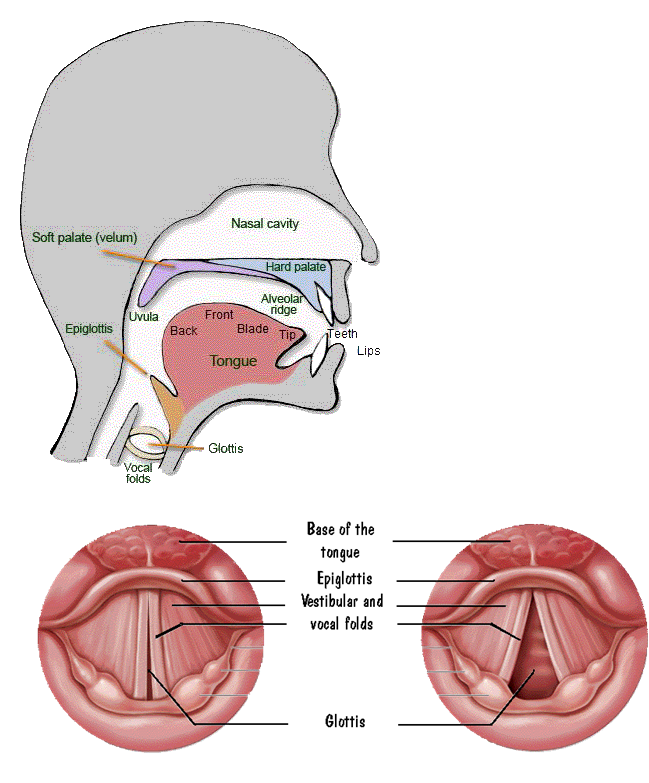
Demystifying the Different Styles of Yoga Introduction With so many styles of yoga available, it can be overwhelming to know which one is right for you. Some yoga classes focus on strength and movement, while others emphasize relaxation and meditation. Whether you’re a beginner or an experienced practitioner, understanding the different styles of yoga can help you choose a practice that aligns with your needs, goals, and preferences. This guide breaks down the most popular styles of yoga, their unique benefits, and who they’re best suited for. 1. Hatha Yoga – The Foundation of All Yoga What It Is: Hatha yoga is a general term for physical yoga practices (asana and pranayama). In modern yoga, Hatha classes are typically slower-paced and focus on basic postures, alignment, and breath control. Best For: Beginners looking for an introduction to yoga Those who prefer a slower, balanced practice Anyone seeking relaxation and improved flexibility What to Expect: A mix of standing and seated poses Gentle breathing exercises A calming, meditative approach 2. Vinyasa Yoga – Flowing and Dynamic What It Is: Vinyasa yoga is a fluid, movement-based practice where poses are linked together through breath. Often called “flow yoga,” it offers creative sequencing and continuous movement. Best For: Those who enjoy a dynamic, athletic practice People who like variety and creative sequences Anyone wanting to build endurance and flexibility What to Expect: Fast-paced movement synchronized with breath A variety of poses in each class Builds strength, flexibility, and cardiovascular fitness 3. Ashtanga Yoga – Structured and Physically Demanding What It Is: Ashtanga yoga follows a fixed sequence of poses in a precise order. It is a disciplined and physically intense practice with an emphasis on breath, bandhas (energy locks), and drishti (gaze). Best For: Dedicated practitioners who enjoy structure and discipline Those looking for a physically demanding practice People who want a self-led (Mysore-style) approach What to Expect: A set sequence repeated in every class Challenging transitions and postures A focus on personal progress and self-discipline 4. Power Yoga – Strength and Sweat What It Is: Power yoga is a modern, fitness-based approach to Vinyasa yoga, emphasizing strength, endurance, and flexibility. It often includes elements of Ashtanga but is more flexible in sequencing. Best For: Athletes and fitness enthusiasts Those looking for a high-energy, sweat-inducing practice People who enjoy strength training with yoga What to Expect: A vigorous, fast-paced flow Strength-building poses and core work Less focus on spirituality, more on physicality 5. Yin Yoga – Deep Stretching and Stillness What It Is: Yin yoga is a slow, meditative practice that targets deep connective tissues. Poses are held for 3-5 minutes, allowing muscles to relax and fascia to release. Best For: Those seeking deep relaxation and flexibility Anyone with tight muscles or joint stiffness People looking to balance a high-energy lifestyle What to Expect: Passive stretching with longer holds A meditative, introspective approach Deep physical and emotional release 6. Restorative Yoga – Ultimate Relaxation What It Is: Restorative yoga is a deeply relaxing practice that uses props like bolsters, blankets, and blocks to support the body in gentle, long-held poses. It is designed for stress relief and healing. Best For: Those recovering from injury or illness People dealing with stress, anxiety, or burnout Anyone seeking deep relaxation What to Expect: Minimal movement, deep rest Supported poses with props Focus on breath and mindfulness 7. Kundalini Yoga – Awakening Inner Energy What It Is: Kundalini yoga combines movement, breathwork, chanting, and meditation to awaken spiritual energy at the base of the spine. It is a deeply transformative practice that works on mental clarity and emotional healing. Best For: Those interested in energy work and spirituality People seeking mental and emotional breakthroughs Anyone wanting a dynamic mix of movement and meditation What to Expect: Repetitive movements (kriyas) and breathing techniques Chanting, mantras, and meditation Strong energetic shifts and emotional release 8. Iyengar Yoga – Precision and Alignment What It Is: Iyengar yoga is a detail-oriented practice that emphasizes proper alignment and uses props like blocks, straps, and chairs. It’s great for improving posture and preventing injuries. Best For: People with injuries or physical limitations Those who enjoy a structured and precise approach Anyone wanting to refine their alignment What to Expect: Slower pace with an emphasis on posture detail Use of props for support and depth Focus on breath control and mindfulness 9. Bikram Yoga (Hot Yoga) – Sweat and Detox What It Is: Bikram yoga is a specific style of hot yoga featuring a set sequence of 26 poses practiced in a room heated to around 105°F (40°C) with high humidity. Best For: Those who enjoy intense, heated workouts People looking for detoxification through sweat Those who prefer consistency in their practice What to Expect: A fixed sequence in every class High heat and sweating A strong emphasis on endurance and discipline (Note: Many studios now offer “hot yoga” classes that are not strictly Bikram but still take place in a heated room.) 10. Jivamukti Yoga – Spiritual and Ethical Practice What It Is: Jivamukti yoga is a modern yoga style that blends physical asana, music, chanting, meditation, and ethical teachings, often promoting environmental and social activism. Best For: Those looking for a deeper spiritual connection in yoga People interested in yoga philosophy and activism Anyone who enjoys dynamic movement with meaning What to Expect: Strong, flowing asana sequences Incorporation of music, chanting, and philosophy A blend of physical, mental, and ethical teachings Choosing the Right Yoga Style for You With so many styles to explore, how do you choose? Here are a few questions to guide you:   Do you want an energetic or calming practice? Energetic: Vinyasa, Ashtanga, Power, Bikram Calming: Yin, Restorative, Hatha   Are you interested in spirituality and meditation? Yes: Kundalini, Jivamukti, Hatha No: Power, Bikram   Do you need injury-friendly options? Yes: Iyengar, Restorative, Yin   Do you prefer structure or creativity? Structure: Ashtanga, Bikram, Iyengar Creativity: Vinyasa, Jivamukti Final Thoughts Yoga is a deeply personal journey, and
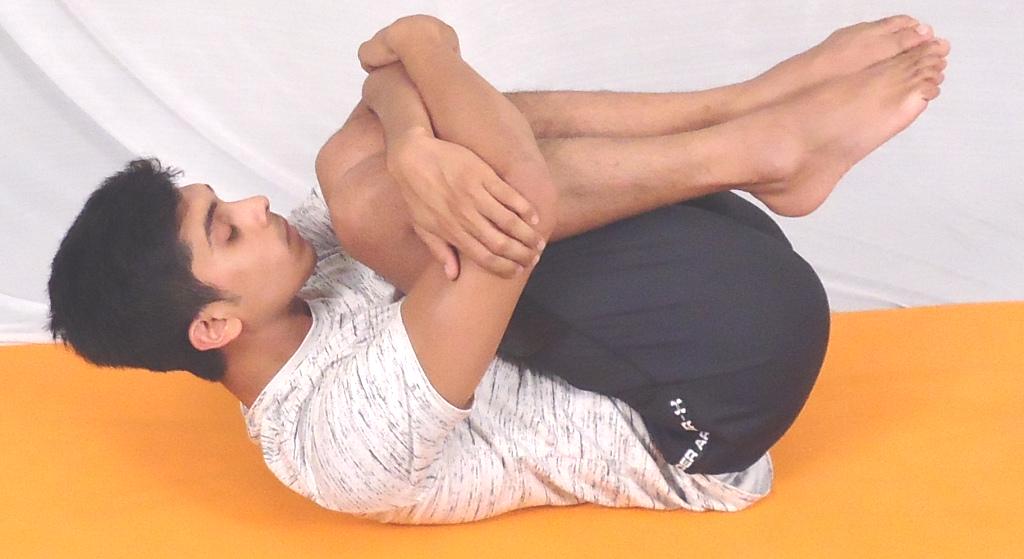
Read More »

Chandra Bhedana Pranayama (Left Nostril Breathing)

Chandra Bhedana Pranayama (Left Nostril Breathing) Chandra Bhedana Pranayama is a cooling yogic breathing technique that activates the Ida Nadi (Moon Channel), which is associated with the parasympathetic nervous system, calmness, and mental relaxation. Chandra= Moon (Cool, Soothing Energy) Bhedana= Piercing or passing through Pranayama= Breath control By inhaling through the left nostril and exhaling through the right nostril, Chandra Bhedana promotes cooling, relaxation, and emotional balance. 🔹 Steps to Perform Chandra Bhedana Pranayama Preparation: ✔️ Sit comfortably in Padmasana (Lotus Pose) or Sukhasana (Easy Pose)✔️ Keep your back straight and hands in Chin Mudra✔️ Close your eyes and relax your breath Technique: 1️⃣ Close your right nostril with your right thumb (using Vishnu Mudra)2️⃣ Inhale slowly and deeply through the left nostril3️⃣ Close your left nostril with your ring finger4️⃣ Exhale slowly and completely through the right nostril5️⃣ Repeat this process for 5-10 minutes 💨 Breathing Ratio: 1:2 (If you inhale for 4 seconds, exhale for 8 seconds) 🌙 Best Time to Practice: Early morning or before bedtime During hot weather or when feeling stressed 🔹 Benefits of Chandra Bhedana Pranayama ✅ Calms the nervous system and reduces stress & anxiety✅ Balances Pitta Dosha (cooling effect)✅ Improves mental focus & clarity✅ Reduces body heat & hyperactivity✅ Enhances sleep quality (good for insomnia)✅ Lowers blood pressure and promotes relaxation✅ Activates the parasympathetic nervous system 🔹 Precautions & Contraindications ❌ Avoid if you have low blood pressure❌ Not suitable for those with respiratory issues like asthma❌ Avoid in extreme cold weather❌ Pregnant women should consult a doctor before practicing  

Read More »

Jnana Mudra (Gesture of Knowledge): Meaning, How to Do & Benefits

Jnana Mudra (Gesture of Knowledge): Meaning, How to Do & Benefits What is Jnana Mudra? Jnana Mudra, also known as the Gesture of Knowledge, is one of the most well-known and widely practiced mudras in yoga and meditation. It symbolizes wisdom, enlightenment, and inner awareness. The gesture represents the connection between the individual self (Jivatma) and the universal consciousness (Paramatma), making it a key practice for deep meditation and mental clarity. How to Do Jnana Mudra (Step-by-Step Guide) ✅ Step 1: Sit comfortably in a meditative posture (Padmasana, Sukhasana, or Vajrasana) with a straight spine.✅ Step 2: Rest your hands on your knees with palms facing upward.✅ Step 3: Touch the tip of the index finger to the tip of the thumb, forming a circle.✅ Step 4: Keep the other three fingers extended but relaxed.✅ Step 5: Close your eyes, take slow deep breaths, and focus on your breath or mantra.✅ Step 6: Hold this mudra for 10–30 minutes, preferably during meditation. 📌 Best Time to Practice: Early morning or before meditation📌 Recommended Duration: 10–30 minutes, daily📌 Optional: Can be combined with OM chanting or deep breathing exercises Meaning Behind Jnana Mudra The symbolism of Jnana Mudra lies in its hand position:✔️ Thumb (Divine Consciousness): Represents Brahman (universal consciousness)✔️ Index Finger (Individual Self): Symbolizes Jiva (ego or personal consciousness)✔️ Union of Fingers: Represents the dissolution of ego and merging with the universe✔️ Three Extended Fingers: Symbolize the three Gunas (Sattva – purity, Rajas – activity, and Tamas – inertia) By forming this mudra, a practitioner invokes higher knowledge, wisdom, and spiritual awareness. Benefits of Jnana Mudra 1️⃣ Enhances Focus & Mental Clarity ✔️ Improves concentration, memory, and learning ability✔️ Reduces brain fog, overthinking, and mental distractions 2️⃣ Promotes Deep Meditation & Spiritual Awakening ✔️ Helps in calming the mind and deepening meditation✔️ Connects with higher consciousness and self-realization 3️⃣ Reduces Stress, Anxiety & Negative Emotions ✔️ Balances the nervous system and emotions✔️ Increases inner peace and mindfulness 4️⃣ Improves Sleep & Relieves Insomnia ✔️ Induces relaxation and tranquility✔️ Helps in regulating sleep cycles and reducing restlessness 5️⃣ Boosts Brain Function & Nervous System Health ✔️ Activates the brain’s cognitive centers✔️ Helps in reducing symptoms of stress-related disorders Variations of Jnana Mudra 🔹 Chin Mudra (Gesture of Consciousness) – The same hand position but with palms facing downward (for grounding and inner stability). 🔹 Dhyana Mudra (Meditation Gesture) – Placing both hands in the lap with Jnana Mudra for deep contemplation and stillness. Precautions & Contraindications ✅ Safe for all age groups and can be practiced anywhere.⚠️ Avoid practicing if feeling overstimulated or hyperactive – reduce duration if needed. 🔹 Tip: Combine Jnana Mudra with deep breathing (Pranayama) or mantra chanting for amplified benefits. Final Thoughts Jnana Mudra is a powerful yet simple hand gesture that enhances wisdom, clarity, and spiritual awareness. With regular practice, it helps in calming the mind, improving focus, and deepening meditation.  

Read More »

10 Ways to Incorporate Meditation Into Your Daily Routine

10 Ways to Incorporate Meditation Into Your Daily Routine Meditation doesn’t have to be a long or complicated practice. Even a few minutes of mindfulness can bring calmness, clarity, and focus to your day. Here are 10 simple ways to integrate meditation into your daily routine: 1. Morning Mindfulness (Start Your Day with Intention) ✅ How? Before getting out of bed, take 2-5 minutes to focus on your breath.✅ Benefits: Sets a positive tone for the day and reduces stress.📌 Tip: Try a short gratitude meditation by mentally listing 3 things you’re thankful for. 2. Breath Awareness During Daily Tasks ✅ How? While brushing your teeth, making coffee, or showering, focus on your breath and sensations.✅ Benefits: Turns routine moments into mini-meditations, keeping you present.📌 Tip: Inhale deeply through the nose, exhale slowly through the mouth. 3. Walking Meditation ✅ How? Walk slowly and focus on each step, the rhythm of your breath, and the sensation of movement.✅ Benefits: Combines movement and mindfulness, great for stress relief.📌 Tip: Try it while walking in nature or during your daily commute. 4. Mindful Eating ✅ How? Eat slowly, savor each bite, and pay attention to textures, flavors, and smells.✅ Benefits: Improves digestion, reduces overeating, and enhances appreciation for food.📌 Tip: Put your phone away while eating to fully engage with the experience. 5. Take a 2-Minute Meditation Break ✅ How? Pause during your workday to close your eyes, breathe deeply, and reset your mind.✅ Benefits: Enhances focus, productivity, and stress relief.📌 Tip: Set a reminder to pause and breathe every few hours. 6. Meditate Before Sleeping ✅ How? Before bed, do a 5-minute guided meditation or deep breathing exercise.✅ Benefits: Improves sleep quality and relaxes the nervous system.📌 Tip: Try Yoga Nidra or a body scan meditation for deeper rest. 7. Mindful Listening ✅ How? During conversations, give full attention to the speaker without distractions or interrupting.✅ Benefits: Strengthens relationships and improves communication.📌 Tip: Take a deep breath before responding to stay present and engaged. 8. Use an App or Guided Meditation ✅ How? Apps like Headspace, Insight Timer, or Calm offer quick, guided sessions.✅ Benefits: Makes meditation easy and accessible.📌 Tip: Start with just 5 minutes per day. 9. Meditate During Chores ✅ How? While washing dishes, folding laundry, or sweeping, focus on the rhythm of your movements and breath.✅ Benefits: Turns boring tasks into relaxing mindfulness exercises.📌 Tip: Engage fully in the sensation of warm water, textures, or sounds. 10. Gratitude Reflection Before Bed ✅ How? Spend 2-3 minutes thinking of things you’re grateful for before sleeping.✅ Benefits: Cultivates positivity and reduces anxiety.📌 Tip: Write down 3 good things from the day in a journal. Final Thoughts Meditation doesn’t have to be a separate activity—it can be woven into everyday moments. By practicing mindfulness in simple ways, you’ll experience greater peace, focus, and well-being without needing extra time.  

Read More »

Ashtanga Yoga vs. Bikram Yoga – Which is Better?

Ashtanga Yoga vs. Bikram Yoga – Which is Better? Both Ashtanga Yoga and Bikram Yoga are intense and structured styles, but they have different philosophies, benefits, and approaches. The best choice depends on your goals, fitness level, and preferences. In this article, we’ll compare Ashtanga and Bikram Yoga based on key factors like structure, intensity, benefits, and suitability to help you decide which one is better for you. 1. Overview of Ashtanga Yoga What is Ashtanga Yoga? Ashtanga Yoga is a dynamic and physically demanding practice that follows a fixed sequence of poses combined with breath control (Ujjayi Pranayama), energy locks (Bandhas), and gaze points (Drishti). ✔ Created by Sri K. Pattabhi Jois in the 20th century.✔ Involves six progressive series (Primary, Intermediate, and four Advanced series).✔ Requires discipline and consistent practice. Key Features of Ashtanga Yoga: ✔ Fast-paced, physically intense flow of poses.✔ No room heating – Heat is generated naturally through movement.✔ Focuses on breath-movement synchronization (Vinyasa flow).✔ Encourages self-practice (Mysore style) or guided led classes. Who is Ashtanga Yoga Best For? ✔ Experienced yogis who love structure and discipline.✔ Those looking for strength-building, flexibility, and endurance.✔ People comfortable with challenging sequences and intense physical exertion. 2. Overview of Bikram Yoga What is Bikram Yoga? Bikram Yoga is a hot yoga style that consists of a fixed sequence of 26 postures and two breathing exercises performed in a heated room (40°C / 104°F) with 40% humidity. ✔ Created by Bikram Choudhury in the 1970s.✔ Every class follows the same 90-minute sequence.✔ The high heat increases sweating and flexibility. Key Features of Bikram Yoga: ✔ Intense heat (hot yoga style) to promote detoxification and flexibility.✔ The same sequence of poses every class, focusing on strength and balance.✔ No music, chanting, or hands-on adjustments – just verbal instruction.✔ Hydration is crucial to prevent dehydration from excessive sweating. Who is Bikram Yoga Best For? ✔ Those who enjoy sweating and detoxing in a heated environment.✔ Beginners who prefer a predictable, structured practice.✔ People looking for a low-impact but intense workout. 3. Comparing Ashtanga Yoga and Bikram Yoga Feature Ashtanga Yoga Bikram Yoga Intensity Very intense, fast-paced Intense, but slower movements Sequence Fixed, but varies by series (6 levels) Fixed 26 postures, same every class Heat No external heat; heat is built internally Heated room (40°C) Flexibility Requirement Requires moderate flexibility to start Heat helps increase flexibility Breath Control (Pranayama) Focuses on deep, controlled breathing Limited breathwork, two breathing exercises Sweating Moderate sweating due to movement Heavy sweating due to external heat Strength & Endurance Builds muscular strength and stamina Focuses on balance and endurance Mental Challenge Requires mental focus and patience Requires mental resilience to handle heat Accessibility More challenging for beginners Easier for beginners due to repetition Weight Loss Effective for weight loss with regular practice Helps with weight loss due to sweating Best for Beginners? Better for intermediate to advanced yogis More beginner-friendly 4. Which One is Better for You? The answer depends on your personal goals, fitness level, and preference for heat. ✔ Choose Ashtanga Yoga if: You want a physically demanding, strength-building practice. You prefer structured yet evolving sequences. You like fast-paced, flowing movements (Vinyasa-style yoga). You are comfortable with self-discipline and long-term progression. ✔ Choose Bikram Yoga if: You enjoy hot yoga and sweating. You prefer a fixed, predictable sequenceevery class. You want a low-impact but detoxifying workout. You are a beginner looking for a guided, structured routine. Final Verdict: Ashtanga vs. Bikram Yoga Both styles have unique benefits: Ashtanga Yogais best for building strength, endurance, and flexibility while developing discipline. Bikram Yogais best for sweating, detoxification, and improving flexibility in a heated room. If you want a dynamic, evolving practice, go for Ashtanga Yoga.If you prefer a structured, hot yoga experience, try Bikram Yoga.  

Read More »
[gravityform id="2" title=false]
Call Back Form