Ethics in teaching and touching
Ethics in teaching and touching. Yoga philosophy emphasizes deeply the practice of Yama. Yama is a personal code of ethics for practicing and teaching yoga. It includes Ahinsa – Nonviolence, Satya – Truth speaking, Asteya – Non-stealing, Apahgriha – Non-possessiveness, and Brahmacharya – Abstinence or rightful use of energy. These ethics create a safe environment for the students and clear the intentions of teaching yoga. The teacher should teach what is true to their knowledge and not beyond their expertise. They shouldn’t push the student in a way that can be harmful to the student, physically, mentally, or emotionally. The teacher should be aware of the functional anatomy, contradictions, and risk factors for practicing yoga and help to strengthen students’ practice. Touching to correct alignment is an important part of teaching yoga. However, it should always be consented to by the student and the teacher should ask for consent before approaching the student. The teacher should not touch the student blindly, randomly, forcibly, meanderingly, and inappropriately. The touching should only be to correct the alignment and provide support or stability in an asana. The consent needs to be valued at all times.
Importance of studying anatomy in hatha yoga application
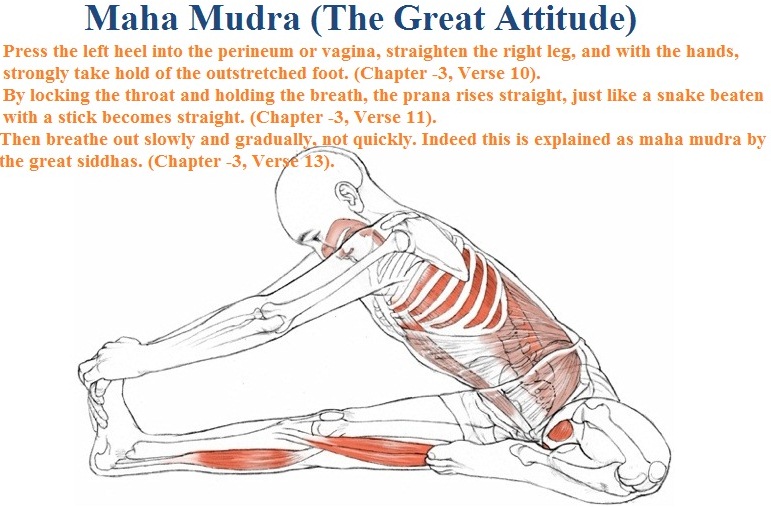
Importance of studying anatomy in hatha yoga application Anatomy: Anatomy is the study of the structure of an organism. This involves the understanding of appearance, structure, location, organization of the various parts of the organism. Importance of studying anatomy in yoga: In Ashtanga Yoga, the practice of asanas and pranayama engages the entire body and physiological processes. They understand the right way to perform an asana the structure is needed to be clear which requires the understanding of bone and muscle alignment. An understanding of anatomy also gives the individual the efficiency to analyze the practice to create effective movement patterns. This effective practice will further aid and prevent the body from possible injuries. Furthermore, knowing one’s body helps in understanding one’s body better, bringing the focus of one’s awareness to the area of the body which requires more attention. In summary, it helps in being more tuned to one’s own body. In pranayama practice, anatomy helps in understanding the movement of prana (breath) within the body. Understanding where the breath is traveling during different pranayama practices. For example, the movement of the abdomen during abdomen breathing and movement of ribs/ chest during thoracic breathing. It facilitates the focus needed during pranayama. Physiology: It is the study of the process of living organisms. Study of how the organism functions. Cell: It is the smallest unit responsible for all life’s processes. Systems in the Human Body: Locomotor System Blood Vascular System Digestive System Respiratory System Ductless System Urogenital System Nervous System Special Sense Organ System Excretory System Locomotor System: It consists of parts of the body responsible for movement including the skeletal system, bones, cartilages, ligaments, muscular system, etc. Blood Vascular System: It is the lymphatic or circulatory system, it consists of the heart, arteries, and veins. It is responsible for the circulation of nutrients, blood, oxygen, etc to various parts of the body. It is also responsible for removing waste from the blood and the lymph, it is responsible for fighting diseases and hence is important for immunity. Respiratory System: It is a network of organs and tissues that function together to exchange oxygen and carbon dioxide. Releasing carbon dioxide and In taking oxygen. It consists of the nose, nasal cavity, pharynx, larynx, trachea, bronchi, bronchioles, and lungs. Nervous System: It is a complex network of the brain, spinal cord, nerves, neurons, and other non- neuron cells and sensory receptors that are responsible for several functions including perception, sensation, movement, thinking, formation of memories, emotions, etc. Courtesy To: Shrutika Mishra, RYT – 200 Hour
PRANAYAMA AND PSYCHOSOMATIC DISORDERS
PRANAYAMA AND PSYCHOSOMATIC DISORDERS Psychosomatic Disorders are conditions involving the occurrence of physical symptoms without an actual physical source. For example Pain Disorder, Hypochondriasis, Conversion disorder, Somatization disorder, etc. In each of these disorders, there is the presence of physical symptoms however they are manifested physically due to the disturbance of the mind. These issues are also seen in medical conditions like PCOS, gastrointestinal disturbances, migraine and tension headaches, pelvic pain, impotence, frigidity, dermatitis, and ulcers. Hence, these physical symptoms are manifestations of a disturbed mind. Pranayama is a practice of gaining control over one’s breathing. Through the practice of Pranayama, one can regulate or gain mastery over the Pranayama Kosha. By having control over one’s Vital Energy, one can also gain control over the Annamaya Kosha and Manomaya Kosha. Annamaya Kosha is where the body exhibits the physical manifestations. Through controlled breathing such as yogic breathing, the human body activates the parasympathetic nervous system which is vital for restoring equilibrium in the body. It directly affects the Annamaya Kosha as well as the 5 major pranas (Prana, Apana, Udana, Vyana and Samana). The movement of energy in the body is in control of the individual through the practice of pranayama. By focusing this energy on different pranas brings different benefits eventually leading to a more settled physiological process. Furthermore, when an individual is faced with stress their breathing gets disrupted leading to disruptions in the flow of energy in pranas. Through pranayama, the breathing is controlled, and the flow of energy is directed in an adequate way. Finally, the mastery of Pranayama Kosha leads to strengthening the Manomaya Kosha. The disruptions of the mind, memories, perspective, and intellect. Pranayama helps in grounding and centering one’s attention and awareness to breathing. Momentarily, if the individual is mindful, the disruptions can reduce. This reduction in the fluctuations or disruptions can further weaken the possibility of physical manifestation of stress. Gradually, as the individual gains more and more control over this, and becomes more mindful, the vulnerability reduces even further. Courtesy To: Shrutika Mishra, RYT – 200 Hour
FULL YOGIC BREATHING AND ITS BENEFITS
FULL YOGIC BREATHING AND ITS BENEFITS Full Yogic Breathing is a conscious practice of breathing used in Pranayama which utilizes conscious breathing from three areas of the body: abdomen, thoracic, and clavicle. The process is inhaling deeply first into the abdomen, then filling the lungs, and finally the clavicle region. While exhaling, the air is released first from the clavicle region, the lungs, and then finally the abdomen. The yogic breathing is beneficial in awakening the Pranayama Kosha or the life force energy (prana). It activates the Parasympathetic nervous system boosting the rest and the digestion of the body, it helps in conserving and building energy and regulating bodily functions activated during the activation of the Parasympathetic Nervous System. Hence, it helps in stimulating digestion, metabolism, regulating the heart rate and blood pressure. There is an increased intake of oxygen because of yogic breathing, improving the quality of breathing and strengthening lung capacity. As it helps in improving the functioning of the Parasympathetic Nervous System, yogic breathing also helps in improving various aspects of mental health. It helps in reducing stress levels and physiological stress arousal, it also helps with gaining control over breathing which is helpful at moments of anxiety and panic. Furthermore, by regulating the breathing through yogic breathing the sleep is also positively affected improving the quality of sleep. The practice of yogic breathing is helpful in regulating any type of physiological arousal allowing the individual to reserve back to equilibrium. Finally, it is also vital for improving mindfulness. Courtesy To: Shrutika Mishra, RYT – 200 Hour
Sun (surya) salutations (Namaskara): Contraindication
Sun (surya) salutations (Namaskara): Contraindication/Precaution/Limitation All styles of Surya Namaskar (Sun Salutation) including Ashtanga A & B and Chandra Namaskar (Moon Salutation) is a sequence of poses done with the flow of energy, proper breathing, and this requires a certain physical strength especially for beginners. Hence, these sequences do have their limitations and should not be performed if one is suffering from certain ailments. In these yoga poses, the muscles are put into work continuously, so it is better to do with good guidance. Below are some of the contraindications of these sequences. Bodily Weakness: Care should be taken if one has general body or muscle and bone weakness. Or continuous practice flow can cause damage to the feeble body parts. Back pain: The spine expands and contracts to put pressure on the lower back and hip. Hence someone with a back issue or injured back should certainly avoid this even if one has practiced this for It is essential to take a yoga teacher’s guidance or start again slowly. Once the yoga practitioner has recovered from the back ailment or injury he/she can continue their practice. Pregnant Women: Not advisable to be done by pregnant women as this puts pressure on the back and the abdominal area. High Blood Pressure: People suffering from high blood pressure should avoid this sequence. But with proper guidance from a yoga teacher and for someone not elderly can begin this yoga pose slowly and carefully. Heart Problem: Someone with a heart issue is advised to consult a physician before practicing these asanas sequences. Remember that the age factor does play a big role for someone with heart Old people must completely avoid the practice. Arthritis: Knee strength plays an important role in the various postures in Surya Namaskar. So someone who has severe arthritis leading to knee stiffness, should take it slow or avoid this sequence. Wrist Injury: Injury at the wrist will make the sequence difficult as pressure on the wrists in poses like Cobra Pose, Adho Mukha Svanasana, and going down to Eight Limb Pose would cause more stress and injury to the wrists. Thus to conclude, someone who is new to yoga and has one or more of the above ailments needs proper guidance from a yoga teacher or someone who is experienced in yoga after consultation from a physician. One needs to work on the Sun Salutation sequence intelligently while keeping the impact on the muscles in mind at each pose. Courtesy To: Ananya Kasiraj, RYT – 200 Hrs (student assignment)
Pancha Koshas and its application of yogic techniques in each layer
Pancha Koshas and its application of yogic techniques in each layer As humans, we define our identity and personality traits on the basis of physical, mental, and spiritual aspects. However, “The Pancha Kosha” theory from the Taittiriya Upanishad clearly explains the five layers of false identities namely, Annamaya Kosha (physical body), Pranamaya Kosha (vital life force), Manomaya Kosha (mind with emotions, feelings, etc), Vijnanamaya Kosha (intellect, ego, etc) and Anandamaya Kosha (bliss, total ignorance). Due to ignorance, we wrongly conclude one or more of these 5 layers to be our true self, leading to the root cause of all human suffering. There are a set of yogic practices which can help us transcend these 5 koshas (layers of false identities). Let’s discuss each kosha and the yogic practices applicable to each layer. Annamaya Kosha: “ Anna” means food and Annamaya Kosha means “ the sheath containing food” is the physical body consisting of blood, flesh, bones, fat, and eating and drinking to sustain the body. The one who understands him/herself within this kosha would define themselves as the physical body and undergo sufferings related to the body. In order for one to keep their body healthy and to make them realize that their body is just merely a vessel containing their true self, he/she must do the practice of yoga asanas or physical workout. Consistent and sincere asana practice helps us relate our body with the other aspects of the Pancha Koshas. Pranamaya kosha: The pranamaya kosha is the life force energy (prana) within the annamaya kosha but it is also related to the aura, it is not simply contained within the physical body – because our aura expands out beyond the body. The prana is then said to be subdivided into various forms called the vayus. They are prana, apana, samana, udana and vyana and according to prana moves via the nadis (energy pathways) to the chakras (spinning energy centers that collect, transform and distribute the energy), and these energy channels are linked to our sense of breath and stimulus in our nervous system. One might think they are the prana, but that’s not the case. For those identifying themself as the energy of life force, they must do the practice of pranayama or breathing exercise. Awareness while breathing increases our lung capacity and helps us calm down nerve impulses. After this practice, we might feel a sense of euphoria, a feeling that nothing is hurting us, and a deepened sense of stillness. This is our prana. However, it does not stop here, we observe that something called the mind is connected to this layer which has to be dealt with. Prana is just another layer of ignorance we must pass through to find our true nature. Manomaya Kosha: The mind sheath manomaya kosha is made up of a collection of thoughts and emotions. Those who think they are actually the mind, undergo suffering caused by unstable thoughts. The mind is like a playful child always running around, it needs to be disciplined by its parents. Similarly, we need to make our minds come to focus on the present moment. The complete set of practices of yoga asana, pranayama, and meditation all together must be practiced to discipline our minds. Mental suffering can end up affecting the prana and the physical body. Hence, this holistic approach can help control the mind through the mastery of the body and the vital life force. Most importantly meditation works effectively to connect with our mind and practice “the observation of thoughts and emotions” from an eagle’s point of view. We will find out that no thoughts or feelings can truly cause us any harm. In doing so we see that our true self is in fact something beyond the mind. Vigyanamaya Kosha: The 4th layer Vigyanamaya kosha is also known as the ego or the intellect. There is always this voice behind our emotions trying to tell us the right actions we must take. The intellect or consciousness thinks logically devoid of emotions and unstable thoughts. Yet those who identify themselves as the intellect become very overconfident and egoistic leading them to suffer. For such people, they need to practice spirituality and read valuable scriptures like the Bhagavad Gita. By gaining the right knowledge they can become humble and transcend out from a life of suffering. Anandamaya kosha: Ananda means happiness, bliss, or total ignorance. The ultimate goal for our Atma (soul or true self) is to reach the level of anandamaya kosha before attaining samadhi. Those who have figured out the existence of anandamaya kosha are also called realized souls. For such persons live a renounced life, usually in a natural surrounding environment like ashrams. They tend to practice all forms of yoga-like karma yoga, jnana yoga, bhakti yoga, and raja yoga. Such people prefer going on pilgrimages or calming recreational trips like hiking, to appreciate all the small things the world has provided us with. Pancha koshas are the 5 layers of ignorance, one has to work on separating themselves from adapting to the illusion of having these koshas as our true identity. Consistent yogic practices have proven to be the best approach to transcend out of these layers and lead a life devoid of much suffering and help us become free from our karma or the unexpected external circumstances. These practices ultimately pave the way towards nirvana or the state of samadhi. Courtesy To: Ananya Kasiraj, RYT – 200 Hrs (student assignment)
Yoga Teacher Code of Ethics
As a Yoga educator, one accepts accountability to act in the most ideal manner. To attempt to lead a daily existence that upholds the lessons and good standards of the act of Yoga. As an educator, you have an obligation to your understudies – an obligation to show others how it’s done – and to plainly exhibit the characteristics and qualities related to being an extraordinary instructor by your conduct both on and off the mat. Yoga educators comprehend and like that showing, Yoga is a respectable and recognizing attempt, which adjusts them to a long queue of decent instructors. Yoga educators are focused on rehearsing Yoga as a lifestyle. Yoga educators are focused on keeping up with perfect norms of expert skill and respectability. Yoga educators commit themselves to an exhaustive and proceeding with study and practice of Yoga, specifically the hypothetical and down-to-earth parts of the branch or kind of Yoga that they instruct others. Yoga educators are focused on staying away from substance misuse and, if for reasons unknown, they surrender to synthetic reliance will quit instructing until they are free again from medication and liquor misuse. All things considered, they will do their best to remain free, including full responsibility to a care group. Yoga instructors will precisely address their schooling, preparing, and experience pertinent to their educating of Yoga. Yoga instructors are focused on advancing the physical, mental, and profound prosperity of their understudies. Yoga instructors, particularly those showing Hatha-Yoga, will keep away from offering clinical guidance, or counsel that could be deciphered accordingly, except if they have the essential clinical capabilities. Yoga educators especially embrace the ideal of honesty in managing understudies and others. Yoga instructors are available to educating all understudies independent race, identity, sex, sexual direction, and social or monetary status. Yoga educators will acknowledge understudies with actual inabilities, giving they have the ability to show those understudies appropriately. Yoga educators will approach their understudies with deference. Yoga educators won’t ever compel their own viewpoints on understudies yet like the way that each individual is qualified for their perspective, thoughts, and convictions. Yoga instructors will stay away from any type of lewd behavior of understudies. Yoga instructors wishing to enter a consensual sexual relationship with a present or previous understudy should look for the prompt insight of their friends prior to making any move. Yoga educators will bend over backward to try not to take advantage of the trust and expected reliance of understudies and rather urge them to discover more prominent inward opportunity. Yoga instructors recognize the significance of the legitimate setting for educating and consent to try not to instruct in an easygoing way, which incorporates noticing appropriate propriety inside and outside of class. Yoga educators endeavor to rehearse resistance toward other Yoga instructors, schools, and customs. At the point when analysis must be brought, this ought to be done in decency and with suitable respect for current realities. These Ethical Guidelines are not comprehensive, and the way that a given lead isn’t explicitly covered by these Guidelines remains silent with regards to the moral or deceptive nature of that direct. Yoga instructors consistently try to regard and, as well as could be expected, stick to the conventional yogic implicit rules just as to the law current in their nation or state.
3 Ways, Will Make You a Better Yoga Teacher
You’ll figure out who you are as a teacher When you are alone with us, we will focus on your strengths and weaknesses as a teacher so that you can grow and develop your own unique talents. We will ask you, “How do you present the idea of yoga to your students?” Once we have defined your point of view, we will take a look at where you are missing the mark and build on what you are really good at. When you teach what you are good at, it feels truly authentic, whether it’s alignment, anatomy or philosophy. You’ll grow into a master Claiming a room and being exceptionally certain doesn’t come effectively to certain individuals. A few educators don’t have the certainty to state, “Actually no, not in my room, not that way.” We’ll show the abilities to catch up on “no” with helpful strides forward, which makes a more associated instructor understudy relationship. We’ll additionally chip away at drawing in with the class and getting your understudies to realize that you see them. Think before you say If you want to say something, make sure you know what you are saying and why. For example, when aligning, one size fits all is impossible. I will not teach you “hints” that you can recite. Many times people don’t know what is in their mouth and why they say that.
3 myths about Yoga, Bio-Mechanism & posture alignment
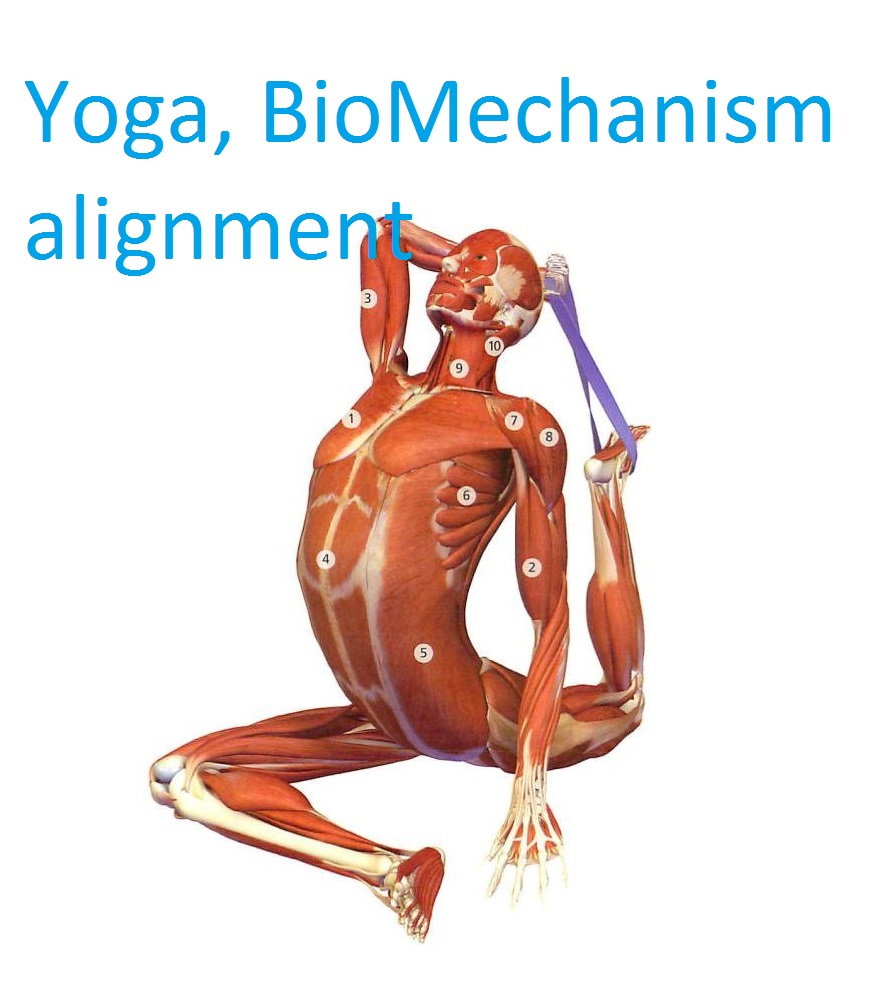
How important is bio-mechanism education for yoga teachers? The bio-mechanism is the science of movement. It includes the study of all physiological mechanisms of the body. The study of kinetics is important in educational disciplines such as rehabilitation therapy, sports medicine, exercise, biomechanics, and orthopedics. Since Hatha Yoga is based on movement, it makes sense for someone who specializes in teaching the physical form of yoga to know the kinetics of the body. More specifically, biomechanics is the scientific study of human bones, joints, tissues, nerves, and muscles. The practice of yoga focuses on moving the body to the proper position, which will strengthen and lengthen the joints and muscles. Kinetics and yoga seem to go hand in hand. When teaching yoga, you are teaching students how to safely move their bodies to specific positions to obtain specific effects. Yoga teachers must understand how different parts of the bodywork together. Bio-mechanism Education for Safety and Alignment Imagine a scenario where you teach a class full of beginners how to perform the Triangle pose for the first time. You will make sure that students adopt a broad posture with proper alignment, and then position their toes to the desired extent. Then, students must focus on the hips, keep them straight forward, and practice moving from the hips instead of guiding them with the shoulders or another part of the body. Once the hips are in place, students should reach with the upper arm up, the shoulders down, and back. Finally, the yoga instructor must convey how to extend the hand towards the front foot, while reaching towards the ceiling, opening the chest, and directing the gaze upwards. One posture covers almost the entire body, from toes to head. When students learn to pose, yoga instructors need to be able to understand the limitations of the students and adjust their bodies accordingly. This requires not only understanding the posture itself but also understanding how the body works. If the student feels pain or discomfort due to the posture, then the job of the yoga instructor is to adjust the body to reduce the discomfort. This requires understanding human dynamics. Importance of bio-mechanism Education Biomechanics knowledge is vital background information for yoga instructors. Although you may not always teach your students about specific tissues or joints, it is important to develop a general understanding of how the human body works. One of the aspects of Hatha Yoga is to get closer contact with our body. Therefore, it is meaningful for yoga teachers to understand the scientific knowledge and knowledge of the body.
Vinyasa Flow Yoga
The definition of Vinyasa Flow Yoga is more difficult to define than other methods because it embodies the continuous, dynamic, and conscious evolution of this practice. It reflects the continuous interaction of human beings in the flow of life, linking our inner essence, life experience and accepted traditional wisdom together because we have explored and discovered new possibilities for creative expression and conscious life on this planet earth. The term vinyasa comes from nyasa, which means “to place” and vi means “in a special way.” The term flow, when referring to Hatha yoga, “means to practice with a theme or purpose with interconnected or interrelated poses.” In conclusion, Vinyasa Flow suggests a practice where we consciously place the body-breath-mind in a continuous flow of space and time. Like Ashtanga Vinyasa Yoga, Vinyasa Flow moves steadily from one posture to another in synchronization with ujjayi pranayama, often pausing and maintaining the posture at different times while maintaining the rhythm of breathing. Unlike Ashtanga Vinyasa, each class usually provides a different sequence of poses, although most classes use some form of Surya Namaskara A and B from the astanga lineage. Many classes also closely follow the basic standing postures and the ending sequence found in Ashtanga Vinyasa. Many Vinyasa Flow classes use the principle of Iyengar alignment, dynamic movements in poses, and the use of props. In Vinyasa Flow’s emphasis on vinyasa krama, one can see Krishnamacharya’s insights and methods, krama refers to the “stage” of creating conscious body sequencing. Vinyasa krama also refers to the stages of practice that adapt to different intentions and abilities, so you start where you are and move consciously in “a special way”, from simple to more complex positions. Vinyasa Flow often employs the concept of pratikriyasana, which means neutralization or “opposite poses”. Working on the idea of “special placement”, many Vinyasa Flow teachers emphasize this concept in several relationships within the practice: being aware of how the body is moved and placed in and between poses; conscious connection of breath and body with a mind in and between poses the way you approach your mat, set your intention, stay in touch with that intention throughout your practice, get up from the mat and go out into the bigger world; paying attention to what you are doing, exercising, breathing, moving, feeling, observing, being upstream; opening in a more intuitive way that expresses and embodies the feeling of pranic energy flowing in the universe. Unlike most Hatha yoga approaches, which have a fixed system, Vinyasa Flow is not a system. This allows for creativity in asana sequencing and offers a wide range of topics in different classes. This freedom and dynamism help make Vinyasa Flow one of the most attractive forms of yoga today, resonant in various ways with the spirit, intentions, and life experiences of different teachers and students.