
Bronchial Mudra (Gesture for Respiratory Health)
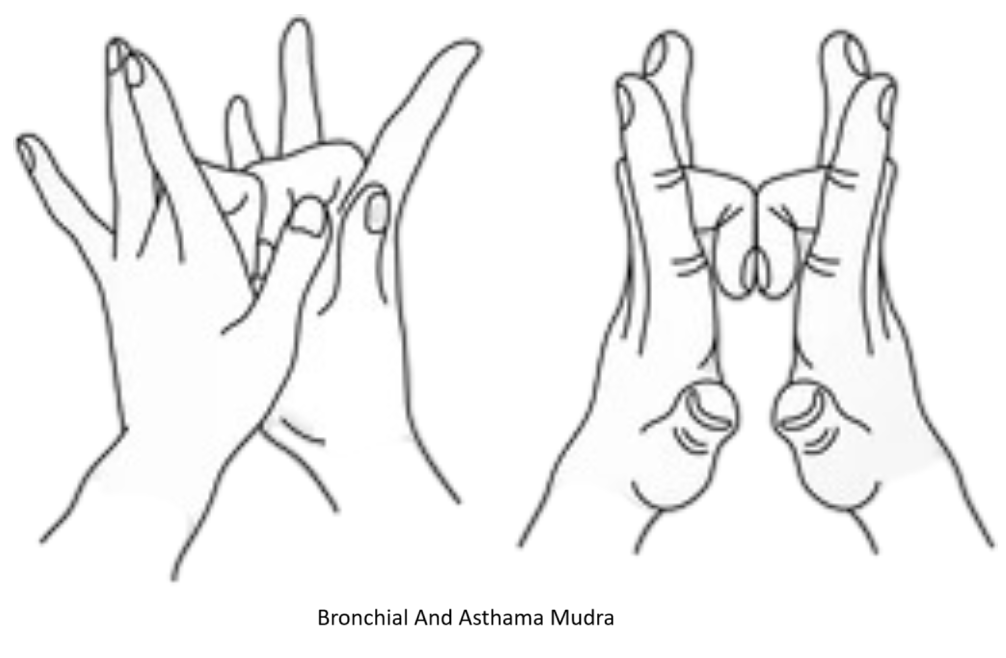
Bronchial Mudra (Gesture for Respiratory Health) Introduction Bronchial Mudra is a therapeutic hand gesture used in yoga and pranayama to support respiratory health. It is particularly effective in strengthening the lungs, easing breathing, and reducing respiratory discomfort. This mudra is recommended for individuals with asthma, bronchitis, or general respiratory weakness. It is part of Ayurvedic and yogic healing practices, where mudras are used to balance elements (Vata, Pitta, Kapha) and optimize physiological function. Meaning Etymology: Bronchial refers to the bronchi, the air passages of the lungs. Mudra means gesture or seal. Symbolism: Represents the opening and cleansing of respiratory pathways. Supports air element (Vayu) balance, improving the flow of prana (life energy) through the lungs. How to Perform Bronchial Mudra Sit comfortably in a meditation posture (Sukhasana, Padmasana, or on a chair). Place the tip of your little finger at the base of your thumb, the tip of your ring finger at the joint of the upper thumb, and the tip of your middle finger at the tip of the thumb. Extend your index finger so that it is straight. Practice this pose with one or both hands for about 5 minutes each day. Follow it with another gesture, where you – Touch the bottom of your palms and bend your middle fingers, in order that they touch one another. Press the fingernails of your middle fingers while extending all your other fingers.Focus on slow, deep breathing, imagining air flowing freely through the bronchial tubes. Maintain this position for 5–15 minutes daily. Tip: Practice this mudra in a calm environment with fresh air for best results. Benefits Improves lung capacity and respiratory efficiency. Helps relieve bronchitis, asthma, and chest congestion. Strengthens diaphragm and intercostal muscles. Promotes relaxation and reduces stress, indirectly aiding breathing. Balances air (Vata) and ether (Akasha) elements, enhancing pranic flow. Supports immune function by enhancing oxygenation and circulation. Contraindications Avoid if there is recent finger or hand injury. People with severe arthritis or hand deformities may need modification. Not a replacement for medical treatment for serious respiratory conditions. Anatomy & Physiology Involves phalanges, interphalangeal joints, and intrinsic hand muscles. Stimulates sensory nerve endings in fingertips, influencing autonomic nervous system. Enhances lung function indirectly by promoting calmness and better diaphragmatic breathing. May improve circulation to the hands, which supports overall oxygenation. Kinesiology Isometric engagement of the thenar, hypothenar, and interossei muscles. Promotes fine motor coordination and proprioception in fingers and hands. Encourages mind-body connection through deliberate finger positioning and focus. Neurology Activates median and ulnar nerves. Engages somatosensory cortex, enhancing awareness and focus on breath. Stimulates parasympathetic nervous system, reducing stress and aiding respiratory function. Visualization of air flow may strengthen neural pathways related to breath control. Duration of Practice Beginners: 5–10 minutes daily. Intermediate/Advanced: 15 minutes, once or twice daily. Can be practiced during meditation, pranayama, or while seated in a calm environment. Counter Mudra Prana Mudra (thumb, ring finger, and little finger together) can be used as a counter to stimulate overall energy and vitality. Alternating with Chin Mudra or Gyana Mudra helps balance mental clarity with respiratory support. Conclusion Bronchial Mudra is a therapeutic gesture for respiratory health, aiding in lung function, stress reduction, and improved breathing. Regular practice enhances energy flow, oxygenation, and overall vitality, especially for those prone to bronchial or respiratory issues. FAQ Q1: Can it help with asthma attacks?A1: It may assist in regular maintenance and calming breath, but acute attacks require medical attention. Q2: Can children practice it?A2: Yes, with guidance for proper finger placement and breathing focus. Q3: Is visualization necessary?A3: Visualization of clean, flowing breath enhances the mudra’s benefits but is optional. Q4: Can it be combined with pranayama?A4: Yes, it complements deep breathing exercises like Anulom Vilom or diaphragmatic breathing. References Swami Satyananda Saraswati, Mudras for Healing and Transformation, Bihar Yoga Publications, 2012. Dr. Harish Johari, Mudra: The Gateway to Health, Inner Traditions, 1994. B.K.S. Iyengar, Light on Yoga, HarperCollins, 2005. Yoga Journal, Mudras for Respiratory Health, 2017. Ayurvedic and yogic texts on Prana and the air element (Vata) regulation.
Bhu Mudrā

Bhu Mudrā Introduction Bhu Mudrā is a yogic hand gesture that symbolizes grounding, stability, and connection with Earth energy. Named after Bhu, meaning “Earth” in Sanskrit, this mudrā is used to stabilize energy, enhance focus, and improve overall vitality. It is often practiced in meditation, pranayama, and yoga therapy to foster a sense of rootedness and inner calm. Meaning Etymology: Bhu = Earth Mudrā = seal, gesture, or symbolic hand position Literal Meaning: “Earth gesture” Symbolism: Represents grounding, stability, patience, and connection with the physical world, helping practitioners feel centered and balanced. How to Perform Practice Sit in a comfortable posture (Padmāsana, Sukhasana, or on a chair) with the spine erect. Let your arms hang straight down from your shoulders toward the ground. Using both hands, fold your ring and little fingers and your thumb into your palm. Keep the middle and index fingers straight so they touch the ground or point toward it, making a relaxed, and inverted ‘V’ shape. Hold for as long as feels comfortable; repeat as required. Close your eyes and focus on rooting energy from the Earth into your body. Maintain steady breathing and visualization for 5–15 minutes daily. Can be combined with pranayama or meditation for enhanced grounding. Benefits Physical Benefits Enhances posture and spinal stability. Improves circulation to lower extremities. Supports muscle relaxation and balance. Mental & Emotional Benefits Reduces anxiety, stress, and restlessness. Improves mental stability, focus, and patience. Promotes emotional balance and inner calm. Spiritual Benefits Stimulates prānic flow through Mūlādhāra (root) chakra. Encourages a sense of grounding and connection with Earth energy. Supports meditation and energy-centered practices. Contraindications Avoid if experiencing severe wrist or hand injuries. Modify practice if circulatory problems or joint pain is present. Maintain gentle posture if lower back issues exist. Anatomy & Physiology Engages intrinsic hand muscles and forearm stabilizers. Activates postural muscles of the spine and core. Enhances blood circulation and lymphatic flow in lower extremities. Supports energy grounding through nerve and subtle energy channels. Kinesiology Involves isometric stabilization of hands and fingers. Promotes neuromuscular awareness and postural alignment. Combines breath, hand placement, and visualization for energetic effect. Neurology Activates parasympathetic nervous system, reducing stress and mental agitation. Stimulates proprioception and body awareness. Enhances focus, patience, and cognitive stability. Duration of Mudrā Beginners: 5–10 minutes daily Intermediate: 10–15 minutes daily Advanced: 15–20 minutes, combined with meditation or pranayama Counter Mudrā Prāna Mudrā – to energize after grounding. Apāna Mudrā – to assist detoxification and energy release. Conclusion Bhu Mudrā is a powerful grounding gesture that enhances physical stability, mental calmness, and spiritual rootedness. It connects practitioners to Earth energy, balances prānic flow, and promotes emotional resilience and focus. Regular practice supports holistic well-being, meditation, and energy balance. FAQ Q1. When is the best time to practice Bhu Mudrā?During meditation, pranayama, or whenever grounding is needed, especially in the morning or evening. Q2. Can it be performed while sitting on a chair?Yes, with spine erect and palms resting on knees. Q3. How long should I hold this mudrā?Start with 5–10 minutes and gradually increase to 15–20 minutes. Q4. What is the main benefit of Bhu Mudrā?It primarily grounds energy, reduces stress, and improves focus and patience. References Swami Satyananda Saraswati – Asana, Pranayama, Mudra, Bandha Joseph & Lilian LePage – Mudras for Healing and Transformation Georg Feuerstein – The Yoga Tradition Swami Niranjanananda Saraswati – Yoga in Daily Life Gertrud Hirschi – Mudras: Yoga in Your Hands
Bhujangini Mudra (Cobra Energy Gesture)
Bhujangini Mudra (Cobra Energy Gesture) Introduction Bhujangini Mudra is a hand gesture inspired by the Cobra (Bhujanga) and is primarily used in yoga and meditation to activate energy, awaken Kundalini, and stimulate vitality. It is often associated with enhancing prana (life force energy) and improving spinal and digestive health. This mudra is less commonly known than Jnana or Chin Mudra but is valued in Tantric and Hatha Yoga practices for its energetic benefits. Meaning Etymology: Bhujangini derives from Bhujanga, meaning serpent or cobra in Sanskrit. Symbolism: Represents kundalini energy rising through the spine like a cobra. Stimulates agni (digestive fire) and awakens latent energy for physical and mental vitality. How to Perform Bhujangini Mudra Sit in a comfortable meditation posture (Sukhasana or Padmasana) with your spine erect. Sit in any comfortable meditation asana. Close the eyes and relax the whole body, especially the abdomen. Push the chin forward and a little upward. Suck in air through the mouth and draw it into the stomach, not the lungs, in a series of gulps as though drinking water. Expand the stomach as much as possible. Hold the air inside for as long as comfortable, then expel the air by belching. Benefits Energy & Vitality: Awakens and circulates Kundalini energy. Spinal Health: Stimulates spinal flexibility and circulation. Digestive Support: Activates digestive fire (Agni) improving metabolism. Mental Clarity: Enhances concentration, focus, and cognitive function. Stress Reduction: Balances the nervous system and reduces tension. Hormonal Balance: Supports endocrine system function indirectly via energy activation. Contraindications Avoid if you have severe spinal or back injuries. People with recent abdominal surgery or hernia should refrain. Not recommended during pregnancy without guidance. Those with cardiac conditions should consult a professional before extended practice. Anatomy & Physiology Involves intrinsic muscles of the hand, forearm flexors, and extensor muscles. Activates blood flow to the hands and fingers, stimulating sensory nerve endings. May influence spinal muscles indirectly through mental focus and visualization of energy movement. Enhances autonomic nervous system balance, particularly stimulating parasympathetic relaxation responses. Kinesiology Movement is primarily isometric with minor finger flexion. Engages thenar, hypothenar, and interossei muscles for maintaining hand posture. Supports neuromuscular coordination between fingers and forearm muscles. Encourages fine motor control and proprioceptive awareness. Neurology Stimulates ulnar, median, and radial nerves through finger contact and tension. Activates somatosensory cortex, aiding focus and awareness. Visualization aspect enhances neural pathways linked to energy perception and mind-body integration. Duration of Practice Beginners: 5 minutes per session. Intermediate/Advanced: 10–15 minutes, once or twice daily. Can be performed during meditation or pranayama practice. Counter Mudra A common counter is Gyana (Chin) Mudra, which emphasizes intellectual clarity rather than energy awakening. Switching between Bhujangini and Gyana Mudra balances vital energy and mental focus. Conclusion Bhujangini Mudra is a powerful energizing mudra that supports physical vitality, mental clarity, and spiritual growth. Through regular practice, it promotes spinal health, digestive efficiency, and overall energy balance. It is best integrated into meditation or pranayama sessions for optimal benefits. FAQ Q1: Can Bhujangini Mudra help with fatigue?A1: Yes, it stimulates energy flow and can help reduce both mental and physical fatigue. Q2: Is visualization necessary?A2: Visualization of energy moving like a cobra enhances the benefits but is optional for beginners. Q3: Can it be practiced during pranayama?A3: Yes, it synergizes well with deep breathing techniques. Q4: Is it safe for children?A4: Generally safe, but supervision is recommended for proper finger posture. References Swami Satyananda Saraswati, Mudras for Healing and Transformation, Bihar Yoga Publications, 2012. Dr. Harish Johari, Mudra: The Gateway to Health, Inner Traditions, 1994. B.K.S. Iyengar, Light on Yoga, HarperCollins, 2005. Yoga Journal, Mudras for Energy and Vitality, 2017. Ayurvedic and Tantric texts on Prana and energy flow, Charaka Samhita & Hatha Yoga Pradipika.
Bam Mudra
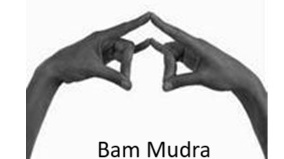
Bam Mudra Introduction Mudras are subtle yogic gestures that influence the flow of prana (life force) and consciousness. They work through the body–mind–energy connection, affecting not only the physical system but also the mental and spiritual dimensions. Among the many mudras used in yogic practices, Bam Mudra holds special importance in mantra and tantric traditions, especially in the worship of Lord Shiva and Devi. This mudra is often performed along with the chanting of the Bija mantra “Bam”, which is associated with the Manipura (solar plexus) chakra or in some tantric texts, connected with creation, energy awakening, and inner fire. Meaning The word “Bam” is a Bija (seed) mantra in tantric and yogic systems. It symbolizes activation of inner energy, fire element, and purification. When expressed as a mudra (hand gesture), Bam Mudra channels the vibrational energy of the mantra into the physical and subtle body. Spiritually, it is believed to awaken divine energy (Shakti) and direct it upward through the chakras. How to Perform Bam Mudra (Method of Practice) Sit in a comfortable meditative posture (Padmasana, Siddhasana, or Vajrasana). Keep the spine erect and shoulders relaxed. Join the tips of the middle and ring fingers together with the pad of the thumb (both hands are identical). Lightly touch the tips of the index and little fingers, and hold the mudra in front of the throat. Close your eyes and bring awareness to your breath. Maintain the mudra for 10–30 minutes daily. Benefits of Bam Mudra Physical Benefits Improves digestion and metabolism by stimulating the Manipura chakra. Balances body heat and energy levels. Enhances immunity and detoxification. May reduce lethargy and fatigue. Mental Benefits Enhances focus, clarity, and willpower. Helps in overcoming fear, insecurity, and low self-esteem. Induces a state of inner strength and confidence. Spiritual Benefits Awakens kundalini energy gradually. Strengthens the practice of mantra sadhana. Balances solar energy within the body. Contraindications Should be avoided in fever, high blood pressure, or excessive body heat conditions. People with ulcers, acidity, or hyperacidity should use caution. Pregnant women should consult a teacher before practicing regularly. Avoid long-duration practice in hot weather. Anatomy & Physiology Musculoskeletal system: Involves flexion of the thumb joint and extension of the other fingers, which subtly engages the forearm flexors/extensors and intrinsic hand muscles. Circulatory & Digestive system: The gesture redirects pranic energy toward the solar plexus, influencing digestive organs like stomach, pancreas, and liver. Respiratory system: Breath awareness with Bam Mudra helps deepen diaphragmatic breathing. Kinesiology Thumb flexion (activating volar muscles) directs pranic force inward. Extension of other fingers balances tension and release in the hand. This biomechanical positioning symbolically and physiologically stimulates manipura chakra energy flow. Neurology Hand mudras stimulate specific areas of the sensory-motor cortex in the brain. The thumb–little finger connection influences the vagus nerve and parasympathetic system, aiding relaxation while simultaneously boosting energy. Chanting the bija mantra “Bam” activates the brain’s auditory and limbic centers, enhancing concentration and emotional regulation. Duration of Mudra Beginners: Start with 5–10 minutes. Regular practitioners: 20–30 minutes daily. Can be done in two or three sittings of 10–15 minutes each. For therapeutic purposes, it can be practiced up to 45 minutes (in divided sessions). Counter Mudra If there is excess heat or overstimulation from Bam Mudra, it can be balanced with: Varun Mudra (water element mudra) – for cooling and hydration. Prana Mudra – to balance life-force energy. Apana Mudra – for grounding and relaxation. Conclusion Bam Mudra is a powerful hand gesture that unites the mantra vibration of “Bam” with the yogic science of mudras. It is especially useful for awakening inner fire, stimulating digestion, and boosting confidence. Practiced with mindfulness and mantra chanting, it not only benefits the body and mind but also prepares the practitioner for deeper spiritual awakening and sadhana. FAQ Q1. Can I practice Bam Mudra without chanting the mantra?Yes, the hand gesture alone has therapeutic effects, but mantra chanting amplifies the benefits. Q2. What is the best time to practice Bam Mudra?Morning or early evening, preferably on an empty stomach. Q3. Can Bam Mudra be combined with meditation?Yes, it enhances concentration and can be combined with breath awareness or mantra meditation. Q4. Is Bam Mudra suitable for children?Yes, but for shorter durations (5–10 minutes) under guidance. Q5. Which chakra does Bam Mudra activate?Primarily the Manipura chakra (Solar plexus). References Swami Satyananda Saraswati, Asana Pranayama Mudra Bandha, Bihar School of Yoga. Rajeswari Raman, Mudras for Healing and Transformation. Gnanananda, Tantric Mudras and Mantras. Joseph Le Page & Lilian Aboim, Mudras for Healing and Transformation.
Bhairava Mudrā
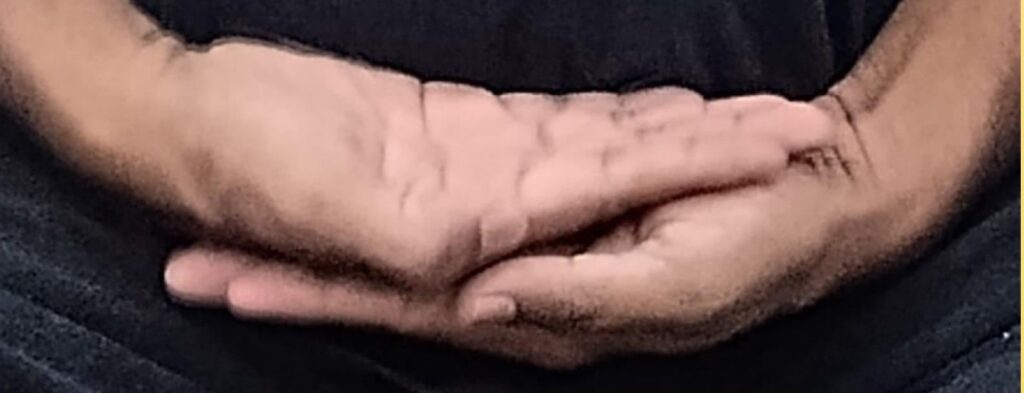
Bhairava Mudrā Introduction Bhairava Mudrā is a powerful yogic and tantric hand gesture used to stimulate courage, willpower, and transformation. Named after Bhairava, the fierce aspect of Lord Shiva, this mudrā is associated with overcoming fear, breaking energy blockages, and activating inner strength. It is practiced in meditation, pranayama, and spiritual rituals to cultivate mental fortitude, clarity, and grounded energy, particularly for dealing with emotional challenges or fear-based limitations. Meaning Etymology: Bhairava = a fierce and protective manifestation of Shiva. Mudrā = seal, gesture, or symbolic hand position. Literal Meaning: “The gesture that invokes the fierce, protective energy of Bhairava.” Symbolism: Represents courage, fearlessness, purification, and transformation, encouraging practitioners to face fears and release internal blockages. How to Perform Practice Sit in a comfortable meditative posture (Padmāsana, Sukhasana, or Vajrāsana) with an upright spine. Place your hands in your lap– on a small cushion if it feels more comfortable. Rest your right hand on top of your left, with both palms facing upward. Allow your joined hands to rest in your lap. Hold for as long as feels comfortable and repeat as required. As a variation, repeat with the left hand on top, which accentuates the fierce feminine energy of the mudra and is known as Bhairavi Mudra. Maintain the mudrā for 5–15 minutes, ideally during meditation or before challenging tasks. Can be combined with pranayama or mantra chanting invoking protective or transformative energies. Note: Finger placement may vary; some traditions emphasize specific locks to stimulate energy in the spine and nervous system. Benefits Physical Benefits Improves posture and spinal alignment during meditation. Enhances circulation to hands, arms, and upper body. Supports muscle relaxation and joint flexibility in the upper limbs. Mental & Emotional Benefits Reduces fear, anxiety, and stress. Strengthens mental clarity, willpower, and focus. Promotes emotional resilience and courage. Spiritual Benefits Stimulates prānic flow and energy activation in the subtle body. Encourages self-transformation and inner purification. Supports meditation and fear-confrontation practices, enabling personal growth. Contraindications Avoid prolonged practice if experiencing wrist, hand, or shoulder injuries. Practice gently if suffering from high blood pressure or cardiovascular issues, as the mudrā may stimulate nervous system activity. Consult a healthcare professional for severe mental health conditions before intensive practice. Anatomy & Physiology Engages intrinsic hand muscles, forearm flexors, deltoids, and spinal stabilizers. Enhances blood and lymph circulation in the upper limbs. Supports spinal alignment and posture. May stimulate subtle energy points (marma or acupressure points) along fingers and hands. Kinesiology Involves isometric contraction and stabilization of the hands and fingers. Encourages neuromuscular awareness of posture and hand positioning. Integrates breath, hand placement, and spinal alignment for therapeutic effects. Neurology Activates nerve endings in the hands, influencing autonomic nervous system balance. Enhances prefrontal cortex function, improving focus and decision-making. Supports limbic system regulation, reducing fear and emotional reactivity. Duration of Mudrā Beginners: 5–10 minutes daily. Intermediate: 10–15 minutes daily. Advanced: 15–20 minutes, combined with pranayama or meditation. Counter Mudrā Jnana Mudrā – to complement Bhairava Mudrā with clarity and wisdom. Prāna Mudrā – to energize after activating courage and protective energy. Conclusion Bhairava Mudrā is a powerful gesture for fearlessness, inner strength, and transformation. Physically, it supports posture and upper body circulation; mentally, it fosters courage, focus, and resilience; spiritually, it activates prānic flow and transformative energy. Regular practice helps cultivate emotional stability, mental clarity, and fearless presence, making it valuable in meditation, therapy, and spiritual practice. FAQ Q1. When should Bhairava Mudrā be practiced?During meditation, pranayama, or before challenging tasks to cultivate courage and focus. Q2. Can it be combined with other mudrās?Yes, it complements Jnana Mudrā or Prāna Mudrā for clarity, energy, and protection. Q3. Is it safe for beginners?Yes, with mindful attention to hand and finger placement, and avoiding strain. Q4. How does it benefit mental health?It reduces fear, stress, and anxiety, while enhancing focus, willpower, and emotional resilience. References Swami Satyananda Saraswati – Asana, Pranayama, Mudra, Bandha Joseph & Lilian LePage – Mudras for Healing and Transformation Georg Feuerstein – The Yoga Tradition Swami Niranjanananda Saraswati – Yoga in Daily Life Gertrud Hirschi – Mudras: Yoga in Your Hands
Bhuchari Mudrā
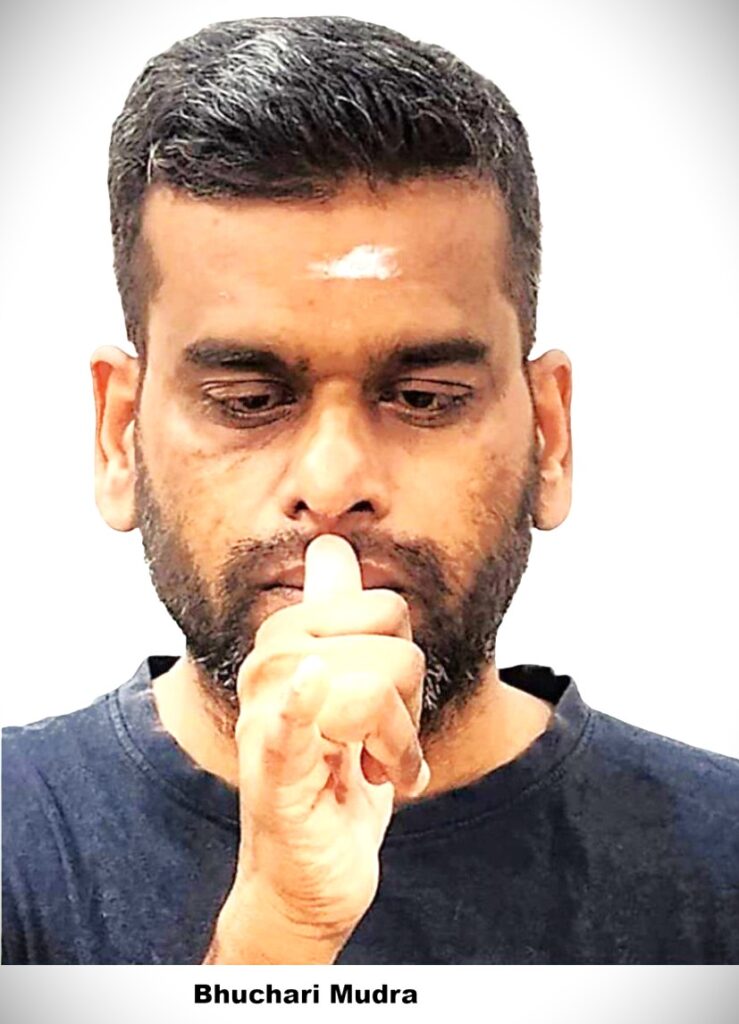
Bhuchari Mudrā Introduction Bhuchari Mudrā is a yogic hand gesture designed to enhance grounding, stability, and prānic flow through the lower body and Earth energy. Its name is derived from Bhu, meaning “Earth,” and Chari, meaning “movement” or “flow.” This mudrā is used in meditation, pranayama, and yoga therapy to cultivate stability, focus, and connection with natural energy forces. Meaning Etymology: Bhu = Earth Chari = movement, flow Mudrā = seal or gesture Literal Meaning: “The gesture that moves or channels Earth energy.” Symbolism: Represents grounding, energy circulation, and connection with nature, fostering stability, patience, and inner strength. How to Perform Practice Sit in a comfortable posture (Padmāsana, Sukhasana, or Vajrāsana) with spine erect. Remove glasses or contact lenses. Come into a sitting position. Place the thumb nail of one hand just above the centre of your upper lip. Curl the index, middle and ring fingers into your palm; stretch your little finger forward. Stare at the tip of your little finger with a steady gaze, trying to blink as little as possible. Relax any tension. After a few moments, your eyes may start to water, a cleansing process. Benefits Physical Benefits Improves posture and spinal alignment. Enhances circulation and energy flow in the lower body. Supports muscle relaxation and joint stability, especially in the legs and hips. Mental & Emotional Benefits Reduces stress, anxiety, and restlessness. Enhances focus, patience, and emotional stability. Fosters a sense of groundedness and inner calm. Spiritual Benefits Stimulates prānic flow through the Mūlādhāra (root) chakra. Encourages connection with Earth energy and natural rhythms. Supports meditation, mindfulness, and energy-centered practices. Contraindications Avoid if suffering from wrist, hand, or finger injuries. Modify practice in cases of circulatory problems or joint pain. Practice gently if experiencing lower back or hip injuries. Anatomy & Physiology Engages intrinsic hand muscles, forearm stabilizers, and spinal postural muscles. Enhances blood flow and lymphatic circulation in the lower extremities. Supports spinal alignment, core stability, and subtle energy grounding. Kinesiology Involves isometric contraction of the fingers and hands. Encourages neuromuscular awareness of posture and alignment. Integrates breath, hand position, and visualization for therapeutic effect. Neurology Activates parasympathetic nervous system, reducing mental agitation and stress. Stimulates proprioception and body awareness, enhancing balance. Supports root chakra activation, fostering mental and emotional stability. Duration of Mudrā Beginners: 5–10 minutes daily Intermediate: 10–15 minutes daily Advanced: 15–20 minutes, combined with meditation or pranayama Counter Mudrā Prāna Mudrā – to energize after grounding. Apāna Mudrā – to support detoxification and energy flow. Conclusion Bhuchari Mudrā is a powerful grounding gesture that enhances physical stability, mental calmness, and spiritual rootedness. Regular practice improves posture, circulation, focus, and connection with Earth energy, making it an excellent tool for meditation, yoga therapy, and energy balancing. FAQ Q1. When should Bhuchari Mudrā be practiced?During meditation, pranayama, or whenever grounding is needed, especially in the morning or evening. Q2. Can it be performed while sitting on a chair?Yes, with spine erect and palms resting on knees. Q3. How long should I hold this mudrā?Start with 5–10 minutes, gradually increasing to 15–20 minutes. Q4. What is the main benefit of Bhuchari Mudrā?It primarily grounds energy, stabilizes mind and body, and enhances focus and patience. References Swami Satyananda Saraswati – Asana, Pranayama, Mudra, Bandha Joseph & Lilian LePage – Mudras for Healing and Transformation Georg Feuerstein – The Yoga Tradition Swami Niranjanananda Saraswati – Yoga in Daily Life Gertrud Hirschi – Mudras: Yoga in Your Hands
Bhūmi-Sparśa Mudrā
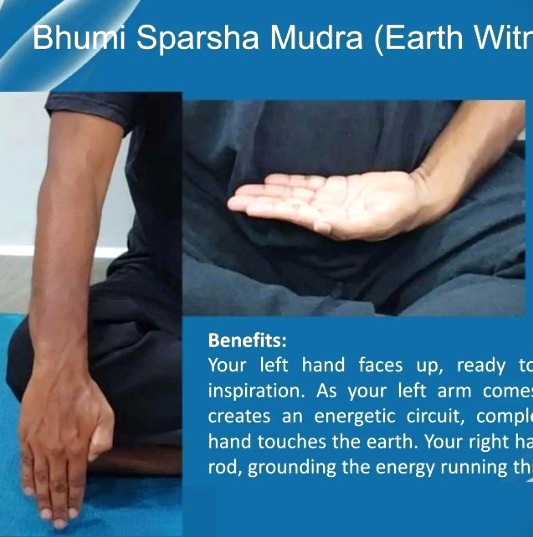
Bhūmi-Sparśa Mudrā Introduction Bhūmi-Sparśa Mudrā, literally meaning “gesture of touching the earth,” is one of the most iconic mudrās in Buddhist and yogic traditions. It is most famously depicted in statues of the Buddha at the moment of enlightenment under the Bodhi tree at Bodh Gaya, where he touches the earth to bear witness to his attainment of awakening. In yoga, it symbolizes grounding, stability, and calling upon inner strength and the earth’s energy. Meaning Bhūmi = Earth Sparśa = Touch Mudrā = Gesture or seal It represents calling the Earth as witness to truth, stability, and enlightenment. Symbolically, it connects the practitioner with prithvī tattva (earth element), grounding energy, and strength against inner turmoil. How to Perform (Practice Method) Seated Posture: Sit in Padmāsana (lotus pose), Siddhāsana, or Vajrāsana. Spine erect. Your left hand faces up, ready to receive energy and inspiration. As your left arm comes across your body it creates an energetic circuit, completed when your right hand touches the earth. Your right-hand acts like a lightning rod, grounding the energy running through your left hand. Awareness: Close eyes, breathe deeply, and visualize drawing strength and stability from the earth. Focus: Meditate on grounding, letting go of fear, and affirming stability. Benefits Physical Improves posture and spinal alignment. Stimulates root chakra (Mūlādhāra). Helps regulate blood circulation and grounding of nervous energy. Balances vāta dosha (air element), reducing restlessness. Mental & Emotional Provides grounding in times of anxiety or instability. Enhances courage, determination, and inner security. Promotes clarity of thought and mindfulness. Symbolic release of ego, fear, and doubt. Spiritual Connects with earth’s pranic energy. Invokes stability, truth, and awakening. Strengthens meditation practice, particularly for insight and mindfulness. Contraindications Those with severe knee pain or arthritis (difficulty sitting cross-legged). Spinal deformities where forward extension of the arm causes strain. Avoid long holding if suffering from sciatica, varicose veins, or circulation disorders. Pregnant women may modify posture with support. Anatomy & Physiology Musculoskeletal: Engages spinal erectors, pelvic stabilizers, and shoulder extensors. Circulatory: Encourages venous return and balanced blood flow. Respiratory: Promotes diaphragmatic breathing by elongating torso. Digestive: Improves parasympathetic tone, supporting digestion and metabolism. Kinesiology Joint Movements: Shoulder → Extension (right arm reaching downward) Elbow → Extension Wrist → Neutral/flexion (gentle contact with ground) Spine → Neutral extension Muscle Groups Activated: Deltoids, triceps (mild activation) Spinal stabilizers Hip flexors and extensors in seated position Neurology Activates parasympathetic nervous system → relaxation and grounding. Stimulates vagus nerve pathways, reducing heart rate and anxiety. Enhances proprioception and awareness of body contact with ground. Supports limbic system regulation, helping emotional stability. Duration of Practice Beginners: 5–10 minutes daily during meditation. Intermediate/Advanced: Up to 30–45 minutes as part of seated meditation. Can be used briefly (1–2 minutes) during stressful moments for grounding. Counter Mudrā Jnana Mudrā (gesture of wisdom) → Balances grounding with expansion of consciousness. Prithvi Mudrā (earth element mudra) → Reinforces earth element if additional grounding is needed. Abhaya Mudrā (gesture of fearlessness) → Complements by instilling courage and protection. Conclusion Bhūmi-Sparśa Mudrā is not just a symbolic gesture but a powerful yogic tool for grounding, stability, and awakening inner strength. It unites physical grounding with emotional balance and spiritual transcendence. By connecting the practitioner with the earth element, it provides a sense of unwavering support, reminding us that stability and truth are always within reach. FAQ Q1. Can Bhūmi-Sparśa Mudrā be done lying down?→ Traditionally no, but a modified form can be done sitting on a chair with hand touching ground. Q2. Is it only for Buddhists?→ No. Though rooted in Buddhist iconography, it is equally effective as a yoga mudra for grounding. Q3. How quickly can one feel benefits?→ Many feel immediate grounding and calmness within minutes of practice. Q4. Can it be combined with mantra chanting?→ Yes. Especially effective with “Om Śāntiḥ” or Mūlādhāra bija mantra “Lam”. References Swami Satyananda Saraswati, Asana, Pranayama, Mudra, Bandha (Bihar School of Yoga) Tarthang Tulku, Gesture of Balance Lama Anagarika Govinda, Foundations of Tibetan Mysticism Mallinson & Singleton, Roots of Yoga Scientific articles on mudra therapy and neurophysiology of meditation (PubMed, NIH)
Bhudi Mudra (Knowledge/Touch Mudra)
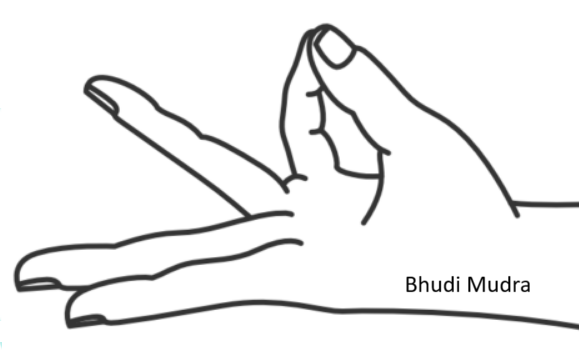
Bhudi Mudra (Knowledge/Touch Mudra) Introduction Bhudi Mudra, sometimes referred to as Buddhi Mudra, is a yogic hand gesture that symbolizes the enhancement of wisdom, intellect, and spiritual knowledge. It is widely practiced in yoga and Ayurveda for improving concentration, mental clarity, and stimulating the nervous system. This mudra is part of the Jnana Mudra family, which focuses on the connection between energy flow and cognitive enhancement. Meaning Etymology: Bhudi/Buddhi means intellect or wisdom in Sanskrit. Mudra means gesture or seal. Symbolism: This mudra represents the connection between individual consciousness and universal consciousness. It balances the elements of air (Vayu) and ether (Akasha), supporting mental clarity and calmness. How to Perform Bhudi Mudra Sit comfortably in a meditative posture such as Sukhasana or Padmasana. Keep your spine erect and shoulders relaxed. Touch the tip of your thumb to the tip of your little (pinky) finger. Keep the other three fingers (index, middle, and ring) extended naturally. Rest your hands on your knees with palms facing upward. Close your eyes and focus on your breath. Maintain awareness on the flow of energy between the thumb and little finger. Optional: Combine with deep inhalation and exhalation for 5–15 minutes. Benefits Enhances mental clarity, concentration, and memory. Improves intellectual power and decision-making ability. Helps in stress reduction and emotional balance. Stimulates the nervous system, especially the parasympathetic system. Supports spiritual growth and inner awareness. Can improve sleep quality and reduce mental fatigue. Contraindications Should be avoided if there is recent hand/finger injury. People with severe arthritis may experience discomfort. Not recommended if performing without guidance during acute neurological or cardiac conditions. Anatomy & Physiology Involves phalanges of thumb and little finger, intrinsic hand muscles, and the thenar/hypothenar muscles. Activates sensory nerve endings in the fingertips which can stimulate the brain cortex related to focus and cognition. Enhances blood circulation to the fingers and hands, indirectly supporting cerebral oxygenation. Kinesiology Movement is isometric; minimal joint motion but muscular engagement stabilizes fingers. Activates flexor and extensor muscles of the little finger and thumb. Helps in coordinating neuromuscular pathways for fine motor control. Neurology Stimulates median and ulnar nerves through fingertip contact. Activates somatosensory cortex, increasing focus and awareness. Encourages parasympathetic nervous system activation, promoting calmness. May enhance neuroplasticity over regular practice, improving memory and cognition. Duration of Practice Beginners: 5–10 minutes daily. Intermediate/Advanced: 15–30 minutes per session, ideally twice daily (morning and evening). Can be performed during meditation, pranayama, or seated rest. Counter Mudra Bhudi Mudra’s counter can be Chin Mudra, where the thumb touches the index finger. This shifts energy from the little finger (Bhudi) to the index finger (Jnana), balancing emotional and intellectual energies differently. Conclusion Bhudi Mudra is a simple yet powerful yogic gesture that enhances mental faculties, stimulates neurological pathways, and promotes spiritual awareness. Regular practice supports cognitive clarity, emotional stability, and overall wellness. Integrating Bhudi Mudra with meditation or pranayama can amplify its benefits. FAQ Q1: Can Bhudi Mudra help with anxiety?A1: Yes, by stimulating the parasympathetic nervous system, it promotes calmness and reduces stress. Q2: Can children practice Bhudi Mudra?A2: Yes, it is safe for children and may enhance focus and memory. Q3: Is it necessary to sit cross-legged to practice?A3: No, it can also be practiced sitting on a chair with a straight spine. Q4: Can I practice Bhudi Mudra during work or study?A4: Yes, it can be subtly practiced anytime to improve concentration. References Swami Satyananda Saraswati, Mudras for Healing and Transformation, Bihar Yoga Publications, 2012. B.K.S. Iyengar, Light on Yoga, HarperCollins, 2005. Dr. Harish Johari, Mudra: The Gateway to Health, Inner Traditions, 1994. Yoga Journal, Hand Mudras for Mind and Body, 2018. Ayurvedic texts: Charaka Samhita & Sushruta Samhita – on energy and elemental balance.
Bharamara Mudrā
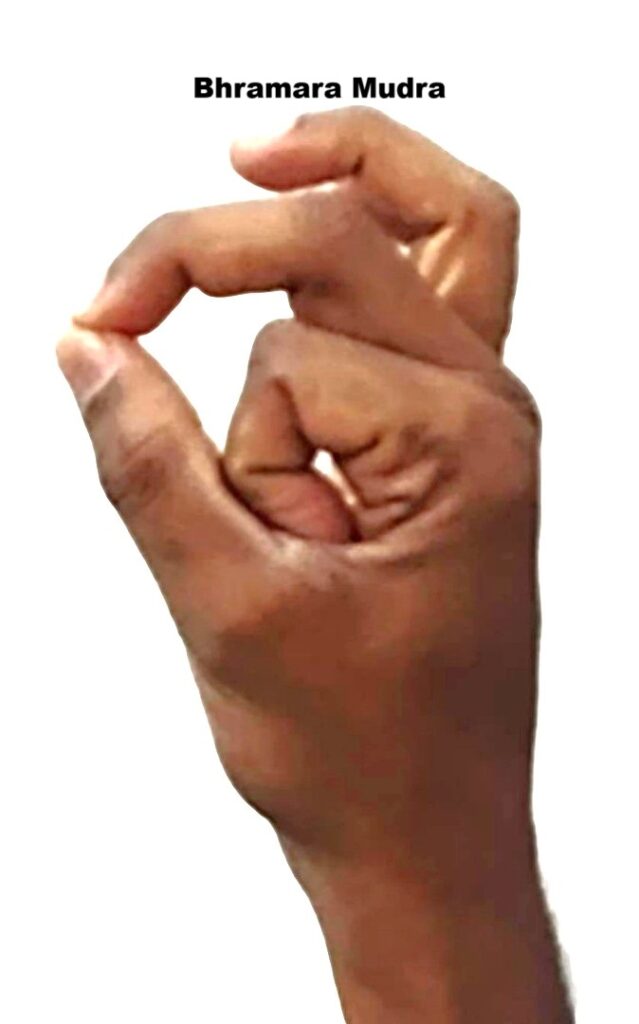
Bharamara Mudrā Introduction Bharamara Mudrā is a therapeutic and meditative hand gesture in yoga, named after Bharamara, which means “humming bee” in Sanskrit. This mudrā is closely associated with Bhramari Pranayama (the bee breath) and is used to calm the mind, reduce anxiety, and enhance concentration. It is often practiced in meditation, pranayama, and energy balancing sessions, helping to harmonize mental, emotional, and nervous system activity while fostering inner peace and focused awareness. Meaning Etymology: Bharamara = bee (symbolizing humming vibration). Mudrā = seal, gesture, or symbolic hand position. Literal Meaning: “The gesture that produces calming vibration like a bee.” Symbolism: Represents calmness, vibrational energy, and mental focus. The humming vibration helps settle the mind and balance the prānic energy. How to Perform Practice Sit in a comfortable meditative posture (Padmāsana, Sukhasana, or Vajrāsana) with the spine erect. Using both hands, bring the ends of your index fingers to the base of your thumbs; then bring the tips of your thumbs against the side of fingernails of the middle fingers. Rest the backs of your hands on your thighs. Hold as you complete the breathing exercise below. Practice for 5–15 minutes daily for best results. Optional: Can be combined with Jnana Mudrā for enhanced mental clarity or pranayama for deeper nervous system regulation. Benefits Physical Benefits Reduces tension in the head, neck, and shoulders. Improves circulation to the cranial region. Supports relaxation of respiratory muscles and vocal cords. Mental & Emotional Benefits Calms the mind and nervous system, reducing stress and anxiety. Enhances concentration, focus, and mindfulness. Helps manage emotional turbulence and mental fatigue. Spiritual Benefits Stimulates prānic flow along the spine and head chakras. Supports meditative absorption and inner awareness. Encourages vibrational harmony and energy stabilization. Contraindications Avoid if suffering from severe ear infection or auditory issues. Use cautiously with high blood pressure or heart conditions if performing vigorous humming. Practice gently if experiencing neck or cervical spine injury. Anatomy & Physiology Engages intrinsic hand muscles, forearm flexors, and stabilizers for mudrā placement. Stimulates cranial nerves, especially the vagus nerve, via humming. Improves oxygenation, circulation, and parasympathetic activation. Relieves tension in jaw, neck, and shoulder muscles. Kinesiology Involves subtle isometric contraction of fingers and hands. Promotes neuromuscular awareness and posture stabilization. Integrates breath, sound vibration, and hand positioning for holistic benefit. Neurology Activates the vagus nerve, enhancing parasympathetic nervous system activity. Stimulates brain regions associated with calmness, focus, and memory. Reduces stress hormone levels through calming vibrations. Enhances proprioceptive awareness and mental clarity. Duration of Mudrā Beginners: 5 minutes daily. Intermediate: 10 minutes. Advanced: 15 minutes, combined with Bhramari Pranayama or meditation. Counter Mudrā Jnana Mudrā – for enhancing focus and clarity. Prāna Mudrā – to balance energy after relaxation practice. Conclusion Bharamara Mudrā is a powerful tool for calming the mind, enhancing concentration, and harmonizing energy. Physically, it relaxes muscles and improves circulation; mentally, it reduces stress and sharpens focus; spiritually, it stimulates prānic flow and vibrational harmony. Regular practice promotes inner peace, mindfulness, and nervous system balance, making it ideal for meditation, yoga therapy, and stress management. FAQ Q1. Can Bharamara Mudrā replace meditation?No, it is a supportive tool that enhances meditation, not a replacement. Q2. How long should it be practiced daily?Start with 5 minutes, gradually increasing to 15 minutes for deeper effects. Q3. Is it safe for all ages?Yes, generally safe with gentle practice; avoid if you have ear infections or cervical spine issues. Q4. What is the main benefit of Bharamara Mudrā?It primarily calms the mind, reduces stress, and improves concentration. References Swami Satyananda Saraswati – Asana, Pranayama, Mudra, Bandha Joseph & Lilian LePage – Mudras for Healing and Transformation Swami Niranjanananda Saraswati – Yoga in Daily Life Georg Feuerstein – The Yoga Tradition Gertrud Hirschi – Mudras: Yoga in Your Hands
Brahma Mudra (Gesture of the Creator)
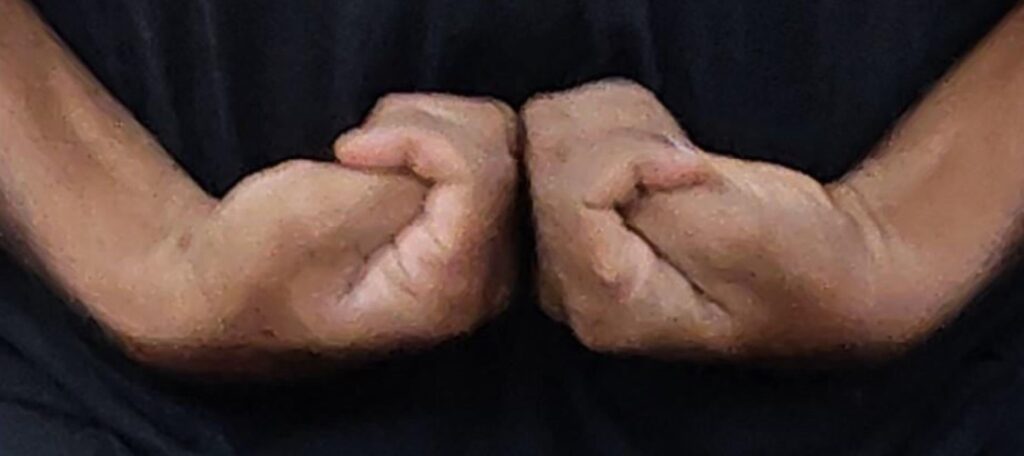
Brahma Mudra (Gesture of the Creator) Introduction Brahma Mudra, also called the Mudra of the Creator, is a yogic hand gesture that symbolizes divine creation, spiritual awakening, and inner balance. It is used in meditation, pranayama, and therapeutic yoga to harmonize energies, relieve stress, and enhance concentration. Brahma Mudra is associated with higher consciousness (Brahman) and is believed to help awaken spiritual wisdom and clarity. Meaning Etymology: Brahma refers to the creator aspect of divinity in Hindu philosophy. Mudra means gesture or seal. Symbolism: Represents the union of body, mind, and spirit. Helps in balancing energetic channels (nadis) and stimulating inner awareness. How to Perform Brahma Mudra Sit comfortably in a meditative posture like Sukhasana, Padmasana, or Vajrasana. Place both hands behind your back. Make a fist and turn palms upwards pressing knuckles against each other. Hold hands in front of solar plexus. Focus on your breath and imagine energy rising from the base of the spine toward the crown. Maintain the mudra for 5–15 minutes, breathing slowly and evenly. Tip: This mudra can also be practiced while standing or sitting in a chair for flexibility. Benefits Enhances mental clarity, focus, and wisdom. Promotes spiritual awareness and deep meditation. Improves posture and spinal flexibility. Balances nervous system, reducing stress and anxiety. Stimulates blood circulation in hands, arms, and upper back. Supports energy flow in the chakras, especially the heart and throat chakras. Contraindications Avoid if you have shoulder, arm, or wrist injuries. People with recent back surgery should practice cautiously. Not recommended for individuals with severe arthritis or limited mobility in fingers/arms. Anatomy & Physiology Involves intrinsic hand muscles, forearm muscles, and deltoids for maintaining the posture. Opens chest muscles (pectoralis major/minor), promoting better respiration. Improves blood circulation in the upper limbs and shoulders. Encourages spinal alignment, which supports nervous system function. Kinesiology The posture requires isometric contraction of hand, arm, and shoulder muscles. Enhances scapular stabilization and upper back mobility. Promotes proprioception through hand interlocking and shoulder engagement. Supports ergonomic alignment for meditation practice. Neurology Activates sensory nerve endings in the fingers, palms, and wrists. Engages cortical regions related to focus, attention, and sensory integration. Stimulates the parasympathetic nervous system, promoting calmness. Visualization during practice may enhance mind-body connectivity and neural plasticity. Duration of Practice Beginners: 5 minutes daily. Intermediate/Advanced: 10–15 minutes, twice daily (morning and evening). Can be combined with meditation, pranayama, or chanting. Counter Mudra Chin Mudra or Gyana Mudra can be used as a counter, emphasizing mental clarity and knowledge. Alternating between Brahma Mudra and Gyana Mudra balances spiritual energy and cognitive focus. Conclusion Brahma Mudra is a powerful tool for spiritual and mental enhancement. It promotes inner harmony, energy balance, and mental clarity while supporting meditation and pranayama practices. Regular practice integrates body, mind, and spirit, leading to a state of higher consciousness. FAQ Q1: Can Brahma Mudra help with anxiety?A1: Yes, it balances the nervous system and promotes relaxation. Q2: Can it be practiced while sitting in a chair?A2: Yes, as long as the spine is straight and shoulders relaxed. Q3: Is this mudra suitable for beginners?A3: Yes, but individuals with shoulder or wrist limitations should practice gently. Q4: How often should it be practiced?A4: Daily practice of 5–15 minutes is sufficient for most benefits. References Swami Satyananda Saraswati, Mudras for Healing and Transformation, Bihar Yoga Publications, 2012. B.K.S. Iyengar, Light on Yoga, HarperCollins, 2005. Dr. Harish Johari, Mudra: The Gateway to Health, Inner Traditions, 1994. Yoga Journal, Hand Mudras for Mind, Body, and Spirit, 2018. Hatha Yoga Pradipika, Ayurvedic and Yogic texts on energy channels and meditation.