
Dhenu Mudra (Cow Gesture)
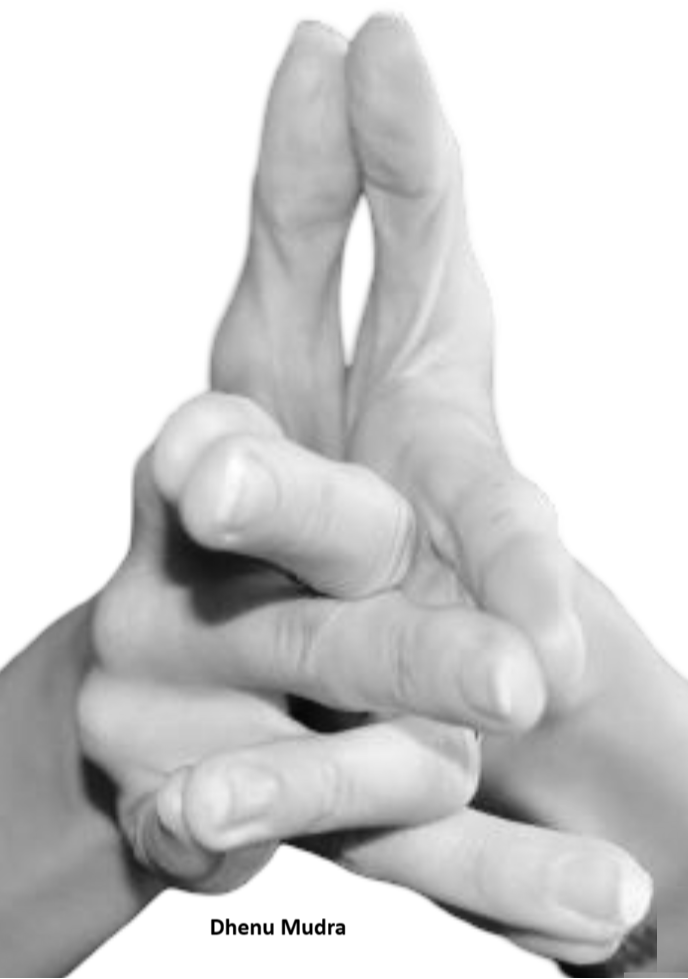
Dhenu Mudra (Cow Gesture) Introduction Dhenu Mudra, also known as the Cow Gesture, is a yogic hand gesture that symbolizes nourishment, vitality, and the flow of energy. Inspired by the cow, which in yogic and Ayurvedic traditions represents abundance, sustenance, and nurturing energy, this mudra is practiced to enhance digestion, metabolism, and overall energy balance. It is particularly used in meditation, pranayama, and energy-balancing routines. Meaning Etymology: Dhenu means cow in Sanskrit. Mudra means gesture or seal. Symbolism: Represents nourishment, vitality, and health. Encourages the flow of prana (life energy) throughout the body. Symbolically balances physical, mental, and spiritual energy. How to Perform Dhenu Mudra Sit in a comfortable meditation posture (Sukhasana, Padmasana, or Vajrasana) with a straight spine. Touch the tip of the small finger of the left hand to the tip of the ring finger of the right hand. Touch the tip of the middle finger of the left hand to the tip of the index finger of the right hand. Touch the tip of the ring finger of the left hand to the tip of the small finger of the right hand. Touch the tip of the index finger of the left hand to the tip of the middle finger of the right hand. Close your eyes and focus on slow, deep breathing, visualizing energy nourishing every organ and cell in the body. Maintain the mudra for 10–15 minutes, once or twice daily. Tip: Practicing in a calm, serene environment enhances the nourishing effects. Benefits Improves digestion and metabolism, supporting weight management and energy levels. Enhances vitality and overall health. Balances prana flow in the body, increasing stamina and energy. Reduces stress, fatigue, and mental exhaustion. Supports emotional stability and calmness. Strengthens focus and mindfulness during meditation. Contraindications Avoid if there is injury or severe pain in fingers, hands, or wrists. People with arthritis or joint deformities should modify finger placement. Not recommended for prolonged practice if discomfort arises. Anatomy & Physiology Involves phalanges, interphalangeal joints, intrinsic hand muscles, and forearm muscles. Stimulates nerve endings in the thumb and ring finger, which correspond to digestive and metabolic energy in reflexology. Encourages blood circulation in hands and forearms, indirectly supporting the autonomic nervous system. Promotes relaxation of the chest, shoulders, and upper back, enhancing breathing and pranic flow. Kinesiology Isometric contraction of thenar, hypothenar, and interossei muscles maintains thumb-ring finger contact. Enhances fine motor coordination and proprioception. Supports shoulder and upper back stabilization during meditation. Encourages mind-body integration through conscious finger placement and awareness. Neurology Activates median and ulnar nerves in the fingers. Stimulates somatosensory cortex, improving focus and body awareness. Promotes parasympathetic nervous system activation, reducing stress and enhancing digestion and energy balance. Visualization during practice strengthens neural pathways associated with nourishment, vitality, and energy flow. Duration of Practice Beginners: 5–10 minutes daily. Intermediate/Advanced: 10–15 minutes, once or twice daily. Can be combined with pranayama or meditation for enhanced digestive and energetic benefits. Counter Mudra Prana Mudra can be used as a counter to stimulate vitality and rejuvenate energy. Alternating Dhenu Mudra with Prana Mudra enhances both nourishment and energy activation. Conclusion Dhenu Mudra is a powerful gesture for nourishment, vitality, and energy balance. Regular practice improves digestion, mental clarity, emotional stability, and overall health, making it an excellent addition to meditation, pranayama, and wellness routines. FAQ Q1: Can Dhenu Mudra improve digestion?A1: Yes, it stimulates energy flow related to digestive and metabolic function. Q2: Can children practice it?A2: Yes, with supervision to ensure proper finger placement and comfort. Q3: Is visualization necessary?A3: Visualization enhances benefits, but simple awareness and mindful practice are sufficient. Q4: Can it be practiced with pranayama?A4: Yes, it complements deep breathing, meditation, and digestive-focused practices. References Swami Satyananda Saraswati, Mudras for Healing and Transformation, Bihar Yoga Publications, 2012. Dr. Harish Johari, Mudra: The Gateway to Health, Inner Traditions, 1994. B.K.S. Iyengar, Light on Yoga, HarperCollins, 2005. Yoga Journal, Mudras for Energy and Digestion, 2018. Hatha Yoga Pradipika and Ayurvedic texts on prana, digestion, and energy flow.
Dharmachakra Mudra
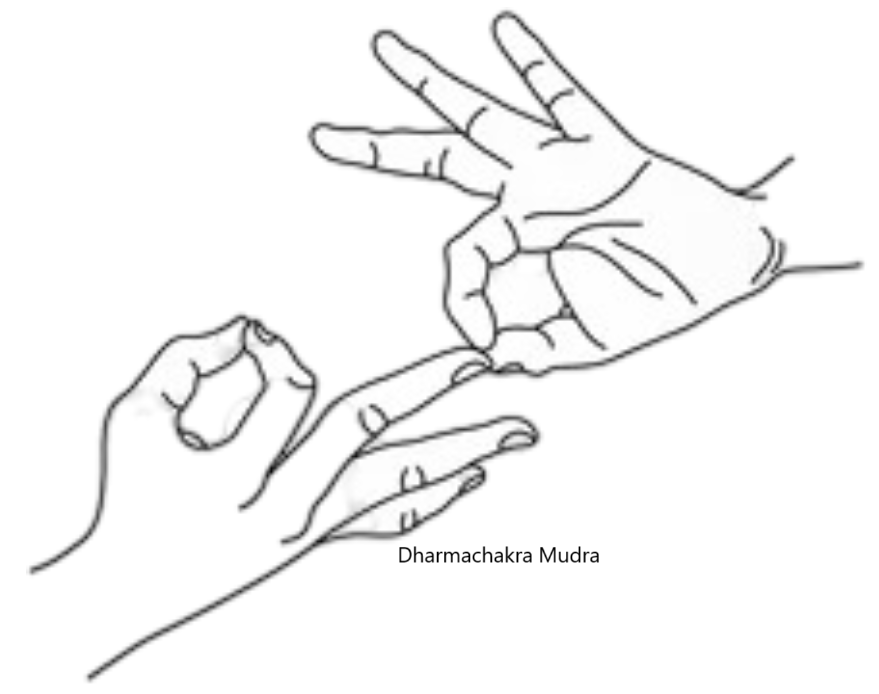
Dharmachakra Mudra Introduction Mudras are sacred hand gestures used in yoga, meditation, and spiritual traditions to channel prana (life energy) and deepen awareness. Among these, the Dharmachakra Mudra is especially significant in Buddhism. This mudra, meaning the “gesture of turning the Wheel of Dharma”, symbolizes the moment when Lord Buddha gave his first sermon at Sarnath, setting the “Wheel of Dharma” in motion. It represents teaching, wisdom, and the union of method (action) and knowledge (wisdom). It is also a meditative hand posture that supports focus, balance, and spiritual growth, widely practiced in Buddhist meditation, mindfulness practices, and yogic traditions. Meaning Dharma = law, truth, or cosmic order Chakra = wheel or cycle Dharmachakra = “Wheel of Dharma” or “Turning the Wheel of Law” Mudra = gesture or seal Thus, Dharmachakra Mudra = the gesture of teaching the universal truth and keeping the wheel of wisdom in motion. Symbolism: Right hand: Represents wisdom and teaching. Left hand: Represents knowledge and inner realization. Circle formed by fingers: Represents the wheel of dharma (truth) turning eternally. How to Perform Dharmachakra Mudra (Method of Practice) Sit in a comfortable meditative posture (Padmasana, Sukhasana, or Vajrasana). Keep the spine upright. Touch tips of thumbs and index fingers together. Hold hands in front of chest, left palm facing heart, right hand facing out. Touch right thumb and index to left middle finger. Close your eyes and breathe deeply. Meditate on the wheel of dharma spinning at your heart centre. Practice for 10–30 minutes during meditation or mantra chanting. Benefits of Dharmachakra Mudra Physical Benefits Promotes relaxation and deep breathing. Stimulates circulation in the upper body, lungs, and heart. Improves posture and reduces chest tightness. Balances the nervous and endocrine systems. Mental Benefits Enhances concentration, memory, and focus. Reduces anxiety, confusion, and overthinking. Fosters inner clarity and wisdom. Encourages compassionate communication and teaching abilities. Spiritual Benefits Symbolizes teaching and spreading wisdom. Opens the heart chakra (Anahata) and third-eye chakra (Ajna). Awakens the union of knowledge (jnana) and action (karma). Helps connect with the lineage of Buddha’s teachings. Contraindications Not recommended while driving, walking, or doing active tasks (requires stillness). People with severe arthritis, finger stiffness, or nerve pain may feel discomfort. Should not be practiced when extremely restless—calmness is required first. Anatomy & Physiology Involves finger flexors and extensors in a balanced circular position. Keeps the thoracic region open, aiding lung and heart function. Supports parasympathetic nervous activation, calming the system. Improves coordination between right and left hemispheres of the brain. Kinesiology Circular finger gesture = creates balance between flexion and extension. Right hand outward, left hand inward = symbolic of external teaching and internal realization. Posture promotes symmetry, openness, and centeredness. Neurology Stimulates the somatosensory cortex (through fingertip contact). Activates prefrontal cortex for higher-order reasoning and insight. Calms the amygdala, reducing fear and anxiety. Strengthens neural pathways linked to concentration and meditation. Duration of Mudra Beginners: 5–10 minutes daily. Regular practice: 20–30 minutes. Advanced/monastic practice: Up to 1 hour during meditation or chanting. Best practiced in silence or with mantras like Om Mani Padme Hum. Counter Mudra To balance or ground after Dharmachakra Mudra, one may practice: Anjali Mudra (prayer gesture) – for centering. Jnana Mudra – for clarity and inner focus. Prithvi Mudra – for grounding energy. Conclusion Dharmachakra Mudra is not just a hand gesture but a symbol of spiritual awakening, teaching, and universal truth. Practicing it opens the heart, clarifies the mind, and deepens meditation. By embodying the turning of the “Wheel of Dharma,” it connects the practitioner to a lineage of wisdom and fosters a life of awareness, compassion, and balance. FAQ Q1. What does Dharmachakra Mudra represent?It represents the turning of the Wheel of Dharma—teaching, wisdom, and spreading truth. Q2. Which chakra does it activate?It primarily activates the heart (Anahata) and third-eye (Ajna) chakras. Q3. Can beginners practice this mudra?Yes, it is simple and suitable for beginners, especially during meditation. Q4. Is this mudra only for Buddhists?No, though rooted in Buddhism, anyone practicing meditation or yoga can benefit. Q5. What is the best time to practice?During meditation, chanting, or quiet reflection—preferably morning or evening. References Swami Satyananda Saraswati, Asana, Pranayama, Mudra, Bandha, Bihar School of Yoga. Lama Anagarika Govinda, Foundations of Tibetan Mysticism. Joseph Le Page & Lilian Aboim, Mudras for Healing and Transformation. Rajeswari Raman, Mudras: For Body, Mind and Spirit. Buddhist Iconography texts on Dharmachakra Mudra depictions of the Buddha.
Chin Mudra (Gesture of Consciousness)
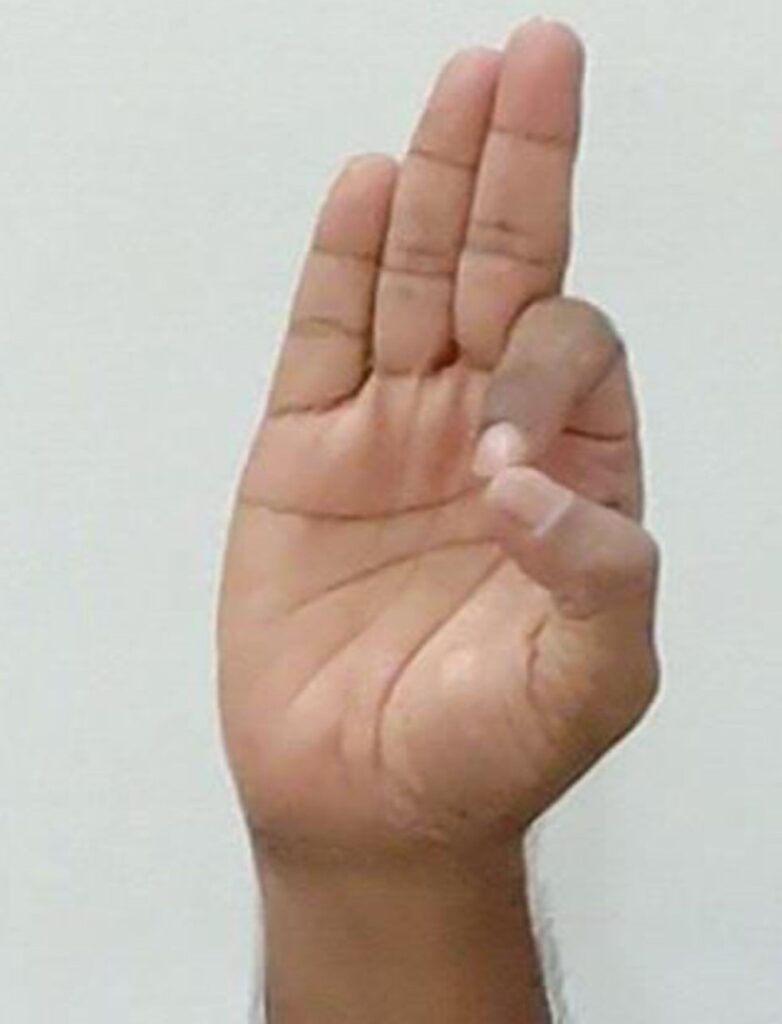
Chin Mudra (Gesture of Consciousness) Introduction Chin Mudra is one of the most commonly practiced yogic hand gestures, used widely in meditation, pranayama, and mindfulness practices. It is known as the gesture of consciousness, connecting the practitioner to inner awareness and spiritual insight. This mudra is particularly effective for calming the mind, enhancing focus, and balancing pranic energy. Meaning Etymology: Chin comes from Chit, meaning consciousness or awareness in Sanskrit. Mudra means gesture or seal. Symbolism: Represents the union of individual consciousness (Atman) with universal consciousness (Brahman). Symbolically connects the thumb (divine) with the index finger (individual self), while the other fingers remain extended, symbolizing activity and balance. How to Perform Chin Mudra Sit in a comfortable meditation posture (Sukhasana, Padmasana, or Vajrasana) with a straight spine. Place your hands on your knees or thighs, palms facing upward. Touch the tip of the thumb to the tip of the index finger, forming a circle. Keep the middle, ring, and little fingers extended and relaxed. Close your eyes and focus on slow, deep breathing, visualizing energy circulating from the base of the spine to the crown. Maintain the mudra for 5–15 minutes during meditation or pranayama. Tip: Chin Mudra can also be practiced with palms facing downward for grounding effects. Benefits Enhances mental clarity, concentration, and memory. Promotes inner peace and emotional stability. Balances prana (life energy) in the body, improving vitality. Reduces stress, anxiety, and fatigue. Supports spiritual awareness and meditation depth. May improve circulatory and nervous system efficiency through subtle energy stimulation. Contraindications Avoid if there is injury or severe pain in fingers or hands. People with arthritis may need to modify finger placement. Not recommended for extended durations if it causes discomfort in joints. Anatomy & Physiology Involves phalanges, interphalangeal joints, intrinsic hand muscles, and forearm muscles. Stimulates sensory nerve endings, influencing cortical areas related to focus and attention. Improves blood circulation to the hands, indirectly supporting autonomic nervous system function. Encourages relaxation of chest and shoulder muscles, supporting deep, diaphragmatic breathing. Kinesiology Isometric contraction of thenar and hypothenar muscles maintains thumb-index contact. Enhances proprioception and fine motor coordination. Supports upper limb and shoulder stabilization during meditation. Encourages mind-body awareness through conscious finger positioning. Neurology Activates median nerve (thumb and index finger) and supports fine sensory input. Engages somatosensory cortex, improving awareness and focus. Stimulates the parasympathetic nervous system, reducing stress and promoting calmness. Visualization enhances neural pathways related to energy flow and consciousness. Duration of Practice Beginners: 5 minutes daily. Intermediate/Advanced: 10–15 minutes, once or twice daily. Can be practiced during meditation, pranayama, or relaxation sessions. Counter Mudra Gyana Mudra is often used interchangeably; some traditions differentiate based on palm orientation: Chin Mudra: Palms upward, encourages receptivity and awareness. Gyana Mudra: Palms downward, encourages grounding and stability. Alternating between both can balance mental clarity and grounding energy. Conclusion Chin Mudra is a simple yet powerful mudra that enhances mental clarity, emotional balance, and spiritual awareness. Regular practice promotes focus, calmness, and energy regulation, making it an ideal gesture for meditation and pranayama. FAQ Q1: Can Chin Mudra help with stress?A1: Yes, it stimulates the parasympathetic nervous system, reducing stress and anxiety. Q2: Can children practice it?A2: Yes, it is safe for children with proper guidance on finger placement. Q3: Is visualization necessary?A3: Visualization enhances effects but is optional; simple awareness is sufficient for beginners. Q4: Can it be practiced with pranayama?A4: Yes, it complements deep breathing techniques like Anulom Vilom or diaphragmatic breathing. References Swami Satyananda Saraswati, Mudras for Healing and Transformation, Bihar Yoga Publications, 2012. Dr. Harish Johari, Mudra: The Gateway to Health, Inner Traditions, 1994. B.K.S. Iyengar, Light on Yoga, HarperCollins, 2005. Yoga Journal, Mudras for Mind, Body, and Spirit, 2018. Hatha Yoga Pradipika and Ayurvedic texts on prana and energy flow.
Chinmaya Mudra (Gesture of Transformation)

Chimaya Mudra (Gesture of Transformation) Introduction Chimaya Mudra is a yogic hand gesture used to enhance energy flow, promote mental clarity, and stimulate spiritual transformation. This mudra is particularly beneficial during meditation, pranayama, and mindfulness practices to harmonize the mind and body. Chimaya Mudra is often associated with purification of thoughts, emotional balance, and awakening higher consciousness. Meaning Etymology: Chimaya can be interpreted as transformation or purification. Mudra means gesture or seal. Symbolism: Represents energy transformation and refinement within the practitioner. Encourages mental clarity, emotional stability, and spiritual growth. Connects conscious awareness with higher pranic energy. How to Perform Chimaya Mudra Sit comfortably in a meditation posture (Sukhasana, Padmasana, or Vajrasana) with the spine erect. Hold fingers in the same way as indicated for Jnana Mudra thumb and index finger connected. Rest of the three fingers tips, middle, ring and small finger rest at inner palms top. The position of the thumb and index finger remains the same, whether the tips are in contact or if the tip of the index finger presses the root of the thumb. Both are correct. Maintain the mudra for 5–15 minutes, gradually increasing duration with regular practice. Tip: Practicing in a calm environment enhances the mudra’s transformative effects. Benefits Promotes mental clarity and focus. Supports emotional balance and stress reduction. Stimulates energy transformation and spiritual growth. Enhances prana circulation, improving vitality. Calms nervous system, reducing anxiety and restlessness. Can aid in meditation depth and mindfulness practice. Contraindications Avoid if there is injury or severe pain in fingers or hands. People with arthritis or hand deformities may need modification. Not recommended for prolonged practice if discomfort arises. Anatomy & Physiology Involves phalanges, interphalangeal joints, and intrinsic hand muscles. Stimulates sensory nerve endings, enhancing focus and awareness. Improves blood circulation to hands and forearms, indirectly supporting the nervous system. Promotes diaphragmatic breathing, supporting relaxation and oxygenation. Kinesiology Isometric contraction of thenar, hypothenar, and interossei muscles maintains the finger posture. Enhances fine motor coordination and proprioception. Supports shoulder and upper back stabilization during meditation. Encourages mind-body integration through deliberate finger placement. Neurology Activates ulnar and median nerves through finger contact. Stimulates somatosensory cortex, improving attention and awareness. Promotes parasympathetic activation, calming the mind and reducing stress. Visualization enhances neural pathways associated with energy transformation and meditation. Duration of Practice Beginners: 5–10 minutes daily. Intermediate/Advanced: 10–15 minutes, once or twice daily. Best practiced during meditation or pranayama sessions. Counter Mudra Gyana Mudra (Chin Mudra) or Prana Mudra can be used as a counter to support mental clarity, grounding, and vitality. Alternating with Chimaya Mudra helps balance energy transformation with stability and awareness. Conclusion Chimaya Mudra is a powerful gesture for mental, emotional, and spiritual transformation. Regular practice promotes clarity, focus, energy balance, and mindfulness, making it a valuable addition to meditation and pranayama routines. FAQ Q1: Can Chimaya Mudra help with stress?A1: Yes, it promotes relaxation and balances the nervous system, reducing stress and anxiety. Q2: Can children practice it?A2: Yes, with guidance for proper finger placement and comfort. Q3: Is visualization necessary?A3: Visualization enhances benefits but is optional; awareness of energy flow is sufficient. Q4: Can it be practiced with pranayama?A4: Yes, it complements deep breathing techniques and meditation practices. References Swami Satyananda Saraswati, Mudras for Healing and Transformation, Bihar Yoga Publications, 2012. Dr. Harish Johari, Mudra: The Gateway to Health, Inner Traditions, 1994. B.K.S. Iyengar, Light on Yoga, HarperCollins, 2005. Yoga Journal, Mudras for Mind, Body, and Energy, 2018. Hatha Yoga Pradipika and Ayurvedic texts on prana and energy flow.
Chonmukha Mudra
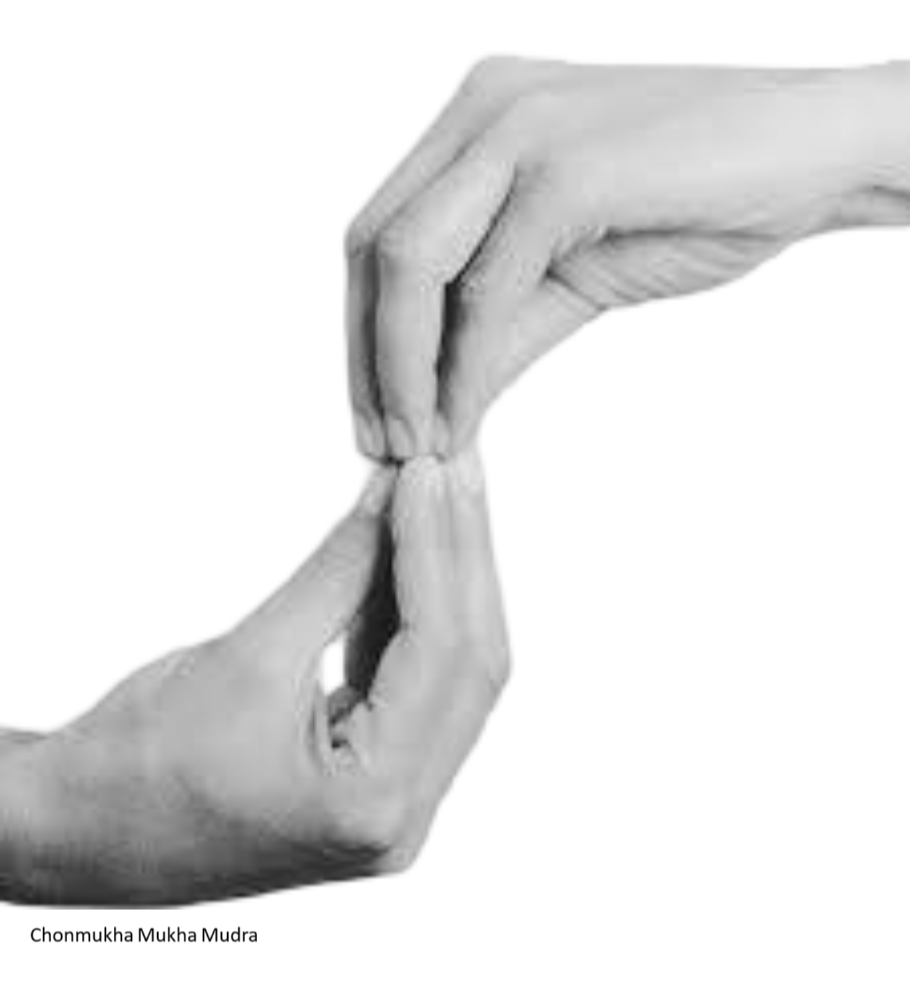
Chonmukha Mudra Introduction Mudras are powerful yogic hand gestures that direct energy flow, deepen meditation, and activate subtle channels of the body. They are widely used in yoga, Ayurveda, tantra, and classical Indian dance. Chonmukha Mudra (sometimes transliterated as Chaturmukha or Chonmukh) is a symbolic gesture where all ten fingers meet at the tips, forming a dome-like opening. It represents expansion, openness, and multi-directional awareness. Yogically, it channels prana equally into four directions and fosters balance, unity, and receptivity. Meaning Chon / Chatur = four Mukha = face, opening, or direction Thus, Chonmukha Mudra = Mudra of Four Faces/Openings. Symbolism: Represents universal consciousness expanding in four directions. Signifies openness of mind and heart. Invokes the quality of equanimity and multidimensional awareness. Spiritually, it is associated with Brahma (the four-faced creator) and the crown chakra (Sahasrara). How to Perform Chonmukha Mudra (Method of Practice) Sit comfortably in Padmasana, Sukhasana, or Vajrasana with the spine erect. Chonmukha Mukha Mudra is a joint-hand gesture (samyukta hasta) common to the yoga tradition. It is found in the Yoga Tattva Mudra Vijnana form, and is one of the traditional thirty-two Gayatri Mudras, specifically the fifteenth gesture in the sub-set of twenty-four mudras practiced before meditation or recitation of the Gayatri Mantra. Benefits of Chonmukha Mudra Physical Benefits Improves lung expansion and respiratory capacity. Enhances blood circulation and oxygen flow. Relieves chest tightness and fatigue. Supports balance of endocrine functions. Mental Benefits Cultivates mental openness and receptivity. Enhances clarity, concentration, and stability of mind. Helps overcome narrow thinking and rigid patterns. Promotes inner harmony and equanimity. Spiritual Benefits Activates the Sahasrara (crown chakra), connecting with higher consciousness. Encourages universal awareness and balance. Supports meditation, chanting, and ritual practice. Symbolizes unity of the four directions and elements. Contraindications Avoid long practice if you have joint stiffness, arthritis, or pain in the fingers. People with low blood pressure should practice moderately, as it induces deep relaxation. Should not be practiced during extreme fatigue or mental dullness, as it may deepen lethargy. Avoid in severe respiratory infections where chest expansion is painful. Anatomy & Physiology Uses flexor and extensor muscles of the fingers to balance fingertip pressure. Expands the chest and intercostal muscles, encouraging deeper breathing. Influences the parasympathetic nervous system, lowering stress responses. Encourages symmetry in body posture and diaphragmatic breathing. Kinesiology Involves isometric contraction of finger flexors and extensors. Balanced activation of both hands promotes neuromuscular coordination. Dome-shape posture allows openness in the thoracic cavity, easing breath flow. Neurology Stimulates somatosensory and motor cortex areas linked to all fingers. Balances activity between the left and right brain hemispheres. Activates prefrontal cortex, aiding concentration and meditative focus. Engages the vagus nerve, promoting calmness and relaxation. Duration of Mudra Beginners: 5–10 minutes. Intermediate: 15–20 minutes. Advanced practitioners/therapeutic use: 30–45 minutes daily (in divided sessions). Ideal during meditation, pranayama, or mantra chanting. Counter Mudra If over-expansion or excessive relaxation occurs, balance with: Prithvi Mudra – for grounding and stability. Surya Mudra – for vitality and energy. Anjali Mudra – for centering and inward awareness. Conclusion Chonmukha Mudra is a symbolic hand gesture embodying the expansion of consciousness in four directions. It fosters balance, receptivity, and spiritual awareness. Practiced regularly, it improves breathing, calms the nervous system, and deepens meditation. It is especially valuable for cultivating equanimity, openness of heart, and universal consciousness. FAQ Q1. What is the main purpose of Chonmukha Mudra?To expand awareness in four directions and cultivate balance in mind and body. Q2. Can it be used in daily meditation?Yes, it is excellent for mantra meditation, dhyana, and pranayama. Q3. Which chakra does it activate?Primarily the Sahasrara (crown chakra), but also balances the heart center. Q4. Is it related to any deity?Yes, symbolically connected with Brahma (four-faced deity), representing omniscience. Q5. Can beginners practice it easily?Yes, it is simple and suitable for all, though advanced practitioners may use it for longer sessions. References Swami Satyananda Saraswati, Asana, Pranayama, Mudra, Bandha (Bihar School of Yoga). Joseph Le Page & Lilian Aboim, Mudras for Healing and Transformation. Rajeswari Raman, Mudras: For Body, Mind and Spirit. Bharata Natyashastra & Indian Dance Hasta Mudras references for symbolic hand gestures.
Dhyana Mudra (Gesture of Meditation)
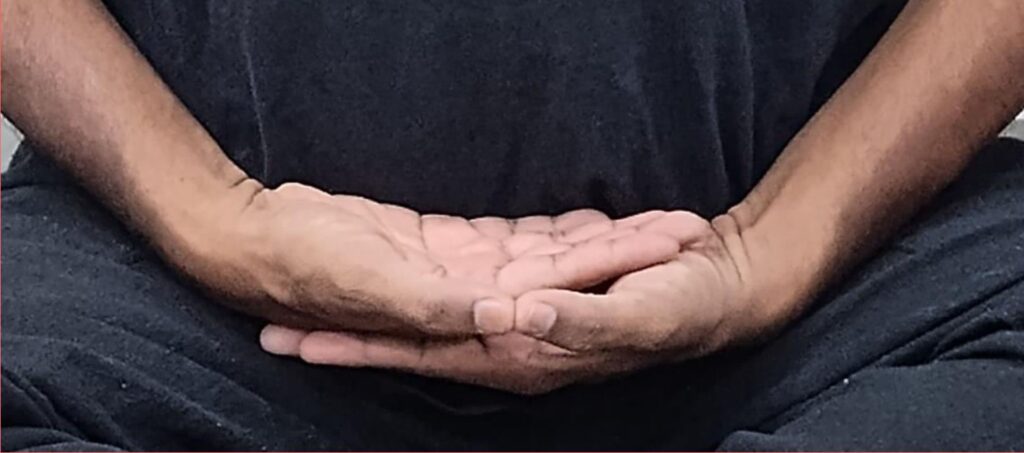
Dhyana Mudra (Gesture of Meditation) Introduction Dhyana Mudra, also called the Meditation Mudra, is a hand gesture commonly used in Buddhist and yogic meditation practices. It symbolizes deep contemplation, mental concentration, and inner calm. This mudra is typically practiced during meditation, pranayama, and mindfulness exercises to help stabilize the mind, enhance focus, and cultivate spiritual awareness. Meaning Etymology: Dhyana means meditation or contemplation in Sanskrit. Mudra means gesture or seal. Symbolism: Represents the balance of thought, mind, and energy. Encourages mental stillness and spiritual awakening. The gesture also symbolizes union of divine consciousness with individual awareness. How to Perform Dhyana Mudra Sit comfortably in a meditation posture (Sukhasana, Padmasana, or Vajrasana) with a straight spine. Place both hands on your lap, palms facing upward. Rest the right hand over the left hand, with the thumb tips lightly touching, forming an oval or triangle shape. Keep shoulders relaxed and elbows close to the body. Close your eyes and focus on slow, deep breathing, bringing attention inward. Maintain this mudra for 10–30 minutes during meditation sessions. Tip: The mudra can be used while chanting, practicing mindfulness, or visualizing a calm energy flow. Benefits Promotes mental calmness, focus, and concentration. Reduces stress, anxiety, and mental fatigue. Supports spiritual growth and deeper meditation. Enhances prana circulation, improving energy balance. Encourages mind-body-soul alignment, cultivating emotional stability. Can improve self-awareness and mindfulness during daily life. Contraindications Avoid if there is hand, wrist, or finger injury. Not suitable if maintaining the hand position causes pain or discomfort. People with severe arthritis may need to adjust finger placement or use a supportive cushion. Anatomy & Physiology Involves phalanges, interphalangeal joints, intrinsic hand muscles, and forearm muscles. Stimulates sensory nerve endings in the thumbs and palms, enhancing cortical activity related to focus. Encourages blood circulation in hands and forearms, indirectly supporting autonomic nervous system balance. Promotes relaxation of the chest, shoulders, and back, supporting deep breathing and energy flow. Kinesiology Isometric contraction of thenar and hypothenar muscles maintains thumb contact. Supports fine motor coordination and proprioception. Engages upper back and shoulder muscles to maintain posture stability during meditation. Promotes mind-body integration and awareness through deliberate finger placement. Neurology Activates median and ulnar nerves in the thumbs and hands. Stimulates somatosensory cortex, improving attention and mental focus. Supports parasympathetic nervous system activation, inducing calm and reducing stress. Visualization and meditation strengthen neural pathways associated with introspection, focus, and consciousness. Duration of Practice Beginners: 5–10 minutes daily. Intermediate/Advanced: 15–30 minutes, once or twice daily. Can be combined with breath-focused meditation or chanting for enhanced effects. Counter Mudra Chin Mudra (Gyana Mudra) can serve as a counter, promoting active awareness and concentration. Alternating Dhyana Mudra with Chin Mudra can balance deep meditation with heightened alertness. Conclusion Dhyana Mudra is a core meditation gesture that promotes mental stillness, emotional balance, and spiritual insight. Regular practice enhances focus, self-awareness, and energy alignment, making it an essential mudra for meditative and mindfulness practices. FAQ Q1: Can Dhyana Mudra reduce anxiety?A1: Yes, it stimulates calming neural pathways and encourages mental stillness, reducing stress. Q2: Can children practice it?A2: Yes, with guidance to maintain comfortable hand placement and posture. Q3: Is visualization necessary?A3: Visualization enhances meditative depth but is optional; simple hand placement and breath awareness are sufficient. Q4: Can it be practiced during pranayama?A4: Yes, it complements deep breathing and mindfulness practices effectively. References Swami Satyananda Saraswati, Mudras for Healing and Transformation, Bihar Yoga Publications, 2012. Dr. Harish Johari, Mudra: The Gateway to Health, Inner Traditions, 1994. B.K.S. Iyengar, Light on Yoga, HarperCollins, 2005. Yoga Journal, Mudras for Meditation and Focus, 2018. Hatha Yoga Pradipika and Buddhist meditation texts on hand gestures and energy flow.
Detoxification Mudra (Vishuddhi Mudra / Cleansing Gesture)
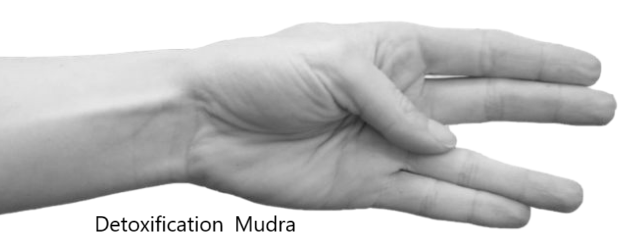
Detoxification Mudra (Vishuddhi Mudra / Cleansing Gesture) Introduction Detoxification Mudra is a yogic hand gesture designed to aid the body in removing toxins, improve metabolism, and promote overall wellness. This mudra is commonly practiced alongside pranayama, meditation, and cleansing routines to support the body’s natural detoxification processes. It stimulates the liver, kidneys, lungs, and lymphatic system, enhancing physical and energetic purification. Meaning Etymology: Detoxification refers to removal of toxins and purification. Mudra means gesture or seal. Symbolism: Represents the cleansing of physical, mental, and emotional toxins. Enhances pranic flow to support health and vitality. Symbolically aligns the body with purity, balance, and energetic clarity. How to Perform Detoxification Mudra Sit comfortably in a meditative posture (Sukhasana, Padmasana, or Vajrasana) with a straight spine. Place tip of thumb touching between ring and middle finger. Close your eyes and focus on slow, deep breathing, imagining toxins leaving the body with each exhale. Maintain this mudra for 10–20 minutes daily for optimal results. Tip: Practicing this mudra in the morning or before meals can enhance metabolic and detoxifying effects. Benefits Supports liver and kidney function, aiding natural detoxification. Enhances digestion and metabolic efficiency. Promotes mental clarity and emotional balance. Reduces stress, fatigue, and sluggishness. Stimulates lymphatic and circulatory systems, aiding toxin removal. Improves prana circulation, enhancing vitality and overall health. Contraindications Avoid if you have finger, hand, or joint injuries. People with arthritis or severe hand deformities should modify the finger position. Not recommended if overexertion or pain occurs during practice. Anatomy & Physiology Involves phalanges, interphalangeal joints, intrinsic hand muscles, and forearm muscles. Stimulates nerve endings in the thumb and middle finger, which correspond to liver and kidney energy in reflexology and acupressure points. Encourages blood circulation in hands and arms, indirectly supporting autonomic nervous system function. Enhances respiratory efficiency through relaxed posture and deep breathing. Kinesiology Isometric contraction of thenar, hypothenar, and interossei muscles maintains the thumb-middle finger contact. Enhances fine motor coordination and proprioception. Supports shoulder and upper back stabilization during meditation. Encourages mind-body integration via conscious finger placement and breath awareness. Neurology Activates median and ulnar nerves, enhancing sensory feedback. Stimulates the somatosensory cortex, improving awareness and focus. Promotes parasympathetic nervous system activation, reducing stress and enhancing detoxification. Visualization during practice strengthens neural pathways associated with cleansing, energy circulation, and self-regulation. Duration of Practice Beginners: 10 minutes daily. Intermediate/Advanced: 15–20 minutes, once or twice daily. Can be combined with pranayama, yoga asanas, or meditation for enhanced detox effects. Counter Mudra Prana Mudra or Gyana Mudra can act as counter mudras to support energy activation and grounding. Alternating between Detoxification Mudra and Prana Mudra enhances both cleansing and energizing effects. Conclusion Detoxification Mudra is a simple yet effective gesture that supports physical and energetic cleansing, improves digestion, enhances prana flow, and promotes mental clarity. Regular practice can boost vitality, emotional balance, and overall health. FAQ Q1: Can Detoxification Mudra replace medical detoxification?A1: No, it complements healthy lifestyle practices like diet, hydration, and exercise. Q2: Can children practice it?A2: Yes, with supervision and gentle guidance on finger placement. Q3: Is visualization necessary?A3: Visualization enhances effects but is optional; focusing on breath and awareness is sufficient. Q4: Can it be combined with pranayama?A4: Yes, it is highly effective when practiced alongside deep breathing or cleansing pranayama like Kapalabhati. References Swami Satyananda Saraswati, Mudras for Healing and Transformation, Bihar Yoga Publications, 2012. Dr. Harish Johari, Mudra: The Gateway to Health, Inner Traditions, 1994. B.K.S. Iyengar, Light on Yoga, HarperCollins, 2005. Yoga Journal, Mudras for Detox and Energy Flow, 2018. Hatha Yoga Pradipika and Ayurvedic texts on prana, digestion, and detoxification.
Dvimukha Mudra

Dvimukha Mudra Introduction Mudras are sacred hand gestures used in yoga, meditation, Ayurveda, and Indian classical dance to channel subtle energy and deepen awareness. Each mudra has symbolic, therapeutic, and spiritual significance. Dvimukha Mudra is one such gesture, found in hasta-mudra traditions of dance (Natya Shastra, Abhinaya Darpana) and yogic symbolism. Dvimukha literally means “two faces” or “two openings”. This mudra signifies duality, dialogue, openness, and receptivity. In yogic practice, it is used to harmonize duality of existence (sun–moon, ida–pingala, inner–outer), and in Indian dance, it represents offerings, gifts, or sacred objects. Meaning Dvi = two Mukha = face, mouth, or opening Dvimukha = Two-faced, dual-aspect, or having two openings Symbolism: The duality of life (light/dark, inner/outer, masculine/feminine). Communication and dialogue, since two “mouths” suggest exchange. Offering and receptivity, as in classical dance usage (offering flowers, fruits, lamps). Balance of ida and pingala nadis, leading to harmony at the central channel (sushumna). How to Perform Dvimukha Mudra (Method of Practice) Sit comfortably in Sukhasana, Padmasana, or Vajrasana with an upright spine. Raise the hands in front of the abdomen, palms facing the midline. Lightly touch the tips of the little and ring fingers of both hands. Relax shoulders and breathe deeply. Close your eyes and focus on the balance between left and right sides of the body. Visualize energy flowing through ida (left, lunar) and pingala (right, solar) nadis, meeting in the heart. Hold for 5–30 minutes in meditation or chanting. Benefits of Dvimukha Mudra Physical Benefits Improves respiratory efficiency by keeping the chest open. Promotes balanced circulation and oxygen flow. Enhances hand coordination and finger strength. Relieves fatigue and mild chest tightness. Mental Benefits Encourages open-mindedness and balanced thinking. Helps resolve inner conflicts by uniting dual aspects. Promotes calmness and emotional balance. Enhances communication skills (metaphorically, two mouths in dialogue). Spiritual Benefits Symbolizes union of dual energies (ida & pingala nadis, yin & yang). Activates the heart chakra (Anahata) by joining both hands at chest level. Encourages awareness of oneness beyond duality. Useful in meditation, puja, and mantra chanting as a gesture of offering. Contraindications Should not be practiced for long durations by those with finger stiffness, arthritis, or nerve pain. Avoid during extreme fatigue or cold conditions, as it may reduce vitality. Not recommended when one is mentally unstable or agitated, since it requires calmness. Anatomy & Physiology Engages flexor and extensor muscles of fingers. Stimulates both sympathetic and parasympathetic balance by aligning left and right hand activity. Opens the chest cavity, supporting respiration and cardiac efficiency. The bilateral gesture promotes neural synchronization across hemispheres. Kinesiology Finger flexion with fingertip contact creates isometric engagement. The symmetrical posture trains neuromuscular coordination. Balances bilateral movement patterns, reflecting left–right equilibrium. Neurology Stimulates sensory–motor cortex regions for all fingers, strengthening brain-hand connection. Engages corpus callosum pathways, improving left–right brain integration. Activates vagal tone, calming stress responses. Supports prefrontal cortex function, aiding focus and higher awareness. Duration of Mudra Beginners: 5–10 minutes. Regular practice: 15–30 minutes. Advanced: Up to 45 minutes (in divided sessions). Best done during meditation, chanting, or before teaching/communication. Counter Mudra To balance Dvimukha Mudra if overstimulating or creating too much openness: Anjali Mudra (prayer gesture) – for centering and devotion. Jnana Mudra – for clarity and focus. Prithvi Mudra – for grounding and stability. Conclusion Dvimukha Mudra is a symbolic gesture of duality, balance, and offering. It represents the union of two aspects of existence and helps harmonize inner and outer worlds. Practiced regularly, it enhances breathing, calms the mind, and supports spiritual receptivity. It is both a yogic and ritual gesture that embodies openness, communication, and equanimity. FAQ Q1. What does Dvimukha Mudra represent?It symbolizes two faces or openings, duality, and communication between opposites. Q2. Is it used in classical dance as well?Yes, in Bharatanatyam and other dances, it represents offering flowers, lamps, or sacred objects. Q3. Which chakra does it activate?Primarily the heart chakra (Anahata). Q4. Can it be practiced during meditation?Yes, it is highly effective in meditation for balancing inner conflicts. Q5. Is it safe for everyone?Yes, generally safe, except for those with severe finger/joint conditions. References Swami Satyananda Saraswati, Asana, Pranayama, Mudra, Bandha (Bihar School of Yoga). Joseph Le Page & Lilian Aboim, Mudras for Healing and Transformation. Rajeswari Raman, Mudras: For Body, Mind and Spirit. Abhinaya Darpana & Natya Shastra (classical dance manuals referencing Dvimukha hasta).
Gada Mudra (Mace Gesture)
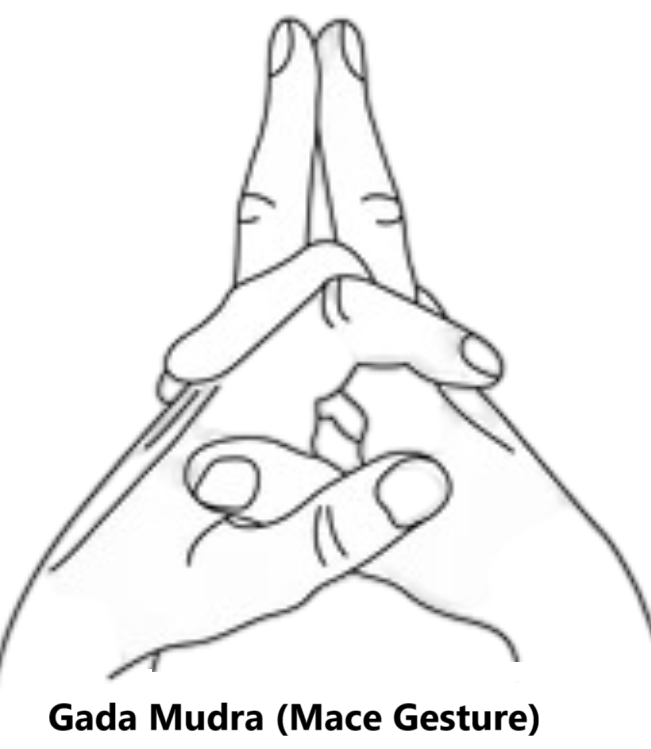
Gada Mudra (Mace Gesture) Introduction Gada Mudra, also known as the Mace Mudra, is a powerful yogic hand gesture that symbolizes strength, stability, and power, inspired by the traditional Indian mace, a symbol of courage and energy. It is often practiced in meditation, pranayama, and mudra therapy to enhance physical vitality, mental resilience, and willpower. Meaning Etymology: Gada means mace in Sanskrit. Mudra means gesture or seal. Symbolism: Represents strength, stability, and grounded energy. Encourages mental courage, physical stamina, and emotional resilience. Symbolically supports inner power and discipline. How to Perform Gada Mudra Sit comfortably in a meditation posture (Sukhasana, Padmasana, or Vajrasana) with a straight spine. Hold the hands in front of you with the palms up. Bend and interlace the little fingers and ring fingers at the second knuckle. Touch the tips of the middle fingers and extend them upward. Form two interlocking rings by touching the tips of the index finders and thumbs on both hands. Maintain this mudra for 10–15 minutes daily for optimal results. Tip: Practicing this mudra in the morning or before physical activity enhances strength and vitality. Benefits Enhances physical strength and stamina. Improves mental courage, resilience, and focus. Supports immune function and energy circulation. Reduces fatigue, lethargy, and mental stress. Strengthens willpower, determination, and self-discipline. Promotes grounding and stability in both mind and body. Contraindications Avoid if there is injury or pain in the fingers, hands, or wrists. Not recommended for people with severe arthritis or joint limitations unless modified. Discontinue practice if discomfort occurs during prolonged use. Anatomy & Physiology Involves phalanges, interphalangeal joints, intrinsic hand muscles, and forearm muscles. Stimulates nerve endings in the thumbs and fingers, enhancing sensory input and cortical activity. Promotes blood circulation in hands, forearms, and upper extremities, indirectly supporting autonomic nervous system function. Encourages postural alignment and breathing efficiency, improving overall energy distribution. Kinesiology Isometric contraction of thenar, hypothenar, and interossei muscles maintains finger interlock. Engages forearm, shoulder, and upper back muscles for stabilization. Enhances fine motor control, proprioception, and hand dexterity. Supports mind-body coordination and intentional energy flow. Neurology Activates median and ulnar nerves, stimulating the somatosensory cortex. Promotes parasympathetic nervous system activation, reducing stress and enhancing focus. Visualization of strength during the mudra strengthens neural pathways associated with confidence, endurance, and mental fortitude. Duration of Practice Beginners: 5–10 minutes daily. Intermediate/Advanced: 10–15 minutes, once or twice daily. Ideal before physical activity, meditation, or energy work. Counter Mudra Prana Mudra can be used as a counter, stimulating vital energy and circulation. Alternating Gada Mudra with Prana Mudra balances strength, energy activation, and vitality. Conclusion Gada Mudra is a powerful gesture for physical and mental strength, stability, and vitality. Regular practice improves endurance, focus, courage, and grounding, making it a valuable addition to meditation, pranayama, and wellness routines. FAQ Q1: Can Gada Mudra improve energy and stamina?A1: Yes, it activates prana circulation and mental focus, enhancing physical and mental vitality. Q2: Can children practice it?A2: Yes, under supervision to ensure proper hand placement and comfort. Q3: Is visualization necessary?A3: Visualization of strength enhances effects, but simple practice with awareness is sufficient. Q4: Can it be combined with meditation or pranayama?A4: Yes, it complements deep breathing, meditation, and energy-focused practices. References Swami Satyananda Saraswati, Mudras for Healing and Transformation, Bihar Yoga Publications, 2012. Dr. Harish Johari, Mudra: The Gateway to Health, Inner Traditions, 1994. B.K.S. Iyengar, Light on Yoga, HarperCollins, 2005. Yoga Journal, Mudras for Energy, Strength, and Focus, 2018. Hatha Yoga Pradipika and Ayurvedic texts on prana, stamina, and energy flow.
Chakra Mudra (Wheel Gesture)
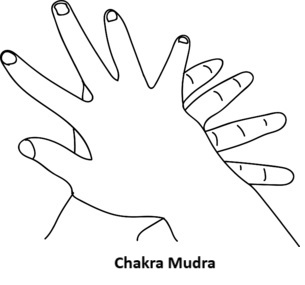
Chakra Mudra (Wheel Gesture) Introduction Chakra Mudra is a yogic hand gesture designed to stimulate energy centers (chakras) and enhance the flow of prana (life force energy) throughout the body. It is often used in meditation, pranayama, and spiritual practices to balance mental, emotional, and physical energies. This mudra helps harmonize energy in all chakras, promoting overall wellness and spiritual growth. Meaning Etymology: Chakra means wheel or energy center in Sanskrit. Mudra means gesture or seal. Symbolism: Represents the cyclical flow of energy in the body. Encourages balance between mind, body, and spirit. Symbolically aligns the seven major chakras along the spine. How to Perform Chakra Mudra Sit in a comfortable meditation posture (Sukhasana, Padmasana, or Vajrasana) with your spine straight. Place the right palm on the left palm in such manner that the index finger of the right hand is placed on the thumb of the left hand and small finger of the right hand is placed on the index finger of the left hand. Now press the palms against each other. Hold the mudra for 5–15 minutes, gradually increasing duration as comfort allows. Tip: Visualization of spinning light in each chakra enhances the mudra’s effects. Benefits Balances energy flow across all chakras. Enhances mental clarity, focus, and emotional stability. Promotes spiritual awareness and meditation depth. Supports autonomic nervous system balance, reducing stress and anxiety. Stimulates blood and pranic circulation, improving vitality. May improve physical energy, immunity, and emotional resilience. Contraindications Avoid if you have hand or wrist injuries. People with severe arthritis may find finger interlocking difficult; modify as needed. Not recommended for recent surgery or acute pain in the upper body. Anatomy & Physiology Involves intrinsic hand muscles, interossei, thenar, and hypothenar muscles. Stimulates sensory nerve endings in the fingertips, activating cortical regions related to focus and energy awareness. Enhances blood flow to the hands, forearms, and upper torso, indirectly supporting central nervous system function. Promotes respiratory and circulatory efficiency through relaxed posture and deep breathing. Kinesiology Isometric contraction of hand and forearm muscles maintains the interlocked posture. Promotes fine motor coordination and proprioception. Encourages shoulder and upper back stabilization during meditation. Supports mind-body integration through controlled finger positioning and conscious breathing. Neurology Activates median, ulnar, and radial nerves. Engages somatosensory cortex, enhancing tactile awareness and concentration. Visualization stimulates neural pathways related to energy perception and meditation focus. May activate parasympathetic nervous system, promoting calmness and stress reduction. Duration of Practice Beginners: 5–10 minutes daily. Intermediate/Advanced: 15–20 minutes, once or twice daily. Can be practiced during meditation, pranayama, or yoga nidra sessions. Counter Mudra Gyana Mudra (Chin Mudra) can be used as a counter, emphasizing intellectual clarity and calmness. Alternating between Chakra Mudra and Gyana Mudra helps balance spiritual energy and mental focus. Conclusion Chakra Mudra is a powerful energetic tool that enhances the flow of prana, harmonizes the chakras, and supports mental, emotional, and spiritual balance. Regular practice strengthens focus, vitality, and self-awareness, making it ideal for meditation and holistic wellness. FAQ Q1: Can Chakra Mudra help with stress?A1: Yes, it stimulates the parasympathetic nervous system and balances energy flow, reducing anxiety. Q2: Can children practice it?A2: Yes, with supervision and gentle guidance for finger positioning. Q3: Is visualization necessary?A3: Visualization enhances benefits but is optional. Awareness of energy flow is sufficient for beginners. Q4: Can it be combined with pranayama?A4: Yes, it synergizes well with deep breathing and meditation practices. References Swami Satyananda Saraswati, Mudras for Healing and Transformation, Bihar Yoga Publications, 2012. Dr. Harish Johari, Mudra: The Gateway to Health, Inner Traditions, 1994. B.K.S. Iyengar, Light on Yoga, HarperCollins, 2005. Yoga Journal, Mudras for Chakra Balance and Energy Flow, 2018. Hatha Yoga Pradipika and Ayurvedic texts on prana, nadis, and chakra energy.