
ASATO MĀ SAD GAMAYA
ASATO MĀ SAD GAMAYA Shanthi Mantra oṃ asato mā sad gamaya tamaso mā jyotir gamaya mṛtyor mā ‘mṛtaṃ gamaya oṃ śāntiḥ śāntiḥ śāntiḥ Lead me (by giving knowledge) from the unreal to the real; from darkness (of ignorance) to the light (of knowledge); from death (sense of limitation) to immortality (limitless liberation), Om Peace, Peace, Peace History of “Asato Mā Sad Gamaya” Scriptural Source: This shloka is from the Bṛhadāraṇyaka Upaniṣad (1.3.28), one of the oldest and largest Upaniṣads, belonging to the Śukla Yajur Veda. Context: It is part of a larger prayer recited during Shānti Mantras (peace invocations). The seeker prays for guidance to move from ignorance to truth, from darkness to light, and from mortality to immortality. Philosophical Foundation: Reflects the Vedāntic quest for liberation (mokṣa). Highlights the human journey from illusion (māyā) to realization of Brahman (ultimate truth). Traditional Usage: Recited in prayers, yajñas, meditation, and spiritual gatherings as a universal invocation of truth, light, and immortality. Etymology and Meaning Word Breakdown: Asataḥ – From the unreal, false, transient. Sat – To the real, truth, eternal. Gamaya – Lead me, guide me. Tamas – Darkness, ignorance. Jyotiḥ – Light, knowledge, wisdom. Mṛtyoḥ – From death. Amṛtam – Immortality, eternal life, liberation. Meaning: “Lead me from the unreal to the real; from darkness to light; from death to immortality.” This is a universal prayer, not tied to any one religion, but to the human spiritual quest. Benefits of the Mantra a) Spiritual Benefits Awakens the seeker’s aspiration for truth and self-realization. Aligns consciousness with sat-chit-ānanda (truth-consciousness-bliss). Invokes divine guidance in the journey of liberation (mokṣa). b) Psychological Benefits Reduces confusion, doubt, and inner conflict. Helps overcome fear of death and attachment to illusions. Builds clarity, optimism, and inner strength. c) Practical Life Benefits Encourages ethical living and pursuit of wisdom. Inspires courage to face hardships with faith in truth. Provides solace in grief and guidance in uncertainty. Contraindications / Precautions This mantra is gentle and universal, so there are no direct contraindications. Still, some considerations: Not for mechanical recitation: It is meant for reflection and meditation, not blind repetition. Deep meaning awareness: Without understanding, chanting may lose transformative impact. Psychological caution: For those facing deep existential anxiety, contemplation on mortality (“mṛtyor mā amṛtam gamaya”) should be approached gradually, preferably with spiritual guidance. Science of “Asato Mā Sad Gamaya” While this is not a phonetic healing mantra like Gāyatrī or Mahā Mrityuñjaya, modern science supports its psychological and neurological impact: Neuroscience & Cognitive Science: Repetitive chanting and meditation on its meaning activate the prefrontal cortex (linked to awareness and higher reasoning). Reduces activity in the default mode network, which is associated with rumination and anxiety. Psychological Impact: Affirmations like “lead me from darkness to light” work as positive cognitive reframing. Provides existential comfort, reducing fear of death and impermanence. Stress & Emotional Regulation: Chanting in slow rhythm activates the parasympathetic nervous system, lowering stress hormones (cortisol). Deepens alpha brainwaves, producing calm alertness. Collective Resonance: When recited in groups (like peace prayers), it creates social synchrony—shared rhythm that enhances empathy, unity, and collective harmony. Summary:The mantra “Asato Mā Sad Gamaya” is a timeless Upaniṣadic prayer for inner awakening. Its etymology reveals a movement from illusion to truth, darkness to light, mortality to immortality. Its benefits include spiritual clarity, psychological strength, and emotional peace. It has no contraindications, but should be practiced with awareness and devotion. Modern science validates its role in stress reduction, emotional regulation, and existential resilience.
MAHĀ MRITYUÑJAYA MANTRA
MAHĀ MRITYUÑJAYA MANTRA oṃ tryámbakaṃ yajāmahe sughandhíṃ puṣṭivardhánam urvārukam iva bandhánāt mṛtyor mukṣīya māmṛtāt Om Śāntiḥ Śāntiḥ Śāntiḥ We worship the three-eyed Lord (Shiva) who is full of sweet fragrance and nourishes human beings. May he liberate me from the fear of death like the cucumber of the vine freed from its stem, but not from the nectar of immortality, Om Peace, Peace, Peace History of the Mahā Mrityuñjaya Mantra Vedic Origin: The mantra comes from the Ṛg Veda (Mandala 7, Hymn 59, Verse 12), attributed to the sage Vasiṣṭha. Scriptural References: Found in the Yajur Veda as well. Referred to as the Triyambaka Mantra (to the three-eyed Lord Śiva). Mentioned in Purāṇas and Upaniṣads as a life-protecting mantra. Traditional Usage: Chanted during serious illness, dangerous journeys, rituals for protection, and at the time of death. Used in Ayurveda and tantric rituals as a healing mantra. Known as the “conqueror of death” mantra, symbolizing victory over fear, disease, and mortality. Etymology of the Mantra Word-by-Word Meaning: Om – Primordial sound, universal vibration. Tryambakam – The three-eyed one (Śiva, seer of past, present, and future; also symbolic of ida, piṅgalā, suṣumṇā nāḍīs). Yajāmahe – We worship, honor, invoke. Sugandhim – Fragrant, pervading like aroma, source of well-being. Puṣṭi-vardhanam – That which nourishes, strengthens, sustains life. Urvārukam iva – Like a cucumber (or gourd) that detaches effortlessly from its stalk when ripe. Bandhanāt – From bondage (of disease, death, suffering). Mṛtyoḥ – From death. Mukṣīya – May I be liberated/released. Mā amṛtāt – Not from immortality (meaning: grant freedom from death, but not from the nectar of eternal life). Literal Meaning:“We worship the three-eyed Lord Śiva, fragrant and nourishing, who liberates us from the bondage of mortality and suffering, like a ripe cucumber is freed from its stalk. May He not deprive us of immortality.” Benefits of the Mahā Mrityuñjaya Mantra a) Spiritual Benefits Conquers fear of death and strengthens faith in the eternal soul. Invokes Śiva’s healing and protective energy. Enhances meditation, deepens inner peace, and awakens higher consciousness. b) Psychological Benefits Reduces anxiety, grief, and fear in times of illness or crisis. Builds resilience, courage, and surrender to divine will. Brings emotional balance, hope, and acceptance. c) Physical & Healing Benefits Traditionally used for recovery from illness and surgery. Said to boost immunity, vitality, and healing capacity. Calms the nervous system, regulates breathing and heart rhythms. d) Energetic & Ritual Benefits Protects against negative influences and accidents. Used in japa, homa, and pūjā to purify spaces and individuals. Considered auspicious during life transitions (birth, illness, death). Contraindications / Precautions Not a substitute for medical care: Should complement, not replace, treatment. Excessive chanting without grounding: May lead to emotional release, restlessness, or energetic imbalance. Best done with guidance. Incorrect pronunciation: Since it is a Vedic mantra, chanting wrongly may reduce its efficacy. Beginners can chant slowly or even mentally with devotion. Pregnancy caution: As with all powerful mantras, high-intensity japa (fast or long hours) is discouraged unless guided by a teacher. Gentle chanting is safe. Science of the Mahā Mrityuñjaya Mantra Modern studies on mantra chanting, including this mantra, show measurable effects: Neurophysiological Effects: Chanting reduces activity in the amygdala (fear center of the brain). Stimulates the vagus nerve, enhancing relaxation response. Creates rhythmic brainwave patterns (theta & alpha), linked to deep healing and meditation. Psychological & Emotional Effects: Lowers cortisol and stress hormones. Provides comfort and hope in terminally ill patients. Enhances resilience against trauma and fear of death. Respiratory & Cardiovascular Benefits: The long exhalation in chanting improves heart rate variability. Enhances lung capacity and oxygen circulation. Sound & Vibrational Science: Repetition of syllables (like “ma, tra, ya”) resonates with the throat, heart, and head chakras. The vibration harmonizes prāṇa and strengthens biofield energy (aura). Symbolic Neuroscience Insight: The imagery of the cucumber (effortless detachment) parallels the nervous system’s ability to release stress and clinging when in parasympathetic dominance. Summary:The Mahā Mrityuñjaya Mantra is a profound healing chant, historically revered as a “life-restoring” mantra. It balances mind, body, and spirit; reduces fear; supports healing; and connects the chanter with immortality of the soul. It has both spiritual depth and measurable scientific benefits in stress reduction and physiological regulation.
GĀYATRĪ MANTRA
GĀYATRĪ MANTRA oṃ bhūr bhuvaḥ svaḥ tat savitur vareṇyaṃ bhargo devasya dhīmahi dhiyo yo naḥ pracodayāt Om Śāntiḥ Śāntiḥ Śāntiḥ We meditate on the glory of sacred light illuminating the three worlds. May that divine light inspire our thoughts, Om Peace, Peace, Peace History of Gāyatrī Mantra Vedic Origins: The Gāyatrī Mantra is found in the Ṛg Veda (Mandala 3, Hymn 62, Verse 10). It is one of the oldest known prayers in human history, composed by the sage Viśvāmitra. Deity: It is addressed to Savitar (the Sun deity), symbolizing light, wisdom, and life force. Scriptural Importance: Considered the essence of the Vedas (“Vedamātā” – the Mother of Vedas). Upaniṣads and Bhagavad Gītā highlight it as a supreme mantra for spiritual evolution. Traditionally chanted during Sandhyā Vandana (sunrise, noon, and sunset) for purification and connection with cosmic consciousness. Etymology of Gāyatrī Mantra Word Breakdown: Gāyatrī = “Gāyati” (to sing, recite, protect) + “Tri” (that which protects the chanter). Literally: “That which protects the one who chants or meditates upon it.” Gāyatrī also refers to a metrical form (24 syllables, 3 lines of 8 syllables each). Meaning (simplified): “We meditate upon the divine light of Savitar (Sun, the Supreme Creator), may that radiant brilliance inspire and guide our intellect towards truth.” Benefits of Gāyatrī Mantra a) Spiritual Benefits Awakens higher consciousness and inner wisdom. Strengthens concentration, clarity, and meditation. Purifies karma and aligns the practitioner with dharma. Connects individual consciousness to cosmic intelligence. b) Psychological Benefits Reduces stress and anxiety through rhythmic chanting. Increases focus, memory, and decision-making capacity. Promotes emotional stability and calmness. c) Physical & Energetic Benefits Improves breathing, oxygenation, and heart rate variability. Vibrations stimulate the nervous system and endocrine balance. Enhances circadian rhythm when chanted at sunrise/sunset. Strengthens prāṇa (life force) and aura. d) Social & Ethical Benefits Encourages compassion, discipline, and righteous living. Cultivates gratitude towards nature and universal order. Contraindications / Precautions Not mechanical chanting: Repetition without devotion, awareness, or correct pronunciation may reduce effectiveness. Health considerations: Those with severe respiratory or vocal issues should begin gently under guidance. Time of chanting: Traditionally avoided during impure states (anger, intoxication, after heavy meals, or when the mind is disturbed). Pregnancy caution: Some traditions advise very intense, long-duration chanting be avoided in late pregnancy, but soft chanting or mental recitation is considered safe and beneficial. Energetic sensitivity: Some people may feel agitation if done excessively without grounding practices (asana, pranayama). Science of Gāyatrī Mantra Modern research explores its psycho-physiological effects: Neurocognitive Effects: Chanting increases activity in prefrontal cortex, linked with focus and decision-making. Improves memory and attention span in students. Studies show better autonomic nervous system balance (reduced sympathetic overdrive). Cardiovascular & Respiratory Benefits: Slows heart rate, improves heart rate variability. Increases lung capacity and oxygen utilization. Vibrational Science: Each syllable of the mantra creates specific vibrational patterns that resonate with chakras. For example: “Om Bhūr Bhuvaḥ Svaḥ” is said to harmonize the three planes of existence (body, mind, spirit). Epigenetic & Stress Response: Mantra meditation reduces cortisol and stress biomarkers. May positively influence gene expression related to immunity and cellular repair. SummaryThe Gāyatrī Mantra is not just a prayer but a vibrational tool for harmonizing the body, mind, and spirit. Rooted in the Vedas, it carries universal appeal, offering spiritual awakening, mental clarity, and measurable health benefits when practiced with devotion and awareness.
Girivar Mudra (Mountain Gesture)
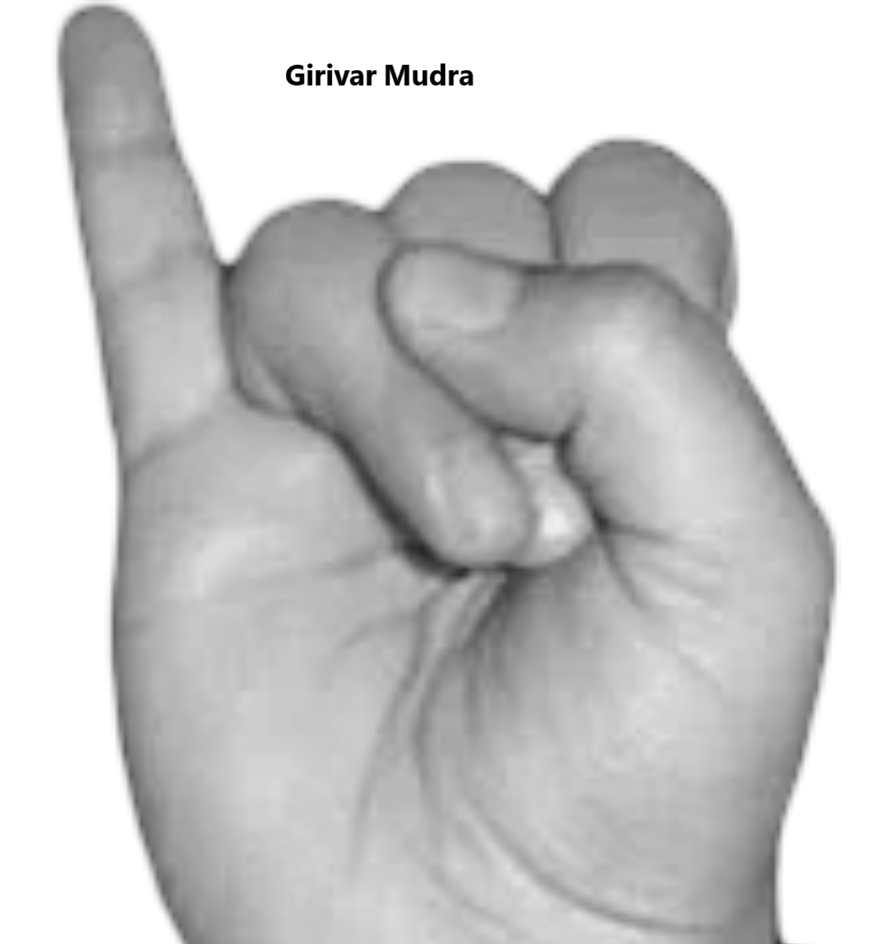
Girivar Mudra (Mountain Gesture) Introduction Girivar Mudra, also known as the Mountain Gesture, is a yogic hand gesture that symbolizes stability, groundedness, and strength. The mudra is inspired by the steadiness and immovability of a mountain, helping practitioners cultivate inner stability, focus, and balance. It is commonly used in meditation, pranayama, and yoga therapy to enhance mental clarity, physical balance, and energetic grounding. Meaning Etymology: Giri means mountain in Sanskrit. Var implies support or stability. Mudra means gesture or seal. Symbolism: Represents steadiness, patience, and grounded energy. Encourages mental calmness, emotional resilience, and focus. Symbolically connects the practitioner to earth energy and inner stability. How to Perform Girivar Mudra Sit comfortably in a meditation posture (Sukhasana, Padmasana, or Vajrasana) or stand with a straight spine. By raising the little finger up and straight while folding the rest of the three fingers and pressing them with the thumb. Keep shoulders relaxed and elbows slightly apart. Close your eyes and focus on slow, deep breathing, visualizing yourself rooted like a mountain, stable and unshakable. Maintain this mudra for 5–15 minutes, once or twice daily. Tip: Practicing in a quiet environment enhances grounding and stability. Benefits Promotes mental stability, focus, and clarity. Cultivates inner strength, patience, and emotional resilience. Enhances grounding and connection to earth energy. Supports balance and alignment in body and mind. Reduces stress, anxiety, and mental fatigue. Improves posture, core stability, and body awareness. Contraindications Avoid if there is injury, inflammation, or pain in the fingers, hands, or wrists. People with severe arthritis or joint limitations may modify finger placement. Discontinue if discomfort occurs during prolonged practice. Anatomy & Physiology Involves phalanges, interphalangeal joints, intrinsic hand muscles, and forearm muscles. Stimulates nerve endings in thumbs and fingers, enhancing sensory input and cortical activity. Encourages circulation in hands and forearms, indirectly supporting autonomic nervous system function. Promotes muscle relaxation in shoulders, chest, and upper back, improving breathing and posture. Kinesiology Isometric contraction of thenar, hypothenar, and interossei muscles maintains hand position. Engages forearm, shoulder, and upper back muscles for stability. Enhances fine motor coordination, proprioception, and postural awareness. Supports mind-body integration and conscious energy flow. Neurology Activates median and ulnar nerves, improving sensory feedback and cortical processing. Stimulates somatosensory cortex, enhancing attention and focus. Promotes parasympathetic nervous system activation, reducing stress and fostering calmness. Visualization of stability strengthens neural pathways associated with grounding, balance, and mental fortitude. Duration of Practice Beginners: 5 minutes daily. Intermediate/Advanced: 10–15 minutes, once or twice daily. Ideal during meditation, pranayama, or grounding exercises. Counter Mudra Prana Mudra or Chin Mudra can act as counter mudras to enhance energy activation, circulation, and relaxation. Alternating Girivar Mudra with these mudras balances grounding with pranic stimulation. Conclusion Girivar Mudra is a powerful gesture for mental, emotional, and energetic stability. Regular practice enhances focus, grounding, inner strength, and calmness, making it an excellent addition to meditation, pranayama, and yoga practices. FAQ Q1: Can Girivar Mudra help reduce anxiety?A1: Yes, it promotes grounding and mental calmness, which helps reduce stress and anxiety. Q2: Can children practice it?A2: Yes, under guidance to ensure proper hand placement and comfort. Q3: Is visualization necessary?A3: Visualization enhances benefits, but awareness of hand position and mindful breathing is sufficient. Q4: Can it be combined with other mudras or asanas?A4: Yes, it complements grounding asanas, pranayama, and meditation for enhanced stability. References Swami Satyananda Saraswati, Mudras for Healing and Transformation, Bihar Yoga Publications, 2012. Dr. Harish Johari, Mudra: The Gateway to Health, Inner Traditions, 1994. B.K.S. Iyengar, Light on Yoga, HarperCollins, 2005. Yoga Journal, Mudras for Mental Stability and Grounding, 2018. Hatha Yoga Pradipika and yogic texts on grounding, prana flow, and meditation practices.
Gnana Mudra (Gesture of Knowledge)
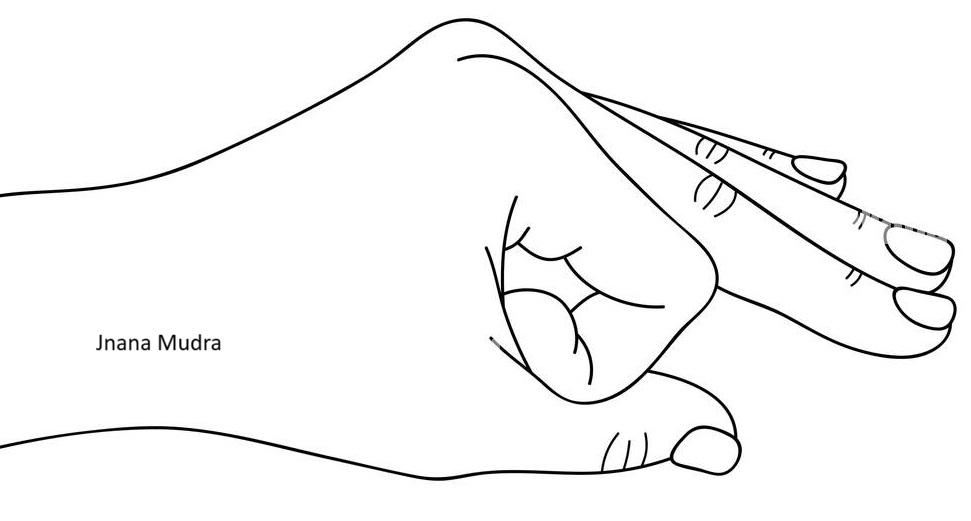
Gnana Mudra (Gesture of Knowledge) Introduction Gnana Mudra, also known as Jnana Mudra or Mudra of Knowledge, is one of the most widely used yogic hand gestures. It is primarily employed in meditation, pranayama, and mindfulness practices to enhance mental clarity, spiritual wisdom, and inner peace. This mudra is believed to stimulate the mind, calm the nervous system, and connect the practitioner with higher consciousness. Meaning Etymology: Gnana / Jnana means knowledge, wisdom, or awareness in Sanskrit. Mudra means gesture or seal. Symbolism: Represents union of individual consciousness (Atman) with universal consciousness (Brahman). Encourages introspection, clarity, and spiritual insight. Promotes mental calmness, focus, and wisdom. How to Perform Gnana Mudra Sit comfortably in a meditation posture (Sukhasana, Padmasana, or Vajrasana) with a straight spine. Rest your hands on your knees or thighs, palms facing upward. Touch the tip of the index finger to the tip of the thumb, forming a circle. Keep the other three fingers straight and relaxed. Close your eyes and focus on slow, deep breathing, observing thoughts without judgment. Maintain this mudra for 10–30 minutes during meditation or pranayama practice. Tip: The circle formed by the thumb and index finger represents the unity of individual and universal consciousness. Benefits Enhances mental clarity, concentration, and memory. Reduces stress, anxiety, and mental fatigue. Promotes inner peace, wisdom, and spiritual awareness. Stimulates brain activity and cortical function, improving cognitive performance. Supports prana flow and energy balance throughout the body. Calms the nervous system and encourages mindfulness. Contraindications Avoid if there is pain, injury, or severe arthritis in fingers or hands. People with joint limitations should practice gently. Discontinue if discomfort occurs during prolonged practice. Anatomy & Physiology Involves phalanges, interphalangeal joints, intrinsic hand muscles, and forearm muscles. Stimulates nerve endings in the thumb and index finger, enhancing sensory perception and cortical activity. Improves circulation in hands and forearms, indirectly supporting autonomic nervous system regulation. Promotes relaxation of shoulders, chest, and upper back, facilitating deep breathing and prana flow. Kinesiology Isometric contraction of thenar and hypothenar muscles maintains thumb-index finger contact. Minimal engagement of forearm muscles, allowing relaxation while maintaining posture. Enhances proprioception, finger dexterity, and hand awareness. Supports mind-body coordination through intentional finger placement and meditative focus. Neurology Activates median and radial nerves, stimulating the somatosensory cortex. Promotes parasympathetic nervous system activation, reducing stress and inducing calmness. Enhances cognitive processing, attention, and introspective neural pathways. Visualization of the circular union strengthens neural pathways related to mindfulness, awareness, and wisdom. Duration of Practice Beginners: 5–10 minutes daily. Intermediate/Advanced: 15–30 minutes, once or twice daily. Can be combined with meditation, pranayama, or mantra chanting for deeper benefits. Counter Mudra Prana Mudra can be used as a counter to energize and activate subtle energy, balancing calm awareness with vitality. Alternating Gnana Mudra with other mudras supports mind-body integration. Conclusion Gnana Mudra is a fundamental meditation gesture for knowledge, wisdom, and mental clarity. Regular practice enhances focus, inner peace, spiritual insight, and nervous system balance, making it an essential addition to yoga and meditation practices. FAQ Q1: Can Gnana Mudra improve concentration?A1: Yes, it stimulates brain activity and enhances attention and memory. Q2: Can children practice it?A2: Yes, with guidance to ensure comfort and proper finger placement. Q3: Is visualization necessary?A3: Visualization enhances meditative depth, but simple finger placement with mindful breathing is sufficient. Q4: Can it be combined with pranayama?A4: Yes, it complements deep breathing, mindfulness, and energy-balancing exercises. References Swami Satyananda Saraswati, Mudras for Healing and Transformation, Bihar Yoga Publications, 2012. Dr. Harish Johari, Mudra: The Gateway to Health, Inner Traditions, 1994. B.K.S. Iyengar, Light on Yoga, HarperCollins, 2005. Yoga Journal, Mudras for Meditation, Focus, and Spiritual Awareness, 2018. Hatha Yoga Pradipika and yogic texts on energy flow and meditation practices.
Granthita Mudra (Knot Gesture)
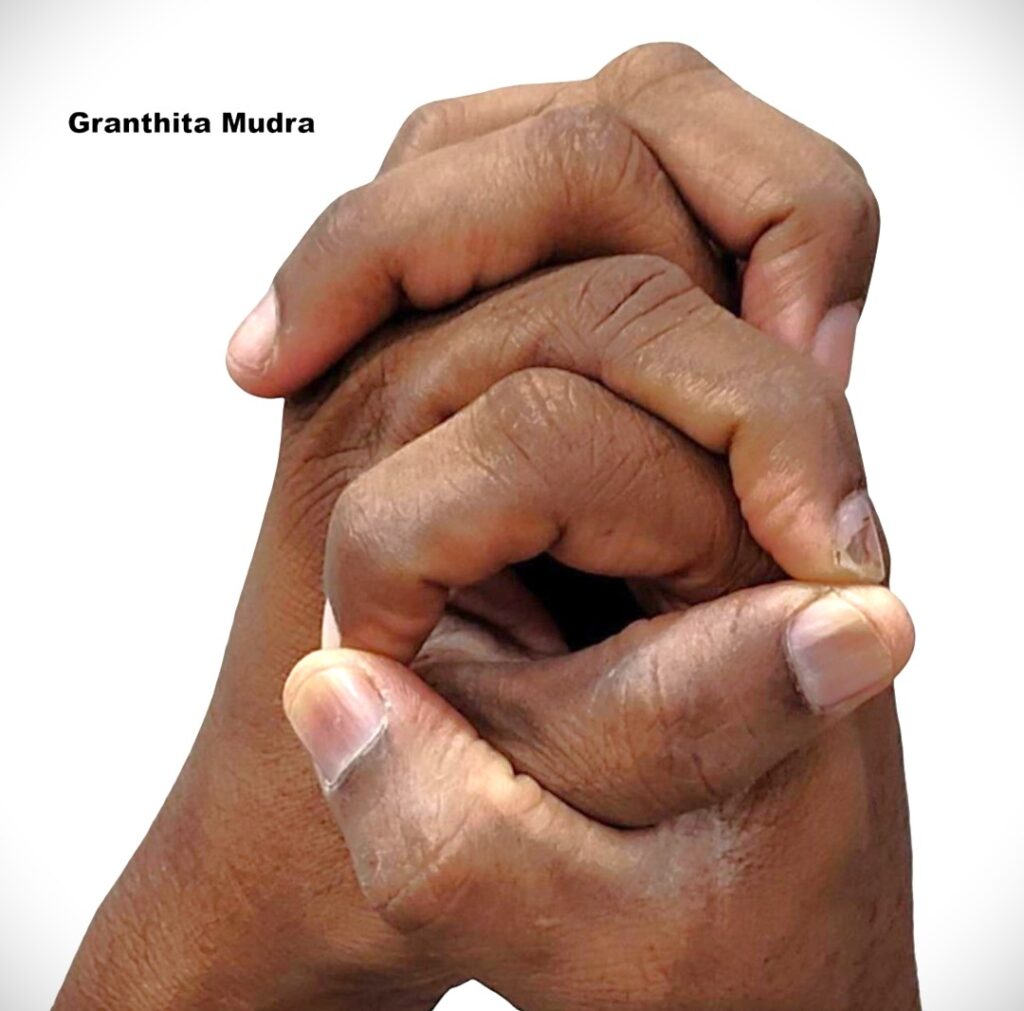
Granthita Mudra (Knot Gesture) Introduction Granthita Mudra, also called the Knot Gesture, is a yogic hand gesture designed to release tension, resolve energetic blockages, and enhance mental focus. It is commonly used in meditation, pranayama, and mudra therapy to promote calmness, concentration, and balanced energy flow. This mudra symbolizes the untying of knots within the body, mind, and subtle energy channels. Meaning Etymology: Granthita means knot or tangle in Sanskrit. Mudra means gesture or seal. Symbolism: Represents untangling physical, mental, and energetic blockages. Encourages clarity, focus, and release of tension. Symbolically supports emotional balance and mental stability. How to Perform Granthita Mudra Sit comfortably in a meditation posture (Sukhasana, Padmasana, or Vajrasana) with a straight spine. Clasp both hands together by interlocking your fingers; make sure the left index finger is on top of the right. Bring the tip of each thumb to the index finger of the same hand, forming two interlocking circles. Rest your hands in your lap or Hold them in front of your heart Keep elbows relaxed and shoulders down. Close your eyes and focus on slow, deep breathing, visualizing energy flowing freely as knots are released. Maintain this mudra for 5–10 minutes, once or twice daily. Tip: Practicing with mindfulness enhances the effect of releasing mental and physical tension. Benefits Reduces stress, anxiety, and mental fatigue. Enhances concentration, mental clarity, and focus. Supports release of energetic blockages in the body. Promotes emotional balance and inner calmness. Improves prana flow and circulation in hands, arms, and upper body. Strengthens mind-body coordination and awareness. Contraindications Avoid if there is injury, inflammation, or severe pain in fingers, hands, or wrists. People with arthritis or joint issues should practice gently or modify finger interlocking. Discontinue if discomfort occurs during prolonged practice. Anatomy & Physiology Involves phalanges, interphalangeal joints, intrinsic hand muscles, and forearm muscles. Stimulates median, ulnar, and radial nerve endings, enhancing sensory input. Improves circulation in hands and forearms, supporting autonomic nervous system balance. Promotes relaxation in shoulders, upper back, and chest, facilitating deeper breathing. Kinesiology Isometric contraction of interossei, thenar, and hypothenar muscles maintains finger interlock. Engages forearm and shoulder muscles for stability. Enhances fine motor control, proprioception, and hand awareness. Supports mind-body integration through intentional hand placement and focused attention. Neurology Activates median, ulnar, and radial nerves, stimulating somatosensory and motor cortices. Promotes parasympathetic nervous system activation, reducing stress and promoting calmness. Visualization of “untangling knots” strengthens neural pathways associated with mental clarity, focus, and stress resilience. Duration of Practice Beginners: 5 minutes daily. Intermediate/Advanced: 10–15 minutes, once or twice daily. Can be integrated with meditation, pranayama, or mindfulness practices. Counter Mudra Prana Mudra or Gnana Mudra can act as counter mudras to restore energy balance, stimulate vitality, and relax the nervous system. Alternating Granthita Mudra with these mudras balances tension release with energy activation. Conclusion Granthita Mudra is a powerful gesture for mental clarity, emotional balance, and energetic unblocking. Regular practice enhances focus, calmness, stress relief, and mind-body awareness, making it an effective tool in meditation, pranayama, and yoga therapy. FAQ Q1: Can Granthita Mudra relieve stress and tension?A1: Yes, it helps release mental and energetic blockages, promoting calmness. Q2: Can children practice it?A2: Yes, with guidance to ensure comfort and proper hand placement. Q3: Is visualization important?A3: Visualization enhances effectiveness, but mindful hand placement and breathing are sufficient. Q4: Can it be combined with other mudras or yoga practices?A4: Yes, especially with pranayama and meditation for optimal energy flow and mental clarity. References Swami Satyananda Saraswati, Mudras for Healing and Transformation, Bihar Yoga Publications, 2012. Dr. Harish Johari, Mudra: The Gateway to Health, Inner Traditions, 1994. B.K.S. Iyengar, Light on Yoga, HarperCollins, 2005. Yoga Journal, Mudras for Stress Relief and Mental Clarity, 2018. Hatha Yoga Pradipika and yogic texts on prana, energy channels, and meditation practices.
Garuda Mudra (Eagle Gesture)
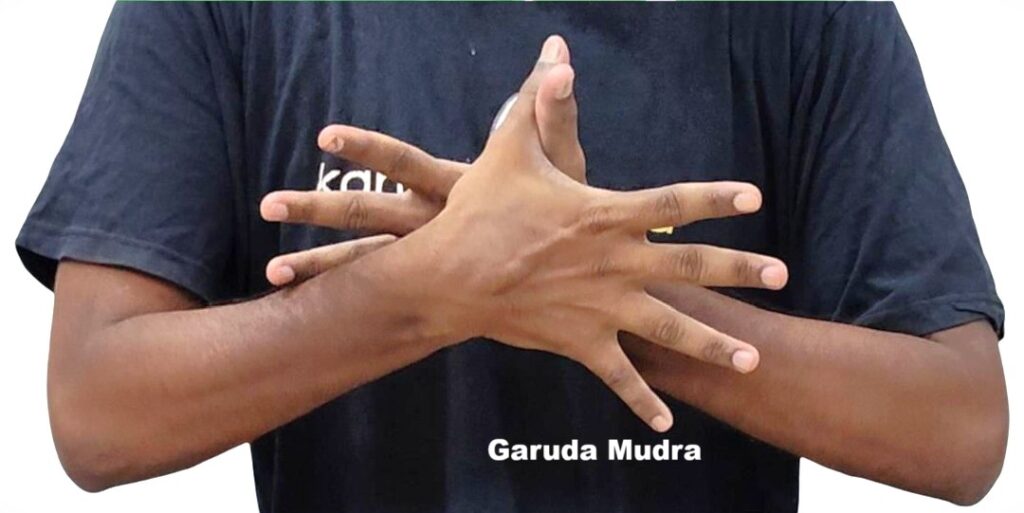
Garuda Mudra (Eagle Gesture) Introduction Garuda Mudra, named after Garuda, the mythological eagle and mount of Lord Vishnu, is a powerful yogic hand gesture that symbolizes strength, vitality, protection, and courage. This mudra is used in pranayama, meditation, and mudra therapy to stimulate energy flow, enhance immunity, and balance the body’s prana. It is also believed to ward off negative energy and promote clarity of mind. Meaning Etymology: Garuda refers to the mythical eagle known for power and speed. Mudra means gesture or seal. Symbolism: Represents freedom, courage, and protective energy. Encourages balance of prana, vitality, and mental alertness. Symbolically clears energy blockages and strengthens the body-mind connection. How to Perform Garuda Mudra Sit comfortably with a straight spine in a meditation posture (Sukhasana, Padmasana, or Vajrasana) or stand with feet shoulder-width apart. Extend your arms forward at chest level. Cross the left wrist in front of the right and interlace the thumbs together, splay the other fingers over the upper chest. In this position the palms should be facing inwards. Moving your hands in this position from the swadisthana Chakra to the manipura chakra and the anahata chakra upwards and keeping them in each position for a minute or so. Keep elbows slightly bent and shoulders relaxed. Close your eyes and focus on slow, deep breathing, visualizing energy flowing freely and negativity being expelled. Maintain this mudra for 5–15 minutes, once or twice daily. Tip: Practicing in the morning or before energy-intensive activities enhances vitality. Benefits Enhances circulation and prana flow in the upper body. Strengthens lungs, respiratory system, and overall immunity. Reduces stress, anxiety, and mental fatigue. Promotes mental clarity, alertness, and courage. Helps detoxify the body by stimulating energy channels. Supports focus and emotional balance. Contraindications Avoid if there is injury, inflammation, or severe pain in hands, wrists, or elbows. People with arthritis or joint issues should practice gently or modify finger placement. Discontinue if prolonged practice causes discomfort. Anatomy & Physiology Involves phalanges, interphalangeal joints, intrinsic hand muscles, forearm muscles, and shoulder girdle muscles. Stimulates median and ulnar nerve endings, enhancing sensory and cortical activity. Opens pectoral and upper back muscles, improving respiration and energy flow. Supports autonomic nervous system balance by promoting relaxation and energy circulation. Kinesiology Isometric contraction of thenar, hypothenar, and interossei muscles maintains finger interlock. Engages shoulder, upper back, and forearm muscles, improving posture and stability. Enhances fine motor control, proprioception, and coordination. Promotes mind-body integration through deliberate hand and arm positioning. Neurology Activates median, ulnar, and radial nerves, enhancing somatosensory feedback. Stimulates somatosensory and motor cortices, improving focus and awareness. Promotes parasympathetic activation, reducing stress and supporting mental clarity. Visualization of the eagle enhances neural pathways associated with courage, energy, and protective awareness. Duration of Practice Beginners: 5–7 minutes daily. Intermediate/Advanced: 10–15 minutes, once or twice daily. Ideal during meditation, pranayama, or energy balancing routines. Counter Mudra Prana Mudra or Gyan Mudra (Chin Mudra) can be used as counter mudras to restore balance, calm the mind, and activate subtle energy. Alternating Garuda Mudra with these mudras balances energy activation and relaxation. Conclusion Garuda Mudra is a powerful gesture for vitality, courage, and energy balance. Regular practice enhances mental clarity, immunity, energy flow, and emotional stability, making it an excellent addition to meditation, pranayama, and wellness practices. FAQ Q1: Can Garuda Mudra increase energy and alertness?A1: Yes, it stimulates prana flow and opens energy channels, improving vitality. Q2: Can children practice it?A2: Yes, under guidance and with gentle finger interlocking. Q3: Is visualization necessary?A3: Visualization enhances effects, but awareness of finger position and breath is sufficient. Q4: Can it be combined with yoga asanas?A4: Yes, especially with chest-opening, pranayama, and energy-balancing exercises. References Swami Satyananda Saraswati, Mudras for Healing and Transformation, Bihar Yoga Publications, 2012. Dr. Harish Johari, Mudra: The Gateway to Health, Inner Traditions, 1994. B.K.S. Iyengar, Light on Yoga, HarperCollins, 2005. Yoga Journal, Mudras for Energy, Strength, and Mental Clarity, 2018. Hatha Yoga Pradipika and yogic texts on energy flow, immunity, and pranic activation.
Chaturmukha Mudra
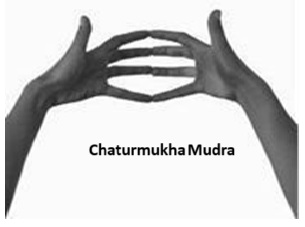
Chaturmukha Mudra Introduction In yoga and tantra, mudras are symbolic gestures that regulate prana (life force) and channel subtle energies within the body–mind system. They are used in meditation, ritual worship, and yogic therapy. Among them, Chaturmukha Mudra is a sacred hand gesture often depicted in classical Indian dance, iconography of deities, and yogic practices. The term Chaturmukha literally means “four faces” or “four directions”. Symbolically, it represents the expansive consciousness that looks in all directions at once, symbolizing universality, omniscience, and balance. This mudra is deeply connected with spiritual awakening, harmony, and the integration of multiple aspects of life. Meaning Chatur = four Mukha = face or opening Together, Chaturmukha means “having four faces” or “awareness in four directions.” The mudra symbolizes: Balance and unity of the four cardinal directions. Integration of body, mind, soul, and spirit. Omnipresence of divine consciousness (as seen in deities like Brahma with four faces). Energetically, it reflects expansion of awareness in all directions and the removal of limitations. How to Perform Chaturmukha Mudra (Method of Practice) Sit in a comfortable meditative posture (Padmasana, Vajrasana, or Sukhasana). Keep the spine upright and shoulders relaxed. lightly touch the tips of the index, middle, ring, and little fingers. Thumbs remain apart. Visualize energy radiating in four directions—north, south, east, and west—expanding your awareness. Maintain for 10–30 minutes in meditation. Benefits of Chaturmukha Mudra Physical Benefits Improves lung capacity and supports respiratory health. Promotes balanced blood circulation and oxygenation. Strengthens the nervous and endocrine systems. May help reduce fatigue and lethargy. Mental Benefits Cultivates mental balance and emotional stability. Enhances focus, concentration, and multidimensional thinking. Helps manage stress, anxiety, and restlessness. Promotes a sense of wholeness and harmony. Spiritual Benefits Awakens expanded consciousness and awareness of universality. Stimulates the Sahasrara (crown) chakra, connecting with divine wisdom. Used in dhyana (meditation) and tantric rituals for invoking universal energy. Symbolizes equanimity and all-embracing awareness. Contraindications Avoid if suffering from severe joint pain or stiffness in fingers. Should not be practiced when feeling extremely cold, weak, or lethargic, as it may deepen inactivity. Those with respiratory illness in acute stage (like pneumonia) should avoid long practice. People with low blood pressure should practice in moderation. Anatomy & Physiology Engages intrinsic muscles of the hand (lumbricals, interossei) and stabilizes finger joints. Encourages symmetrical muscle activation, balancing left–right neural signaling. Enhances diaphragmatic breathing by creating a relaxed chest and shoulder posture. Supports parasympathetic nervous activation, inducing relaxation. Kinesiology Flexion at MCP joints (fingers bent slightly to bring tips together). Extension at interphalangeal joints, creating a dome-like structure. This action balances tension and release in the hand, mirroring balance in body–mind. Neurology Stimulation of sensory–motor cortex representation of fingers enhances cortical connectivity. Activates parasympathetic pathways, reducing stress and over-arousal. Promotes hemispheric balance in the brain, aiding holistic awarenes. Supports prefrontal cortex activity, improving higher-order thinking and spiritual focus. Duration of Mudra Beginners: 5–10 minutes in meditation. Intermediate: 20–30 minutes daily. Advanced/therapeutic use: Up to 45 minutes (in divided sessions). Best practiced in silence, meditation, or pranayama sessions. Counter Mudra To balance Chaturmukha Mudra when feeling over-expanded or fatigued: Prithvi Mudra – for grounding and stability. Jnana Mudra – for focus and clarity. Anjali Mudra – to bring awareness inward and cultivate humility. Conclusion Chaturmukha Mudra is a powerful yogic gesture symbolizing the four faces of consciousness and the expansion of awareness in all directions. It brings harmony to body, mind, and spirit, supports meditation, and helps practitioners connect with universal energy. Regular practice promotes mental clarity, inner peace, and spiritual awakening, making it a valuable tool for both yoga therapy and higher sadhana. FAQ Q1. What is Chaturmukha Mudra mainly used for?It is mainly used for meditation, balance, and expansion of awareness. Q2. Can it be practiced daily?Yes, it can be practiced daily for 10–30 minutes. Q3. Does it activate any specific chakra?Yes, it primarily stimulates the Sahasrara (crown chakra) and expands awareness. Q4. Can children practice this mudra?Yes, but for shorter durations (5–10 minutes), mainly for concentration and calmness. Q5. Is it connected to any deity?Yes, symbolically it is associated with Lord Brahma (four-faced deity) and the idea of omniscience. References Swami Satyananda Saraswati, Asana, Pranayama, Mudra, Bandha, Bihar School of Yoga. Joseph Le Page & Lilian Aboim, Mudras for Healing and Transformation. Rajeswari Raman, Mudras: For Body, Mind and Spirit. Devendra Chaitanya, Tantric Mudras in Yoga and Ritual Practice. Indian Classical Dance Manuals describing Chaturmukha hasta symbolism.
Ganesh Mudra (Elephant Gesture)
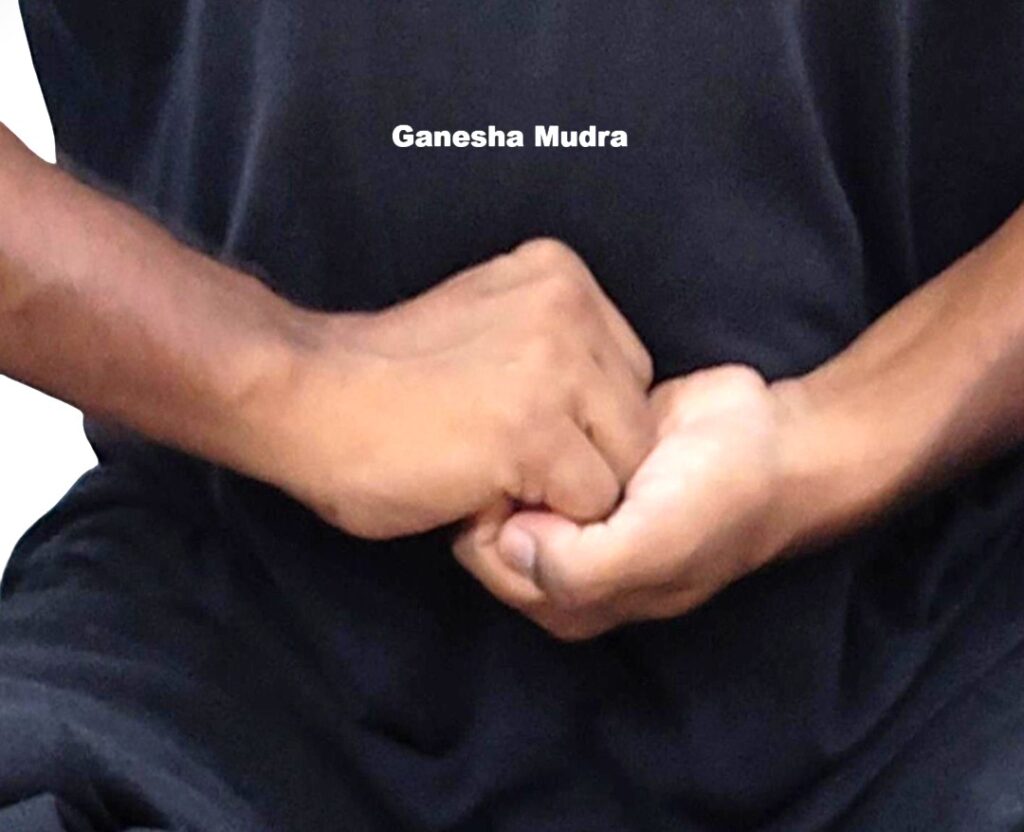
Ganesh Mudra (Elephant Gesture) Introduction Ganesh Mudra is a yogic hand gesture inspired by Lord Ganesha, the Hindu deity symbolizing removal of obstacles, wisdom, and strength. This mudra is primarily used in yoga, pranayama, and meditation to cultivate courage, confidence, and focus. It helps to open the chest, strengthen the upper body, and release tension, while symbolically removing mental and energetic blockages. Meaning Etymology: Ganesh refers to Lord Ganesha, the elephant-headed deity. Mudra means gesture or seal. Symbolism: Represents strength, wisdom, and removal of obstacles. Encourages mental clarity, courage, and emotional resilience. Symbolically opens heart and chest energy, promoting vitality and openness. How to Perform Ganesh Mudra Have your right-hand palm up and place your left palm face down over it. Bend all your fingers and hook them together. Keep your joined hands at waist level or rest them in your lap. Hold for as long as feels comfortable without moving. Repeat as require, for example during difficult meetings or when standing on a crowded commuter train. Benefits Opens and strengthens chest, shoulders, and upper back. Improves posture, flexibility, and upper body mobility. Enhances confidence, courage, and mental strength. Reduces stress, tension, and emotional blockages. Supports energy flow through heart and throat chakras. Promotes mind-body connection and focus. Contraindications Avoid if there is shoulder, elbow, or wrist injury. People with severe joint limitations should modify the hand clasp or reduce stretching intensity. Not recommended for prolonged practice if discomfort occurs. Anatomy & Physiology Involves intrinsic hand muscles, forearm flexors/extensors, shoulder girdle, and chest muscles. Stimulates nerve endings in the fingers and hands, enhancing sensory input. Opens pectoral muscles, deltoids, and rhomboids, improving posture and lung capacity. Supports circulation and energy flow in upper body and autonomic nervous system balance. Kinesiology Isometric contraction of hand, forearm, and shoulder muscles maintains hand clasp. Stretching engages pectoralis major/minor, deltoids, trapezius, and rhomboids. Improves upper back strength, flexibility, and motor coordination. Supports mind-body awareness through intentional stretching and breath. Neurology Activates median, ulnar, and radial nerves, improving sensory and motor feedback. Stimulates somatosensory and motor cortices, enhancing posture awareness and hand coordination. Promotes parasympathetic nervous system activation, reducing stress and anxiety. Visualization during practice strengthens neural pathways for focus, courage, and obstacle management. Duration of Practice Beginners: 20–30 seconds per repetition, 2–3 times. Intermediate/Advanced: 45–60 seconds per repetition, 3–5 times. Can be practiced daily, especially during meditation or pranayama sessions. Counter Mudra Prana Mudra or Chin Mudra can act as counter mudras to restore balance, relax shoulders, and energize fingers. Alternating Ganesh Mudra with these mudras balances upper body stretching with energy activation. Conclusion Ganesh Mudra is a powerful gesture for strength, courage, and chest opening. Regular practice improves upper body flexibility, posture, mental clarity, and emotional resilience, making it an excellent addition to yoga, meditation, and pranayama routines. FAQ Q1: Can Ganesh Mudra relieve stress?A1: Yes, it reduces upper body tension and promotes emotional balance. Q2: Can children practice it?A2: Yes, under supervision and with gentle stretching. Q3: Is visualization necessary?A3: Visualization enhances effect, but focus on posture, breath, and stretch is sufficient. Q4: Can it be combined with other mudras or yoga asanas?A4: Yes, especially with chest-opening asanas and pranayama for enhanced energy flow. References Swami Satyananda Saraswati, Mudras for Healing and Transformation, Bihar Yoga Publications, 2012. Dr. Harish Johari, Mudra: The Gateway to Health, Inner Traditions, 1994. B.K.S. Iyengar, Light on Yoga, HarperCollins, 2005. Yoga Journal, Mudras for Strength and Energy, 2018. Hatha Yoga Pradipika and texts on chest opening and energy flow.
Chandrakalā Mudra
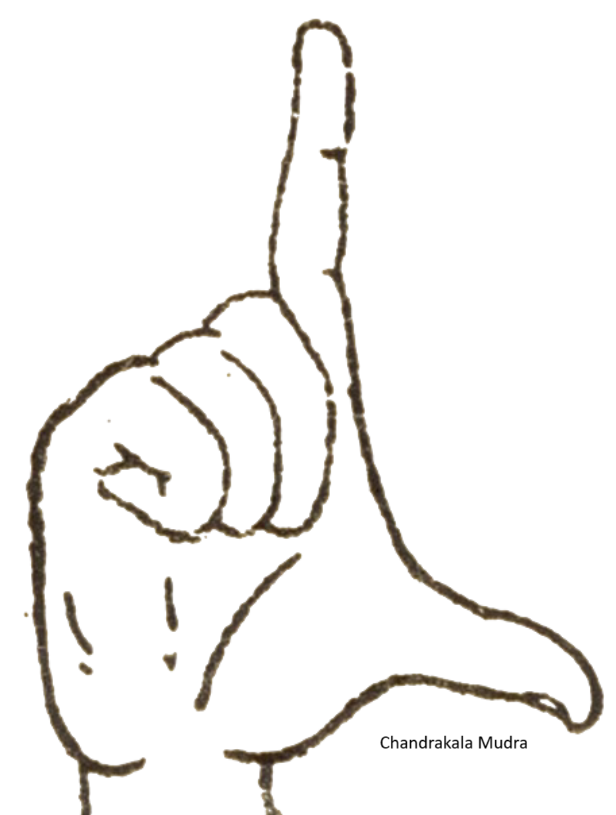
Chandrakalā Mudra Introduction Mudras are subtle yogic gestures that channel prana (life energy) and consciousness into specific pathways of the body–mind system. In yogic and tantric traditions, certain mudras are associated with celestial forces such as the sun (Surya) and the moon (Chandra). Chandrakalā Mudra is one such gesture that embodies the cooling, calming, and nourishing energies of the moon. It is often practiced in meditation, mantra chanting, and tantric rituals, where the moon’s rays are visualized as nectar bringing peace, clarity, and rejuvenation. In Ayurveda and yoga therapy, Chandrakalā Mudra is valued for its soothing effect on pitta (fire) energy and its ability to restore emotional balance. Meaning The word “Chandra” means moon and “Kalā” means digit, ray, or phase. Together, Chandrakalā refers to the crescent moon or moonbeam. Symbolically, this mudra represents peace, coolness, healing, and emotional stability. Spiritually, it is connected to the Ajna (third-eye) and Sahasrara (crown) chakras, evoking inner wisdom, intuition, and serenity. How to Perform Chandrakalā Mudra (Method of Practice) Sit in a comfortable meditative posture such as Padmasana, Siddhasana, or Sukhasana. Keep the spine straight and body relaxed. Bend the little, ring, and middle fingers into the palm. Extend the index finger and thumb, forming a 90-degree angle. Benefits of Chandrakalā Mudra Physical Benefits Cools the body and reduces excess heat or pitta imbalance. Relieves headaches, insomnia, and high blood pressure. Improves digestion by soothing hyperacidity. Supports hormonal balance and women’s health (especially during menstruation or menopause). Mental Benefits Induces calmness, relaxation, and clarity of thought. Reduces anger, irritability, and emotional turbulence. Promotes better sleep and stress relief. Spiritual Benefits Awakens intuition and higher awareness. Balances the ida nadi (lunar channel), which governs cooling, relaxation, and inward focus. Prepares the mind for dhyana (meditation) and mantra sadhana. Contraindications Avoid excessive practice if suffering from low blood pressure. Not suitable for people with excess kapha (coldness, lethargy), as it may aggravate sluggishness. Should not be practiced in extremely cold weather for long durations. Individuals with depression or extreme fatigue should balance it with a warming mudra (like Surya Mudra). Anatomy & Physiology The gesture engages flexor digitorum profundus and flexor pollicis muscles in the hand. Its calming effect is mediated through the parasympathetic nervous system, reducing stress hormones. By directing prana toward the hypothalamus and pineal gland, it regulates body temperature, circadian rhythm, and endocrine balance. Kinesiology Flexion of ring and little finger with thumb support represents withdrawal of fiery energy. Extension of index and middle finger symbolizes openness and channeling of cooling lunar energy upward. This biomechanical balance corresponds to reducing muscular tension and calming the neural circuits. Neurology Stimulates parasympathetic vagal pathways, slowing heart rate and respiration. Activates the right hemisphere of the brain, associated with intuition, creativity, and emotional balance. Engages cortical areas linked to somatosensory mapping of fingers, sending cooling signals to the nervous system. Duration of Mudra Beginners: 5–10 minutes. Regular practitioners: 20–30 minutes. Can be practiced before meditation or sleep for insomnia relief. Therapeutically, up to 45 minutes in divided sessions. Counter Mudra To balance the cooling and calming effect of Chandrakalā Mudra, the following mudras may be practiced: Surya Mudra (fire mudra): For warmth and energy if feeling cold or lethargic. Prana Mudra: To restore vitality and balance energy. Gyan Mudra: For mental clarity and grounding. Conclusion Chandrakalā Mudra is a graceful yogic gesture embodying the essence of moonlight—cool, soothing, and peaceful. By practicing it regularly, one can balance excessive heat, calm the mind, and enhance intuition. It harmonizes the ida nadi and supports both meditation and healing practices. Like the phases of the moon, it reminds us of the cyclical nature of life and the need for balance between activity (sun) and rest (moon). FAQ Q1. What is the best time to practice Chandrakalā Mudra?Evening or night, when lunar energy is naturally stronger. Q2. Can Chandrakalā Mudra help with anger issues?Yes, its cooling effect reduces pitta-related emotions such as anger and irritability. Q3. Can I practice this mudra during menstruation?Yes, it helps relieve cramps, hormonal imbalances, and emotional fluctuations. Q4. Can this mudra be combined with pranayama?Yes, it works well with Chandra Bhedana Pranayama (left nostril breathing). Q5. Does it require mantra chanting?Not necessary, but chanting Chandra mantra or visualizing moonlight enhances the effects. References Swami Satyananda Saraswati, Asana, Pranayama, Mudra, Bandha, Bihar School of Yoga. Joseph Le Page & Lilian Aboim, Mudras for Healing and Transformation. Rajeswari Raman, Mudras: For Body, Mind and Spirit. Tantra texts describing Chandra Bija Mantras and lunar practices.