
Kapha Naashak Mudra

Kapha Naashak Mudra Introduction In Ayurveda and yogic mudra therapy, the body is governed by three doshas—Vata, Pitta, and Kapha. Imbalance in these doshas leads to physical or mental disturbances. The Kapha Naashak Mudra is a therapeutic hand gesture designed to reduce Kapha dosha (the water–earth principle). It is particularly effective when Kapha is aggravated, manifesting as congestion, lethargy, obesity, cold-related ailments, and excessive sleep. Meaning Kapha = combination of water + earth (stability, lubrication, immunity, structure). Naashak = destroyer or reducer. Thus, Kapha Naashak Mudra literally means the gesture that reduces or eliminates Kapha energy in the body and mind. How to Perform (Method of Practice) Step-by-Step: Sit in a comfortable meditative posture like Sukhasana, Padmasana, or Vajrasana. Keep your back straight and shoulders relaxed. Fold the little finger (water element) and ring finger (earth element) to touch the base of the thumb. Press these two fingers lightly with the thumb. Keep the index and middle fingers extended outward. Rest hands on the knees, palms facing upward. Close your eyes, focus on your breath, and practice slow, deep inhalation and exhalation. Benefits Physical Benefits Reduces Kapha-related disorders: cough, cold, congestion, sinusitis, asthma, excess mucus. Helps in weight reduction by improving metabolism. Improves digestion and relieves sluggishness. Reduces swelling, water retention, and heaviness. Increases body heat and energy levels. Mental & Emotional Benefits Removes lethargy, dullness, and mental stagnation. Boosts motivation and alertness. Reduces emotional dependency and possessiveness (Kapha traits). Spiritual Benefits Activates Manipura Chakra (Solar Plexus) by reducing earth-water dominance. Encourages lightness, dynamism, and transformation. Contraindications Should be avoided by people with Pitta aggravation (acidity, ulcers, burning sensations). Avoid in cases of Vata imbalance (dryness, constipation, joint pain). Do not over-practice in summer or hot climates, as it increases internal heat. Pregnant women should practice under expert supervision. Anatomy & Physiology Fingers involved: Ring finger (earth) + Little finger (water) are pressed by Thumb (fire). Pressing earth and water elements reduces Kapha dominance, while fire (thumb) is enhanced. Physiologically: Boosts metabolism. Activates respiratory system, reducing mucus. Enhances digestion and circulation. Kinesiology Requires flexion of ring and little fingers towards the thumb base. Strengthens intrinsic hand muscles involved in fine motor coordination. Encourages balance between flexors and extensors of the hand. Neurology Stimulates ulnar nerve distribution (ring and little finger areas). Activates sympathetic nervous system, increasing alertness and energy. Reduces parasympathetic dominance (lethargy, sleepiness) often linked to Kapha excess. Duration of Practice Therapeutic use: 15–20 minutes, 2–3 times daily. For chronic Kapha imbalance: up to 45 minutes daily (divided into sessions). Best practiced in morning hours (Kapha time: 6–10 AM). Counter Mudra Kapha Kaarak Pitta Naashak Mudra – increases Kapha if it becomes too low. Varun Mudra – balances water element without suppressing it. Prana Mudra – energizes body if excess heat is produced from Kapha reduction. Conclusion The Kapha Naashak Mudra is a powerful yogic gesture that helps eliminate excess earth and water energy, thereby reducing Kapha dosha. It is highly effective for respiratory, digestive, and metabolic issues and promotes lightness, clarity, and vitality. However, balance is key—overuse may increase Pitta or Vata, so it should be practiced with awareness of one’s body constitution and seasonal influences. FAQ Q1: Who should practice Kapha Naashak Mudra?Anyone suffering from Kapha-related issues like cold, obesity, lethargy, or congestion. Q2: Can it be practiced daily?Yes, but avoid excessive practice in hot climates or if you already have high Pitta. Q3: What is the best time?Morning hours (6–10 AM), the natural Kapha time. Q4: Can it help in weight loss?Yes, it boosts metabolism and helps reduce excess fat and fluid retention. Q5: Can children practice it?Yes, for 5–10 minutes under guidance. References Swami Satyananda Saraswati – Asana, Pranayama, Mudra, Bandha. Gertrud Hirschi – Mudras: Yoga in Your Hands. Dr. Vasant Lad – Ayurveda: Science of Self-Healing. Swami Niranjanananda Saraswati – Yoga Darshan. Research papers on Mudra Therapy and Dosha Balancing (Ayurvedic perspective).
Kapittha Mudra
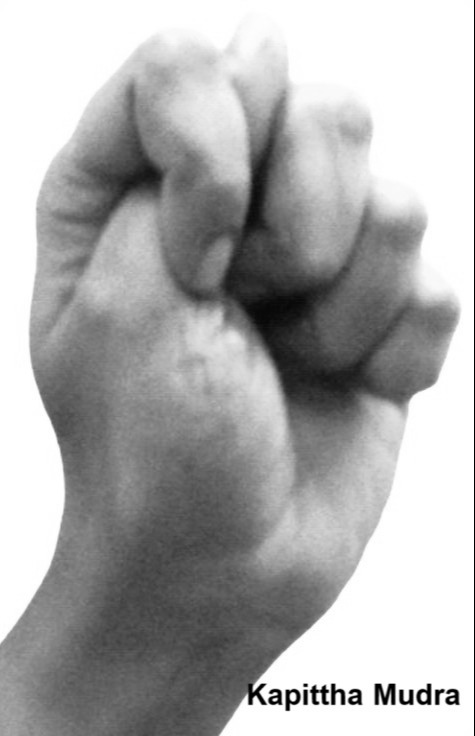
Kapittha Mudra Introduction Kapittha Mudra is one of the Hasta Mudras (hand gestures) used in classical dance (Bharatanatyam, Kuchipudi, Odissi) as well as in yoga and meditation. In Natya Shastra, it is categorized as a single-hand gesture (Asamyukta Hasta). In the yogic context, it is symbolic and therapeutic, channeling energy to enhance focus, devotion, and grounding. It has both expressive (Abhinaya) and energetic (yogic) applications. Meaning Kapittha means “wood apple” or “bilva fruit” in Sanskrit. The mudra resembles the shape of a fruit held between the fingers. In dance, it is used to depict Lakshmi, Saraswati, holding cymbals, milking cows, grasping, or offering. In yoga, it symbolizes dedication, inner strength, and the channeling of feminine divine energy. How to Perform (Method of Practice) Step-by-Step: Sit comfortably in Sukhasana, Padmasana, or Vajrasana. Insert the thumb in the web between the index and middle fingers. Close all the remaining fingers as if making a fist. Place the left hand against the heart, and the right hand against the pubic bone. Soften the chest, throat, and belly, and breathe naturally. Focus on the feeling of unity between the sexual and spiritual aspects of your life. Maintain a steady breath and awareness while holding the gesture. Close your eyes and focus inward (if practicing meditative Kapittha Mudra). Benefits Physical Benefits Improves strength and coordination of hand muscles (used in dance and therapy). Stimulates the respiratory and reproductive systems. Helps in reducing lethargy and increasing alertness. Mental & Emotional Benefits Enhances devotion (Bhakti) and concentration. Balances emotions and increases confidence. Reduces stress by channeling energy toward creativity and expression. Spiritual Benefits Associated with Lakshmi (prosperity) and Saraswati (wisdom). Enhances meditative focus on Divine Feminine energy. Balances Anahata (Heart Chakra) and Ajna (Third Eye Chakra) depending on intent. Contraindications Avoid if you have severe finger joint pain or arthritis. Should not be forced if there is nerve compression in the wrist or hand. Avoid long, rigid practice if experiencing carpal tunnel syndrome—instead, do in short intervals. Anatomy & Physiology The index finger (air element) pressed by thumb (fire element) symbolizes control of thoughts and ego by higher willpower. This reduces excess Vata (air element) and channels prana inward. Physiologically, it stimulates lung function, hand muscles, and blood circulation. Kinesiology Flexion of the index finger at the metacarpophalangeal joint. Stabilization by thumb adduction. Middle, ring, and little fingers are extended—requiring extrinsic finger extensor muscles to remain active. Encourages fine motor precision and grip control. Neurology Stimulates median nerve (thumb, index finger). Activates somatosensory cortex related to hand representation. Encourages parasympathetic activation, leading to calm focus. Enhances neural circuits of memory, creativity, and devotion when used with mantra/meditation. Duration of Practice Dance practice: as per choreography. Yoga/meditation practice: 15–30 minutes daily, in one or two sessions. Can be integrated with bhakti yoga, mantra chanting, or pranayama. Counter Mudra Chin Mudra – balances energy outward when too much inward focus occurs. Anjali Mudra – restores emotional balance and grounding. Hridaya Mudra – balances excess emotional energy if Kapittha becomes intense. Conclusion Kapittha Mudra is a versatile hasta mudra that blends artistic, spiritual, and therapeutic dimensions. In classical dance, it depicts divinity, offering, and cultural symbolism. In yoga, it cultivates inner strength, devotion, and clarity of mind. It harmonizes the air and fire elements, strengthens the hands, improves focus, and connects practitioners to higher consciousness and feminine divinity. FAQ Q1: Is Kapittha Mudra only for dancers?No, it has spiritual and meditative uses in yoga as well. Q2: Which deities are represented by Kapittha Mudra?Goddess Lakshmi and Saraswati, as well as devotional offering. Q3: Can it help with stress?Yes, it calms the nervous system and improves focus. Q4: How is it different from Chin Mudra?Chin Mudra symbolizes universal consciousness; Kapittha focuses on devotion and divine offering. Q5: Can beginners practice it?Yes, both beginners and advanced practitioners can benefit. References Natya Shastra – Bharata. Abhinaya Darpana – Nandikeshvara. Swami Satyananda Saraswati – Asana, Pranayama, Mudra, Bandha. Gertrud Hirschi – Mudras: Yoga in Your Hands. Vasant Lad – Ayurveda: Science of Self-Healing.
Hamsi Mudra (Swan Gesture)
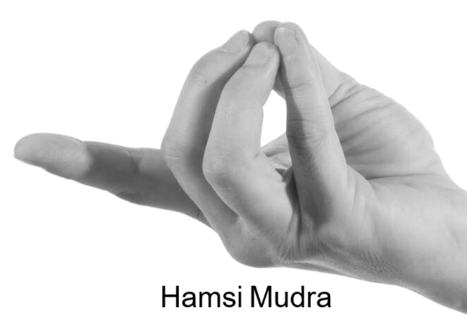
Hamsi Mudra (Swan Gesture) Introduction Hamsi Mudra, also known as the Swan Gesture, is a yogic hand gesture that represents purity, spiritual elevation, and graceful energy flow. It is commonly practiced in meditation, pranayama, and yoga therapy to enhance mental clarity, calm the mind, and balance subtle energies. The swan is considered a symbol of discernment, wisdom, and spiritual liberation in yogic philosophy, and Hamsi Mudra embodies these qualities. Meaning Etymology: Hamsi derives from Hamsa, meaning swan in Sanskrit. Mudra means gesture or seal. Symbolism: Represents purity of thought, spiritual discernment, and transcendence. Encourages mental clarity, calmness, and spiritual insight. Symbolically promotes the ability to differentiate between higher and lower energies, akin to a swan separating milk from water. How to Perform Hamsi Mudra Sit comfortably in a meditation posture (Sukhasana, Padmasana, or Vajrasana) with a straight spine. Join the tips of the middle, ring, and little fingers with the tip of the thumb. Extend the index finger. Close your eyes and focus on slow, deep breathing, visualizing purity and wisdom flowing through your body and mind. Maintain this mudra for 10–20 minutes, ideally during meditation or pranayama. Tip: Practicing in a serene environment enhances mental and spiritual benefits. Benefits Enhances mental clarity, focus, and concentration. Promotes spiritual awareness, discernment, and inner calm. Reduces stress, anxiety, and mental fatigue. Supports energy flow and balance in the body and subtle channels. Encourages mindfulness and meditative depth. Strengthens mind-body coordination and sensory awareness. Contraindications Avoid if there is pain, injury, or inflammation in fingers, hands, or wrists. People with arthritis or joint limitations should practice gently or modify finger placement. Discontinue if discomfort occurs during practice. Anatomy & Physiology Involves phalanges, interphalangeal joints, intrinsic hand muscles, and forearm muscles. Stimulates median and ulnar nerve endings, enhancing sensory perception and cortical activity. Improves circulation in hands and forearms, indirectly supporting nervous system balance. Promotes relaxation in shoulders, chest, and upper back, facilitating deeper breathing and prana flow. Kinesiology Isometric contraction of thenar, hypothenar, and interossei muscles maintains finger configuration. Engages forearm and shoulder muscles for stability. Enhances fine motor control, proprioception, and hand awareness. Supports mind-body integration through intentional hand placement and meditative focus. Neurology Activates median, ulnar, and radial nerves, stimulating somatosensory and motor cortices. Promotes parasympathetic nervous system activation, reducing stress and enhancing calmness. Visualization of the swan strengthens neural pathways associated with mental clarity, discernment, and spiritual awareness. Duration of Practice Beginners: 5–10 minutes daily. Intermediate/Advanced: 10–20 minutes, once or twice daily. Can be combined with meditation, pranayama, or mindfulness practices. Counter Mudra Gnana Mudra or Prana Mudra can serve as counter mudras to energize and balance subtle energies after Hamsi Mudra practice. Alternating Hamsi Mudra with these mudras balances mental calmness with energy activation. Conclusion Hamsi Mudra is a powerful gesture for mental clarity, spiritual discernment, and calm awareness. Regular practice enhances focus, mindfulness, spiritual insight, and subtle energy balance, making it a valuable tool in meditation, pranayama, and yoga therapy. FAQ Q1: Can Hamsi Mudra improve focus and meditation?A1: Yes, it enhances concentration, clarity, and meditative depth. Q2: Can children practice it?A2: Yes, with guidance and gentle hand placement. Q3: Is visualization necessary?A3: Visualization enhances benefits, but mindful finger placement and deep breathing are sufficient. Q4: Can it be combined with other mudras?A4: Yes, especially with meditation, pranayama, or other energy-balancing mudras. References Swami Satyananda Saraswati, Mudras for Healing and Transformation, Bihar Yoga Publications, 2012. Dr. Harish Johari, Mudra: The Gateway to Health, Inner Traditions, 1994. B.K.S. Iyengar, Light on Yoga, HarperCollins, 2005. Yoga Journal, Mudras for Mental Clarity and Spiritual Awareness, 2018. Hatha Yoga Pradipika and yogic texts on energy channels, prana flow, and meditation practices.
Hakini Mudra (Mudra of the Mind)
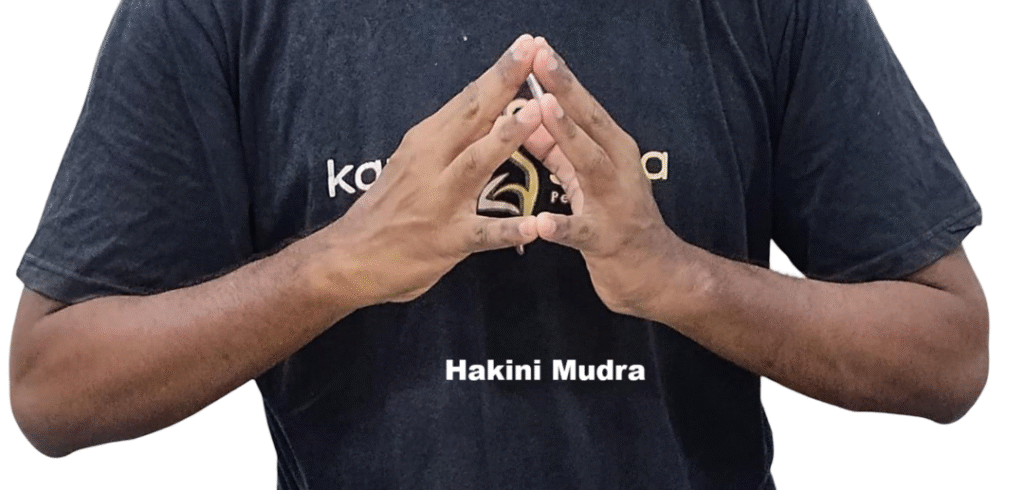
Hakini Mudra (Mudra of the Mind) Introduction Hakini Mudra, often referred to as the Mudra of the Mind, is a yogic hand gesture designed to enhance mental power, focus, and cognitive function. It is commonly used in meditation, pranayama, and yoga therapy to promote concentration, memory, and mental clarity. Hakini Mudra is especially beneficial for balancing brain hemispheres, stimulating prana flow, and enhancing decision-making skills. Meaning Etymology: Hakini is associated with the mind and intellect in yogic traditions. Mudra means gesture or seal. Symbolism: Represents mental unity, focus, and cognitive empowerment. Encourages clarity of thought, memory enhancement, and brain synchronization. Symbolically connects the practitioner with mental energy and intuitive intelligence. How to Perform Hakini Mudra Sit comfortably in a meditation posture (Sukhasana, Padmasana, or Vajrasana) with a straight spine. Bring your palms in front of the chest, facing each other. Touch tips of all fingers of the left hand to the corresponding tips of the right hand (thumb to thumb, index to index, middle to middle, ring to ring, little to little). Keep the fingers gently pressed together, without tension. Maintain relaxed shoulders and elbows slightly bent. Close your eyes and focus on slow, deep breathing, visualizing mental energy harmonizing and intelligence expanding. Maintain this mudra for 5–15 minutes, once or twice daily. Tip: Practicing in a quiet environment enhances mental clarity and focus. Benefits Enhances memory, focus, and concentration. Stimulates brain activity and cognitive function. Promotes mental clarity, decision-making, and problem-solving ability. Balances left and right brain hemispheres, improving creativity and logic. Reduces stress, anxiety, and mental fatigue. Supports energy flow and pranic balance in the brain and nervous system. Contraindications Avoid if there is pain, injury, or inflammation in fingers, hands, or wrists. People with arthritis or joint limitations should practice gently. Stop if discomfort or strain occurs. Anatomy & Physiology Involves phalanges, interphalangeal joints, intrinsic hand muscles, and forearm muscles. Stimulates median, ulnar, and radial nerve endings, enhancing sensory perception and cortical activity. Improves blood circulation in hands and forearms, indirectly benefiting the autonomic nervous system. Supports relaxation in shoulders, upper back, and chest, facilitating deeper breathing and pranic flow. Kinesiology Isometric contraction of thenar, hypothenar, and interossei muscles maintains finger contact. Engages forearm, shoulder, and upper back muscles for stability. Enhances fine motor coordination, proprioception, and hand awareness. Promotes mind-body integration through deliberate finger placement and focus. Neurology Activates median, ulnar, and radial nerves, stimulating the somatosensory and motor cortices. Enhances parasympathetic nervous system activity, reducing stress and mental tension. Strengthens neural pathways associated with memory, attention, and brain hemisphere coordination. Visualization and mindful practice improve mental energy, clarity, and cognitive resilience. Duration of Practice Beginners: 5 minutes daily. Intermediate/Advanced: 10–15 minutes, once or twice daily. Can be combined with meditation, pranayama, or concentration exercises. Counter Mudra Gyana Mudra or Prana Mudra can act as counter mudras to stimulate vitality and maintain energy balance after Hakini Mudra practice. Alternating Hakini Mudra with these mudras balances mental focus with energetic activation. Conclusion Hakini Mudra is a powerful gesture for enhancing mental clarity, focus, and cognitive function. Regular practice improves memory, decision-making, brain hemisphere balance, and overall mental energy, making it a valuable tool for meditation, pranayama, and yoga therapy. FAQ Q1: Can Hakini Mudra improve memory?A1: Yes, it stimulates brain activity and enhances memory retention and recall. Q2: Can children practice it?A2: Yes, with guidance to ensure comfort and proper finger alignment. Q3: Is visualization necessary?A3: Visualization enhances benefits, but finger contact and mindful breathing alone are effective. Q4: Can it be combined with other mudras?A4: Yes, especially with meditation, pranayama, or cognitive enhancement practices. References Swami Satyananda Saraswati, Mudras for Healing and Transformation, Bihar Yoga Publications, 2012. Dr. Harish Johari, Mudra: The Gateway to Health, Inner Traditions, 1994. B.K.S. Iyengar, Light on Yoga, HarperCollins, 2005. Yoga Journal, Hakini Mudra for Mental Clarity and Focus, 2018. Hatha Yoga Pradipika and yogic texts on meditation, prana, and cognitive enhancement.
Guru Mudra (Gesture of the Teacher or Wisdom)
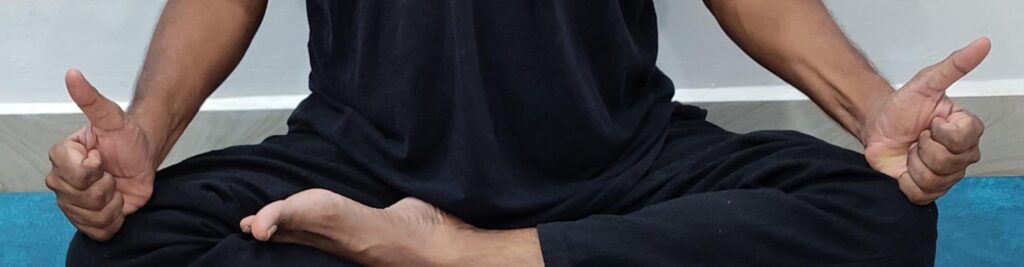
Guru Mudra (Gesture of the Teacher or Wisdom) Introduction Guru Mudra, also called the Gesture of the Teacher, is a yogic hand gesture used to cultivate wisdom, knowledge, and clarity of thought. It is commonly practiced during meditation, pranayama, and mudra therapy to enhance learning, mental focus, and spiritual insight. This mudra symbolizes the guidance of the inner teacher (Guru) and the awakening of intuitive wisdom. Meaning Etymology: Guru means teacher, master, or one who dispels darkness (ignorance) in Sanskrit. Mudra means gesture or seal. Symbolism: Represents knowledge, guidance, and illumination of consciousness. Encourages mental clarity, wisdom, and introspection. Symbolically helps balance prana and enhance cognitive and spiritual development. How to Perform Guru Mudra Sit comfortably in a meditation posture (Sukhasana, Padmasana, or Vajrasana) with a straight spine. Make fists with both hands, with your thumbs pointing straight up. Rest the fists on their respective knees. Hold for as long as you can sit quietly or meditate. Close your eyes and focus on slow, deep breathing, visualizing wisdom and clarity flowing into your mind. Maintain this mudra for 10–20 minutes daily during meditation or pranayama. Tip: Practice in a calm environment to maximize mental clarity and spiritual focus. Benefits Enhances memory, concentration, and cognitive performance. Promotes mental clarity, wisdom, and insight. Reduces stress, anxiety, and mental fatigue. Supports prana flow and subtle energy balance. Encourages spiritual awareness and intuitive understanding. Strengthens mind-body coordination and mindfulness. Contraindications Avoid if there is pain, inflammation, or injury in fingers, hands, or wrists. People with joint limitations or arthritis should practice gently. Discontinue if discomfort occurs during prolonged practice. Anatomy & Physiology Involves phalanges, interphalangeal joints, intrinsic hand muscles, and forearm muscles. Stimulates median, ulnar, and radial nerve endings, enhancing sensory perception and cortical activity. Improves circulation in hands and forearms, indirectly supporting autonomic nervous system regulation. Promotes relaxation of shoulders, upper back, and chest, facilitating deeper breathing and energy flow. Kinesiology Isometric contraction of thenar, hypothenar, and interossei muscles maintains finger position. Minimal engagement of forearm muscles, allowing relaxed posture. Enhances fine motor control, proprioception, and hand awareness. Supports mind-body integration through deliberate hand placement and meditative focus. Neurology Activates median, ulnar, and radial nerves, stimulating the somatosensory cortex. Promotes parasympathetic nervous system activation, reducing stress and improving calmness. Visualization of knowledge flow strengthens neural pathways associated with memory, cognition, and insight. Duration of Practice Beginners: 5–10 minutes daily. Intermediate/Advanced: 15–20 minutes, once or twice daily. Can be practiced during meditation, pranayama, or mindfulness sessions. Counter Mudra Prana Mudra or Gnana Mudra can act as counter mudras to energize and stabilize after inward-focused mental practices. Alternating Guru Mudra with these mudras balances wisdom-focused calmness with energy activation. Conclusion Guru Mudra is a powerful gesture for cultivating wisdom, mental clarity, and spiritual insight. Regular practice enhances focus, mindfulness, cognitive function, and intuitive understanding, making it an essential tool in meditation, pranayama, and yoga therapy. FAQ Q1: Can Guru Mudra improve memory and learning?A1: Yes, it stimulates brain activity and enhances cognitive performance. Q2: Can children practice it?A2: Yes, under guidance and with gentle finger placement. Q3: Is visualization important?A3: Visualization enhances effects, but mindful hand placement and breathing are effective on their own. Q4: Can it be combined with other mudras?A4: Yes, especially with meditation or pranayama mudras for enhanced energy and focus. References Swami Satyananda Saraswati, Mudras for Healing and Transformation, Bihar Yoga Publications, 2012. Dr. Harish Johari, Mudra: The Gateway to Health, Inner Traditions, 1994. B.K.S. Iyengar, Light on Yoga, HarperCollins, 2005. Yoga Journal, Mudras for Mental Clarity, Learning, and Focus, 2018. Hatha Yoga Pradipika and yogic texts on prana, meditation, and cognitive enhancement.
Gupta Mudra (Hidden Gesture)
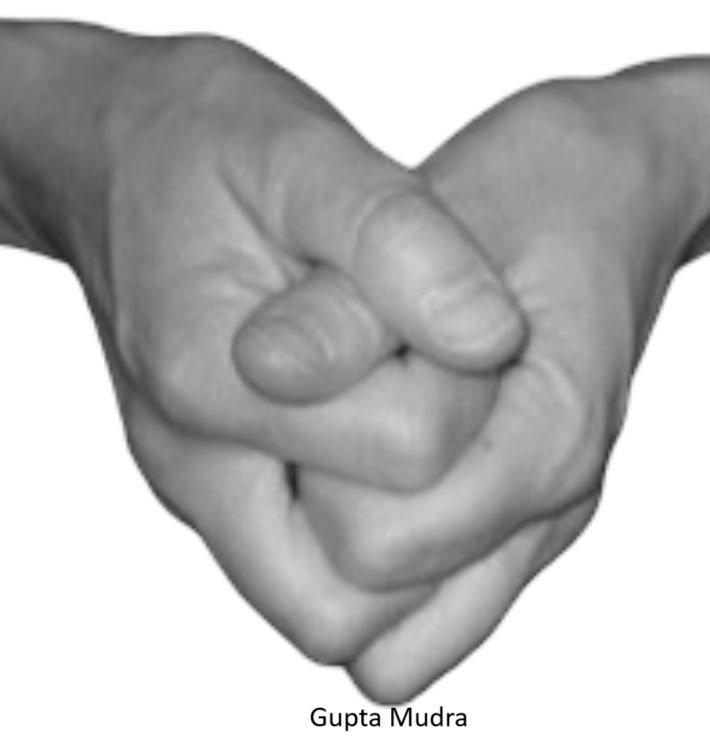
Gupta Mudra (Hidden Gesture) Introduction Gupta Mudra, also called the Hidden Gesture, is a yogic hand gesture used to internalize energy, enhance concentration, and promote inner calm. This mudra is commonly practiced during meditation and pranayama to encourage mental clarity, spiritual insight, and subtle energy flow. It is believed to help the practitioner focus inward, balance prana, and cultivate mindfulness. Meaning Etymology: Gupta means hidden or secret in Sanskrit. Mudra means gesture or seal. Symbolism: Represents inner awareness, introspection, and subtle energy control. Encourages mental focus, self-discipline, and spiritual insight. Symbolically helps retain and circulate prana within the body. How to Perform Gupta Mudra Sit comfortably in a meditation posture (Sukhasana, Padmasana, or Vajrasana) with a straight spine. Interlace fingers inwards towards palms, cross right thumb over left and hold in front of abdomen. Close your eyes and focus on deep, slow breathing, visualizing energy being retained and circulated within the body. Maintain this mudra for 10–20 minutes daily during meditation or pranayama. Tip: Practicing in a quiet environment enhances mindfulness and internal energy awareness. Benefits Enhances mental focus, clarity, and memory. Promotes inner calm, emotional stability, and mindfulness. Stimulates subtle energy circulation within the body. Supports prana retention and balancing of energy channels. Helps reduce stress, anxiety, and mental fatigue. Encourages spiritual insight and self-awareness. Contraindications Avoid if there is injury, pain, or inflammation in fingers, hands, or wrists. People with joint limitations or arthritis should practice gently. Discontinue if discomfort occurs during practice. Anatomy & Physiology Involves phalanges, interphalangeal joints, intrinsic hand muscles, and forearm muscles. Stimulates median and ulnar nerve endings, enhancing sensory perception and cortical activity. Improves circulation in hands and forearms, indirectly supporting autonomic nervous system regulation. Promotes relaxation in shoulders, chest, and upper back, facilitating deep breathing and subtle energy flow. Kinesiology Isometric contraction of thenar, hypothenar, and interossei muscles maintains finger position. Minimal engagement of forearm muscles, allowing relaxation while maintaining posture. Enhances fine motor control, proprioception, and hand awareness. Supports mind-body integration through intentional hand placement and meditative focus. Neurology Activates median and ulnar nerves, stimulating somatosensory and motor cortices. Promotes parasympathetic nervous system activation, reducing stress and enhancing calmness. Visualization of energy retention strengthens neural pathways associated with concentration, introspection, and mindfulness. Duration of Practice Beginners: 5–10 minutes daily. Intermediate/Advanced: 15–20 minutes, once or twice daily. Can be practiced during meditation, pranayama, or energy-balancing routines. Counter Mudra Prana Mudra or Gnana Mudra can act as counter mudras to energize and activate subtle energy after inward-focused practice. Alternating Gupta Mudra with these mudras balances inner awareness with outward energy activation. Conclusion Gupta Mudra is a powerful gesture for introspection, mental clarity, and subtle energy balance. Regular practice enhances focus, mindfulness, calmness, and spiritual insight, making it an excellent addition to meditation, pranayama, and yoga therapy practices. FAQ Q1: Can Gupta Mudra improve concentration?A1: Yes, it enhances focus and mental clarity by stimulating subtle energy pathways. Q2: Can children practice it?A2: Yes, under supervision and with gentle finger placement. Q3: Is visualization necessary?A3: Visualization enhances effects, but mindful hand placement and breathing are sufficient. Q4: Can it be combined with other mudras?A4: Yes, especially with pranayama or meditation mudras for energy balancing. References Swami Satyananda Saraswati, Mudras for Healing and Transformation, Bihar Yoga Publications, 2012. Dr. Harish Johari, Mudra: The Gateway to Health, Inner Traditions, 1994. B.K.S. Iyengar, Light on Yoga, HarperCollins, 2005. Yoga Journal, Mudras for Meditation, Focus, and Energy Balance, 2018. Hatha Yoga Pradipika and yogic texts on subtle energy, prana flow, and meditation practices.
Diaphragm Breathing (Yogic Abdominal Breathing)
Diaphragm Breathing (Yogic Abdominal Breathing) Introduction Diaphragm breathing, also called abdominal breathing or belly breathing, is a fundamental pranayama technique that focuses on the conscious use of the diaphragm muscle to optimize breathing efficiency. It forms the foundation for most yogic pranayama practices and is essential for cultivating relaxation, awareness, and energy balance. Definition Diaphragm breathing is the practice of inhaling deeply so that the diaphragm contracts and moves downward, causing the abdomen to expand, while exhaling slowly and completely, allowing the diaphragm to relax and move upward. Meaning Diaphragm = A dome-shaped muscle beneath the lungs. Breathing = Inhalation + exhalation with awareness. Thus, it means using the diaphragm consciously for deeper, fuller, and healthier breaths. Etymology Diaphragm: From Greek “dia” (through) + “phragma” (fence or partition). In Yogic terms, it corresponds to Adhama Pranayama (lower abdominal breathing) forming the first stage of Full Yogic Breathing (Vibhagiya Pranayama). Philosophy Yogic philosophy considers breath as Prana (life force). Diaphragm breathing allows optimal pranic absorption, calms the mind, and creates a state of balance. It is also seen as a way to purify nadis and prepare for higher pranayama. Concept Expands lung capacity by engaging the lower lobes. Promotes parasympathetic nervous system activation. Strengthens the mind–body connection through awareness. Preparatory Practice Before starting: Relax in Shavasana or Sukhasana. Bring awareness to natural breathing. Release tension from chest and shoulders. How to Perform Sit comfortably or lie down in Shavasana. Place one hand on the chest, the other on the abdomen. Inhale slowly through the nose, expanding the belly (not the chest). Exhale gently, allowing the abdomen to contract inward. Continue rhythmic breathing for 5–10 minutes. Common Mistakes & How to Improve Mistake: Raising chest/shoulders → Correction: Focus on abdominal expansion. Mistake: Shallow breaths → Correction: Slow, deep, controlled breathing. Mistake: Forcing breath → Correction: Stay natural and relaxed. Benefits Enhances oxygen intake. Activates relaxation response (reduces stress, anxiety, BP). Improves digestion & elimination (massages abdominal organs). Strengthens diaphragm and lungs. Balances emotions, improves concentration. Precautions Avoid if feeling dizzy or short of breath. Asthmatics should practice slowly and gently. Do not force abdominal movement. Contraindications Severe respiratory illness (COPD, advanced asthma) without guidance. Post-abdominal surgery patients (avoid until recovery). Cardiac patients should consult a doctor first. Duration, Timing, and Stages of Practice Duration: 5–15 minutes daily. Timing: Morning or before meditation/sleep. Stages: Beginner: Conscious belly movement. Intermediate: Smooth rhythm (6–8 cycles/min). Advanced: Integration with kumbhaka (breath retention). Practical Technique Use props like cushions under knees in Shavasana. Practice in front of a mirror for posture awareness. Integrate into meditation, yoga, and stress-relief routines. Variations & Advanced Levels Supine breathing (lying down). Seated breathing (cross-legged). Three-part yogic breath (diaphragm + chest + clavicular breathing). Kumbhaka integration for pranayama advancement. Stages of Progress & Signs of Advancement Natural diaphragmatic activation in daily life. Longer, smoother breath cycles. Calm, steady mind with reduced stress. Ability to integrate into pranayama like Nadi Shodhana, Ujjayi. Application in Daily Life & Lifestyle Integration Stress management in workplace. Calming before sleep. Pre-performance relaxation for singers, speakers, athletes. Aid for emotional balance during anxiety or anger. Integration with Other Yogic Practices Base for Vibhagiya Pranayama (full yogic breath). Preparatory stage for Anulom Vilom and Bhramari. Enhances meditation and mantra chanting. Yogic Anatomy & Physiology Activates Pranamaya Kosha (energy sheath). Balances Ida & Pingala Nadis. Enhances prana circulation through Sushumna. Anatomy & Physiology Muscles involved: Diaphragm, intercostals, abdominal muscles. Organs affected: Lungs, heart, digestive organs. Systems impacted: Respiratory, circulatory, nervous, digestive. Kinesiology Inhalation: Diaphragm contracts → descends → abdominal expansion. Exhalation: Diaphragm relaxes → ascends → abdominal contraction. Creates intra-abdominal pressure, aiding circulation and organ massage. Biomechanism Efficient lung ventilation. Improved oxygen–carbon dioxide exchange. Reduced sympathetic overdrive → parasympathetic dominance. Physiological & Psychological Effects Physiological: Lowers BP, HR, stress hormones, improves oxygenation. Psychological: Promotes calmness, reduces anxiety, sharpens focus. Modern Relevance & Scientific Research Used in psychotherapy (for stress/anxiety). Recommended in pulmonary rehab for asthma/COPD. Proven to activate vagus nerve and HRV (heart rate variability). Clinical research shows reduction in stress markers (cortisol). Summary Diaphragm breathing is a gateway pranayama—simple, safe, and powerful. It strengthens respiratory health, balances emotions, integrates mind-body awareness, and lays the foundation for advanced yogic practices. FAQ Q1. Can beginners start with diaphragm breathing?Yes, it is the easiest and safest pranayama for beginners. Q2. How is it different from chest breathing?Chest breathing is shallow, diaphragm breathing is deep and efficient. Q3. Can it help in sleep problems?Yes, practicing before bedtime induces relaxation and better sleep. Q4. Is it suitable for children and elderly?Yes, safe for all age groups. References Swami Satyananda Saraswati – Asana, Pranayama, Mudra, Bandha (Bihar School of Yoga). B.K.S. Iyengar – Light on Pranayama. Medical research journals on diaphragmatic breathing & vagus nerve activation. Yogic texts: Hatha Yoga Pradipika, Gheranda Samhita.
Anuloma-Viloma Prāṇāyāma
Anuloma-Viloma Prāṇāyāma Introduction & Definition Anuloma-Viloma is a basic form of alternate nostril breathing, often practiced as a preliminary step to Nadi Shodhana Prāṇāyāma. It balances the flow of prāṇa in the two main channels (Idā & Piṅgalā) and calms the mind. In this practice, inhalation and exhalation alternate between the two nostrils without retention (kumbhaka), making it beginner-friendly. Meaning & Etymology Anuloma = “with the grain,” “natural order,” or “moving along with.” Viloma = “against the grain,” “reverse order.” Together: Anuloma-Viloma means breathing alternately in natural and reverse order through both nostrils. Philosophy & Concept Based on the yogic philosophy of Nadis (energy channels): Ida Nadi (left nostril) = lunar, cooling, calming, parasympathetic. Pingala Nadi (right nostril) = solar, heating, energizing, sympathetic. Alternating breath balances Ha (sun) and Tha (moon), creating harmony. A foundation for higher practices like Nadi Shodhana and Kumbhaka. Preparatory Practices Kapalabhati to clear nasal passages. Simple breath awareness for beginners. Comfortable seated posture (Sukhasana, Padmasana, Vajrasana). Practical Technique (How to Perform) Sit in a meditative posture with spine erect. Use Nasika Mudra with right hand (thumb closes right nostril, ring finger closes left). Steps: Close right nostril, inhale through left slowly. Close left nostril, exhale through right. Inhale through right nostril. Close right nostril, exhale through left. This completes one round. Practice 5–10 rounds initially, gradually increase. Common Mistakes & How to Improve Forcing the breath → keep inhalation/exhalation smooth. Rapid switching → pause briefly while changing nostrils. Slouching posture → keep spine upright. Holding breath (when not ready) → beginners should avoid kumbhaka. Benefits Balances nervous system and pranic flow. Improves lung capacity and oxygenation. Reduces anxiety, stress, and insomnia. Improves focus and emotional stability. Prepares mind for meditation. Precautions & Contraindications Avoid immediately after meals. Not for people with severe cold, blocked nostrils, or lung infection. Advanced ratios should not be attempted without guidance. Duration, Timing & Stages Beginner: 5–10 minutes daily. Intermediate: 15–20 minutes with slow, long breaths. Advanced: Ratio breathing (1:2, then 1:4:2 with kumbhaka). Best time: Morning (Brahma Muhurta) or evening, on an empty stomach. Variations & Advanced Levels With Kumbhaka (breath retention) → transforms into Nadi Shodhana. With ratios: 1:1 (equal inhale & exhale). 1:2 (double exhalation). 1:4:2 (inhale-hold-exhale). With Bandhas (Jalandhara, Mula, Uddiyana) in advanced practice. Stages of Progress & Signs of Advancement Initial: Greater calmness, steady breathing. Intermediate: Balanced emotions, deeper awareness. Advanced: Subtle pranic awareness, meditative absorption, deeper vitality. Application in Daily Life & Lifestyle Integration Ideal stress reliever during work breaks. Can be practiced before meditation or sleep for relaxation. Helps balance mental energy before important tasks. Integration with Other Yogic Practices Excellent preparatory pranayama before asana or dhyana. Complements Kapalabhati and Bhastrika (cleansing & energizing). Forms foundation for Kundalini practices. Yogic Anatomy & Physiology Balances Ida & Pingala Nadis, leading prana to Sushumna Nadi. Activates Ajna Chakra (center of awareness). Harmonizes prana vayus: Prana Vayu (inhalation) Apana Vayu (exhalation) Samana Vayu (balance at navel). Modern Anatomy, Physiology & Kinesiology Enhances respiratory efficiency & lung capacity. Improves autonomic nervous system balance (parasympathetic ↔ sympathetic). Kinesiology: promotes upright posture, thoracic expansion, and diaphragmatic movement. Biomechanism Controlled nasal breathing → increases CO₂ tolerance, regulates blood pH. Alternating nostrils → stimulates both brain hemispheres alternately. Creates coherence in heart rate variability (HRV) → linked with calmness. Physiological & Psychological Effects Physiological: Improves oxygen exchange, reduces blood pressure, enhances cardiac efficiency. Psychological: Increases calmness, concentration, emotional balance, memory. Long-term → improves resilience to stress. Modern Relevance & Scientific Research Studies show alternate nostril breathing: Lowers blood pressure & heart rate. Enhances cognitive performance & memory. Reduces anxiety, depression, and insomnia. Improves autonomic balance (HRV). Summary Anuloma-Viloma Prāṇāyāma is a foundational yogic breathing practice that balances energy, harmonizes the nervous system, and prepares for advanced pranayama. Safe, simple, and highly effective, it is a bridge between physical yoga and meditative states. FAQ Q: How is Anuloma-Viloma different from Nadi Shodhana? → Anuloma-Viloma has no retention; Nadi Shodhana includes kumbhaka & ratios.Q: Can beginners do it daily? → Yes, starting with 5 minutes.Q: Which nostril to start with? → Traditionally, start inhalation from the left nostril.Q: Can it cure anxiety? → Helps reduce anxiety by balancing the nervous system. References Hatha Yoga Pradipika (Chapter 2, Verses 7–10). Gheranda Samhita. Swami Satyananda Saraswati – Asana Pranayama Mudra Bandha. B.K.S. Iyengar – Light on Pranayama. Research: Journals on yoga, pranayama & HRV studies.
Bhastrika Pranayama
Bhastrika Pranayama Introduction Bhastrika is a vigorous, bellows-type yogic breathing practice used to energize the body, clear the nadīs, and increase respiratory drive and alertness. Unlike Kapalabhati (active exhale / passive inhale), Bhastrika involves active inhalation and active exhalation in a rapid, rhythmic cycle and is sometimes followed by breath retention and bandha application in advanced practice. Bhastrika appears in classical Hatha yoga texts and is widely used in modern pranayama sequences. Definition, Meaning & Etymology Etymology: Bhastrika comes from Sanskrit meaning “bellows” or “bellows-like” (the device that blows air). The name evokes a rapid pumping action of the chest and abdomen. Definition (practical): A forced, rhythmic breathing practice where both inhalation and exhalation are active and vigorous — like operating a bellows — often practiced in rounds with a specific number of cycles and sometimes followed by kumbhaka (retention). Philosophy & Concept Subtle-body intent: In Hatha tradition Bhastrika is considered cleansing and energizing — it “stokes” the inner fire (agni), clears kapha stagnation, stimulates prana flow in the central channels (iḍā/piṅgalā → suṣumnā), and prepares the mind for concentration or higher pranayama. Classical texts list it among important breath techniques and cleansing practices. Contemporary framing: Modern teachers present Bhastrika as both an activation practice (for alertness, circulation) and a respiratory training method (increasing ventilatory control and interoceptive awareness). Preparatory Practices Before practicing Bhastrika, prepare the body and breath: Sit erect in a comfortable meditative posture (Sukha / Ardha Padma / Siddhasana) or on a bench if sitting cross-legged is uncomfortable. Do gentle joint warm-ups and spinal mobility (neck, shoulders, thoracic rotation). Practice a few minutes of diaphragmatic breathing or Anulom-Vilom to stabilize breath rhythm. If nasal passages are blocked, perform Neti (jala or sutra) or gentle nasal clearing. Avoid on a full stomach; best on empty stomach or 3+ hours after a heavy meal. How to Perform — Step-by-Step Practical Technique Basic (beginner) Bhastrika — “bellows breath” Sit upright, spine long, hands on knees (Gyan mudra optional). Relax jaw and face. Take a deep, conscious inhalation through the nose. Begin rapid, forceful inhalations and exhalations through the nose, using diaphragm + accessory respiratory muscles: inhalation is active and quick, exhalation is active and forceful — both driven by purposeful chest and abdominal movement. Maintain a steady, rhythmical cadence (start ~20–30 cycles/round — roughly 1 cycle/sec or slower). After a round (e.g., 20–30 cycles), finish with a full exhalation and then a comfortable inhalation; rest for several normal breaths. Optionally add retention (antar kumbhaka) after a completed inhalation for short, safe durations only after training. Recommended beginner dosing: 1–3 rounds × 20–30 cycles, with 30–60 s rest between rounds. Gradually increase count/speed only under teacher guidance. Notes on posture and movement Keep shoulders relaxed, avoid shrugging. Movement should come from the diaphragm, lower ribs and upper abdomen together. Eyes can be soft-gazed or closed; ajna focus is used in advanced practice. Variations & Advanced Levels Slow/medium-speed Bhastrika: Focus on long, full inflations and expirations (for beginners). Fast Bhastrika: Rapid cycles (experienced practitioners) — increases ventilatory drive and arousal. Bhastrika with kumbhaka & bandha: After a round, inhale deeply and hold (antar kumbhaka) with chin lock (jalandhara) and mula/uddiyana bandha for advanced, healthy practitioners. Combined sequences: Often taught with Kapalabhati, Bhastrika followed by Anulom-Vilom or Nadi Shodhana to balance the nervous system. Common Mistakes & How to Improve Mistake: Using only the upper chest / shoulders (shallow breathing). → Fix: Cue “breathe into the lower ribs and belly”; engage diaphragm and intercostals. Mistake: Holding the jaw / clenching teeth. → Fix: Relax jaw, soft facial muscles. Mistake: Going too fast too soon → dizziness, strain. → Fix: Start slow, count cycles, keep quality over speed. Mistake: Trying prolonged retention before readiness. → Fix: Only add kumbhaka after stable cycles and teacher supervision. Use a metronome or count aloud initially; film the student to check for accessory-muscle overuse. Benefits (Traditional & Evidence-informed) Traditional / yogic claims Clears nadīs and removes kapha/stagnation, strengthens digestive fire (agni), brightens the mind and awakens prana. Scientific / physiological benefits (evidence-informed) Short-term studies link Bhastrika and similar high-frequency breathing to changes in autonomic function (HRV), increased alertness, improved cerebral blood flow and improvements in certain measures of emotion processing and anxiety after training programs. Some RCTs show reductions in anxiety scores and improvements in cognitive-attention measures after regular practice. Anatomy, Kinesiology & Biomechanism Active muscles and mechanics Inhalation (active): Diaphragm contracts (descends), external intercostals lift ribs, accessory muscles (scalenes, sternocleidomastoid) may assist in rapid inhalation. Exhalation (active): Internal intercostals and abdominal muscles (rectus abdominis, transverse abdominis, obliques) contract to force air out rapidly. Pressure dynamics: Rapid alternate contractions create alternating intra-thoracic and intra-abdominal pressure swings, increasing minute ventilation and accelerating gas exchange. Kinesiology notes Emphasize coordinated diaphragm-abdominal timing to avoid neck/shoulder overuse. Keep thorax mobile; allow lower rib flare to support full inhalation. Physiological & Psychological Effects (Mechanisms) Autonomic effects: Acute Bhastrika often produces sympathetic activation during the practice (increased HR, alertness). Post-practice there may be a parasympathetic rebound and improved HRV metrics in some protocols. Findings vary by speed, duration and practitioner experience. Respiratory gas changes: Rapid breathing can lower arterial CO₂ (transient hypocapnia) if volume is high, which can cause lightheadedness; careful pacing mitigates this. Cerebral perfusion & EEG: Recent small studies report acute increases in prefrontal cerebral blood flow and changes in EEG patterns associated with alertness after Bhastrika. Psychological effects: Studies report reduced anxiety and improved emotion processing/affect following structured Bhastrika training programs vs controls. Modern Relevance & Scientific Research Research on Bhastrika is growing; randomized trials and physiological studies (HRV, EEG, cerebral blood flow) suggest measurable effects on autonomic regulation, attention, and mood, but sample sizes are often small and protocols heterogeneous. Systematic reviews on breathwork conclude breath techniques can influence stress, anxiety and autonomic markers — but call for higher-quality trials. Use modern evidence to inform safe teaching and to tailor dosing to the student. Precautions & Contraindications Avoid
Vibhāgīya Prāṇāyāma (Sectional / Yogic Breathing)
Vibhāgīya Prāṇāyāma (Sectional / Yogic Breathing) Introduction & Definition Vibhāgīya Prāṇāyāma = “sectional breathing.”It is the practice of consciously dividing the breath into three regions of the torso: Abdominal breathing (Adhama) Thoracic breathing (Madhyama) Clavicular breathing (Uttama) When practiced sequentially and harmoniously, it is called Dirgha Svasam or Full Yogic Breathing. Meaning & Etymology Vibhāgīya = “Vibhāga” (division, section, part). Prāṇāyāma = “Prāṇa” (vital energy) + “Āyāma” (expansion, regulation). Thus, Vibhāgīya Prāṇāyāma means controlled expansion of prana by sectional breathing. Philosophy & Concept Rooted in Hatha Yoga texts as a preparatory practice for higher pranayamas. Philosophy: By expanding breath awareness from abdomen → chest → collarbone, we awaken subtle energy layers and harmonize Ida, Pingala, Sushumna nadis. Concept: Learning to breathe fully = learning to live fully. Preparatory Practices Awareness of natural breath. Relaxation (Shavasana or Sukhasana). Gentle stretching of chest and diaphragm. Simple abdominal breathing. How to Perform Vibhāgīya Prāṇāyāma Stage 1: Abdominal (Adhama) Breathing Place hand on abdomen. Inhale → abdomen expands. Exhale → abdomen contracts. Stage 2: Thoracic (Madhyama) Breathing Place hands on rib cage. Inhale → chest expands sideways. Exhale → ribs contract inward. Stage 3: Clavicular (Uttama) Breathing Place fingers near collarbones. Inhale → shoulders/clavicles lift slightly. Exhale → they relax downward. Stage 4: Full Yogic Breathing (Dirgha Svasam) Combine abdomen + chest + clavicle in one smooth inhalation and exhalation. Breathe slowly, rhythmically, and consciously. Common Mistakes & How to Improve Forcing expansion → ✅ Keep natural, effortless.Lifting shoulders aggressively → ✅ Allow gentle clavicular rise.Shallow breaths → ✅ Lengthen inhalation & exhalation.Holding tension in face/neck → ✅ Keep relaxed. Benefits Improves lung capacity and oxygenation. Strengthens diaphragm & intercostal muscles. Relieves stress, anxiety, and insomnia. Enhances awareness of breath, body, and mind. Balances nervous system, induces calmness. Excellent preparation for advanced pranayama. Precautions & Contraindications Avoid during acute respiratory illness, severe asthma, or chest infection. Not immediately after meals. Should not be forced in elderly or heart patients—keep gentle. Duration, Timing & Stages Best time: Morning (Brahma Muhurta) or before meditation. Beginners: 5–10 minutes daily. Intermediate: 15–20 minutes. Advanced: Integrated into asana, meditation, and other pranayamas. Practical Technique Sit or lie down comfortably. Practice abdominal → thoracic → clavicular breathing separately (5 rounds each). Then practice full yogic breathing (10–15 rounds). Keep eyes closed, awareness on breath movement. Variations & Advanced Levels With counts (inhale 4, exhale 6). With mantra awareness (So-Ham or Om). With retention (Kumbhaka) for advanced practitioners. With Mudras and Bandhas (Mula Bandha, Jalandhara Bandha). Stages of Progress & Signs of Advancement Beginner: Awareness of sections, mechanical practice. Intermediate: Smooth transition between sections, longer breath. Advanced: Effortless full yogic breath, pranic awareness, inner calm. Application in Daily Life & Lifestyle Integration Stress management at workplace. Useful before sleep for relaxation. Can be used during asana practice for stability. Helps singers, speakers, and athletes improve breath control. Integration with Other Yogic Practices Prepares for Nadi Shodhana, Ujjayi, Bhastrika. Supports meditation & mantra chanting. Enhances asana practice by linking breath with movement. Yogic Anatomy & Physiology Activates Pranamaya Kosha (energy body). Balances Ida-Pingala, awakens Sushumna nadi. Stimulates Manipura Chakra (solar plexus) and Anahata Chakra (heart). Anatomy, Physiology & Kinesiology Anatomy: Diaphragm, intercostal muscles, clavicular muscles. Physiology: Improves tidal volume, vital capacity, oxygen exchange. Kinesiology: Sequential movement of abdomen, ribs, clavicles trains respiratory muscles. Biomechanism Diaphragm contracts → abdominal expansion. Intercostals expand → thoracic expansion. Accessory muscles lift clavicles → upper chest expansion. Sequential coordination = full lung utilization. Physiological & Psychological Effects Physiological: Improves circulation, oxygen delivery, digestion, heart efficiency. Psychological: Induces calmness, reduces anxiety, enhances focus. Activates parasympathetic nervous system (rest & digest). Modern Relevance & Scientific Research Shown to improve pulmonary function in COPD, asthma, anxiety disorders. Boosts HRV (Heart Rate Variability) → stress resilience. Practiced in clinical yoga therapy for psychosomatic disorders. Summary Vibhāgīya Prāṇāyāma is a foundation of pranayama practice. Teaches awareness of breath sections, leading to full yogic breathing. Harmonizes body, breath, and mind. Acts as a bridge between ordinary breathing and higher pranayamas. FAQ Q: Is it same as Dirgha Pranayama?A: Yes, Dirgha = complete yogic breath, which is integration of sectional breathing. Q: Can children practice it?A: Yes, it is safe and beneficial for posture and concentration. Q: How long should I practice?A: Start with 5 minutes, gradually extend to 15–20 minutes daily. References Hatha Yoga Pradipika – Swatmarama. Asana Pranayama Mudra Bandha – Swami Satyananda Saraswati. Light on Pranayama – B.K.S. Iyengar. PubMed indexed research on yogic breathing and pulmonary health.