
Kapha Kaarak Pitta Naashak Mudra

Kapha Kaarak Pitta Naashak Mudra Introduction In yogic mudra therapy, specific hand gestures are practiced to balance the three doshas (Vata, Pitta, and Kapha) as described in Ayurveda. The Kapha Kaarak Pitta Naashak Mudra is a therapeutic gesture that increases Kapha dosha (which governs structure, stability, water, and earth elements) and reduces Pitta dosha (which governs fire and metabolism). This mudra is especially beneficial for people suffering from excess Pitta conditions such as hyperacidity, inflammation, irritability, and excessive heat in the body. Meaning Kapha = Earth + Water (structure, lubrication, immunity). Kaarak = enhancing or increasing. Pitta = Fire + Water (digestion, metabolism, heat, transformation). Naashak = destroyer or reducer. Thus, this mudra literally means the gesture that increases Kapha and decreases Pitta, restoring doshic balance in favor of coolness, calmness, and stability. How to Perform (Method of Practice) Step-by-Step: Sit in Sukhasana, Padmasana, or any meditative posture with spine erect. Relax shoulders, close eyes, and breathe naturally. Fold the index and middle finger towards inner palm. Then joining together the tips of the thumb, the ring finger and the little Finger. Rest the hands on the knees with palms facing upward. Practice slow, deep abdominal breathing while maintaining awareness of coolness and stability. Benefits Physical Benefits Reduces Pitta disorders like acidity, gastritis, burning sensation, ulcers, and skin rashes. Promotes cooling effect in the body. Enhances Kapha qualities like stability, lubrication, and immunity. Helps in cases of dryness, fatigue, and tissue depletion due to excess heat. Supports better sleep by reducing hyperactivity. Mental & Emotional Benefits Calms anger, irritability, and aggression (Pitta emotions). Enhances patience, stability, and compassion (Kapha qualities). Reduces overthinking and excessive drive. Spiritual Benefits Balances Manipura (solar plexus chakra) by cooling excessive fire energy. Enhances grounding and inner calmness. Contraindications Should be avoided in cases of Kapha aggravation (cold, cough, congestion, obesity, lethargy). Not suitable for people with low digestion power (Mandagni) if Kapha is already high. Should not be practiced for very long in humid or cold climates. Anatomy & Physiology Fingers involved: Little finger → water element. Ring finger → earth element. Thumb → fire element. By touching water + earth with fire, the excess fire of Pitta is suppressed, and the Kapha qualities are enhanced. Physiologically, it reduces hyperacidity, balances liver and gallbladder ativity, and supports hydration and tissue stability. Kinesiology Involves flexion of ring and little fingers to meet the thumb. Stabilizes fine motor coordination in the hand. Encourages balance between flexor and extensor muscles of the palm. Neurology Stimulates the ulnar nerve (ring and little finger areas). Calms the sympathetic nervous system by reducing Pitta-driven stress. Activates parasympathetic response, which cools the body and mind. Duration of Practice Therapeutic use: 15–20 minutes, 2–3 times daily. For chronic Pitta imbalance: Up to 45 minutes daily (divided sessions). For meditation: Can be held throughout the sitting practice. Best practiced during noon or evening when Pitta dosha is naturally high. Counter Mudra Surya Mudra (Agni Vardhak Mudra): Opposite mudra that increases Pitta/fire. Varun Mudra: Balances water element without increasing earth. Vayu Mudra: For balancing excess Kapha if it rises due to overuse of this mudra. Conclusion The Kapha Kaarak Pitta Naashak Mudra is a dosha-balancing yogic hand gesture that reduces excess heat, inflammation, and irritability caused by aggravated Pitta while simultaneously enhancing Kapha qualities such as stability, calmness, and lubrication. When practiced regularly, it helps restore harmony between fire and water/earth energies, offering cooling, grounding, and healing benefits for both body and mind. FAQ Q1: Who should practice this mudra?Anyone with Pitta imbalance (acidity, anger, skin rashes, heat-related issues). Q2: Can it be practiced daily?Yes, but avoid long-term daily use if Kapha is already dominant in your body. Q3: What is the best time to practice?During Pitta hours (10 AM–2 PM and 10 PM–2 AM). Q4: Can it help with stress?Yes, it reduces anger, irritability, and excessive drive, bringing calmness. Q5: Can children practice it?Yes, for short durations (5–10 minutes) under guidance. References Swami Satyananda Saraswati – Asana, Pranayama, Mudra, Bandha. Gertrud Hirschi – Mudras: Yoga in Your Hands. Dr. Vasant Lad – Ayurveda: Science of Self-Healing. Swami Niranjanananda Saraswati – Yoga Darshan. Ayurvedic research papers on dosha-balancing mudra therapy.
Kangula Mudra
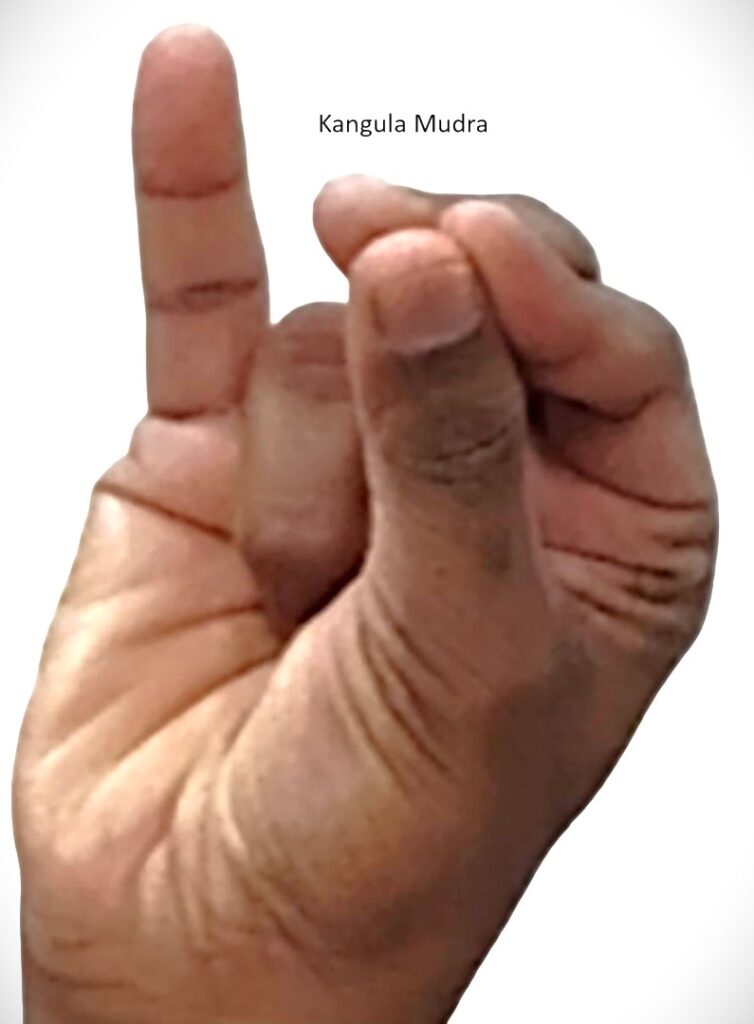
Kangula Mudra Introduction Kangula Mudra is one of the lesser-known therapeutic mudras in yogic and ayurvedic traditions. It is primarily used to strengthen the little finger (Kangula), which represents the water element and is associated with the urinary and reproductive systems. In yoga mudra therapy, this mudra is recommended for conditions related to the kidneys, urinary bladder, prostate, uterus, and reproductive health. It also helps in improving vitality and restoring fluid balance in the body. Meaning Kangula = little finger (in Sanskrit). Mudra = gesture, seal, or psychic posture. Thus, Kangula Mudra means the “gesture of the little finger,” which harnesses the energy of the water element for healing, purification, and reproductive vitality. How to Perform (Method of Practice) Step-by-Step Instructions: Sit in a comfortable posture such as Sukhasana, Padmasana, or Vajrasana with a straight spine. Touch the tip of your Ring finger to the center point of your palm and press slightly. Join the tips of your other four fingers together and extend them as upwards as possible. Close your eyes, focus on slow deep breathing, and direct awareness to the urinary system or reproductive area. Maintain the mudra for the desired duration. Benefits Physical Benefits: Balances the water element in the body. Improves the functioning of kidneys, bladder, uterus, and prostate. Helpful in urinary tract infections, excessive urination, and incontinence. Supports fertility and strengthens reproductive energy. Reduces joint stiffness and lubricates tissues. Mental & Emotional Benefits: Calms emotional disturbances linked to fear and insecurity. Promotes a sense of inner purity, fluidity, and adaptability. Helps overcome suppressed emotions, particularly those connected with relationships. Spiritual Benefits: Awakens Swadhisthana Chakra (sacral energy center). Enhances creativity and emotional harmony. Purifies pranic flow through the water element channel (Jala Nadi). Contraindications Should be avoided during excessive water retention, swelling, or edema. Not recommended for people with severe kidney failure without medical guidance. Pregnant women should practice only under supervision. Should not be practiced for too long in cases of low blood pressure. Anatomy & Physiology Finger Involvement: Little finger represents the water element and is linked to the excretory and reproductive organs. Physiology: Activates urinary and reproductive pathways, regulates water metabolism, and supports endocrine functions (especially gonads). Circulatory Effect: Improves hydration and nutrient transport at a cellular level. Kinesiology Involves flexion of the little finger and gentle pressure by the thumb. Encourages relaxation of the forearm flexors and extensors. Promotes a stable seated posture with balanced hand positioning. Neurology Stimulates the ulnar nerve (connected to the little finger), influencing motor control and sensory feedback. Calms the autonomic nervous system by reducing stress signals from the bladder. Supports parasympathetic activation, which aids in urinary and reproductive system balance. Duration of Practice Beginners: 10–15 minutes, 2–3 times daily. Therapeutic Use: 20–30 minutes in divided sessions. Spiritual Practice: Can be held during meditation for 30–45 minutes. Best practiced on an empty stomach or during early morning or evening meditation. Counter Mudra Apana Mudra – for purification and elimination. Varun Mudra – for overall water element balance and hydration. Linga Mudra – as an opposite energizing mudra (fire element to balance excess water). Conclusion Kangula Mudra is a therapeutic hand gesture that activates the water element in the body, promoting health of the kidneys, bladder, and reproductive organs. It balances emotions, enhances creativity, and purifies the body’s energy system. When practiced regularly with mindful breathing, it brings physical healing, emotional clarity, and spiritual balance by harmonizing the Swadhisthana Chakra. FAQ Q1: What is Kangula Mudra best for?It is best for urinary health, kidney balance, reproductive vitality, and emotional purification. Q2: Can it cure urinary infections?It may support healing, but should be practiced along with proper medical treatment. Q3: Can children practice it?Yes, for short durations (5–10 minutes), under guidance. Q4: When should I avoid it?Avoid during water retention, edema, or severe kidney failure. Q5: Can it be combined with pranayama?Yes, it works well with deep abdominal breathing or Ujjayi pranayama. References Swami Satyananda Saraswati – Asana, Pranayama, Mudra, Bandha. Gertrud Hirschi – Mudras: Yoga in Your Hands. Swami Niranjanananda Saraswati – Yoga Darshan. B.K.S. Iyengar – Light on Yoga. Research papers on mudra therapy and yogic healing of urinary disorders.
Kamajayi Mudra
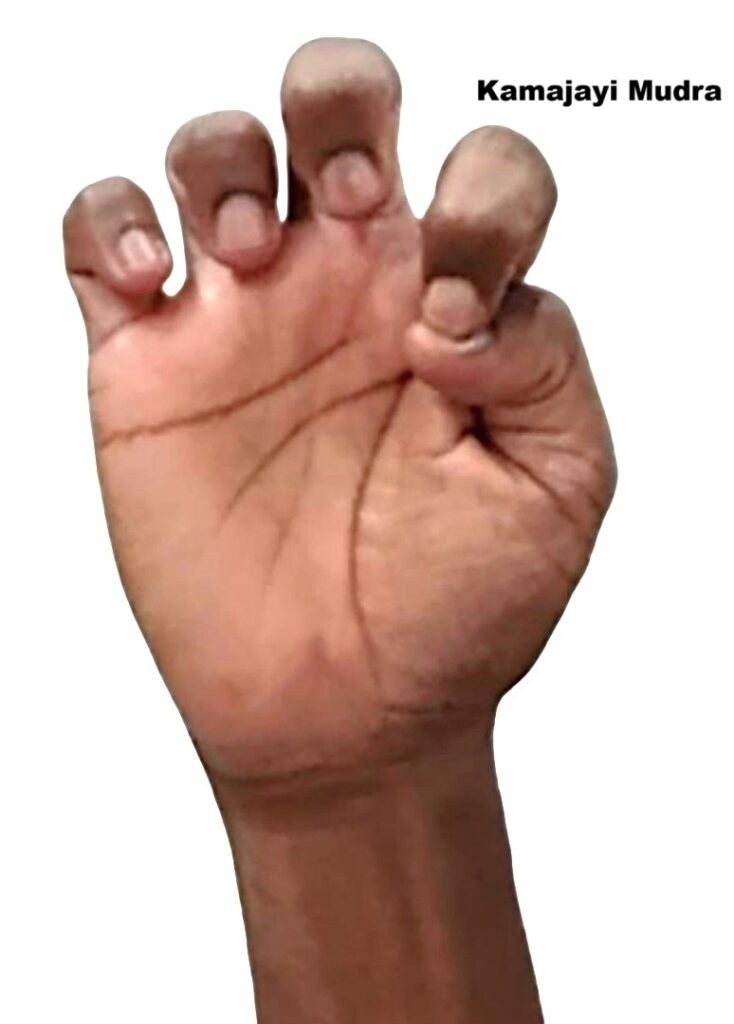
Kamajayi Mudra Introduction Kamajayi Mudra is a powerful yogic hand gesture described in Hatha Yoga texts for mastery over desires and senses. The term itself indicates the victory (jaya) over kama (desires, passions, sensual urges). It is considered both a mudra and a tantric practice, often used to channel sexual energy into higher spiritual energy, supporting brahmacharya (self-restraint) and deeper meditation. This mudra is especially recommended for practitioners who want to stabilize the mind, conserve energy, and direct prana (life force) inward. Meaning Kama = desire, passion, sensual energy. Jayi (from jaya) = victory, mastery, control. Mudra = seal, gesture, or psychic attitude. Kamajayi Mudra therefore means “the gesture of conquering desire”. How to Perform (Method of Practice) Step-by-Step Instructions: Sit in a comfortable meditative posture like Padmasana (Lotus Pose), Sukhasana (Easy Pose), or Vajrasana (Thunderbolt Pose) with the spine erect. You can practice this mudra in any position with either or both hands. Press down on the root of your thumb nail with the tip of the index finger of the same hand. Allow the other fingers to remain relaxed and slightly curled. Keep the hands just below the navel region (Swadhisthana/Manipura chakra area). Close your eyes and focus on your breath and awareness of lower abdomen. Maintain deep, slow, rhythmic breathing. Mentally repeat an affirmation or mantra, such as “I master my desires” or chant Om Shanti for inner peace. Benefits Physical Benefits: Supports better hormonal regulation by calming the pelvic region. Improves digestion and pranic flow in the abdominal area. Enhances stamina by conserving energy. Mental & Emotional Benefits: Helps overcome lust, addictions, compulsive behaviors. Enhances willpower, clarity, and determination. Provides emotional balance, especially during stress or temptations. Spiritual Benefits: Supports brahmacharya (continence, self-control). Assists in sublimating lower desires into spiritual awakening. Helps stabilize prana in Swadhisthana and Manipura chakras, preparing for higher meditation. Contraindications Should not be practiced during intense emotional disturbances unless guided by a teacher. Those with severe depression or suppressed desires may experience discomfort—gradual practice advised. Pregnant women should avoid holding mudra for long periods. Avoid after heavy meals. Anatomy & Physiology Hands & Fingers: Both hands are relaxed, forming an energy seal. Nervous System: The mudra calms the autonomic nervous system by reducing overactivation of sympathetic arousal linked to desires.Endocrine: May influence gonadal and adrenal glands, reducing overstimulation. Respiratory: Encourages slower and deeper breathing. Kinesiology Minimal musculoskeletal effort. Gentle hand positioning promotes relaxation in shoulders, arms, and pelvic floor muscles. Reinforces stillness by reducing unnecessary micro-movements of the hands. Neurology Activates parasympathetic response, calming sexual and emotional urges. Strengthens prefrontal cortex activity, enhancing willpower and decision-making. Helps in reducing limbic system overdrive, balancing emotions and desires. Duration of Practice Beginners: 5–10 minutes daily during meditation or pranayama. Intermediate: 15–20 minutes, especially useful in morning/evening practice. Advanced: Up to 30 minutes or integrated throughout meditation sessions. Best practiced at dawn, before meals, or before bedtime for calming desires. Counter Mudra Apana Mudra – to balance elimination and grounding. Dhyana Mudra – to restore calm neutrality after intense practice. Conclusion Kamajayi Mudra is a sacred yogic hand gesture designed to help practitioners control passions, transform desires, and achieve mastery over the senses. It has profound effects on the mind, emotions, and spiritual energy, making it a valuable tool for anyone seeking inner discipline, emotional stability, and higher awareness. By sublimating lower urges, the practitioner gains more focus and freedom for spiritual growth. FAQ Q1: Can beginners practice Kamajayi Mudra?Yes, it is simple and safe for beginners with mindful practice. Q2: How long does it take to see results?With daily practice, improvements in self-control and calmness can be noticed within a few weeks. Q3: Can it be practiced during stress or temptation?Yes, it is especially beneficial at such times to redirect energy inward. Q4: Is it only for celibate practitioners?No, it is useful for anyone who wishes to balance desires and strengthen willpower. Q5: Can it be practiced while standing or walking?No, it is best practiced in a seated meditative position with stillness. References Swami Satyananda Saraswati – Asana, Pranayama, Mudra, Bandha. Gertrud Hirschi – Mudras: Yoga in Your Hands. Swami Niranjanananda Saraswati – Yoga Darshan. B.K.S. Iyengar – Light on Yoga. Research articles on mudra therapy, meditation, and neuropsychology of desire regulation.
Kaki Mudra
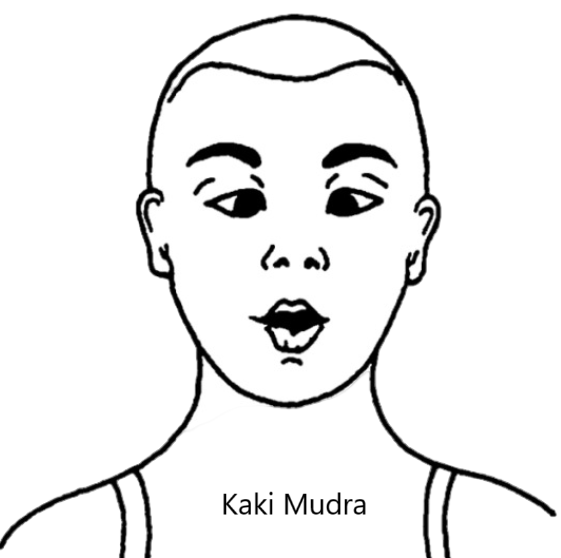
Kaki Mudra Introduction Kaki Mudra is a pranayama-oriented mudra (breath-control gesture) rather than just a hand mudra. In this practice, the mouth is shaped like the beak of a crow (Kaki in Sanskrit means crow), and the breath is drawn through the lips. It is a cooling pranayama practice that balances body temperature, calms the nervous system, and rejuvenates internal organs. It is particularly effective in reducing stress, acidity, and excess heat (pitta dosha) in the body. Meaning Kaki = Crow Mudra = Gesture/seal The lips are shaped like a crow’s beak, symbolizing the precision and directness of energy flow. Just as a crow sips water carefully, in Kaki Mudra the practitioner inhales through the pursed lips (like sipping air) and exhales slowly through the nose, symbolizing mindful intake of prana. How to Perform (Method of Practice) Step-by-Step Instructions: Sit in a meditative posture such as Padmasana, Sukhasana, or Vajrasana, keeping the spine erect. Relax the shoulders and place the hands on the knees in Chin Mudra (index finger and thumb together). Purse your lips into the shape of a crow’s beak (a small round opening). Inhale deeply through the pursed lips, feeling cool air enter. Close your lips, then exhale slowly and completely through the nose. Keep eyes closed or gaze at the tip of the nose (Nasikagra Drishti). Repeat for 5–10 rounds initially. Advanced Practice: Can be combined with kumbhaka (breath retention) after inhalation for deeper pranic absorption. Benefits Physical Benefits: Provides cooling effect on body, reducing excessive heat. Improves digestion and liver function. Relieves gastric acidity, ulcers, and constipation. Improves respiratory efficiency and oxygen intake. Helps in conditions like fever, hypertension, and skin problems caused by excess pitta. Mental & Emotional Benefits: Reduces stress, anger, and irritability. Promotes calmness, focus, and clarity of thought. Spiritual Benefits: Activates Vishuddhi (throat) and Anahata (heart) chakras. Helps conserve and channel prana for meditation. Induces a sense of inner tranquility. Contraindications Avoid if suffering from cold, cough, sinusitis, or asthma (as inhaling through the mouth may worsen symptoms). Not suitable for people with low blood pressure or chronic respiratory weakness. Should not be practiced in extreme cold climates. Avoid immediately after meals. Anatomy & Physiology Respiratory: Inhalation through the lips cools the breath, reducing internal body temperature and stimulating alveolar ventilation. Digestive: Enhances liver, gallbladder, and stomach function by reducing acidity. Circulatory: Helps regulate blood pressure through parasympathetic activation. Thermoregulation: Balances body heat via cooling air intake. Kinesiology Engages orbicularis oris muscles of lips to form the beak-like shape. Promotes controlled use of diaphragmatic breathing. Creates postural stability by keeping spine erect and chest open. Neurology Activates parasympathetic nervous system, inducing relaxation response. Reduces sympathetic overdrive linked with stress and anger. Stimulates cranial nerves via pursed-lip breathing. Enhances focus and awareness by directing attention to controlled breath. Duration of Practice Beginners: 3–5 minutes, 1–2 sessions per day. Intermediate: 10–15 minutes daily. Advanced: Can be integrated into pranayama sessions (20 minutes) with kumbhaka. Counter Mudra Surya Bhedana Pranayama (right nostril breathing) can be used as a counter to balance excessive cooling if body temperature drops too much. Bhramari Pranayama (humming bee breath) may also complement Kaki Mudra for relaxation. Conclusion Kaki Mudra is a cooling, calming, and rejuvenating pranayama mudra that harmonizes the body’s water and fire elements, reduces stress, and supports digestion and respiratory health. Its simplicity makes it suitable for daily practice, especially in hot weather, or for individuals with excess pitta. However, it should be practiced with care in cold conditions or by those with respiratory issues. FAQ Q1: Can Kaki Mudra be practiced after eating? No, wait at least 2–3 hours after meals. Q2: Can children practice it? Yes, but under supervision and for shorter durations. Q3: Can it be practiced lying down? Best performed in a seated posture for proper pranic flow. Q4: When is the best time to practice? Early morning or evening, in a calm and quiet environment. Q5: Is it similar to Sitali Pranayama? Yes, both are cooling practices. Kaki Mudra differs by using pursed lips instead of a rolled tongue. References Swami Satyananda Saraswati – Asana, Pranayama, Mudra, Bandha. Yoga Publications Trust. B.K.S. Iyengar – Light on Pranayama. Dr. H.R. Nagendra – Pranayama: The Art and Science. Yoga Journal articles on cooling pranayamas and mudras. Clinical studies on pranayama and autonomic nervous system regulation.
Kali Mudra
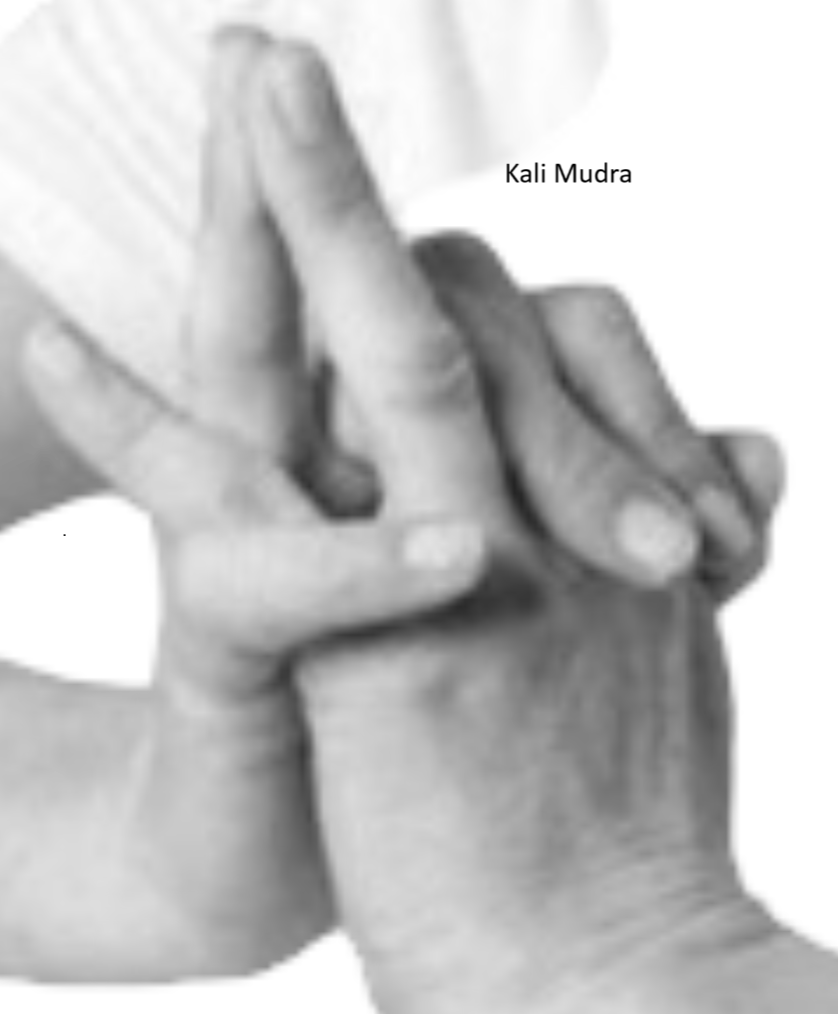
Kali Mudra Introduction Kali Mudra is a powerful yogic hand gesture named after the fierce goddess Kali, the embodiment of transformation, destruction of negativity, and inner power. This mudra symbolizes cutting through illusions, channeling strength, and awakening dormant energy. It is often practiced in meditation, pranayama, or dynamic yoga flows to increase focus, empowerment, and energetic purification. Meaning Kali – Goddess of time, power, transformation, and liberation from ego and fear. Mudra – Sacred hand gesture or seal that directs energy flow in the body. Thus, Kali Mudra means “the gesture that invokes the fierce transformative power of Goddess Kali”, helping practitioners remove inner obstacles, fear, and negativity. How to Perform (Method of Practice) Step-by-Step Instructions: Sit in Sukhasana (Easy Pose), Padmasana (Lotus Pose), or stand firmly in Tadasana (Mountain Pose). With both hands in front of your chest, interlace your index, middle and little fingers, making sure that the right little finger is on the outside. Extend and join both ring fingers so they point straight up. Cross your left thumb Over your right. Raise your elbows until your forearms are parallel to the ground. Hold for as long as feels comfortable. Hold the hands in front of the chest, solar plexus, or overhead depending on the intensity of practice. Close your eyes, breathe deeply, and visualize fiery energy burning away fear and negativity. Maintain focus at the Ajna Chakra (third eye) or Manipura Chakra (solar plexus) for empowerment. Practice Tip: When used in meditation, chant silently or aloud “Om Kali Ma” for deeper connection. Benefits Physical Benefits: Stimulates energy flow throughout the body. Activates core muscles and improves posture when held overhead. Improves circulation and breath awareness. Mental & Emotional Benefits: Reduces fear, insecurity, and mental stagnation. Increases confidence, inner strength, and determination. Provides emotional release and stress relief. Spiritual Benefits: Awakens kundalini shakti (dormant energy at the base of the spine). Supports deep meditation and inner purification. Invokes the transformative energy of Kali, aiding spiritual growth. Contraindications People with shoulder, arm, or wrist injuries should avoid holding the mudra overhead; keep it at chest level instead. Those with high blood pressure or migraines should avoid raising arms above the head for long durations. Not recommended during periods of extreme emotional imbalance without guidance. Anatomy & Physiology Musculoskeletal: Engages finger flexors (through interlacing), index finger extensors, shoulder and chest stabilizers. Respiratory: Encourages deeper diaphragmatic breathing. Circulatory: Promotes blood flow toward the upper body. Endocrine: May stimulate adrenal and solar plexus region, linked to willpower. Kinesiology Involves isometric engagement of finger muscles through interlacing. Extension of index fingers creates a symbolic “sword of energy” channel. Overhead position engages deltoids, trapezius, and core stabilizers, strengthening posture. Neurology Activates somatosensory and motor cortex through precise finger positioning. Calms the amygdala, reducing fear and stress responses. May enhance alpha brainwave activity, improving focus and meditation depth. Duration of Practice Beginners: 3–5 minutes, once or twice daily. Intermediate: 10–15 minutes, can be combined with pranayama. Advanced: Up to 20 minutes in meditation or dynamic yoga sequences. Best practiced in the morning or during moments of low energy or fear. Counter Mudra Anjali Mudra (Prayer Gesture): Balances and grounds after the intensity of Kali Mudra. Gyan Mudra: Helps restore calm focus after energizing practices. Conclusion Kali Mudra is a dynamic and empowering yogic gesture that channels the fierce energy of Goddess Kali, helping practitioners overcome fear, negativity, and inner obstacles. It strengthens body, mind, and spirit, making it ideal for moments when one needs courage, clarity, or transformation. Practiced with awareness, it becomes a powerful tool for personal empowerment and spiritual awakening. FAQ Q1: Can beginners practice Kali Mudra? Yes, but start with shorter durations and keep hands at chest level to avoid strain. Q2: Can it be practiced lying down? No, it is best done sitting or standing with spine erect. Q3: Is chanting necessary? Not required, but chanting mantras like “Om Kali Ma” enhances the spiritual effect. Q4: Can children practice it? Yes, for short durations with guidance. Q5: Does it help with fear and anxiety? Yes, it helps release fear and builds courage by activating the solar plexus chakra. References Swami Satyananda Saraswati – Asana, Pranayama, Mudra, Bandha. Gertrud Hirschi – Mudras: Yoga in Your Hands. B.K.S. Iyengar – Light on Yoga. Swami Niranjanananda Saraswati – Yoga Darshan. Contemporary articles on mudra therapy and meditation neuroscience.
Kaleshwara Mudra
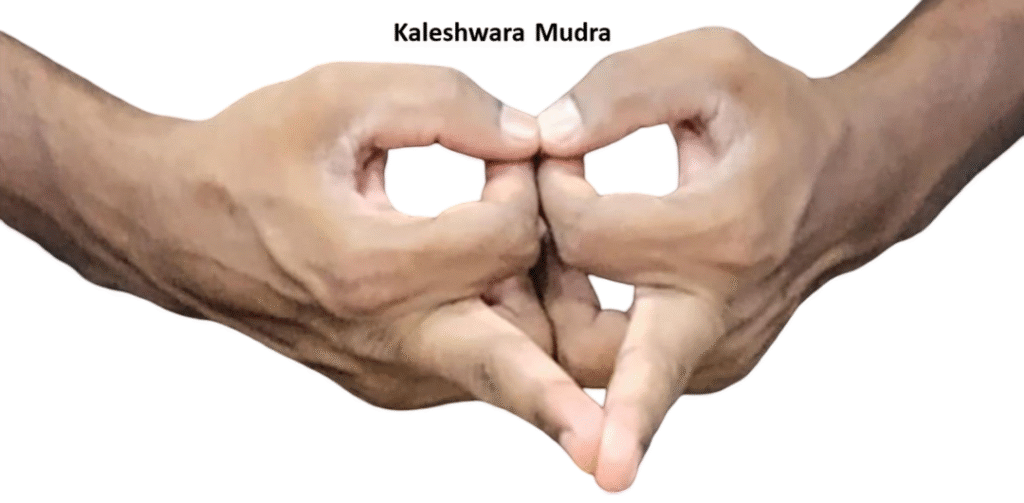
Kaleshwara Mudra Introduction Kaleshwara Mudra is a hand gesture associated with calming the mind, focusing thoughts, and regulating emotions. It is often referred to as the “Mudra of Time”, because it is believed to bring awareness of inner rhythms, reduce racing thoughts, and help practitioners manage stress and mental agitation. The practice directs pranic energy toward the head and heart, enhancing meditation and mindfulness. Meaning Kaleshwara = derived from Kala (time) + Ishwara (Lord, controller). It represents the Lord of Time. Mudra = gesture or seal. Thus, Kaleshwara Mudra means the gesture that helps master or harmonize time, symbolically referring to mastering the restless flow of thoughts and emotions. How to Perform (Method of Practice) Step-by-Step Instructions: Sit comfortably in Padmasana, Sukhasana, or Vajrasana with a straight spine. Bring both hands together in front of the chest. Using both hands, extend your middle fingers and bring the pads together. Bend your index, ring and little fingers halfway into their palms and bring the backs of the respective fingers together. Join the ends of your thumbs and point them toward your chest, spreading your elbows to the sides. Hold for as long as you like, repeating as required. Optionally, direct awareness to the Ajna Chakra (third eye) or Anahata Chakra (heart center). Tip: This mudra is often combined with deep breathing or meditation for maximum effect. Benefits Physical Benefits: Relieves tension, stress-related headaches, and restlessness. Reduces heart palpitations and regulates breathing rhythm. May help normalize blood pressure. Mental & Emotional Benefits: Quiets excessive thoughts and mental chatter. Promotes clarity, concentration, and emotional stability. Useful for people with insomnia, anxiety, or restlessness. Spiritual Benefits: Brings awareness of inner time cycles (breath, thought, meditation rhythm). Supports meditative states and mindfulness. Helps practitioners move into timeless awareness during meditation. Contraindications People with severe depression should use cautiously, as it may deepen introspection—best practiced under guidance. Should be avoided if holding the gesture causes hand cramps or finger pain. Not recommended for very long sessions in people with low blood pressure and dizziness—start short. Anatomy & Physiology Musculoskeletal: Engages intrinsic muscles of the hand and flexor tendons while creating balance between left and right hand. Respiratory: Enhances diaphragmatic breathing and lung expansion by calming the nervous system. Circulatory: May help reduce stress-related blood pressure fluctuations. Endocrine/Autonomic: Encourages parasympathetic dominance, balancing stress hormones. Kinesiology Involves isometric hand engagement, especially at the thumb and middle fingers. Stimulates neural reflex zones in the fingers associated with heart and brain. Encourages bilateral symmetry, promoting coordination between brain hemispheres. Neurology Activates prefrontal cortex regions involved in attention, self-regulation, and mindfulness. Promotes parasympathetic nervous system activity, calming stress responses. May improve alpha brainwave activity, supporting meditation and relaxation. Duration of Practice Beginners: 5–10 minutes daily. Intermediate: 15–20 minutes, once or twice daily. Advanced: Up to 30 minutes during meditation sessions. Best practiced during quiet times (early morning or evening). Counter Mudra Gyan Mudra (gesture of knowledge) can be practiced afterward to enhance focus. Apana Mudra may also be used to ground excess energy after long practice. Conclusion Kaleshwara Mudra is a powerful meditation aid that calms the mind, regulates emotions, and brings clarity to thoughts. It is often called the Mudra of Time because it creates awareness of the timeless inner self beyond stress, anxiety, or mental agitation. Practiced regularly, it can help cultivate peace, inner stillness, and emotional balance. FAQ Q1: Can Kaleshwara Mudra help with sleep problems? Yes, practicing it before bedtime can reduce restlessness and support better sleep. Q2: Can it be practiced while standing? Yes, but sitting with a straight spine is more effective. Q3: Is it suitable for children? Yes, for short durations under supervision. Q4: Should it be practiced with pranayama? It can be combined with deep abdominal breathing or practiced alone. Q5: How soon are benefits noticed? Mental calmness can be felt in just a few sessions, while emotional stability builds over weeks of regular practice. References Swami Satyananda Saraswati – Asana, Pranayama, Mudra, Bandha. Gertrud Hirschi – Mudras: Yoga in Your Hands. Swami Niranjanananda Saraswati – Yoga Darshan. T.K.V. Desikachar – The Heart of Yoga. Yoga Journal & contemporary articles on mudra therapy and meditation neuroscience.
Jalodar Nāshak Mudra
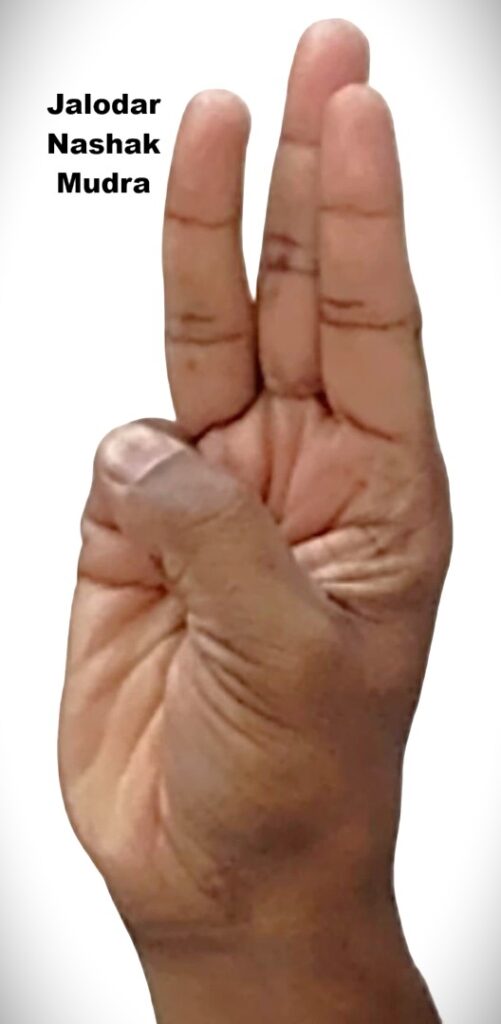
Jalodar Nāshak Mudra Introduction Jalodar Nāshak Mudra is a therapeutic yogic hand gesture designed to reduce excess water retention in the body. The Sanskrit word Jalodar refers to ascites (abnormal accumulation of fluid in the abdominal cavity), while Nāshak means destroyer or remover. This mudra is traditionally practiced to balance the water element (jala tattva), improve digestion, and regulate fluid metabolism. Meaning Jala (Water): Represents the water element in the body, associated with fluid balance, circulation, and emotions. Udara (Belly/Abdomen): Refers to abdominal fluid accumulation. Nāshak (Destroyer): Signifies removal or reduction. Mudra (Gesture): A symbolic hand gesture that redirects pranic energy. Thus, Jalodar Nāshak Mudra means “the gesture that removes excess water or fluid from the abdomen/body.” How to Perform (Method of Practice) Step-by-Step Instructions: Sit comfortably in Padmasana (Lotus Pose), Sukhasana (Easy Pose), or on a chair with spine erect. Rest your hands on your thighs with palms facing upward. Bend the little finger to the base of the thumb. Place the thumb gently over the little finger, applying light pressure. Keep the other fingers (index, middle, ring) extended but relaxed. Close your eyes, breathe slowly and deeply. Focus your awareness on the abdominal region, visualizing excess water being released. Practice Tip: Perform this mudra in a calm environment, preferably after meals or during meditation. Benefits Physical Benefits: Helps in reducing water retention, swelling, and edema. Supports the management of ascites (fluid in abdomen). Improves digestion and assimilation of food. Assists the urinary system in expelling excess fluids. Balances Swadhisthana chakra (water element center). Mental & Emotional Benefits: Reduces feelings of heaviness, lethargy, and sluggishness. Promotes mental clarity and emotional stability. Spiritual Benefits: Encourages balance of the jala tattva (water element). Aids in cleansing the body energetically and emotionally. Contraindications Should be avoided by people with extreme dehydration or low fluid levels. Not recommended for those with chronic dryness in the body (dry skin, constipation due to lack of water). Pregnant women should practice only under guidance. Should not replace medical treatment for serious abdominal disorders—use only as supportive therapy. Anatomy & Physiology Musculoskeletal: Involves flexion of the little finger and pressure from the thumb, engaging intrinsic hand muscles. Digestive System: Helps in stimulating digestion and preventing fluid accumulation in the abdomen. Urinary System: Supports kidney and bladder function by enhancing excretion of water. Circulatory System: May improve lymphatic drainage and reduce bloating. Kinesiology Involves finger flexion (little finger) and oppositional grip (thumb). Creates tension in hand muscles, stimulating reflex zones associated with water balance. Promotes neuromuscular awareness through tactile feedback. Neurology Stimulates sensory nerve endings in the fingers that connect to brain regions regulating autonomic functions. Enhances parasympathetic activation, encouraging relaxation and metabolic balance. Indirectly influences the hypothalamus-pituitary axis, which regulates fluid balance. Duration of Practice Beginners: 10–15 minutes per session. Intermediate/Advanced: 20–30 minutes, 2–3 times daily. Best practiced on an empty stomach or after digestion. Counter Mudra Varun Mudra (thumb + little finger tips together) can be used as a counter practice to increase water element if dryness occurs. Prithvi Mudra can also be alternated to maintain balance of the earth element. Conclusion Jalodar Nāshak Mudra is a therapeutic hand gesture for reducing excess water in the body and promoting digestive and urinary health. It is highly beneficial for conditions like ascites, edema, and bloating, while also calming the mind. When practiced consistently with proper lifestyle habits, this mudra can restore balance to the water element, leading to improved health and vitality. FAQ Q1: Can Jalodar Nāshak Mudra cure ascites completely? No, it is a supportive practice. Medical treatment is essential for serious conditions. Q2: How soon can results be felt? Relief from heaviness and bloating may be noticed within a few sessions; deeper benefits may take weeks. Q3: Can children practice this mudra? Yes, for short durations under supervision. Q4: Is it safe during pregnancy? Not recommended unless guided by an experienced yoga therapist. Q5: Can it be done lying down? It is best done while sitting upright to promote proper pranic flow. References Swami Satyananda Saraswati. Asana, Pranayama, Mudra, Bandha. Yoga Publications Trust. Gertrud Hirschi. Mudras: Yoga in Your Hands. Dr. B.K. Taimni. The Science of Yoga. T.K.V. Desikachar. The Heart of Yoga. Research articles on yoga mudras and fluid balance in holistic therapies.
Jala Surabhi Mudra
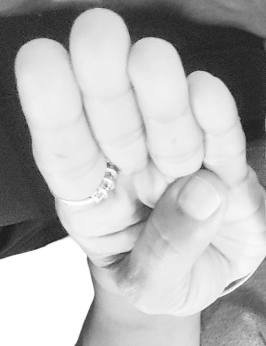
Jala Surabhi Mudra Introduction Jala Surabhi Mudra is a hand gesture in yoga that harmonizes the water element (Jala) within the body, promoting fluid balance, calmness, and detoxification. The term “Jala” means water, and “Surabhi” is associated with purity and fragrance, symbolizing clarity and vitality. This mudra is primarily used to regulate hydration, improve kidney and urinary system function, and enhance emotional balance. Meaning Jala (Water): Represents fluidity, emotions, and adaptability. Surabhi (Fragrance/Purity): Symbolizes clarity and vitality. Mudra (Gesture): Hand positioning that directs energy toward specific physiological or energetic effects. Jala Surabhi Mudra is believed to balance the water element in the body, which can influence fluid metabolism, emotional stability, and overall wellness. How to Perform (Method of Practice) Step-by-Step: Sit comfortably in Sukhasana (Easy Pose), Padmasana (Lotus Pose), or on a chair with a straight spine. Rest your hands on your thighs or knees, palms facing upward. Mudra is formed by touching the tips of the thumbs to the base of the small fingers while performing surabhi mudra. Close your eyes, breathe naturally, and focus on fluidity and calmness within your body. Practice Tip: Perform gently without straining fingers. Visualize the water element flowing and cleansing your system. Benefits Physical Benefits: Supports kidney and urinary system health. Helps regulate body fluids and hydration. May aid in detoxification and water metabolism. Mental & Emotional Benefits: Reduces stress, tension, and emotional turbulence. Enhances mental clarity and adaptability. Spiritual Benefits: Promotes inner calm and emotional purification. Supports meditative focus and energy balance in the Swadhisthana (water) chakra. Contraindications Avoid if you have severe finger or hand joint issues. Individuals with serious kidney or urinary disorders should practice under guidance. Do not overstrain fingers; maintain comfort. Anatomy & Physiology Musculoskeletal: Activates intrinsic muscles of the hand, flexor and extensor coordination. Urinary & Excretory: Supports parasympathetic regulation of kidneys and bladder. Circulatory: Enhances blood flow to fingers and hand. Neurological: Stimulates sensory nerve endings, improving proprioception and mind-body awareness. Kinesiology Involves fine motor coordination of fingers. Gentle stretching and alignment improve joint mobility in the phalanges. Provides neuromuscular feedback, promoting hand stability and energy awareness. Neurology Stimulates somatosensory cortex areas corresponding to fingers. Activates parasympathetic nervous system, promoting relaxation. Enhances focus and meditative awareness through tactile feedback and visualization. Duration of Practice Beginners: 5–10 minutes per session. Advanced: 15–20 minutes, once or twice daily. Can be combined with pranayama techniques like Nadi Shodhana (alternate nostril breathing) for enhanced water element balance. Counter Mudra Prithvi Mudra (ring finger and thumb tip together) or Varuna Mudra can be alternated. Switching helps balance earth and water elements, maintaining overall elemental harmony. Conclusion Jala Surabhi Mudra is a subtle yet effective mudra for balancing the water element, calming emotions, and supporting kidney/urinary health. Regular practice helps maintain fluid balance, emotional stability, and inner serenity, making it a valuable addition to daily yoga or meditation practices. FAQ Q1: Can Jala Surabhi Mudra be done while lying down? Yes, though sitting with a straight spine enhances energy flow. Q2: How frequently should it be practiced? Once or twice daily, preferably during meditation or quiet moments. Q3: Can children practice it? Yes, under supervision and for shorter durations. Q4: Does it replace medical treatment for kidney issues? No, it complements but does not replace conventional medical care. Q5: How soon will benefits be felt? Mental calmness can appear within a few sessions; physical benefits may take weeks of consistent practice. References Swami Satyananda Saraswati. Mudras for Healing and Transformation. Yoga Publications Trust. Dr. Bharati Krishna Tirtha. Science of Mudras. T.K.V. Desikachar. The Heart of Yoga: Developing a Personal Practice. Yoga Journal articles on mudra therapy. Clinical studies on mudras and parasympathetic nervous system activation.
Kali Mudra
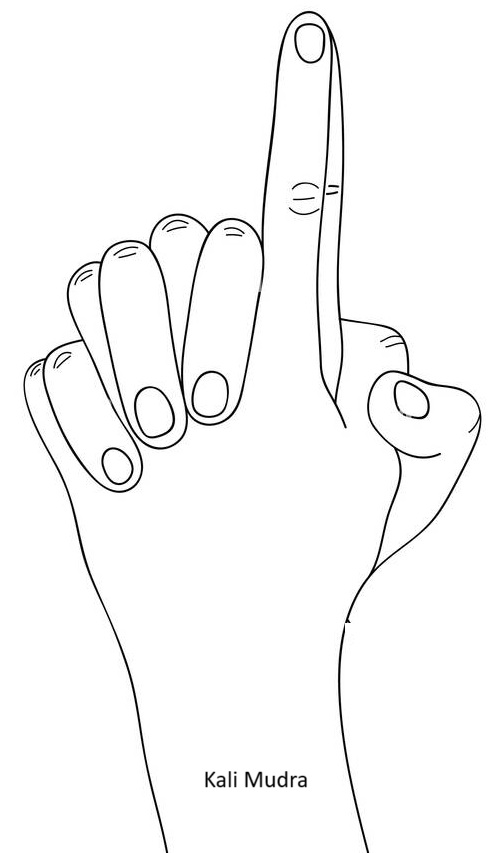
Kali Mudra Introduction Kali Mudra is a powerful yogic hand gesture named after the fierce goddess Kali, the embodiment of transformation, destruction of negativity, and inner power. This mudra symbolizes cutting through illusions, channeling strength, and awakening dormant energy. It is often practiced in meditation, pranayama, or dynamic yoga flows to increase focus, empowerment, and energetic purification. Meaning Kali – Goddess of time, power, transformation, and liberation from ego and fear. Mudra – Sacred hand gesture or seal that directs energy flow in the body. Thus, Kali Mudra means “the gesture that invokes the fierce transformative power of Goddess Kali”, helping practitioners remove inner obstacles, fear, and negativity. How to Perform (Method of Practice) Step-by-Step Instructions: Sit in Sukhasana (Easy Pose), Padmasana (Lotus Pose), or stand firmly in Tadasana (Mountain Pose). The index finger points upward with the interlace middle, ring and small fingers; left thumb crossed from the right side; place the hands in front of the chest or above the head. Hold the hands in front of the chest, solar plexus, or overhead depending on the intensity of practice. Close your eyes, breathe deeply, and visualize fiery energy burning away fear and negativity. Maintain focus at the Ajna Chakra (third eye) or Manipura Chakra (solar plexus) for empowerment. Practice Tip: When used in meditation, chant silently or aloud “Om Kali Ma” for deeper connection. Benefits Physical Benefits: Stimulates energy flow throughout the body. Activates core muscles and improves posture when held overhead. Improves circulation and breath awareness. Mental & Emotional Benefits: Reduces fear, insecurity, and mental stagnation. Increases confidence, inner strength, and determination. Provides emotional release and stress relief. Spiritual Benefits: Awakens kundalini shakti (dormant energy at the base of the spine). Supports deep meditation and inner purification. Invokes the transformative energy of Kali, aiding spiritual growth. Contraindications People with shoulder, arm, or wrist injuries should avoid holding the mudra overhead; keep it at chest level instead. Those with high blood pressure or migraines should avoid raising arms above the head for long durations. Not recommended during periods of extreme emotional imbalance without guidance. Anatomy & Physiology Musculoskeletal: Engages finger flexors (through interlacing), index finger extensors, shoulder and chest stabilizers. Respiratory: Encourages deeper diaphragmatic breathing. Circulatory: Promotes blood flow toward the upper body. Endocrine: May stimulate adrenal and solar plexus region, linked to willpower. Kinesiology Involves isometric engagement of finger muscles through interlacing. Extension of index fingers creates a symbolic “sword of energy” channel. Overhead position engages deltoids, trapezius, and core stabilizers, strengthening posture. Neurology Activates somatosensory and motor cortex through precise finger positioning. Calms the amygdala, reducing fear and stress responses. May enhance alpha brainwave activity, improving focus and meditation depth. Duration of Practice Beginners: 3–5 minutes, once or twice daily. Intermediate: 10–15 minutes, can be combined with pranayama. Advanced: Up to 20 minutes in meditation or dynamic yoga sequences. Best practiced in the morning or during moments of low energy or fear. Counter Mudra Anjali Mudra (Prayer Gesture): Balances and grounds after the intensity of Kali Mudra. Gyan Mudra: Helps restore calm focus after energizing practices. Conclusion Kali Mudra is a dynamic and empowering yogic gesture that channels the fierce energy of Goddess Kali, helping practitioners overcome fear, negativity, and inner obstacles. It strengthens body, mind, and spirit, making it ideal for moments when one needs courage, clarity, or transformation. Practiced with awareness, it becomes a powerful tool for personal empowerment and spiritual awakening. FAQ Q1: Can beginners practice Kali Mudra? Yes, but start with shorter durations and keep hands at chest level to avoid strain. Q2: Can it be practiced lying down? No, it is best done sitting or standing with spine erect. Q3: Is chanting necessary? Not required, but chanting mantras like “Om Kali Ma” enhances the spiritual effect. Q4: Can children practice it? Yes, for short durations with guidance. Q5: Does it help with fear and anxiety? Yes, it helps release fear and builds courage by activating the solar plexus chakra. References Swami Satyananda Saraswati – Asana, Pranayama, Mudra, Bandha. Gertrud Hirschi – Mudras: Yoga in Your Hands. B.K.S. Iyengar – Light on Yoga. Swami Niranjanananda Saraswati – Yoga Darshan. Contemporary articles on mudra therapy and meditation neuroscience.
Hridaya Mudra
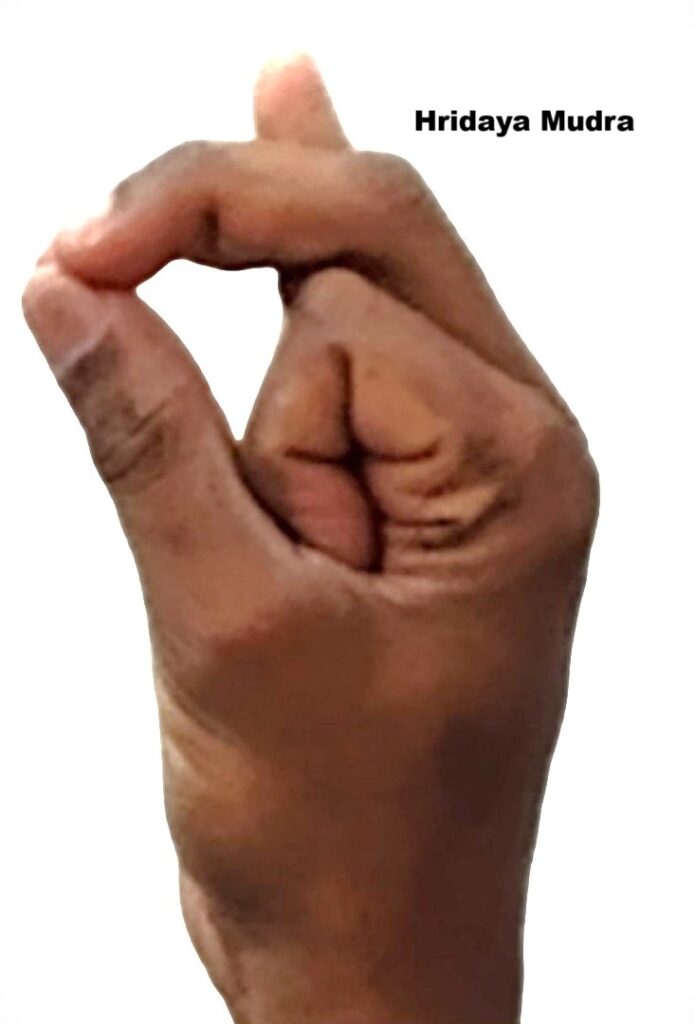
Hridaya Mudra Introduction Hridaya Mudra is a yogic hand gesture aimed at supporting heart health and emotional balance. The Sanskrit word “Hridaya” means heart, symbolizing both the physical heart and the emotional/spiritual center. This mudra is used to cultivate emotional calm, compassion, and circulation of energy to the heart region, often practiced during meditation or pranayama. Meaning Hridaya (Heart): Represents love, compassion, and vitality. Mudra (Gesture): A specific hand positioning that channels energy within the body. Hridaya Mudra is believed to strengthen the heart, regulate blood pressure, and harmonize emotions by directing pranic energy toward the heart chakra (Anahata). How to Perform (Method of Practice) Step-by-Step: Sit in a comfortable posture like Sukhasana (Easy Pose) or Padmasana (Lotus Pose) with a straight spine. Using both hands, bend the index fingers until the tips touch their own bases. Then keep rolling the fingers down until the first knuckles touch the base of each thumb. Join the tips of the thumbs with the tips of their respective ring and middle fingers. Allow the little fingers to remain extended, but keep them relaxed. Hold as you sit quietly or meditate, or whenever you feel the need. Close your eyes and breathe naturally, focusing on the heart center. Practice Tip: Avoid forcing fingers; let the position be comfortable and stable. Benefits Physical Benefits: Supports heart and circulatory health. May help in lowering blood pressure. Enhances oxygen flow and energy to the chest region. Mental & Emotional Benefits: Reduces stress, anxiety, and emotional turbulence. Cultivates inner peace, compassion, and love. Spiritual Benefits: Activates and balances the Anahata (heart) chakra. Promotes meditative focus and intuitive clarity. Encourages emotional release and healing. Contraindications People with severe finger injuries or arthritis should avoid or modify the mudra. Should not replace medical treatment for heart disease; use as a complementary practice. Avoid overstraining fingers or wrist during the practice. Anatomy & Physiology Musculoskeletal: Engages small muscles of fingers and hand, enhancing dexterity. Cardiovascular: Indirectly supports heart function by promoting parasympathetic activation. Respiratory: Encourages deep, relaxed breathing, improving oxygenation. Neurological: Stimulates sensory nerve endings in fingers, aiding mind-body connection. Kinesiology Fine motor coordination of phalanges and metacarpals. Gentle stretching improves joint mobility of fingers and wrist. Engages proprioceptive feedback loops enhancing hand awareness. Neurology Stimulates cortical areas related to focus, attention, and sensory perception. Activates parasympathetic nervous system, promoting calm and emotional regulation. Can positively influence heart rate variability (HRV) through relaxation response. Duration of Practice Beginners: 5–10 minutes per session. Advanced: 15–20 minutes, once or twice daily. Can be paired with Anulom Vilom or Bhramari Pranayama for enhanced benefits. Counter Mudra Gyan Mudra (index finger and thumb tip together) or Prithvi Mudra can be alternated to balance energy. Switching to these mudras helps maintain overall mental clarity and grounding after heart-focused energy practices. Conclusion Hridaya Mudra is a simple yet profound practice that harmonizes body, mind, and heart energy. Regular practice can support emotional stability, heart health, and spiritual awareness. It is especially beneficial for stress management, cultivating compassion, and deepening meditation. FAQ Q1: Can Hridaya Mudra be practiced while lying down? Yes, but sitting upright with a straight spine enhances energy flow. Q2: How frequently should it be practiced? Once or twice daily, ideally during meditation or calm periods. Q3: Is it safe for children? Yes, with supervision and shorter practice duration. Q4: Can it replace medical heart treatments? No, it complements but does not replace conventional medical care. Q5: When will I feel the benefits? Emotional calmness can be noticed within a few sessions; physical and spiritual benefits may develop over weeks of consistent practice. References Swami Satyananda Saraswati. Mudras for Healing and Transformation. Yoga Publications Trust. Dr. Bharati Krishna Tirtha. Science of Mudras. T.K.V. Desikachar. The Heart of Yoga: Developing a Personal Practice. Yoga Journal articles on mudra therapy. Clinical studies on hand gestures and heart rate variability.