
Adhi Mudrā
Introduction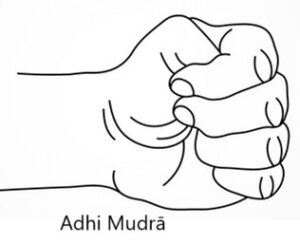
Adhi Mudrā is one of the classic hasta mudrās (hand gestures) described in yogic tradition. It is a gesture of primal silence and inwardness, often practiced in meditation and pranayama. The term Adhi means “first” or “primordial,” symbolizing the original state of consciousness before thought. By curling the thumb into the palm and covering it with the fingers, Adhi Mudrā represents retreating inward, withdrawing from external distractions, and returning to the self.
Meaning
- Etymology:
- Adhi = first, primordial, original.
- Mudrā = seal, gesture, or attitude.
- Philosophical Meaning: Represents returning to the primordial stillness of the mind before ego and thought arise.
- Symbolism: Closing the thumb (ego/will) within the fist symbolizes surrender of individual control to higher consciousness.
How to Perform Practice
- Seated Posture: Sit in Padmāsana, Sukhasana, or Vajrasana. Spine straight, shoulders relaxed.
- In the Adi Mudra, the thumb is placed at the base of the little finger and the remaining fingers curl over the thumb, forming a light fist. The palms are again placed upward on the thighs and exhale repeatedly.
- Breathing: Practice slow, deep diaphragmatic breathing or ujjayi pranayama.
- Awareness: Direct attention inward, especially at the Ajna Chakra (third eye) or Anahata (heart center).
- Duration: Maintain for 5–20 minutes during meditation or pranayama.
Benefits
Physical Benefits
- Promotes deeper, slower breathing.
- Improves oxygen intake and circulation.
- Relaxes the nervous system, reducing muscle tension.
Mental & Emotional Benefits
- Induces calmness and serenity.
- Reduces stress, anxiety, and restlessness.
- Promotes introversion and mental clarity.
Spiritual Benefits
- Encourages pratyāhāra (withdrawal of the senses).
- Helps enter deeper meditative states.
- Symbolizes surrender of ego to the higher Self.
Contraindications
- Not suitable for those with severe depression or extreme lethargy, as it may increase inward withdrawal.
- Avoid if feeling overly isolated or emotionally closed.
- Should be practiced in balance with more expansive mudras (like Jnana or Urdhva Mukha).
Anatomy & Physiology
- Organs Affected: Lungs, diaphragm, heart.
- Physiological Effects:
- By reducing sensory stimulation (palms downward, fist closed), it encourages parasympathetic dominance.
- Promotes deeper exhalation, activating vagus nerve pathways for relaxation.
Kinesiology
- Involves flexion of the thumb into the palm and flexion of the fingers over the thumb.
- Shoulder and arm muscles relax as fists rest on thighs/knees.
- Supports a forward grounding of energy toward the pelvis and earth.
Neurology
- Activates the parasympathetic nervous system (calming response).
- Reduces beta-wave activity, encouraging alpha and theta states (deep relaxation, meditation).
- Symbolically suppresses the ego-driven neural activity (represented by the thumb enclosed within fingers).
Duration of Mudra
- Beginners: 5 minutes.
- Intermediate: 10–15 minutes.
- Advanced: Up to 30 minutes during meditation or pranayama.
Counter Mudra
- Jnana Mudrā (gesture of knowledge) – balances inward withdrawal with wisdom and openness.
- Urdhva Mukha Mudrā – restores expansiveness and receptivity.
Conclusion
Adhi Mudrā is a primordial hand gesture symbolizing the return to silence and the womb of consciousness. By folding the thumb within the fist, one symbolically surrenders ego and control, turning awareness inward. It calms the nervous system, deepens the breath, and supports meditation. However, for balance, it should be practiced alongside more expansive and uplifting mudras to avoid excessive introversion.
FAQ
Q1. What is the best time to practice Adhi Mudrā?
Early morning or evening, during meditation or pranayama.
Q2. Does Adhi Mudrā improve breathing?
Yes, it encourages diaphragmatic breathing and increases lung efficiency.
Q3. Can it be practiced while lying down?
It is best in a seated posture, but can be done lying down for relaxation.
Q4. Is Adhi Mudrā good for anxiety?
Yes, it activates parasympathetic relaxation, reducing stress and anxiety.
References
- Swami Satyananda Saraswati – Asana, Pranayama, Mudra, Bandha.
- Gertrud Hirschi – Mudras: Yoga in Your Hands.
- Joseph & Lilian LePage – Mudras for Healing and Transformation.
- B.K.S. Iyengar – Light on Yoga.
- Mark Stephens – Yoga Sequencing.