
Akashi Mudrā
Introduction
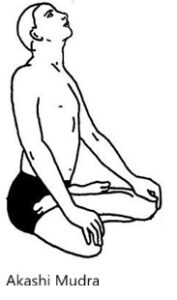
Akashi Mudrā is a subtle yogic hand gesture that works with the ether (space) element, similar to Ākāśa Mudrā. The name “Akashi” refers to one who belongs to or relates to space (ākāśa). This mudrā is often used in meditation and spiritual practices to awaken inner consciousness, dissolve limitations, and connect to the vastness of existence.
Unlike Ākāśa Mudrā, which is performed with thumb and middle finger, some traditions describe Akashi Mudrā as a gaze (drishti) and awareness mudrā that expands inner vision, especially by focusing awareness in the inner space of the head and heart. It is both a hand gesture and a mental practice for cultivating spaciousness and universal connection.
Meaning
Etymology:
Akashi = belonging to space, celestial, vast
Mudrā = seal, gesture, psychic attitude
Literal Meaning: “Gesture of Space Consciousness”
Symbolism: Represents freedom, openness, and universal expansion beyond the limits of body and mind.
How to Perform Practice
Akashi Mudra (awareness of inner space)
Sit in any comfortable meditation asana. Close the eyes and relax the whole body for a few minutes. Fold the tongue back against the palate in khechari mudra. Practice ujjayi pranayama and shambhavi mudra. Bend the head backward about 45 degrees.
Straighten the arms and lock the elbows, pressing the knees with the hands. Breathe slowly and deeply in ujjayi. Continue for as long as you feel comfortable.
End the practice by bending the elbows and releasing khechari and shambhavi mudras. Raise the head to the upright position. Resume normal breathing and be aware of the inner space.
Benefits
Physical Benefits
Improves ear health, supports hearing and balance disorders (tinnitus, vertigo).
Enhances bone strength by improving calcium absorption.
Boosts lung capacity and oxygenation.
Helps clear toxins and congestion.
Mental & Emotional Benefits
Reduces feelings of confinement, depression, or heaviness.
Enhances clarity, receptivity, and openness to new ideas.
Calms anxiety and overthinking by creating mental spaciousness.
Spiritual Benefits
Expands consciousness, deepens meditation.
Awakens inner vision (chidakasha dharana).
Promotes detachment from ego, connecting with universal self.
Helps in astral experiences and lucid awareness in yogic traditions.
Contraindications
Avoid over-practice, which can cause excessive detachment or disconnection.
Not recommended for individuals with severe dizziness or extreme light-headedness.
Should be balanced with grounding mudras if feelings of “emptiness” or weakness occur.
Anatomy & Physiology
Involves thumb (fire element, Agni) and middle finger (space element, Akasha).
Activates the auditory system, vestibular balance, and skeletal metabolism.
Stimulates cranial nerves and expands lung–thoracic cavity functions.
Kinesiology
Requires precise coordination of the thumb and middle finger.
Engages intrinsic hand muscles for subtle stability.
Encourages stillness and posture alignment through neuromuscular relaxation.
Neurology
Stimulates parietal and temporal lobes (space perception, auditory functions).
Activates parasympathetic nervous system → promotes relaxation.
Enhances alpha–theta brainwave states, useful for meditation and inner vision.
Strengthens neural circuits of spatial awareness and introspection.
Duration of Mudra
Beginners: 10–15 minutes daily.
Therapeutic: 30–45 minutes (can be split into 2–3 sessions).
Advanced meditation: Up to 1 hour with deep inner awareness.
Counter Mudra
Prithvi Mudrā (Earth Mudra) – balances excessive space element with grounding.
Apana Mudrā – supports elimination and grounding energy.
Conclusion
Akashi Mudrā is a powerful yogic hand and awareness gesture that expands the space element, cultivates inner clarity, and deepens spiritual consciousness. Physically, it supports ear health, bone strength, and detoxification. Mentally, it brings openness and calm. Spiritually, it connects the practitioner to the vast universal self. Like all mudrās, it should be practiced in balance and complemented with grounding practices when necessary.
FAQ
Q1. Is Akashi Mudra the same as Akasha Mudra?
They are closely related. Some traditions treat them as synonyms; others distinguish Akashi Mudra as having a stronger connection with chidakasha dharana (inner sky meditation).
Q2. Can it improve ear disorders?
Yes, it is traditionally prescribed for tinnitus, vertigo, and partial hearing issues.
Q3. Can beginners practice it?
Yes, but short sessions (5–10 minutes) are recommended at first.
Q4. Can I combine it with pranayama?
Yes, especially with Anulom Vilom or Ujjayi breathing for deeper awareness.
References
Swami Satyananda Saraswati – Asana, Pranayama, Mudra, Bandha
Gertrud Hirschi – Mudras: Yoga in Your Hands
Joseph & Lilian LePage – Mudras for Healing and Transformation
Dr. David Frawley – Ayurveda and the Mind
Tiwari, O.P. – Pranayama: The Breath of Yoga