
Apāna Mudrā
Introduction
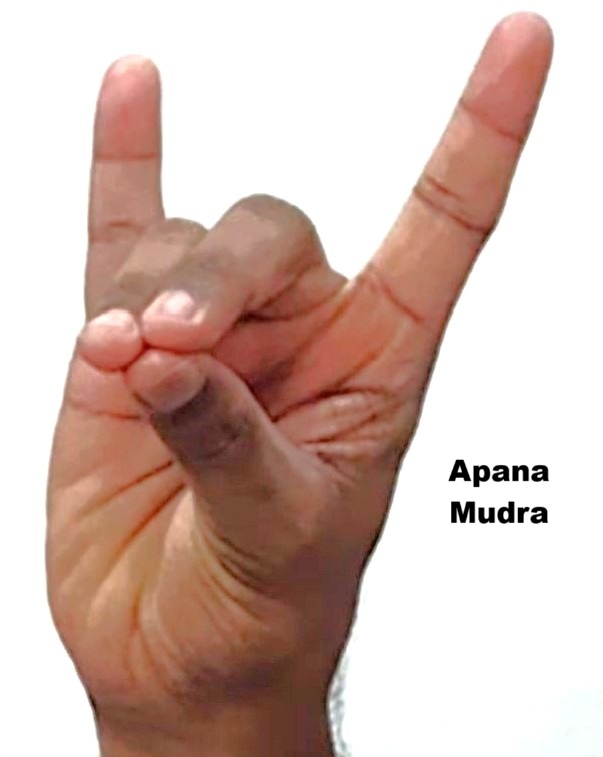
Apāna Mudrā is one of the most powerful hasta mudrās (hand gestures) in yoga, often referred to as the “mudrā of purification and elimination.” It is closely linked to the Apāna Vāyu, one of the five prānic forces responsible for the downward and outward flow of energy in the body. This mudrā plays a vital role in detoxification, reproductive health, and balancing lower-body energy.
In yogic philosophy, Apāna Mudrā is also considered a “life-saving mudrā” (mrityuñjaya mudrā) because it helps harmonize vital functions, particularly in emergency or critical conditions.
Meaning
Etymology:
Apāna = downward flowing vital energy.
Mudrā = seal, gesture, psychic lock.
Literal Meaning: “The gesture that regulates and directs the downward-moving energy of elimination and purification.”
Symbolism: Represents grounding, cleansing, and release of physical, emotional, and energetic toxins.
How to Perform Practice
Sit in a comfortable posture (Padmāsana, Vajrāsana, or Sukhasana) with spine erect.
Rest the hands on the knees or thighs.
Touch the tip of the thumb with the tips of the middle and ring fingers.
Keep the index finger and little finger extended but relaxed.
Maintain gentle pressure between the fingers.
Close the eyes, focus on deep breathing, and bring awareness to the lower abdomen and pelvic region.
Practice for 15–45 minutes daily, either at once or in 3 sessions of 15 minutes each.
Benefits
Physical Benefits
Stimulates Apāna Vāyu aiding excretion of toxins, sweat, urine, and feces.
Regulates menstrual cycles, reduces cramps, and supports reproductive health.
Improves digestion, relieves constipation, piles, and gastric discomfort.
Strengthens pelvic and lower abdominal organs.
Acts as a supportive practice during labor, aiding smooth childbirth.
Known as a “life-saving mudrā” during emergencies to stabilize energy flow.
Mental & Emotional Benefits
Promotes grounding and emotional stability.
Helps release suppressed emotions and mental clutter.
Creates a sense of safety, rootedness, and letting go.
Spiritual Benefits
Grounds excess energy, helping balance higher spiritual practices.
Activates the Mūlādhāra (root) chakra and Swādhiṣṭhāna (sacral) chakra.
Facilitates prāṇic cleansing, preparing for meditation.
Contraindications
Pregnant women should practice under guidance (beneficial during late pregnancy but should be avoided in the first trimester).
Should not be overdone by individuals with low blood pressure or severe weakness.
Not recommended immediately after surgery in abdominal or pelvic areas.
Anatomy & Physiology
Stimulates the excretory and reproductive systems.
Balances the autonomic nervous system by activating parasympathetic responses.
Enhances circulation in the pelvic floor muscles and lower abdomen.
Supports hormonal regulation through its effect on reproductive glands.
Kinesiology
Engages fine motor coordination of fingers (thumb with middle and ring fingers).
Promotes subtle activation of pelvic floor muscles through awareness and breath control.
Encourages proper posture and stability while seated.
Neurology
Calms the sympathetic nervous system, reducing stress responses.
Activates parasympathetic functions linked to digestion and elimination.
Enhances vagus nerve stimulation, promoting deep relaxation and gut health.
Improves communication between the brainstem and pelvic nerves (sacral plexus).
Duration of Mudra
Minimum: 15 minutes daily.
Optimal: 30–45 minutes daily (can be divided into 2–3 sessions).
In emergency or life-saving situations: practice continuously until relief is experienced.
Counter Mudra
Prāna Mudrā – to energize and revitalize after deep cleansing.
Ashwini Mudrā (perineal contraction) – can complement Apāna Mudrā for pelvic floor strengthening.
Conclusion
Apāna Mudrā is a powerful yogic gesture that harmonizes the downward-flowing Apāna energy, supporting detoxification, reproductive health, and grounding. Its practice provides physical cleansing, emotional release, and spiritual grounding. Recognized as a “life-saving mudrā,” it is one of the most important hasta mudrās in yoga therapy. When practiced regularly, it cultivates balance, stability, and purification at all levels of being.
FAQ
Q1. Why is Apāna Mudrā called the life-saving mudrā?
Because it balances vital energy in emergencies, supporting circulation, respiration, and excretion when the body is under shock or stress.
Q2. Can Apāna Mudrā be practiced during pregnancy?
Yes, under guidance. It helps during labor but should be avoided in the first trimester.
Q3. Which chakra does Apāna Mudrā activate most?
Primarily Mūlādhāra (Root) and Swādhiṣṭhāna (Sacral) chakras.
Q4. When is the best time to practice Apāna Mudrā?
Morning and evening, especially on an empty stomach, or whenever detoxification or grounding is needed.
References
Swami Satyananda Saraswati – Asana, Pranayama, Mudra, Bandha
Joseph & Lilian LePage – Mudras for Healing and Transformation
Swami Niranjanananda Saraswati – Yoga in Daily Life
Gertrud Hirschi – Mudras: Yoga in Your Hands
Georg Feuerstein – The Yoga Tradition