
Ahankar Mudrā
Introduction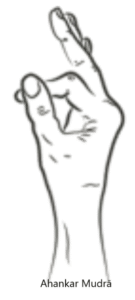
Ahankar Mudrā is a symbolic yogic hand gesture associated with the concept of ego (Ahankāra). In yogic psychology, Ahankāra means the “I-maker,” the sense of identity or ego that differentiates the self from others. While ego is necessary for survival and individuality, its excess can cause suffering, imbalance, and detachment from higher consciousness.
This mudrā is often practiced in mindfulness, meditation, and yoga therapy to observe, balance, and transcend ego-driven tendencies.
Meaning
- Etymology:
- Aham = I / Self
- Kāra = Maker / Doer
- Mudrā = Gesture or seal
- Literal Meaning: “Gesture of Ego” or “Seal of Identity.”
- Spiritual Significance: Represents the observation and control of ego, leading to humility, balance, and self-awareness.
How to Perform Practice
- Posture: Sit in a meditative position such as Sukhasana, Padmasana, or Vajrasana. Keep the spine upright.
- Bend index fingers slightly and put the upper phalanx of the thumb to the side of the middle phalanx of the index finger, at the upper part. Other fingers are straight.
- Placement: Rest the hands on the knees, palms facing upward.
- Breathing: Inhale deeply and exhale slowly with awareness.
- Awareness: Focus on the concept of “I” — observe the thoughts of ego without judgment, slowly cultivating detachment.
Benefits
Physical Benefits
- Helps release physical stress linked to overthinking or ego-driven anxiety.
- Calms heart rate and reduces psychosomatic tension.
- Supports healthy breathing and relaxation.
Mental & Emotional Benefits
- Balances the sense of self, reducing arrogance or inferiority.
- Promotes self-awareness, humility, and acceptance.
- Helps overcome anger, jealousy, pride, and competitiveness.
- Supports emotional healing in relationships by reducing ego clashes.
Spiritual Benefits
- Assists in transcending ego to reach higher states of consciousness.
- Enhances meditation, devotion, and surrender to universal energy.
- Facilitates self-realization by distinguishing between the ego-self and the true Self (Atman).
Contraindications
- Not recommended during phases of severe depression or dissociation (may cause confusion about identity if not guided).
- Should be avoided if the practitioner feels overly detached or disconnected from reality.
- Must be practiced with guidance if emotional trauma related to self-identity is present.
Anatomy & Physiology
- Works on the respiratory and cardiovascular systems by calming breath and heart rate.
- Balances the autonomic nervous system, reducing stress responses.
- Influences the pituitary gland and pineal gland, supporting higher awareness.
Kinesiology
- Involves flexion of the index finger and pressure by the thumb.
- Represents subordination of ego (index finger) to higher consciousness (thumb).
- Activates neuromuscular relaxation by positioning fingers in symbolic alignment.
Neurology
- Calms the sympathetic nervous system (fight or flight) and activates the parasympathetic system (rest and digest).
- Stimulates brain areas associated with self-perception and emotional regulation.
- Encourages neuroplasticity by reframing identity beyond egoic thought patterns.
Duration of Mudra
- Beginners: 5–10 minutes daily.
- Intermediate: 15–20 minutes.
- Advanced: Up to 30–45 minutes in meditation.
- Best practiced in silence, before or after meditation.
Counter Mudra
- Chin Mudrā (Gesture of Consciousness) – balances ego with awareness of higher Self.
- Hridaya Mudrā (Heart Gesture) – opens compassion to counteract ego-driven separation.
Conclusion
Ahankar Mudrā is a transformative hand gesture that brings awareness to the role of ego in daily life. By symbolically pressing the index finger (ego) under the thumb (higher self), it teaches humility, surrender, and balance. It is a valuable tool for personal growth, emotional regulation, and spiritual awakening. However, practitioners must approach it with mindfulness and avoid misuse when already struggling with identity-related issues.
FAQ
Q1. Is Ahankar Mudrā meant to remove ego completely?
No, it balances ego. Ego is necessary for individuality, but excessive ego causes suffering.
Q2. Can it be practiced with other mudrās?
Yes, especially with Chin Mudrā or Hridaya Mudrā for balancing self-awareness and compassion.
Q3. What is the best time to practice?
Morning meditation or evening reflection sessions.
Q4. Can beginners practice it without a teacher?
Yes, but deeper ego-related work is best guided by a yoga therapist or meditation teacher.
References
- Swami Satyananda Saraswati – Asana, Pranayama, Mudra, Bandha.
- Gertrud Hirschi – Mudras: Yoga in Your Hands.
- Joseph & Lilian LePage – Mudras for Healing and Transformation.
- Georg Feuerstein – The Yoga Tradition.
- Dr. David Frawley – Yoga and Ayurveda.