
Anjali Mudra (Gesture of prayer)

Anjali Mudra (Gesture of prayer) Introduction Atmanjali Mudrā is a sacred yogic hand gesture that embodies self-offering, reverence, and devotion. Derived from traditional yoga and devotional practices, it represents the unity of the individual self (Ātman) with the universal consciousness. This mudrā is commonly used in meditation, prayer, and pranayama, fostering inner calm, spiritual focus, and emotional balance. It is closely related to Anjali Mudrā (prayer position) but emphasizes the conscious surrender of the self, hence the name Atmanjali – “offering of the self.” Meaning Etymology: Ātman = self, soul, or inner consciousness. Anjali = offering, reverence, or salutation. Mudrā = seal or symbolic gesture. Literal Meaning: “Gesture of offering one’s self in reverence and surrender.” Symbolism: Represents humility, devotion, self-awareness, and alignment with higher consciousness. It is often performed as a greeting, a sign of respect, or during meditation to cultivate inner stillness. How to Perform Practice Sit in a comfortable meditative posture (Padmāsana, Sukhasana, or Vajrāsana) with the spine erect. Bring both palms together, flat against each other with all your fingers pointing upward. Bring your thumbs against your breastbone. Hold for as long as feels comfortable and repeat as required. Close the eyes and focus on the heart center, visualizing your energy and consciousness being offered in surrender. Maintain calm, steady breathing. Practice for 5–30 minutes, ideally during meditation or prayer sessions. Optional: Combine with mantra chanting or silent affirmation for enhanced spiritual connection. Benefits Physical Benefits Encourages upright posture and spinal alignment. Improves circulation in hands, wrists, and upper body. Relieves muscle tension in shoulders and chest. Mental & Emotional Benefits Cultivates calmness, emotional stability, and mindfulness. Enhances focus, concentration, and inner awareness. Reduces stress, anxiety, and mental clutter. Spiritual Benefits Promotes heart-centered awareness and devotion. Activates Anāhata Chakra (Heart Chakra), fostering love, compassion, and empathy. Strengthens the connection between individual consciousness and universal energy. Supports meditation, prayer, and spiritual discipline. Contraindications Generally safe for all practitioners. Avoid prolonged practice if wrist or shoulder pain occurs; support hands with a cushion if needed. Should be practiced with mindful attention, not as a mechanical gesture. Anatomy & Physiology Engages forearm, wrist, and hand muscles through gentle isometric contraction. Opens the chest, promoting lung expansion and oxygen intake. Stimulates parasympathetic nervous system, inducing relaxation and reducing stress response. Supports upper body alignment and joint stability. Kinesiology Involves bilateral symmetry of hands and arms, enhancing proprioception. Promotes postural stability while seated. Encourages coordination between hand placement and breath control. Enhances fine neuromuscular control of hands, wrists, and forearms. Neurology Activates the vagus nerve, supporting calm heart rate and respiratory rhythm. Stimulates prefrontal cortex for focus and emotional regulation. Balances limbic system activity, enhancing emotional clarity. Supports interhemispheric coordination through symmetrical hand placement. Duration of Mudra Beginners: 5–10 minutes daily. Intermediate: 10–20 minutes daily. Advanced: 20–30 minutes integrated with meditation or prayer. Counter Mudra Jnana Mudrā – to enhance receptivity and awareness after devotional focus. Hridaya Mudrā – to deepen heart-centered energy and emotional balance. Conclusion Atmanjali Mudrā is a profound gesture for self-offering, inner focus, and spiritual alignment. Physically, it supports posture and upper body circulation; mentally, it cultivates calmness and concentration; spiritually, it deepens heart-centered awareness and devotion. Regular practice nurtures humility, compassion, and connection to universal consciousness, making it a powerful tool in meditation, prayer, and yoga practice. FAQ Q1. How is Atmanjali Mudrā different from Anjali Mudrā?While both involve palms together at the heart, Atmanjali emphasizes conscious self-offering and inner surrender, whereas Anjali Mudrā is often a greeting or general gesture of respect. Q2. Which chakra does it primarily activate?Primarily Anāhata (Heart Chakra), with secondary benefits to Vishuddha (Throat Chakra) for expression of devotion. Q3. Can it be combined with meditation or mantra practice?Yes, combining it with mantras or silent affirmations enhances spiritual focus and energy flow. Q4. Is it safe for beginners?Yes, it is safe for all practitioners and can be performed daily with mindful attention. References Swami Satyananda Saraswati – Asana, Pranayama, Mudra, Bandha Joseph & Lilian LePage – Mudras for Healing and Transformation Swami Niranjanananda Saraswati – Yoga in Daily Life Georg Feuerstein – The Yoga Tradition Gertrud Hirschi – Mudras: Yoga in Your Hands
Apāna Mudrā
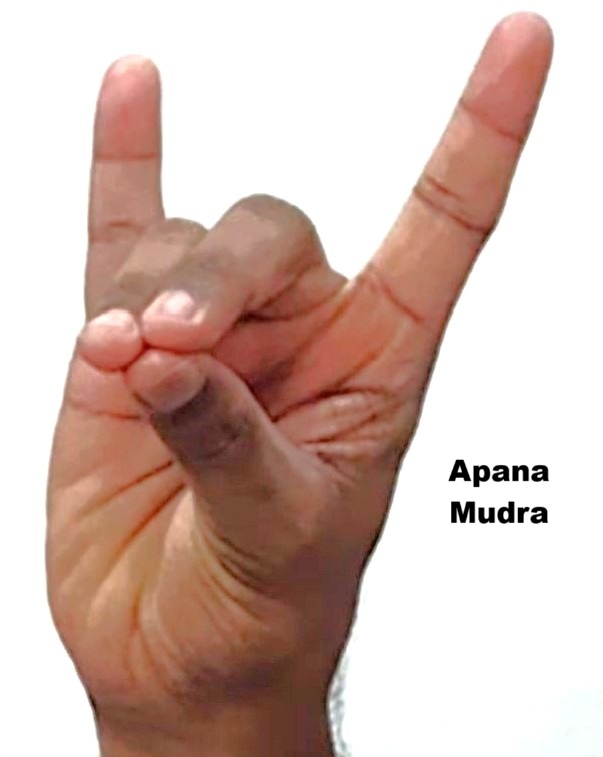
Apāna Mudrā Introduction Apāna Mudrā is one of the most powerful hasta mudrās (hand gestures) in yoga, often referred to as the “mudrā of purification and elimination.” It is closely linked to the Apāna Vāyu, one of the five prānic forces responsible for the downward and outward flow of energy in the body. This mudrā plays a vital role in detoxification, reproductive health, and balancing lower-body energy. In yogic philosophy, Apāna Mudrā is also considered a “life-saving mudrā” (mrityuñjaya mudrā) because it helps harmonize vital functions, particularly in emergency or critical conditions. Meaning Etymology: Apāna = downward flowing vital energy. Mudrā = seal, gesture, psychic lock. Literal Meaning: “The gesture that regulates and directs the downward-moving energy of elimination and purification.” Symbolism: Represents grounding, cleansing, and release of physical, emotional, and energetic toxins. How to Perform Practice Sit in a comfortable posture (Padmāsana, Vajrāsana, or Sukhasana) with spine erect. Rest the hands on the knees or thighs. Touch the tip of the thumb with the tips of the middle and ring fingers. Keep the index finger and little finger extended but relaxed. Maintain gentle pressure between the fingers. Close the eyes, focus on deep breathing, and bring awareness to the lower abdomen and pelvic region. Practice for 15–45 minutes daily, either at once or in 3 sessions of 15 minutes each. Benefits Physical Benefits Stimulates Apāna Vāyu aiding excretion of toxins, sweat, urine, and feces. Regulates menstrual cycles, reduces cramps, and supports reproductive health. Improves digestion, relieves constipation, piles, and gastric discomfort. Strengthens pelvic and lower abdominal organs. Acts as a supportive practice during labor, aiding smooth childbirth. Known as a “life-saving mudrā” during emergencies to stabilize energy flow. Mental & Emotional Benefits Promotes grounding and emotional stability. Helps release suppressed emotions and mental clutter. Creates a sense of safety, rootedness, and letting go. Spiritual Benefits Grounds excess energy, helping balance higher spiritual practices. Activates the Mūlādhāra (root) chakra and Swādhiṣṭhāna (sacral) chakra. Facilitates prāṇic cleansing, preparing for meditation. Contraindications Pregnant women should practice under guidance (beneficial during late pregnancy but should be avoided in the first trimester). Should not be overdone by individuals with low blood pressure or severe weakness. Not recommended immediately after surgery in abdominal or pelvic areas. Anatomy & Physiology Stimulates the excretory and reproductive systems. Balances the autonomic nervous system by activating parasympathetic responses. Enhances circulation in the pelvic floor muscles and lower abdomen. Supports hormonal regulation through its effect on reproductive glands. Kinesiology Engages fine motor coordination of fingers (thumb with middle and ring fingers). Promotes subtle activation of pelvic floor muscles through awareness and breath control. Encourages proper posture and stability while seated. Neurology Calms the sympathetic nervous system, reducing stress responses. Activates parasympathetic functions linked to digestion and elimination. Enhances vagus nerve stimulation, promoting deep relaxation and gut health. Improves communication between the brainstem and pelvic nerves (sacral plexus). Duration of Mudra Minimum: 15 minutes daily. Optimal: 30–45 minutes daily (can be divided into 2–3 sessions). In emergency or life-saving situations: practice continuously until relief is experienced. Counter Mudra Prāna Mudrā – to energize and revitalize after deep cleansing. Ashwini Mudrā (perineal contraction) – can complement Apāna Mudrā for pelvic floor strengthening. Conclusion Apāna Mudrā is a powerful yogic gesture that harmonizes the downward-flowing Apāna energy, supporting detoxification, reproductive health, and grounding. Its practice provides physical cleansing, emotional release, and spiritual grounding. Recognized as a “life-saving mudrā,” it is one of the most important hasta mudrās in yoga therapy. When practiced regularly, it cultivates balance, stability, and purification at all levels of being. FAQ Q1. Why is Apāna Mudrā called the life-saving mudrā?Because it balances vital energy in emergencies, supporting circulation, respiration, and excretion when the body is under shock or stress. Q2. Can Apāna Mudrā be practiced during pregnancy?Yes, under guidance. It helps during labor but should be avoided in the first trimester. Q3. Which chakra does Apāna Mudrā activate most?Primarily Mūlādhāra (Root) and Swādhiṣṭhāna (Sacral) chakras. Q4. When is the best time to practice Apāna Mudrā?Morning and evening, especially on an empty stomach, or whenever detoxification or grounding is needed. References Swami Satyananda Saraswati – Asana, Pranayama, Mudra, Bandha Joseph & Lilian LePage – Mudras for Healing and Transformation Swami Niranjanananda Saraswati – Yoga in Daily Life Gertrud Hirschi – Mudras: Yoga in Your Hands Georg Feuerstein – The Yoga Tradition
Akasha Mudrā
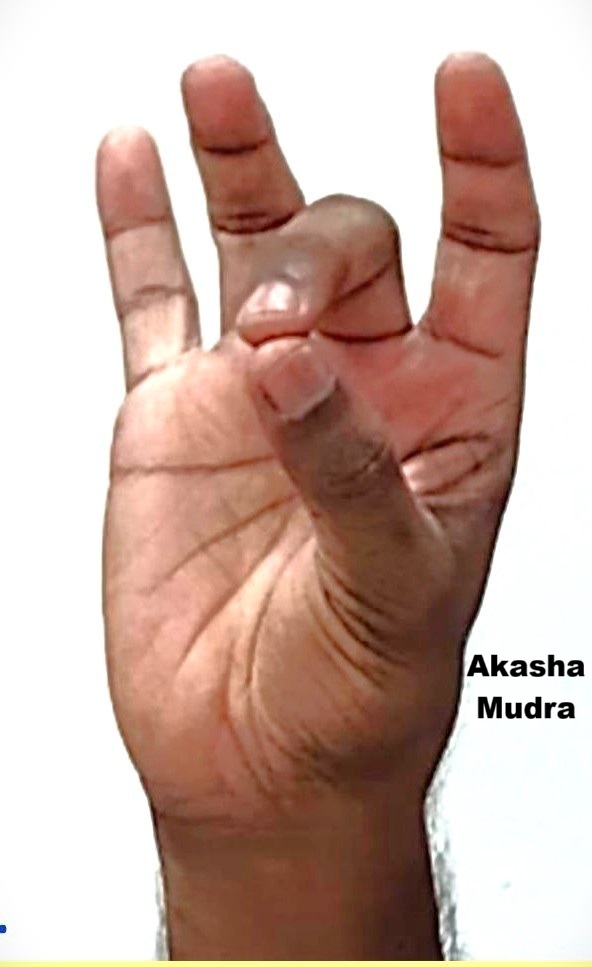
Akasha Mudrā Introduction Akasha Mudrā is a yogic hand gesture associated with the element of space (ether) in the Pancha Mahabhutas (five great elements). “Ākāsha” means sky, space, or ether, and this mudrā is used to balance the space element within the body and mind. It is also called the Mudrā of Consciousness because it promotes expansion, clarity, and spiritual awareness. This mudrā is often practiced in meditation and pranayama to increase mental space, inner freedom, and connection with higher consciousness. Meaning Etymology: Ākāsha = sky, space, ether Mudrā = seal, gesture Literal Meaning: “Gesture of Space” or “Seal of Ether.” Symbolism: Represents the vastness of the universe, openness, receptivity, and connection to the higher self. How to Perform Practice Sit in a meditative posture such as Padmāsana, Sukhasana, or Vajrasana. Spine upright and relaxed. Place the tip of the middle finger gently on the tip of the thumb. Keep the other three fingers (index, ring, little) extended but relaxed. Rest the hands on the knees with palms facing upward. Close your eyes, take slow deep breaths, and focus on the feeling of expansion and spaciousness inside. Practice for a set duration (5–30 minutes). Benefits Physical Benefits Improves hearing and helps ear-related problems (tinnitus, vertigo, partial hearing loss). Strengthens bones by improving calcium absorption. Enhances detoxification by clearing blockages in the body. Helps regulate metabolism and digestion. Mental & Emotional Benefits Creates a sense of inner space and freedom. Reduces feelings of heaviness, claustrophobia, or stagnation. Enhances clarity, creativity, and receptivity. Reduces anxiety and mental congestion. Spiritual Benefits Expands consciousness and opens spiritual awareness. Supports meditation, intuition, and connection with higher realms. Helps dissolve ego boundaries, allowing unity with universal consciousness. Contraindications Should be avoided in excessive practice, as too much space element may lead to disconnection, detachment, or dizziness. Not recommended for people who already experience excessive lightness, emptiness, or weakness. Pregnant women should consult a teacher before prolonged practice. Anatomy & Physiology Involves thumb (fire element) and middle finger (space element) connection. Stimulates cranial nerves and ear channels, aiding hearing function. Improves skeletal system health (calcium absorption, bone density). Expands lung capacity and improves oxygen exchange. Kinesiology Requires fine motor coordination of the thumb and middle finger. Activates muscles of the hand, forearm, and shoulders in subtle stabilization. Enhances proprioception by engaging fingers in symbolic gestures. Neurology Stimulates sensory pathways linked to the auditory cortex and vestibular system (balance, hearing). Activates parasympathetic nervous system promoting calmness. Encourages alpha and theta brain waves, aiding deep meditation. Supports neural circuits of spacious awareness and spiritual cognition. Duration of Mudra Minimum: 10–15 minutes daily. Therapeutic use: 30–45 minutes (can be divided into 2–3 sessions). For meditation: as long as one is comfortable. Counter Mudra Prithvi Mudrā (Earth Gesture) – balances excessive space element by grounding. Apana Mudrā – helps if Akasha mudra causes dizziness or excessive lightness. Conclusion Akasha Mudrā is a profound yogic practice that balances the ether element, enhances spiritual awareness, and promotes mental clarity and receptivity. Physically, it aids in ear health, bone strength, and detoxification. Mentally, it creates inner spaciousness, while spiritually, it connects the practitioner to universal consciousness. With mindful practice, it brings a sense of vastness and expansion into life, but it should be practiced in balance to avoid excessive lightness or detachment. FAQ Q1. Can Akasha Mudra improve hearing loss?Yes, it is traditionally believed to help ear-related issues, but it should be practiced consistently and with medical guidance for chronic conditions. Q2. Can beginners practice Akasha Mudra?Yes, it is simple and safe for beginners when practiced moderately. Q3. Can I practice it while walking or standing?It is best practiced in a seated meditative posture, though one can use it briefly in daily life. Q4. Is Akasha Mudra useful for meditation?Yes, it is one of the best mudrās for expanding consciousness and deepening meditation. References Swami Satyananda Saraswati – Asana, Pranayama, Mudra, Bandha Gertrud Hirschi – Mudras: Yoga in Your Hands Joseph & Lilian LePage – Mudras for Healing and Transformation Dr. David Frawley – Yoga and Ayurveda Tiwari, O.P. – Pranayama: The Breath of Yoga
Ājñā Mudrā
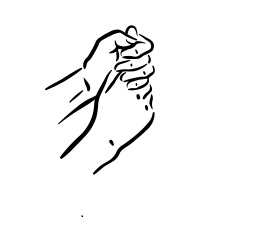
Ājñā Mudrā Introduction Ājñā Mudrā is a powerful yogic hand gesture and concentration technique linked with the Ājñā Chakra (the third eye center, located between the eyebrows). In Sanskrit, Ājñā means command, knowledge, or perception. This mudrā enhances inner guidance, intuition, and clarity of thought. It is used in meditation and spiritual practices to awaken awareness, balance the mind, and develop higher consciousness. Meaning Etymology: Ājñā = command, perception, authority, knowledge Mudrā = seal, gesture Literal meaning: “Gesture of Command/Perception.” Symbolism: Represents focusing one’s energy and awareness on the third eye to receive inner wisdom and higher guidance. How to Perform Practice Posture: Sit comfortably in Padmāsana, Siddhāsana, or Sukhasana with an upright spine. Raise your left hand in front of your face. Gently curl all the fingers of your left hand into the palm, making a loose fist with your thumb on the outside. Release your index finger and extend it upward. Bring the fingers of the right hand around the extended left index finger, using your right thumb to gently press on the outside edge of the nail. Eyes: Close the eyes and direct inner gaze (drishti) toward the space between the eyebrows. Breathing: Inhale deeply and exhale slowly, maintaining awareness at the third eye. Awareness: Concentrate on receiving guidance, clarity, or simply observe thoughts without attachment. Benefits Physical Benefits Relieves tension headaches and eye strain. Enhances relaxation by calming the nervous system. Improves concentration and memory. Mental & Emotional Benefits Develops intuition and decision-making power. Reduces confusion, doubt, and overthinking. Promotes inner balance, clarity, and mindfulness. Spiritual Benefits Activates the third eye (Ājñā Chakra). Supports meditation, visualization, and spiritual insight. Helps connect with higher consciousness and inner wisdom. Contraindications Not suitable for individuals with severe migraines if pressure at the third eye causes discomfort. Should be avoided in acute psychiatric conditions (hallucinations, delusions). Those with glaucoma or high eye pressure should not apply strong pressure at the eyebrow center. Pregnant women may practice it gently without excessive focus on chakra awakening. Anatomy & Physiology Influences the pituitary and pineal glands, regulating hormones and circadian rhythms. Stimulates the frontal cortex, responsible for concentration and decision-making. Calms the sympathetic nervous system, activating parasympathetic relaxation. Kinesiology Involves finger flexion, palmar contact, and gentle isometric pressure. The mudrā redirects prāna (life energy) from the periphery inward, centralizing awareness at the third eye. Symbolically unites left and right hemispheres of the brain through symmetrical hand positioning. Neurology Activates neural pathways of the prefrontal cortex and pineal gland, enhancing focus and intuitive perception. Encourages alpha and theta brain wave activity, supportive of meditation and creativity. Helps down-regulate the amygdala, reducing anxiety and fear-based responses. Duration of Mudra Beginners: 3–5 minutes with meditation. Intermediate: 10–15 minutes. Advanced: Up to 30 minutes in deep meditation or as part of kriyā yoga. Best practiced during early morning meditation or before sleep for clarity. Counter Mudra Chin Mudrā (Gesture of Consciousness) – balances intellect with higher awareness. Jnana Mudrā (Gesture of Knowledge) – grounds the wisdom accessed through Ājñā Mudrā. Conclusion Ājñā Mudrā is a sacred yogic gesture that awakens the inner eye of wisdom. By concentrating awareness at the third eye center, it cultivates intuition, clarity, and spiritual perception. Physically, it reduces stress and supports brain function; mentally, it enhances decision-making and inner calm; spiritually, it connects practitioners with higher consciousness. It must, however, be practiced mindfully and gently, especially for those sensitive to mental or eye-related issues. FAQ Q1. Is Ājñā Mudrā the same as third-eye meditation?It is a gesture that supports third-eye meditation, but can also be used independently with breath awareness. Q2. Can beginners safely practice it?Yes, but focus should remain gentle without forcing visualization or pressure. Q3. Does it open the third eye instantly?No, it gradually balances and activates the Ājñā Chakra with regular practice. Q4. Can it be combined with mantras?Yes, chanting Om while in Ājñā Mudrā deepens concentration and third-eye activation. References Swami Satyananda Saraswati – Asana, Pranayama, Mudra, Bandha Gertrud Hirschi – Mudras: Yoga in Your Hands Swami Niranjanananda – Prana and Pranayama Georg Feuerstein – The Yoga Tradition Joseph & Lilian LePage – Mudras for Healing and Transformation
Ahankar Mudrā
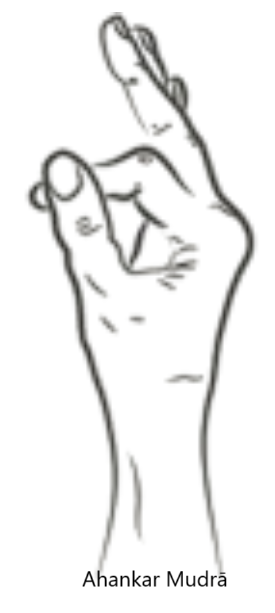
Ahankar Mudrā Introduction Ahankar Mudrā is a symbolic yogic hand gesture associated with the concept of ego (Ahankāra). In yogic psychology, Ahankāra means the “I-maker,” the sense of identity or ego that differentiates the self from others. While ego is necessary for survival and individuality, its excess can cause suffering, imbalance, and detachment from higher consciousness. This mudrā is often practiced in mindfulness, meditation, and yoga therapy to observe, balance, and transcend ego-driven tendencies. Meaning Etymology: Aham = I / Self Kāra = Maker / Doer Mudrā = Gesture or seal Literal Meaning: “Gesture of Ego” or “Seal of Identity.” Spiritual Significance: Represents the observation and control of ego, leading to humility, balance, and self-awareness. How to Perform Practice Posture: Sit in a meditative position such as Sukhasana, Padmasana, or Vajrasana. Keep the spine upright. Bend index fingers slightly and put the upper phalanx of the thumb to the side of the middle phalanx of the index finger, at the upper part. Other fingers are straight. Placement: Rest the hands on the knees, palms facing upward. Breathing: Inhale deeply and exhale slowly with awareness. Awareness: Focus on the concept of “I” — observe the thoughts of ego without judgment, slowly cultivating detachment. Benefits Physical Benefits Helps release physical stress linked to overthinking or ego-driven anxiety. Calms heart rate and reduces psychosomatic tension. Supports healthy breathing and relaxation. Mental & Emotional Benefits Balances the sense of self, reducing arrogance or inferiority. Promotes self-awareness, humility, and acceptance. Helps overcome anger, jealousy, pride, and competitiveness. Supports emotional healing in relationships by reducing ego clashes. Spiritual Benefits Assists in transcending ego to reach higher states of consciousness. Enhances meditation, devotion, and surrender to universal energy. Facilitates self-realization by distinguishing between the ego-self and the true Self (Atman). Contraindications Not recommended during phases of severe depression or dissociation (may cause confusion about identity if not guided). Should be avoided if the practitioner feels overly detached or disconnected from reality. Must be practiced with guidance if emotional trauma related to self-identity is present. Anatomy & Physiology Works on the respiratory and cardiovascular systems by calming breath and heart rate. Balances the autonomic nervous system, reducing stress responses. Influences the pituitary gland and pineal gland, supporting higher awareness. Kinesiology Involves flexion of the index finger and pressure by the thumb. Represents subordination of ego (index finger) to higher consciousness (thumb). Activates neuromuscular relaxation by positioning fingers in symbolic alignment. Neurology Calms the sympathetic nervous system (fight or flight) and activates the parasympathetic system (rest and digest). Stimulates brain areas associated with self-perception and emotional regulation. Encourages neuroplasticity by reframing identity beyond egoic thought patterns. Duration of Mudra Beginners: 5–10 minutes daily. Intermediate: 15–20 minutes. Advanced: Up to 30–45 minutes in meditation. Best practiced in silence, before or after meditation. Counter Mudra Chin Mudrā (Gesture of Consciousness) – balances ego with awareness of higher Self. Hridaya Mudrā (Heart Gesture) – opens compassion to counteract ego-driven separation. Conclusion Ahankar Mudrā is a transformative hand gesture that brings awareness to the role of ego in daily life. By symbolically pressing the index finger (ego) under the thumb (higher self), it teaches humility, surrender, and balance. It is a valuable tool for personal growth, emotional regulation, and spiritual awakening. However, practitioners must approach it with mindfulness and avoid misuse when already struggling with identity-related issues. FAQ Q1. Is Ahankar Mudrā meant to remove ego completely?No, it balances ego. Ego is necessary for individuality, but excessive ego causes suffering. Q2. Can it be practiced with other mudrās?Yes, especially with Chin Mudrā or Hridaya Mudrā for balancing self-awareness and compassion. Q3. What is the best time to practice?Morning meditation or evening reflection sessions. Q4. Can beginners practice it without a teacher?Yes, but deeper ego-related work is best guided by a yoga therapist or meditation teacher. References Swami Satyananda Saraswati – Asana, Pranayama, Mudra, Bandha. Gertrud Hirschi – Mudras: Yoga in Your Hands. Joseph & Lilian LePage – Mudras for Healing and Transformation. Georg Feuerstein – The Yoga Tradition. Dr. David Frawley – Yoga and Ayurveda.
Agni Mudrā

Agni Mudrā Introduction Agni Mudrā (also known as Agni Vardhak Mudrā or Fire Gesture) is a yogic hand gesture associated with the fire element (Agni Mahabhuta). In yogic philosophy, Agni represents digestion, transformation, energy, vitality, and metabolism. Practicing this mudrā stimulates the digestive fire (Jatharagni), enhances vitality, and promotes inner strength. It is widely used in yoga therapy for improving digestion, metabolism, and energy regulation. Meaning Etymology: Agni = Fire, energy, transformation. Mudrā = Gesture, seal, or attitude. Symbolic Meaning: Represents the ignition of the inner fire, essential for digestion and life force. Spiritual Meaning: Awakens willpower, determination, and inner radiance, burning away laziness and negativity. How to Perform Practice Posture: Sit in a comfortable meditative position (Sukhasana, Padmasana, or Vajrasana) with a straight spine. By folding the ring finger at the base of thumb and pressing it with the thumb at the second phalange. Keep the rest of the three fingers straight and perform it in sitting position only. Awareness: Concentrate on the solar plexus (Manipura Chakra) to activate the fire element. Benefits Physical Benefits Improves digestion and metabolism. Reduces problems of indigestion, gas, and constipation. Helps regulate body temperature and maintains warmth. Supports weight management by stimulating fat metabolism. Mental & Emotional Benefits Increases alertness, energy, and willpower. Helps overcome sluggishness, dullness, and lethargy. Promotes clarity, motivation, and enthusiasm. Spiritual Benefits Activates Manipura Chakra (Solar Plexus), the center of energy and transformation. Burns away inner negativity and enhances spiritual radiance (Tejas). Prepares the mind for meditation and higher awareness. Contraindications Should be avoided in fever, acidity, heartburn, ulcers, or excess pitta conditions. Not recommended for individuals with high blood pressure or inflammatory disorders. Avoid excessive practice in hot climates or summers. Anatomy & Physiology Organs Affected: Stomach, intestines, liver, pancreas, and digestive glands. Physiological Effects: Stimulates digestive enzymes and improves assimilation of nutrients. Regulates metabolism and enhances circulatory warmth. Balances endocrine activity in the pancreas and adrenal glands. Kinesiology Involves flexion of the ring finger and pressure from the thumb. Symbolically reduces earth element (heaviness) while increasing fire element (energy, heat). Encourages abdominal muscle activity through conscious breathing. Neurology Stimulates the enteric nervous system (gut-brain connection). Calms the vagus nerve, improving parasympathetic activity for digestion. Activates brain centers linked to alertness, motivation, and willpower. Duration of Mudra Beginners: 5 minutes daily after meals. Intermediate: 15–20 minutes. Advanced: Up to 30–45 minutes, divided into sessions. Best practiced on an empty stomach in the morning. Counter Mudra Varun Mudrā (Water gesture) – to balance excess fire or pitta conditions. Prithvi Mudrā (Earth gesture) – for grounding and stability. Conclusion Agni Mudrā is a powerful hand gesture for activating the fire element, improving digestion, boosting metabolism, and enhancing vitality. It awakens the Manipura Chakra, cultivating energy, determination, and transformation. When practiced moderately, it supports physical health, mental clarity, and spiritual illumination. However, care should be taken by those with excess pitta or heat-related conditions. FAQ Q1. Can Agni Mudrā help with weight loss?Yes, it stimulates metabolism and fat digestion, supporting weight management. Q2. Is it safe to practice daily?Yes, but avoid during fever, acidity, or inflammation. Q3. What is the best time to practice?Morning on an empty stomach, or after meals for digestion. Q4. Can it be combined with pranayama?Yes, especially with Kapalabhati or Bhastrika, but only under guidance. References Swami Satyananda Saraswati – Asana, Pranayama, Mudra, Bandha. Gertrud Hirschi – Mudras: Yoga in Your Hands. Joseph & Lilian LePage – Mudras for Healing and Transformation. Dr. H. R. Nagendra – Yoga Therapy. Tiwari, O.P. – Pranayama: The Breath of Yoga.
Agni Mudrā

Agni Mudrā Introduction Agni Mudrā (also known as Agni Vardhak Mudrā or Fire Gesture) is a yogic hand gesture associated with the fire element (Agni Mahabhuta). In yogic philosophy, Agni represents digestion, transformation, energy, vitality, and metabolism. Practicing this mudrā stimulates the digestive fire (Jatharagni), enhances vitality, and promotes inner strength. It is widely used in yoga therapy for improving digestion, metabolism, and energy regulation. Meaning Etymology: Agni = Fire, energy, transformation. Mudrā = Gesture, seal, or attitude. Symbolic Meaning: Represents the ignition of the inner fire, essential for digestion and life force. Spiritual Meaning: Awakens willpower, determination, and inner radiance, burning away laziness and negativity. How to Perform Practice Posture: Sit in a comfortable meditative position (Sukhasana, Padmasana, or Vajrasana) with a straight spine. Right hand makes a fist with the thumb pointing straight up. Left hand – open your hand, with the palm facing up. Place your right fist on your left palm and, maintaining this position, rest both hands in your lap. Breathing: Inhale deeply, exhale slowly, maintaining awareness on the navel region. Awareness: Concentrate on the solar plexus (Manipura Chakra) to activate the fire element. Benefits Physical Benefits Improves digestion and metabolism. Reduces problems of indigestion, gas, and constipation. Helps regulate body temperature and maintains warmth. Supports weight management by stimulating fat metabolism. Mental & Emotional Benefits Increases alertness, energy, and willpower. Helps overcome sluggishness, dullness, and lethargy. Promotes clarity, motivation, and enthusiasm. Spiritual Benefits Activates Manipura Chakra (Solar Plexus), the center of energy and transformation. Burns away inner negativity and enhances spiritual radiance (Tejas). Prepares the mind for meditation and higher awareness. Contraindications Should be avoided in fever, acidity, heartburn, ulcers, or excess pitta conditions. Not recommended for individuals with high blood pressure or inflammatory disorders. Avoid excessive practice in hot climates or summers. Anatomy & Physiology Organs Affected: Stomach, intestines, liver, pancreas, and digestive glands. Physiological Effects: Stimulates digestive enzymes and improves assimilation of nutrients. Regulates metabolism and enhances circulatory warmth. Balances endocrine activity in the pancreas and adrenal glands. Kinesiology Involves flexion of the ring finger and pressure from the thumb. Symbolically reduces earth element (heaviness) while increasing fire element (energy, heat). Encourages abdominal muscle activity through conscious breathing. Neurology Stimulates the enteric nervous system (gut-brain connection). Calms the vagus nerve, improving parasympathetic activity for digestion. Activates brain centers linked to alertness, motivation, and willpower. Duration of Mudra Beginners: 5 minutes daily after meals. Intermediate: 15–20 minutes. Advanced: Up to 30–45 minutes, divided into sessions. Best practiced on an empty stomach in the morning. Counter Mudra Varun Mudrā (Water gesture) – to balance excess fire or pitta conditions. Prithvi Mudrā (Earth gesture) – for grounding and stability. Conclusion Agni Mudrā is a powerful hand gesture for activating the fire element, improving digestion, boosting metabolism, and enhancing vitality. It awakens the Manipura Chakra, cultivating energy, determination, and transformation. When practiced moderately, it supports physical health, mental clarity, and spiritual illumination. However, care should be taken by those with excess pitta or heat-related conditions. FAQ Q1. Can Agni Mudrā help with weight loss?Yes, it stimulates metabolism and fat digestion, supporting weight management. Q2. Is it safe to practice daily?Yes, but avoid during fever, acidity, or inflammation. Q3. What is the best time to practice?Morning on an empty stomach, or after meals for digestion. Q4. Can it be combined with pranayama?Yes, especially with Kapalabhati or Bhastrika, but only under guidance. References Swami Satyananda Saraswati – Asana, Pranayama, Mudra, Bandha. Gertrud Hirschi – Mudras: Yoga in Your Hands. Joseph & Lilian LePage – Mudras for Healing and Transformation. Dr. H. R. Nagendra – Yoga Therapy. Tiwari, O.P. – Pranayama: The Breath of Yoga.
Aditi Mudrā
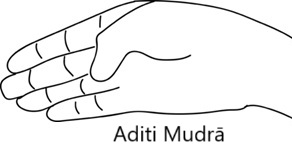
Aditi Mudrā Introduction Aditi Mudrā is a sacred hasta mudrā (hand gesture) named after the Vedic goddess Aditi, considered the Mother of the Gods (Devas) and the personification of infinite space and cosmic abundance. Aditi is associated with limitlessness, protection, and nurturing energy. Practicing this mudrā connects the practitioner with expansiveness, openness, and the nurturing quality of the divine mother. This mudrā is often practiced in meditation, pranayama, and devotional yoga to invoke spaciousness, compassion, and freedom from limitations. Meaning Etymology: Aditi = “Boundless,” “Limitless,” “Infinite Mother.” Mudrā = gesture, seal, or attitude. Symbolic Meaning: Represents the cosmic womb of creation and the nurturing, protective power of the divine mother. Spiritual Meaning: By practicing Aditi Mudrā, one invokes qualities of openness, liberation, protection, and abundance. How to Perform Practice Seated Posture: Sit in Padmāsana, Sukhasana, or Vajrasana with a straight spine. Place the thumb end on the base of the ring finger. Anamika represents Prithvi (earth) and thumb represents fire (Agni). When the finger touches the base of the ring finger, the earth rises and also the fire element. Breathing: Practice slow, deep, rhythmic breaths. Inhale with the sense of openness, exhale with release of limitations. Awareness: Focus on expansiveness, compassion, and the quality of nurturing protection. Duration: Hold for 5–20 minutes in meditation or pranayama. Benefits Physical Benefits Opens the chest and improves lung capacity. Encourages deeper breathing and oxygen exchange. Relaxes the muscles of the shoulders and chest. Mental & Emotional Benefits Enhances feelings of openness, trust, and receptivity. Reduces stress, fear, and insecurity. Promotes emotional nurturing and self-acceptance. Spiritual Benefits Connects the practitioner to divine mother energy (Shakti). Enhances meditation by invoking limitlessness and cosmic space. Helps in healing practices by radiating compassion and protective energy. Contraindications No major physical contraindications. Should be avoided in situations of emotional hypersensitivity if it leads to feelings of overwhelm. Those experiencing extreme anxiety may prefer grounding mudrās (like Prithvi Mudrā) before moving to Aditi Mudrā. Anatomy & Physiology Organs Affected: Lungs, heart, diaphragm. Physiological Effects: Expands thoracic cavity, improving lung ventilation. Activates parasympathetic response through calm breathing. Stimulates heart chakra region, influencing cardiovascular and respiratory efficiency. Kinesiology Involves finger abduction (spreading of thumb and index) and palmar connection (palms touching). Encourages external rotation of shoulders and opening of chest cavity. Promotes balance between flexor and extensor muscles of the arms. Neurology Activates neural pathways connected with safety, compassion, and maternal connection. Calms the sympathetic nervous system, shifting toward parasympathetic dominance. Engages limbic system centers related to emotional regulation and bonding. Duration of Mudra Beginners: 5 minutes daily. Intermediate: 10–15 minutes. Advanced: Up to 30 minutes in meditation or healing practices. Counter Mudra Prithvi Mudrā (Earth gesture) – for grounding and stability. Hridaya Mudrā – for emotional healing and heart opening. Conclusion Aditi Mudrā is a gesture of openness, nurturance, and infinite space, honoring the boundless quality of the cosmic mother. It expands the chest, calms the mind, and nourishes the heart. Practicing this mudrā cultivates compassion, trust, and freedom from limitations, making it especially beneficial for meditation, healing, and devotional yoga. When combined with grounding mudrās, it balances expansiveness with stability. FAQ Q1. What is the best time to practice Aditi Mudrā?Morning meditation or before sleep to invoke calmness and openness. Q2. Can Aditi Mudrā help with emotional healing?Yes, it helps release fear, insecurity, and emotional blockages by invoking nurturing qualities. Q3. Can it be practiced during pranayama?Yes, especially with deep breathing practices to enhance lung capacity and heart activation. Q4. Is Aditi Mudrā only spiritual?No, it also has physical and psychological benefits, especially for stress reduction and chest opening. References Swami Satyananda Saraswati – Asana, Pranayama, Mudra, Bandha. Gertrud Hirschi – Mudras: Yoga in Your Hands. Joseph & Lilian LePage – Mudras for Healing and Transformation. B.K.S. Iyengar – Light on Yoga. Tiwari, O.P. – Pranayama: The Breath of Yoga.
Adho Mukha Mudrā

Adho Mukha Mudrā Introduction Adho Mukha Mudrā (downward-facing gesture) is a lesser-known yogic hand and body gesture symbolizing humility, surrender, grounding, and devotion. While “Adho Mukha” is widely recognized in asana names (e.g., Adho Mukha Svanasana – Downward-Facing Dog Pose), in mudrā practice, it refers to a gesture where the palms face downward, directing prāṇa (vital energy) into the earth. This mudrā embodies rooting, stability, and surrender of the ego, making it particularly effective for grounding and calming an overactive mind. Meaning Etymology: Adho = downward. Mukha = face, direction. Mudrā = seal, gesture, mark. Philosophical Meaning: Symbolizes bowing to the earth, surrendering mental restlessness and grounding energy. Symbolism: By facing the palms down, the practitioner channels energy from the subtle body into the earth, creating stability, calmness, and humility. How to Perform Practice Posture: Sit in Sukhasana (easy pose) or Vajrasana. Spine tall, shoulders relaxed. With both palms facing downward, bend your fingers and bring the backs of your fingers together as you extend and join the tips of your thumbs. Awareness: Focus on the Muladhara Chakra (root center). Imagine energy flowing downward into the earth. Breathwork: Inhale deeply, exhale with a sense of grounding and surrender. Duration: Practice 10–20 minutes in meditation or pranayama sessions. Benefits Physical Benefits Stabilizes posture and reduces fidgeting. Encourages deeper diaphragmatic breathing. Helps balance blood pressure and calm heart rate. Mental & Emotional Benefits Provides a sense of safety, grounding, and stability. Reduces anxiety, overthinking, and excessive “airiness.” Encourages humility and surrender of ego. Spiritual Benefits Grounds prāṇa into the physical body. Activates Muladhara Chakra, strengthening the foundation for higher practices. Supports meditative absorption (dhyāna) by reducing restlessness. Contraindications Not recommended if the practitioner feels overly heavy, lethargic, or depressed (as downward energy may increase dullness). Should be avoided in cases of severe hypotension (very low blood pressure). Those with trauma associated with submission may need guided practice. Anatomy & Physiology Organs Affected: Lungs, diaphragm, heart (indirectly through calming breath). Systems Influenced: Nervous system (parasympathetic dominance), musculoskeletal (postural stabilization). Physiological Effects: Downward palms activate grounding reflex, stabilizing autonomic functions. Kinesiology Involves pronation of forearms (palms down). Engages flexors of the wrist lightly while keeping shoulders relaxed. Promotes stability in the pelvic floor and spine through grounding effect. Neurology Stimulates somatosensory pathways linked with palm-down pressure. Encourages calming neural activity, shifting from sympathetic (“fight/flight”) to parasympathetic (“rest/digest”). Promotes alpha brainwave activity → relaxation and mindfulness. Duration of Mudra Beginners: 5–10 minutes during meditation. Intermediate: 15–20 minutes daily. Advanced: Up to 30 minutes in long meditation or pranayama practice. Counter Mudra Urdhva Mukha Mudrā (palms facing upward) – balances openness and receptivity when too much grounding causes heaviness. Jnana Mudrā – for mental clarity if Adho Mukha induces excessive passivity. Conclusion Adho Mukha Mudrā is a grounding, stabilizing gesture that channels prāṇa downward, cultivating humility, surrender, and calmness. It harmonizes the root chakra, reduces anxiety, and strengthens the foundation for meditation. Best practiced when one feels restless, anxious, or ungrounded, this mudrā brings a sense of inner stability and connection with the earth. FAQ Q1. Is Adho Mukha Mudrā the same as Adho Mukha Svanasana?No, the asana is a physical posture, while the mudrā is a hand gesture used in meditation. Q2. Can this mudrā be practiced while standing?Yes, simply keep arms relaxed by your sides with palms facing downward. Q3. Can it help with insomnia?Yes, it grounds excess mental energy, which may support better sleep. Q4. When should I avoid this mudrā?When feeling dull, depressed, or overly heavy, as it increases downward/earth energy. References Swami Satyananda Saraswati – Asana, Pranayama, Mudra, Bandha. Joseph & Lilian Lepage – Mudras for Healing and Transformation. T.K.V. Desikachar – The Heart of Yoga. B.K.S. Iyengar – Light on Yoga. Contemporary yoga therapy manuals on grounding and mudrā practices.
Adhi Mudrā
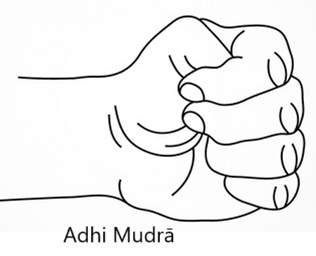
Adhi Mudrā Introduction Adhi Mudrā is one of the classic hasta mudrās (hand gestures) described in yogic tradition. It is a gesture of primal silence and inwardness, often practiced in meditation and pranayama. The term Adhi means “first” or “primordial,” symbolizing the original state of consciousness before thought. By curling the thumb into the palm and covering it with the fingers, Adhi Mudrā represents retreating inward, withdrawing from external distractions, and returning to the self. Meaning Etymology: Adhi = first, primordial, original. Mudrā = seal, gesture, or attitude. Philosophical Meaning: Represents returning to the primordial stillness of the mind before ego and thought arise. Symbolism: Closing the thumb (ego/will) within the fist symbolizes surrender of individual control to higher consciousness. How to Perform Practice Seated Posture: Sit in Padmāsana, Sukhasana, or Vajrasana. Spine straight, shoulders relaxed. In the Adi Mudra, the thumb is placed at the base of the little finger and the remaining fingers curl over the thumb, forming a light fist. The palms are again placed upward on the thighs and exhale repeatedly. Breathing: Practice slow, deep diaphragmatic breathing or ujjayi pranayama. Awareness: Direct attention inward, especially at the Ajna Chakra (third eye) or Anahata (heart center). Duration: Maintain for 5–20 minutes during meditation or pranayama. Benefits Physical Benefits Promotes deeper, slower breathing. Improves oxygen intake and circulation. Relaxes the nervous system, reducing muscle tension. Mental & Emotional Benefits Induces calmness and serenity. Reduces stress, anxiety, and restlessness. Promotes introversion and mental clarity. Spiritual Benefits Encourages pratyāhāra (withdrawal of the senses). Helps enter deeper meditative states. Symbolizes surrender of ego to the higher Self. Contraindications Not suitable for those with severe depression or extreme lethargy, as it may increase inward withdrawal. Avoid if feeling overly isolated or emotionally closed. Should be practiced in balance with more expansive mudras (like Jnana or Urdhva Mukha). Anatomy & Physiology Organs Affected: Lungs, diaphragm, heart. Physiological Effects: By reducing sensory stimulation (palms downward, fist closed), it encourages parasympathetic dominance. Promotes deeper exhalation, activating vagus nerve pathways for relaxation. Kinesiology Involves flexion of the thumb into the palm and flexion of the fingers over the thumb. Shoulder and arm muscles relax as fists rest on thighs/knees. Supports a forward grounding of energy toward the pelvis and earth. Neurology Activates the parasympathetic nervous system (calming response). Reduces beta-wave activity, encouraging alpha and theta states (deep relaxation, meditation). Symbolically suppresses the ego-driven neural activity (represented by the thumb enclosed within fingers). Duration of Mudra Beginners: 5 minutes. Intermediate: 10–15 minutes. Advanced: Up to 30 minutes during meditation or pranayama. Counter Mudra Jnana Mudrā (gesture of knowledge) – balances inward withdrawal with wisdom and openness. Urdhva Mukha Mudrā – restores expansiveness and receptivity. Conclusion Adhi Mudrā is a primordial hand gesture symbolizing the return to silence and the womb of consciousness. By folding the thumb within the fist, one symbolically surrenders ego and control, turning awareness inward. It calms the nervous system, deepens the breath, and supports meditation. However, for balance, it should be practiced alongside more expansive and uplifting mudras to avoid excessive introversion. FAQ Q1. What is the best time to practice Adhi Mudrā?Early morning or evening, during meditation or pranayama. Q2. Does Adhi Mudrā improve breathing?Yes, it encourages diaphragmatic breathing and increases lung efficiency. Q3. Can it be practiced while lying down?It is best in a seated posture, but can be done lying down for relaxation. Q4. Is Adhi Mudrā good for anxiety?Yes, it activates parasympathetic relaxation, reducing stress and anxiety. References Swami Satyananda Saraswati – Asana, Pranayama, Mudra, Bandha. Gertrud Hirschi – Mudras: Yoga in Your Hands. Joseph & Lilian LePage – Mudras for Healing and Transformation. B.K.S. Iyengar – Light on Yoga. Mark Stephens – Yoga Sequencing.