
Linga Mudra
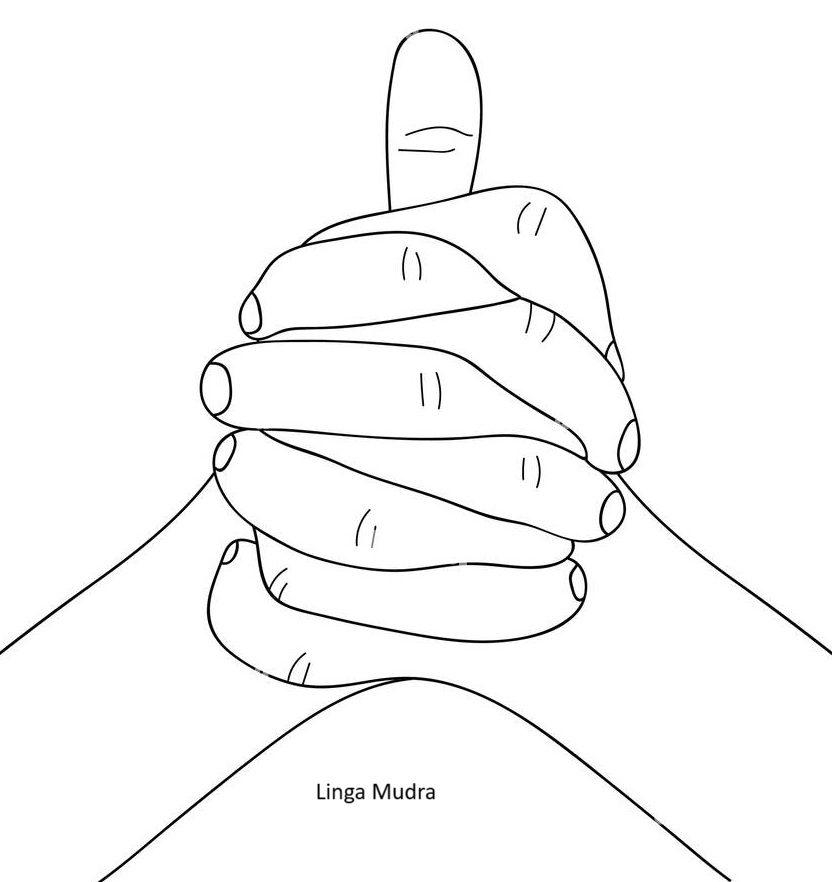
Linga Mudra Introduction Linga Mudra is a powerful hand gesture in yoga and Ayurveda that symbolizes the union of masculine and feminine energies and represents Lord Shiva (the cosmic masculine principle). It is considered a heating mudra, often practiced to boost vitality, inner strength, immunity, and energy. This mudra harnesses the fire element (Agni Tattva) and is especially recommended during cold weather, low energy states, or conditions where increased metabolic activity is beneficial. Meaning Linga in Sanskrit means phallus, symbol of Shiva, and creative cosmic energy. This mudra represents heat, power, and transformation. It is also called the Mudra of Heat as it generates internal warmth and enhances the fire element. How to Perform (Practice) Sit comfortably in a meditative posture (Padmasana, Sukhasana, or Vajrasana). Keep the spine erect. Interlock the fingers of both hands, palms pressed together. Keep the left thumb upright, encircled by the right thumb and right index finger. Relax the shoulders and keep the hands near the chest or in the lap. Close the eyes and breathe deeply and slowly. Focus on the sensations of warmth and energy building within. Benefits Physical Benefits Increases body heat, useful in cold weather. Boosts immunity and strengthens defense against infections. Helpful in colds, cough, asthma, bronchitis, and sinus issues. Stimulates digestion and metabolism. Promotes weight loss by enhancing fat metabolism. Mental & Emotional Benefits Increases confidence and willpower. Reduces lethargy and depression. Enhances inner strength, motivation, and enthusiasm. Spiritual Benefits Awakens inner energy (Agni/Tejas). Symbolizes devotion to Lord Shiva, bringing balance of masculine energy. Encourages transformation and purification. Contraindications Avoid in hot weather or when body heat is already high. Not suitable for people with fever, hypertension, gastritis, ulcers, hyperthyroidism, or excessive Pitta dosha. Should not be practiced for long durations without guidance. Pregnant women should avoid prolonged practice. Anatomy & Physiology Elemental Association: Fire (Agni Tattva). Physiological Impact: Stimulates sympathetic nervous system. Increases blood circulation and metabolic rate. Enhances heat production (thermogenesis). Supports respiratory system by dilating air passages. Kinesiology Involves isometric contraction of hand muscles by interlocking fingers. Provides stabilization and balance in hand muscles, particularly the flexors and extensors. Helps activate meridians (energy channels) linked with lung and digestive organs. Neurology Stimulates the hypothalamus, regulating body temperature and metabolic processes. Activates parasympathetic tone initially, then enhances sympathetic drive for energy mobilization. Influences the limbic system, creating motivation and emotional strength. Duration of Practice Practice 15–20 minutes daily, preferably in three short sessions (5–7 minutes each). Avoid overdoing as it can create excess heat and imbalance. Counter Mudra To balance the heat of Linga Mudra, practice: Varun Mudra (for water element & cooling). Prana Mudra (restores vitality). Chin Mudra (for relaxation). Conclusion Linga Mudra is a highly energizing and heat-generating mudra that enhances inner strength, immunity, and metabolism. Rooted in the symbolism of Lord Shiva, it transforms lethargy into vitality. However, it must be practiced with caution, especially for those prone to excess heat, high blood pressure, or Pitta imbalance. Balanced practice, awareness, and complementary cooling mudras ensure its safe and effective application. FAQ Q1. Can Linga Mudra help in weight loss?Yes, it boosts metabolism and aids fat burning when combined with yoga and diet. Q2. Can I practice Linga Mudra daily?Yes, but limit to 15–20 minutes to avoid overheating. Q3. Does it cure asthma and respiratory issues?It helps in relieving congestion and improving breathing but should not replace medical treatment. Q4. When should I avoid Linga Mudra?Avoid during fever, hot climate, high blood pressure, or hyperacidity. Q5. Can children practice this mudra?Yes, for short durations (5–7 minutes), especially in winter under guidance. References Hirschi, Gertrud. Mudras: Yoga in Your Hands. K. S. Joshi. Mudras in Yoga. Ayurveda & Yoga texts on therapeutic mudras. Research articles on hand mudras and their effects on autonomic functions.
Maha Mudra
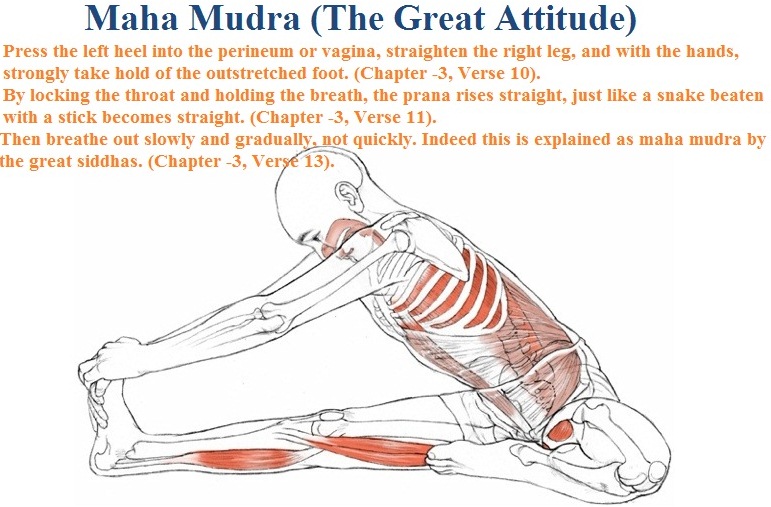
Maha Mudra Introduction Maha Mudra, described in the Hatha Yoga Pradipika and other classical yoga texts, is one of the most revered yogic practices. Considered a king among mudras, it harmonizes the body, mind, and spirit. Maha Mudra combines asanas, bandhas, pranayama, and drishti (gaze) to awaken prana, stimulate the chakras, and purify the nadis (energy channels). It is said to bestow liberation (moksha) when practiced with devotion and discipline. Meaning Maha = Great, supreme. Mudra = Gesture, seal, psychic attitude. Thus, Maha Mudra means the great gesture/seal, symbolizing the unification of pranic energy and consciousness. It represents the harmonization of Ida, Pingala, and Sushumna Nadis, which leads to spiritual awakening. How to Perform (Practice) Sit in utthanpadasana with the right leg outstretched. Keep the back straight. Relax the whole body. Practice khechari mudra. Take a deep breath in. Exhale and bend forward. Clasp the right big toe with both hands. Keep the head erect, and the back straight. Slowly inhale, tilting the head slightly back. Perform shambhavi mudra and then moola bandha. Hold the breath inside and rotate the awareness from the eyebrow centre, to the throat, to the perineum. Mentally repeat, ‘ajna, vishuddhi, mooladhara’. The concentration should remain at each chakra for only I or 2 seconds. Release shambhavi and moola bandha. Slowly exhale, returning to the upright position. This is one round. Benefits Physical Benefits Stimulates the pancreas, liver, spleen, kidneys, and digestive organs. Helps regulate insulin and blood sugar (useful in diabetes management). Improves digestion and metabolism. Strengthens pelvic floor, spinal muscles, and hamstrings. Pranic/Energetic Benefits Purifies the nadis (energy channels). Balances Ida (lunar), Pingala (solar), and activates Sushumna Nadi. Directs prana to higher chakras. Enhances vitality and pranic reserve. Mental & Spiritual Benefits Improves concentration and meditative awareness. Removes lethargy and mental dullness. Dissolves energetic blockages (granthis). Leads toward Samadhi (union with higher consciousness). Contraindications Avoid in cases of: Severe back or spinal issues, Hypertension, Heart disease, Hernia, ulcers, colitis, Pregnancy. Should not be practiced after meals. Advanced practice with bandhas and retention should only be done under expert supervision. Anatomy & Physiology Involves forward bending → stretches hamstrings, calves, spinal extensors. Compression of the abdomen massages pancreas and digestive organs. Bandhas stimulate the endocrine glands: Mula Bandha → pelvic/urogenital region. Jalandhara Bandha → thyroid and parathyroid. Retention of breath increases oxygen utilization and carbon dioxide tolerance. Kinesiology Involves hip flexion, spinal flexion, and ankle dorsiflexion. Engages hamstrings, erector spinae, abdominals, and pelvic floor. Strengthens and lengthens posterior chain muscles. Neurology Breath retention + bandhas stimulate autonomic nervous system regulation. Jalandhara Bandha influences baroreceptors in the neck, balancing heart rate and BP. Enhances vagal stimulation (parasympathetic dominance → relaxation). Focus on Ajna Chakra activates higher brain centers (frontal lobe, pineal gland). Duration of Practice Beginners: 1–2 minutes per side, 3–5 rounds. Intermediate: Up to 5 minutes per side. Advanced: Integrated with pranayama and mantra, up to 30 minutes. Best practiced early morning on an empty stomach. Counter Mudra To balance Maha Mudra’s intense internal effects: Shakti Mudra → promotes calmness and cooling. Chin Mudra → aids grounding and meditation. Prana Mudra → restores vitality gently. Conclusion Maha Mudra is rightly called the great mudra, as it integrates posture, bandhas, pranayama, and concentration. It cleanses the nadis, activates pranic energy, harmonizes endocrine function, and uplifts the practitioner toward higher states of consciousness. While offering immense physical, mental, and spiritual benefits, it should be practiced progressively, with guidance, and avoided by those with contraindicated health conditions. FAQ Q1. Can Maha Mudra cure diabetes?It helps regulate pancreatic function and insulin secretion, making it supportive but not a replacement for medical treatment. Q2. Is it suitable for beginners?Yes, in a simplified form without bandhas and retention. Advanced practice requires guidance. Q3. When should I practice Maha Mudra?Early morning, on an empty stomach, in a quiet environment. Q4. Does it awaken Kundalini?Yes, it purifies the nadis and directs prana into Sushumna, preparing for Kundalini awakening. Q5. Can women practice it during menstruation?It is best avoided during menstruation due to bandhas and abdominal pressure. References Hatha Yoga Pradipika – Svātmārāma. Gheranda Samhita. Swami Satyananda Saraswati – Asana, Pranayama, Mudra, Bandha. Kuvalayananda – Yoga Mimamsa Journal (scientific research on mudras and bandhas). Swami Niranjanananda – Prana and Pranayama.
Ushakaal Mudra
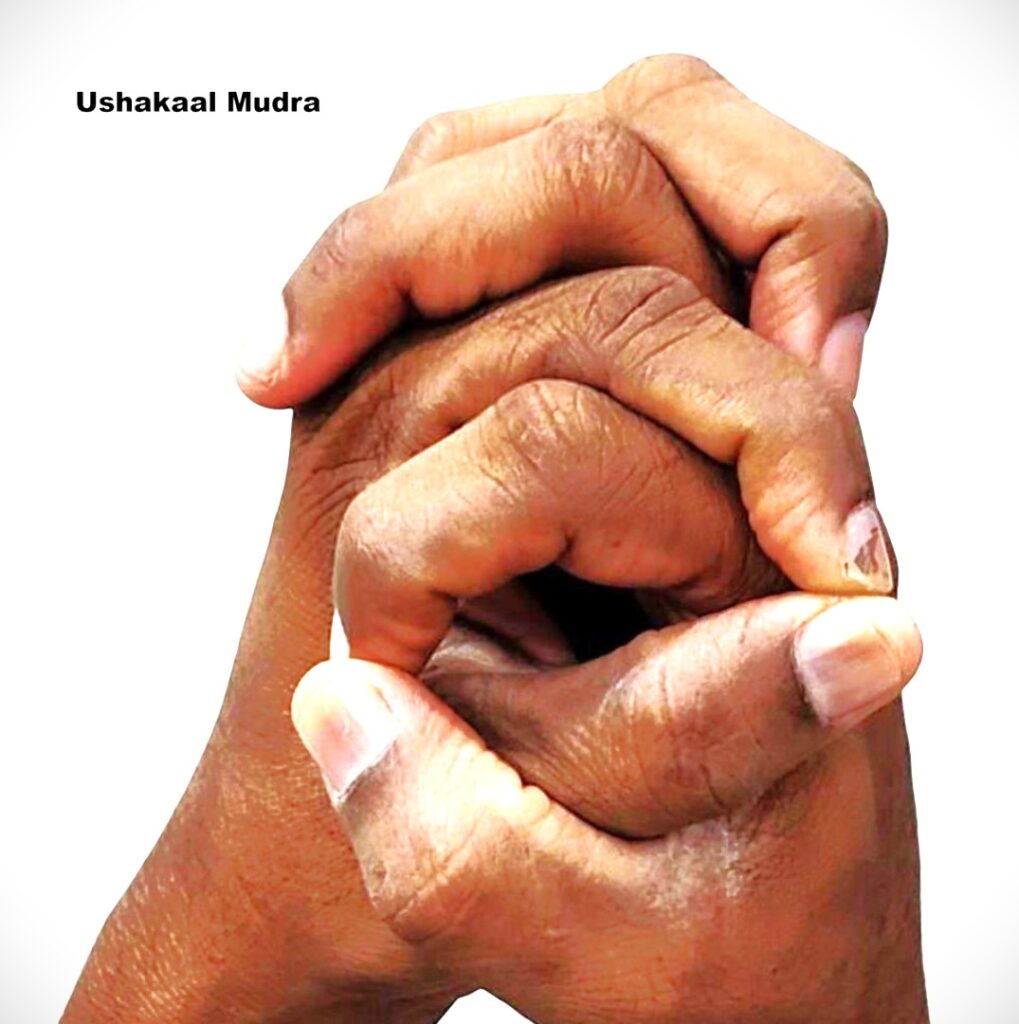
Ushakaal Mudra Introduction Ushakaal Mudra is a subtle hand gesture in yoga designed to stimulate energy flow, support mental focus, and enhance vitality. It is believed to balance the body’s energy channels, promoting clarity of mind and overall wellness. The term Ushakaal combines Usha, meaning dawn or new beginning, and Kaal, meaning time or energy cycle, reflecting the mudra’s purpose of revitalizing energy and promoting a fresh, balanced state of being. It is often incorporated in meditation, pranayama, and yoga therapy practices. Meaning Usha: Dawn, new beginning, vitality. Kaal: Energy cycle, time, rhythm. Mudra: Gesture to channel energy flow. Overall Meaning:Ushakaal Mudra symbolizes renewal of energy and mental clarity, enhancing vitality and focus while supporting emotional and energetic balance. How to Perform / Practice Sit comfortably in a meditative posture (Padmasana, Sukhasana, or on a chair) with an erect spine. This Mudra can be performed while being seated, in a standing position or lying in bed. Concentrate on your breathing to relax and feel comfortable. Clasp both your hands together as shown in the image. Please note that the left index figure is on top of the right index finger. Now, bring the tips of the Index finger and Thumb of the respective hands closer, but do not let them touch, simply form an open circle. Maintain the mudra for 15–30 minutes daily, or 5–10 minutes in shorter sessions. Tip: Ideal for morning practice to stimulate energy and focus for the day ahead. Benefits Physical Benefits: Enhances overall vitality and energy levels. Supports metabolism and organ function. Reduces fatigue and improves circulation. Mental & Emotional Benefits: Improves concentration, mental clarity, and focus. Reduces stress, anxiety, and mental fatigue. Encourages emotional stability and calmness. Energetic / Spiritual Benefits: Stimulates upward and balanced pranic flow. Supports meditation, mindfulness, and mental alertness. Promotes a sense of renewal, positivity, and energetic harmony. Contraindications Avoid if experiencing hand or finger injuries. Not recommended for severe arthritis or joint pain in fingers. Discontinue if numbness, tingling, or discomfort occurs. Anatomy & Physiology Muscles: Engages intrinsic hand muscles (lumbricals, interossei) and forearm muscles to maintain the mudra. Joints: Flexion at little and ring fingers; extension at index and middle fingers. Nervous System: Activates parasympathetic system for relaxation while supporting focused alertness. Circulation: Enhances microcirculation in hands and fingers; indirectly supports energy flow throughout the body. Kinesiology Improves fine motor coordination and finger dexterity. Enhances neuromuscular communication between hands and brain. Supports static postural stability during seated meditation. Neurology Stimulates brain regions responsible for alertness, focus, and energy regulation. Balances sympathetic and parasympathetic activity, reducing mental fatigue while enhancing vitality. Supports neural plasticity, improving mental clarity, concentration, and emotional resilience. Duration of Practice Daily Practice: 15–30 minutes, can be divided into 2–3 sessions. Short Practice: 5–10 minutes during meditation, work breaks, or energy rituals. Can be combined with pranayama or other mudras for enhanced effect. Counter Mudra If energy becomes excessive or restless, switch to Gyan Mudra or Chala Mudra. Gentle hand stretching or shaking is recommended to release tension after prolonged practice. Conclusion Ushakaal Mudra is a simple yet effective hand gesture to revitalize energy, enhance focus, and balance mental and emotional states. Regular practice harmonizes physical, mental, and energetic systems, making it a valuable tool for meditation, yoga therapy, and daily wellness. Proper execution ensures maximum benefits without discomfort. FAQ Q1: Can beginners practice Ushakaal Mudra?A: Yes, it is safe and simple; start with 5–10 minutes and gradually increase. Q2: Can it improve energy levels and focus?A: Yes, it stimulates upward and balanced pranic flow, enhancing vitality and mental clarity. Q3: Can it be combined with other mudras?A: Yes, often combined with Dhyana Mudra, Prana Mudra, or Gyan Mudra during meditation. Q4: Is it suitable for morning practice?A: Yes, it is ideal for morning practice to invigorate the mind and body. References Swami Satyananda Saraswati, Mudras for Healing and Transformation. Iyengar, B.K.S., Light on Yoga. Saraswati, S., Pranayama and Mudras in Yoga Therapy. Fishman, L., Yoga for Emotional Balance. Journal of Bodywork and Movement Therapies, 2018; 22(4): Effects of Hand Mudras on Mental and Physiological Functions.
Udana Mudra
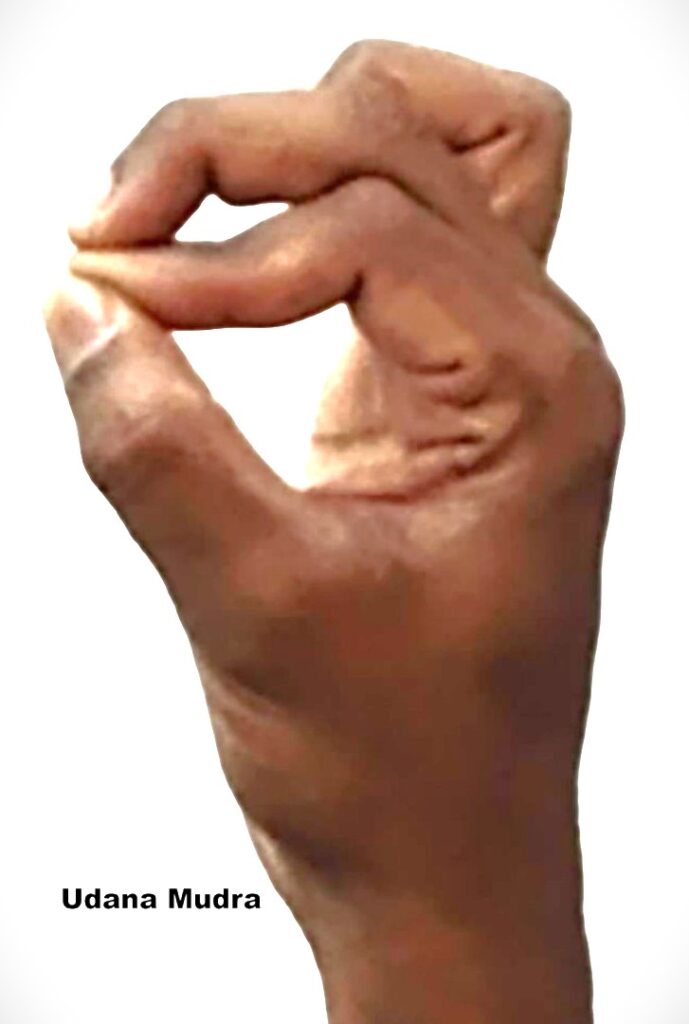
Udana Mudra Introduction Udana Mudra is a hand gesture in yoga that helps boost energy, improve vitality, and enhance upward flow of prana (life force). It is particularly used to stimulate the throat and head regions, supporting communication, mental clarity, and spiritual growth. The term Udana in Sanskrit means “upward moving energy”, reflecting the mudra’s role in channeling energy from the body upward, aiding in expression, inspiration, and vitality. It is often recommended in yogic therapy, meditation, and pranayama practices. Meaning Udana: Upward moving energy, vitality, inspiration. Mudra: Hand gesture used to direct prana and energy flow. Overall Meaning:Udana Mudra facilitates the upward movement of energy, enhancing vitality, mental clarity, communication, and spiritual awareness. How to Perform / Practice Come into a sitting position or practice while walking. Using both hands, join the tips of your thumbs and index fingers. Place the tips of your middle fingers on the nails of the index fingers and apply gentle pressure. Allow your ring and little fingers to remain slightly curled, but relaxed. Practice for 15–30 minutes daily, or 5–10 minutes in short intervals. Tip: Best practiced in the morning to stimulate energy or during meditation for clarity and focus. Benefits Physical Benefits: Improves energy levels and reduces fatigue. Enhances respiratory and circulatory functions. Supports throat, neck, and head regions. Boosts immunity and overall vitality. Mental & Emotional Benefits: Improves concentration, mental clarity, and focus. Reduces lethargy, mental fatigue, and emotional stress. Encourages positive thinking and emotional stability. Energetic / Spiritual Benefits: Stimulates upward flow of prana, promoting spiritual awareness. Activates the throat chakra (Vishuddha) and third eye chakra indirectly. Supports meditation and energy practices aimed at mental and spiritual growth. Contraindications Avoid if experiencing hand or finger injuries. Not recommended for severe hypertension or insomnia without guidance. Stop practice if numbness, tingling, or discomfort occurs. Anatomy & Physiology Muscles: Intrinsic hand muscles (lumbricals, interossei) maintain finger positions; forearm muscles stabilize the hand. Joints: Flexion at middle and ring fingers; extension at index and little fingers. Nervous System: Activates parasympathetic system while also enhancing alertness and upward energy flow. Circulation: Improves microcirculation in hands and fingers, indirectly stimulating energy flow. Kinesiology Enhances fine motor control and finger coordination. Improves neuromuscular communication between hand and brain. Supports static posture stability during meditation. Neurology Stimulates brain regions related to alertness, focus, and energy regulation. Encourages parasympathetic and sympathetic balance, reducing mental fatigue while enhancing vitality. Supports neural plasticity, improving mental clarity, memory, and communication skills. Duration of Practice Daily Practice: 15–30 minutes, can be divided into 2–3 sessions. Short Practice: 5–10 minutes during meditation or work breaks. Can be combined with pranayama, visualization, or other mudras for enhanced effect. Counter Mudra If excess energy or restlessness occurs, switch to Gyan Mudra or Chala Mudra. Gentle hand stretching or shaking helps release tension after practice. Conclusion Udana Mudra is a simple yet effective gesture to enhance energy, mental clarity, and spiritual awareness. Regular practice harmonizes upward flow of energy, strengthens body and mind, and supports meditation and vitality. Proper execution ensures maximum benefits without discomfort. FAQ Q1: Can beginners practice Udana Mudra?A: Yes, it is safe and simple. Start with 5–10 minutes and gradually increase. Q2: Can it help with energy and focus?A: Yes, it stimulates upward flow of prana, improving alertness and mental clarity. Q3: Can it be combined with other mudras?A: Yes, often combined with Dhyana Mudra, Gyan Mudra, or Prana Mudra. Q4: Is it suitable for spiritual meditation?A: Yes, it enhances upward energy flow, supporting meditation and spiritual practices. References Swami Satyananda Saraswati, Mudras for Healing and Transformation. Iyengar, B.K.S., Light on Yoga. Saraswati, S., Pranayama and Mudras in Yoga Therapy. Fishman, L., Yoga for Emotional Balance. Journal of Bodywork and Movement Therapies, 2018; 22(4): Effects of Hand Mudras on Mental and Physiological Functions.
Trishula Mudrā
Trishula Mudrā Introduction The word Trishula means trident, the three-pronged weapon of Lord Shiva that symbolizes the destruction of ignorance and the triumph of higher consciousness. In yogic and tantric traditions, the three prongs represent the three gunas (sattva, rajas, tamas), the three nadis (ida, pingala, sushumna), or the three aspects of time (past, present, future). Trishula Mudrā is a symbolic hand gesture practiced in yoga, meditation, and ritual to balance opposing energies, harmonize the nervous system, and awaken spiritual awareness. Meaning Tri = three Shula = spear or trident Mudrā = gesture, seal Thus, Trishula Mudrā means “the gesture of the trident”.It represents balance, spiritual awakening, and transcendence of duality through the unity of three forces. How to Perform Practice Sit in a meditative posture (Padmāsana, Sukhasana, or Vajrāsana) with the spine upright. Raise your hand with the palm facing forward. Place the pad of the thumb over the nail of the little finger. Extend and separate the index, middle, and ring fingers. Close the eyes, breathe deeply, and focus on the third eye (ajna chakra) or the flow of energy along the spine. Maintain awareness of balance between ida, pingala, and sushumna nadis. Benefits of Trishula Mudrā Physical Benefits Helps regulate the respiratory system and improves lung capacity. Relieves mild tension headaches and sinus blockages. Balances the autonomic nervous system. Supports spine and brain oxygenation. Mental Benefits Promotes mental clarity, calmness, and concentration. Helps overcome indecisiveness by integrating past, present, and future. Reduces anxiety, restlessness, and overthinking. Encourages balanced decision-making. Spiritual Benefits Awakens awareness of third eye (ajna chakra). Symbolizes the union of ida, pingala, and sushumna energies. Aids in meditation, mantra chanting, and pranayama. Represents Shiva consciousness—dissolving negativity and ignorance. Contraindications Avoid if experiencing severe hypertension or migraines, as stimulating the third eye may worsen symptoms. Not recommended during acute neurological disorders without guidance. Should not be forced—practice gently. Anatomy & Physiology Stimulates nerve endings in thumb, index, and middle fingers, influencing pathways linked to air, ether, and fire elements. Balances the respiratory and circulatory systems. Promotes synchronization between left and right hemispheres of the brain. Enhances blood flow and oxygen supply to the frontal cortex. Kinesiology Involves fine motor control of fingers and flexor muscles of the hand. Encourages bilateral symmetry when practiced with both hands. Improves neuromuscular coordination in hand and forearm muscles. Neurology Stimulates the somatosensory cortex through finger positioning. Calms the sympathetic nervous system and activates parasympathetic relaxation. Encourages brainwave shift into alpha and theta states for meditation. Enhances awareness of ajna chakra and higher states of consciousness. Duration of Mudrā Beginners: 5–10 minutes daily in meditation or pranayama. Intermediate: 15–20 minutes, 1–2 sessions daily. Advanced: Up to 30–45 minutes with mantra chanting (Om Namah Shivaya or Shiva bija mantra). Counter Mudra Chin Mudrā / Jnana Mudrā – for grounding and balancing after higher activation. Prāna Mudrā – to restore overall energy balance. Shanmukhi Mudrā – to deepen pratyahara (sense withdrawal) if the mind feels overstimulated. Conclusion Trishula Mudrā is a symbolic and powerful yogic hand gesture that represents the trident of Shiva, the balance of the three nadis, and the transcendence of the three gunas. Physically, it harmonizes the nervous system; mentally, it cultivates clarity and balance; spiritually, it awakens higher awareness and leads toward inner freedom. When practiced with mindfulness, it becomes a key to balancing dualities and realizing unity within. FAQ Q1. What does Trishula Mudrā symbolize?It symbolizes Shiva’s trident, the three nadis, the three gunas, and balance of time (past, present, future). Q2. Can it be practiced with one hand?Yes, though both hands are commonly used for symmetry. Q3. Is it suitable for beginners?Yes, but start with short durations. Q4. Which chakra does Trishula Mudrā activate?Mainly the Ajna Chakra (third eye). Q5. Can it be combined with pranayama?Yes, especially with alternate nostril breathing (Nadi Shodhana). References Swami Satyananda Saraswati – Asana, Pranayama, Mudra, Bandha Gertrud Hirschi – Mudras: Yoga in Your Hands Joseph Le Page – Mudras for Healing and Transformation Tantra and Shaivism texts on symbolism of the Trishula
Surya Mudra

Surya Mudra Introduction Surya Mudra, also known as the “Sun Gesture,” is a hand mudra in yoga that is believed to stimulate the fire element (Agni) in the body, promoting metabolism, energy, and vitality. It is particularly beneficial for weight management, digestion, and boosting overall energy levels. The word Surya in Sanskrit means sun, symbolizing heat, energy, and vitality. Practicing this mudra is often recommended in yogic therapy for balancing body weight, improving circulation, and enhancing vitality. Meaning Surya: Sun, representing energy, vitality, and fire element. Mudra: Hand gesture used to direct pranic energy. Overall Meaning:Surya Mudra channels energy in the body to stimulate metabolic processes, increase vitality, and energize the mind and body. How to Perform / Practice Sit comfortably in a meditative posture (Padmasana, Sukhasana, or on a chair) with the spine erect. Fold the ring finger towards the base of the thumb. Press the thumb gently over the ring finger to keep it in place. Keep the other fingers straight and relaxed. Place the hands on your lap with palms facing upward. Close your eyes, breathe deeply, and focus on warming energy or sunlight visualization. Practice for 15–30 minutes daily, preferably in the morning. Tip: Can also be practiced in short intervals of 5–10 minutes during the day. Benefits Physical Benefits: Boosts metabolism and aids in weight management. Improves digestion and reduces bloating. Enhances circulation and oxygen supply. Supports thyroid and adrenal function. Mental & Emotional Benefits: Increases energy and alertness. Reduces lethargy and mental fatigue. Supports motivation and a positive mindset. Energetic / Spiritual Benefits: Stimulates the fire element (Agni) in the body. Enhances vitality and overall life force (prana). Can be used for meditation to cultivate inner warmth and energy. Contraindications Avoid if experiencing high blood pressure, insomnia, or excessive heat in the body. Not recommended for pregnant women unless guided by a qualified instructor. Discontinue if finger or hand discomfort occurs. Anatomy & Physiology Muscles: Engages intrinsic hand muscles (lumbricals and interossei) to hold the ring finger. Joints: Flexion at ring finger MCP and PIP joints; extension at other fingers. Nervous System: Activates parasympathetic system for balanced energy while stimulating metabolic processes. Circulation: Improves microcirculation in hands and may indirectly stimulate thermogenic activity. Kinesiology Encourages fine motor control in fingers. Improves neuromuscular coordination between brain and hands. Maintains static postural stability while seated during meditation. Neurology Stimulates brain areas associated with alertness, focus, and energy regulation. May enhance neuroendocrine activity, indirectly influencing metabolic rate. Supports mental clarity and motivation through parasympathetic and sympathetic balance. Duration of Practice Daily Practice: 15–30 minutes, can be split into multiple sessions. Short Practice: 5–10 minutes during work or morning routines. Can be combined with pranayama or sun visualization techniques for maximum effect. Counter Mudra If excessive heat or restlessness develops, alternate with Chala Mudra or Shunya Mudra to balance energy. Gentle hand stretching or shaking helps release excess energy. Conclusion Surya Mudra is a simple yet effective gesture for enhancing vitality, stimulating metabolism, and improving overall energy. Regular practice harmonizes physical, mental, and energetic systems, making it a valuable tool for yogic therapy and daily wellness. Proper and consistent practice ensures maximum benefits without discomfort. FAQ Q1: Can beginners practice Surya Mudra?A: Yes, it is safe for beginners; start with 5–10 minutes and gradually increase. Q2: Can it help with weight management?A: Yes, it stimulates the fire element, which can aid metabolism and support weight control. Q3: Can it be combined with other mudras?A: Yes, often combined with Prana Mudra or Dhyana Mudra for meditation. Q4: Is it suitable for evening practice?A: Preferably practice in the morning, as it stimulates energy and alertness. References Swami Satyananda Saraswati, Mudras for Healing and Transformation. Iyengar, B.K.S., Light on Yoga. Saraswati, S., Pranayama and Mudras in Yoga Therapy. Fishman, L., Yoga for Emotional Balance. Journal of Bodywork and Movement Therapies, 2018; 22(4): Effects of Hand Mudras on Mental and Physiological Functions.
Swadisthana Mudra
Swadisthana Mudra Introduction Swadisthana Mudra, also known as the “Sacral Chakra Gesture,” is a hand mudra used in yoga to balance the second chakra (Swadisthana), associated with creativity, emotions, and sexuality. It is widely practiced to harmonize emotions, enhance creativity, and improve vitality. The term Swadisthana comes from Sanskrit, meaning “one’s own abode”, representing the center of personal identity, pleasure, and emotional expression. This mudra helps in strengthening emotional intelligence and energy flow in the sacral region. Meaning Swadisthana: One’s own abode; sacral energy center. Mudra: Gesture to direct energy and balance prana in the body. Overall Meaning:Swadisthana Mudra channels energy to the sacral chakra, supporting emotional stability, creativity, and reproductive health. How to Perform / Practice Sit comfortably in a meditative posture (Padmasana, Sukhasana, or on a chair) with an erect spine. Hold both palms facing each other. Cross each middle finger over the index finger next to it. Bend the little and ring fingers of both hands and interlace them. Bring the tips of your index fingers together. Join the end of each thumb with the middle finger of the same hand. Bring the sides of both thumbs as close to each other as possible; try to press them together. Rest your hands in your lap with the thumbs on top for 3 minutes, gradually building up to 15 minutes. Benefits Physical Benefits: Supports reproductive health and balances hormonal function. Enhances digestion and water metabolism. Reduces tension in the lower back and pelvic region. Mental & Emotional Benefits: Balances emotions and reduces stress, fear, or guilt. Stimulates creativity, imagination, and inspiration. Enhances emotional intelligence and interpersonal relationships. Energetic / Spiritual Benefits: Balances the Swadisthana (sacral) chakra. Improves flow of prana in the lower abdomen. Supports meditation and energy practices focused on vitality and creativity. Contraindications Avoid if recent hand injury, arthritis, or joint pain is present. Discontinue if numbness, tingling, or discomfort occurs during prolonged practice. Practice gently; do not force finger positions. Anatomy & Physiology Muscles: Engages intrinsic hand muscles (lumbricals and interossei) to maintain finger positions. Joints: Flexion at middle and ring fingers; extension at index and little fingers. Nervous System: Activates parasympathetic nervous system, promoting calmness and emotional balance. Circulation: Enhances microcirculation in hands and may support blood flow in lower abdominal region indirectly. Kinesiology Improves fine motor coordination and finger dexterity. Enhances neuromuscular communication between the brain and hand muscles. Supports static postural stability during seated meditation. Neurology Stimulates brain areas responsible for emotional regulation, creativity, and focus. Activates parasympathetic pathways, helping to reduce stress and maintain calmness. Supports neural plasticity related to emotional intelligence and creative thinking. Duration of Practice Daily Practice: 15–30 minutes, can be divided into multiple sessions. Short Practice: 5–10 minutes during creative or mindful activities. Can be combined with meditation, pranayama, or sacral chakra visualization for enhanced effect. Counter Mudra If energy becomes stagnant or emotions feel excessive, switch to Prana Mudra or Gyan Mudra to release and balance energy. Gentle hand stretching or shaking is recommended after long practice. Conclusion Swadisthana Mudra is a powerful hand gesture to balance emotional energy, enhance creativity, and support reproductive health. Regular practice harmonizes the sacral chakra and improves emotional and energetic stability. Proper execution ensures maximum benefit without discomfort. FAQ Q1: Can beginners practice Swadisthana Mudra?A: Yes, it is safe for beginners; start with 5–10 minutes and gradually increase. Q2: Can it help with creative blockages?A: Yes, it stimulates the sacral chakra, enhancing creativity and emotional expression. Q3: Can it be combined with other mudras?A: Yes, often combined with Dhyana Mudra or Prana Mudra for meditation. Q4: Is it suitable during stress or emotional instability?A: Yes, it helps stabilize emotions and reduce stress when practiced mindfully. References Swami Satyananda Saraswati, Mudras for Healing and Transformation. Iyengar, B.K.S., Light on Yoga. Saraswati, S., Pranayama and Mudras in Yoga Therapy. Fishman, L., Yoga for Emotional Balance. Journal of Bodywork and Movement Therapies, 2018; 22(4): Effects of Hand Mudras on Mental and Physiological Functions.
Surabhi Mudra
Surabhi Mudra Introduction Surabhi Mudra, also known as the “Gesture of the Sacred Cow,” is a hand mudra in yoga that promotes physical health, emotional balance, and overall vitality. Traditionally, it is believed to strengthen immunity, improve digestion, and enhance energy flow, while also calming the mind. The term Surabhi in Sanskrit refers to the sacred cow, a symbol of nourishment, abundance, and vitality. This mudra is often used in yoga therapy to harmonize body energies and enhance overall well-being. Meaning Surabhi: Sacred cow, abundance, nourishment. Mudra: Hand gesture used to direct energy and prana in the body. Overall Meaning:Surabhi Mudra symbolizes nourishment, vitality, and stability, creating balance in physical, mental, and emotional energies. How to Perform / Practice Sit comfortably in a meditative posture (Padmasana, Sukhasana, or on a chair) with spine erect. Come into a sitting or kneeling position. Bring the tip of the little finger of your left hand to touch the right ring finger, and the little finger of your right hand to touch the left ring finger. Then join the middle fingers of each hand with the index fingers of the other hand. Extend your thumbs and bring the ends together. Close your eyes, breathe evenly, and focus on energy flow, nourishment, and balance. Practice for 15–30 minutes daily, or 5–10 minutes in shorter intervals. Tip: Best practiced on an empty stomach or after light meals. Benefits Physical Benefits: Supports digestion and metabolism. Enhances immunity and vitality. Reduces fatigue and strengthens the body. Improves circulation and oxygenation. Mental & Emotional Benefits: Stabilizes emotions and reduces stress or anxiety. Improves mental clarity and focus. Enhances a sense of inner peace and contentment. Energetic / Spiritual Benefits: Balances pranic energy in the body. Supports meditation and mindfulness practices. Promotes a sense of abundance and harmony. Contraindications Avoid if there is recent injury, arthritis, or pain in fingers or hands. Discontinue if numbness, tingling, or discomfort occurs. Practice gently without forcing finger positions. Anatomy & Physiology Muscles: Intrinsic hand muscles (lumbricals, interossei) and forearm muscles maintain finger positions. Joints: Flexion at middle and little fingers; extension at index and ring fingers. Nervous System: Activates parasympathetic system, reducing stress and promoting relaxation. Circulation: Enhances microcirculation in hands and fingers. Kinesiology Improves fine motor control of the fingers. Enhances neuromuscular coordination between hand and brain. Supports static postural stability during meditation. Neurology Stimulates brain regions associated with focus, calmness, and emotional regulation. Activates parasympathetic pathways, promoting relaxation and stress reduction. Supports neural plasticity related to focus, balance, and emotional resilience. Duration of Practice Daily Practice: 15–30 minutes, can be split into multiple sessions. Short Practice: 5–10 minutes during work breaks or meditation. Can be combined with pranayama or other mudras for enhanced benefits. Counter Mudra If excess tension or rigidity develops, alternate with Gyan Mudra or Chala Mudra. Gentle hand stretching or shaking is recommended after prolonged practice. Conclusion Surabhi Mudra is a gentle but effective gesture to enhance vitality, emotional stability, and physical well-being. Regular practice harmonizes the body, mind, and energy systems, making it a valuable tool for yoga therapy, meditation, and daily wellness. Proper and consistent practice ensures maximum benefits without discomfort. FAQ Q1: Can beginners practice Surabhi Mudra?A: Yes, it is safe and simple; start with 5–10 minutes and gradually increase. Q2: Can it help with digestion and immunity?A: Yes, it is traditionally used to support digestive function and enhance vitality. Q3: Can it be combined with other mudras?A: Yes, it is often combined with Sukam Mudra or Dhyana Mudra during meditation. Q4: Can it be practiced while walking?A: Not recommended; best practiced seated to maintain stability and focus. References Swami Satyananda Saraswati, Mudras for Healing and Transformation. Iyengar, B.K.S., Light on Yoga. Saraswati, S., Pranayama and Mudras in Yoga Therapy. Fishman, L., Yoga for Emotional Balance. Journal of Bodywork and Movement Therapies, 2018; 22(4): Effects of Hand Mudras on Mental and Physiological Functions.
Tadagi Mudra
Tadagi Mudra Introduction Tadagi Mudra is a hand gesture in yoga that promotes detoxification, energy flow, and overall vitality. It is believed to help balance body systems, stimulate metabolism, and enhance mental clarity. The term Tadagi in Sanskrit is associated with purity and clarity, reflecting the mudra’s role in cleansing and energizing both the body and mind. This mudra is often incorporated in yoga therapy, pranayama, and meditation practices to support holistic well-being. Meaning Tadagi: Purity, clarity, or cleansing. Mudra: Gesture used to channel and balance pranic energy. Overall Meaning:Tadagi Mudra focuses on purifying the body and mind, enhancing vitality, and promoting a sense of mental and physical balance. How to Perform / Practice Sit with the legs stretched out in front of the body and the feet slightly apart. The legs should remain straight throughout the practice. Place the hands on the knees, keeping the headstand spine straight. Close the eyes and relax the whole body, especially the abdominal area. Lean forward and grasp the big toes with the thumbs, index and second fingers. Keep the head facing forward. Inhale slowly and deeply, expanding the abdominal muscles to their fullest extent. Retain the breath inside for a comfortable length of time without straining the lungs in any way. Exhale slowly and deeply while relaxing the abdomen. Maintain the hold on the toes. Repeat the breathing up to 10 times. Then release the toes and return to the starting position. This is one round. Benefits Physical Benefits: Supports detoxification and metabolism. Enhances circulation and oxygenation in the hands and body. Reduces fatigue and promotes vitality. Supports organ function through energetic stimulation. Mental & Emotional Benefits: Improves mental clarity and focus. Reduces stress, anxiety, and emotional turbulence. Promotes a sense of purity and calmness. Energetic / Spiritual Benefits: Balances pranic energy throughout the body. Enhances meditation and mindfulness practices. Promotes a sense of spiritual cleansing and balance. Contraindications Avoid if there is recent injury, arthritis, or pain in fingers or hands. Stop practice if numbness, tingling, or discomfort occurs. Practice gently without forcing finger positions. Anatomy & Physiology Muscles: Engages intrinsic hand muscles (lumbricals, interossei) to hold the fingers in position. Joints: Flexion at middle and little fingers; extension at index and ring fingers. Nervous System: Activates parasympathetic system, promoting relaxation and balance. Circulation: Improves microcirculation in hands and may influence subtle energy flow throughout the body. Kinesiology Improves fine motor control of fingers. Enhances neuromuscular coordination between hand and brain. Supports static postural stability while seated during meditation. Neurology Stimulates brain regions associated with attention, calmness, and energy regulation. Supports parasympathetic activation, reducing stress and mental fatigue. Encourages neural plasticity related to focus, balance, and emotional stability. Duration of Practice Daily Practice: 15–30 minutes, can be split into multiple sessions. Short Practice: 5–10 minutes during work breaks or meditation sessions. Can be combined with pranayama, visualization, or other mudras for enhanced benefits. Counter Mudra To release excessive energy, switch to Gyan Mudra or Chala Mudra. Gentle hand stretching or shaking is recommended after prolonged practice. Conclusion Tadagi Mudra is a subtle yet effective gesture to purify the body, enhance vitality, and improve mental clarity. Regular practice harmonizes physical, mental, and energetic systems, making it a valuable tool for meditation, yoga therapy, and daily wellness. Proper execution ensures maximum benefit without discomfort. FAQ Q1: Can beginners practice Tadagi Mudra?A: Yes, it is safe for beginners. Start with 5–10 minutes and gradually increase. Q2: Can it help with stress and mental fatigue?A: Yes, it stimulates parasympathetic activity, promoting calmness and mental clarity. Q3: Can it be combined with other mudras?A: Yes, it can be combined with Dhyana Mudra, Prana Mudra, or Gyan Mudra. Q4: Can it be practiced while walking?A: Not recommended; best practiced seated for stability and focus. References Swami Satyananda Saraswati, Mudras for Healing and Transformation. Iyengar, B.K.S., Light on Yoga. Saraswati, S., Pranayama and Mudras in Yoga Therapy. Fishman, L., Yoga for Emotional Balance. Journal of Bodywork and Movement Therapies, 2018; 22(4): Effects of Hand Mudras on Mental and Physiological Functions.
Sumukha Mudrā
Sumukha Mudrā Introduction Sumukha Mudrā is a graceful hasta mudrā (hand gesture) used in yoga, meditation, and Indian classical traditions. The term Sumukha translates to “beautiful face” or “auspicious countenance.” In yogic symbolism, it signifies clarity, openness, and positivity. This mudrā is performed by joining the fingers and thumbs in a way that resembles a unified, harmonious front. Sumukha Mudrā is often practiced in meditation to calm the mind, focus attention, and cultivate inner radiance. In dance and iconography, it represents beauty, purity, and auspiciousness. Meaning Su = good, beautiful, auspicious Mukha = face, expression, countenance Sumukha → “The one with a beautiful face” or “pleasant expression.” This mudra symbolizes purity of thought, clarity of perception, and radiance of mind. How to Perform Practice Sit in a comfortable meditative posture (Padmāsana, Vajrāsana, or Sukhasana). Join the tips of all of the fingers of each hand. Touch the two hands together at the fingertips. Keep the elbows relaxed and shoulders down. Close the eyes, breathe deeply, and focus on the Ajñā Chakra (between the eyebrows) or heart center. Stay in this position while meditating or chanting mantras. Benefits of Sumukha Mudrā Physical Benefits Relaxes the respiratory system and improves oxygen flow. Enhances facial relaxation and reduces muscular tension. Helps regulate endocrine system balance (especially thyroid and pituitary). Improves posture by gently aligning shoulders and chest. Mental Benefits Promotes mental clarity and concentration. Cultivates feelings of positivity, grace, and confidence. Reduces stress, anxiety, and fatigue. Brings a sense of inner beauty and contentment. Spiritual Benefits Symbolizes purity of soul and divine radiance. Helps connect with inner harmony and auspiciousness. Supports dhyāna (meditation) and mantra chanting. Invokes qualities of compassion, wisdom, and serenity. Contraindications No strict contraindications. Those with shoulder or upper arm stiffness may keep hands lower. People with severe anxiety should begin with short sessions. Anatomy & Physiology Engages intrinsic hand muscles while keeping arms relaxed. Encourages expansion of the chest cavity, aiding better breathing. Directs energy toward the Ajñā Chakra and facial region. Stimulates the parasympathetic nervous system, lowering stress responses. Kinesiology Involves gentle isometric action of finger flexors. Promotes bilateral hand coordination, enhancing brain–hand integration. Encourages alignment of the upper limb kinetic chain (shoulder, elbow, wrist, fingers). Neurology Activates somatosensory cortex via tactile finger contact. Promotes alpha brain wave activity, linked to relaxation and meditative awareness. Supports prefrontal cortex functioning, improving attention and self-awareness. Helps withdraw from external distractions, supporting pratyāhāra. Duration of Mudra Beginners: 5 minutes in meditation. Intermediate: 10–15 minutes daily. Advanced: 20–30 minutes integrated with prāṇāyāma or mantra japa. Counter Mudra Chin Mudrā – to ground awareness after Sumukha practice. Hridaya Mudrā – to open the heart and emotions. Abhaya Mudrā – to release fear and encourage confidence. Conclusion Sumukha Mudrā is a gentle yet profound hand gesture that symbolizes inner beauty, auspiciousness, and clarity of mind. By joining all fingers in harmony, it encourages mental focus, physical relaxation, and spiritual upliftment. Regular practice can help cultivate peace, positivity, and a radiant inner presence. FAQ Q1. What does Sumukha Mudrā represent?It represents beauty, auspiciousness, and clarity of mind. Q2. Can it be practiced during mantra chanting?Yes, it is highly beneficial during chanting and meditation. Q3. Is it safe for everyone?Yes, it has no strict contraindications. Q4. How long should I hold it?Start with 5 minutes and gradually extend to 20–30 minutes. Q5. Is it used in dance traditions too?Yes, in Bharatanatyam and other Indian classical dances, it represents a beautiful or pleasant expression. References Swami Satyananda Saraswati, Asana, Pranayama, Mudra, Bandha. Gertrud Hirschi, Mudras: Yoga in Your Hands. Joseph Le Page & Lilian Aboim, Mudras for Healing and Transformation. Vatsyayan, Kapila. Classical Indian Dance in Literature and the Arts. Hatha Yoga Pradipika – commentaries on pratyāhāra and meditation.