
Krounchasana(heron pose)
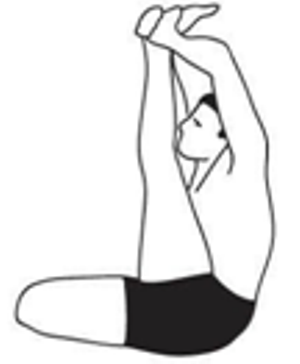
Krounchasana(heron pose) This is the heron pose. Start in dandasana, sitting with your legs stretched out in front of you. Sit in half Virasana, with your right knee bent and placed on the floor, your foot by your buttocks, toes pointing backwards. The inner right calf should touch the back of the right thigh. As you exhale, bend the left knee and grasp the left foot with both hands. Raise the left leg until it is pointing to the sky with the knee straight. Make sure your spine is straight. Try and press your nose or chin to your knee. Stay here, breathing easily for thirty seconds. Then come out of the pose and relax. Precaution: Who having knee problem should avoid this pose. Benefits: Abdominal organs all get rejuvenated.
What is Meditation?-Patanjali Yoga Sutra – Vibhuti Pada
Patanjali Yoga Sutra – Vibhuti Pada What is Meditation? 3.2. Tatra pratyayaikatanata dhyanam| Tatra-there(in the desha) Pratyaya-basis or content of consciousness Ekatanata-continuity Dhyanam-meditation Uninterrupted stream of the content of consciouness is Meditation.
By Meditation Future Pain Avoidable – patanjali yoga sutra
Through Meditation Future Pain can Be Avoidable 11. Dhyanaheyastadvrttayah| Dhyana-meditation Heyah-reducible Tadvrttayah-their modification The modifications of the kleshas are reducible through meditation.
Nada anusandhana – exploration of sound “OM”
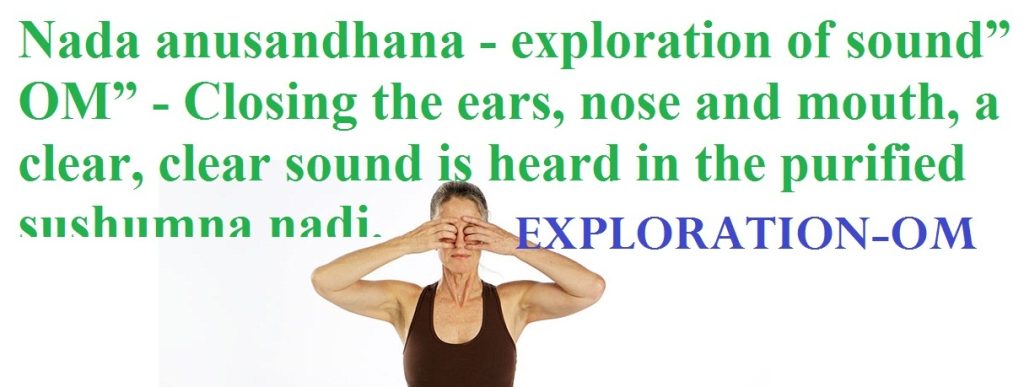
Nada anusandhana – exploration of sound “OM” Nada anusandhana – exploration of sound”OM” – Closing the ears, nose and mouth, a clear, clear sound is heard in the purified sushumna nadi. Muktasane sthito yogi mudram sandhaya sambhavim/ Śrnuyad dakshine karne nadam antastham ekadhih// The Hatha Yogi, sitting in Muktasana, concentrated in shambhavi mudra, should hear closely to the nada heard within the right ear. (Chapter -4, Verse 67). Sravanaputanayanayughala Ghranamukhanam nirodhanam karyam /Suddhasushumnasaranau Sphutamamalah sruyate nadah// Closing the ears, nose and mouth, a clear sound is heard in the cleansed sushumna nadi. (Chapter -4, Verse 68).
Mind dissolves in Samadhi
Mind dissolves in Samadhi Mind dissolves in Samadhi – As camphor burnt in fire, and salt mix in the sea, in samadhi mind dissolves into ‘Thatness’ Karpuramanale yadvatsaindhavam salile yatha/ Tatha sandhiyamanam cha manastattve viliyate// As camphor burnt in fire, and salt mix in the sea, in samadhi mind dissolves into ‘Thatness’. (Chapter -4, Verse 59). Knower, known and knowing united Jneyam sarvam pratitam cha jnanam cha mana uchyate/ Jnanam jneyam samam nashtam nanyah pantha dvitiyakah// All that can be known, all that is known and the knowledge, is called mind. When the knower and that which is known are lost together, there is no second way. (Chapter -4, Verse 60).
Manonmani (consciousness without mind) State

Manonmani (consciousness without mind) State Manonmani (consciousness without mind) – Manonmani is obtained when prana flows in sushumna nadi Sushumnavahini prane siddhyatyeva manonmani/ Anyatha tvitarabhyasah prayasayaiva yoghinam// When the prana travels in the sushumna nadi this state of manonmani (consciousness without mind) is obtained. Therefore, other forced practices are just laborious to the Hatha Yogi. (Chapter -4, Verse 20).
Prana and Mind end in Samadhi state
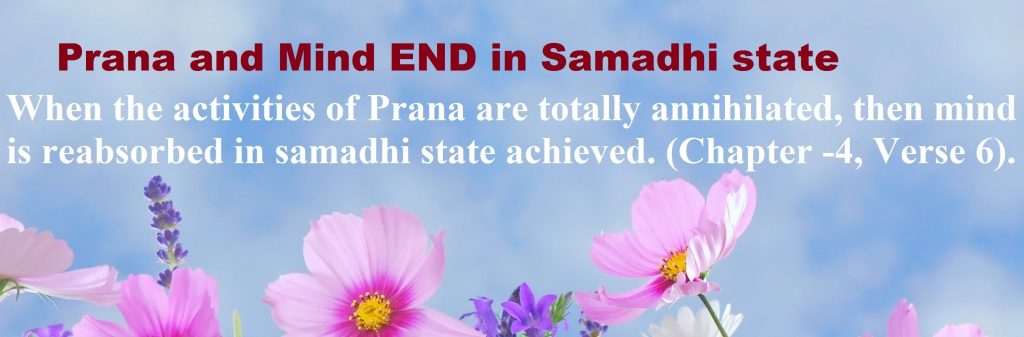
Ending of Prana and Mind in Samadhi state Ending of Prana and Mind in Samadhi state – Activities of prana is annihilated, then mind is reabsorbed in samadhi. Yada samkshiyate prano manasam cha praliyate/ Tada samarasatvam cha samadhir abhidhiyate// When the activities of Prana are totally annihilated, then mind is reabsorbed in samadhi state achieved. (Chapter -4, Verse 6). Individual soul merge with universal soul, all desires eliminated When Jivatma unites with Paramatma, desires are eliminated Tatsamam cha dvayoraikyam jivatmaparamatmanoh / Pranashtasarvasangkalpah samadhih so abhidhiyate// When the twofold characteristics of the individual soul and cosmic soul become one, all desires are eliminated and that state is called samadhi. (Chapter -4, Verse 7).