
Halasana – Plough Posture
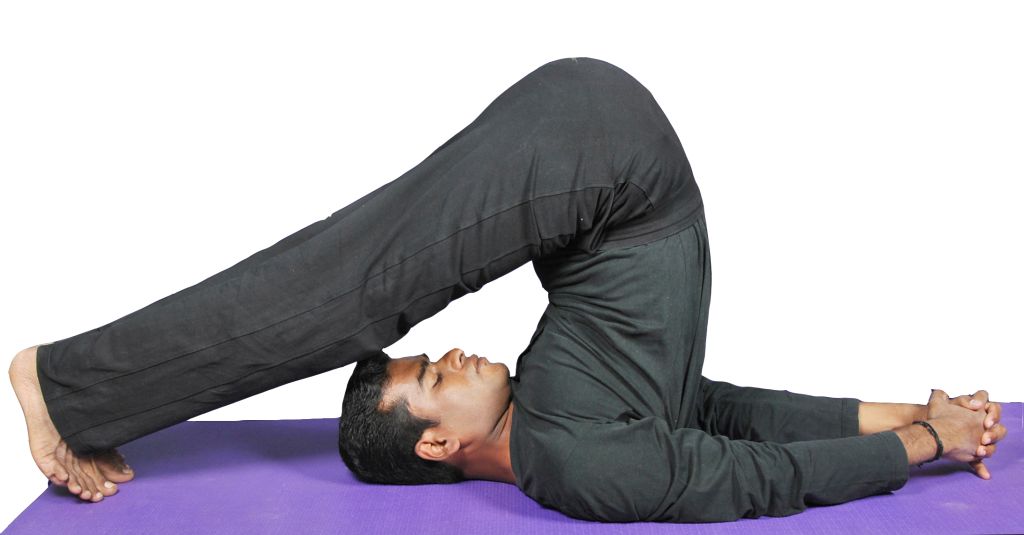
Halasana – Plough Posture (hala – plough) Practice: Lie supine on the floor with the hands extended along the body and the feet together. Raise the legs upto 90 degree, by keeping the knees straight. Press the palms against floor, raise the trunk by bending the legs towards the head and touch the toes on […]
Cakarasana – Wheel Posture
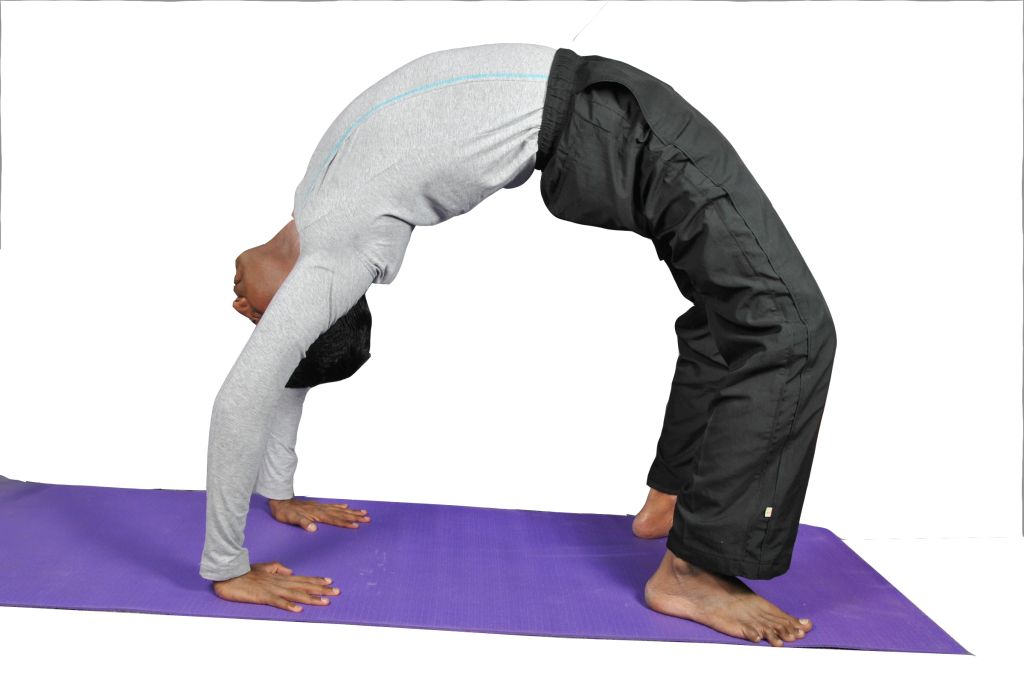
Cakarasana – Wheel Posture (cakra – wheel) Practice: Come to (Savasana) corpse posture; bring legs together foot pointing upward, arms beside thighs. Place the palms under the shoulder towards feet, elbows facing upward; bend both the knees, place heels close to butt. Inhale lift spine up, rest head on the floor. Again inhale raise head, […]
Sarvangasana ( Shoulder Standing Pose)
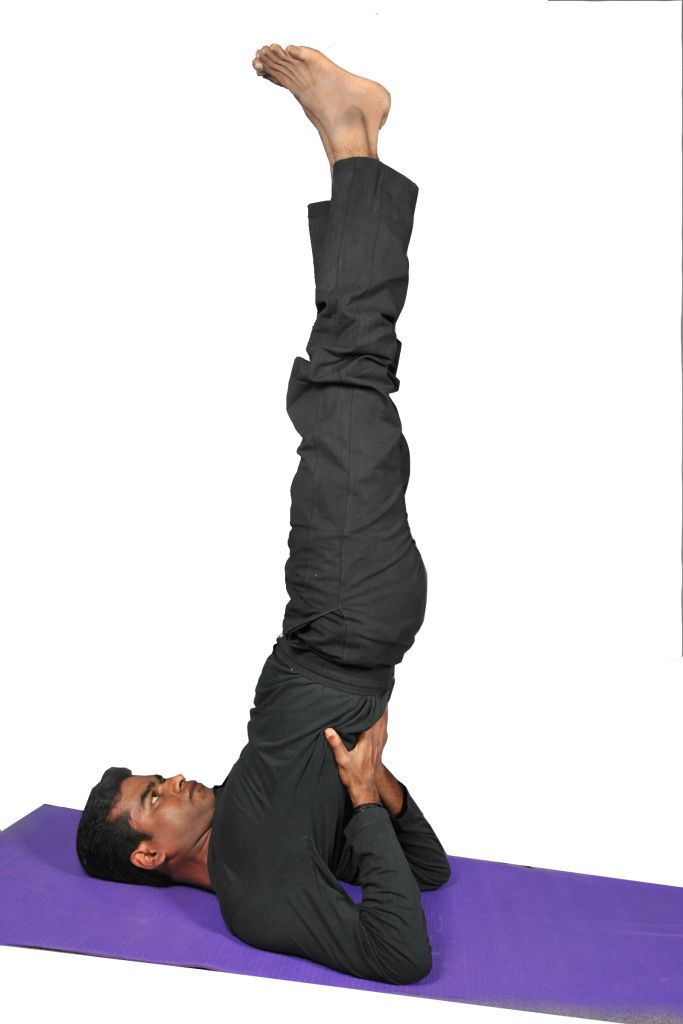
Sarvangasana – Shoulder Standing Posture (sarva- all, whole, entire, anga – limb or part of body) Practice: Lie flat on the back with feet together, arms by the sides and palms flat on the ground. Using the arms as levers raise the legs and back to a vertical position. Bend the elbows and use the […]
Mayurasana (Peacock Pose)
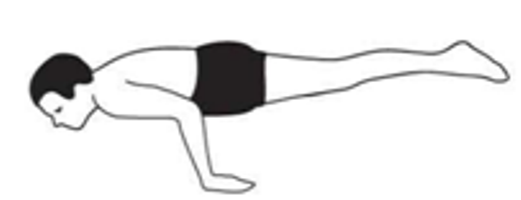
Mayurasana (Peacock Pose) Dharam avashtabhya karadvayena Tatkurparasthapitanabhiparsvah/ Uchchasano dandavad utthitah san Mayuram etat pravadanti pitham//(Chapter -1, Verse 30). Lie down on the stomach, placing both hands on the ground under the body and place the elbows at the sides of the navel. Raise the body high, keeping it like a stick. This is called […]
Paschimottanasana (Back Stretching Pose)
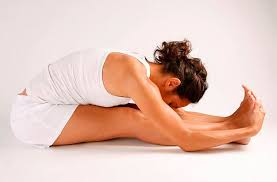
Paschimottanasana (Back Stretching Pose) Prasarya padau bhuvi dandarupau Dorbhyam padaghradvitayam ghrhitva/ Januparinyastalalatadeso Vasedidam paschimatanamahuh.// (Chapter -1, Verse 28). Stretching the legs in front on the ground, like a stick; bending forward, holding the toes with both hands and placing the forehead on the knees, is known as Paschimottanasana. (Chapter -1, Verse 28). Paschimottanasana Iti paschimatanamasanaghryam […]
Transcendental knowledge By samyama-Patanjali Yoga Sutra
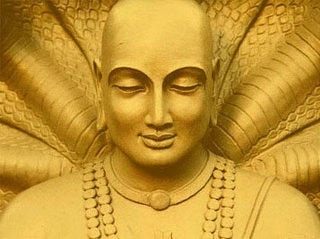
By samyama transcendental knowledge 3.55. Tarakam sarvavisayam sarvatha visayamakramam cheti vivekajam jnanam| Tarakam-transcendental Sarvavisayam-all subjects sarvatha visayam-object of every place akramam-beyond the order of successon cha-and iti-that is all vivekajam jnanam- knowledge born of viveka Transcendental knowledge includes the knowledge of all objects beyond all orders of succession and is born of discrimintaion.
Causes of downfall in YOGA path-Patanjali Yoga Sutra – Vibhuti Pada
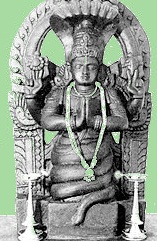
Causes of downfall in spiritual path 3.52. Sthanyupanimantrane sangasmayakaranam punanistaprasangat| Sthani-gods Upanimantrane-on being respectfully Sanga-attachment Smaya-pride Akaranam-by not Punah-once again Anista-undesirable Prasangat-by revival On being invited by the gods there should be no attachment and pride, because of the possibility of revival of the undesirable.
Gain universal state of mind-Patanjali Yoga Sutra – Vibhuti Pada
Gain universal state of mind 3.44. Bahirakalpita vrttirmahavideha tatah prakasavaranaksayah| Bahih-external Akalpita-unimaginable Vrttih-state of mind Mahavideha-existence wihout body Tatah-therefrom Prakasa-light Avarana-covering Ksayah-distraction In the state of, existence without body, the vrittis are inconceivable and outside the scope of the body, whereby the covering of light is destroyed.
Psychic powers obstacles path of Yoga-Patanjali Yoga Sutra
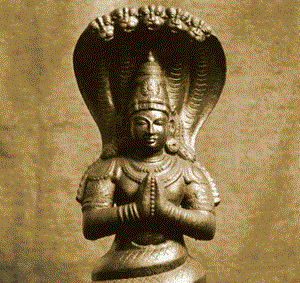
Patanjali Yoga Sutra – Vibhuti Pada – Psychic powers are obstacles in path of Yoga 3.38. Te samadhvupasarga vyutthane siddhayah| Te-they Samadhau-in samadhi Upasarga-obstacles Vyuttane-in the state of the consciousness of the world Siddhayah-psychics powers These psychic powers or siddhis are hindrances in path of samadhi, but in the state of consciousness of the world […]
What is Meditation?-Patanjali Yoga Sutra – Vibhuti Pada
Patanjali Yoga Sutra – Vibhuti Pada What is Meditation? 3.2. Tatra pratyayaikatanata dhyanam| Tatra-there(in the desha) Pratyaya-basis or content of consciousness Ekatanata-continuity Dhyanam-meditation Uninterrupted stream of the content of consciouness is Meditation