
Dhanurasana (Bow Pose)
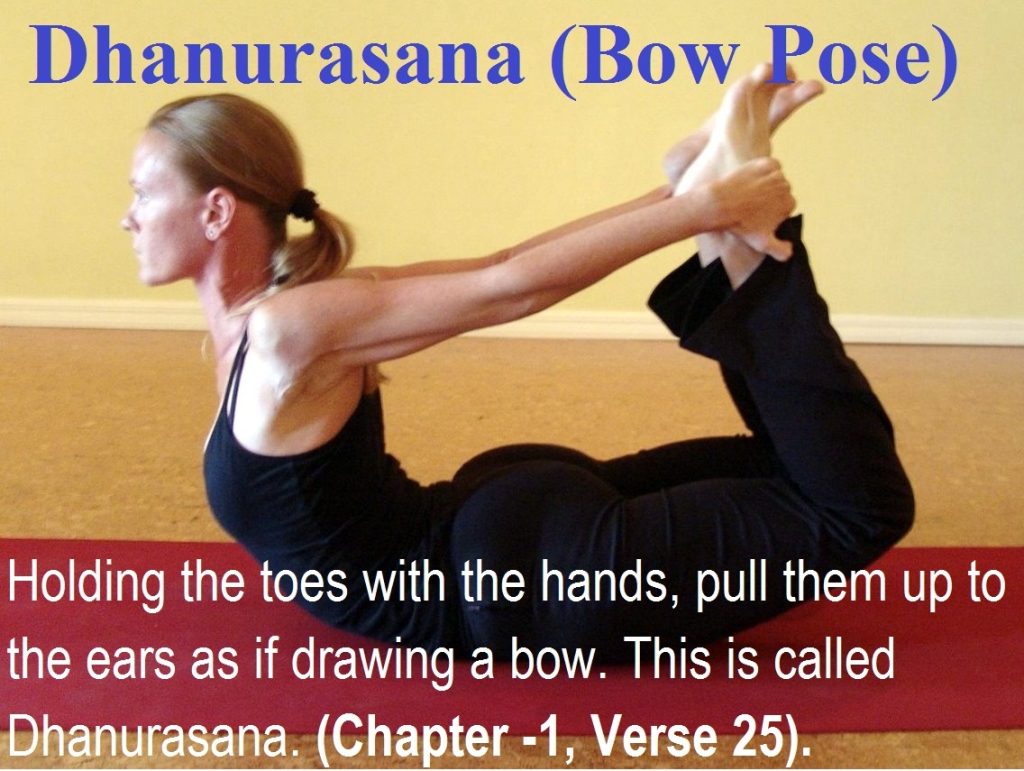
Dhanurasana (Bow Pose) Padanghushthau tu panibhyam ghrhitva sravanavadhi / Dhanurakarshanam kuryad dhanurasanam uchyate//(Chapter -1, Verse 25). Holding the toes with the hands, pull them up to the ears as if drawing a bow. This is called Dhanurasana. (Chapter -1, Verse 25).
Bhadrasana (gracious pose)
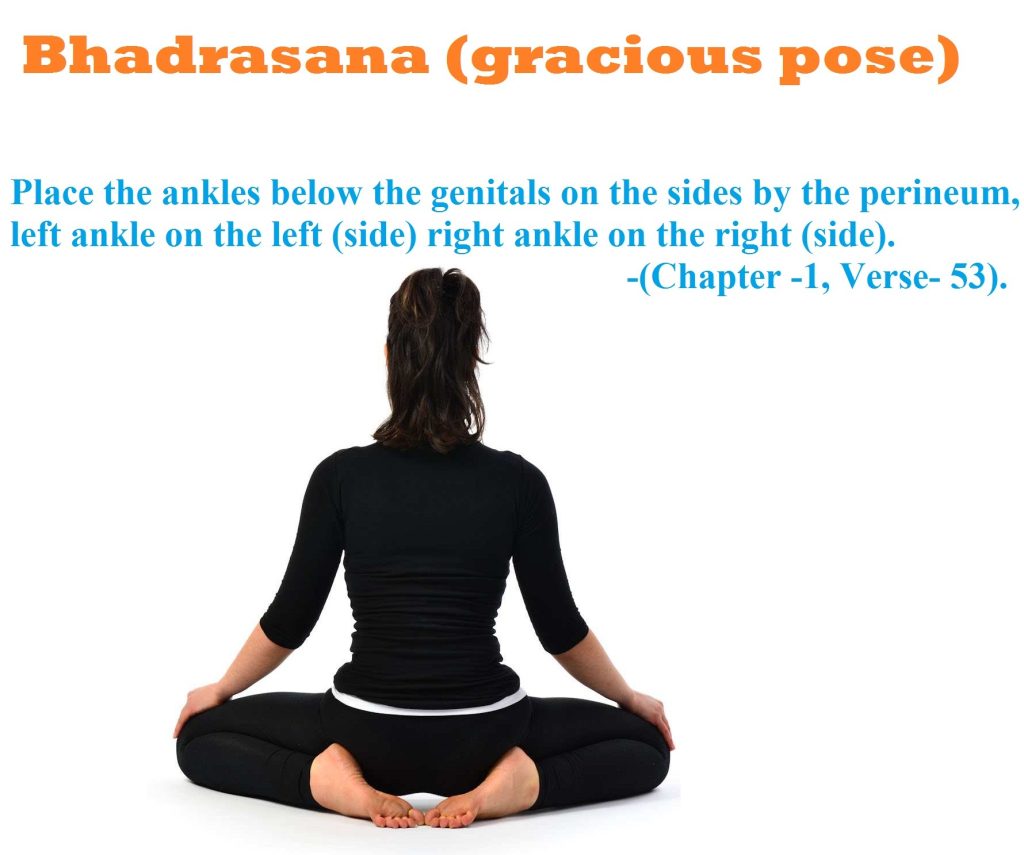
Bhadrasana (gracious pose) Ghulphau cha vrshanasyadhah Sivantyah parsvayoh kshipet / Savyaghulpham tatha savye Dakshaghulpham tu dakshine // Parsvapadau cha panibhyam Drdham baddhva sunischalam / Bhadrasanam bhavedetatsarvavyadhivinasanam //(Chapter -1, Verse- 53). Place the ankles below the genitals on the sides by the perineum, left ankle on the left (side) right ankle on the right (side).(Chapter -1, Verse- 53). Ghorakshasanamityahuridam vai siddhayoghinah/ Evamasanabandheshu yogindro vighatasramah // Abhyasennadikasuddhim mudradipavanakriyam/(Chapter -1, Verse-54). Then hold the feet, which are on their sides, firmly with the hands and remain motionless. This is bhadrasana which destroys all diseases. The yogis who are perfected (siddhas) call it gorakshasana. (Chapter -1, Verse-54).
Who can practice Yoga?
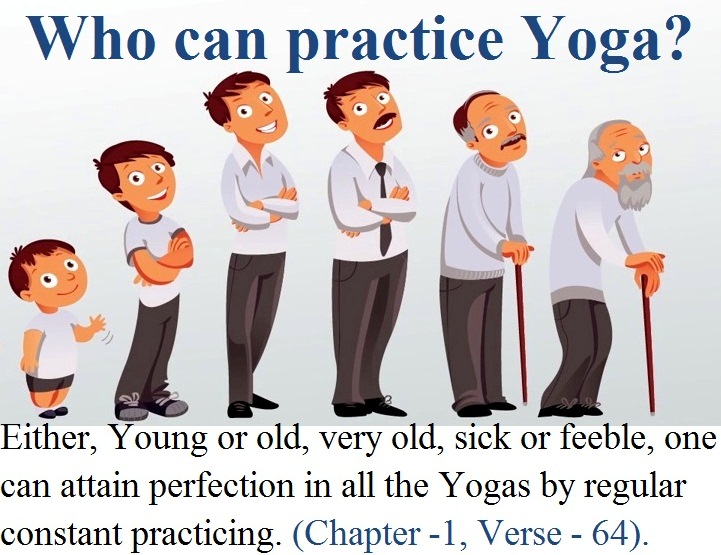
Hatha Yoga Pradipika – Who can practice Yoga? Yuvo vrddhoativrddho va vyadhito durbaloapi va / Abhyasat siddhim apnoti sarvayogheshvatandritah//(Chapter -1, Verse -64). Either, Young or old, very old, sick or feeble, one can attain perfection in all the Yogas by regular constant practicing. (Chapter -1, Verse – 64).
Food conducive for Hatha Yogic Practices

Hatha Yoga Pradipika – Food conducive for Hatha Yogic Practices Ghodhuma-sali-yava-shashtika-sobhanannam / Kshirajyakhanda-navanitasi hamadhuni// Sunthipatolakaphaladikapanchasakam / Mudghadidivyam udakam cha yamindrapathyam//(Chapter -1, Verse -62). The most supporting foods for the Hatha Yogic practices are: good grains, wheat, rice, barley, milk, ghee, brown sugar, sugar candy (crystallized sugar), honey, dry ginger, patola fruit (species of cucumber), five vegetables, mung, pulses, and pure water. (Chapter -1, Verse -62). Pushtam sumadhuram snighdham Gavyam dhatupraposhanam / Manobhilashitam yoghyam yogi bhojanamacharet//(Chapter -1, Verse-63). The Hatha Yogi should take nourishing and sweet food mixed with, ghee and milk; it should nourish the dhatus (basic body constituents) and be pleasing and suitable for body-mind-soul. (Chapter -1,Verse-63).
Food Prohibited for Hatha Yogic Practices
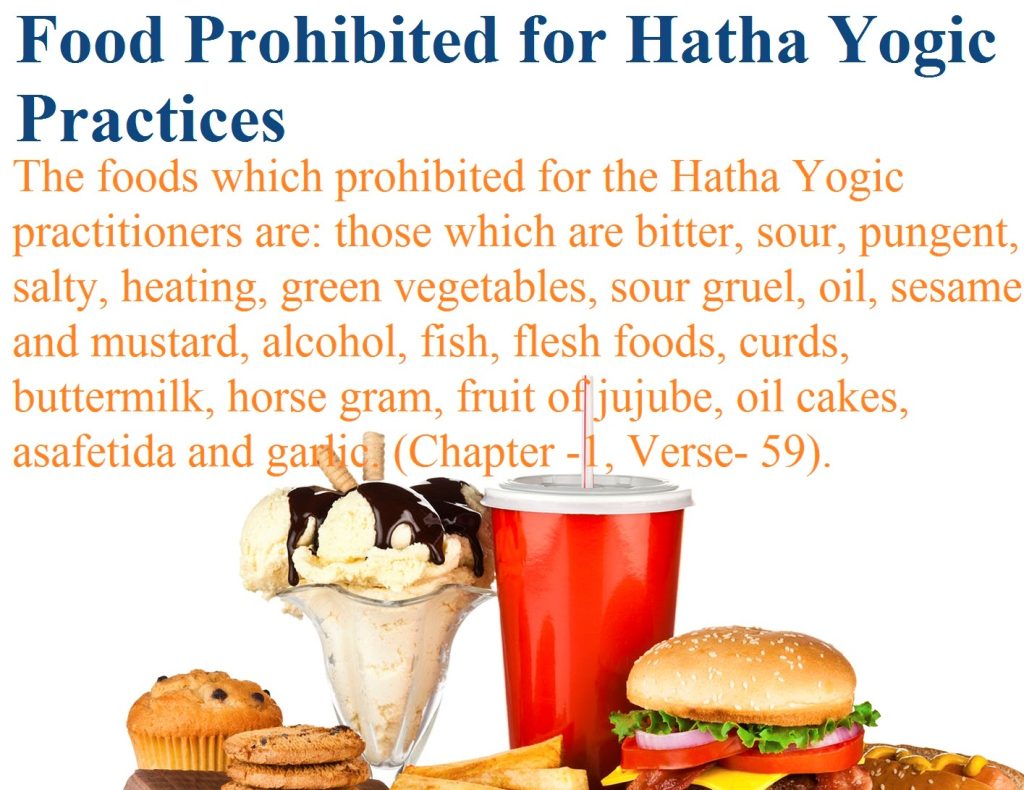
Hatha Yoga Pradipika – Food Prohibited for Hatha Yogic Practices Katvamla-tikshna-lavanoshna-haritasaka / Sauvira-taila-tila-sarshapa-madya-matsyan // Ajadi-mamsa-dadhi-takra-kulattha-kola / Pinyaka-hingghu-lasunady-amapathyam-ahuh//(Chapter -1, Verse- 59). The foods which prohibited for the Hatha Yogic practitioners are: those which are bitter, sour, pungent, salty, heating, green vegetables, sour gruel, oil, sesame and mustard, alcohol, fish, flesh foods, curds, buttermilk, horse gram, fruit of jujube, oil cakes, asafetida and garlic. (Chapter -1, Verse- 59). Bhojanam ahitam vidyāt punarasyoshnīkrtam rūksham/ Atilavanamam layuktam kadaśanaśākotkam varjyam// (Chapter -1, Verse -60). Unnourishing food should not be consumed, that which is reheated after becoming cold, which is dry (devoid of natural oil), which is excessively salty or acidic, stale or has too many mixed vegetables. (Chapter -1, Verse -60).
Moderate diet for Hatha Yogic Practices
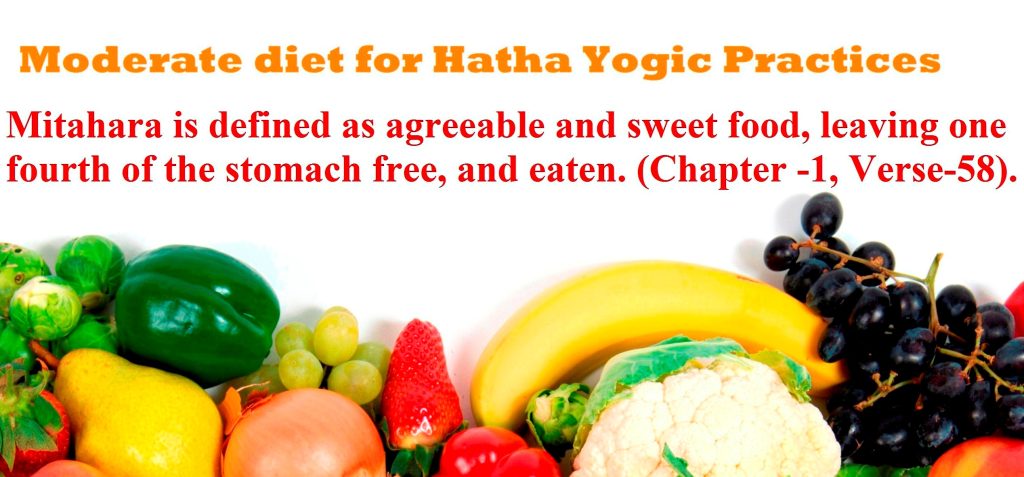
Hatha Yoga Pradipika -Moderate diet for Hatha Yogic Practices Susnighdhamadhuraharaschaturthamsavivarjitah / Bhujyate sivasamprityai mitaharah sa uchyate//(Chapter -1, Verse -58). Mitahara is defined as agreeable and sweet food, leaving one fourth of the stomach free, and eaten. (Chapter -1, Verse-58).
Electrocardiogram ECG
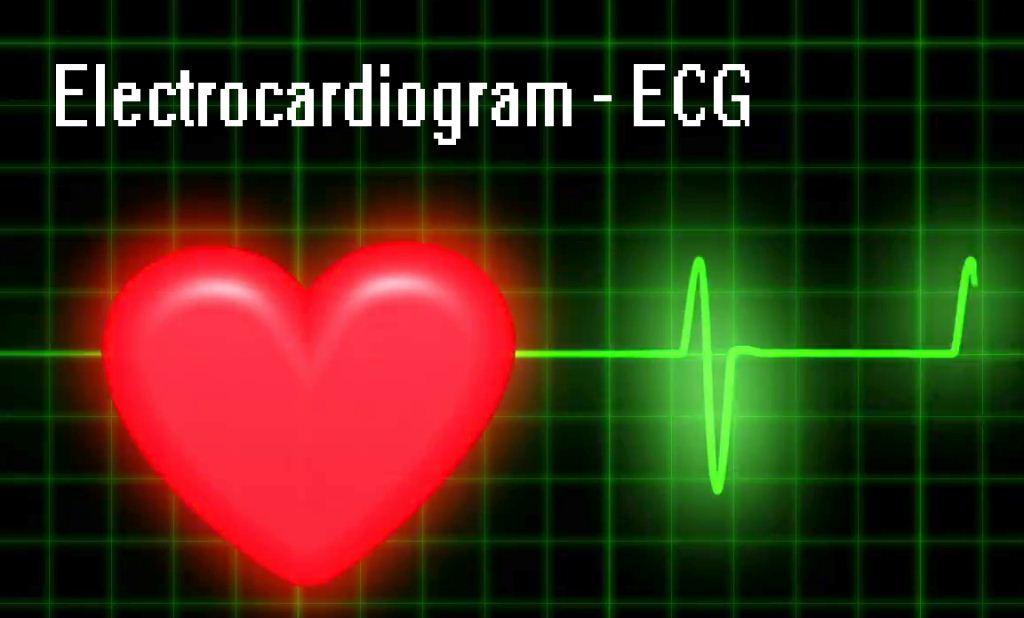
Electrocardiogram ECG: The ECG shows the heart’s electrical activity as line tracings on paper. It’s the recording of electrical activity of the heart. ECG is an instrument which is used to record the electrical current generated in the heart. By means of this instrument, the electrical current generated in the heart is conducted to remote by connecting any two parts of the body with this instrument. The connections are called as leads they are. A normal ECG contains waves, intervals, segments and one complex, as defined below. Wave: A positive or negative deflection from the baseline that indicates a specific electrical event. The waves on an ECG include the P wave, Q wave, R wave, S wave, T wave and U wave. Interval: The time between two specific ECG events. The intervals commonly measured on an ECG include the PR interval, QRS interval (also called QRS duration), QT interval and RR interval. Segment: The length between two specific points on an ECG that are supposed to be at the baseline amplitude (not negative or positive). The segments on an ECG include the PR segment, ST segment, and TP segment. Complex: The combination of multiple waves grouped together. The only main complex on an ECG is the QRS complex. The P wave indicates atrial depolarization. The QRS complex consists of a Q wave, R wave, and S wave and represents ventricular depolarization. The T wave comes after the QRS complex and indicates ventricular repolarization.
Functions of the Skeletal System
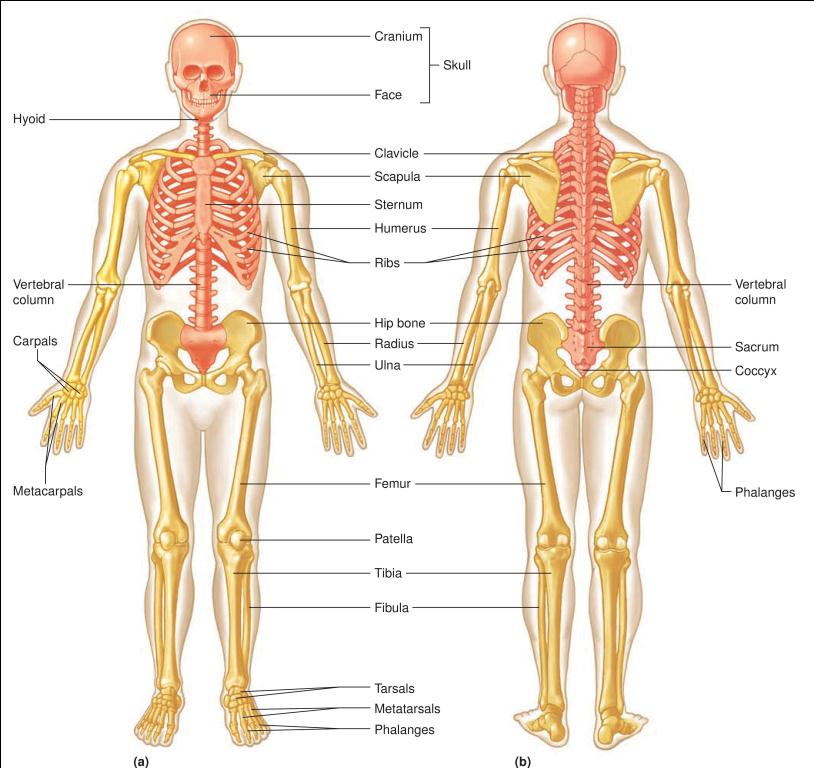
Functions of the Skeletal System? Support of the body Locomotion Provide protection for internal organs Act as a site for the production of blood cells, Calcium storage & endocrine regulation. Growth and development
Disorders of blood vessels

Disorders of blood vessels: Arteriosclerosis: Arteriosclerosis is the thickening, hardening, and loss of elasticity of the walls of arteries. This process gradually restricts the blood flow to one’s organs and tissues. Atherosclerosis: it’s a thickening of arterial walls due to the deposition of fat and white blood cells). An aneurysm: it’s a local abnormal dilation of an artery. Classified into 3 types: fusiform, saccular, and dissecting. Embolus: it’s a clot moving in circulation and becomes impacted in a small vessel. Thrombus: it’s a clot obstructing a blood vessel at the point where it’s actually formed. Venous thrombosis: its blood clot obstructing a vein. Thrombophlebitis: it’s inflammation of vein complicated by an obstructing clot. Varicose vein: it’s a dilated and tortuous superficial vein. This occurs because valves in the veins don’t close. So, the backward flow of blood in the vein is not prevented. This leads to dropping back of the column occurs in 1- long saphenous vein. 2- short saphenous vein. 3- anterior tibial vein.
Properties of skeletal muscle
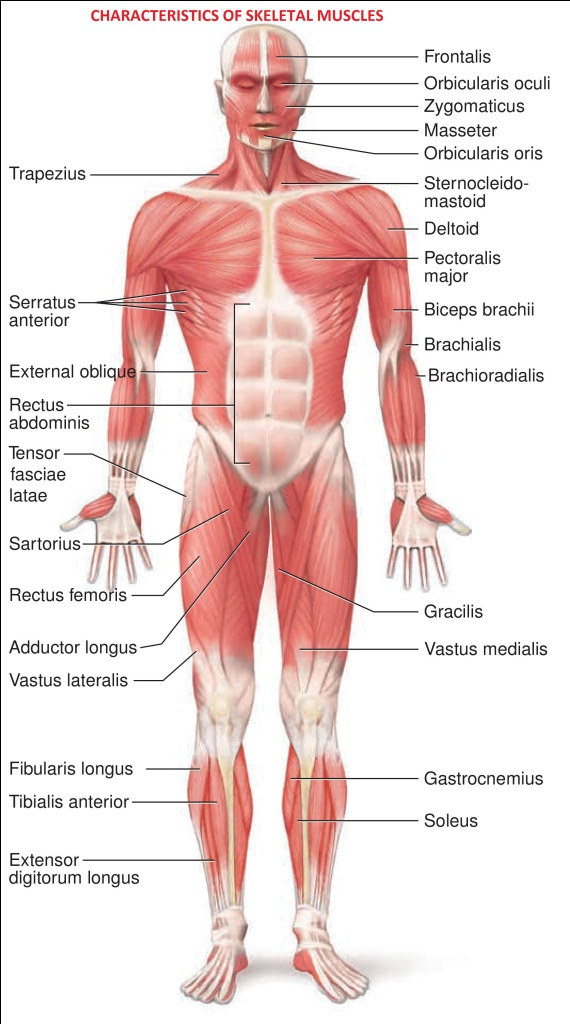
Properties of skeletal muscle: Excitability and irritability: It’s the property of a muscle to respond to a stimulus. If the response occurs in the front of a contraction. It’s called as contractility. Tonicity: Muscles of a living organism are in the partially contracted state, even at rest. They are never fully relaxed and they will resist being stretched the resistance to stretch is called as tonicity. All or none response: When a stimulus is given to a muscle, the muscle either contracts to the maximum or it doesn’t contract at all. When a weak stimulus is applied to a muscle, it doesn’t produce any response. But when the stimulus is gradually increased, the muscle contracts at a point to the maximum level. Later even a greater degree of stimulus does not increase the degree of contraction. Summation: When a second stimulus is given to a muscle even while it’s contracting due to the first stimulus, the degree of contraction is more. This phenomenon is called as a summation. The increased response is due to stimulation of more and more motor units by repetitive stimuli. Treppe or staircase phenomenon: Stimulation of a muscle at regular short intervals increases the amplitudes of contraction *which goes on increasing like the steps of a staircase*. This occurs due to increased irritability of the muscle produced by chemical products of the earlier contractions. Tetanus: When a muscle is stimulated repeatedly at a very faster rate, the muscle contracts maximally. The muscle remains at this maximal state of contraction till 1- the stimulus continues or 2- it gets fatigued. This sustained maximal contraction is called tetanus. Refractory period: Muscle, like other excitable tissues, has a period following its action potential during which the membrane will not respond to stimulation regardless of the strength. Isotonic contraction: It’s the contraction in which the muscle shortens under constant load. It occurs in muscles during walking, running or lifting. Isometric contraction: In this type of contraction, the muscle develops tension but it does not shorten in length e.g. maintaining the posture against gravity. Fatigue: It’s a state of reduced excitability and contractility of a muscle. It’s produced by rapid and repeated stimulation of the muscle. Fatigue may occur due to depletion of energy and accumulation of metabolites like lactic acid.