
Introduction
Yoga practice includes a wide range of postures that promote physical health, mental relaxation, and emotional balance. Among these postures, Happy Baby Pose (Ananda Balasana) is a gentle, restorative, and playful yoga posture commonly practiced toward the end of a yoga session. It is widely used in Hatha Yoga, Yin Yoga, Restorative Yoga, and therapeutic yoga practices because of its calming and deeply releasing effects on the hips, spine, and nervous system.
Happy Baby Pose resembles the natural position of a joyful infant lying on the back and holding the feet with the hands. Babies instinctively move in this way because it helps them develop hip mobility, spinal flexibility, and neuromuscular coordination. In yoga, this posture recreates that natural movement pattern, encouraging relaxation while gently stretching the hips and lower back.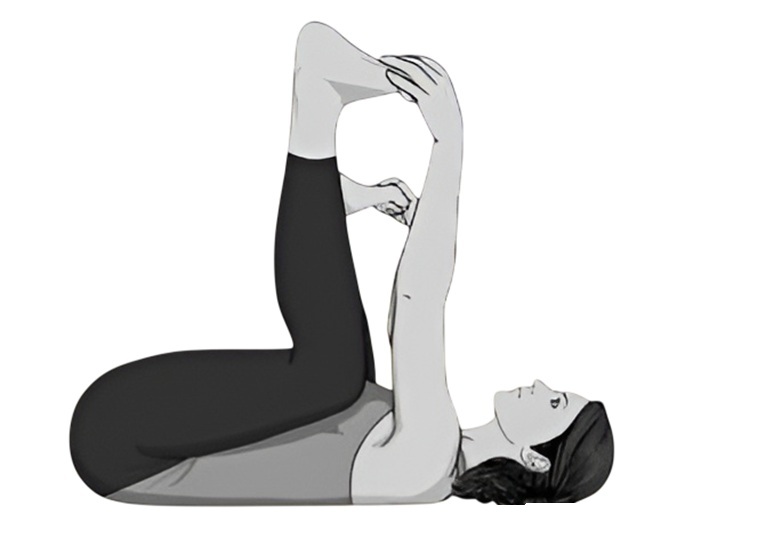
From a physical perspective, Happy Baby Pose provides a deep stretch to the inner thighs, groin, and hips, while also lengthening the spine and releasing tension in the lower back. It can help counteract the effects of long periods of sitting, which often cause tightness in the hips and compression in the lumbar spine. By opening the hips and decompressing the lower back, this pose contributes to improved posture and spinal health.
Beyond its physical benefits, Happy Baby Pose also has significant effects on the nervous system. Because the posture is performed lying on the back in a relaxed position, it encourages parasympathetic nervous system activation, which promotes relaxation and stress reduction. The pose often creates a sense of comfort, ease, and emotional release, making it a valuable posture in yoga therapy and relaxation practices.
From an anatomical and biomechanical perspective, Happy Baby Pose involves coordinated movement of the hip joints, knee joints, and ankle joints, while the spine remains in a neutral or slightly flexed position. The posture emphasizes hip abduction, hip flexion, and external rotation, movements that are essential for maintaining healthy joint mobility and preventing stiffness.
Happy Baby Pose is often included in yoga sequences as a counterpose for backbends, standing poses, or hip-strengthening postures, because it helps release muscular tension and restore balance in the body.
Word Meaning and Etymology
The Sanskrit name Ananda Balasana consists of three main components:
- Ananda – bliss, joy, happiness
- Bala – child or baby
- Asana – posture or pose
Thus, Ananda Balasana translates to “The Pose of the Happy or Blissful Baby.”
The name reflects the posture’s resemblance to the natural movement of infants lying on their backs while holding their feet. Babies instinctively move in this way because it helps develop mobility in the hips and coordination in the body.
In yoga philosophy, the word Ananda also refers to a state of inner joy and contentment. Practicing this pose can evoke feelings of relaxation, playfulness, and emotional release, aligning with the deeper meaning of the word.
Definition of Happy Baby Pose
Happy Baby Pose is a supine yoga posture performed while lying on the back, where the practitioner bends the knees toward the chest and holds the feet with the hands while allowing the knees to move outward toward the armpits.
Key characteristics of the pose include:
- the spine resting on the floor
- the hips flexed and externally rotated
- the knees bent and moving toward the shoulders
- the hands holding the feet or ankles
The posture creates a gentle stretch in the hips and inner thighs while relaxing the spine and encouraging deep breathing.
Method of Practice (Step-by-Step)
Step 1: Starting Position
Begin by lying on the back in a comfortable position.
- Place the body flat on the mat.
- Relax the arms beside the body.
- Take a few deep breaths.
Step 2: Bend the Knees
- Slowly bend both knees.
- Bring the knees toward the chest.
Step 3: Open the Knees
- Gently separate the knees apart.
- Move the knees toward the armpits.
Step 4: Hold the Feet
- Reach the hands upward.
- Hold the outer edges of the feet.
If holding the feet is difficult, hold the ankles or shins.
Step 5: Align the Ankles and Knees
- Position the ankles directly above the knees.
- Keep the shins perpendicular to the floor.
Step 6: Relax the Spine
- Keep the lower back resting on the mat.
- Avoid lifting the shoulders excessively.
Step 7: Maintain the Pose
Remain in the pose for 5–10 deep breaths.
Optional movement:
- gently rock side to side.
Step 8: Release the Pose
- Slowly release the feet.
- Bring the knees back to the chest.
- Extend the legs and relax.
Alignment Cues
Proper alignment enhances safety and effectiveness.
Spine
- Keep the spine relaxed and neutral.
- Avoid lifting the lower back.
Hips
- Allow the hips to open naturally.
- Avoid forcing the knees downward.
Knees
- Knees move toward the armpits.
- Maintain comfortable spacing.
Ankles
- Ankles align above the knees.
Shoulders
- Relax the shoulders toward the floor.
Preparatory Practices
Several poses help prepare the body for Happy Baby Pose.
Knees-to-Chest Pose
Gently stretches the lower back.
Supine Butterfly Pose
Opens the hips.
Cat–Cow Pose
Improves spinal mobility.
Reclining Hand-to-Big-Toe Pose
Enhances hamstring flexibility.
Counterposes
Counterposes help neutralize the body after Happy Baby Pose.
Supine Twist
Releases the spine.
Legs Extended Relaxation
Restores neutral alignment.
Bridge Pose
Strengthens the back and hips.
Modifications
Happy Baby Pose can be modified for comfort and accessibility.
Limited Hip Mobility
Hold the ankles or shins instead of the feet.
Tight Hamstrings
Use a yoga strap around the feet.
Lower Back Sensitivity
Place a folded blanket under the pelvis.
Shoulder Tightness
Hold the backs of the thighs instead of the feet.
Benefits of Happy Baby Pose
Happy Baby Pose provides many physical and psychological benefits.
1. Opens the Hips
The posture stretches the inner thighs and hip joints.
2. Relieves Lower Back Tension
The pose gently decompresses the lumbar spine.
3. Improves Hip Mobility
Encourages movement in multiple hip joint directions.
4. Reduces Stress and Anxiety
The supine position promotes relaxation.
5. Enhances Digestion
Gentle pressure on the abdomen stimulates digestive organs.
6. Improves Circulation
The posture encourages blood flow in the pelvis and lower body.
7. Encourages Playfulness and Emotional Release
The posture often creates a sense of ease and joy.
Contraindications
Certain individuals should practice caution.
Knee Injury
Avoid deep knee flexion.
Hip Injury
Practice with modifications.
Neck Injury
Keep the head relaxed on the mat.
Pregnancy (Late Stages)
Avoid compressing the abdomen.
Muscles Involved
Happy Baby Pose involves several muscle groups.
Hip Muscles
- Gluteus maximus
- Gluteus medius
- Piriformis
- Adductors
Inner Thigh Muscles
- Adductor longus
- Adductor magnus
- Gracilis
These muscles experience stretching.
Core Muscles
- Rectus abdominis
- Transverse abdominis
Support pelvic stability.
Back Muscles
- Erector spinae
- Multifidus
Relax and lengthen.
Kinesiology
Kinesiology examines muscular activity during movement.
Hip Joint
Performs:
- flexion
- abduction
- external rotation
Knee Joint
Maintains flexion.
Ankle Joint
Maintains neutral or slight dorsiflexion.
Kinematics
Kinematics describes motion without analyzing forces.
Hip Motion
The hips move in three directions simultaneously:
- flexion
- abduction
- external rotation
Knee Motion
The knees remain bent.
Spinal Motion
The spine remains mostly neutral.
Biomechanics
Biomechanics analyzes forces acting on the body.
Base of Support
The back rests fully on the mat.
Gravity
Gravity assists the opening of the hips.
Joint Loading
Minimal joint compression occurs.
Biomechanism of the Pose
Happy Baby Pose works through coordinated muscular relaxation and stretching.
Hip Opening
External rotation creates space in the hip joints.
Pelvic Position
Pelvis remains neutral or slightly tilted.
Spinal Decompression
The lower back lengthens and relaxes.
Functional Anatomy and Physiology
Happy Baby Pose influences several physiological systems.
Musculoskeletal System
Improves flexibility in the hips and inner thighs.
Nervous System
Activates the parasympathetic nervous system, promoting relaxation.
Digestive System
Gentle compression stimulates digestion.
Circulatory System
Improves blood circulation in the pelvic region.
Teaching Methodology
Teaching Happy Baby Pose requires clear instruction and careful observation.
Demonstration
Teachers should demonstrate the posture slowly.
Verbal Instructions
Examples include:
- “Bring your knees toward your chest.”
- “Hold the outer edges of your feet.”
- “Relax your spine on the mat.”
Common Mistakes
Lifting the Lower Back
Encourage grounding through the pelvis.
Forcing the Knees Down
Allow natural movement.
Shoulder Tension
Encourage relaxation.
How to Correct and Adjust While Teaching
Verbal Corrections
Encourage gentle stretching rather than force.
Visual Observation
Observe:
- hip alignment
- knee position
- spinal relaxation
Hands-On Adjustments
With consent:
Hip Adjustment
Guide the knees toward comfortable alignment.
Spinal Relaxation
Encourage the lower back to relax into the mat.
Shoulder Relaxation
Gently guide shoulders toward the floor.
Teaching Tips for Yoga Instructors
- Encourage slow breathing.
- Avoid forcing the stretch.
- Use props when necessary.
- Allow playful movement.
Conclusion
Happy Baby Pose (Ananda Balasana) is a gentle and restorative yoga posture that promotes relaxation, flexibility, and emotional ease. The posture recreates the natural movement pattern of infants, encouraging mobility in the hips and release in the lower back.
From an anatomical perspective, the pose primarily affects the hip joints, inner thighs, and lumbar spine, while also stimulating the nervous system and digestive organs. The posture is particularly beneficial for relieving tension in the hips and promoting relaxation after more demanding yoga poses.