
Parivrtta Parsvakonasana – Prayer Hand (Revolved Side Angle Pose – Namaste Hands)
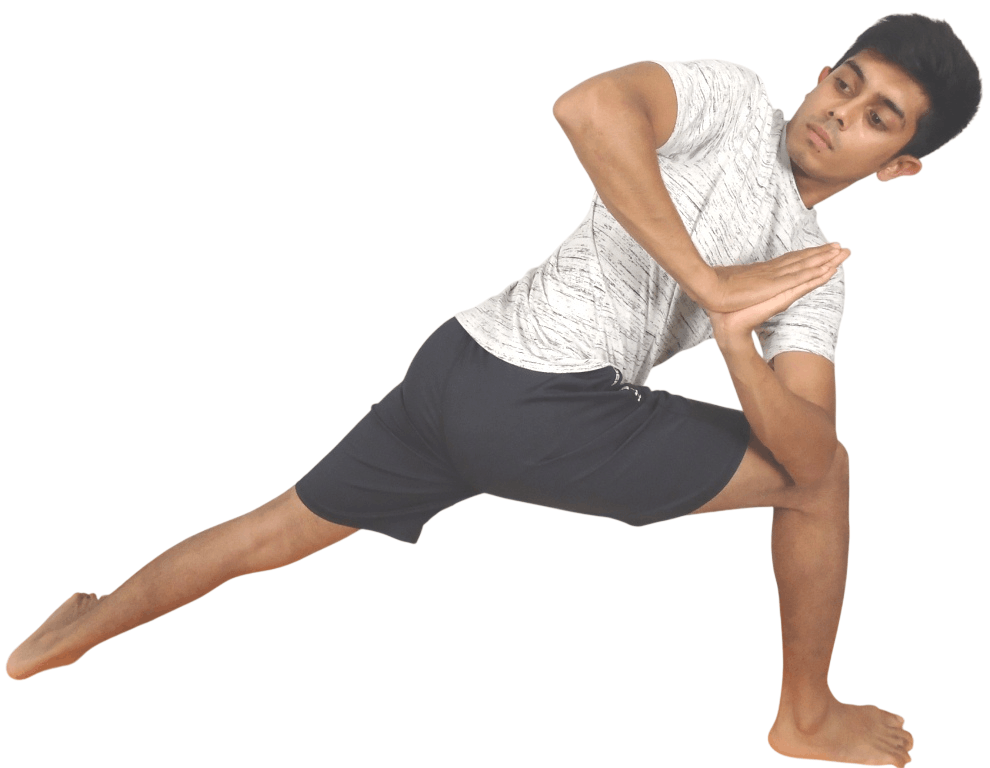
1. Introduction Revolved Side Angle Pose, known in Sanskrit as Parivrtta Parsvakonasana, is a dynamic standing yoga posture that integrates twisting, balance, strength, and flexibility. In the Namaste Hands (Prayer Hands) variation, the palms are pressed together in front of the chest while the torso twists over the bent front leg. This variation emphasizes core engagement, spinal rotation, and postural alignment, making it a powerful posture in both traditional and modern yoga practice. The pose belongs to the family of standing twisting postures, which are widely practiced in Hatha Yoga, Vinyasa Yoga, and Ashtanga Yoga. Twisting poses play a crucial role in yoga because they stimulate the spine, abdominal organs, and nervous system, while also improving balance and coordination. Revolved Side Angle Pose combines several important biomechanical actions, including hip flexion, spinal rotation, knee flexion, and shoulder stabilization. The practitioner steps one foot forward into a lunge-like stance while rotating the torso toward the front leg. The hands come into a prayer position, creating a closed kinetic chain that encourages deeper twisting and muscular activation. From an anatomical perspective, this posture requires coordination between the lower body stabilizers, core muscles, and spinal rotators. The legs provide a strong foundation, while the abdominal muscles facilitate rotation of the torso. Biomechanically, the pose challenges the body’s ability to maintain stability while rotating around the spine. The center of gravity shifts forward, and the body must engage the core and lower limb muscles to maintain balance and prevent collapse. Physiologically, Revolved Side Angle Pose may improve digestive function, spinal mobility, muscular strength, and circulation. The twisting motion gently compresses and releases abdominal organs, which may support detoxification and digestive efficiency. Energetically, the posture stimulates the Manipura Chakra (solar plexus energy center), associated with personal power, metabolism, and transformation. The twisting action around the abdominal region is believed to activate energy flow and promote internal balance. Because the pose is moderately advanced, proper alignment, gradual progression, and mindful breathing are essential. Understanding the functional anatomy, biomechanics, and teaching methods allows practitioners and instructors to perform the posture safely and effectively. 2. Word Meaning and Etymology The Sanskrit name Parivrtta Parsvakonasana consists of several components: Parivrtta – revolved or twistedParsva – sideKona – angleAsana – posture Thus, the pose translates as “Revolved Side Angle Pose.” Namaste Hands The Namaste Hands variation refers to placing the palms together in a prayer position (Anjali Mudra) at the center of the chest. Symbolic Meaning The twisting nature of the posture symbolizes transformation and purification, while the prayer hands represent balance, focus, and mindfulness. 3. Definition of the Pose Revolved Side Angle Pose is a standing twisting posture in which one leg is bent forward in a lunge while the torso rotates toward the front leg and the hands press together in a prayer position. Key Characteristics The posture is primarily practiced to improve spinal mobility, strengthen the legs, and stimulate abdominal organs. 4. Method of Practice (Step-by-Step) Starting Position Step-by-Step Instructions Step 1 – Step the Feet Apart Step the left foot back into a lunge position. Step 2 – Bend the Front Knee Bend the right knee to approximately 90 degrees. Step 3 – Align the Hips Keep the hips facing forward. Step 4 – Bring Hands to Prayer Place the palms together in front of the chest. Step 5 – Twist the Torso Rotate the torso toward the right side. Step 6 – Hook the Elbow Place the left elbow outside the right thigh. Step 7 – Press the Palms Press the palms firmly together to deepen the twist. Step 8 – Lengthen the Spine Maintain a long spine while twisting. Step 9 – Hold the Pose Remain in the posture for 5–10 breaths. Step 10 – Release Return to the starting position and repeat on the opposite side. 5. Alignment Cues Proper alignment ensures safe and effective practice. Front Knee Keep the knee directly above the ankle. Back Leg Extend the back leg strongly. Hips Square the hips toward the front. Spine Lengthen the spine before twisting. Chest Open the chest while maintaining the twist. Shoulders Relax the shoulders away from the ears. 6. Preparatory Practices Several poses prepare the body for Revolved Side Angle Pose. Low Lunge Opens the hip flexors. Standing Forward Fold Improves hamstring flexibility. Twisted Chair Pose Develops spinal rotation. Revolved Triangle Pose Introduces deeper twisting. 7. Counterposes Counterposes help release tension after the posture. Forward Fold Relaxes the spine. Child’s Pose Releases the lower back. Gentle Backbend Opens the front body. 8. Modifications Block Support Place a yoga block under the lower hand. Shorter Stance Reduce the distance between the feet. Hands on Hips Practice the twist without prayer hands. Wall Support Practice near a wall for balance. 9. Muscles Involved Primary Muscles QuadricepsGluteus maximusObliquesErector spinae Secondary Muscles HamstringsHip flexorsShoulder stabilizersCore muscles These muscles contribute to stability, rotation, and balance. 10. Kinesiology Kinesiology examines how muscles produce movement. Joint Actions Hip – flexion and stabilizationKnee – flexion in the front legSpine – rotationShoulders – stabilization Muscle Activity Core muscles create rotation while leg muscles maintain stability. 11. Kinematics Kinematics analyzes movement patterns. Plane of Motion The twist occurs mainly in the transverse plane. Axis of Rotation Spinal rotation occurs around a vertical axis. Movement Pattern The posture combines static holding with rotational movement. 12. Biomechanics Biomechanics studies the forces acting on the body. Base of Support The base of support includes: Center of Gravity The center of gravity shifts toward the front leg. Load Distribution Body weight is shared between the legs. 13. Functional Anatomy Spine The thoracic spine is the primary region for rotation. Pelvis The pelvis stabilizes the lower body. Shoulder Girdle The shoulders assist in maintaining the prayer position. Core Muscles Core muscles control spinal rotation. 14. Physiological Effects Musculoskeletal System Strengthens the legs and improves spinal mobility. Digestive System Abdominal compression may stimulate digestion. Circulatory System Enhances blood circulation. Nervous System Improves balance and coordination. 15. Benefits Physical Benefits Therapeutic Benefits Mental Benefits 16. Contraindications Revolved Side Angle Pose should be practiced cautiously in the following conditions: Safety Guidelines 17. Teaching and Adjustment Techniques Verbal Instructions Teachers should encourage students to: Observational Teaching Teachers should observe: Hands-On Adjustments Teachers may