
Guru Mudra (Gesture of the Teacher or Wisdom)
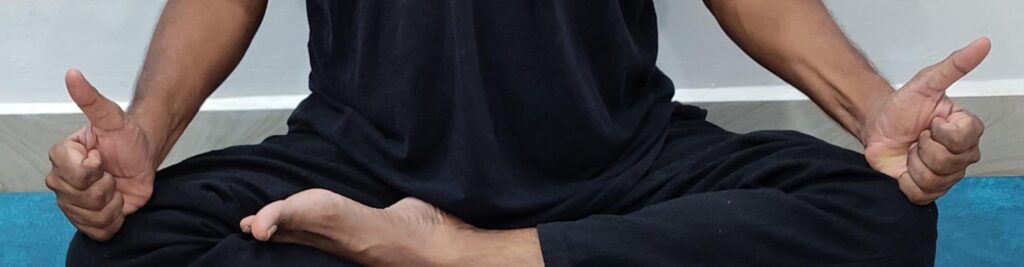
Guru Mudra (Gesture of the Teacher or Wisdom) Introduction Guru Mudra, also called the Gesture of the Teacher, is a yogic hand gesture used to cultivate wisdom, knowledge, and clarity of thought. It is commonly practiced during meditation, pranayama, and mudra therapy to enhance learning, mental focus, and spiritual insight. This mudra symbolizes the guidance of the inner teacher (Guru) and the awakening of intuitive wisdom. Meaning Etymology: Guru means teacher, master, or one who dispels darkness (ignorance) in Sanskrit. Mudra means gesture or seal. Symbolism: Represents knowledge, guidance, and illumination of consciousness. Encourages mental clarity, wisdom, and introspection. Symbolically helps balance prana and enhance cognitive and spiritual development. How to Perform Guru Mudra Sit comfortably in a meditation posture (Sukhasana, Padmasana, or Vajrasana) with a straight spine. Make fists with both hands, with your thumbs pointing straight up. Rest the fists on their respective knees. Hold for as long as you can sit quietly or meditate. Close your eyes and focus on slow, deep breathing, visualizing wisdom and clarity flowing into your mind. Maintain this mudra for 10–20 minutes daily during meditation or pranayama. Tip: Practice in a calm environment to maximize mental clarity and spiritual focus. Benefits Enhances memory, concentration, and cognitive performance. Promotes mental clarity, wisdom, and insight. Reduces stress, anxiety, and mental fatigue. Supports prana flow and subtle energy balance. Encourages spiritual awareness and intuitive understanding. Strengthens mind-body coordination and mindfulness. Contraindications Avoid if there is pain, inflammation, or injury in fingers, hands, or wrists. People with joint limitations or arthritis should practice gently. Discontinue if discomfort occurs during prolonged practice. Anatomy & Physiology Involves phalanges, interphalangeal joints, intrinsic hand muscles, and forearm muscles. Stimulates median, ulnar, and radial nerve endings, enhancing sensory perception and cortical activity. Improves circulation in hands and forearms, indirectly supporting autonomic nervous system regulation. Promotes relaxation of shoulders, upper back, and chest, facilitating deeper breathing and energy flow. Kinesiology Isometric contraction of thenar, hypothenar, and interossei muscles maintains finger position. Minimal engagement of forearm muscles, allowing relaxed posture. Enhances fine motor control, proprioception, and hand awareness. Supports mind-body integration through deliberate hand placement and meditative focus. Neurology Activates median, ulnar, and radial nerves, stimulating the somatosensory cortex. Promotes parasympathetic nervous system activation, reducing stress and improving calmness. Visualization of knowledge flow strengthens neural pathways associated with memory, cognition, and insight. Duration of Practice Beginners: 5–10 minutes daily. Intermediate/Advanced: 15–20 minutes, once or twice daily. Can be practiced during meditation, pranayama, or mindfulness sessions. Counter Mudra Prana Mudra or Gnana Mudra can act as counter mudras to energize and stabilize after inward-focused mental practices. Alternating Guru Mudra with these mudras balances wisdom-focused calmness with energy activation. Conclusion Guru Mudra is a powerful gesture for cultivating wisdom, mental clarity, and spiritual insight. Regular practice enhances focus, mindfulness, cognitive function, and intuitive understanding, making it an essential tool in meditation, pranayama, and yoga therapy. FAQ Q1: Can Guru Mudra improve memory and learning?A1: Yes, it stimulates brain activity and enhances cognitive performance. Q2: Can children practice it?A2: Yes, under guidance and with gentle finger placement. Q3: Is visualization important?A3: Visualization enhances effects, but mindful hand placement and breathing are effective on their own. Q4: Can it be combined with other mudras?A4: Yes, especially with meditation or pranayama mudras for enhanced energy and focus. References Swami Satyananda Saraswati, Mudras for Healing and Transformation, Bihar Yoga Publications, 2012. Dr. Harish Johari, Mudra: The Gateway to Health, Inner Traditions, 1994. B.K.S. Iyengar, Light on Yoga, HarperCollins, 2005. Yoga Journal, Mudras for Mental Clarity, Learning, and Focus, 2018. Hatha Yoga Pradipika and yogic texts on prana, meditation, and cognitive enhancement.
Gupta Mudra (Hidden Gesture)
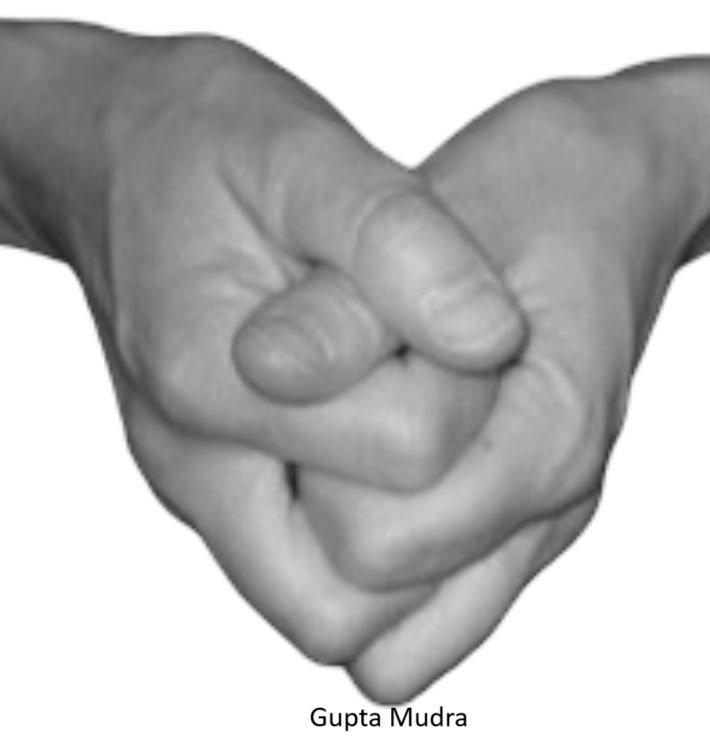
Gupta Mudra (Hidden Gesture) Introduction Gupta Mudra, also called the Hidden Gesture, is a yogic hand gesture used to internalize energy, enhance concentration, and promote inner calm. This mudra is commonly practiced during meditation and pranayama to encourage mental clarity, spiritual insight, and subtle energy flow. It is believed to help the practitioner focus inward, balance prana, and cultivate mindfulness. Meaning Etymology: Gupta means hidden or secret in Sanskrit. Mudra means gesture or seal. Symbolism: Represents inner awareness, introspection, and subtle energy control. Encourages mental focus, self-discipline, and spiritual insight. Symbolically helps retain and circulate prana within the body. How to Perform Gupta Mudra Sit comfortably in a meditation posture (Sukhasana, Padmasana, or Vajrasana) with a straight spine. Interlace fingers inwards towards palms, cross right thumb over left and hold in front of abdomen. Close your eyes and focus on deep, slow breathing, visualizing energy being retained and circulated within the body. Maintain this mudra for 10–20 minutes daily during meditation or pranayama. Tip: Practicing in a quiet environment enhances mindfulness and internal energy awareness. Benefits Enhances mental focus, clarity, and memory. Promotes inner calm, emotional stability, and mindfulness. Stimulates subtle energy circulation within the body. Supports prana retention and balancing of energy channels. Helps reduce stress, anxiety, and mental fatigue. Encourages spiritual insight and self-awareness. Contraindications Avoid if there is injury, pain, or inflammation in fingers, hands, or wrists. People with joint limitations or arthritis should practice gently. Discontinue if discomfort occurs during practice. Anatomy & Physiology Involves phalanges, interphalangeal joints, intrinsic hand muscles, and forearm muscles. Stimulates median and ulnar nerve endings, enhancing sensory perception and cortical activity. Improves circulation in hands and forearms, indirectly supporting autonomic nervous system regulation. Promotes relaxation in shoulders, chest, and upper back, facilitating deep breathing and subtle energy flow. Kinesiology Isometric contraction of thenar, hypothenar, and interossei muscles maintains finger position. Minimal engagement of forearm muscles, allowing relaxation while maintaining posture. Enhances fine motor control, proprioception, and hand awareness. Supports mind-body integration through intentional hand placement and meditative focus. Neurology Activates median and ulnar nerves, stimulating somatosensory and motor cortices. Promotes parasympathetic nervous system activation, reducing stress and enhancing calmness. Visualization of energy retention strengthens neural pathways associated with concentration, introspection, and mindfulness. Duration of Practice Beginners: 5–10 minutes daily. Intermediate/Advanced: 15–20 minutes, once or twice daily. Can be practiced during meditation, pranayama, or energy-balancing routines. Counter Mudra Prana Mudra or Gnana Mudra can act as counter mudras to energize and activate subtle energy after inward-focused practice. Alternating Gupta Mudra with these mudras balances inner awareness with outward energy activation. Conclusion Gupta Mudra is a powerful gesture for introspection, mental clarity, and subtle energy balance. Regular practice enhances focus, mindfulness, calmness, and spiritual insight, making it an excellent addition to meditation, pranayama, and yoga therapy practices. FAQ Q1: Can Gupta Mudra improve concentration?A1: Yes, it enhances focus and mental clarity by stimulating subtle energy pathways. Q2: Can children practice it?A2: Yes, under supervision and with gentle finger placement. Q3: Is visualization necessary?A3: Visualization enhances effects, but mindful hand placement and breathing are sufficient. Q4: Can it be combined with other mudras?A4: Yes, especially with pranayama or meditation mudras for energy balancing. References Swami Satyananda Saraswati, Mudras for Healing and Transformation, Bihar Yoga Publications, 2012. Dr. Harish Johari, Mudra: The Gateway to Health, Inner Traditions, 1994. B.K.S. Iyengar, Light on Yoga, HarperCollins, 2005. Yoga Journal, Mudras for Meditation, Focus, and Energy Balance, 2018. Hatha Yoga Pradipika and yogic texts on subtle energy, prana flow, and meditation practices.
Diaphragm Breathing (Yogic Abdominal Breathing)
Diaphragm Breathing (Yogic Abdominal Breathing) Introduction Diaphragm breathing, also called abdominal breathing or belly breathing, is a fundamental pranayama technique that focuses on the conscious use of the diaphragm muscle to optimize breathing efficiency. It forms the foundation for most yogic pranayama practices and is essential for cultivating relaxation, awareness, and energy balance. Definition Diaphragm breathing is the practice of inhaling deeply so that the diaphragm contracts and moves downward, causing the abdomen to expand, while exhaling slowly and completely, allowing the diaphragm to relax and move upward. Meaning Diaphragm = A dome-shaped muscle beneath the lungs. Breathing = Inhalation + exhalation with awareness. Thus, it means using the diaphragm consciously for deeper, fuller, and healthier breaths. Etymology Diaphragm: From Greek “dia” (through) + “phragma” (fence or partition). In Yogic terms, it corresponds to Adhama Pranayama (lower abdominal breathing) forming the first stage of Full Yogic Breathing (Vibhagiya Pranayama). Philosophy Yogic philosophy considers breath as Prana (life force). Diaphragm breathing allows optimal pranic absorption, calms the mind, and creates a state of balance. It is also seen as a way to purify nadis and prepare for higher pranayama. Concept Expands lung capacity by engaging the lower lobes. Promotes parasympathetic nervous system activation. Strengthens the mind–body connection through awareness. Preparatory Practice Before starting: Relax in Shavasana or Sukhasana. Bring awareness to natural breathing. Release tension from chest and shoulders. How to Perform Sit comfortably or lie down in Shavasana. Place one hand on the chest, the other on the abdomen. Inhale slowly through the nose, expanding the belly (not the chest). Exhale gently, allowing the abdomen to contract inward. Continue rhythmic breathing for 5–10 minutes. Common Mistakes & How to Improve Mistake: Raising chest/shoulders → Correction: Focus on abdominal expansion. Mistake: Shallow breaths → Correction: Slow, deep, controlled breathing. Mistake: Forcing breath → Correction: Stay natural and relaxed. Benefits Enhances oxygen intake. Activates relaxation response (reduces stress, anxiety, BP). Improves digestion & elimination (massages abdominal organs). Strengthens diaphragm and lungs. Balances emotions, improves concentration. Precautions Avoid if feeling dizzy or short of breath. Asthmatics should practice slowly and gently. Do not force abdominal movement. Contraindications Severe respiratory illness (COPD, advanced asthma) without guidance. Post-abdominal surgery patients (avoid until recovery). Cardiac patients should consult a doctor first. Duration, Timing, and Stages of Practice Duration: 5–15 minutes daily. Timing: Morning or before meditation/sleep. Stages: Beginner: Conscious belly movement. Intermediate: Smooth rhythm (6–8 cycles/min). Advanced: Integration with kumbhaka (breath retention). Practical Technique Use props like cushions under knees in Shavasana. Practice in front of a mirror for posture awareness. Integrate into meditation, yoga, and stress-relief routines. Variations & Advanced Levels Supine breathing (lying down). Seated breathing (cross-legged). Three-part yogic breath (diaphragm + chest + clavicular breathing). Kumbhaka integration for pranayama advancement. Stages of Progress & Signs of Advancement Natural diaphragmatic activation in daily life. Longer, smoother breath cycles. Calm, steady mind with reduced stress. Ability to integrate into pranayama like Nadi Shodhana, Ujjayi. Application in Daily Life & Lifestyle Integration Stress management in workplace. Calming before sleep. Pre-performance relaxation for singers, speakers, athletes. Aid for emotional balance during anxiety or anger. Integration with Other Yogic Practices Base for Vibhagiya Pranayama (full yogic breath). Preparatory stage for Anulom Vilom and Bhramari. Enhances meditation and mantra chanting. Yogic Anatomy & Physiology Activates Pranamaya Kosha (energy sheath). Balances Ida & Pingala Nadis. Enhances prana circulation through Sushumna. Anatomy & Physiology Muscles involved: Diaphragm, intercostals, abdominal muscles. Organs affected: Lungs, heart, digestive organs. Systems impacted: Respiratory, circulatory, nervous, digestive. Kinesiology Inhalation: Diaphragm contracts → descends → abdominal expansion. Exhalation: Diaphragm relaxes → ascends → abdominal contraction. Creates intra-abdominal pressure, aiding circulation and organ massage. Biomechanism Efficient lung ventilation. Improved oxygen–carbon dioxide exchange. Reduced sympathetic overdrive → parasympathetic dominance. Physiological & Psychological Effects Physiological: Lowers BP, HR, stress hormones, improves oxygenation. Psychological: Promotes calmness, reduces anxiety, sharpens focus. Modern Relevance & Scientific Research Used in psychotherapy (for stress/anxiety). Recommended in pulmonary rehab for asthma/COPD. Proven to activate vagus nerve and HRV (heart rate variability). Clinical research shows reduction in stress markers (cortisol). Summary Diaphragm breathing is a gateway pranayama—simple, safe, and powerful. It strengthens respiratory health, balances emotions, integrates mind-body awareness, and lays the foundation for advanced yogic practices. FAQ Q1. Can beginners start with diaphragm breathing?Yes, it is the easiest and safest pranayama for beginners. Q2. How is it different from chest breathing?Chest breathing is shallow, diaphragm breathing is deep and efficient. Q3. Can it help in sleep problems?Yes, practicing before bedtime induces relaxation and better sleep. Q4. Is it suitable for children and elderly?Yes, safe for all age groups. References Swami Satyananda Saraswati – Asana, Pranayama, Mudra, Bandha (Bihar School of Yoga). B.K.S. Iyengar – Light on Pranayama. Medical research journals on diaphragmatic breathing & vagus nerve activation. Yogic texts: Hatha Yoga Pradipika, Gheranda Samhita.
Anuloma-Viloma Prāṇāyāma
Anuloma-Viloma Prāṇāyāma Introduction & Definition Anuloma-Viloma is a basic form of alternate nostril breathing, often practiced as a preliminary step to Nadi Shodhana Prāṇāyāma. It balances the flow of prāṇa in the two main channels (Idā & Piṅgalā) and calms the mind. In this practice, inhalation and exhalation alternate between the two nostrils without retention (kumbhaka), making it beginner-friendly. Meaning & Etymology Anuloma = “with the grain,” “natural order,” or “moving along with.” Viloma = “against the grain,” “reverse order.” Together: Anuloma-Viloma means breathing alternately in natural and reverse order through both nostrils. Philosophy & Concept Based on the yogic philosophy of Nadis (energy channels): Ida Nadi (left nostril) = lunar, cooling, calming, parasympathetic. Pingala Nadi (right nostril) = solar, heating, energizing, sympathetic. Alternating breath balances Ha (sun) and Tha (moon), creating harmony. A foundation for higher practices like Nadi Shodhana and Kumbhaka. Preparatory Practices Kapalabhati to clear nasal passages. Simple breath awareness for beginners. Comfortable seated posture (Sukhasana, Padmasana, Vajrasana). Practical Technique (How to Perform) Sit in a meditative posture with spine erect. Use Nasika Mudra with right hand (thumb closes right nostril, ring finger closes left). Steps: Close right nostril, inhale through left slowly. Close left nostril, exhale through right. Inhale through right nostril. Close right nostril, exhale through left. This completes one round. Practice 5–10 rounds initially, gradually increase. Common Mistakes & How to Improve Forcing the breath → keep inhalation/exhalation smooth. Rapid switching → pause briefly while changing nostrils. Slouching posture → keep spine upright. Holding breath (when not ready) → beginners should avoid kumbhaka. Benefits Balances nervous system and pranic flow. Improves lung capacity and oxygenation. Reduces anxiety, stress, and insomnia. Improves focus and emotional stability. Prepares mind for meditation. Precautions & Contraindications Avoid immediately after meals. Not for people with severe cold, blocked nostrils, or lung infection. Advanced ratios should not be attempted without guidance. Duration, Timing & Stages Beginner: 5–10 minutes daily. Intermediate: 15–20 minutes with slow, long breaths. Advanced: Ratio breathing (1:2, then 1:4:2 with kumbhaka). Best time: Morning (Brahma Muhurta) or evening, on an empty stomach. Variations & Advanced Levels With Kumbhaka (breath retention) → transforms into Nadi Shodhana. With ratios: 1:1 (equal inhale & exhale). 1:2 (double exhalation). 1:4:2 (inhale-hold-exhale). With Bandhas (Jalandhara, Mula, Uddiyana) in advanced practice. Stages of Progress & Signs of Advancement Initial: Greater calmness, steady breathing. Intermediate: Balanced emotions, deeper awareness. Advanced: Subtle pranic awareness, meditative absorption, deeper vitality. Application in Daily Life & Lifestyle Integration Ideal stress reliever during work breaks. Can be practiced before meditation or sleep for relaxation. Helps balance mental energy before important tasks. Integration with Other Yogic Practices Excellent preparatory pranayama before asana or dhyana. Complements Kapalabhati and Bhastrika (cleansing & energizing). Forms foundation for Kundalini practices. Yogic Anatomy & Physiology Balances Ida & Pingala Nadis, leading prana to Sushumna Nadi. Activates Ajna Chakra (center of awareness). Harmonizes prana vayus: Prana Vayu (inhalation) Apana Vayu (exhalation) Samana Vayu (balance at navel). Modern Anatomy, Physiology & Kinesiology Enhances respiratory efficiency & lung capacity. Improves autonomic nervous system balance (parasympathetic ↔ sympathetic). Kinesiology: promotes upright posture, thoracic expansion, and diaphragmatic movement. Biomechanism Controlled nasal breathing → increases CO₂ tolerance, regulates blood pH. Alternating nostrils → stimulates both brain hemispheres alternately. Creates coherence in heart rate variability (HRV) → linked with calmness. Physiological & Psychological Effects Physiological: Improves oxygen exchange, reduces blood pressure, enhances cardiac efficiency. Psychological: Increases calmness, concentration, emotional balance, memory. Long-term → improves resilience to stress. Modern Relevance & Scientific Research Studies show alternate nostril breathing: Lowers blood pressure & heart rate. Enhances cognitive performance & memory. Reduces anxiety, depression, and insomnia. Improves autonomic balance (HRV). Summary Anuloma-Viloma Prāṇāyāma is a foundational yogic breathing practice that balances energy, harmonizes the nervous system, and prepares for advanced pranayama. Safe, simple, and highly effective, it is a bridge between physical yoga and meditative states. FAQ Q: How is Anuloma-Viloma different from Nadi Shodhana? → Anuloma-Viloma has no retention; Nadi Shodhana includes kumbhaka & ratios.Q: Can beginners do it daily? → Yes, starting with 5 minutes.Q: Which nostril to start with? → Traditionally, start inhalation from the left nostril.Q: Can it cure anxiety? → Helps reduce anxiety by balancing the nervous system. References Hatha Yoga Pradipika (Chapter 2, Verses 7–10). Gheranda Samhita. Swami Satyananda Saraswati – Asana Pranayama Mudra Bandha. B.K.S. Iyengar – Light on Pranayama. Research: Journals on yoga, pranayama & HRV studies.
Box Breathing (Square Breathing)
Box Breathing (Square Breathing) Introduction Box Breathing is a structured breath-control technique used in yoga, meditation, therapy, and even military training (famously used by Navy SEALs). The practice involves inhaling, holding, exhaling, and holding again — all for equal counts, creating a “box” pattern of breath. It balances the nervous system, reduces stress, and builds resilience in both mind and body. Definition Box Breathing is defined as a pranayama and breath regulation technique where one cycles through four equal stages of breath: Inhalation → Retention → Exhalation → Retention. Meaning Called Box or Square because the breathing pattern forms four equal sides, like a square. Also called Four-Square Breathing. Etymology Box: English metaphor representing equal four sides. In yoga texts, similar practices exist under Samavritti Pranayama (Sama = equal, Vritti = pattern, flow). Philosophy Philosophically, Box Breathing embodies equanimity (samatva). By balancing inhalation, retention, and exhalation, the practitioner cultivates steadiness of mind (sthira), inner discipline, and self-awareness. Concept The concept is rooted in yogic pranayama (Samavritti) but applied in modern settings for stress management, mental focus, and performance optimization. It activates the parasympathetic system, harmonizing body and mind. Preparatory Practices Sukshma Vyayama (gentle warm-up) Diaphragmatic breathing Basic mindfulness practices Nadi Shodhana (alternate nostril breathing) as preparation How to Perform (Step by Step) Sit comfortably (Sukhasana, Vajrasana, or Chair). Keep spine erect, shoulders relaxed. Inhale through the nose for 4 counts. Hold the breath gently for 4 counts. Exhale slowly through the nose for 4 counts. Hold again after exhalation for 4 counts. Repeat 5–10 rounds. Common Mistakes & How to Improve Mistake: Forcing the breath → Correction: Keep breath natural, not strained. Mistake: Inconsistent counts → Correction: Use a timer/mental count. Mistake: Breath-holding with tension → Correction: Hold gently, stay relaxed. Benefits Reduces stress and anxiety Improves focus, concentration, and decision-making Balances autonomic nervous system Enhances lung capacity and breathing efficiency Promotes emotional stability Improves resilience under pressure Precautions Do not practice with full stomach. Avoid in extreme fatigue or illness. Beginners should start with smaller counts (e.g., 3:3:3:3). Contraindications Severe respiratory issues (e.g., asthma attacks, COPD flare-ups) Uncontrolled hypertension Heart disease (consult doctor) Anxiety disorders triggered by breath-holding Duration, Timing & Stages Duration: 5–15 minutes daily Timing: Morning, before sleep, or during stressful moments Stages of progression: Beginner: 3:3:3:3 Intermediate: 4:4:4:4 or 5:5:5:5 Advanced: 6–8 counts Practical Technique Equal rhythm of inhalation, holding, exhalation, holding. Can be done anywhere — office, meditation, therapy sessions. Variations & Advanced Levels Triangle Breathing (inhale–hold–exhale only) 5:5:5:5 advanced version With mantra counting (e.g., OM for each count) With visualization (drawing a square in mind’s eye) Stages of Progress & Signs of Advancement Beginner: Reduced restlessness, improved focus Intermediate: Longer breath capacity, calmer nervous system Advanced: Deep meditative absorption, mastery of prana flow Application in Daily Life & Lifestyle Integration Useful in stressful situations (public speaking, exams, sports) Helps in emotional regulation during conflicts Improves sleep quality if practiced before bed Integration with Other Yogic Practices Complements meditation and mantra chanting Can be practiced after Asanas for grounding Balances dynamic pranayamas like Kapalabhati Yogic Anatomy & Physiology Harmonizes Ida and Pingala Nadis → activates Sushumna Increases pranic energy flow evenly Enhances subtle awareness (dharana → dhyana) Anatomy & Physiology Expands lungs, improves oxygen-carbon dioxide exchange Improves diaphragmatic and intercostal muscle function Optimizes heart rate variability (HRV) Kinesiology & Biomechanism Inhalation: diaphragm contracts, chest expands Retention: lung alveoli maximize oxygen absorption Exhalation: diaphragm relaxes, parasympathetic dominance Retention after exhale: calming vagus nerve response Physiological Effects Lowers blood pressure and heart rate Enhances vagal tone → relaxation response Reduces cortisol and stress hormones Psychological Effects Improves emotional balance Enhances resilience to stress Promotes mindfulness and concentration Modern Relevance & Scientific Research Used in military, sports psychology, and therapy for performance and stress control. Research shows box breathing increases HRV, improves prefrontal cortex activity (decision-making), and reduces sympathetic overdrive. Summary Box Breathing is a simple yet profound practice that balances breath, body, and mind. With its roots in yoga and wide modern applications, it is a universal technique to improve resilience, focus, and calmness. Safe for all with proper guidance, it serves as a bridge between yogic wisdom and modern science. FAQ Q1. Is Box Breathing the same as Samavritti Pranayama? Yes, Box Breathing is the modern name for Samavritti. Q2. Can it be done lying down? Yes, but best in seated upright posture for beginners. Q3. How long should beginners practice? 5 minutes daily with 3:3:3:3 rhythm. Q4. Can children practice Box Breathing? Yes, with shorter counts (2:2:2:2). References Hatha Yoga Pradipika – Samavritti Pranayama Swami Satyananda Saraswati – Asana Pranayama Mudra Bandha B.K.S. Iyengar – Light on Pranayama Navy SEAL Foundation on Tactical Breathing Peer-reviewed research on Box Breathing & HRV (e.g., Frontiers in Psychology, PubMed)
Rhythmic Breathing
Rhythmic Breathing Calm, steady, patterned breathing — “rhythmic breathing” — is a broad family of practices found in yoga, meditation, breathwork, and clinical breathing protocols. Below is a teacher-training-ready, comprehensive guide you can drop into manuals, handouts or lessons. Introduction Rhythmic breathing means intentionally breathing with a regular, repeatable pattern (counts, ratios, tempos or biomechanical phases). It can be as simple as the 4-count box breath or as complex as coordinated breath–movement practices (vinyāsa, coherent breathing). Rhythm stabilizes the autonomic nervous system, organizes attention, and entrains physiological systems (heart, vagus, brain rhythms). Definition, Meaning & Etymology Definition: Any breathing practice that uses a regular, repeatable temporal structure (e.g., inhale 4 — hold 4 — exhale 4 — hold 4) or a repeated mechanical cycle (e.g., abdominal → thoracic → clavicular) to produce predictable physiological and psychological effects. Meaning: The word “rhythmic” comes from Greek rhythmos (measured flow); in pranayama similar ideas appear as samavritti (equalized flow) or vritti (patterned fluctuations). Philosophy & Concept Rhythm calms citta (mind fluctuations) by providing a steady object of attention. In yogic terms, patterned breath balances ida/pingala and helps prāṇa flow into suṣumnā. In modern psychophysiology, rhythmic breathing increases cardiac–respiratory coherence, boosts vagal tone, and reduces threat responsivity. Preparatory Practice Before formal rhythmic breathing: Sit or lie comfortably; establish upright but relaxed posture. Release neck/shoulder tension; soften jaw. Do 2–5 minutes of diaphragmatic (belly) breathing to anchor the breath. Clear nasal passages if congested; avoid heavy meals immediately before. If new, begin with short timed practice (2–5 minutes). How to Perform — Practical Techniques (Foundations) Below are simple, typical patterns. Choose one that fits the student’s health and experience. Equal-count (Samavritti / Box) Inhale 4 → hold 4 → exhale 4 → hold 4. Repeat 5–10 rounds. Coherent / Resonant breathing (often ~5–6 breaths/min) Inhale 5 sec → exhale 5 sec (no hold). Aim ~6 breaths/minute for HRV benefits. 1:2 Ratio (Calming) Inhale 4 → exhale 8 (no hold). Longer exhale favors parasympathetic tone. 2:1 Ratio (Energizing) Inhale 4 → exhale 2 (use carefully; stimulates alertness). Three-part (dirgha) rhythmic cycle Abdomen in (inhale → abdomen expand) → ribs → clavicle, then reverse on exhale; repeat with steady timing. Basic cues Breath through the nose unless instructed otherwise. Keep jaw, face and shoulders relaxed. Breathe into the diaphragm (belly) first. Use silent counting or a gentle metronome/guide at first. Common Mistakes & How to Improve Forcing volume or speed: Slow down counts; shorten duration. Tensing during holds: Teach soft, gentle retention; relax face and throat. Chest-only breathing: Cue abdominal expansion first. Inconsistent counts: Use a timer/metronome or guided audio initially. Overdoing: If lightheaded, reduce counts/tempo, return to normal breathing. Benefits (Evidence-informed & Practical) Improves autonomic regulation (increased HRV). Reduces acute stress, anxiety and panic symptoms. Enhances attention and performance under pressure. Improves sleep initiation when practiced at night. Supports emotional regulation and mood stabilization. Can modestly improve blood pressure and respiratory efficiency. Precautions & Contraindications Precautions: Start gently if you’re hypertensive, pregnant, or have cardiovascular or pulmonary disease. Stop on dizziness, chest pain, or severe discomfort. Contraindications: During acute respiratory infection, recent cardiac events without clearance, uncontrolled severe psychiatric conditions where breathwork triggers dissociation (consult clinician). For breath-hold practices (kumbhaka), require prior training and medical clearance when cardiovascular disease or glaucoma is present. Duration, Timing & Stages of Practice Beginners: 2–5 minutes per session, once or twice daily. Intermediate: 10–20 minutes as tolerated. Advanced: 20–40+ minutes, or repeated short micro-sessions through the day. Timing: Morning (to prime attention), afternoon (to reset), evening (longer calming rhythm before sleep). Avoid intense breathwork immediately after heavy meals. Variations & Advanced Levels Guided coherent breathing with biofeedback (HRV apps). Resonant frequency training (individual optimal ~4.5–6.5 breaths/min). Ratio progressions (1:2 exhale emphasis; then add gentle retention). Integrations: Rhythmic breathing with Ujjayi, Bhramari, or light bandha in advanced practice. Dynamic forms: Breath synchronized with movement (vinyāsa, qigong), or paced vocalizations (mantra/chanting). Stages of Progress & Signs of Advancement Stage 1 (Stabilization): Can maintain equal counts comfortably; reduced reactivity. Stage 2 (Integration): Breath becomes subtler; daily stress reactivity reduces; improved sleep. Stage 3 (Self-regulation): Automatic use of rhythmic breath in real-world stress (e.g., before presentations). Stage 4 (Advanced): Integration with meditation and autonomic regulation visible on HRV/biofeedback. Application in Daily Life & Lifestyle Integration Work: 2–3 min coherent breathing before meetings or presentations. Sleep: 10 min 4:6 or 5:5 breathing before bed. Stress moments: Short micro-breath cycles (e.g., 4:4 box) to downshift. Exercise: Rhythmically match breath to movement for pacing (e.g., running cadence, yoga vinyāsa). Integration with Other Yogic Practices Use rhythmic breathing as a bridge between asana and dhyāna. Precursor to advanced pranayama (Anuloma-Viloma, Ujjayi, Kumbhaka). Combine with mudras or mantra for deeper concentration work. Yogic Anatomy & Physiology (Subtle Body) Rhythm supports balancing Ida/Pingala; fosters flow into Suṣumnā when sustained attention quiets the dualities. Longer exhalations emphasize apāna and calming, while balanced rhythms promote sattva (clarity). Anatomy, Physiology & Kinesiology (Modern) Muscles: Diaphragm and intercostals coordinate; abdominal muscles assist exhalation on intentional breaths. Gas exchange: Slow, fuller breaths improve alveolar ventilation and CO₂ tolerance (reducing hyperventilation). Cardiorespiratory coupling: Rhythmic breathing entrains heart rate (respiratory sinus arrhythmia) improving HRV. Autonomic: Longer exhales shift balance toward parasympathetic (vagal) dominance. Biomechanism Rhythmic respiratory cycles create predictable intrathoracic pressure swings that modulate venous return, baroreceptor sensitivity, and autonomic outflow — these yield measurable changes in HRV, blood pressure, and cortisol dynamics. Physiological & Psychological Effects Physiological: Reduced heart rate, stabilized blood pressure, improved digestive vagal tone, lower cortisol. Psychological: Less rumination, improved working memory and attention, decreased anxiety, greater emotional regulation. Modern Relevance & Scientific Research Clinical and experimental research supports the use of paced breathing for stress reduction, anxiety management, insomnia, PTSD adjunctive care, and improving HRV. Coherent breathing protocols are increasingly used with biofeedback in psychotherapy and performance training. (Clinical application should follow current evidence and guidelines.) Practical Teaching Tips Start with short, guided
yā kundendutuṣārahāradhavalā yā śubhravastrāvṛtā
YĀ KUNDENDU TUṢĀRAHĀRADHAVALĀ YĀ ŚUBHRAVASTRĀVṚTĀ yā kundendutuṣārahāradhavalā yā śubhravastrāvṛtā yā vīṇāvaradaṇḍamaṇḍitakarā yā śvetapadmāsanā . yā brahmācyuta śaṃkaraprabhṛtibhirdevaiḥ sadā pūjitā sā māṃ pātu sarasvati bhagavatī niḥśeṣajāḍyāpahā ..1.. Sarasvatī, Bhagavatī, is of fair complexion like the necklace which is as white as the jasmine, moon and snow, who is dressed in white clothes, whose hands adorn the divine vīņā, who is seated on a white lotus, who is always worshipped by Gods like Brahmā, Vişnu, Śankara. May she, who removes the darkness of ignorance, protect me! This mantra is part of the Śrī Lalitā Sahasranāma and other stotras praising Goddess Lalitā Tripurasundarī, describing her divine form, beauty, and auspicious attributes. History and Origin Scriptural Roots: This mantra comes from Śrī Lalitā Sahasranāma, a sacred text venerating the Divine Mother (Śakti) in her form as Lalitā Tripurasundarī. The Sahasranāma (Thousand Names of the Goddess) dates back to the Tantric period in medieval India and is revered in Shakta and Tantric traditions. Historical Context: Recitation of this mantra has been practiced for centuries in temples, household pujas, and meditation. The mantra describes the Goddess’s form as radiant, adorned with snow-like garlands and white attire, emphasizing purity, auspiciousness, and divine beauty. Cultural Significance: Used in festivals, Devi Navaratri, and Lalitā worship. Aims to invoke divine grace, protection, prosperity, and spiritual upliftment. Etymology and Meaning Yā – “She who” Kundendu Tuṣārahāradhavalā – “Is adorned with garlands of jasmine (Kunda) and the moon (Indu), and looks like freshly fallen snow (Tuṣāra)” Yā Śubhravastrāvṛtā – “She who is clothed in pure, white garments” Combined Meaning:“She who is adorned with garlands like jasmine and the moon, shining like snow, and dressed in pure white garments.” The mantra is descriptive, invoking the visualization of the Goddess’s divine form, which is central in Tantric meditation practices. Benefits Spiritual Benefits: Enhances devotion (bhakti) and surrender to the Divine Mother. Cultivates purity of mind, heart, and intentions. Promotes spiritual awakening and protection from negative energies. Psychological Benefits: Induces calmness, mental clarity, and emotional balance. Reduces fear, anxiety, and mental agitation through focused recitation. Fosters inner joy, positivity, and confidence. Energetic / Subtle Benefits: Activates heart (Anahata) and third-eye (Ajna) chakras, promoting love, intuition, and spiritual insight. Harmonizes subtle energies, purifying the aura and attracting auspicious vibrations. Used in Tantric visualization practices to meditate on the Divine Feminine form. Contraindications / Cautions No physical contraindications; safe for all ages. Most effective when recited with faith, reverence, and correct pronunciation. Mechanical repetition without visualization or understanding may reduce its spiritual impact. Scientific Perspective Neurophysiological Effects: Chanting Sanskrit mantras reduces stress, lowers heart rate, and induces relaxation. Visualization of divine forms can enhance brain wave coherence, improving focus and meditative states. Cognitive and Emotional Benefits: Enhances concentration, mindfulness, and emotional stability. Evokes positive emotions, aesthetic appreciation, and a sense of connectedness. Energetic Effects: The vibrational resonance of Sanskrit syllables aligns subtle energies in the body. Visualization-based chanting purifies mental patterns and reinforces positive neural pathways. Summary:The mantra “Yā Kundendu Tuṣārahāradhavalā Yā Śubhravastrāvṛtā” is a devotional and meditative chant to Goddess Lalitā Tripurasundarī, focusing on her pure, radiant, and auspicious form. Reciting this mantra enhances devotion, mental clarity, emotional balance, and energetic harmony, making it ideal for daily worship, meditation, and spiritual visualization practices.
śruti smṛti purāṇānām ālayama karuṇālayam
ŚRUTI SMṚTI PURĀṆĀNĀM ĀLAYAMA KARUṆĀLAYAM śruti smṛti purāṇānām ālayama karuṇālayam. namāmi bhagavatpādama śaṅkaraṃ loka śaṅkaram.. I bow at the feet of the Lord in the form Sri Sankaracharya, who is the blessing for humanity, who is the shrine for the sruti, the smrti and the purana, and, who is the abode of compassion. This mantra is a devotional invocation, praising the temple or sacred abode of divine knowledge and recognizing it as a place of compassion and wisdom. History and Origin Scriptural Roots: The mantra is inspired by the Hindu tradition of revering temples and sacred spaces, often described in Smṛti texts, Purāṇas, and stotras. It is related to the practice of acknowledging temples, holy places, and scriptures as abodes of divine grace and knowledge. Historical Context: Recitation of this mantra became common in temple rituals, pujas, and recitations in spiritual assemblies, where sacred knowledge and compassion were invoked. Temples dedicated to deities such as Vishnu, Shiva, and Devi often used this mantra to sanctify the spiritual space and bless devotees. Cultural Significance: Recognizes scriptural tradition (Śruti, Smṛti, Purāṇa) as a guiding force for ethical, spiritual, and social life. Emphasizes compassion (karuṇā) as the central quality of divine sanctity in temples and spiritual practice. Etymology and Meaning Śruti – Refers to Vedas, the heard and revealed scriptures. Smṛti – Refers to remembered texts and ethical traditions. Purāṇānām – Refers to Purāṇas, mythological and historical texts conveying dharma and devotion. Ālayama – “Abode” or “temple.” Karuṇālayam – “Place of compassion.” Combined Meaning:“The abode of the Vedas, Smṛtis, and Purāṇas, a place of divine compassion.” Benefits Spiritual Benefits: Fosters respect and devotion toward sacred spaces and scriptures. Enhances spiritual awareness and reverence for divine wisdom. Encourages ethical living and dharmic conduct. Psychological Benefits: Promotes peace, humility, and mindfulness. Cultivates gratitude and compassion through recognition of sacred traditions. Energetic / Subtle Benefits: Aligns mind, body, and spirit with divine vibrations in sacred spaces. Strengthens the aura and connection to higher consciousness. Contraindications / Cautions No physical contraindications; safe for all ages. Most effective when recited with reverence, understanding, and focus. Mechanical recitation without comprehension may diminish the mantra’s impact. Scientific Perspective Neurophysiological Effects: Chanting Sanskrit mantras reduces stress hormones, lowers heart rate, and promotes relaxation. Cognitive and Emotional Benefits: Encourages mindfulness, moral reflection, and emotional regulation. Improves focus, memory, and sense of purpose when aligned with devotional practice. Energetic Effects: Vibrational resonance enhances positive energy in sacred spaces, purifying the environment and promoting mental and spiritual well-being. Summary:The mantra “Śruti Smṛti Purāṇānām Ālayama Karuṇālayam” venerates temples, sacred spaces, and scriptures as abodes of divine wisdom and compassion. Its recitation enhances spiritual awareness, mental peace, and ethical consciousness, making it a powerful chant for temple worship, meditation, and devotion to sacred knowledge.
śrī rāma rāma rāmeti rame rāme manorame
ŚRĪ RĀMA RĀMA RĀMETI RAME RĀME MANORAME śrī rāma rāma rāmeti rame rāme manorame. sahasranāma tat tulyaṃ rāmanāma varānane .. In chanting his name again and again, ‘śrīrāma rāma rāma,’ I discover joy in Lord Rāma who pleases my heart and whose face is a blessing. His name is equal to the one thousand names of Lord Vişnu. This is one of the most popular Bhakti (devotional) mantras in Hinduism, dedicated to Lord Rāma, the seventh incarnation of Vishnu, and revered for its spiritual and meditative potency. History and Origin Scriptural Roots: This mantra originates from the Bhakti tradition, particularly popularized by Saint Tulsidas in the Ramcharitmanas (16th century CE) and other devotional texts. It is also found in Ramayana-based recitations and oral traditions throughout India. Historical Context: The mantra has been chanted by devotees for centuries to attain inner peace, spiritual merit, and liberation (moksha). It is considered a muhurta-mantra: easy to memorize, melodious, and suitable for continuous recitation. Cultural Significance: Widely recited in temples, homes, and spiritual gatherings. Often used in japa meditation, where the devotee repeats the mantra hundreds or thousands of times for spiritual purification. Etymology and Meaning Śrī – Denotes auspiciousness, respect, and divine energy. Rāma – Name of Lord Rāma, symbolizing virtue, righteousness, and divine love. Rāmeti – A rhythmic variation to aid chanting; emphasizes meditation on Rāma. Rame Rāme – Repetition for intensification of devotion and concentration. Manorame – “Pleasing to the mind” or “delightful,” highlighting the joy and bliss of meditating on Rāma. Combined Meaning:“I meditate on Lord Rāma, whose remembrance is delightful, auspicious, and pleasing to the mind.” Benefits Spiritual Benefits: Cultivates devotion, faith, and surrender to the divine. Enhances spiritual purification and merit (punya). Helps attain inner peace, liberation (moksha), and protection from negative energies. Psychological Benefits: Reduces stress, fear, and mental agitation. Promotes positive thinking, focus, and emotional stability. Brings joy, satisfaction, and contentment through rhythmic chanting. Energetic / Subtle Benefits: Activates the heart (Anahata) and third-eye (Ajna) chakras, fostering intuition and compassion. Harmonizes subtle energies and strengthens aura and protective vibrations. Regular japa induces vibrational resonance that aligns mind, body, and energy. Contraindications / Cautions No physical contraindications; safe for all ages. Must be recited with focus, reverence, and correct pronunciation for full effect. Mechanical repetition without devotion may limit spiritual benefits. Scientific Perspective Neurophysiological Effects: Chanting Sanskrit mantras like this activates the parasympathetic nervous system, reducing cortisol and inducing calmness. Enhances brain wave coherence, improving concentration and mental clarity. Cognitive and Emotional Benefits: Supports stress relief, emotional regulation, and mental well-being. Rhythmic repetition improves memory, attention, and mindfulness. Energetic Effects: Vibrations of Sanskrit syllables resonate with subtle energy centers (chakras). Encourages energetic balance, inner harmony, and spiritual elevation. Summary:The mantra “Śrī Rāma Rāma Rāmeti Rame Rāme Manorame” is a timeless devotional chant dedicated to Lord Rāma. Its regular recitation enhances spiritual devotion, mental peace, emotional stability, and energetic harmony, making it ideal for japa meditation, daily prayer, and spiritual practice.
dīpajyotiḥ parabrahma dīpajyotirjanārdanaḥ
DĪPAJYOTIḤ PARABRAHMA DĪPAJYOTIRJANĀRDANAḤ dīpajyotiḥ parabrahma dīpajyotirjanārdanaḥ | dīpo haratu me pāpaṃ dīpajyoti-namo’stute || Salutations to the light of the lamp: the supreme Brahman, Janardhana, Let the light of the lamp remove my sins; salutations to the light of the lamp. Historical Background This mantra is a devotional invocation to the divine light (Dīpajyoti), equating the light of a lamp with the Supreme Reality (Parabrahma) and Lord Janārdana (Vishnu). It is traditionally used in Hindu rituals, particularly during festivals like Diwali, as well as in temple worship and domestic pujas, symbolizing the triumph of light over darkness and knowledge over ignorance. Origin Scriptural Roots: The mantra is rooted in the Deepa Stotra (Hymns of the Lamp), which praise the sacred lamp as a symbol of divine illumination. Although not part of the earliest Vedic corpus, it reflects classical devotional and Puranic traditions emphasizing light as a representation of the Supreme Being. Historical Context: Lighting lamps and reciting mantras like this has been a longstanding practice in Hindu culture, dating back many centuries, as a way to invoke auspiciousness, dispel negativity, and honor the divine. Its recitation is associated with festivals, auspicious beginnings, and meditation practices. Cultural Significance: The mantra symbolizes spiritual illumination, where the physical light of a lamp represents the inner light of wisdom and consciousness. By equating the lamp’s light with Parabrahma and Janārdana, devotees are reminded that divine presence pervades all existence. Summary:The mantra “Dīpajyotiḥ Parabrahma Dīpajyotirjanārdanaḥ” originates from Deepa Stotra traditions within Hindu devotional literature. Its history is tied to the ritualistic and spiritual use of lamps as symbols of divine illumination and auspiciousness, particularly in festivals like Diwali. Reciting this mantra invokes the Supreme Light, representing both the absolute reality and Lord Janārdana, promoting spiritual awareness, knowledge, and the dispelling of ignorance.