
Shankha Mudra
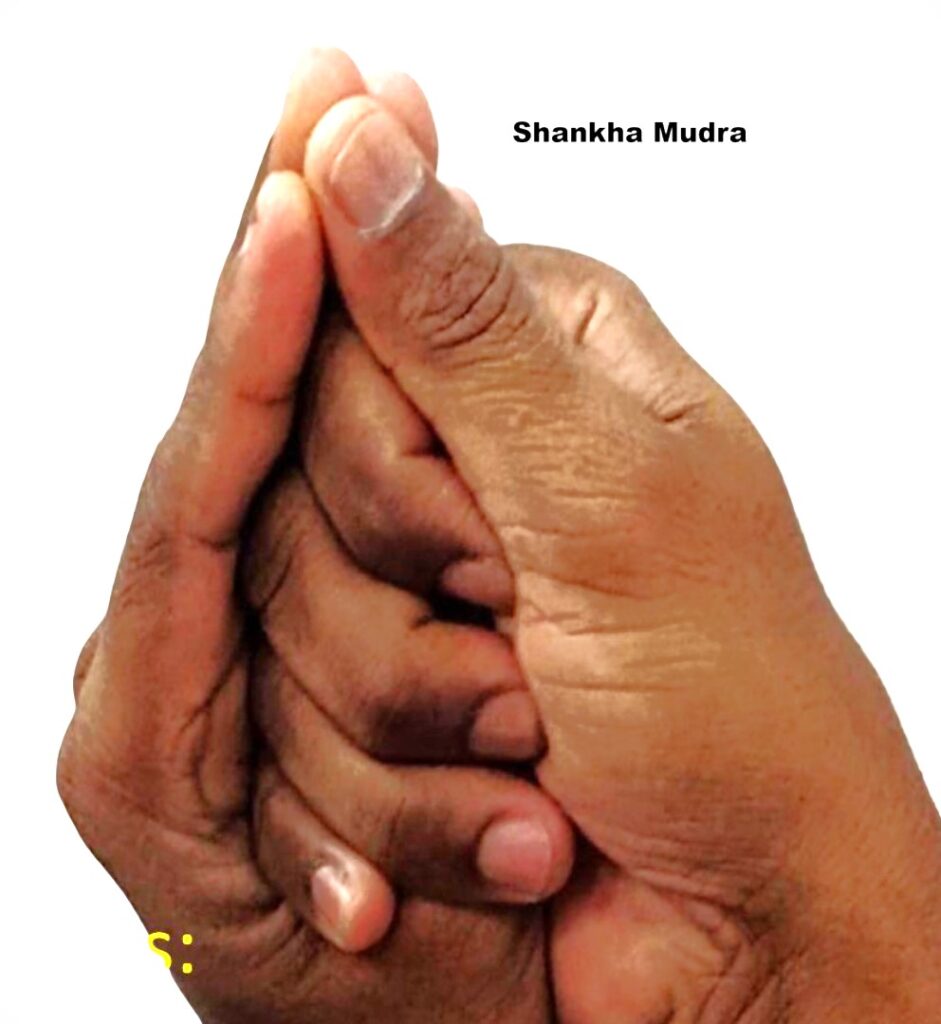
Shankha Mudra Introduction Mudras are symbolic hand gestures in yoga that influence prana (vital energy) and affect physical, mental, and spiritual well-being. Shankha Mudra, named after the conch shell (Shankha in Sanskrit), is a powerful mudra that stimulates energy, enhances vitality, and promotes respiratory and cardiovascular health. This mudra is often used in pranayama, meditation, and yoga therapy. The shape of the folded hand resembles a conch shell, symbolizing divine sound, energy, and awakening of inner power. Meaning Shankha = Conch shell, symbolizing energy, purity, and auspiciousness. Mudra = Yogic seal or gesture. Purpose: To activate prana, enhance vitality, and support respiratory and cardiovascular functions, while harmonizing physical and subtle energy systems. How to Perform (Practice) Sit comfortably in Sukhasana, Padmasana, or Vajrasana, keeping the spine straight. Relax shoulders, arms, and hands. Come into a sitting position with your hands in front of your solar plexus. Wrap all four fingers of your right hand around your left thumb. Keep the fingers of your left hand together and pointing upward. Rotate your right hand until the thumb points upward and join the tips of your right thumb and left middle finger. Bring your hands, now in the form of a conch shell, in front of your breastbone. Close your eyes, breathe slowly, and visualize energy circulating throughout the body. Maintain the mudra for 5–15 minutes, gradually increasing duration with practice. Tip: Keep hands relaxed; focus on breath and energy flow. Benefits Physical Benefits Stimulates respiratory system and lung capacity. Supports cardiovascular health and circulation. Enhances energy and vitality. May aid in cold, cough, or asthma symptoms when practiced with pranayama. Mental & Emotional Benefits Promotes calmness and mental clarity. Reduces stress, anxiety, and mental fatigue. Enhances focus, mindfulness, and emotional stability. Spiritual Benefits Awakens pranic energy and subtle vibrations, similar to the conch sound in spiritual practices. Supports meditation and energy channeling in the body. Encourages purity of mind and alignment of chakras. Contraindications Finger, hand, or wrist injuries. Respiratory conditions should be mild; severe conditions should practice under supervision. Avoid over-practice if discomfort occurs in hands, wrists, or shoulders. Anatomy & Physiology Musculoskeletal: Activates intrinsic hand muscles, stabilizes fingers, engages forearm muscles. Circulatory system: Improves blood flow to hands, arms, and chest. Nervous system: Stimulates sensory nerve endings, promoting alertness and energy perception. Respiratory system: Supports lung function and pranic flow. Kinesiology Index, middle, and ring fingers folded; thumb lightly pressing them; little finger extended to form the “conch shell” shape. Wrists neutral, shoulders relaxed. Hands resting on thighs or in front of chest. Enhances hand stability, proprioception, and pranic energy circulation. Neurology Stimulates peripheral nerve endings, enhancing mind-body coordination and awareness. Activates parasympathetic system for relaxation and sympathetic system for vitality. Supports cortical areas associated with attention, memory, and focus. Enhances subtle energy perception and circulation during meditation. Duration of Mudra Beginners: 5 minutes. Intermediate: 10–15 minutes. Advanced: 20–30 minutes during meditation or pranayama. Tip: Regular daily practice enhances vitality, focus, and respiratory function. Counter Mudra Shaant Mudra: To calm after energetic practice. Prana Mudra: To boost energy along with Shankha Mudra. Apana Mudra: To release stagnant energy post-practice. Conclusion Shankha Mudra is an energy-activating mudra that enhances vitality, respiratory and cardiovascular health, and mental clarity. Regular practice provides physical, mental, and subtle energy benefits, making it ideal for meditation, pranayama, and energy-balancing yoga routines. FAQ Q1. Can beginners practice this mudra?Yes, it is simple and safe for all levels. Q2. Can it help with respiratory or energy-related issues?Yes, it improves lung function, pranic circulation, and general vitality. Q3. How long should it be practiced daily?5–15 minutes for beginners; up to 30 minutes for advanced practitioners. Q4. Can it be combined with pranayama or meditation?Yes, it enhances breath-focused practices and meditation. References Swami Satyananda Saraswati, Asana, Pranayama, Mudra, Bandha. B.K.S. Iyengar, Light on Yoga. Hatha Yoga Pradipika – Mudras for energy activation and respiratory health. Gheranda Samhita – Mudras for vitality, mental clarity, and subtle energy flow. Kuvalayananda, Yoga Mimamsa Journal.
Śaṅkavarta Mudrā
Śaṅkavarta Mudrā Introduction Śaṅkavarta Mudrā is a classical hasta (hand) mudrā described in yoga, tantra, and Indian dance traditions. The term combines śaṅka (conch) and varta (spiral, circular movement). Thus, the mudra is symbolically connected with the spiral motion of a conch shell and the cyclical flow of prāṇa (life-force). It is often used in rituals, meditation, and healing practices for harmonizing energy, supporting respiratory health, and invoking purity. In yogic symbolism, the conch is an auspicious object, used to call attention, awaken consciousness, and drive away negativity. Śaṅkavarta Mudrā reflects this power within the body and mind. Meaning Śaṅka = conch, sacred shell. Varta = spiral, turning, or circulation. Mudrā = gesture, seal, or psychic attitude. Hence, Śaṅkavarta Mudrā means the gesture of the spiral conch, symbolizing purification, resonance, and cyclical energy flow. How to Perform Practice Sit comfortably in Padmāsana, Vajrāsana, or Sukhasana. Place the left hand vertically in front of the chest. Raise the hands in front of the heart, palms facing each other. Join the tips of all the fingers. Bend the right index finger about 90 degrees at the middle joint. Practice with or without chanting “Om” or mantras. Benefits of Śaṅkavarta Mudrā Physical Benefits Improves respiratory health (asthma, bronchitis, shortness of breath). Strengthens the throat, vocal cords, and lungs. Supports the digestive system by stimulating samana vayu (balancing energy in the navel region). Boosts immune response and clears mucus/obstructions. Mental Benefits Enhances clarity and concentration. Calms mental restlessness, creating inner harmony. Reduces anxiety by regulating breath and mind. Spiritual Benefits Invokes the sacred resonance of the conch, removing negativity. Activates the Vishuddhi (throat chakra), enhancing mantra chanting. Balances prāṇic currents in a spiral motion, symbolizing universal rhythm. Contraindications People with severe hypertension should avoid prolonged practice. Not suitable for those with severe arthritis of the fingers/thumbs. Those with excess Kapha (mucus congestion) should not overuse it. Anatomy & Physiology Stimulates the lungs, bronchial passages, throat muscles. Aids in oxygenation and breath regulation. Works on the lymphatic system, enhancing immunity. Activates the thyroid and parathyroid glands (via throat stimulation). Kinesiology Engages flexor muscles of the fingers (as the right hand wraps around the left thumb). Encourages stabilization of the thumb joint. Gentle isometric contraction supports neuromuscular coordination. Neurology Stimulates the parasympathetic nervous system, promoting calmness. Activates vagal tone, reducing stress and improving heart rate variability. Enhances auditory and vibrational awareness through resonance effect. Supports neuroplasticity by reinforcing focus and mantra awareness. Duration of Mudra 5–15 minutes, 2–3 times daily. Can be done before prānāyāma or meditation for better results. With mantra chanting, it may be practiced for up to 30 minutes. Counter Mudra To balance Śaṅkavarta Mudrā’s inward spiral energy: Prāṇa Mudrā – to energize and expand. Chinmaya Mudrā – for grounding and clarity. Akash Mudrā – to open throat and chest further. Conclusion Śaṅkavarta Mudrā is a sacred hand gesture of purification and resonance, embodying the spiral energy of the conch. It harmonizes breath, voice, and prāṇa, while calming the nervous system. Practicing it regularly strengthens the respiratory system, balances emotions, and awakens higher consciousness. It is especially beneficial for pranayama practitioners, mantra chanters, and meditators. FAQ Q1. Is Śaṅkavarta Mudrā the same as Śaṅkha Mudrā?They are related but slightly different. Śaṅkha Mudrā symbolizes the conch, while Śaṅkavarta Mudrā emphasizes the spiral circulation of energy. Q2. Can it help with throat problems?Yes, it strengthens the throat, vocal cords, and respiratory system. Q3. When is the best time to practice?Early morning or before mantra chanting/meditation. Q4. Which dosha does it balance?It balances Vata and Kapha, while cooling excess Pitta. Q5. Can beginners practice it safely?Yes, but beginners should start with 5 minutes daily and increase gradually. References Swami Satyananda Saraswati, Asana, Pranayama, Mudra, Bandha. Gertrud Hirschi, Mudras: Yoga in Your Hands. Joseph Le Page & Lilian Aboim, Mudras for Healing and Transformation. Hatha Yoga Pradipika (commentaries on mudras). Natyashastra (symbolism of hasta mudras in ritual and dance).
Shuni Mudra
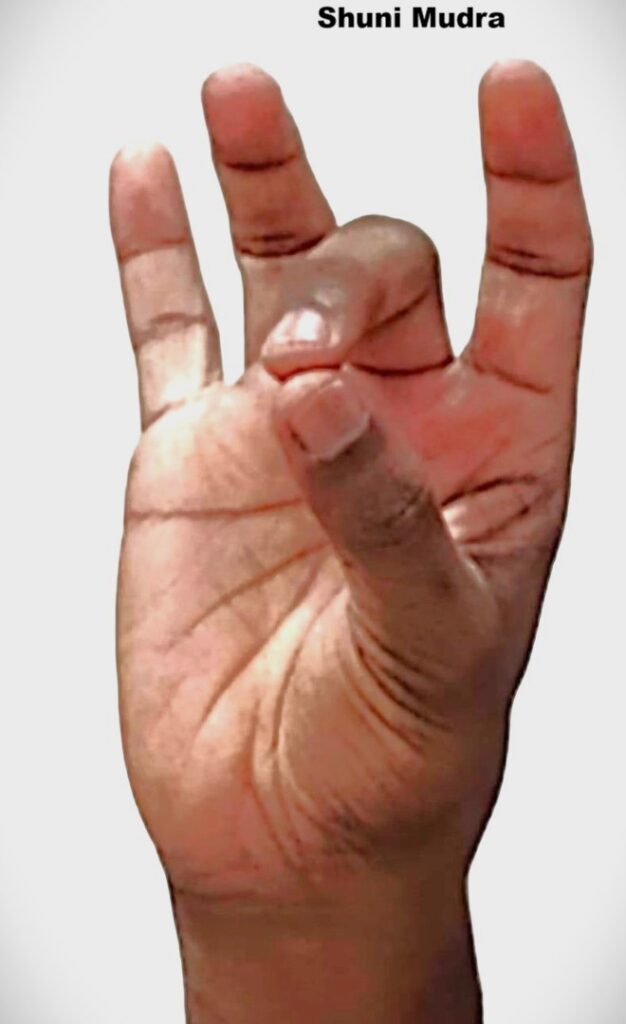
Shuni Mudra Introduction Mudras are symbolic hand gestures in yoga that influence prana (life energy), affecting physical, mental, and spiritual well-being. Shuni Mudra, also called the “seal of patience” or “Saturn Mudra”, is a mudra that enhances discipline, patience, focus, and stability. The term “Shuni” in Sanskrit refers to Saturn, symbolizing patience, endurance, and discernment. This mudra is commonly used to cultivate patience, mental clarity, and spiritual discernment, often in meditation and pranayama practices. Meaning Shuni = Saturn, patience, endurance, stability. Mudra = Yogic seal or gesture. Purpose: To develop patience, mental stability, wisdom, and spiritual awareness, while regulating prana in the body. How to Perform (Practice) Sit comfortably in Sukhasana, Padmasana, or Vajrasana, keeping the spine erect. Relax shoulders and arms. The middle finger and thumb are lightly touching the tips. Use enough pressure to feel the flow of energy but not to whiten the fingers. The remaining three fingers are gently pulled out, relaxed but not ridiculed. Close your eyes, breathe slowly, and focus on cultivating patience, discipline, and inner balance. Maintain the mudra for 10–15 minutes, gradually increasing with regular practice. Tip: Keep the gesture gentle; avoid tension in fingers or shoulders. Benefits Physical Benefits Improves circulation and pranic flow in the fingers and hands. Supports nervous system balance. Helps in reducing fatigue and improving overall energy levels. Mental & Emotional Benefits Enhances patience, focus, and mental clarity. Reduces impulsiveness, stress, and agitation. Improves decision-making and emotional stability. Spiritual Benefits Activates prana and energy flow in subtle channels. Enhances discernment, wisdom, and inner awareness. Supports meditation and mental discipline, cultivating higher consciousness. Contraindications Finger, hand, or thumb injuries. Avoid over-practice if fingers or hands feel fatigued. Not recommended for severe joint or arthritis issues without guidance. Anatomy & Physiology Musculoskeletal: Engages intrinsic hand muscles, stabilizes fingers, and lightly activates forearm muscles. Circulatory system: Enhances blood flow in hands and fingers. Nervous system: Stimulates sensory nerve endings, enhancing focus and attention. Endocrine system: Supports subtle energy regulation linked to mental clarity and balance. Kinesiology Middle finger touches thumb to form a circle, other fingers extended. Hands rest on thighs or knees, wrists neutral. Shoulders relaxed, elbows slightly bent. Promotes stability, hand proprioception, and subtle energy direction. Neurology Stimulates peripheral nerves of the fingers, enhancing attention and sensory awareness. Promotes parasympathetic activity, reducing stress and mental agitation. Activates cortical areas related to focus, patience, and cognitive control. Supports energy flow and meditative awareness. Duration of Mudra Beginners: 5–10 minutes. Intermediate: 10–15 minutes. Advanced: 20–30 minutes during meditation or pranayama. Tip: Daily practice improves mental patience, emotional balance, and focus. Counter Mudra Gyan Mudra: To enhance knowledge and memory after patience-focused practice. Prana Mudra: To energize body after Shuni Mudra. Shaant Mudra: To calm excessive mental activity. Conclusion Shuni Mudra is a hand gesture that cultivates patience, mental stability, focus, and inner wisdom. Regular practice supports emotional balance, mental clarity, and pranic flow, making it ideal for meditation, mindfulness, and spiritual practices. FAQ Q1. Can beginners practice Shuni Mudra?Yes, it is simple and safe for all levels. Q2. Can it help with impatience or stress?Yes, it enhances patience, emotional stability, and focus. Q3. How long should it be practiced daily?5–10 minutes for beginners; up to 30 minutes for advanced practitioners. Q4. Can it be combined with meditation or pranayama?Yes, it is particularly effective in meditation and mindfulness practices. References Swami Satyananda Saraswati, Asana, Pranayama, Mudra, Bandha. B.K.S. Iyengar, Light on Yoga. Hatha Yoga Pradipika – Mudras for mental discipline and pranic regulation. Gheranda Samhita – Mudras for patience, focus, and meditation. Kuvalayananda, Yoga Mimamsa Journal.
Samputa Mudra
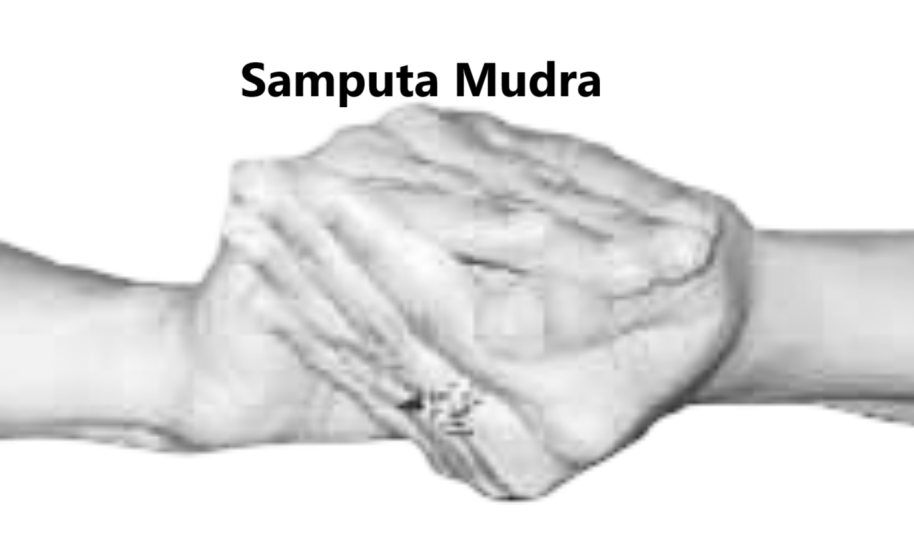
Samputa Mudra Introduction Mudras are yogic hand gestures that regulate prana (life energy), impacting physical, mental, and spiritual well-being. Samputa Mudra is a sealing or containment mudra, used to contain and harmonize internal energy, enhance concentration, and protect subtle energies during meditation or spiritual practices. The term “Samputa” in Sanskrit means “box, container, or sealed vessel,” signifying this mudra’s ability to hold and stabilize energy within the practitioner. It is commonly used in meditation, pranayama, and energy-focused practices to cultivate inner focus and mental clarity. Meaning Samputa = Container, sealed vessel. Mudra = Yogic seal or gesture. Purpose: To contain prana, stabilize internal energy, enhance focus, and protect subtle energies during meditation or spiritual practice. How to Perform (Practice) Sit comfortably in a meditation posture such as Sukhasana, Padmasana, or Vajrasana. Relax shoulders, spine, and arms. Cup hands with left underneath right, create a hollow space between palm; hold hands in front of torso. Close your eyes and focus on containing prana, stabilizing energy, and enhancing inner awareness. Maintain the mudra for 5–15 minutes, gradually increasing as comfort improves. Tip: Keep hands relaxed; avoid tension in fingers, wrists, or shoulders. Benefits Physical Benefits Stabilizes energy flow in the hands, arms, and chest. Improves circulation and pranic distribution. Enhances overall vitality and internal balance. Mental & Emotional Benefits Increases concentration, focus, and mental clarity. Reduces anxiety, stress, and mental distractions. Promotes emotional stability and inner calm. Spiritual Benefits Helps contain and protect subtle energies during meditation. Supports mindfulness and introspection. Enhances spiritual concentration, inner harmony, and energy integration. Contraindications Finger, hand, or wrist injuries. Shoulder or upper arm discomfort should practice under supervision. Avoid over-practice if hands, wrists, or shoulders feel strained. Anatomy & Physiology Musculoskeletal: Engages intrinsic hand muscles and stabilizes fingers; light forearm activation. Circulatory system: Improves localized blood flow in hands and forearms. Nervous system: Activates sensory nerves, promoting mental focus and calmness. Endocrine system: Supports subtle energy centers associated with concentration and inner balance. Kinesiology Fingers interlocked to form a sealed and stable structure, directing energy inward. Thumbs aligned to reinforce the energy “seal.” Shoulders relaxed; wrists neutral. Enhances hand stability, proprioception, and subtle energy containment. Neurology Stimulates peripheral nerve endings, enhancing mind-body integration and concentration. Promotes parasympathetic activity, reducing mental distraction and stress. Supports cortical regions associated with focus, emotional regulation, and awareness. Enhances subtle energy perception and containment during meditation. Duration of Mudra Beginners: 5 minutes. Intermediate: 10–15 minutes. Advanced: 20–30 minutes during meditation or pranayama. Tip: Regular practice helps contain and harmonize internal energy, improving concentration and meditation depth. Counter Mudra Gyan Mudra: To enhance knowledge and mental clarity while containing energy. Prana Mudra: To energize the body after practice. Apana Mudra: To release excess or stagnant energy before using Samputa Mudra. Conclusion Samputa Mudra is a meditative mudra that contains and stabilizes internal energy, enhances concentration, mental clarity, and inner harmony, and supports spiritual practices. Regular practice integrates physical, mental, and energetic benefits, making it ideal for meditation, pranayama, and yogic energy work. FAQ Q1. Can beginners practice this mudra?Yes, it is safe for all levels with gentle practice. Q2. Can it help with mental distraction or lack of focus?Yes, it promotes concentration, calmness, and energy containment. Q3. How long should it be practiced daily?5–15 minutes for beginners; up to 30 minutes for advanced practitioners. Q4. Can it be combined with meditation or pranayama?Yes, it enhances meditation and pranayama by stabilizing prana and mental focus. References Swami Satyananda Saraswati, Asana, Pranayama, Mudra, Bandha. B.K.S. Iyengar, Light on Yoga. Hatha Yoga Pradipika – Mudras for energy stabilization and meditation. Gheranda Samhita – Mudras for mental focus and pranic control. Kuvalayananda, Yoga Mimamsa Journal.
Samana Vayu or Mukula Mudra (Gesture to co-ordinate all five elements)
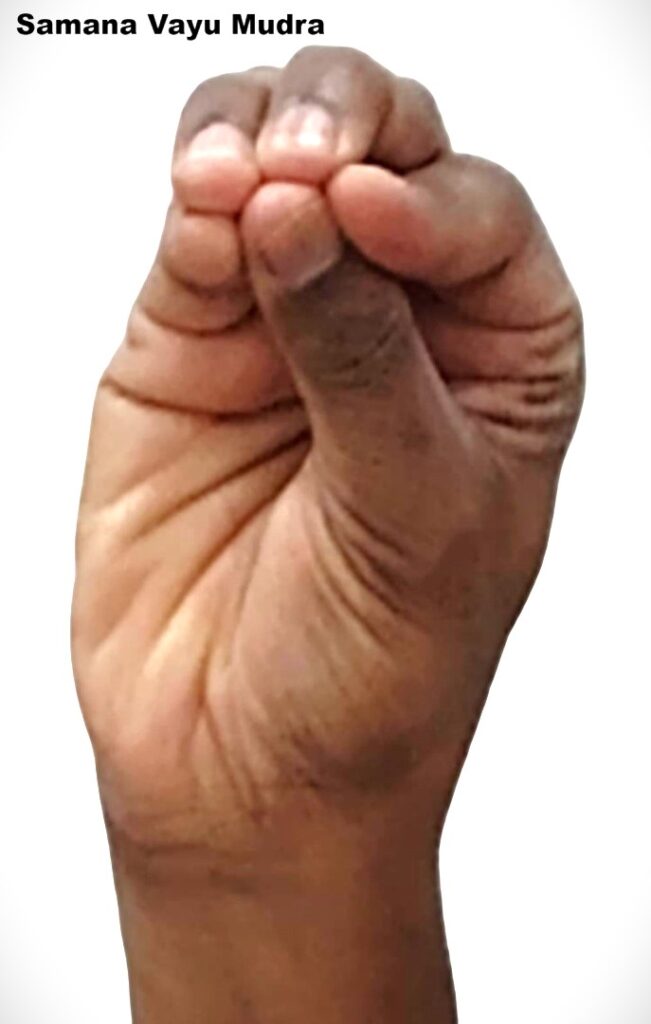
Samana Vayu or Mukula Mudra (Gesture to co-ordinate all five elements) Introduction Mudras are symbolic hand gestures in yoga that regulate prana (vital energy), affecting physical, mental, and spiritual well-being. Samana Mudra is specifically associated with balancing the digestive fire (Agni) and stabilizing the body’s energies. The term “Samana” refers to the digestive and assimilative energy that governs metabolism, nutrient absorption, and equilibrium between the body’s energy systems. This mudra is often used in pranayama, meditation, and healing practices to promote internal balance and vitality. Meaning Samana = That which balances, assimilates, or regulates energy (digestive and metabolic balance). Mudra = Yogic seal or gesture. Purpose: To balance prana in the digestive system, improve assimilation of nutrients, and harmonize internal energies. How to Perform (Practice) Sit comfortably in a meditation posture such as Sukhasana, Padmasana, or Vajrasana. Relax shoulders, spine, and arms. In the sitting position, place the hands upward on the thighs or knees with the palm. Close your eyes and take some deep breaths with awareness on the breathing process. Bring your little, ring, index finger and middle finger together and bend it to touch your thumb. All the fingers are touching together. You can do this on both hands. This samana is the air hand pose. Place hands on your thighs or near the abdomen, palms facing upward. Close your eyes and focus on digestive energy, assimilation, and balance of internal prana. Maintain the mudra for 5–15 minutes, gradually increasing duration with practice. Tip: Keep the fingers gently touching, avoid tension in the hands, and breathe naturally. Benefits Physical Benefits Stimulates digestive fire (Agni), improving metabolism and nutrient absorption. Supports liver, pancreas, and gastrointestinal health. Helps relieve indigestion, bloating, and constipation. Enhances overall energy and vitality. Mental & Emotional Benefits Reduces mental fatigue and lethargy. Promotes clarity of thought and emotional balance. Supports mind-body integration and focus. Spiritual Benefits Directs prana to the Manipura (solar plexus) chakra, strengthening willpower and inner stability. Supports meditation by balancing energy flow and enhancing inner harmony. Enhances subtle energy assimilation and stability. Contraindications Finger, hand, or wrist injuries. Severe digestive disorders should practice only under guidance. Avoid over-practice if hands, wrists, or arms feel strained. Anatomy & Physiology Musculoskeletal: Activates intrinsic hand muscles and stabilizes fingers. Digestive system: Stimulates peristalsis, digestive enzymes, and nutrient assimilation. Circulatory system: Improves localized and systemic blood flow. Nervous system: Activates sensory nerve endings in fingers, promoting parasympathetic activity and digestion. Endocrine system: Supports pancreas, adrenal glands, and hormonal balance associated with metabolism. Kinesiology Thumb, middle, and ring fingers form a triangular seal, guiding energy flow to the solar plexus. Index and little fingers extended to lightly engage hand muscles. Neutral wrist alignment avoids strain. Enhances proprioception, hand stability, and energy direction. Neurology Stimulates peripheral nerve endings, enhancing mind-body integration. Supports parasympathetic activation, aiding digestion and metabolic balance. Activates cortical regions associated with focus, assimilation, and emotional regulation. Enhances subtle energy perception and flow to the solar plexus chakra. Duration of Mudra Beginners: 5 minutes. Intermediate: 10–15 minutes. Advanced: 20–30 minutes during meditation or pranayama. Tip: Daily practice supports digestive health, energy balance, and mental clarity. Counter Mudra Apana Mudra: To expel toxins and balance downward energy. Prana Mudra: To energize and support overall vitality. Gyan Mudra: To enhance mental clarity while balancing internal energies. Conclusion Samana Mudra is a digestive and energy-balancing mudra that enhances metabolism, nutrient assimilation, and internal equilibrium. Regular practice integrates physical, emotional, and subtle energy benefits, making it ideal for meditation, pranayama, and holistic wellness. FAQ Q1. Can beginners practice this mudra?Yes, it is safe and suitable for all levels. Q2. Can it help with indigestion or bloating?Yes, it improves digestion, nutrient absorption, and energy balance. Q3. How long should it be practiced daily?5–15 minutes for beginners; up to 30 minutes for advanced practitioners. Q4. Can it be combined with pranayama?Yes, especially with Kapalabhati, deep abdominal breathing, or Anulom Vilom. References Swami Satyananda Saraswati, Asana, Pranayama, Mudra, Bandha. B.K.S. Iyengar, Light on Yoga. Hatha Yoga Pradipika – Mudras for digestive and energy balance. Gheranda Samhita – Mudras for metabolic and digestive harmony. Kuvalayananda, Yoga Mimamsa Journal.
Samasti Mudra (Integrating Brain Hemispheres Gesture)
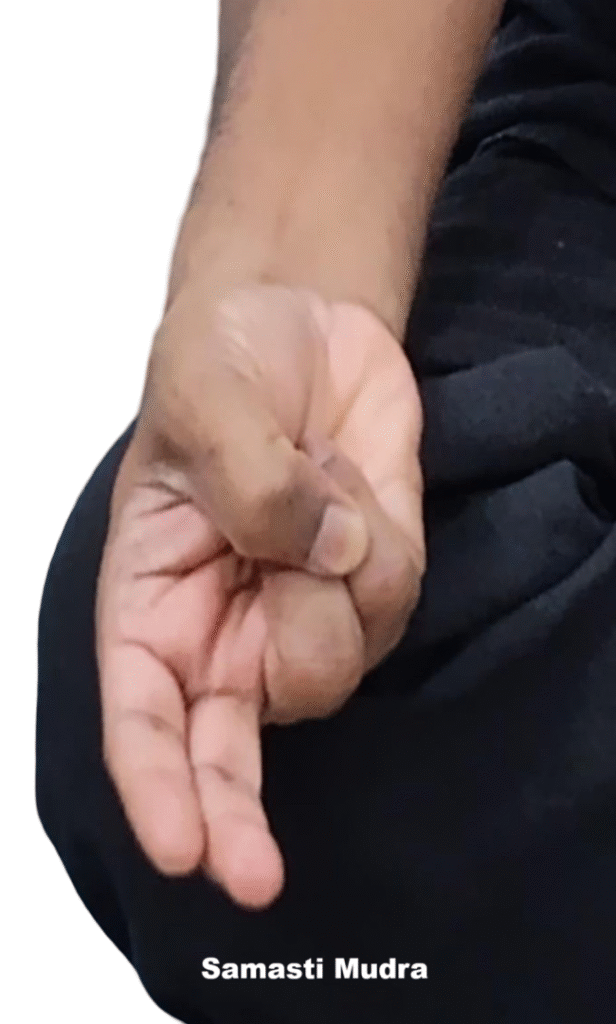
Samasti Mudra (Integrating Brain Hemispheres Gesture) Introduction Mudras are symbolic hand gestures in yoga that regulate prana (life energy) and influence physical, mental, and spiritual well-being. Samasti Mudra is a unifying mudra that harmonizes the energies of the body and mind, promoting balance, inner calm, and spiritual integration. The term “Samasti” in Sanskrit means “whole” or “complete,” signifying this mudra’s ability to bring together body, mind, and prana for holistic wellness. It is often practiced during meditation, pranayama, and spiritual practices to foster inner peace, unity, and energy alignment. Meaning Samasti = Whole, complete, integrated. Mudra = Yogic seal or gesture. Purpose: To unify energies within the body, promote balance, and enhance spiritual and emotional stability. How to Perform (Practice) Come into a sitting position, stand, and walk or lie down. Fold down the ring and little fingers of each hand so the fingertips touch their respective palms. Press on the backs of the bent fingers with the thumb of the same hand. Keep your index and middle fingers extended and relaxed. Hold for 4 minutes six times daily, waiting at least 20 minutes between sessions. Maintain the mudra for 5–15 minutes, gradually increasing duration with practice. Benefits Physical Benefits Harmonizes prana flow throughout the body. Improves circulation and energy distribution. Supports postural alignment and relaxation of upper body muscles. Enhances overall vitality and internal balance. Mental & Emotional Benefits Promotes emotional stability and mental calmness. Reduces stress, anxiety, and mental fatigue. Enhances focus, mindfulness, and inner awareness. Spiritual Benefits Encourages integration of subtle energies, supporting spiritual growth. Strengthens heart and mind connection, promoting inner peace. Supports meditation by aligning body, breath, and prana. Contraindications Finger, hand, or wrist injuries. Shoulder or upper back issues should practice under supervision. Avoid over-practice if hands or arms feel fatigued. Anatomy & Physiology Musculoskeletal: Engages intrinsic hand muscles, stabilizes fingers, and lightly involves forearm muscles. Circulatory system: Improves blood flow to hands, forearms, and chest. Nervous system: Activates sensory nerves, promoting parasympathetic activation and relaxation. Endocrine system: Supports subtle energy centers related to stress regulation and balance. Kinesiology Fingers interlocked to form a stable unifying seal, directing energy inward. Thumbs gently touch, supporting subtle energy circulation. Shoulders relaxed; wrists in neutral alignment. Enhances hand stability, proprioception, and energetic awareness. Neurology Stimulates peripheral nerve endings, enhancing mind-body integration. Promotes parasympathetic activity, aiding relaxation and mental clarity. Supports cortical areas associated with emotional regulation, focus, and awareness. Enhances subtle energy perception and internal balance during meditation. Duration of Mudra Beginners: 5 minutes. Intermediate: 10–15 minutes. Advanced: 20–30 minutes during meditation or pranayama. Tip: Daily practice enhances holistic balance, calmness, and energy integration. Counter Mudra Gyan Mudra: To combine unity with mental clarity. Prana Mudra: To energize the body after meditation. Apana Mudra: To release stagnant energy and promote grounding. Conclusion Samasti Mudra is a holistic mudra that balances body, mind, and prana, fostering emotional stability, mental clarity, and spiritual integration. Regular practice provides physical, emotional, and energetic benefits, making it ideal for meditation, pranayama, and yoga practice. FAQ Q1. Can beginners practice this mudra?Yes, it is simple, safe, and suitable for all levels. Q2. Can it help with stress or emotional imbalance?Yes, it promotes calmness, focus, and emotional stability. Q3. How long should it be practiced daily?5–15 minutes for beginners; up to 30 minutes for advanced practitioners. Q4. Can it be combined with meditation or pranayama?Yes, it enhances meditation and pranayama practices by aligning energy flow. References Swami Satyananda Saraswati, Asana, Pranayama, Mudra, Bandha. B.K.S. Iyengar, Light on Yoga. Hatha Yoga Pradipika – Mudras for energy balance and meditation. Gheranda Samhita – Mudras for holistic integration. Kuvalayananda, Yoga Mimamsa Journal.
Śanmukha Mudrā
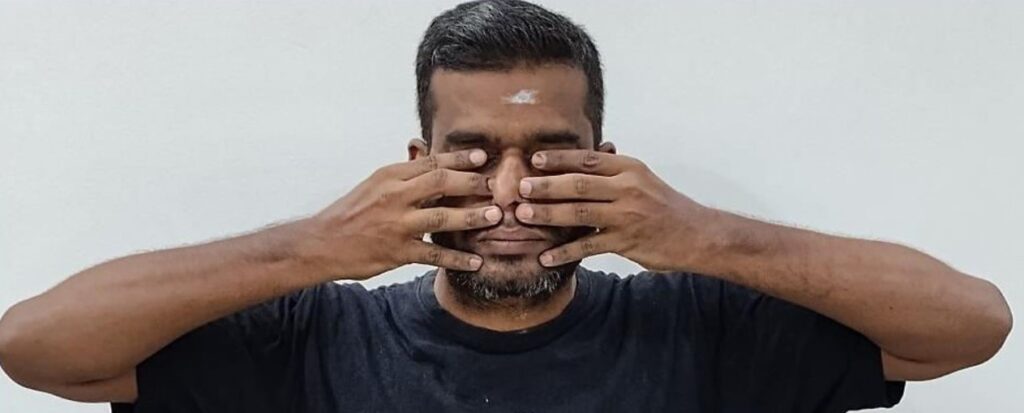
Śanmukha Mudrā Introduction Śanmukha Mudrā is a classical yogic hand and facial gesture used in pratyāhāra (withdrawal of the senses) practices. The word “Śanmukha” literally means “six-faced” (ṣaṭ = six, mukha = face). In yogic symbolism, it represents Lord Kārttikeya (Skanda/Murugan), the six-faced deity of wisdom and war. This mudrā is also called Yoni Mudrā in some traditions because it seals the sensory openings and directs awareness inward. By closing the ears, eyes, nostrils, and mouth, Śanmukha Mudrā helps the practitioner turn away from external distractions and experience inner silence. Meaning Ṣaṇ (six) + Mukha (faces/openings) → Six gates of perception. Refers to the six sensory doors (ears, eyes, nostrils, mouth). The mudra symbolizes withdrawing the senses into the mind, leading to pratyāhāra, dhāraṇā, and eventually dhyāna. How to Perform Practice Sit in siddha/siddha yoni asana if possible. Otherwise take a comfortable meditation asana and place a small cushion beneath the perineum to provide pressure in this area. Hold the head and spine straight. Close the eyes and place the hands on the knees. Relax the whole body. Raise the arms in front of the face with the elbows pointing sideways. Close the ears with the thumbs, the eyes with the index fingers, the nostrils with the middle fingers, and the mouth by placing the ring fingers above and little fingers below the lips. Release the pressure of the middle fingers and open the nostrils. Inhale slowly and deeply, using full yogic breathing. At the end of inhalation, close the nostrils with the middle fingers. Retain the breath inside for as long as is comfortable. After some time, release the pressure of the middle fingers and slowly exhale. This is one round. Inhale again immediately to start another round. To end the practice, lower the hands to the knees, keeping the eyes closed, and slowly externalize the mind, becoming aware of external sounds and the physical body. Benefits of Śanmukha Mudrā Physical Benefits Improves lung capacity and strengthens the respiratory system. Soothes the nervous system, reduces stress and fatigue. Beneficial for people with insomnia, hypertension, or anxiety. Enhances facial relaxation by reducing strain in eyes, ears, and jaw. Mental Benefits Facilitates pratyāhāra (sense withdrawal). Deepens concentration and prepares the mind for dhyāna (meditation). Reduces sensory overload and cultivates inner peace. Calms racing thoughts, promoting mental clarity. Spiritual Benefits Activates the Ājñā Chakra (third eye) by inwardly directing awareness. Enhances sensitivity to nāda (inner sound vibration). Aids in antar mouna (inner silence) and yogic trance states. Invokes the energy of Lord Skanda/Kārttikeya, symbolizing wisdom and strength. Contraindications People with ear infections, glaucoma, or severe sinus issues should avoid pressure on openings. Those with high anxiety or claustrophobia should begin with short durations. Not recommended for people with severe respiratory blockages. Anatomy & Physiology Engages the facial muscles, eyelids, auricular muscles, and nasal passages. Restricts sensory input, reducing external stimuli to the brain. Encourages parasympathetic dominance, leading to slower heart rate and reduced blood pressure. Stimulates the pineal and pituitary glands by focusing awareness inward. Kinesiology The mudra uses the isometric action of finger flexors to gently close sensory gates. Encourages neuromuscular coordination between breath, fingers, and senses. Promotes proprioceptive awareness of the head–neck–face region. Neurology Reduces activation of the reticular activating system, quieting sensory input. Stimulates the vagus nerve, improving emotional regulation. Supports neuroplasticity by strengthening inward attention pathways. Mimics sensory deprivation therapy, which promotes deep relaxation and altered states of consciousness. Duration of Mudra Beginners: 3–5 minutes daily. Intermediate: 10 minutes before meditation or prāṇāyāma. Advanced: Up to 20 minutes combined with Bhrāmarī or Nādānusandhāna. Counter Mudra Chin Mudrā – for grounding awareness after inward withdrawal. Akāśa Mudrā – to open throat and expand awareness. Prāṇa Mudrā – to energize after prolonged inner silence. Conclusion Śanmukha Mudrā is a powerful tool of pratyāhāra, guiding practitioners away from external distractions into inner silence. By closing the six sensory gates, it helps balance the nervous system, deepen concentration, and prepare for meditation. Practiced regularly, it improves respiratory health, reduces stress, and nurtures spiritual growth. FAQ Q1. Is Śanmukha Mudrā the same as Yoni Mudrā?Yes, both refer to closing the senses for pratyāhāra, though descriptions vary slightly in different traditions. Q2. Can beginners practice it safely?Yes, but they should start with short durations (3–5 minutes). Q3. Is it useful for meditation?Absolutely. It is one of the most effective mudras for stilling the mind. Q4. Can it help with sleep problems?Yes, as it reduces stress and activates the parasympathetic system. Q5. Should it be combined with mantra or sound?Yes, combining it with Bhrāmarī Prāṇāyāma or Om chanting enhances its effect. References Swami Satyananda Saraswati, Asana, Pranayama, Mudra, Bandha. Gertrud Hirschi, Mudras: Yoga in Your Hands. Joseph Le Page & Lilian Aboim, Mudras for Healing and Transformation. Hatha Yoga Pradipika (commentaries on mudras and pratyāhāra). Swami Niranjanananda Saraswati, Prana and Pranayama.
Sandhi Mudra (Joint Pain relief)
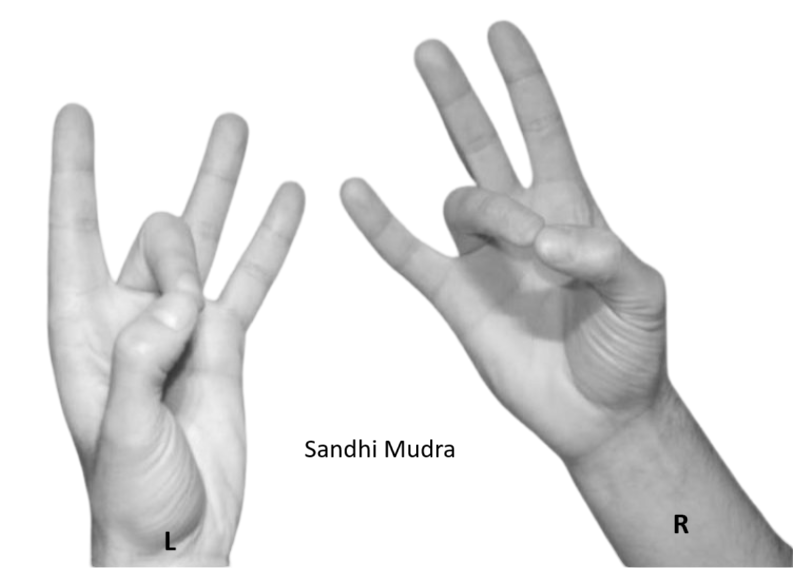
Sandhi Mudra (Joint Pain relief) Introduction Mudras are symbolic hand gestures in yoga that influence the flow of prana (vital energy) and affect physical, mental, and spiritual well-being. Sandhi Mudra is specifically used to strengthen joints, improve flexibility, and maintain structural integrity of bones and connective tissues. The term “Sandhi” in Sanskrit means “joint” or “connection,” reflecting this mudra’s focus on preserving joint health, alleviating stiffness, and enhancing circulation in hands and fingers. It is often practiced alongside other mudras, meditation, or yoga routines targeting musculoskeletal health. Meaning Sandhi = Joint, connection, articulation. Mudra = Yogic seal or gesture. Purpose: To support joint health, flexibility, and the smooth flow of energy through connective tissues. How to Perform (Practice) Sit comfortably in a meditation posture such as Sukhasana, Padmasana, or Vajrasana. Relax shoulders, spine, and arms. Right Hand: Join tips of Ring Finger and Thumb together. Left Hand: Join tips of Middle Finger and Thumb together. Place the palms, face-up, on your knees or thighs. Keep your spine and head straight, shoulders relaxed. Close your eyes and focus on energy flowing through the joints and fingers, promoting flexibility and health. Maintain the mudra for 5–15 minutes, gradually increasing as comfort improves. Tip: Keep hands relaxed; avoid straining fingers or wrists. Benefits Physical Benefits Strengthens joints, ligaments, and connective tissues. Improves flexibility in fingers, hands, and wrists. Enhances circulation and pranic flow to joints. Helps reduce stiffness and prevent degenerative joint conditions. Mental & Emotional Benefits Promotes calmness and focus. Reduces stress associated with physical discomfort or stiffness. Enhances mind-body connection and awareness of physical alignment. Spiritual Benefits Supports meditation by stabilizing hand posture and prana flow. Enhances energetic integrity of the body, allowing deeper focus and spiritual awareness. Facilitates subtle energy circulation in relation to structural alignment. Contraindications Finger, hand, wrist, or shoulder injuries. Severe arthritis or joint inflammation should practice under guidance. Avoid over-practice if discomfort occurs. Anatomy & Physiology Musculoskeletal: Activates intrinsic hand muscles, stabilizes fingers, and engages wrist and forearm muscles. Circulatory system: Improves blood flow to fingers, hands, and upper limbs. Nervous system: Stimulates sensory nerves, promoting awareness and motor coordination. Connective tissue health: Supports joint lubrication, tendon flexibility, and ligament strength. Kinesiology Fingers interlocked and thumbs extended to form a stable seal, directing energy through joints. Maintains neutral wrist alignment to avoid strain. Shoulders relaxed; forearms lightly engaged. Enhances proprioception, hand stability, and subtle energy flow through joints. Neurology Stimulates sensory nerve endings in fingers and palms, improving fine motor control and hand awareness. Promotes parasympathetic activity, aiding relaxation of joint-associated muscles. Supports cortical regions related to motor planning, tactile feedback, and proprioception. Enhances subtle energy awareness in relation to skeletal structure. Duration of Mudra Beginners: 5 minutes. Intermediate: 10–15 minutes. Advanced: 20–30 minutes during meditation or yoga practice. Tip: Regular practice improves joint health, flexibility, and energy circulation. Counter Mudra Prana Mudra: To energize the body after joint-focused practice. Apana Mudra: To release stagnant energy from limbs. Gyan Mudra: To combine mental clarity with joint stability. Conclusion Sandhi Mudra is a mudra that strengthens joints, enhances flexibility, and supports musculoskeletal and energetic health. Regular practice provides physical, mental, and energetic benefits, making it ideal for meditation, yoga, and daily hand and joint wellness routines. FAQ Q1. Can beginners practice this mudra?Yes, it is simple and safe for all levels. Q2. Can it help with joint stiffness or mild arthritis?Yes, it improves flexibility and circulation in fingers and hands. Q3. How long should it be practiced daily?5–15 minutes for beginners; up to 30 minutes for advanced practitioners. Q4. Can it be combined with pranayama or meditation?Yes, it enhances meditation and energy circulation while maintaining joint stability. References Swami Satyananda Saraswati, Asana, Pranayama, Mudra, Bandha. B.K.S. Iyengar, Light on Yoga. Hatha Yoga Pradipika – Mudras for joint health and energy flow. Gheranda Samhita – Mudras for musculoskeletal and energetic wellness. Kuvalayananda, Yoga Mimamsa Journal.
Sankalpa Mudra
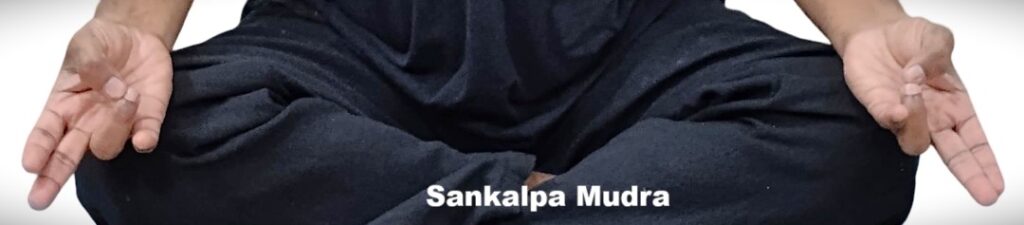
Sankalpa Mudra Introduction Mudras are symbolic hand gestures in yoga that regulate prana (vital energy) and influence physical, mental, and spiritual well-being. Sankalpa Mudra is primarily associated with intention setting, willpower, and manifestation. The term “Sankalpa” in Sanskrit means resolve, determination, or solemn vow. This mudra is commonly practiced to strengthen mental focus, clarify intentions, and align mind, body, and prana toward a specific goal or purpose. It is often used in meditation, affirmation, and spiritual practices to empower personal transformation and conscious manifestation. Meaning Sankalpa = Determination, resolve, intention. Mudra = Yogic seal or gesture. Purpose: To enhance mental clarity, focus, and determination, allowing the practitioner to consciously direct energy toward a desired goal or intention. How to Perform (Practice) Sit comfortably in a meditation posture such as Sukhasana, Padmasana, or Vajrasana. Relax shoulders, spine, and arms. Right hand – rest the tip of your thumb on the inside edge of the nail of your ring finger. Left hand – bring the tips of the thumb and middle finger together. This is Akasha Mudra. Close your eyes, take deep breaths, and visualize your intention clearly. Maintain the mudra for 5–15 minutes, repeating your Sankalpa mentally or silently. Tip: Keep the hands relaxed, and let the focus on your intention guide the energy flow. Benefits Physical Benefits Supports postural alignment during meditation. Encourages relaxation and energy flow in the upper body. May indirectly improve cardiovascular and respiratory functions through focused breathwork. Mental & Emotional Benefits Strengthens willpower, mental clarity, and focus. Reduces stress, indecision, and mental distractions. Encourages confidence, motivation, and emotional stability. Spiritual Benefits Amplifies intentional meditation and manifestation practices. Aligns mind, body, and prana with spiritual or personal goals. Enhances inner awareness and alignment with higher purpose. Contraindications There are no strict physical contraindications; however: Avoid strain in shoulders or wrists if the Anjali Mudra position causes discomfort. Those with severe hand or wrist injuries should modify the gesture. Anatomy & Physiology Musculoskeletal: Engages intrinsic hand muscles, stabilizes fingers, and lightly activates forearm and shoulder muscles. Circulatory system: Improves blood flow to hands, wrists, and upper chest. Nervous system: Activates sensory nerves, promoting focus and relaxation. Endocrine system: May stimulate subtle energy centers related to motivation, intention, and emotional regulation. Kinesiology Hands pressed together to form a stable, symmetrical seal, promoting energy alignment. Elbows slightly away from the body for shoulder relaxation. Shoulders relaxed; spine upright. Enhances proprioception, hand stability, and energy direction toward the heart and mind. Neurology Stimulates sensory nerve endings in hands and fingers, enhancing mind-body awareness. Activates parasympathetic pathways, reducing stress and improving focus. Supports cortical regions associated with goal setting, decision making, and emotional regulation. Enhances subtle energy perception and alignment with mental intention. Duration of Mudra Beginners: 5 minutes. Intermediate: 10–15 minutes. Advanced: 20–30 minutes during meditation or pranayama. Tip: Practice consistently with clear intention to maximize mental, emotional, and energetic benefits. Counter Mudra Gyan Mudra: Enhances focus and knowledge while supporting intention. Prana Mudra: Energizes the body after intention setting. Apana Mudra: Clears obstacles and releases stagnant energy before using Sankalpa Mudra. Conclusion Sankalpa Mudra is a powerful mudra for strengthening mental focus, clarifying intention, and aligning energy with personal or spiritual goals. Regular practice integrates physical, emotional, and subtle energy benefits, making it ideal for meditation, intention setting, and conscious manifestation. FAQ Q1. Can beginners practice this mudra?Yes, it is simple and safe for all levels. Q2. Can it help with mental clarity and decision making?Yes, it strengthens focus, willpower, and emotional stability. Q3. How long should it be practiced daily?5–15 minutes for beginners; up to 30 minutes for advanced practitioners. Q4. Can it be combined with meditation or affirmations?Yes, it is most effective when combined with meditation, visualization, or affirmation practices. References Swami Satyananda Saraswati, Asana, Pranayama, Mudra, Bandha. B.K.S. Iyengar, Light on Yoga. Hatha Yoga Pradipika – Mudras for meditation, intention, and energy alignment. Gheranda Samhita – Mudras for mind-body integration and focused meditation. Kuvalayananda, Yoga Mimamsa Journal.
Shaant Mudra
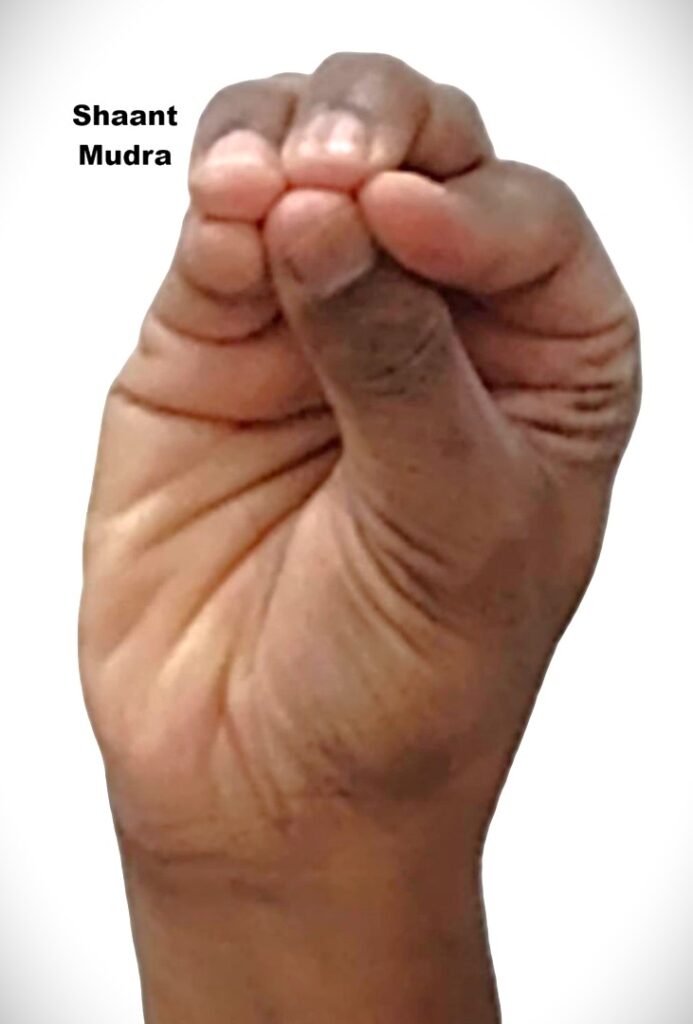
Shaant Mudra Introduction Mudras are yogic hand gestures that regulate prana (vital energy) and influence physical, mental, and spiritual well-being. Shaant Mudra is a calming mudra, designed to promote mental peace, emotional stability, and relaxation. The term “Shaant” in Sanskrit means “peace, calm, or tranquility.” This mudra is often practiced during meditation, pranayama, or times of stress to reduce anxiety, stabilize emotions, and harmonize the mind and body. Meaning Shaant = Calm, peaceful, tranquil. Mudra = Yogic seal or gesture. Purpose: To induce inner calm, reduce mental agitation, and harmonize prana, supporting both mental clarity and emotional balance. How to Perform (Practice) Sit comfortably in a meditation posture such as Sukhasana, Padmasana, or Vajrasana. Relax shoulders, spine, and arms. Form the mudra: Place the tips of the index finger, middle finger, ring finger and little finger, together with the thumb, while the little finger remains extended. Rest hands on your thighs or in front of the chest, palms facing upward. Close your eyes and focus on breathing slowly, releasing tension, and cultivating inner peace. Maintain the mudra for 5–15 minutes, gradually increasing duration with regular practice. Tip: Keep hands relaxed; do not force fingers or thumbs. Benefits Physical Benefits Reduces muscle tension, particularly in hands, arms, and shoulders. Enhances circulation and pranic flow. Supports relaxation of the nervous system. Mental & Emotional Benefits Reduces stress, anxiety, and mental agitation. Promotes mental clarity, emotional stability, and mindfulness. Enhances focus and meditative awareness. Spiritual Benefits Supports inner tranquility and calm mind, facilitating meditation and spiritual practices. Harmonizes energy centers (chakras), especially the heart and mind connection. Encourages balanced prana flow and subtle energy awareness. Contraindications Finger, hand, or wrist injuries. Shoulder or forearm discomfort should be monitored during practice. Avoid over-practice if hands or arms feel fatigued. Anatomy & Physiology Musculoskeletal: Engages intrinsic hand muscles, stabilizes fingers, and lightly activates forearm muscles. Circulatory system: Improves blood flow in fingers, hands, and upper limbs. Nervous system: Stimulates sensory nerves, promoting parasympathetic activation and relaxation. Endocrine system: Supports subtle energy centers associated with stress regulation, calmness, and emotional stability. Kinesiology Fingers form a stable, relaxing seal, directing energy inward. Hands relaxed on thighs or chest, with neutral wrist alignment. Shoulders relaxed, elbows slightly bent. Enhances hand stability, proprioception, and subtle energy awareness. Neurology Activates peripheral nerve endings, enhancing mind-body integration. Promotes parasympathetic nervous activity, reducing stress and promoting calm. Supports cortical regions associated with attention, emotional regulation, and relaxation. Enhances subtle energy perception and internal balance during meditation. Duration of Mudra Beginners: 5 minutes. Intermediate: 10–15 minutes. Advanced: 20–30 minutes during meditation or pranayama. Tip: Daily practice promotes mental peace, emotional stability, and inner harmony. Counter Mudra Gyan Mudra: To combine relaxation with mental clarity. Prana Mudra: To energize after calming practice. Apana Mudra: To release stagnant energy before practicing Shaant Mudra. Conclusion Shaant Mudra is a calming mudra that reduces stress, promotes inner peace, and harmonizes mind, body, and energy. Regular practice provides physical relaxation, mental clarity, and emotional stability, making it ideal for meditation, pranayama, and daily stress management. FAQ Q1. Can beginners practice this mudra?Yes, it is safe and suitable for all levels. Q2. Can it help with anxiety or stress?Yes, it promotes calmness, mental clarity, and emotional balance. Q3. How long should it be practiced daily?5–15 minutes for beginners; up to 30 minutes for advanced practitioners. Q4. Can it be combined with meditation or pranayama?Yes, it enhances meditation, breathing practices, and mindfulness. References Swami Satyananda Saraswati, Asana, Pranayama, Mudra, Bandha. B.K.S. Iyengar, Light on Yoga. Hatha Yoga Pradipika – Mudras for mental calmness and energy balance. Gheranda Samhita – Mudras for emotional stability and meditation. Kuvalayananda, Yoga Mimamsa Journal.