
Śanmukha Mudrā
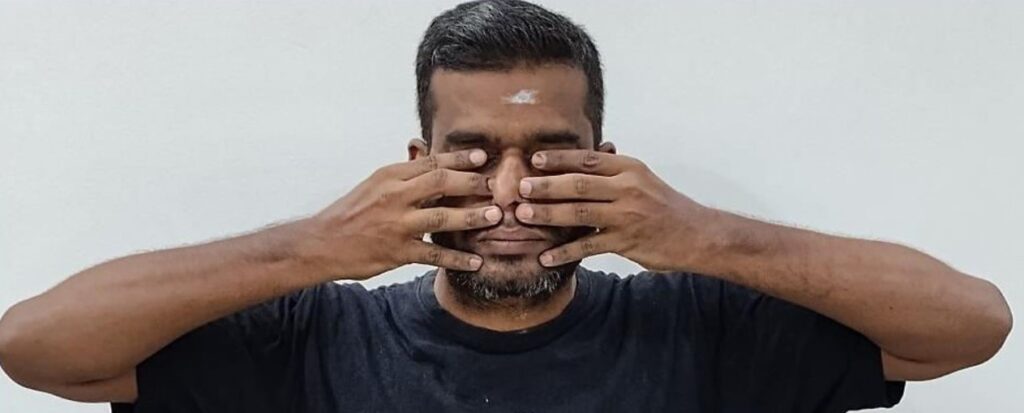
Śanmukha Mudrā Introduction Śanmukha Mudrā is a classical yogic hand and facial gesture used in pratyāhāra (withdrawal of the senses) practices. The word “Śanmukha” literally means “six-faced” (ṣaṭ = six, mukha = face). In yogic symbolism, it represents Lord Kārttikeya (Skanda/Murugan), the six-faced deity of wisdom and war. This mudrā is also called Yoni Mudrā in some traditions because it seals the sensory openings and directs awareness inward. By closing the ears, eyes, nostrils, and mouth, Śanmukha Mudrā helps the practitioner turn away from external distractions and experience inner silence. Meaning Ṣaṇ (six) + Mukha (faces/openings) → Six gates of perception. Refers to the six sensory doors (ears, eyes, nostrils, mouth). The mudra symbolizes withdrawing the senses into the mind, leading to pratyāhāra, dhāraṇā, and eventually dhyāna. How to Perform Practice Sit in siddha/siddha yoni asana if possible. Otherwise take a comfortable meditation asana and place a small cushion beneath the perineum to provide pressure in this area. Hold the head and spine straight. Close the eyes and place the hands on the knees. Relax the whole body. Raise the arms in front of the face with the elbows pointing sideways. Close the ears with the thumbs, the eyes with the index fingers, the nostrils with the middle fingers, and the mouth by placing the ring fingers above and little fingers below the lips. Release the pressure of the middle fingers and open the nostrils. Inhale slowly and deeply, using full yogic breathing. At the end of inhalation, close the nostrils with the middle fingers. Retain the breath inside for as long as is comfortable. After some time, release the pressure of the middle fingers and slowly exhale. This is one round. Inhale again immediately to start another round. To end the practice, lower the hands to the knees, keeping the eyes closed, and slowly externalize the mind, becoming aware of external sounds and the physical body. Benefits of Śanmukha Mudrā Physical Benefits Improves lung capacity and strengthens the respiratory system. Soothes the nervous system, reduces stress and fatigue. Beneficial for people with insomnia, hypertension, or anxiety. Enhances facial relaxation by reducing strain in eyes, ears, and jaw. Mental Benefits Facilitates pratyāhāra (sense withdrawal). Deepens concentration and prepares the mind for dhyāna (meditation). Reduces sensory overload and cultivates inner peace. Calms racing thoughts, promoting mental clarity. Spiritual Benefits Activates the Ājñā Chakra (third eye) by inwardly directing awareness. Enhances sensitivity to nāda (inner sound vibration). Aids in antar mouna (inner silence) and yogic trance states. Invokes the energy of Lord Skanda/Kārttikeya, symbolizing wisdom and strength. Contraindications People with ear infections, glaucoma, or severe sinus issues should avoid pressure on openings. Those with high anxiety or claustrophobia should begin with short durations. Not recommended for people with severe respiratory blockages. Anatomy & Physiology Engages the facial muscles, eyelids, auricular muscles, and nasal passages. Restricts sensory input, reducing external stimuli to the brain. Encourages parasympathetic dominance, leading to slower heart rate and reduced blood pressure. Stimulates the pineal and pituitary glands by focusing awareness inward. Kinesiology The mudra uses the isometric action of finger flexors to gently close sensory gates. Encourages neuromuscular coordination between breath, fingers, and senses. Promotes proprioceptive awareness of the head–neck–face region. Neurology Reduces activation of the reticular activating system, quieting sensory input. Stimulates the vagus nerve, improving emotional regulation. Supports neuroplasticity by strengthening inward attention pathways. Mimics sensory deprivation therapy, which promotes deep relaxation and altered states of consciousness. Duration of Mudra Beginners: 3–5 minutes daily. Intermediate: 10 minutes before meditation or prāṇāyāma. Advanced: Up to 20 minutes combined with Bhrāmarī or Nādānusandhāna. Counter Mudra Chin Mudrā – for grounding awareness after inward withdrawal. Akāśa Mudrā – to open throat and expand awareness. Prāṇa Mudrā – to energize after prolonged inner silence. Conclusion Śanmukha Mudrā is a powerful tool of pratyāhāra, guiding practitioners away from external distractions into inner silence. By closing the six sensory gates, it helps balance the nervous system, deepen concentration, and prepare for meditation. Practiced regularly, it improves respiratory health, reduces stress, and nurtures spiritual growth. FAQ Q1. Is Śanmukha Mudrā the same as Yoni Mudrā?Yes, both refer to closing the senses for pratyāhāra, though descriptions vary slightly in different traditions. Q2. Can beginners practice it safely?Yes, but they should start with short durations (3–5 minutes). Q3. Is it useful for meditation?Absolutely. It is one of the most effective mudras for stilling the mind. Q4. Can it help with sleep problems?Yes, as it reduces stress and activates the parasympathetic system. Q5. Should it be combined with mantra or sound?Yes, combining it with Bhrāmarī Prāṇāyāma or Om chanting enhances its effect. References Swami Satyananda Saraswati, Asana, Pranayama, Mudra, Bandha. Gertrud Hirschi, Mudras: Yoga in Your Hands. Joseph Le Page & Lilian Aboim, Mudras for Healing and Transformation. Hatha Yoga Pradipika (commentaries on mudras and pratyāhāra). Swami Niranjanananda Saraswati, Prana and Pranayama.
Sandhi Mudra (Joint Pain relief)
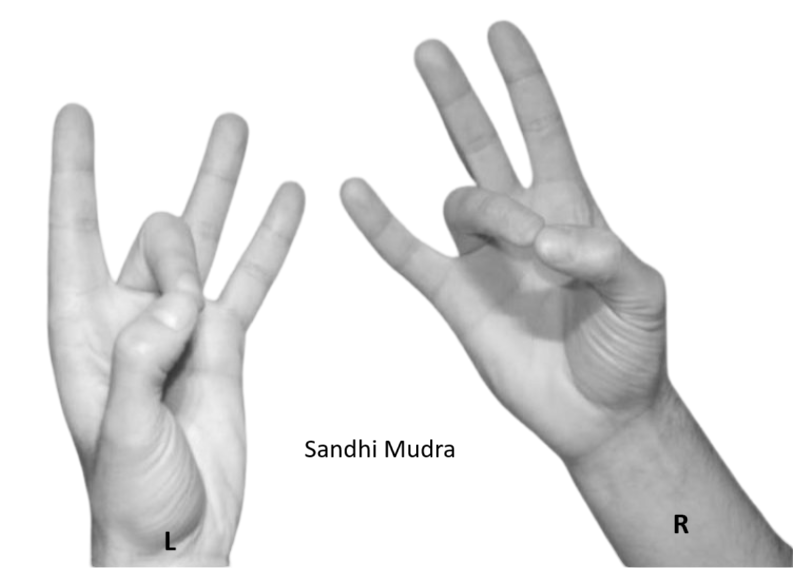
Sandhi Mudra (Joint Pain relief) Introduction Mudras are symbolic hand gestures in yoga that influence the flow of prana (vital energy) and affect physical, mental, and spiritual well-being. Sandhi Mudra is specifically used to strengthen joints, improve flexibility, and maintain structural integrity of bones and connective tissues. The term “Sandhi” in Sanskrit means “joint” or “connection,” reflecting this mudra’s focus on preserving joint health, alleviating stiffness, and enhancing circulation in hands and fingers. It is often practiced alongside other mudras, meditation, or yoga routines targeting musculoskeletal health. Meaning Sandhi = Joint, connection, articulation. Mudra = Yogic seal or gesture. Purpose: To support joint health, flexibility, and the smooth flow of energy through connective tissues. How to Perform (Practice) Sit comfortably in a meditation posture such as Sukhasana, Padmasana, or Vajrasana. Relax shoulders, spine, and arms. Right Hand: Join tips of Ring Finger and Thumb together. Left Hand: Join tips of Middle Finger and Thumb together. Place the palms, face-up, on your knees or thighs. Keep your spine and head straight, shoulders relaxed. Close your eyes and focus on energy flowing through the joints and fingers, promoting flexibility and health. Maintain the mudra for 5–15 minutes, gradually increasing as comfort improves. Tip: Keep hands relaxed; avoid straining fingers or wrists. Benefits Physical Benefits Strengthens joints, ligaments, and connective tissues. Improves flexibility in fingers, hands, and wrists. Enhances circulation and pranic flow to joints. Helps reduce stiffness and prevent degenerative joint conditions. Mental & Emotional Benefits Promotes calmness and focus. Reduces stress associated with physical discomfort or stiffness. Enhances mind-body connection and awareness of physical alignment. Spiritual Benefits Supports meditation by stabilizing hand posture and prana flow. Enhances energetic integrity of the body, allowing deeper focus and spiritual awareness. Facilitates subtle energy circulation in relation to structural alignment. Contraindications Finger, hand, wrist, or shoulder injuries. Severe arthritis or joint inflammation should practice under guidance. Avoid over-practice if discomfort occurs. Anatomy & Physiology Musculoskeletal: Activates intrinsic hand muscles, stabilizes fingers, and engages wrist and forearm muscles. Circulatory system: Improves blood flow to fingers, hands, and upper limbs. Nervous system: Stimulates sensory nerves, promoting awareness and motor coordination. Connective tissue health: Supports joint lubrication, tendon flexibility, and ligament strength. Kinesiology Fingers interlocked and thumbs extended to form a stable seal, directing energy through joints. Maintains neutral wrist alignment to avoid strain. Shoulders relaxed; forearms lightly engaged. Enhances proprioception, hand stability, and subtle energy flow through joints. Neurology Stimulates sensory nerve endings in fingers and palms, improving fine motor control and hand awareness. Promotes parasympathetic activity, aiding relaxation of joint-associated muscles. Supports cortical regions related to motor planning, tactile feedback, and proprioception. Enhances subtle energy awareness in relation to skeletal structure. Duration of Mudra Beginners: 5 minutes. Intermediate: 10–15 minutes. Advanced: 20–30 minutes during meditation or yoga practice. Tip: Regular practice improves joint health, flexibility, and energy circulation. Counter Mudra Prana Mudra: To energize the body after joint-focused practice. Apana Mudra: To release stagnant energy from limbs. Gyan Mudra: To combine mental clarity with joint stability. Conclusion Sandhi Mudra is a mudra that strengthens joints, enhances flexibility, and supports musculoskeletal and energetic health. Regular practice provides physical, mental, and energetic benefits, making it ideal for meditation, yoga, and daily hand and joint wellness routines. FAQ Q1. Can beginners practice this mudra?Yes, it is simple and safe for all levels. Q2. Can it help with joint stiffness or mild arthritis?Yes, it improves flexibility and circulation in fingers and hands. Q3. How long should it be practiced daily?5–15 minutes for beginners; up to 30 minutes for advanced practitioners. Q4. Can it be combined with pranayama or meditation?Yes, it enhances meditation and energy circulation while maintaining joint stability. References Swami Satyananda Saraswati, Asana, Pranayama, Mudra, Bandha. B.K.S. Iyengar, Light on Yoga. Hatha Yoga Pradipika – Mudras for joint health and energy flow. Gheranda Samhita – Mudras for musculoskeletal and energetic wellness. Kuvalayananda, Yoga Mimamsa Journal.
Sankalpa Mudra
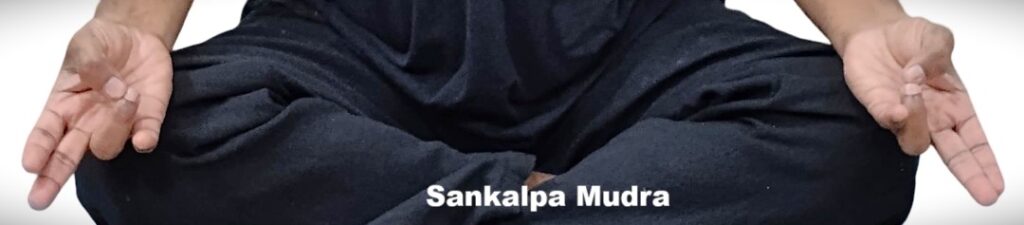
Sankalpa Mudra Introduction Mudras are symbolic hand gestures in yoga that regulate prana (vital energy) and influence physical, mental, and spiritual well-being. Sankalpa Mudra is primarily associated with intention setting, willpower, and manifestation. The term “Sankalpa” in Sanskrit means resolve, determination, or solemn vow. This mudra is commonly practiced to strengthen mental focus, clarify intentions, and align mind, body, and prana toward a specific goal or purpose. It is often used in meditation, affirmation, and spiritual practices to empower personal transformation and conscious manifestation. Meaning Sankalpa = Determination, resolve, intention. Mudra = Yogic seal or gesture. Purpose: To enhance mental clarity, focus, and determination, allowing the practitioner to consciously direct energy toward a desired goal or intention. How to Perform (Practice) Sit comfortably in a meditation posture such as Sukhasana, Padmasana, or Vajrasana. Relax shoulders, spine, and arms. Right hand – rest the tip of your thumb on the inside edge of the nail of your ring finger. Left hand – bring the tips of the thumb and middle finger together. This is Akasha Mudra. Close your eyes, take deep breaths, and visualize your intention clearly. Maintain the mudra for 5–15 minutes, repeating your Sankalpa mentally or silently. Tip: Keep the hands relaxed, and let the focus on your intention guide the energy flow. Benefits Physical Benefits Supports postural alignment during meditation. Encourages relaxation and energy flow in the upper body. May indirectly improve cardiovascular and respiratory functions through focused breathwork. Mental & Emotional Benefits Strengthens willpower, mental clarity, and focus. Reduces stress, indecision, and mental distractions. Encourages confidence, motivation, and emotional stability. Spiritual Benefits Amplifies intentional meditation and manifestation practices. Aligns mind, body, and prana with spiritual or personal goals. Enhances inner awareness and alignment with higher purpose. Contraindications There are no strict physical contraindications; however: Avoid strain in shoulders or wrists if the Anjali Mudra position causes discomfort. Those with severe hand or wrist injuries should modify the gesture. Anatomy & Physiology Musculoskeletal: Engages intrinsic hand muscles, stabilizes fingers, and lightly activates forearm and shoulder muscles. Circulatory system: Improves blood flow to hands, wrists, and upper chest. Nervous system: Activates sensory nerves, promoting focus and relaxation. Endocrine system: May stimulate subtle energy centers related to motivation, intention, and emotional regulation. Kinesiology Hands pressed together to form a stable, symmetrical seal, promoting energy alignment. Elbows slightly away from the body for shoulder relaxation. Shoulders relaxed; spine upright. Enhances proprioception, hand stability, and energy direction toward the heart and mind. Neurology Stimulates sensory nerve endings in hands and fingers, enhancing mind-body awareness. Activates parasympathetic pathways, reducing stress and improving focus. Supports cortical regions associated with goal setting, decision making, and emotional regulation. Enhances subtle energy perception and alignment with mental intention. Duration of Mudra Beginners: 5 minutes. Intermediate: 10–15 minutes. Advanced: 20–30 minutes during meditation or pranayama. Tip: Practice consistently with clear intention to maximize mental, emotional, and energetic benefits. Counter Mudra Gyan Mudra: Enhances focus and knowledge while supporting intention. Prana Mudra: Energizes the body after intention setting. Apana Mudra: Clears obstacles and releases stagnant energy before using Sankalpa Mudra. Conclusion Sankalpa Mudra is a powerful mudra for strengthening mental focus, clarifying intention, and aligning energy with personal or spiritual goals. Regular practice integrates physical, emotional, and subtle energy benefits, making it ideal for meditation, intention setting, and conscious manifestation. FAQ Q1. Can beginners practice this mudra?Yes, it is simple and safe for all levels. Q2. Can it help with mental clarity and decision making?Yes, it strengthens focus, willpower, and emotional stability. Q3. How long should it be practiced daily?5–15 minutes for beginners; up to 30 minutes for advanced practitioners. Q4. Can it be combined with meditation or affirmations?Yes, it is most effective when combined with meditation, visualization, or affirmation practices. References Swami Satyananda Saraswati, Asana, Pranayama, Mudra, Bandha. B.K.S. Iyengar, Light on Yoga. Hatha Yoga Pradipika – Mudras for meditation, intention, and energy alignment. Gheranda Samhita – Mudras for mind-body integration and focused meditation. Kuvalayananda, Yoga Mimamsa Journal.
Shaant Mudra
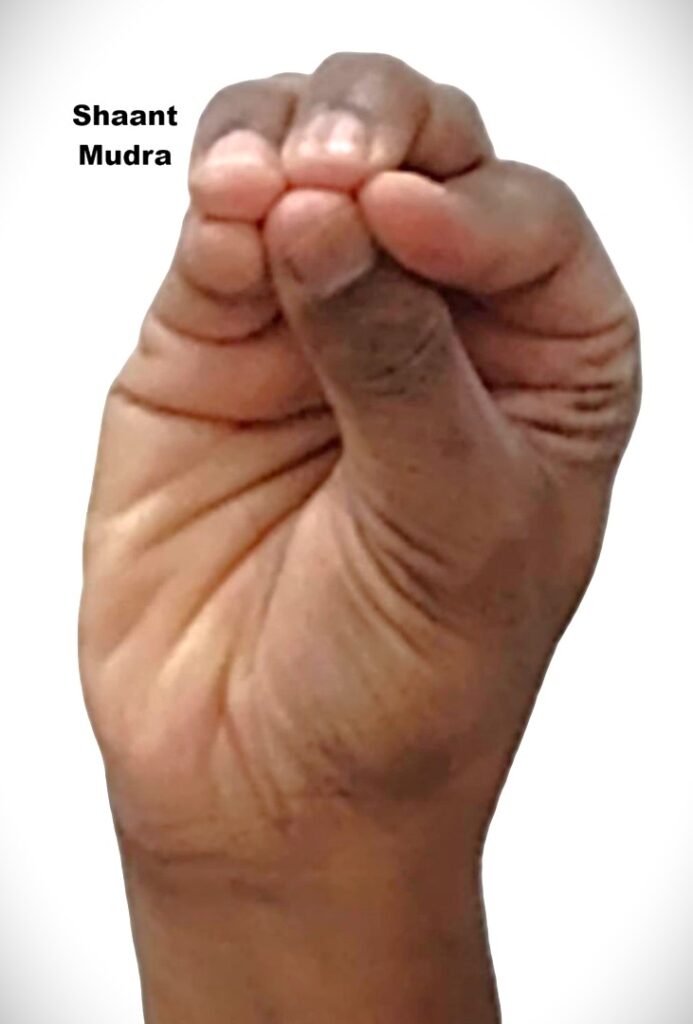
Shaant Mudra Introduction Mudras are yogic hand gestures that regulate prana (vital energy) and influence physical, mental, and spiritual well-being. Shaant Mudra is a calming mudra, designed to promote mental peace, emotional stability, and relaxation. The term “Shaant” in Sanskrit means “peace, calm, or tranquility.” This mudra is often practiced during meditation, pranayama, or times of stress to reduce anxiety, stabilize emotions, and harmonize the mind and body. Meaning Shaant = Calm, peaceful, tranquil. Mudra = Yogic seal or gesture. Purpose: To induce inner calm, reduce mental agitation, and harmonize prana, supporting both mental clarity and emotional balance. How to Perform (Practice) Sit comfortably in a meditation posture such as Sukhasana, Padmasana, or Vajrasana. Relax shoulders, spine, and arms. Form the mudra: Place the tips of the index finger, middle finger, ring finger and little finger, together with the thumb, while the little finger remains extended. Rest hands on your thighs or in front of the chest, palms facing upward. Close your eyes and focus on breathing slowly, releasing tension, and cultivating inner peace. Maintain the mudra for 5–15 minutes, gradually increasing duration with regular practice. Tip: Keep hands relaxed; do not force fingers or thumbs. Benefits Physical Benefits Reduces muscle tension, particularly in hands, arms, and shoulders. Enhances circulation and pranic flow. Supports relaxation of the nervous system. Mental & Emotional Benefits Reduces stress, anxiety, and mental agitation. Promotes mental clarity, emotional stability, and mindfulness. Enhances focus and meditative awareness. Spiritual Benefits Supports inner tranquility and calm mind, facilitating meditation and spiritual practices. Harmonizes energy centers (chakras), especially the heart and mind connection. Encourages balanced prana flow and subtle energy awareness. Contraindications Finger, hand, or wrist injuries. Shoulder or forearm discomfort should be monitored during practice. Avoid over-practice if hands or arms feel fatigued. Anatomy & Physiology Musculoskeletal: Engages intrinsic hand muscles, stabilizes fingers, and lightly activates forearm muscles. Circulatory system: Improves blood flow in fingers, hands, and upper limbs. Nervous system: Stimulates sensory nerves, promoting parasympathetic activation and relaxation. Endocrine system: Supports subtle energy centers associated with stress regulation, calmness, and emotional stability. Kinesiology Fingers form a stable, relaxing seal, directing energy inward. Hands relaxed on thighs or chest, with neutral wrist alignment. Shoulders relaxed, elbows slightly bent. Enhances hand stability, proprioception, and subtle energy awareness. Neurology Activates peripheral nerve endings, enhancing mind-body integration. Promotes parasympathetic nervous activity, reducing stress and promoting calm. Supports cortical regions associated with attention, emotional regulation, and relaxation. Enhances subtle energy perception and internal balance during meditation. Duration of Mudra Beginners: 5 minutes. Intermediate: 10–15 minutes. Advanced: 20–30 minutes during meditation or pranayama. Tip: Daily practice promotes mental peace, emotional stability, and inner harmony. Counter Mudra Gyan Mudra: To combine relaxation with mental clarity. Prana Mudra: To energize after calming practice. Apana Mudra: To release stagnant energy before practicing Shaant Mudra. Conclusion Shaant Mudra is a calming mudra that reduces stress, promotes inner peace, and harmonizes mind, body, and energy. Regular practice provides physical relaxation, mental clarity, and emotional stability, making it ideal for meditation, pranayama, and daily stress management. FAQ Q1. Can beginners practice this mudra?Yes, it is safe and suitable for all levels. Q2. Can it help with anxiety or stress?Yes, it promotes calmness, mental clarity, and emotional balance. Q3. How long should it be practiced daily?5–15 minutes for beginners; up to 30 minutes for advanced practitioners. Q4. Can it be combined with meditation or pranayama?Yes, it enhances meditation, breathing practices, and mindfulness. References Swami Satyananda Saraswati, Asana, Pranayama, Mudra, Bandha. B.K.S. Iyengar, Light on Yoga. Hatha Yoga Pradipika – Mudras for mental calmness and energy balance. Gheranda Samhita – Mudras for emotional stability and meditation. Kuvalayananda, Yoga Mimamsa Journal.
Shakti-Chalini or Maha Vedha Mudra
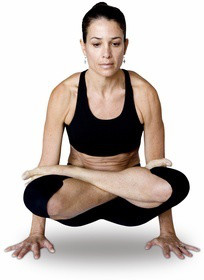
Shakti-Chalini or Maha Vedha Mudra Introduction Mudras are symbolic yogic hand gestures that influence prana (vital energy) and affect physical, mental, and spiritual well-being. Shakti Chalini Mudra is an energy-activating and circulating mudra that helps awaken inner power, boost vitality, and stimulate the flow of prana throughout the body. The term “Shakti” means energy, power, or divine force, and “Chalini” means to move, circulate, or activate. Therefore, this mudra focuses on activating and circulating energy within the body, especially during meditation, pranayama, or spiritual practices. Meaning Shakti = Energy, power, vitality. Chalini = Circulation, movement. Mudra = Yogic seal or gesture. Purpose: To stimulate the flow of energy, increase vitality, and enhance pranic movement for overall physical, mental, and spiritual well-being. How to Perform (Practice) Sit in padmasana. Relax the body and close the eyes. Place the palms of the hands on the floor beside the thighs with the fingers pointing forward or make fists with the knuckles facing down. The arms should be straight but relaxed. Inhale slowly and deeply. Retain the breath inside. Raise the body by placing all the weight on the hands and straightening the arms. Gently beat the buttocks on the ground 3 times, keeping the awareness at the perineum. The buttocks and the back of the thighs should touch the ground simultaneously. The spine must be kept straight. Gently rest the buttocks back on the floor. Exhale. This is one round. When the breathing returns to normal, repeat the process. Practice 3 rounds. Benefits Physical Benefits Stimulates internal energy and metabolism. Enhances respiratory efficiency and oxygen uptake. Supports immunity and general vitality. Helps combat fatigue, lethargy, and cold-related weakness. Mental & Emotional Benefits Improves focus, mental alertness, and motivation. Reduces mental fatigue and stress. Enhances emotional resilience and confidence. Spiritual Benefits Activates pranic energy in energy centers (chakras), particularly the Manipura (solar plexus) and Sahasrara (crown) chakras. Encourages willpower, determination, and inner strength. Supports meditation by circulating subtle energy throughout the body. Contraindications Finger, hand, or wrist injuries. High blood pressure or hyperthyroidism may require caution as this mudra stimulates internal energy. Avoid over-practice if hands, wrists, or shoulders feel strained. Anatomy & Physiology Musculoskeletal: Engages intrinsic hand muscles, stabilizes fingers, lightly activates forearm muscles. Circulatory system: Enhances blood flow to hands, wrists, and upper limbs. Nervous system: Stimulates sensory nerve endings, improving alertness and energy perception. Endocrine system: Supports adrenal and thyroid activity, boosting vitality and internal energy. Kinesiology Ring and little fingers folded into the palm and pressed by thumb, creating a seal that directs energy inward. Index and middle fingers extended to project and circulate energy. Shoulders relaxed, elbows slightly bent, wrists neutral. Enhances hand stability, proprioception, and pranic energy circulation. Neurology Stimulates peripheral nerve endings, enhancing mind-body coordination, focus, and energy awareness. Activates mild sympathetic response to boost internal energy. Supports cortical areas related to attention, motivation, and subtle energy perception. Facilitates circulation of prana and enhanced energetic awareness during meditation. Duration of Mudra Beginners: 5 minutes. Intermediate: 10–15 minutes. Advanced: 20–30 minutes during meditation or pranayama. Tip: Daily practice enhances vitality, energy circulation, and mental alertness. Counter Mudra Shaant Mudra: To calm excessive energy after practice. Prana Mudra: To further energize the body and mind. Apana Mudra: To release excess heat or stagnant energy post-practice. Conclusion Shakti Chalini Mudra is an energy-circulating mudra that boosts vitality, stimulates internal energy, and enhances mental alertness. Regular practice integrates physical, emotional, and subtle energy benefits, making it ideal for meditation, pranayama, and energy-boosting routines. FAQ Q1. Can beginners practice this mudra?Yes, it is safe for most practitioners with gentle finger positioning. Q2. Can it help with fatigue or low energy?Yes, it stimulates prana and enhances vitality. Q3. How long should it be practiced daily?5–15 minutes for beginners; up to 30 minutes for advanced practitioners. Q4. Can it be combined with meditation or pranayama?Yes, it is effective during meditation, pranayama, or morning energy routines. References Swami Satyananda Saraswati, Asana, Pranayama, Mudra, Bandha. B.K.S. Iyengar, Light on Yoga. Hatha Yoga Pradipika – Mudras for energy activation and prana circulation. Gheranda Samhita – Mudras for vitality, inner power, and subtle energy flow. Kuvalayananda, Yoga Mimamsa Journal.
Shakti Mudra
Shakti Mudra Introduction Mudras are symbolic hand gestures in yoga that regulate prana (life energy) and influence physical, mental, and spiritual well-being. Shakti Mudra is known as the “energy-activating mudra” that stimulates vitality, inner strength, and heat energy (agni) in the body. The term “Shakti” in Sanskrit means power, energy, or divine force. This mudra is commonly used to increase body heat, boost immunity, energize the body, and awaken inner potential. It is often practiced during pranayama, meditation, or early morning routines to enhance physical and mental vigor. Meaning Shakti = Energy, power, vitality. Mudra = Yogic seal or gesture. Purpose: To activate inner energy, increase vitality, and support overall strength and immunity. How to Perform (Practice) Sit comfortably in a meditation posture such as Sukhasana, Padmasana, or Vajrasana. Relax shoulders, spine, and arms. Bring the ends of both little fingers together, then join the tips of your ring fingers. Fold your thumbs into their respective palms and bend the index and middle fingers over them. Rotate your palms so your ring and little fingers point down slightly. Rest your hands on your abdomen, relaxing your arms and shoulders. Close your eyes and focus on activating internal energy, warmth, and vitality. Practice for 5–15 minutes, preferably during morning or before pranayama. Tip: Keep fingers relaxed; maintain natural breathing. Benefits Physical Benefits Boosts internal body heat and metabolism. Enhances respiratory efficiency and oxygen uptake. Supports immunity and general vitality. Helps combat lethargy and cold-related weakness. Mental & Emotional Benefits Increases focus, mental alertness, and motivation. Reduces mental fatigue and feelings of weakness. Encourages emotional resilience and inner strength. Spiritual Benefits Stimulates pranic energy in the Manipura (solar plexus) chakra. Enhances willpower, determination, and spiritual energy activation. Supports meditation by energizing subtle energy channels. Contraindications Finger, hand, or wrist injuries. High blood pressure or hyperthyroidism may need caution, as this mudra can increase internal heat. Avoid over-practice if discomfort occurs in hands, wrists, or arms. Anatomy & Physiology Musculoskeletal: Engages intrinsic hand muscles, stabilizes fingers, and lightly activates forearm muscles. Circulatory system: Improves blood circulation in hands and upper limbs. Nervous system: Stimulates sensory nerve endings, enhancing alertness and energy awareness. Endocrine system: Supports adrenal and thyroid activity by stimulating internal heat and energy. Kinesiology Ring and little fingers folded and pressed with the thumb to create a seal that directs energy inward. Index and middle fingers extended for energy projection. Wrists neutral, shoulders relaxed, elbows slightly bent. Enhances hand stability, energy channeling, and proprioception. Neurology Stimulates peripheral nerve endings, enhancing focus, alertness, and mental energy. Activates sympathetic nervous system mildly to boost internal energy. Supports cortical regions associated with attention, motor coordination, and energy perception. Enhances subtle pranic activation and vitality during meditation. Duration of Mudra Beginners: 5 minutes. Intermediate: 10–15 minutes. Advanced: 20–30 minutes during meditation or pranayama. Tip: Practice early in the day to energize the body and mind, or before pranayama. Counter Mudra Shaant Mudra: To calm excessive energy after practice. Prana Mudra: To boost overall vitality along with Shakti Mudra. Apana Mudra: To release excess heat or energy after intense practice. Conclusion Shakti Mudra is an energy-activating mudra that boosts vitality, internal heat, immunity, and mental alertness. Regular practice enhances physical strength, emotional resilience, and spiritual energy, making it ideal for meditation, pranayama, and energy-boosting routines. FAQ Q1. Can beginners practice this mudra?Yes, it is safe for most practitioners, with gentle finger placement. Q2. Can it help with fatigue or lethargy?Yes, it stimulates energy and improves mental and physical vigor. Q3. How long should it be practiced daily?5–15 minutes for beginners; up to 30 minutes for advanced practitioners. Q4. Can it be combined with meditation or pranayama?Yes, it is particularly effective when combined with deep breathing, sun salutations, or morning meditation. References Swami Satyananda Saraswati, Asana, Pranayama, Mudra, Bandha. B.K.S. Iyengar, Light on Yoga. Hatha Yoga Pradipika – Mudras for energy activation and vitality. Gheranda Samhita – Mudras for pranic stimulation and inner strength. Kuvalayananda, Yoga Mimamsa Journal.
Shambhavi Mudra
Shambhavi Mudra Introduction Mudras are symbolic hand or body gestures used in yoga and meditation to influence prana (life energy), mental states, and spiritual awareness. Shambhavi Mudra, also called the “eyebrow center gaze” or Trataka Mudra, is a powerful meditative technique that promotes inner focus, clarity, and awakening of spiritual insight. The term “Shambhavi” in Sanskrit means “related to Lord Shiva” or “auspicious one”, reflecting the mudra’s association with inner awakening and divine insight. It is widely practiced in Kundalini Yoga, Hatha Yoga, and meditation practices to stabilize the mind and awaken higher consciousness. Meaning Shambhavi = Auspicious, divine, related to inner vision. Mudra = Yogic seal or gesture. Purpose: To focus attention inward, stabilize mind and prana, and awaken intuition and spiritual awareness. How to Perform (Practice) Sit in any comfortable meditation asana. Keep the head and spine upright and straight, and place the hands on the knees in either chin or jnana mudra. Close the eyes and relax the whole body. Relax all the muscles of the face, including the forehead, the eyes and behind the eyes. Slowly open the eyes and look ahead at a fixed point, keeping the head and the whole body absolutely still. Next, look upward and inward, focusing the eyes at the eyebrow centre. The head should not move. When performed correctly, the curve of the eyebrows will form a V-shaped image. The apex of the V is located at the eyebrow centre. If the V-formation is not seen, the gaze is not directed upward and inward correctly Release the gaze at the slightest sensation of strain. Hold the gaze for only a few seconds at first. Close the eyes and relax them. Suspend the thought processes and meditate on the stillness in the dark space in front of the closed eyes. Benefits Physical Benefits Reduces eye strain and tension. Improves blood circulation around the eyes and forehead. Enhances neurological control of ocular muscles. Mental & Emotional Benefits Improves concentration, memory, and mental clarity. Reduces stress, anxiety, and mental agitation. Enhances emotional stability and mindfulness. Spiritual Benefits Activates Ajna (third eye) chakra, stimulating intuition and higher perception. Deepens meditation and inner awareness. Supports awakening of subtle energy channels (nadis) and prana flow. Contraindications Avoid practicing if experiencing severe eye disorders without medical guidance. Those with high blood pressure should practice under supervision. Avoid straining eyes or forcing the gaze for prolonged periods. Anatomy & Physiology Musculoskeletal: Engages ocular muscles, stabilizes neck and spine. Circulatory system: Improves blood flow to eyes and forehead. Nervous system: Stimulates optic nerves and regions associated with focus, attention, and visual processing. Endocrine system: Activates pineal and pituitary glands indirectly through focused meditation. Kinesiology Neck remains straight; eyes softly focused on a fixed point between eyebrows. Shoulder and arm muscles relaxed. Promotes proprioception and ocular motor control. Enhances energy flow to Ajna chakra and subtle energy alignment. Neurology Stimulates optic nerves and visual cortex, improving visual attention and cognitive focus. Activates parasympathetic activity, calming the mind and reducing stress. Enhances cortical areas associated with introspection, memory, and sensory integration. Supports subtle energy awareness and third-eye activation. Duration of Mudra Beginners: 2–5 minutes. Intermediate: 5–10 minutes. Advanced: 10–20 minutes during meditation or pranayama. Tip: Gradually increase practice time as eye and mental stamina improve. Counter Mudra Shaant Mudra: To calm the mind after focused practice. Gyan Mudra: To enhance mental clarity. Prana Mudra: To energize the body after meditation. Conclusion Shambhavi Mudra is a meditative mudra that enhances concentration, mental clarity, and spiritual insight. Regular practice stabilizes the mind, activates the Ajna chakra, and supports deep meditation and subtle energy awareness. FAQ Q1. Can beginners practice this mudra?Yes, with gentle focus and short durations to avoid eye strain. Q2. Can it help with stress and mental distraction?Yes, it calms the mind and improves concentration. Q3. How long should it be practiced daily?2–5 minutes for beginners; up to 20 minutes for advanced practitioners. Q4. Can it be combined with pranayama or meditation?Yes, it enhances meditation, breathing practices, and spiritual awareness. References Swami Satyananda Saraswati, Asana, Pranayama, Mudra, Bandha. B.K.S. Iyengar, Light on Yoga. Hatha Yoga Pradipika – Mudras for third-eye activation and meditation. Gheranda Samhita – Mudras for focus, mental clarity, and spiritual awakening. Kuvalayananda, Yoga Mimamsa Journal.
Yampāśa Mudrā
Yampāśa Mudrā Introduction Yampāśa Mudrā is a symbolic hand gesture used in classical Indian dance, yoga, and meditation traditions. The word Yampāśa refers to the noose or binding cord of Yama, the deity of dharma and death in Vedic tradition. The mudrā represents restraint, control, and karmic law, reminding practitioners of discipline, self-mastery, and the inevitable law of cause and effect. In yogic practice, it signifies the power to bind and release thoughts, emotions, and energies for spiritual transformation. Meaning Yama = the lord of dharma, death, and discipline. Pāśa = noose, cord, or bond. Thus, Yampāśa Mudrā means “the gesture of Yama’s noose” – symbolizing binding, restraint, and karmic discipline. It teaches that attachment and desires are like cords binding the soul, and through yogic discipline, one can break free. How to Perform Practice Sit comfortably in Sukhasana, Padmasana, or Vajrasana, spine erect. On each hand, extend the index fingers and join the remaining fingers together with the thumb. Hook the index fingers, with the left hand facing up and the right hand facing down. Hold the mudrā at chest or heart level, with relaxed shoulders. Close the eyes, breathe deeply, and focus on the Anāhata (heart chakra) or Ajñā (third-eye chakra). Benefits of Yampāśa Mudrā Physical Benefits Enhances respiratory function by focusing on chest expansion. Improves circulation and nerve flow in the hands and arms. Helps release tension in the shoulders, chest, and spine. Supports regulation of blood pressure through calming breathwork. Mental Benefits Encourages discipline, self-control, and inner restraint. Reduces fear, anxiety, and attachment to outcomes. Symbolically helps break free from negative thought cycles. Promotes mental clarity and acceptance of impermanence. Spiritual Benefits Represents the binding and liberation of karma. Encourages reflection on life, death, and dharma. Assists in meditative detachment and dissolving ego-attachments. Awakens awareness of universal law and higher order. Contraindications Avoid during severe depression without guidance, as it may increase feelings of heaviness. Those with arthritic pain in fingers or hand stiffness should practice gently. People with respiratory issues should avoid long holds unless combined with slow breathing. Anatomy & Physiology Activates muscles of the forearm flexors, interossei, and lumbricals due to interlocking of fingers. Improves neuromuscular coordination between both hands. Encourages parasympathetic activation, lowering stress responses. Engages thoracic muscles and diaphragm via deep breathing. Kinesiology Involves finger flexion and interlocking, strengthening intrinsic muscles of the hand. Engages oppositional forces in the fingers, improving dexterity. Promotes symmetrical balance between left and right hand actions. Enhances shoulder stability when performed at heart or chest level. Neurology Stimulates somatosensory and motor cortices through bilateral finger interlinking. Enhances inter-hemispheric communication between brain hemispheres. Induces alpha and theta brainwave patterns, deepening meditative states. Symbolically trains the nervous system in restraint and release cycles. Duration of Mudrā Beginners: 5 minutes with slow breathing. Intermediate: 10–15 minutes in meditation or pranayama practice. Advanced: 20–30 minutes daily for deeper psychological and spiritual effects. Counter Mudra Vajrapradāna Mudrā – balances discipline with generosity. Hridaya Mudrā – balances karmic restraint with heart expansion. Chin or Jñana Mudrā – brings clarity and wisdom after discipline. Conclusion Yampāśa Mudrā is a gesture of discipline, restraint, and karmic awareness, symbolizing the noose of Yama that binds souls to worldly desires. Through its practice, one develops self-control, acceptance of impermanence, and freedom from attachment. It is both a symbolic and practical mudrā that encourages reflection on life, death, and liberation. When practiced with awareness, it opens the path to inner mastery and spiritual freedom. FAQ Q1. What does Yampāśa Mudrā symbolize?It symbolizes restraint, karmic law, and discipline, reminding us of the inevitability of life and death. Q2. Can beginners practice this mudrā?Yes, but they should begin with short durations (5–10 minutes). Q3. Which chakra does it activate?It primarily influences the Anāhata (heart chakra) and Ajñā (third-eye chakra). Q4. Can this mudrā help with anxiety?Yes, it reduces fear and anxiety by instilling acceptance and discipline. Q5. Can it be combined with mantra?Yes, it pairs well with chanting “Om Namo Bhagavate Vāsudevāya” or Yama-related mantras for karmic purification. References Swami Satyananda Saraswati – Asana, Pranayama, Mudra, Bandha Gertrud Hirschi – Mudras: Yoga in Your Hands Joseph Le Page – Mudras for Healing and Transformation André Van Lysebeth – The Yoga of Breathing Natyashastra & Abhinaya Darpana (classical dance texts referencing symbolic mudras)
Vipareeta Karani Mudra
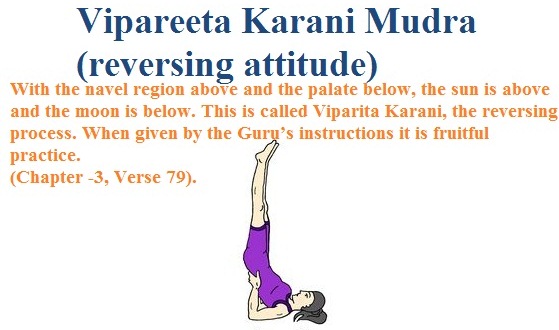
Vipareeta Karani Mudra Introduction Vipareeta Karani Mudra is a rejuvenating yogic hand and body gesture that enhances energy circulation, relaxation, and balance in the body and mind. It is derived from Vipareeta Karani Asana (Legs-Up-the-Wall Pose) in yoga and focuses on reversing energy flow to restore vitality. The term comes from Sanskrit: Vipareeta: Inverted or reversed Karani: Action or gesture Overall Purpose:This mudra helps balance prana, reduce fatigue, calm the nervous system, and support emotional and mental well-being. Meaning Vipareeta: Reversal of usual energy flow Karani: Action or mudra Overall Meaning: Vipareeta Karani Mudra reverses stagnant energy, revitalizes the body, and promotes mental and emotional equilibrium. How to Perform / Practice Assume vipareeta karani asana. Bring the legs over the head so that the eyes look straight up at the feet. Close the eyes and relax the whole body. This is the starting position. Fix the awareness at manipura chakra in the spine, directly behind the navel. Inhale slowly and deeply with ujjayi pranayama. Simultaneously, feel the breath and consciousness moving from manipura to vishuddhi chakra. While exhaling, maintain the awareness at vishuddhi. At the end of exhalation, immediately bring the awareness back to manipura and repeat the same process. Benefits Physical Benefits: Promotes blood circulation and lymphatic drainage. Reduces fatigue, heaviness in legs, and lower body swelling. Relieves tension in legs, lower back, and feet. Supports endocrine and nervous system balance. Mental & Emotional Benefits: Calms stress, anxiety, and mental fatigue. Enhances clarity, emotional stability, and rejuvenation. Improves sleep quality when practiced in the evening. Energetic / Spiritual Benefits: Reverses stagnant prana, promoting smooth energy flow. Balances Ida and Pingala nadis, fostering mental clarity. Encourages deep relaxation and energetic rejuvenation. Contraindications Avoid if experiencing serious spinal or neck injuries. Not recommended for glaucoma, uncontrolled hypertension, or heart conditions without medical advice. Avoid if pregnant unless modified under supervision. Discontinue if discomfort, dizziness, or strain occurs. Anatomy & Physiology Muscles: Engages legs, lower back, and intrinsic hand muscles for mudra positioning. Joints: Hip and knee extension/flexion (if legs elevated) and slight finger flexion. Nervous System: Activates parasympathetic system, reducing stress and promoting relaxation. Circulation: Enhances venous return and lymphatic flow; improves energy and oxygen supply to the brain. Kinesiology Improves postural alignment during inversion or semi-inversion. Encourages muscular relaxation in lower limbs while supporting spinal alignment. Supports energy flow through upper and lower body channels. Neurology Stimulates brain regions related to relaxation, stress reduction, and attention. Balances autonomic nervous system, reducing sympathetic overactivity. Enhances neural regulation of circulation and energy distribution. Duration of Practice Daily Practice: 10–20 minutes; can be extended to 30 minutes for therapeutic purposes. Short Practice: 5–10 minutes for relaxation and energy refresh. Can be combined with pranayama or meditation for deeper rejuvenation. Counter Mudra Gentle stretching or restorative postures like Supta Baddha Konasana can follow practice. Avoid prolonged inversion in case of dizziness; resume upright position gradually. Conclusion Vipareeta Karani Mudra is a rejuvenating hand and body gesture that balances prana, improves circulation, and promotes emotional and mental calmness. Regular practice reduces fatigue, stress, and stagnation while enhancing energy flow, relaxation, and overall well-being. FAQ Q1: Can beginners practice Vipareeta Karani Mudra?A: Yes, start with 5–10 minutes and gradually increase duration. Q2: Can it improve sleep and relaxation?A: Yes, it calms the nervous system and supports restorative sleep. Q3: Can it be combined with other mudras or asanas?A: Yes, it can be combined with pranayama and meditation for enhanced benefits. Q4: Is it suitable for people with high blood pressure or eye issues?A: Consult a physician before practice if glaucoma, hypertension, or cardiovascular issues are present. References Swami Satyananda Saraswati, Mudras for Healing and Transformation. Iyengar, B.K.S., Light on Yoga. Saraswati, S., Pranayama and Mudras in Yoga Therapy. Fishman, L., Yoga for Emotional Balance. Lad, V., Ayurveda: The Science of Self-Healing. Journal of Bodywork and Movement Therapies, 2018; 22(4): Effects of Hand Mudras on Mental and Physiological Functions.
Vishuddha Mudra
Vishuddha Mudra Introduction Vishuddha Mudra is a hand gesture in yoga that activates and balances the throat chakra (Vishuddha Chakra), which governs communication, self-expression, and purification. It is widely used in pranayama, meditation, and energy healing to enhance clarity of speech, expression, and energetic purification. The term comes from Sanskrit: Vishuddha: Pure, purified Mudra: Gesture or seal Overall Purpose:Vishuddha Mudra helps purify energy, improve communication, and harmonize the throat chakra, facilitating clear expression and energetic balance. Meaning Vishuddha: Purity, clarity, and purification of body, mind, and energy. Mudra: Hand gesture used to direct pranic flow. Overall Meaning:Vishuddha Mudra clears and purifies the energy in the throat region, supporting expression, communication, and mental clarity. How to Perform / Practice Sit comfortably in a meditative posture (Padmasana, Sukhasana, or Vajrasana) with a straight spine. Start with both palms facing down. Bend all your fingers down and loosely interlock them. Join the tip of each index finger with the tip of its respective thumb to form two interlocked circles. Tip: Can be practiced anytime, especially before speaking, writing, or creative work to enhance clarity and expression. Benefits Physical Benefits: Improves throat health, vocal clarity, and respiratory function. Supports endocrine balance, especially thyroid and parathyroid. Enhances neck and shoulder flexibility and relaxation. Mental & Emotional Benefits: Promotes mental clarity and calmness. Enhances self-expression, communication, and confidence. Reduces stress, anxiety, and mental blockages. Energetic / Spiritual Benefits: Activates and balances the Vishuddha Chakra (throat chakra). Purifies pranic energy in the upper body. Encourages honest expression, creativity, and spiritual growth. Contraindications Avoid if experiencing hand, wrist, or finger injuries. Not recommended for severe arthritis or joint pain in fingers. Discontinue if numbness, tingling, or discomfort occurs. Practice moderately in cases of excess Pitta, as excessive focus on throat energy may cause irritation. Anatomy & Physiology Muscles: Engages intrinsic hand muscles (lumbricals, interossei) and forearm muscles. Joints: Flexion at interlocked fingers; thumb extended. Nervous System: Activates parasympathetic pathways, calming stress and enhancing focus. Circulation: Improves blood flow to hands and indirectly influences upper body and throat energy. Endocrine System: Supports thyroid and parathyroid health through energetic alignment. Kinesiology Enhances fine motor coordination through finger interlocking. Supports postural stability during seated meditation. Encourages a relaxed hand posture, aiding focus, energy circulation, and expression. Neurology Stimulates brain regions associated with speech, communication, and emotional regulation. Balances sympathetic and parasympathetic activity, reducing stress. Supports neural pathways for attention, vocal control, and self-expression. Duration of Practice Daily Practice: 10–20 minutes during meditation or pranayama. Short Practice: 5 minutes to boost expression, clarity, or focus before work or speaking. Can be combined with Chin Mudra or Gyan Mudra for enhanced meditative and energetic benefits. Counter Mudra If tension arises, relax hands in Gyan Mudra or Prithvi Mudra. Gentle hand stretching or shaking is recommended after prolonged practice. Conclusion Vishuddha Mudra is a powerful tool for purifying energy, enhancing communication, and balancing the throat chakra. Regular practice improves throat health, mental clarity, self-expression, and energetic purification, making it ideal for meditation, pranayama, and creative work. FAQ Q1: Can beginners practice Vishuddha Mudra?A: Yes, it is simple and safe; start with a few minutes and gradually increase duration. Q2: Can it improve speech and communication?A: Yes, it supports vocal clarity, self-expression, and confident communication. Q3: Can it be combined with other mudras?A: Yes, it pairs well with Chin Mudra, Gyan Mudra, or Prana Mudra for enhanced benefits. Q4: Is it safe during meditation or pranayama?A: Yes, it enhances energy flow and mental focus when practiced with awareness. References Swami Satyananda Saraswati, Mudras for Healing and Transformation. Iyengar, B.K.S., Light on Yoga. Saraswati, S., Pranayama and Mudras in Yoga Therapy. Fishman, L., Yoga for Emotional Balance. Lad, V., Ayurveda: The Science of Self-Healing. Journal of Bodywork and Movement Therapies, 2018; 22(4): Effects of Hand Mudras on Mental and Physiological Functions.