
Varāha Mudrā
Varāha Mudrā Introduction Varāha Mudrā is a classical yogic and tantric hand gesture inspired by Varāha, the boar incarnation of Lord Vishnu. In Hindu mythology, Varāha lifted the Earth (Bhūdevi) from the depths of the cosmic ocean, symbolizing protection, rescue, and restoration of balance. Similarly, this mudrā is believed to awaken vitality, grounding, and resilience, while offering energetic protection against negativity. Meaning Varāha = boar, the third avatāra of Vishnu. Mudrā = gesture, seal, or psychic posture. Thus, Varāha Mudrā means “the gesture of the Boar”, symbolizing the restoration of Earthly balance, grounding, and protection. It embodies courage, survival instinct, and the rooting of prāṇa into the body. How to Perform Practice Sit in Padmāsana, Vajrāsana, or Sukhasana with spine straight. Hold the left hand with the palm facing you. Curl the middle, ring, and little fingers toward the palm with the index finger pointing to the right and the thumb extended upward. With the right hand, clasp the curled fingers of the left. Connect the right index finger to the left thumb. left index finger rests on the outside of the right little finger. Focus on the Mulādhāra (root chakra) or Navel (Manipūra chakra). Breathe deeply and visualize yourself being grounded, stable, and protected. Optionally chant the mantra: “Om Varāhāya Namah”. Benefits of Varāha Mudrā Physical Benefits Strengthens the respiratory system by widening the chest. Improves digestion and stimulates abdominal organs. Enhances circulation in the arms and hands. Relieves fatigue and revitalizes body energy. Mental Benefits Promotes grounding and stability during emotional upheaval. Increases courage, determination, and resilience. Reduces fear, anxiety, and insecurity. Boosts concentration and mental clarity. Spiritual Benefits Awakens Mulādhāra chakra (root chakra – grounding, survival). Connects with the protective energy of Varāha (Vishnu’s avatar). Shields the practitioner from negative energies and psychic disturbances. Promotes balance between the earth element and cosmic consciousness. Contraindications Avoid long practice if you have severe hand arthritis or joint stiffness. People with hypertension should practice gently with slow breathing. Should not be forced if it causes discomfort in the thumb joints. Anatomy & Physiology Opens the thoracic cavity, improving lung function. Stimulates the abdominal viscera, aiding digestion. Activates sympathetic and parasympathetic nervous system balance. Improves musculoskeletal alignment of upper body. Kinesiology Engages opposition of the thumb (symbolic of Varāha tusks). Coordinates flexion of the fingers with thumb abduction. Activates fine motor control of hand intrinsic muscles. Supports postural stability by grounding through the hands. Neurology Stimulates sensory nerves of the thumb and fingers. Activates brain regions linked to survival instinct and grounding. Balances hemispheric activity for alert yet calm awareness. Induces alpha-theta brainwave states, aiding meditation. Duration of Mudrā Beginners: 5–10 minutes daily. Intermediate: 15–20 minutes during meditation or mantra practice. Advanced: 30–45 minutes for deep grounding and energy protection practices. Counter Mudra Prithvi Mudrā (earth gesture) – strengthens grounding after Varāha practice. Apāna Mudrā – helps channel downward energy for stability. Jnana Mudrā – balances grounding with clarity. Conclusion Varāha Mudrā is a powerful hand gesture embodying the protective, stabilizing, and grounding force of Vishnu’s Varāha avatāra. Physically, it supports the lungs and digestion; mentally, it instills courage and resilience; spiritually, it strengthens the root chakra and shields against negativity. Regular practice of this mudrā helps one remain grounded, strong, and energetically balanced, even in challenging times. FAQ Q1. What does Varāha Mudrā symbolize?It symbolizes the protective and grounding energy of Varāha, the boar incarnation of Vishnu. Q2. Which chakra does it activate?It primarily activates the Mulādhāra (root chakra) and secondarily the Manipūra (solar plexus chakra). Q3. Can beginners practice Varāha Mudrā?Yes, it is simple and suitable for all, though should be avoided with hand injuries. Q4. Can it be used in meditation?Yes, especially with grounding mantras like Om Varāhāya Namah. Q5. What time of day is best for practice?Early morning or evening, when seeking grounding, stability, or protection. References Swami Satyananda Saraswati – Asana, Pranayama, Mudra, Bandha Gertrud Hirschi – Mudras: Yoga in Your Hands Joseph Le Page – Mudras for Healing and Transformation Vishnu Purana – Mythology of Varāha Avatāra
Vajrapradāna Mudrā
Vajrapradāna Mudrā Introduction Vajrapradāna Mudrā is a powerful yogic and ritual hand gesture found in Buddhist, Hindu, and tantric traditions. The word combines Vajra (thunderbolt or diamond, symbol of indestructibility and spiritual power) and Pradāna (offering, bestowal). Together, this mudrā represents the act of offering the vajra—spiritual strength, clarity, and indestructible wisdom—to oneself or others. It is often depicted in iconography of deities, particularly in tantric Buddhism, where it symbolizes the sharing of inner strength, divine energy, and blessings. Meaning Vajra = thunderbolt, diamond, indestructible truth, spiritual strength. Pradāna = gift, offering, bestowal. Thus, Vajrapradāna Mudrā means “the gesture of offering spiritual strength and divine power”.It signifies the transfer of wisdom, compassion, and protective energy. How to Perform Practice Sit in a comfortable meditative posture with spine erect (Padmāsana, Vajrāsana, or Sukhasana). Place hands in front of the chest. Interlace the fingers of both hands together. Extend both index fingers straight forward and press them together, pointing outward. Rest the hands at the level of the heart or slightly higher. Close the eyes, breathe deeply, and focus on the heart chakra (Anāhata) or third eye (Ājñā chakra). Visualize offering light, energy, or blessings outward to the world. Benefits of Vajrapradāna Mudrā Physical Benefits Improves respiratory health by expanding the chest area. Stimulates blood circulation in hands and arms. Relieves tension in the upper back and shoulders. Enhances vitality by channeling pranic energy outward. Mental Benefits Promotes a sense of generosity, openness, and compassion. Reduces feelings of isolation, selfishness, and inner blockages. Enhances confidence and courage in decision-making. Fosters mental clarity and resilience. Spiritual Benefits Symbolizes the offering of inner strength to higher consciousness. Encourages seva (selfless service) and sharing of energy. Balances ego with humility. Activates Anāhata (heart chakra) and connects with universal compassion. Contraindications People with shoulder stiffness, frozen shoulder, or arthritis should practice gently. Those with severe heart or lung conditions should avoid long practice without guidance. Should not be forced if it causes discomfort in fingers or wrists. Anatomy & Physiology Expands the thoracic region, improving lung function. Engages intercostal muscles and improves breathing efficiency. Stimulates parasympathetic nervous system (relaxation response). Enhances circulation in upper extremities. Kinesiology Uses fine motor control of the fingers to interlace and extend. Engages flexor and extensor muscles of the hand. Encourages bilateral coordination of hands and arms. Improves postural alignment by opening chest and shoulders. Neurology Stimulates sensory-motor nerves of the hands and arms. Activates brain centers related to compassion, empathy, and altruism. Balances activity between left and right brain hemispheres. Encourages brainwave shift toward alpha and theta states (meditation and deep focus). Duration of Mudrā Beginners: 5–10 minutes daily in meditation. Intermediate: 15–20 minutes, especially with mantra chanting (Om Mani Padme Hum, Om Namah Shivaya). Advanced: Up to 30–45 minutes for deeper spiritual practices or rituals. Counter Mudra Anjali Mudrā (prayer gesture) – for grounding and centering after Vajrapradāna. Hridaya Mudrā – to restore heart-centered balance. Jnana Mudrā – for clarity and grounding after outward energy offering. Conclusion Vajrapradāna Mudrā is a profound yogic gesture symbolizing the offering of inner strength, divine wisdom, and blessings. Physically, it strengthens the chest and shoulders; mentally, it cultivates generosity and courage; spiritually, it awakens the heart and expands compassion. By practicing this mudrā, one learns the balance between receiving and giving, embodying the principle of selfless service and universal harmony. FAQ Q1. What does Vajrapradāna Mudrā symbolize?It symbolizes the offering of spiritual strength, compassion, and blessings. Q2. Can it be practiced during meditation?Yes, it is often combined with mantra chanting or visualization. Q3. Which chakra does it activate?Primarily the heart chakra (Anāhata), and secondarily the third eye (Ājñā). Q4. Is it suitable for beginners?Yes, but should be practiced gently if there are hand or shoulder issues. Q5. Can it be combined with pranayama?Yes, especially with Anulom Vilom (alternate nostril breathing) or deep heart-centered breathing. References Swami Satyananda Saraswati – Asana, Pranayama, Mudra, Bandha Gertrud Hirschi – Mudras: Yoga in Your Hands Joseph Le Page – Mudras for Healing and Transformation Buddhist Tantric Iconography texts on Vajra and ritual mudras
Vaayan Mudra
Vaayan Mudra Introduction Vaayan Mudra is a yogic hand gesture aimed at stimulating the movement of energy (prana) throughout the body, enhancing circulation, and balancing the body’s Vata dosha according to Ayurveda. It is particularly helpful for reducing stiffness, improving flexibility, and relieving tension in both the body and mind. The term Vaayan in Sanskrit refers to movement or circulation, reflecting the mudra’s function of promoting free flow of prana and vitality. This mudra is commonly used in yoga therapy, meditation, and pranayama practices to harmonize physical, mental, and energetic systems. Meaning Vaayan: Circulation, movement, free flow of energy. Mudra: Hand gesture used to influence prana and physiological processes. Overall Meaning:Vaayan Mudra facilitates circulation of prana, reducing stiffness, promoting flexibility, and enhancing overall physical and mental well-being. How to Perform / Practice Sit comfortably in a meditative posture (Padmasana, Sukhasana, or on a chair) with a straight spine. This pose is made by joining the tips of the thumb, index finger and middle finger together. Maintain a relaxed hand posture, close your eyes, and breathe slowly and evenly. Visualize energy circulating throughout your body. Practice for 15–30 minutes daily, or 5–10 minutes in short intervals. Tip: Can be practiced anytime during the day to relieve stiffness, improve circulation, or during meditation. Benefits Physical Benefits: Improves circulation and movement of energy. Reduces stiffness in hands, fingers, and arms. Supports flexibility and joint mobility. Helps relieve tension and fatigue in the body. Mental & Emotional Benefits: Reduces anxiety and restlessness. Improves concentration, focus, and mental clarity. Promotes emotional balance and calmness. Energetic / Spiritual Benefits: Stimulates free flow of prana (vital energy) throughout the body. Balances Vata energy and other dosha-related imbalances. Enhances meditation and mindfulness practices. Contraindications Avoid if there is hand or finger injury. Not recommended for severe arthritis or joint pain in fingers. Stop practice if numbness, tingling, or discomfort occurs. Individuals with excessive Pitta or Kapha should practice moderately to avoid imbalance. Anatomy & Physiology Muscles: Engages intrinsic hand muscles (lumbricals, interossei) and stabilizing forearm muscles. Joints: Flexion at little and ring fingers; extension at index and middle fingers. Nervous System: Activates parasympathetic system, promoting relaxation and circulation of energy. Circulation: Improves microcirculation in hands and may influence systemic energy distribution. Kinesiology Improves fine motor coordination and finger dexterity. Supports static postural stability while seated. Encourages relaxed hand posture, aiding mental focus and physical balance. Neurology Stimulates brain regions associated with alertness, focus, and energy regulation. Balances sympathetic and parasympathetic activity to reduce fatigue while improving mental clarity. Supports neural plasticity, enhancing cognitive function, emotional stability, and meditation capacity. Duration of Practice Daily Practice: 15–30 minutes, divided into 1–3 sessions. Short Practice: 5–10 minutes during meditation, work breaks, or whenever circulation or focus is needed. Can be combined with pranayama or other mudras for enhanced benefits. Counter Mudra If excessive Vata energy or restlessness occurs, switch to Prithvi Mudra or Gyan Mudra. Gentle hand stretching or shaking is recommended after prolonged practice. Conclusion Vaayan Mudra is a powerful yet simple hand gesture that promotes circulation of prana, reduces stiffness, and balances energy flow, supporting overall physical, mental, and emotional well-being. Regular practice enhances flexibility, mental clarity, and mindfulness, making it ideal for yoga, meditation, and daily wellness routines. FAQ Q1: Can beginners practice Vaayan Mudra?A: Yes, it is safe and simple; start with 5–10 minutes and gradually increase. Q2: Can it help with stiffness or fatigue?A: Yes, it promotes circulation and energy flow, reducing physical and mental fatigue. Q3: Can it be combined with other mudras?A: Yes, it can be combined with Prana Mudra or Dhyana Mudra for enhanced energy and focus. Q4: Is it suitable during meditation?A: Yes, it enhances pranic flow and mental calm, supporting deeper meditation. References Swami Satyananda Saraswati, Mudras for Healing and Transformation. Iyengar, B.K.S., Light on Yoga. Saraswati, S., Pranayama and Mudras in Yoga Therapy. Fishman, L., Yoga for Emotional Balance. Journal of Bodywork and Movement Therapies, 2018; 22(4): Effects of Hand Mudras on Mental and Physiological Functions.
Vaikhara Mudra
Vaikhara Mudra Introduction Vaikhara Mudra is a yogic hand gesture designed to enhance speech, communication, and expression, while also stimulating energy in the throat and vocal regions. It is often used in pranayama, mantra chanting, and meditation to improve clarity of voice, strengthen the throat, and balance the body’s energy channels. The term Vaikhara in Sanskrit refers to articulation, pronunciation, or sound, reflecting the mudra’s connection with vocal expression and communication. Meaning Vaikhara: Articulation, vocal expression, sound. Mudra: Gesture to influence pranic energy and physiological processes. Overall Meaning:Vaikhara Mudra symbolizes enhanced communication, clarity of speech, and balanced energy flow, particularly in the throat and head regions. How to Perform / Practice Sit comfortably in a meditative posture (Padmasana, Sukhasana, or on a chair) with a straight spine. Make a fist with thumbs on outside of fingers then cross forearms over chest with right arm closest to body. Optionally, chant a mantra while holding this mudra to enhance vocal clarity and resonance. Practice for 10–20 minutes daily, or in shorter sessions of 5–10 minutes. Tip: Can be practiced before speaking, chanting, or singing, or during meditation to improve communication skills and confidence. Benefits Physical Benefits: Strengthens the throat, vocal cords, and respiratory system. Improves breathing, lung capacity, and oxygenation. Supports better digestion and metabolism via throat and energy channel activation. Mental & Emotional Benefits: Enhances confidence and self-expression. Reduces nervous tension and anxiety related to communication. Improves focus, clarity of thought, and emotional stability. Energetic / Spiritual Benefits: Activates Vishuddha (throat) chakra, improving energy flow in the throat and head regions. Supports pranayama, mantra, and meditation practices. Promotes a sense of clarity, assertiveness, and inner harmony. Contraindications Avoid if experiencing hand, finger, or wrist injuries. Not recommended for severe arthritis or chronic joint pain. Discontinue if numbness, tingling, or discomfort occurs. Individuals with excess Pitta should practice moderately to avoid throat irritation or overheating. Anatomy & Physiology Muscles: Engages intrinsic hand muscles (lumbricals, interossei) to maintain finger positions. Joints: Flexion at thumb and ring finger; extension at other fingers. Nervous System: Activates parasympathetic pathways to reduce stress while supporting vocal energy. Circulation: Improves microcirculation in hands and may influence throat and head region energetics. Kinesiology Enhances fine motor coordination of fingers and hands. Supports static posture stability during seated meditation or pranayama. Encourages relaxed hand posture, facilitating focused mental and energetic activity. Neurology Stimulates brain regions associated with speech, focus, and communication. Balances sympathetic and parasympathetic activity, promoting calm confidence. Supports neural plasticity, improving cognitive clarity, expression, and attention. Duration of Practice Daily Practice: 10–20 minutes, can be divided into 1–2 sessions. Short Practice: 5 minutes before speaking, singing, or meditation for enhanced vocal clarity. Can be combined with pranayama or Gyan Mudra for greater energetic and mental benefits. Counter Mudra If excessive throat tension occurs, switch to Shunya Mudra or gently stretch the hands and fingers. Relaxation exercises for the shoulders and neck may complement the mudra practice. Conclusion Vaikhara Mudra is a powerful tool to enhance vocal clarity, communication, and energetic flow in the throat region. Regular practice supports physical, mental, and spiritual development, making it valuable for meditation, mantra practice, and daily communication improvement. Proper execution ensures maximum benefits without discomfort. FAQ Q1: Can beginners practice Vaikhara Mudra?A: Yes, it is safe and simple; start with 5–10 minutes and gradually increase. Q2: Can it improve speaking or singing skills?A: Yes, it strengthens throat energy and enhances clarity and confidence in vocal expression. Q3: Can it be combined with other mudras?A: Yes, it can be combined with Prana Mudra or Gyan Mudra for enhanced focus and energetic balance. Q4: Is it suitable for meditation?A: Yes, it enhances mental clarity, vocal energy, and concentration during meditation. References Swami Satyananda Saraswati, Mudras for Healing and Transformation. Iyengar, B.K.S., Light on Yoga. Saraswati, S., Pranayama and Mudras in Yoga Therapy. Fishman, L., Yoga for Emotional Balance. Journal of Bodywork and Movement Therapies, 2018; 22(4): Effects of Hand Mudras on Mental and Physiological Functions.
Vaata Naashak Mudra
Vaata Naashak Mudra Introduction Vaata Naashak Mudra is a yogic hand gesture specifically designed to balance and reduce excess Vata dosha in the body according to Ayurveda. Vata imbalances often lead to anxiety, restlessness, digestive issues, dry skin, and joint stiffness. Practicing this mudra helps stabilize the body’s energy, calm the mind, and improve overall vitality. The term Vaata Naashak literally means “destroyer of Vata”, emphasizing its role in reducing the disturbances caused by excessive air and space elements in the body. Meaning Vaata: One of the three doshas, representing air and space, governing movement and circulation. Naashak: Reducer or destroyer. Mudra: Gesture to influence pranic energy and physiological balance. Overall Meaning:Vaata Naashak Mudra is a therapeutic hand gesture that reduces excessive Vata energy, restoring balance to physical, mental, and emotional systems. How to Perform / Practice Sit comfortably in a meditative posture (Padmasana, Sukhasana, or on a chair) with a straight spine. The Vaata-naashak mudra brings about a reduction of the Vaata humour within the body. This mudra is formed by first placing the tips of the index and the middle fingers on the base of the thumb and then bringing gentle pressure of the thumb upon these fingers. Focus on stabilizing energy, calming the nervous system, and improving mental clarity. Practice for 15–30 minutes daily, or in shorter sessions of 5–10 minutes. Tip: Can be practiced morning or evening, or whenever stress, anxiety, or Vata imbalance is felt. Benefits Physical Benefits: Reduces dryness, stiffness, and joint discomfort associated with Vata imbalance. Improves digestion and metabolic stability. Enhances circulation and promotes overall vitality. Mental & Emotional Benefits: Calms restlessness, anxiety, and nervous tension. Improves focus, concentration, and mental stability. Promotes emotional balance and mental clarity. Energetic / Spiritual Benefits: Balances Vata energy in the body and subtle energy channels. Supports meditation and mindfulness practices by reducing mental agitation. Promotes a sense of groundedness, stability, and inner peace. Contraindications Avoid if experiencing hand or finger injuries. Not recommended for severe arthritis or joint pain in fingers. Discontinue if numbness, tingling, or discomfort occurs. Individuals with excess Pitta or Kapha may need to practice moderately. Anatomy & Physiology Muscles: Engages intrinsic hand muscles (lumbricals, interossei) to maintain finger positions. Joints: Flexion at thumb, index, and middle fingers; extension at ring and little fingers. Nervous System: Activates parasympathetic pathways to calm the nervous system and reduce restlessness. Circulation: Enhances microcirculation in hands and may indirectly improve systemic energy flow and digestion. Kinesiology Improves fine motor coordination and finger dexterity. Supports static postural stability during seated meditation. Encourages relaxed hand posture, aiding mental focus and energetic balance. Neurology Stimulates brain regions responsible for focus, calmness, and energy regulation. Balances sympathetic and parasympathetic activity, reducing mental agitation and anxiety. Supports neural plasticity, improving attention, emotional stability, and cognitive clarity. Duration of Practice Daily Practice: 15–30 minutes, can be split into 1–3 sessions. Short Practice: 5–10 minutes during meditation, work breaks, or periods of anxiety. Can be combined with pranayama or other mudras for enhanced Vata-balancing effects. Counter Mudra If Vata is overly reduced or sluggishness occurs, switch to Prithvi Mudra or Surya Mudra to gently energize the body. Gentle hand stretching or shaking is recommended after prolonged practice. Conclusion Vaata Naashak Mudra is a simple yet effective hand gesture to reduce excessive Vata energy, calm the mind, and stabilize the body’s systems. Regular practice supports mental clarity, emotional balance, and physical well-being, making it a valuable tool in yoga, meditation, and Ayurvedic therapy. FAQ Q1: Can beginners practice Vaata Naashak Mudra?A: Yes, it is safe and easy; start with 5–10 minutes and gradually increase. Q2: Can it help with anxiety and restlessness?A: Yes, it calms the nervous system and reduces mental agitation. Q3: Can it be combined with other mudras?A: Yes, it can be combined with Gyan Mudra or Prana Mudra for enhanced mental and energetic balance. Q4: Is it suitable for digestion improvement?A: Yes, it supports digestive stability and reduces Vata-related digestive disturbances. References Swami Satyananda Saraswati, Mudras for Healing and Transformation. Iyengar, B.K.S., Light on Yoga. Saraswati, S., Pranayama and Mudras in Yoga Therapy. Fishman, L., Yoga for Emotional Balance. Lad, V., Ayurveda: The Science of Self-Healing. Journal of Bodywork and Movement Therapies, 2018; 22(4): Effects of Hand Mudras on Mental and Physiological Functions.
Vajrapradama Mudra
Vajrapradama Mudra Introduction Vajrapradama Mudra is a powerful yogic hand gesture that symbolizes steadfastness, confidence, and inner strength. It is often practiced in meditation, pranayama, and spiritual exercises to cultivate mental stability, courage, and resilience. The term Vajrapradama comes from Sanskrit: Vajra: Thunderbolt or diamond, symbolizing strength, clarity, and indestructibility. Pradama: Faith, confidence, or trust. Overall Purpose:Vajrapradama Mudra strengthens the mind, fosters inner confidence, and enhances the ability to remain calm and focused under challenging circumstances. Meaning Represents steadfastness, courage, and mental clarity. Encourages inner resilience and self-confidence. Symbolically aligns the practitioner with unshakable mental and spiritual power. How to Perform / Practice Sit comfortably in a meditative posture (Padmasana, Sukhasana, or on a chair) with a straight spine. Place your hands on your thighs or lap, palms facing upward. Interlock the fingers of both hands, keeping the thumbs crossed or lightly touching. Relax the hands, shoulders, and arms. Close your eyes, breathe deeply and evenly, and focus on strength, confidence, and mental stability. Visualize energy flowing through your body, creating inner resilience. Practice for 10–20 minutes daily, gradually increasing duration with experience. Tip: Best practiced during meditation or before challenging tasks to enhance focus and self-assurance. Benefits Physical Benefits: Promotes relaxation of hands, wrists, and forearms. Enhances circulation and subtle energy flow. Supports posture and core stability while seated. Mental & Emotional Benefits: Increases confidence, courage, and mental clarity. Reduces stress, anxiety, and fear-related tension. Enhances emotional stability and resilience. Energetic / Spiritual Benefits: Activates pranic energy throughout the body. Balances subtle energy channels and chakras, particularly head and heart centers. Encourages a sense of inner strength, decisiveness, and spiritual confidence. Contraindications Avoid if experiencing hand or finger injuries. Not recommended for severe arthritis or chronic joint pain in fingers. Discontinue if numbness, tingling, or discomfort occurs. Practice moderately if experiencing high blood pressure or excessive nervous tension. Anatomy & Physiology Muscles: Engages intrinsic hand muscles (lumbricals, interossei) for finger interlocking. Joints: Flexion of fingers; gentle relaxation of thumbs. Nervous System: Promotes parasympathetic activation, reducing stress and improving mental focus. Circulation: Enhances microcirculation in hands and may influence energetic flow throughout the body. Kinesiology Improves fine motor coordination and finger dexterity. Supports static postural stability during meditation or seated practice. Encourages a relaxed yet stable hand posture, aiding focus and energetic balance. Neurology Stimulates brain regions associated with confidence, focus, and stress resilience. Balances sympathetic and parasympathetic activity, enhancing calmness and alertness. Supports neural pathways for emotional regulation, decision-making, and attention. Duration of Practice Daily Practice: 10–20 minutes, can be divided into 1–2 sessions. Short Practice: 5 minutes during meditation or before performing challenging tasks. Can be combined with Dhyana Mudra or Prana Mudra for enhanced mental and energetic benefits. Counter Mudra If tension or stiffness occurs, switch to Gyan Mudra or gently stretch and relax the hands. Hand shaking or light massage of fingers may complement practice. Conclusion Vajrapradama Mudra is a gesture of inner strength, confidence, and mental stability. Regular practice cultivates courage, emotional resilience, and spiritual power, making it ideal for meditation, yoga therapy, and daily life challenges. Proper execution ensures maximum benefit without discomfort. FAQ Q1: Can beginners practice Vajrapradama Mudra?A: Yes, it is safe and simple; start with 5–10 minutes and gradually increase. Q2: Can it help with anxiety or fear?A: Yes, it promotes mental stability, reduces fear, and increases confidence. Q3: Can it be combined with other mudras?A: Yes, it can be combined with Dhyana Mudra or Prana Mudra for enhanced focus and inner strength. Q4: Is it suitable during meditation?A: Yes, it enhances calmness, decisiveness, and mental clarity during meditation. References Swami Satyananda Saraswati, Mudras for Healing and Transformation. Iyengar, B.K.S., Light on Yoga. Saraswati, S., Pranayama and Mudras in Yoga Therapy. Fishman, L., Yoga for Emotional Balance. Journal of Bodywork and Movement Therapies, 2018; 22(4): Effects of Hand Mudras on Mental and Physiological Functions.
Vaata + Pitta Naashak Mudra
Vaata + Pitta Naashak Mudra Introduction Vaata + Pitta Naashak Mudra is a yogic hand gesture designed to balance Vata and Pitta doshas according to Ayurveda. It is particularly effective for reducing excess heat, calming restlessness, improving digestion, and relieving stress-related symptoms. This mudra is commonly practiced in yoga therapy, meditation, and Ayurvedic wellness routines to harmonize energy, improve mental clarity, and support overall vitality. Meaning Vaata: Dosha associated with movement, air, and space. Pitta: Dosha associated with fire and metabolism. Naashak: Reducer or destroyer. Mudra: Hand gesture used to influence pranic flow and physiological balance. Overall Meaning:Vaata + Pitta Naashak Mudra helps reduce excessive Vata and Pitta energies, promoting mental calm, emotional stability, and digestive health. How to Perform / Practice Sit comfortably in a meditative posture (Padmasana, Sukhasana, or on a chair) with spine erect. This mudra helps to overcome any ailment of a person having a Vaata + Pitta mix constitution. This mudra is formed by placing the index finger on the base of the thumb and joining together the tips of the thumb and the ring finger. Practice for 15–30 minutes daily, or in shorter intervals of 5–10 minutes. Tip: Best practiced during afternoons or evenings when Pitta tends to increase. Benefits Physical Benefits: Reduces excess heat in the body and Pitta-related imbalances. Improves digestion, metabolism, and energy flow. Relieves Vata-related restlessness, tension, and digestive irregularities. Enhances circulation and overall vitality. Mental & Emotional Benefits: Calms the mind and reduces irritability or anger. Improves focus, concentration, and emotional balance. Reduces stress, anxiety, and mental fatigue. Energetic / Spiritual Benefits: Balances pranic flow related to Vata and Pitta doshas. Supports meditation and mindfulness practices. Promotes a sense of cool-headedness, clarity, and energetic equilibrium. Contraindications Avoid if experiencing finger or hand injuries. Not recommended for severe arthritis or joint pain in fingers or hands. Discontinue if numbness, tingling, or discomfort occurs. Individuals with excess Kapha should practice moderately to prevent sluggishness. Anatomy & Physiology Muscles: Engages intrinsic hand muscles (lumbricals, interossei) to hold finger positions. Joints: Flexion at middle and ring fingers; extension at index and little fingers. Nervous System: Activates parasympathetic system to calm mental heat and regulate stress. Circulation: Improves microcirculation in hands, indirectly stimulating digestive and metabolic organs. Kinesiology Enhances fine motor coordination and finger dexterity. Supports static postural stability while seated. Encourages relaxed hand posture, promoting mental and energetic balance. Neurology Stimulates brain regions associated with focus, mental calm, and emotional regulation. Balances sympathetic and parasympathetic activity, reducing mental agitation while improving clarity. Supports neural plasticity related to attention, emotional stability, and meditation. Duration of Practice Daily Practice: 15–30 minutes, can be split into 2–3 sessions. Short Practice: 5–10 minutes during meditation or work breaks. Can be combined with pranayama or other mudras for enhanced energetic and digestive benefits. Counter Mudra If energy imbalance or excessive cooling occurs, switch to Prana Mudra or Surya Mudra. Gentle hand stretching or shaking is recommended after prolonged practice. Conclusion Vaata + Pitta Naashak Mudra is a simple yet powerful gesture to balance Vata and Pitta energies, improve digestion, and calm the mind. Regular practice harmonizes physical, mental, and energetic systems, making it ideal for meditation, yoga therapy, and daily wellness. Proper execution ensures maximum benefit without discomfort. FAQ Q1: Can beginners practice Vaata + Pitta Naashak Mudra?A: Yes, it is safe and simple; start with 5–10 minutes and gradually increase. Q2: Can it help with mental agitation and anger?A: Yes, it balances Pitta, promoting calmness and mental clarity. Q3: Can it be combined with other mudras?A: Yes, it can be combined with Dhyana Mudra or Prana Mudra for enhanced effect. Q4: Is it suitable for digestion improvement?A: Yes, it supports digestive fire and metabolic balance. References Swami Satyananda Saraswati, Mudras for Healing and Transformation. Iyengar, B.K.S., Light on Yoga. Saraswati, S., Pranayama and Mudras in Yoga Therapy. Fishman, L., Yoga for Emotional Balance. Lad, V., Ayurveda: The Science of Self-Healing. Journal of Bodywork and Movement Therapies, 2018; 22(4): Effects of Hand Mudras on Mental and Physiological Functions.
Vata and Kapha Naashak Mudra
Vata and Kapha Naashak Mudra Introduction Vata and Kapha Naashak Mudra is a yogic hand gesture designed to balance the Vata (air and space) and Kapha (earth and water) doshas in the body, according to Ayurvedic principles. This mudra helps to stimulate metabolism, improve circulation, reduce lethargy, and harmonize the nervous system. It is commonly used in yoga therapy, meditation, and pranayama to maintain energetic balance, improve digestion, and promote overall well-being. Meaning Vata: Governs movement, circulation, and nervous system activity. Kapha: Governs structure, lubrication, and stability. Naashak: Reducer or destroyer. Mudra: Hand gesture to influence prana and dosha balance. Overall Meaning:This mudra reduces excess Vata and Kapha, promoting vitality, stability, and energy circulation while reducing sluggishness and stiffness. How to Perform / Practice Sit comfortably in a meditative posture (Padmasana, Sukhasana, or on a chair) with a straight spine. This mudra I formed by applying the tips of the index and the ring fingers to the base of the thumb. Relax the hands and arms, close your eyes, and breathe slowly and deeply. Focus on balancing energy, stimulating metabolism, and calming the mind. Practice for 15–30 minutes daily, or in shorter sessions of 5–10 minutes. Tip: Can be practiced anytime during the day, particularly in the morning or before meals, to boost energy and digestion. Benefits Physical Benefits: Improves digestion and metabolism. Reduces lethargy, stiffness, and heaviness in the body. Supports circulation and energy balance. Helps relieve joint stiffness and muscular fatigue. Mental & Emotional Benefits: Calms anxiety, restlessness, and sluggishness. Enhances focus, mental clarity, and emotional stability. Promotes motivation and alertness. Energetic / Spiritual Benefits: Balances Vata and Kapha doshas in the body. Stimulates free flow of prana and energy through the body. Supports meditation by creating a sense of groundedness and vitality. Contraindications Avoid if experiencing hand, finger, or joint injuries. Not recommended for severe arthritis or chronic joint pain. Discontinue if numbness, tingling, or discomfort occurs. Use moderately if there is excess Pitta, to avoid overheating. Anatomy & Physiology Muscles: Engages intrinsic hand muscles (lumbricals, interossei) for finger tip contact. Joints: Flexion at thumb, middle, and ring fingers; extension at index and little fingers. Nervous System: Activates parasympathetic system, reducing restlessness while stimulating energy flow. Circulation: Enhances microcirculation in hands and may indirectly improve digestion, metabolism, and energetic flow. Kinesiology Enhances fine motor coordination of fingers. Supports static postural stability while seated. Encourages relaxed hand posture, aiding focus, energy balance, and mind-body coordination. Neurology Stimulates brain regions associated with focus, alertness, and emotional regulation. Balances sympathetic and parasympathetic activity, reducing stress and fatigue. Supports neural plasticity, improving cognitive clarity, attention, and energy regulation. Duration of Practice Daily Practice: 15–30 minutes, divided into 1–2 sessions. Short Practice: 5–10 minutes during meditation, work breaks, or whenever lethargy or imbalance is felt. Can be combined with Surya Mudra or Prana Mudra for enhanced metabolic and energetic benefits. Counter Mudra If energy becomes excessive or tension arises, switch to Prithvi Mudra or Gyan Mudra. Gentle hand stretching or shaking is recommended after prolonged practice. Conclusion Vata and Kapha Naashak Mudra is a powerful tool to harmonize Vata and Kapha doshas, improve metabolism, and enhance mental clarity and physical vitality. Regular practice reduces lethargy, stiffness, and restlessness while promoting emotional stability, energetic balance, and overall well-being. FAQ Q1: Can beginners practice Vata and Kapha Naashak Mudra?A: Yes, it is simple and safe; start with 5–10 minutes and gradually increase. Q2: Can it improve digestion and energy levels?A: Yes, it supports metabolism, digestion, and overall vitality. Q3: Can it be combined with other mudras?A: Yes, it can be combined with Surya Mudra or Prana Mudra for enhanced benefits. Q4: Is it suitable during meditation?A: Yes, it promotes calmness, alertness, and energetic balance during meditation. References Swami Satyananda Saraswati, Mudras for Healing and Transformation. Iyengar, B.K.S., Light on Yoga. Saraswati, S., Pranayama and Mudras in Yoga Therapy. Fishman, L., Yoga for Emotional Balance. Lad, V., Ayurveda: The Science of Self-Healing. Journal of Bodywork and Movement Therapies, 2018; 22(4): Effects of Hand Mudras on Mental and Physiological Functions.
Varuna Mudra
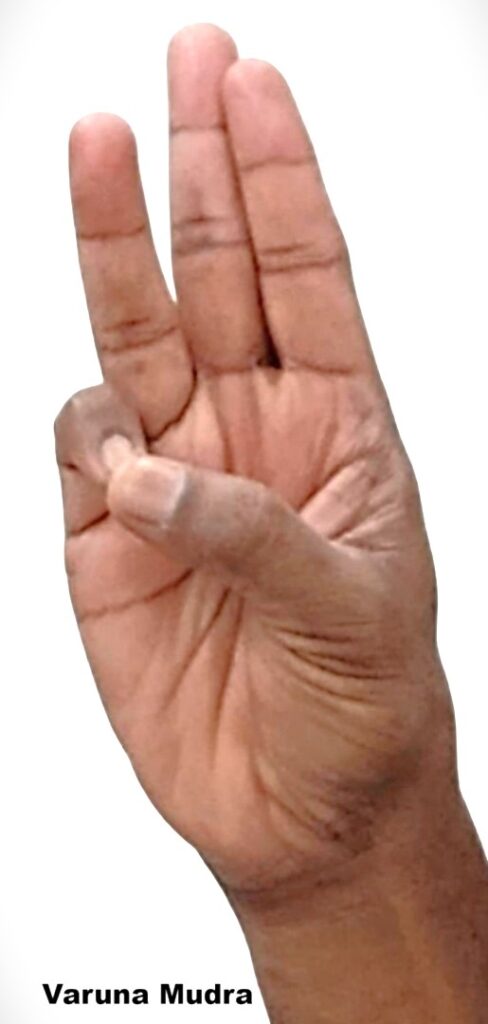
Varuna Mudra Introduction Varuna Mudra is a yogic hand gesture aimed at balancing the water element (Jala) in the body according to Ayurveda. This mudra is effective in maintaining hydration, improving fluid balance, and enhancing skin and tissue health. It also supports mental clarity and emotional stability, as the water element influences emotional flow and calmness. The term Varuna in Sanskrit refers to the god of water, symbolizing fluidity, balance, and purification. This mudra is often used in yoga therapy, meditation, and pranayama for overall health and energetic balance. Meaning Varuna: Water element; associated with fluidity, balance, and purification. Mudra: Gesture used to influence pranic flow and physiological processes. Overall Meaning:Varuna Mudra enhances hydration, fluid circulation, and balance of emotional and physical water elements in the body. How to Perform / Practice Sit comfortably in a meditative posture (Padmasana, Sukhasana, or on a chair) with an erect spine. Place your hands on your lap or thighs, palms facing upward. Join the tip of the little finger with the tip of the thumb. Keep the other three fingers extended comfortably. Close your eyes, breathe slowly and deeply, and focus on fluidity, calmness, and energy balance. Practice for 15–30 minutes daily, or in shorter intervals of 5–10 minutes. Tip: Can be practiced anytime during the day, particularly when experiencing dryness, dehydration, or emotional imbalance. Benefits Physical Benefits: Maintains hydration and fluid balance in the body. Improves skin health, moisture, and tissue elasticity. Supports joint lubrication and metabolic processes. Mental & Emotional Benefits: Calms the mind and reduces restlessness, irritability, and emotional turbulence. Enhances mental clarity, focus, and emotional stability. Supports relaxation and stress reduction. Energetic / Spiritual Benefits: Balances Jala (water) element in the body and pranic channels. Promotes smooth flow of energy and emotions. Enhances meditation by fostering a sense of fluidity, adaptability, and calmness. Contraindications Avoid if experiencing hand or finger injuries. Not recommended for severe arthritis or joint pain in fingers. Discontinue if numbness, tingling, or discomfort occurs. Practice moderately in cases of excess Kapha, as it may increase fluid retention. Anatomy & Physiology Muscles: Engages intrinsic hand muscles (lumbricals, interossei) to maintain tip-to-tip contact. Joints: Flexion at thumb and little finger; extension at other fingers. Nervous System: Activates parasympathetic pathways, promoting relaxation and calmness. Circulation: Improves microcirculation in hands and indirectly influences systemic fluid regulation and metabolic balance. Kinesiology Enhances fine motor coordination of fingers. Supports static postural stability while seated in meditation. Encourages relaxed hand posture, aiding focus and energy balance. Neurology Stimulates brain regions associated with emotional regulation and calmness. Balances sympathetic and parasympathetic activity, reducing stress and enhancing mental clarity. Supports neural plasticity in areas related to attention, emotional stability, and meditation. Duration of Practice Daily Practice: 15–30 minutes, can be split into 2–3 sessions. Short Practice: 5–10 minutes during meditation, relaxation, or work breaks. Can be combined with Prana Mudra or Surya Mudra for enhanced energetic and metabolic benefits. Counter Mudra If excess fluid accumulation or sluggishness occurs, switch to Prithvi Mudra or Surya Mudra to balance energy. Gentle hand stretching or shaking is recommended after prolonged practice. Conclusion Varuna Mudra is a powerful hand gesture to balance the water element, maintain hydration, and stabilize emotions. Regular practice supports physical, mental, and energetic well-being, making it ideal for yoga, meditation, and daily health maintenance. Proper execution ensures maximum benefits without discomfort. FAQ Q1: Can beginners practice Varuna Mudra?A: Yes, it is safe and simple; start with 5–10 minutes and gradually increase. Q2: Can it improve skin and hydration?A: Yes, it supports fluid balance and tissue health. Q3: Can it be combined with other mudras?A: Yes, it can be combined with Prana Mudra or Vajra Mudra for enhanced energy and vitality. Q4: Is it suitable for meditation?A: Yes, it enhances mental calm, emotional stability, and mindfulness. References Swami Satyananda Saraswati, Mudras for Healing and Transformation. Iyengar, B.K.S., Light on Yoga. Saraswati, S., Pranayama and Mudras in Yoga Therapy. Fishman, L., Yoga for Emotional Balance. Lad, V., Ayurveda: The Science of Self-Healing. Journal of Bodywork and Movement Therapies, 2018; 22(4): Effects of Hand Mudras on Mental and Physiological Functions.
Suchi Mudra (Gesture of relief)
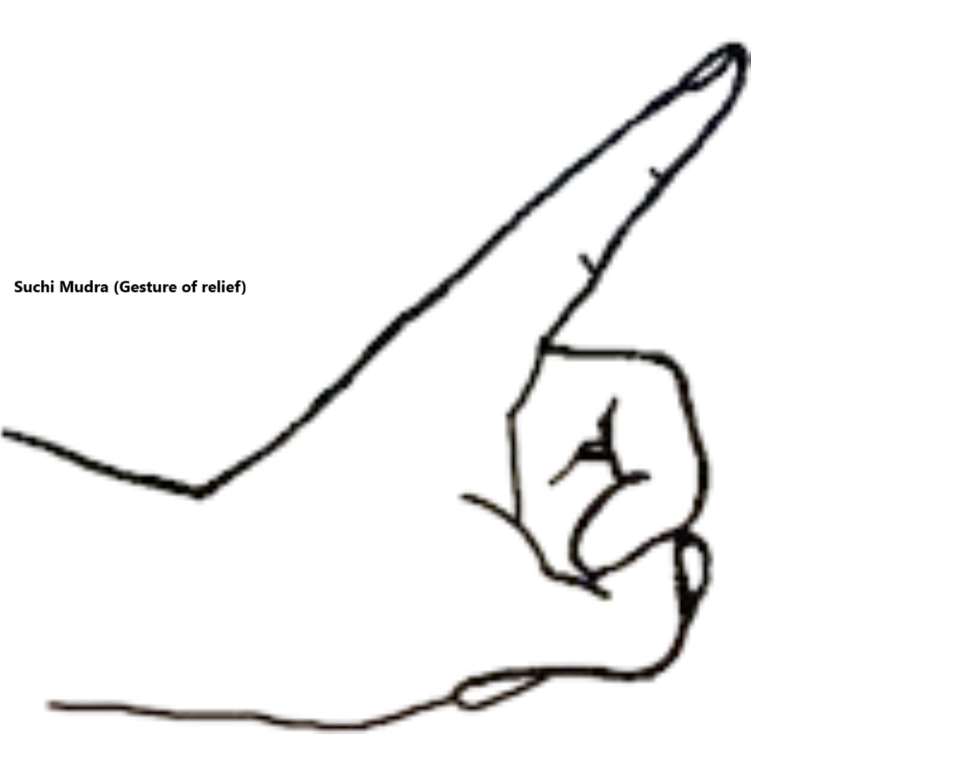
Suchi Mudra (Gesture of relief) Introduction Suchi Mudra, also called the “Pointer Finger Gesture,” is a hand mudra in yoga that enhances mental clarity, focus, and calmness. It is one of the simplest mudras, often used during meditation, pranayama, or daily mindfulness practices. The term Suchi means needle or pointer in Sanskrit, symbolizing precision and concentration. Practicing this mudra is believed to channel energy into improving focus, memory, and spiritual awareness. Meaning Suchi: Needle or pointer – representing focus, precision, and direction. Mudra: Gesture used to direct energy flow in the body and mind. Overall Meaning:Suchi Mudra encourages mental focus, clarity of thought, and calmness. It symbolizes directing your energy toward a single point of intention, improving concentration and meditation quality. How to Perform / Practice Sit in a comfortable meditative posture (Padmasana, Sukhasana, or on a chair) with the spine erect. Extend your index finger straight. Fold the other three fingers (middle, ring, and little finger) so that the thumb touches the tips of these three fingers gently. Keep the hand relaxed and place it on your lap or thighs with the palm facing upward. Close the eyes and focus on steady breathing. Maintain the mudra for 15–30 minutes daily. Short intervals of 5–10 minutes can also be beneficial during work or study. Tip: Practice on an empty stomach or after light meals for better results. Benefits Physical Benefits: Enhances fine motor coordination in fingers and hands. Promotes relaxation and reduces hand fatigue. Improves blood circulation in the fingers. Mental & Emotional Benefits: Improves concentration and attention span. Calms the mind and reduces stress, anxiety, and restlessness. Enhances memory and mental clarity. Helps manage overthinking and emotional imbalance. Energetic / Spiritual Benefits: Directs energy (prana) to higher mental centers. Supports mindfulness and meditation practices. Balances subtle energies in the body. Contraindications Avoid if there is joint pain, arthritis, or recent injury in fingers or hands. Should not be forced if finger flexibility is limited. Discontinue if numbness or tingling occurs. Anatomy & Physiology Muscles: Intrinsic hand muscles (lumbricals, interossei) maintain the finger positions. Joints: Flexion at the metacarpophalangeal joints for folded fingers; extension at the index finger. Nervous System: Promotes parasympathetic activation, reducing stress response. Circulation: Gentle finger placement improves microcirculation in the hand. Kinesiology Improves fine motor control of fingers. Enhances neuromuscular coordination between brain and hands. Supports static postural stability during seated meditation. Neurology Stimulates attention and sensory integration centers in the brain. Activates vagus nerve indirectly through parasympathetic pathways. Supports neural plasticity, helping focus and memory over time. Duration of Practice Daily Practice: 15–30 minutes, can be divided into 2–3 sessions. Short Practice: 5–10 minutes during work or study breaks to regain focus. Can be combined with pranayama or meditation for enhanced benefits. Counter Mudra If the mind becomes rigid or tense, switch to Shunya Mudra or Chala Mudra to release excess energy. Gentle hand stretching or shaking after prolonged practice is advised. Conclusion Suchi Mudra is a simple yet effective gesture to enhance mental clarity, focus, and emotional calmness. Regular practice balances body and mind energies, making it a useful tool for meditation, study, and daily mindfulness. Proper and gentle execution ensures maximum benefits without discomfort. FAQ Q1: Can beginners practice Suchi Mudra?A: Yes, it is simple and safe. Start with 5–10 minutes and gradually increase. Q2: Can it be combined with other mudras?A: Yes, often used with Gyan Mudra or Dhyana Mudra for meditation. Q3: Will it help with stress and anxiety?A: Yes, by stimulating parasympathetic activity, it promotes calmness and mental stability. Q4: Can it be practiced while walking?A: Not recommended; best practiced seated for focus and stability. References Swami Satyananda Saraswati, Mudras for Healing and Transformation. Iyengar, B.K.S., Light on Yoga. Saraswati, S., Pranayama and Mudras in Yoga Therapy. Fishman, L., Yoga for Emotional Balance. Journal of Bodywork and Movement Therapies, 2018; 22(4): Effects of Hand Mudras on Mental and Physiological Functions.