
Introduction
Yin Yoga is a slow-paced, meditative practice that emphasizes passive stretching, stillness, and long-held postures. Unlike dynamic or Yang styles of yoga that focus on muscular engagement and movement, Yin Yoga targets the deeper connective tissues—fascia, ligaments, joints, and bones. Through sustained holds, Yin Yoga promotes flexibility, joint health, energetic balance, and mental clarity.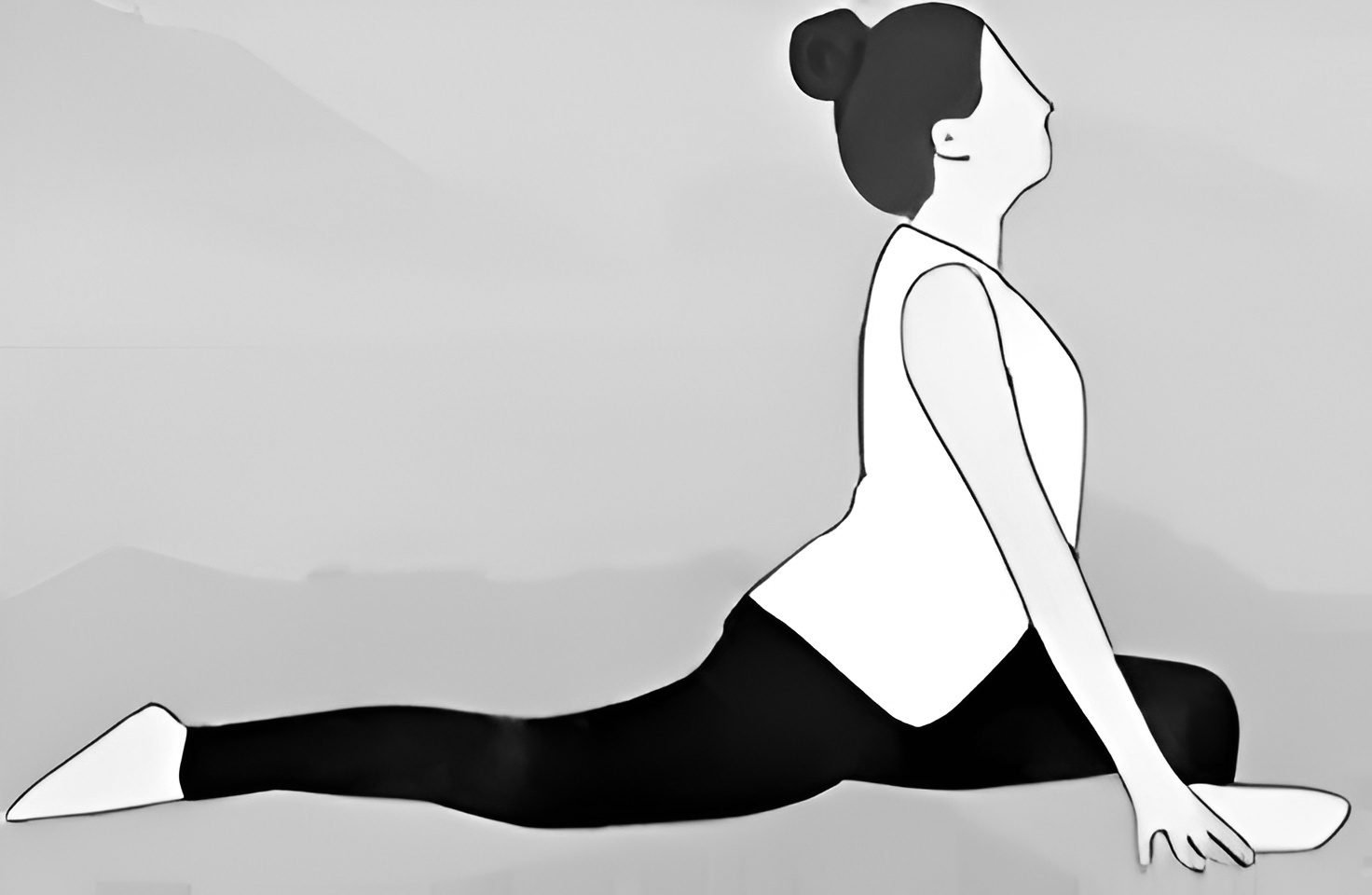
Among the most profound hip-opening postures in Yin Yoga is Swan Pose, a foundational pose that closely resembles the classical Pigeon Pose (Eka Pada Rajakapotasana) but is practiced in a passive, Yin-oriented manner. Swan Pose is renowned for its ability to deeply access the hips, pelvis, and lower spine—areas where both physical tension and emotional stress are often stored.
This posture is particularly effective for stretching the gluteal muscles, piriformis, hip flexors, and fascia surrounding the pelvis. Additionally, Swan Pose plays a significant role in stimulating meridians associated with emotional balance and vitality.
This essay provides an in-depth exploration of Swan Pose, including its method of practice, anatomical and physiological effects, energetic implications, contraindications, benefits, and its integration into a Yin Yoga sequence.
Swan Pose is a powerful Yin Yoga posture that offers deep physical, energetic, and emotional benefits. By targeting the hips and connective tissues, it enhances flexibility, supports joint health, and promotes emotional release.
Through mindful practice, Swan Pose becomes a meditative experience that fosters awareness, patience, and inner balance. By respecting the body’s limits and embracing stillness, practitioners can unlock the full potential of this transformative posture.
Ultimately, Swan Pose embodies the essence of Yin Yoga—surrender, mindfulness, and deep connection, guiding practitioners toward harmony in body and mind.
Understanding Swan Pose
Swan Pose in Yin Yoga is a deep hip-opening posture performed with one leg bent in front of the body and the other extended behind. While the shape resembles a pigeon sitting on the ground, the emphasis in Yin Yoga is not on achieving a perfect alignment but on finding a suitable level of stress in the connective tissues.
Unlike its Yang counterpart, Swan Pose in Yin Yoga is held passively, with minimal muscular engagement. The practitioner allows gravity to gradually deepen the stretch, focusing on stillness and breath awareness.
The pose primarily targets the outer hips of the front leg and the hip flexors of the back leg, creating a balanced stretch across the pelvis.
Getting Into the Pose
Entering Swan Pose requires careful alignment and attention to the hips and knees.
- Starting Position
Begin in a tabletop position (hands and knees) on the mat. - Positioning the Front Leg
Bring one knee forward toward the corresponding wrist. Place the shin on the mat, angling it diagonally or more parallel to the front of the mat depending on flexibility. - Placing the Front Foot
The front foot can be closer to the groin for less intensity or moved forward for a deeper stretch. - Extending the Back Leg
Slide the opposite leg straight back, keeping the top of the foot resting on the mat. - Hip Alignment
Square the hips as much as possible toward the front of the mat. If one hip lifts, use a bolster or cushion under the front hip for support. - Upright Swan (Option 1)
Keep the torso upright, resting hands on the floor or blocks. - Sleeping Swan (Option 2)
Fold forward over the front leg, resting the forehead on the floor or on props. - Relaxation and Stillness
Once in position, relax the muscles and allow gravity to deepen the stretch. Focus on slow, steady breathing.
Coming Out of the Pose
Exiting Swan Pose should be done gently to avoid strain.
- Lift the Torso
If folded forward, slowly press into the hands and lift the torso upright. - Return to Tabletop
Bring the back knee forward and return to the starting position. - Neutralize the Hips
Move into a neutral pose such as tabletop or Child’s Pose. - Observe Sensations
Notice the effects in the hips before switching sides. - Repeat on the Other Side
Practice the pose with the opposite leg forward.
Counterposes
Counterposes are essential to balance the deep hip opening.
- Child’s Pose (Balasana)
Gently stretches the lower back and hips. - Downward-Facing Dog
Helps reset the legs and spine. - Low Lunge (Opposite Leg)
Balances the hip flexors. - Gentle Backbend (e.g., Sphinx Pose)
Counteracts forward folding. - Wind-Relieving Pose (Apanasana)
Releases tension in the hips.
Meridians and Organs Affected
Primary Meridians Stimulated
- Liver Meridian
- Gallbladder Meridian
These meridians run through the inner and outer hips and thighs.
Secondary Meridians
- Kidney Meridian
- Stomach Meridian
Organs Affected
- Liver
- Gallbladder
- Kidneys
- Digestive organs
- Reproductive organs
The stimulation of these meridians supports detoxification, emotional balance, and the smooth flow of energy (Qi).
Joints Affected
- Hip Joints
Deep external rotation (front leg) and extension (back leg). - Knee Joint (Front Leg)
Requires careful alignment to avoid strain. - Ankle Joint
Stabilizes the front leg. - Sacroiliac Joint (SI Joint)
Mild stress enhances mobility. - Lumbar Spine
Slight involvement depending on posture.
Recommended Hold Times
- Beginners: 1–2 minutes per side
- Intermediate: 3–5 minutes per side
- Advanced: 5–8 minutes per side
The duration should be guided by comfort and breath awareness.
Contraindications
- Knee Injuries
Avoid deep angles or use props. - Hip Replacement
Requires professional guidance. - Sciatica
May aggravate symptoms. - Lower Back Pain
Forward folding may increase discomfort. - Pregnancy
Modify or avoid deep compression.
Modifications
- Use props under the hips
- Keep the front foot closer to the body
- Stay upright instead of folding forward
Benefits of Swan Pose
Physical Benefits
- Deep Hip Opening
Targets glutes and piriformis. - Improves Flexibility
Enhances range of motion in hips. - Relieves Lower Back Tension
By improving hip mobility. - Stimulates Circulation
In the pelvic region. - Supports Posture
Reduces tightness from sitting.
Mental and Emotional Benefits
- Encourages Emotional Release
Hips are associated with stored emotions. - Promotes Relaxation
Activates the parasympathetic nervous system. - Enhances Mindfulness
Encourages inward focus.
Energetic Benefits
- Stimulates Liver Qi
Supports detoxification. - Balances Emotional Energy
Reduces frustration and tension. - Enhances Vitality
Improves energy flow.
Anatomy and Physiology
Muscles Involved
- Gluteus Maximus and Medius
- Piriformis
- Hip Flexors (Iliopsoas)
- Quadriceps (back leg)
These muscles are passively stretched.
Connective Tissue Focus
- Fascia of the hips
- Ligaments around the pelvis
- Joint capsules
The sustained stretch improves elasticity.
Joint Mechanics
- External rotation (front hip)
- Extension (back hip)
- Pelvic stabilization
Nervous System Effects
- Activates parasympathetic response
- Reduces stress
- Promotes relaxation
Fascial System
- Releases tension patterns
- Improves hydration
- Enhances mobility
Circulatory Effects
- Improves blood flow
- Enhances lymphatic drainage
- Supports tissue nourishment
Psychological and Meditative Aspects
Swan Pose is often emotionally intense:
- Encourages introspection
- Builds resilience
- Promotes acceptance
The stillness allows deep awareness of sensations and emotions.
Integration into Practice
Swan Pose can be included:
- Mid-practice for hip opening
- After warming up
- Before meditation
It pairs well with forward folds and gentle backbends.