
1. Word Meaning
The Sanskrit word “Swastik” is derived from two roots:
- “Su” meaning well, good, auspicious
- “Astika” meaning being, existence
Thus, Swastik Asana translates as the “Auspicious Pose” or “Pose of Well-being.”
In yogic tradition, the Swastik symbol represents harmony, balance, and auspiciousness, making this pose a foundation for meditation, pranayama, and seated mindfulness practices.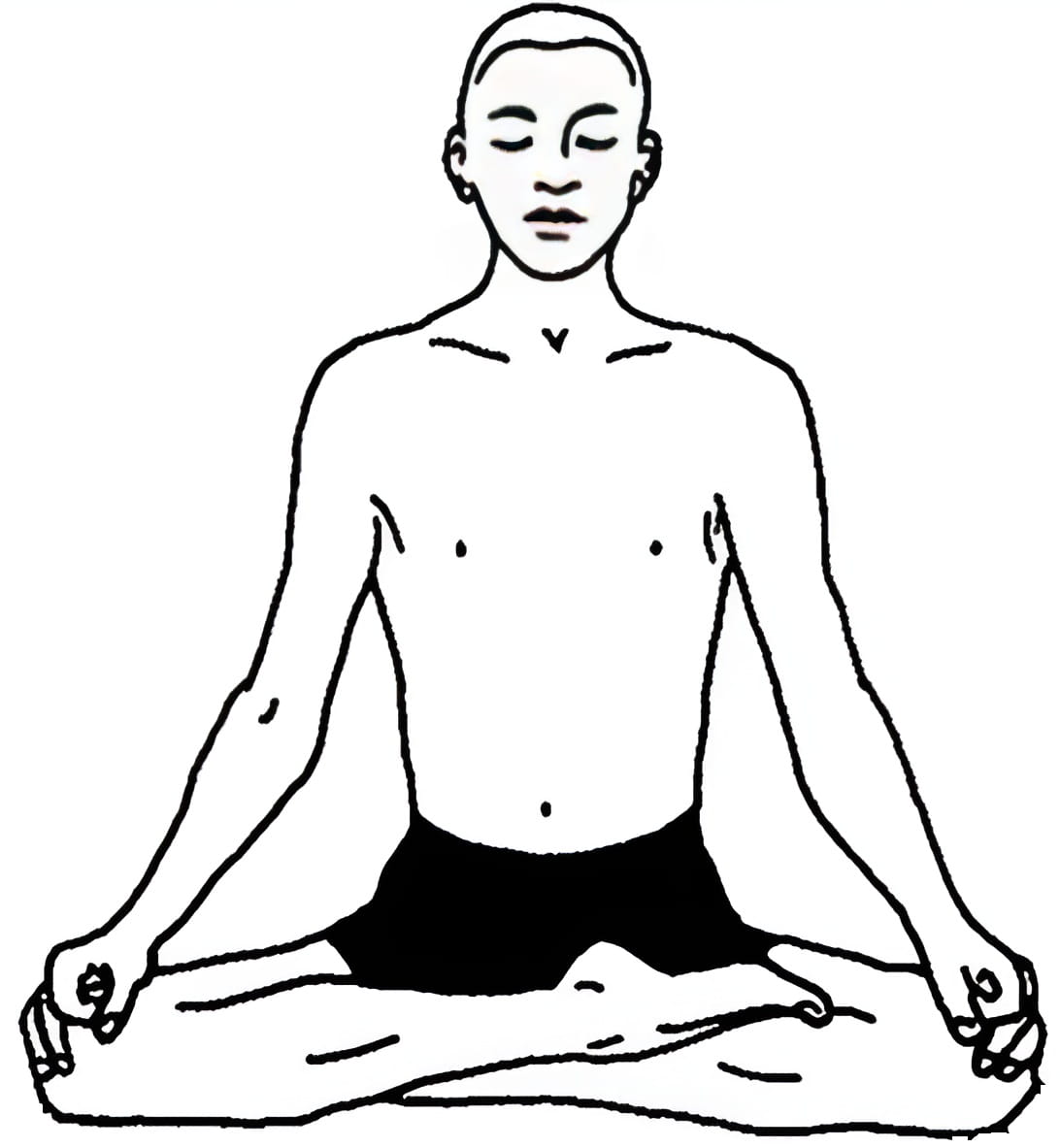
2. Definition
Swastik Asana is a seated cross-legged posture in which:
- Both legs are crossed at the shins, with each foot resting beneath the opposite knee
- Sit bones are grounded firmly on the floor or a cushion
- Spine is upright and elongated
- Shoulders are relaxed, shoulder blades slightly drawn down and back
- Hands may rest on knees or thighs in meditative mudras (Gyan Mudra or Chin Mudra)
It is classified as a meditative seated posture for mind-body integration, promoting physical stability, mental clarity, and energetic alignment.
3. Method of Practice – Step by Step
Step 1: Sit on the Floor
- Choose a firm mat or folded blanket for comfort
- Sit with legs extended forward initially
Step 2: Cross the Legs
- Bring the right leg forward and place the foot beneath the left knee
- Bring the left leg forward and place the foot beneath the right knee
- The legs form a comfortable cross, resembling the Swastik symbol
Step 3: Align Hips and Spine
- Sit evenly on both sit bones
- Tilt pelvis slightly forward for neutral lumbar curve
- Lengthen spine from tailbone to crown of head
Step 4: Place Hands
- Rest hands on knees or thighs
- Optional mudras:
- Gyan Mudra (index finger and thumb touch)
- Chin Mudra (palms up, index finger and thumb touch)
Step 5: Shoulders and Neck
- Relax shoulders down and back
- Shoulder blades slightly drawn together
- Neck in neutral alignment, chin slightly tucked
Step 6: Engage Core
- Slightly draw navel toward spine
- Engage erector spinae for postural support
- Legs remain active, with shins and thighs grounded
Step 7: Breathing
- Diaphragmatic breathing, slow and deep
- Optional pranayama techniques: Nadi Shodhana, Kapalabhati
Step 8: Hold the Pose
- Beginners: 1–2 minutes
- Advanced: 5–10 minutes for meditation
Step 9: Exit
- Extend legs forward gently
- Shake legs if needed
- Transition to Shavasana or other seated poses
4. Alignment Cues
Hips
- Sit evenly on both sit bones
- Use a folded blanket for elevated hips if hamstrings or hips are tight
Legs
- Shins crossed, feet beneath opposite knees
- Knees gently drop toward floor
- Avoid excessive force or discomfort
Spine
- Maintain elongated, neutral spine
- Avoid slouching or leaning forward
Shoulders
- Relaxed, scapula slightly retracted
- Avoid shoulder tension or shrugging
Head and Neck
- Neutral, chin parallel to floor
- Eyes can be gently closed or focused on a drishti point
Arms and Hands
- Palms resting comfortably on knees or thighs
- Optional mudras for meditation
5. Benefits of Swastik Asana
Physical Benefits
- Opens hips and knees
- Stretches ankles, thighs, and groins
- Improves lower back posture
- Strengthens spinal stabilizers and core
- Prepares body for meditative seated poses
Mental & Emotional Benefits
- Reduces stress and anxiety
- Enhances focus and concentration
- Supports mindfulness and meditation practice
Energetic Benefits
- Activates Muladhara (Root Chakra) for grounding
- Promotes balance of prana (life force) in the body
- Harmonizes subtle energy channels
6. Contraindications
- Knee injuries – avoid deep cross-legged posture
- Hip injuries or tight hips – use props or alternative seated postures
- Sciatica or lower back issues – ensure neutral spine and support under hips
- Ankle sprains – place cushion under ankles for support
7. Counterposes
- Supta Swastik Asana (Reclined Cross-Legged Pose) – relaxes lower limbs
- Shavasana (Corpse Pose) – full relaxation
- Balasana (Child’s Pose) – gentle spinal flexion
- Paschimottanasana (Seated Forward Bend) – stretches posterior chain
8. Preparatory Practices
- Baddha Konasana (Bound Angle Pose) – opens inner thighs
- Ardha Padmasana (Half Lotus) – hip mobility
- Marjaryasana–Bitilasana (Cat-Cow) – spinal mobility
- Ankle rotations and hip circles – prepare joints for cross-legged position
9. Modifications
- Elevated Hips – folded blanket under sit bones
- Knee Support – small cushion or folded blanket under knees
- Wall Support – sit against wall for spinal alignment
- Leg Variations – one leg forward, one leg bent if hip mobility is limited
- Shorter Hold Duration – gradually increase time as flexibility improves
10. Muscles Involved
A. Stretched Muscles
- Hip adductors (adductor longus, brevis, magnus)
- Piriformis
- Gluteus medius and minimus
- Gastrocnemius and soleus (ankle dorsiflexion)
B. Strengthened / Stabilized Muscles
- Erector spinae
- Transverse abdominis and obliques (core)
- Quadratus lumborum (spinal stability)
- Rhomboids and trapezius (shoulder stabilization)
11. Kinesiology
- Hip Joints: Flexion and external rotation, adductors stretched
- Knee Joints: Flexed, stabilized by quadriceps and hamstrings
- Ankle Joints: Slight dorsiflexion, plantar fascia stretch
- Spine: Neutral lumbar and thoracic alignment, cervical spine neutral
- Shoulders: Stabilized by scapular retractors
12. Kinematics
- Plane of Movement: Sagittal and transverse (hip rotation)
- Joint Axes:
- Hips: vertical axis for rotation
- Knees: sagittal flexion axis
- Force Distribution:
- Even load through sit bones
- Core engagement prevents lumbar compression
13. Biomechanics
- Hip Joint: Stabilized in external rotation with neutral flexion
- Knee Joint: Maintains flexion, avoids hyperextension
- Spine Mechanics: Neutral lumbar curve maintained by erector spinae
- Shoulder Mechanics: Scapula stabilized, shoulder joints relaxed
- Balance: Even weight distribution ensures long-term comfort
14. Functional Anatomy & Physiology
A. Musculoskeletal
- Opens hip flexors and strengthens core
- Improves postural awareness and spinal alignment
- Supports knee, ankle, and hip joint stability
B. Nervous System
- Activates parasympathetic system
- Reduces stress and anxiety
- Enhances proprioception
C. Circulatory System
- Mildly improves lower limb circulation
- Reduces venous stasis
D. Respiratory System
- Opens thoracic cavity for diaphragmatic breathing
- Supports pranayama and meditation
15. Teaching Methodology
Common Misalignments
- Slouched spine
- Uneven sit bones
- Knees lifted or tense
- Shoulders shrugged or tight
Corrections
- Place cushion under sit bones for neutral spine
- Ensure knees and shins grounded
- Cue shoulder relaxation and chest opening
- Guide head and neck to neutral alignment
Hands-On Adjustments
- Light pressure on sit bones for stability
- Support knees or ankles if discomfort arises
- Adjust shoulders for tension release
Verbal Cueing
- “Sit tall, crown reaching upward”
- “Ground your sit bones evenly”
- “Relax shoulders and neck”
- “Cross legs comfortably, without strain”
- “Breathe slowly and deeply”
16. Variations
- Ardha Swastik Asana – half cross-legged, for beginners
- Supta Swastik Asana – reclined version for relaxation
- Prop-supported Swastik Asana – bolster or blanket under hips
- Mudra Variations – hands in Gyan, Chin, or Anjali Mudra
17. Philosophical Aspect
- Swastik Asana represents harmony, auspiciousness, and balance
- Supports mindful meditation and energy alignment
- Encourages mental clarity, emotional balance, and inner stability
- Symbolizes the alignment of body, mind, and prana
18. Conclusion
Swastik Asana (Auspicious Pose) is a foundational seated posture emphasizing:
- Physical stability, hip opening, and spinal alignment
- Core engagement and postural awareness
- Mindful meditation and energetic balance
- Accessibility for beginners and meditative focus for advanced practitioners
With proper alignment, props, and adjustments, Swastik Asana provides a firm foundation for seated yoga, pranayama, and meditation practices, fostering physical, mental, and energetic well-being.
QUESTION AND ANSWER
1. What does “Swastik” mean in Sanskrit?
a) Cross-legged
b) Auspicious, well-being
c) Posture
d) Meditation
Answer: b
2. Swastik Asana is commonly known as:
a) Cross-Legged Pose
b) Staff Pose
c) Hero Pose
d) Lotus Pose
Answer: a
3. Which body alignment is emphasized in Swastik Asana?
a) Spine upright and neutral
b) Forward bending
c) Lateral twisting
d) Shoulder shrug
Answer: a
4. Primary purpose of Swastik Asana is:
a) Meditation and pranayama
b) Standing balance
c) Arm strengthening
d) Inversion
Answer: a
5. Which muscles are primarily stretched in Swastik Asana?
a) Hip adductors, piriformis, gluteus medius
b) Biceps
c) Deltoids
d) Pectorals
Answer: a
6. Which muscles are primarily strengthened in Swastik Asana?
a) Erector spinae, transverse abdominis, obliques
b) Gastrocnemius only
c) Triceps
d) Biceps
Answer: a
7. Which joints are mainly involved in Swastik Asana?
a) Hips, knees, ankles, spine
b) Elbows and shoulders only
c) Wrists and fingers
d) Cervical vertebrae only
Answer: a
8. Contraindication for Swastik Asana includes:
a) Knee injuries
b) Shoulder stiffness
c) Neck tension
d) Wrist pain
Answer: a
9. Which preparatory pose opens the hips for Swastik Asana?
a) Baddha Konasana
b) Tadasana
c) Bhujangasana
d) Adho Mukha Svanasana
Answer: a
10. A suitable counterpose for Swastik Asana is:
a) Supta Swastik Asana
b) Shavasana
c) Balasana
d) All of the above
Answer: d
11. Correct hand placement in Swastik Asana is:
a) On knees or thighs, optional mudras
b) Behind back
c) Raised overhead
d) Clasped behind head
Answer: a
12. Which mudra is commonly used in Swastik Asana?
a) Gyan Mudra
b) Anjali Mudra
c) Chin Mudra
d) Both a and c
Answer: d
13. Recommended duration for beginners is:
a) 1–2 minutes
b) 10–15 minutes
c) 30 minutes
d) 5–10 minutes
Answer: a
14. Spine alignment in Swastik Asana should be:
a) Neutral, elongated
b) Rounded forward
c) Hyperextended
d) Twisted sideways
Answer: a
15. How should shoulders be positioned?
a) Relaxed, scapula slightly retracted
b) Shrugged
c) Compressed forward
d) Rotated externally
Answer: a
16. Core activation involves:
a) Drawing navel toward spine
b) Relaxing abdominal muscles
c) Tilting pelvis backward
d) Pushing chest down
Answer: a
17. If hips are tight, what modification can be applied?
a) Folded blanket under hips
b) Lock knees
c) Pull toes back forcefully
d) Slouch forward
Answer: a
18. Correct foot placement is:
a) Shins crossed, feet beneath opposite knees
b) Feet extended forward
c) Feet lifted off floor
d) Ankles crossed behind
Answer: a
19. Which breathing method is suitable in Swastik Asana?
a) Diaphragmatic, slow and deep
b) Rapid chest breathing
c) Breath-holding
d) Forced inhale/exhale
Answer: a
20. Mental benefits include:
a) Stress reduction
b) Increased focus
c) Emotional balance
d) All of the above
Answer: d
21. Energetic benefits include:
a) Muladhara (Root Chakra) activation
b) Manipura activation
c) Heart chakra activation
d) Vishuddha activation
Answer: a
22. Common misalignment in beginners:
a) Slouched spine
b) Uneven sit bones
c) Knees lifted or tense
d) All of the above
Answer: d
23. Hands-on adjustments may include:
a) Supporting knees or ankles
b) Forcing legs apart
c) Pulling torso forward
d) Pressing head down
Answer: a
24. Which is an advanced variation?
a) Supta Swastik Asana
b) Ardha Swastik Asana
c) Wall-supported Swastik
d) All of the above
Answer: d
25. Which preparatory pose mobilizes spine?
a) Marjaryasana–Bitilasana
b) Baddha Konasana
c) Ardha Padmasana
d) Supta Padangusthasana
Answer: a
26. Which preparatory exercise helps ankles?
a) Ankle rotations
b) Shoulder rolls
c) Neck stretches
d) Wrist stretches
Answer: a
27. How to exit safely from Swastik Asana?
a) Extend legs forward gently
b) Jump to stand
c) Twist torso abruptly
d) Lean forward forcefully
Answer: a
28. Philosophical aspect of Swastik Asana represents:
a) Harmony and auspiciousness
b) Aggression
c) Tension
d) Inversion
Answer: a
29. What is the spinal curve maintained in Swastik Asana?
a) Neutral lumbar curve
b) Excessive lordosis
c) Rounded thoracic curve
d) Flexed cervical spine
Answer: a
30. Which system benefits from deep diaphragmatic breathing?
a) Respiratory system
b) Nervous system
c) Musculoskeletal system
d) All of the above
Answer: d
31. Swastik Asana is beneficial for:
a) Meditation
b) Pranayama
c) Mind-body integration
d) All of the above
Answer: d
32. Which muscles stabilize shoulders?
a) Rhomboids and trapezius
b) Biceps
c) Deltoids
d) Pectorals
Answer: a
33. Which muscles are stretched in the ankle region?
a) Gastrocnemius and soleus
b) Quadriceps
c) Hamstrings
d) Erector spinae
Answer: a
34. Modification for discomfort in knees:
a) Small cushion under knees
b) Force knees to floor
c) Keep knees elevated in air
d) Cross legs differently
Answer: a
35. Core engagement in Swastik Asana helps to:
a) Maintain upright posture
b) Stretch hamstrings
c) Elevate shoulders
d) Lock neck
Answer: a
36. Which preparatory pose improves hip external rotation?
a) Ardha Padmasana
b) Tadasana
c) Bhujangasana
d) Adho Mukha Svanasana
Answer: a
37. Which variation is suitable for beginners with tight hips?
a) Ardha Swastik Asana
b) Supta Swastik Asana
c) Wall-supported Swastik
d) All of the above
Answer: d
38. How should the head be positioned?
a) Neutral alignment, chin slightly tucked
b) Tilted backward
c) Twisted sideways
d) Tilted forward
Answer: a
39. Which system is stimulated for relaxation in Swastik Asana?
a) Parasympathetic nervous system
b) Sympathetic nervous system
c) Muscular system only
d) Circulatory system only
Answer: a
40. Which of the following is true about hands in Swastik Asana?
a) Rest on knees or thighs, optional mudras
b) Must always be in Anjali Mudra
c) Must touch floor behind body
d) Can only be lifted overhead
Answer: a
41. Which muscles help maintain spinal erectness?
a) Erector spinae and obliques
b) Hamstrings
c) Quadriceps only
d) Calves
Answer: a
42. How does Swastik Asana affect energy?
a) Balances prana
b) Reduces energy flow
c) Overstimulates chakras
d) No effect
Answer: a
43. What is the primary hip action in Swastik Asana?
a) Flexion and external rotation
b) Extension
c) Internal rotation
d) Abduction only
Answer: a
44. Which preparatory pose stretches inner thighs?
a) Baddha Konasana
b) Ardha Swastik Asana
c) Tadasana
d) Adho Mukha Svanasana
Answer: a
45. Duration of advanced practice can be:
a) 5–10 minutes
b) 30 seconds
c) 15–30 seconds
d) 1–2 minutes
Answer: a
46. Recommended props for beginners include:
a) Blanket under sit bones
b) Cushion under knees
c) Wall support
d) All of the above
Answer: d
47. Common mistake for shoulders:
a) Shrugging
b) Relaxing
c) Drawing back slightly
d) Neutral
Answer: a
48. Which is a counterpose after Swastik Asana?
a) Supta Swastik Asana
b) Shavasana
c) Balasana
d) All of the above
Answer: d
49. Swastik Asana enhances:
a) Mindfulness and meditation
b) Core stability
c) Hip flexibility
d) All of the above
Answer: d
50. Which is a correct teaching cue?
a) “Sit tall, crown of head reaching upward”
b) “Slouch slightly forward”
c) “Lock knees forcefully”
d) “Lift shoulders to ears”
Answer: a