
1. Word Meaning
The Sanskrit term “Marichyasana” is derived from:
- Marichi – meaning “Ray of Light” or “Sage Marichi”, a revered sage in Hindu mythology
- Asana – meaning “pose” or “seat”
Thus, Marichyasana translates to “Sage Marichi Pose”, named after the sage Marichi, who is believed to have practiced this posture to enhance concentration, energy flow, and spiritual insight.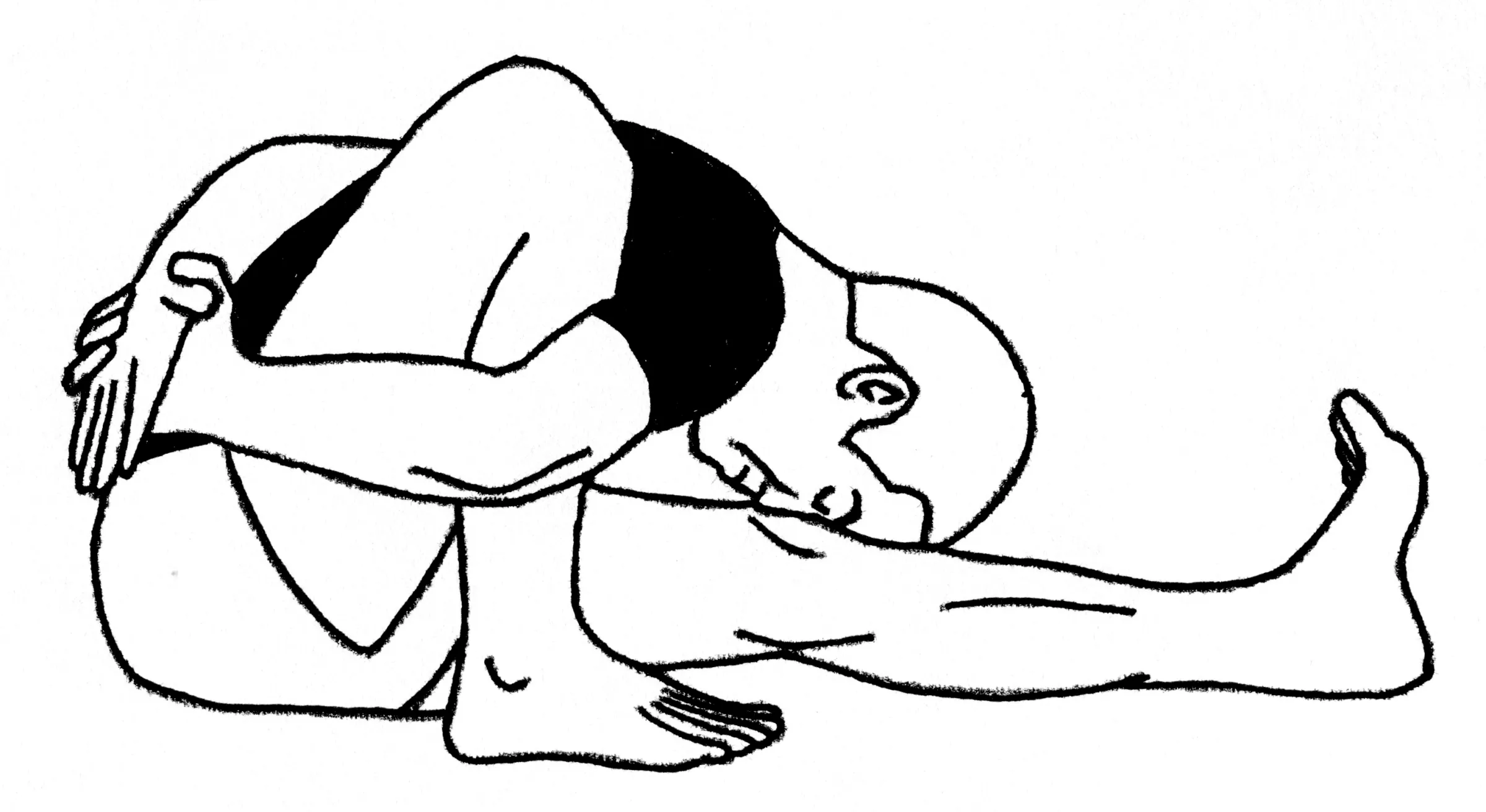
The pose is often associated with seated twists, combining spinal rotation, hip stability, and upper body engagement, symbolizing balance between flexibility and stability.
2. Definition
Marichyasana is a seated twisting posture that integrates hip flexibility, spinal mobility, and shoulder opening.
- It is classified as a seated twist with one leg bent and the other extended.
- There are four variations (Marichyasana I–IV) based on leg and arm placement:
- Marichyasana I: Right leg bent, left leg extended forward, twist toward bent leg
- Marichyasana II: Both legs on floor, one knee bent, other extended, twist
- Marichyasana III: Like I, but hands clasp behind back
- Marichyasana IV: Both legs bent, one foot on floor, one on thigh, twist
The pose is used in asana sequences for spinal health, digestion, and energy activation.
3. Method of Practice – Step by Step (Marichyasana I)
Step 1: Begin in Dandasana
- Sit with both legs extended forward, spine tall
- Engage core, shoulders relaxed, sit bones grounded
Step 2: Bend the Knee
- Bend the right knee, placing the right foot flat on the floor near the right sit bone
- Keep left leg extended and active
Step 3: Position the Arm
- Inhale and raise left arm overhead, lengthen spine
- Exhale and twist torso to the right
- Bring left elbow outside right knee for leverage
- Right hand can reach back to floor or clasp left hand behind the back
Step 4: Maintain Alignment
- Sit evenly on both sit bones
- Lengthen spine and lift chest
- Gaze can be over the right shoulder
Step 5: Breathing
- Inhale to lengthen spine
- Exhale to deepen twist
- Maintain calm, steady diaphragmatic breathing
Step 6: Hold
- Beginners: 15–30 seconds per side
- Intermediate: 30–60 seconds per side
- Advanced: 1–2 minutes per side
Step 7: Release
- Exhale, unwind torso gently
- Return to Dandasana
- Repeat on the opposite side
4. Alignment Cues
- Hips: Sit evenly on both sit bones
- Spine: Lengthen through thoracic and lumbar regions, avoid rounding
- Knees: Keep the extended leg active and straight
- Arms: Position elbow outside bent knee for leverage
- Shoulders: Draw down and back
- Head: Gaze over shoulder in twist
- Breath: Smooth and steady
5. Benefits of Marichyasana
A. Physical Benefits
- Stretches spine, shoulders, chest, and hamstrings
- Improves spinal flexibility and mobility
- Stimulates abdominal organs, liver, kidneys, and digestive system
- Strengthens core, obliques, and back muscles
- Promotes balance and coordination between upper and lower body
B. Mental Benefits
- Enhances focus, concentration, and mental clarity
- Calms mind, reducing stress and anxiety
- Encourages mindfulness and body awareness
C. Physiological Benefits
- Improves digestion and detoxification
- Stimulates circulation to abdominal organs
- Promotes flexibility of spine and shoulders
D. Energetic Benefits
- Activates Manipura (solar plexus) chakra
- Balances prana flow along the spine
- Encourages inner awareness and meditative focus
6. Contraindications
- Spinal injuries – avoid deep twists
- Knee injuries – modify or use support
- Shoulder injuries – avoid clasping hands behind back
- Pregnancy – avoid compressive twisting
- Hernias or abdominal surgery – consult physician before practice
7. Counterposes
- Paschimottanasana (Seated Forward Bend) – lengthens spine
- Ardha Matsyendrasana opposite side – balances twist
- Shavasana (Corpse Pose) – relaxation and spinal release
- Setu Bandhasana (Bridge Pose) – stretches front body and counterbalances twist
8. Preparatory Practice
- Dandasana – seated posture alignment
- Baddha Konasana – hip and groin mobility
- Bhujangasana (Cobra Pose) – spinal extension
- Seated Side Stretch – lateral flexibility
- Garudasana arms – shoulder mobility
- Supine twist – gentle spinal rotation
9. Modifications
- Use strap or towel to bridge hands behind back
- Sit on blanket or block for hip elevation
- Keep the bottom arm elbow slightly bent if shoulder tight
- Half twist or forearm support on knee for stability
10. Muscles Involved
A. Stretched Muscles
- Spine: erector spinae, multifidus
- Shoulders and arms: deltoids, triceps, biceps, teres major/minor
- Hips and legs: gluteus maximus, piriformis, hamstrings, adductors
- Chest: pectoralis major and minor
B. Strengthened Muscles
- Core muscles (rectus abdominis, transverse abdominis, obliques)
- Spinal stabilizers
- Hip stabilizers (gluteus medius, quadratus lumborum)
C. Joints
- Hip: flexion and external rotation
- Knee: flexion
- Shoulder: flexion, abduction, external rotation
- Elbow: flexion/extension
- Spine: rotation, slight lateral flexion
11. Kinesiology
- Spinal rotation: thoracic and lumbar spine actively rotates
- Hip mechanics: flexion and external rotation of bent leg
- Shoulder mechanics: rotation and extension for clasping hands
- Core engagement: stabilizes torso during twist
- Force distribution: even on sit bones and legs
12. Kinematics
- Sagittal plane: spine lengthening
- Frontal plane: slight lateral flexion
- Transverse plane: rotation of spine and shoulders
- Dynamic lever mechanics: bent arm provides torque for twist
13. Biomechanics
- Twisting compresses one side of abdomen, stretches opposite side
- Lever arm of elbow on bent knee enhances spinal rotation
- Core engagement prevents collapse of spine
- Hips stable to prevent compensation
- Props adjust leverage for beginners or injured practitioners
14. Functional Anatomy & Physiology
A. Musculoskeletal System
- Strengthens core, back, shoulders
- Improves flexibility of spine, shoulders, and hips
- Enhances joint stability
B. Nervous System
- Stimulates proprioceptors for spinal rotation and core stability
- Calms sympathetic nervous system
C. Circulatory System
- Enhances blood flow to abdominal organs
- Improves venous return from lower limbs
D. Respiratory System
- Opens chest, improves lung expansion
- Encourages deep diaphragmatic breathing
E. Energetic System
- Stimulates Manipura and Anahata chakras
- Balances pranic energy in torso
15. How to Correct and Adjust While Teaching
Common Misalignments
- Collapsed spine or rounded shoulders
- Uneven sit bones or hip tilt
- Knees misaligned
- Shoulder hyperextension or shrugging
Verbal Adjustments
- “Sit evenly on both sit bones”
- “Lengthen through the spine and lift chest”
- “Press elbow gently against bent knee”
- “Clasp hands using a strap if needed”
Hands-On Adjustments
- Support hip or knee alignment
- Guide arm and hand clasp
- Encourage core engagement
- Adjust shoulder rotation
16. Variations
- Marichyasana II: Both legs on floor, one knee bent, twist
- Marichyasana III: Hands clasp behind back
- Marichyasana IV: Both legs bent, one foot on floor, twist
- Using strap: Hands bridged
- Half Marichyasana: Only spinal rotation without clasp
17. Philosophical and Energetic Aspect
- Symbolizes mindful twisting and inner reflection
- Enhances balance between flexibility and stability
- Activates solar plexus for energy and digestive function
- Encourages prana flow along the spine
18. Conclusion
Marichyasana is a powerful seated twist integrating spinal rotation, hip flexibility, shoulder opening, and core engagement.
- Physical Benefits: Spinal mobility, hip and shoulder flexibility, digestion stimulation
- Mental Benefits: Calms mind, enhances focus, encourages mindfulness
- Physiological Benefits: Stimulates abdominal organs, improves circulation and breathing
- Energetic Benefits: Activates Manipura chakra, balances prana flow
Through proper alignment, preparatory poses, and modifications, Marichyasana can be safely practiced by beginners to advanced practitioners, offering a holistic approach to spinal health, core strength, and meditative awareness.
QUESTION AND ANSWER
1. What does “Marichi” mean in Sanskrit?
a) Cow
b) Sage or Ray of Light
c) Face
d) Pose
Answer: b
2. What does “Asana” mean?
a) Meditation
b) Pose or seat
c) Breath
d) Twist
Answer: b
3. Which type of posture is Marichyasana?
a) Forward bend
b) Seated twist
c) Backbend
d) Inversion
Answer: b
4. How many main variations of Marichyasana exist?
a) 2
b) 3
c) 4
d) 5
Answer: c
5. Which leg is bent in Marichyasana I?
a) Left
b) Right
c) Both
d) None
Answer: b (can be practiced on either side)
6. Base posture for Marichyasana practice?
a) Dandasana
b) Sukhasana
c) Padmasana
d) Vajrasana
Answer: a
7. Arm placement cue in Marichyasana I?
a) Elbow outside bent knee, other arm behind back
b) Both arms forward
c) Hands on knees
d) Both arms overhead straight
Answer: a
8. How should the spine be positioned?
a) Lengthened and upright
b) Rounded forward
c) Collapsed
d) Twisted backward
Answer: a
9. Which muscles are stretched in Marichyasana?
a) Erector spinae, obliques, shoulders, hamstrings, glutes
b) Only biceps
c) Only calves
d) None
Answer: a
10. Which muscles are strengthened in Marichyasana?
a) Core (rectus abdominis, obliques), spinal stabilizers, hip stabilizers
b) Only legs
c) Only arms
d) None
Answer: a
11. What is a primary physiological benefit of Marichyasana?
a) Improves digestion and stimulates abdominal organs
b) Weakens spine
c) Reduces lung capacity
d) Causes hip instability
Answer: a
12. Energetic benefit of Marichyasana?
a) Activates Manipura (solar plexus) chakra
b) Depletes energy
c) Opens throat chakra only
d) None
Answer: a
13. Recommended preparatory poses?
a) Dandasana, Baddha Konasana, Bhujangasana, Seated Side Stretch, Garudasana arms
b) Only Tadasana
c) Only forward bends
d) None
Answer: a
14. Recommended counterposes?
a) Paschimottanasana, Ardha Matsyendrasana opposite side, Shavasana, Setu Bandhasana
b) Only Dandasana
c) Only standing poses
d) None
Answer: a
15. Contraindications include:
a) Spinal injuries, knee injuries, shoulder injuries, pregnancy, hernia
b) Tight calves only
c) Wrist injuries only
d) None
Answer: a
16. Common misalignment in Marichyasana:
a) Collapsed spine or uneven hips
b) Perfect alignment
c) Hands clasped correctly
d) Knees stacked properly
Answer: a
17. Modification for beginners:
a) Use strap for hand clasp
b) Force hands behind back
c) Ignore knee alignment
d) Bend spine forward
Answer: a
18. How long should beginners hold the pose?
a) 15–30 seconds per side
b) 1–2 minutes
c) 5 minutes
d) 5 seconds
Answer: a
19. How long for intermediate practitioners?
a) 30–60 seconds per side
b) 5 seconds
c) 2 minutes
d) 10 minutes
Answer: a
20. Proper breathing cue?
a) Inhale to lengthen, exhale to deepen twist
b) Hold breath
c) Rapid shallow breaths
d) Forceful inhalation
Answer: a
21. Hips alignment cue:
a) Sit evenly on both sit bones
b) Tilt forward
c) Tilt backward
d) Lift one hip
Answer: a
22. Shoulder cue:
a) Draw down and back
b) Shrug shoulders
c) Round forward
d) Lift toward ears
Answer: a
23. Head cue:
a) Gaze over shoulder in twist
b) Tilt down
c) Tilt back
d) Rotate randomly
Answer: a
24. Knee cue:
a) Extended leg active and straight
b) Bent leg loose
c) Both bent
d) Ignore knee alignment
Answer: a
25. Foot cue:
a) Foot of bent leg flat on floor near sit bone
b) Foot lifted
c) Crossed
d) Extended forward
Answer: a
26. Arm modification:
a) Use strap if hands don’t meet behind back
b) Force clasp
c) Leave arms loose
d) None
Answer: a
27. Core cue:
a) Engage core to stabilize spine
b) Relax core
c) Twist hips only
d) Collapse torso
Answer: a
28. Common mistake:
a) Collapsed spine and shoulders
b) Properly upright
c) Hands clasped correctly
d) Even hips
Answer: a
29. Variation for advanced practitioners:
a) Marichyasana III (hands clasp behind back)
b) Half Marichyasana
c) Use strap
d) None
Answer: a
30. Variation for beginners:
a) Half Marichyasana, use strap, sit on block
b) Full twist forcibly
c) Ignore hand clasp
d) None
Answer: a
31. Joint mechanics in Marichyasana:
a) Hip flexion/external rotation, knee flexion, shoulder rotation, spinal rotation
b) Only hip extension
c) Only shoulder abduction
d) None
Answer: a
32. Kinesiology – Spine:
a) Thoracic and lumbar rotation
b) Only lumbar flexion
c) Only cervical extension
d) None
Answer: a
33. Kinematics – planes involved:
a) Sagittal: spine lengthening, Frontal: lateral flexion, Transverse: rotation
b) Only sagittal
c) Only frontal
d) Only transverse
Answer: a
34. Biomechanics principle:
a) Use leverage of elbow on knee, engage core, maintain hip stability
b) Collapse torso
c) Ignore shoulder alignment
d) None
Answer: a
35. Nervous system benefit:
a) Stimulates proprioception, calms sympathetic nervous system
b) Overstimulates nerves
c) None
d) Causes imbalance
Answer: a
36. Circulatory system benefit:
a) Enhances blood flow to abdominal organs
b) Reduces circulation
c) Weakens heart
d) None
Answer: a
37. Respiratory system benefit:
a) Opens chest, improves lung expansion
b) Compresses lungs
c) Reduces oxygen intake
d) None
Answer: a
38. Energetic system benefit:
a) Activates Manipura chakra, balances prana flow
b) Depletes energy
c) Only throat chakra
d) None
Answer: a
39. Teaching cue for beginner:
a) “Lengthen spine, draw shoulders down, use strap if needed”
b) “Force hands behind back”
c) “Collapse hips”
d) “Twist rapidly”
Answer: a
40. Counterpose for twist release:
a) Paschimottanasana or opposite side twist
b) Dandasana only
c) Tadasana only
d) None
Answer: a
41. Recommended props:
a) Strap, block, blanket
b) Chair only
c) Wall only
d) None
Answer: a
42. Common shoulder mistake:
a) Shrugging shoulders, collapsing chest
b) Relaxed and aligned
c) Drawn down properly
d) None
Answer: a
43. Half Marichyasana purpose:
a) Less intense twist for beginners or injury
b) Full expression
c) Ignore core
d) Collapse spine
Answer: a
44. Arm clasping precaution:
a) Use strap if hands do not meet
b) Force hands together
c) Ignore misalignment
d) None
Answer: a
45. Twist intensity cue:
a) Use breath, deepen gently exhaling, lengthen spine inhaling
b) Force twist aggressively
c) Hold breath
d) Rapid rotation
Answer: a
46. Spinal alignment check:
a) Upright thoracic spine, avoid rounding
b) Collapse forward
c) Only lumbar twist
d) None
Answer: a
47. Philosophical aspect:
a) Enhances mindfulness, balance, and inner reflection
b) Causes agitation
c) Promotes haste
d) None
Answer: a
48. Energetic focus of twist:
a) Activates solar plexus, stimulates digestive fire
b) Depletes energy
c) Only throat
d) None
Answer: a
49. Leg cue for extended leg:
a) Keep fully active and straight, toes pointed up
b) Relax and bend
c) Cross foot
d) Lift foot
Answer: a
50. Recommended practice frequency:
a) 3–5 times per week, alternating sides
b) Once a month
c) Daily without rest
d) Only in summer
Answer: a